Oslo in Winter: A Complete Cold-Season Planning Guide
Winter is the season Oslo was built for. Here is what the cold months actually deliver, in numbers, and how to plan around them.
Short answer
Oslo in winter means temperatures around minus 2 °C in January, under six hours of daylight on 21 December, and a city that moves onto skis, sleds and museum benches. The Oslo Pass costs 580 NOK for 24 hours and covers over 30 museums plus transport. The Viking Ship Museum stays closed until 2027.
What Is Winter in Oslo Really Like?
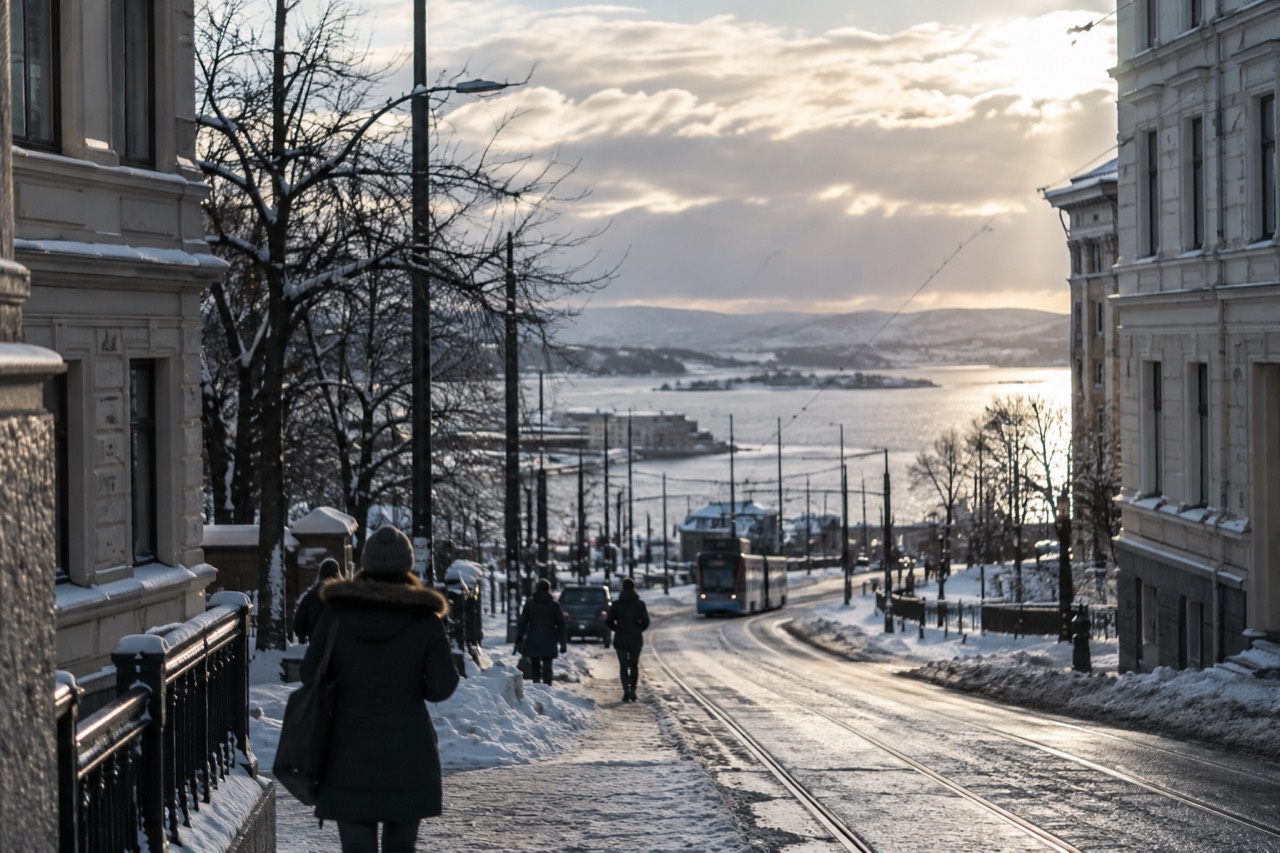
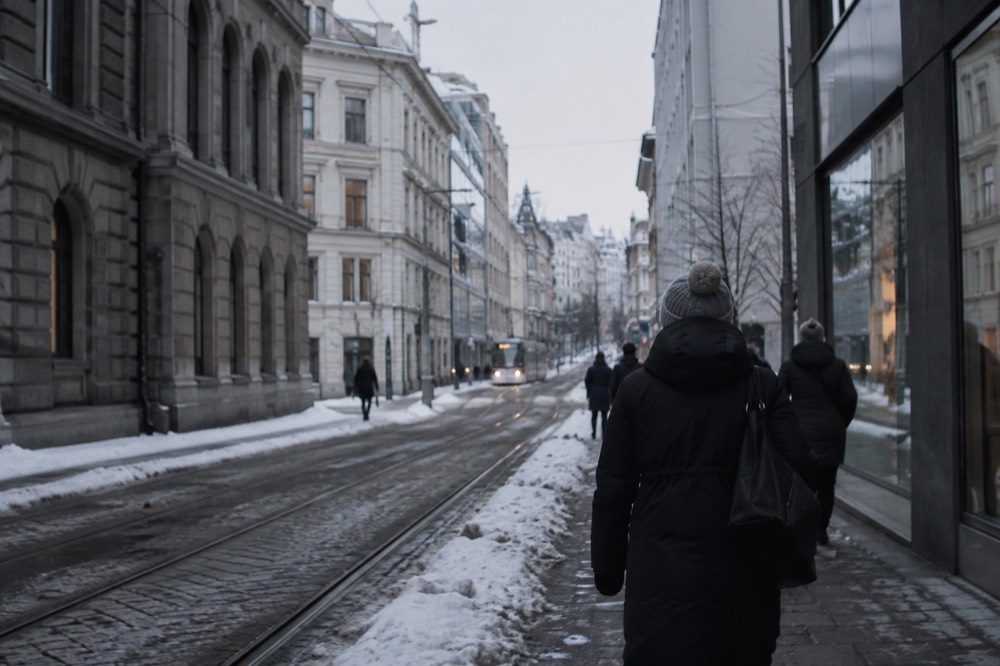
Oslo in winter is a working Nordic capital that does not shut down for the cold, it reorganizes around it: streets stay busy at minus ten, metro trains run deep into the forest on the skiers' schedule, museums extend their hours into the dark afternoons, and the waterfront fills with people walking the frozen-adjacent piers as if it were summer. Daylight is the scarce resource, not warmth, and every good winter plan is built around the roughly six hours of light you get in late December and the eighteen you get by late March. The city is compact, walkable and lit, so the season rewards slow days rather than punishing them.
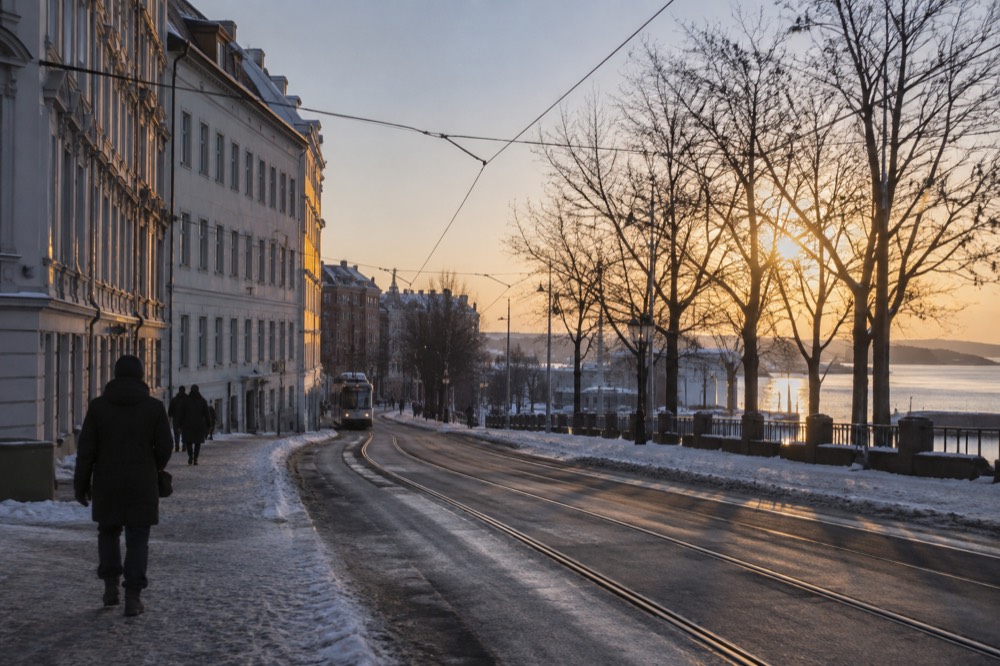
The first thing to understand is that Oslo winter is not Arctic winter. The city sits at 59.91 N, well south of the Arctic Circle, so there is no midnight sun in summer and no polar night in winter. The sun always rises. It just does so at 09:18 on the darkest day of the year and sets again at 15:11, which concentrates everyone's outdoor life into a bright, low, blue-silver window that photographers chase and locals treat as ordinary Tuesday. Visitors who plan for that window, and let evenings belong to museums, restaurants and fires, enjoy the season far more than those who fight it.
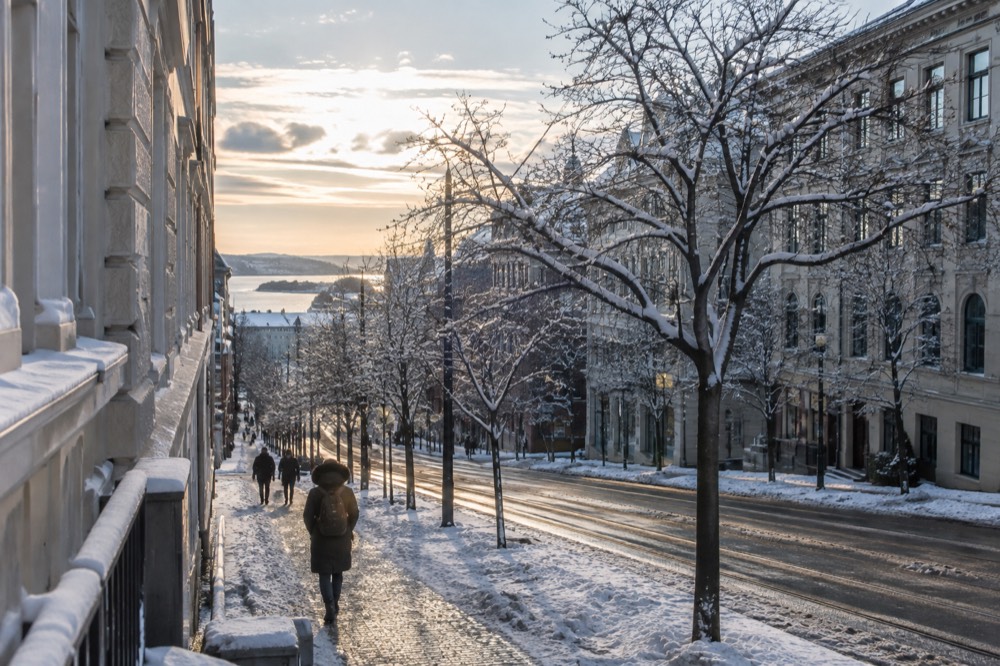
The second thing is snow. Oslo sits between the fjord and the forested hills of Nordmarka, and the height difference matters: the city center can be bare and grey in January while the trails at Frognerseteren, one metro line up, hold groomed snow all season. That vertical split is the reason a single T-bane ride can take you from slush to ski tracks, and it is why locals talk about "going up" the way coastal cities talk about going to the beach. More on the skiing further down.
If you are still shaping the trip itself, our three days in Oslo itinerary has a full-year version you can winterize, and the one day in Oslo guide shows the minimum viable city loop.
How Cold Does Oslo Get, and How Much Daylight?
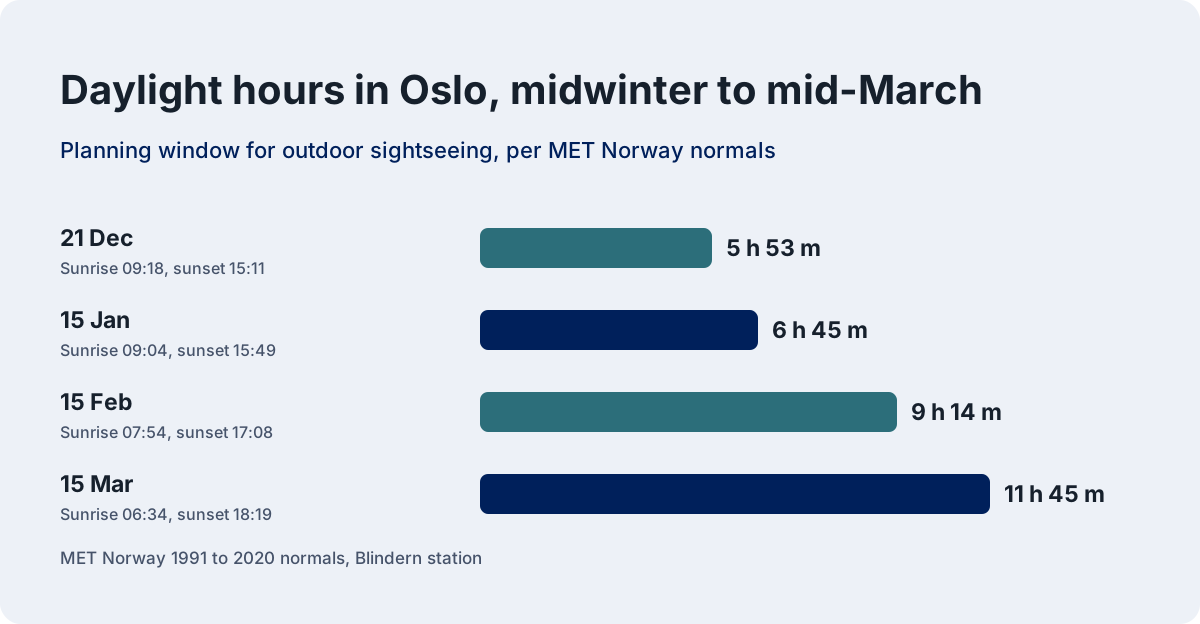
Expect a January normal of minus 2.3 °C (28 °F), about six hours and 45 minutes of daylight in mid-January, and a swing from 5 hours 53 minutes on 21 December to 18 hours 50 minutes on 21 June. Those are MET Norway's official 1991 to 2020 normals for the Blindern station, not travel-blog folklore, and they describe a winter that is cold but rarely brutal by continental standards. The recent observed extremes tell the fuller story: a low of minus 17.2 °C in January 2026, a July high of 32.9 °C, and 131 days with precipitation across a 13-month window. In other words, plan for damp cold that occasionally turns serious.
The precipitation pattern matters more than the temperature. August is Oslo's wettest month on the normals at 103 mm, not November as many assume, but winter precipitation arrives as the grey, drizzling kind that eats through cotton and makes waterproof layers non-negotiable. Snow in the center is common but not guaranteed; snow on the forest trails above the city is close to it. The table below is the honest monthly picture.
| Month | Normal mean temp | Normal precipitation | What it feels like |
|---|---|---|---|
| December | −1.4 °C | 54 mm | Dark by 15:30, first snow likely |
| January | −2.3 °C | 58 mm | The deep of it: short light, frozen puddles |
| February | −2.0 °C | 46 mm | Cold but noticeably lighter, ski season peaks |
| March | 1.3 °C | 41 mm | The payoff month: snow up high, spring below |
Daylight is the number that reshapes an itinerary, so it deserves its own table. These are MET Norway sunrise API values for central Oslo, in local time.
| Date | Sunrise | Sunset | Day length |
|---|---|---|---|
| 21 Dec | 09:18 | 15:11 | 5 h 53 m |
| 15 Jan | 09:04 | 15:49 | 6 h 45 m |
| 15 Feb | 07:54 | 17:08 | 9 h 14 m |
| 15 Mar | 06:34 | 18:19 | 11 h 45 m |
Read that middle column as your planning window. In January you have roughly 09:00 to 15:00 for anything outdoors that needs light, which is plenty for a museum morning and a waterfront walk if you start early. By mid-February the evenings stretch past 17:00 and the whole city relaxes. March is the locals' favorite month: full daylight, real snow in Nordmarka, and none of the Christmas crowds.
With the weather framed, the season's bookable experiences fall into place. These three are the ones winter visitors actually book.
What Should You Pack for an Oslo Winter?
Pack for damp cold around minus 5 °C, wind off the Oslofjord, and constant indoor-outdoor transitions, which means wool base layers, a real waterproof shell, insulated boots with grip, and no cotton anywhere near your skin. The mistake visitors make is dressing for the thermometer rather than for the movement pattern: Oslo winter days involve walking 20 minutes, standing in a heated museum for two hours, walking another 20, then sitting in a café. Layers you can shed and carry beat one heavy coat you cannot. Norwegians dress in merino wool and shell, and it works.
Footwear deserves its own sentence. Oslo sidewalks are cleared but partial thaw-refreeze cycles leave polished ice patches everywhere, and the T-bane floors are wet with melt. Boots with a lugged sole, or slip-on ice grips if you are visiting in January, change the whole trip. Bring a hat and gloves you like, because you will wear them for a week.
| Item | Why | Notes |
|---|---|---|
| Merino base layers | Sweat management indoors and out | Two sets is enough for a week |
| Waterproof shell jacket | Winter precipitation is often rain or sleet in the center | Wind resistance matters more than thickness |
| Insulated boots with grip | Refrozen sidewalks, wet metro floors | Ice grips optional in deep winter |
| Wool socks and hat | The basics Norwegians never skip | Wool insulates when damp, cotton does not |
| Small daypack | For shed layers in museums | Museums have lockers but not always |
One packing item you can skip: heavy duty Arctic gear. Oslo is not Tromsø, and the same coat that serves a Chicago January serves an Oslo one. If you are heading north afterwards, plan that leg separately, the distances are long and the climate is a different animal entirely.
What Are the Best Things to Do in Oslo in Winter?
The winter shortlist is: a torchlit forest walk with a campfire, the museums on Bygdøy, the opera house roof at dusk, an evening myths-and-legends walk through the dark center, and one day on skis or snowshoes in Nordmarka. Winter splits Oslo into two cities: the indoor city of museums, saunas and long dinners, and the outdoor city of groomed trails, torchlit paths and frozen piers. The best trips do both in the same day, outdoors in the light window, indoors after 15:30, and the compact geography makes that genuinely possible.
Start with the signature one. The torchlit forest walk runs about three and a half hours, heads into the Oslo forest with a guide, and ends around a campfire, which is the winter format Oslo does better than almost any capital. It is the product that converts visitors who thought winter city trips were a punishment into people who book February flights. Slots are limited by guide and fire, so it is the one to lock in early.
After that, the evening belongs to the city's other winter specialty: storytelling in the dark. The evening myths and legends walk runs about two hours through central Oslo and is built for exactly the season when night falls at 16:00, and it pairs naturally with an early dinner in Grünerløkka, whose bars and bakeries carry the neighborhood's winter social life. The sauna culture, which in winter is not a luxury but a survival strategy, rounds out the evening hours.
The museums deserve more of your itinerary in winter than summer, and the Bygdøy cluster is the core of it. Kon-Tiki and Fram sit next to each other at the Bygdøynes pier, both warm, both genuinely gripping on a dark afternoon, and both covered by the Oslo Pass. The Kon-Tiki entry ticket is the anchor booking for that day.
Is the Viking Ship Museum Open in Winter?
No. The former Viking Ship Museum on Bygdøy closed in October 2021 and will reopen as the Museum of the Viking Age in 2027, and until then no Viking ships are on display there, which matters because the old museum was one of Oslo's biggest draws and plenty of outdated pages still send visitors to a locked door. The museum's own wording commits to the year 2027 and nothing more precise, so treat any month you read elsewhere with suspicion. The three ships have been moved into the new building, with the Oseberg moved in September 2025, the Gokstad in late 2025 and the Tune in February 2026, but a ship inside a closed building is still a closed building. Do not build a day around it.
The honest substitutes are two. Viking Planet in the center is a Viking-themed venue with a VR movie included in the ticket, and it is what actually sells while the museum is shut. The Historical Museum in central Oslo holds other Viking-age objects and is the museum's own recommended stop. Our Museum of the Viking Age page tracks the reopening in detail, and the Oslo museums overview ranks everything else you can see instead.
Beyond the Viking gap, winter closures in Oslo are minimal. Nothing major is shut at Nasjonalmuseet, MUNCH, Fram, Kon-Tiki, the Folkemuseum, Holmenkollen or Akershus Fortress, and the winter-only additions more than fill the gap: the Christmas market season, the New Year period, and cross-country trails opening from the city's own metro stations. Everything else covered here is indexed on Oslo Travel Guide. Everything else covered here is indexed on Oslo Travel Guide.
Can You Ski or Snowshoe from the City in Winter?
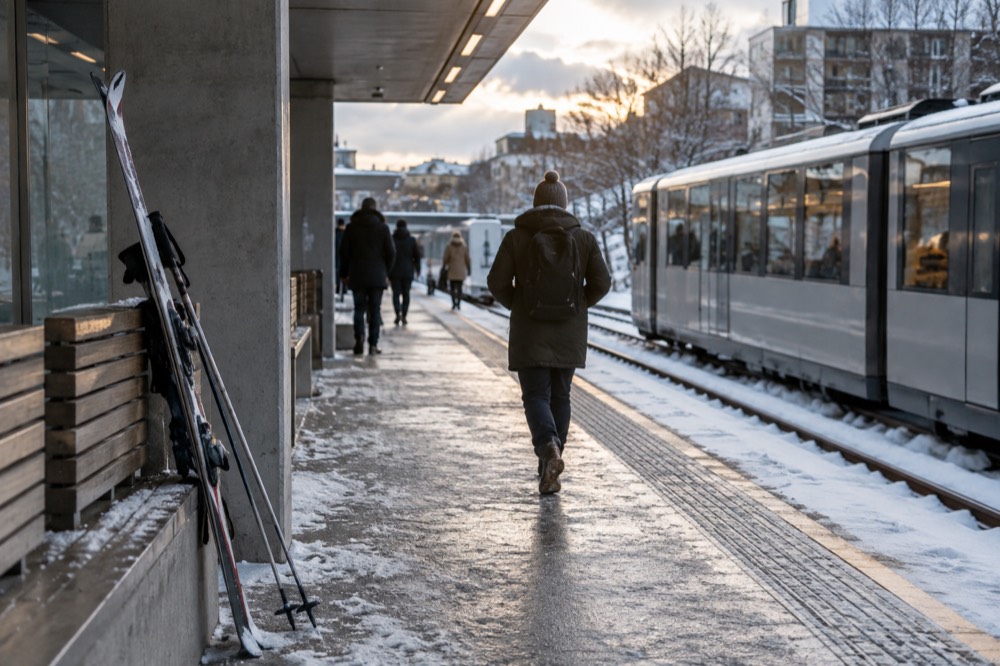
Yes, and this is Oslo's genuine superpower: groomed cross-country trails in Nordmarka are reachable by ordinary metro, a learn-to-ski half-day runs from the city with instruction included, and guided snowshoe tours in the forest run all winter on the same transit, no car and no transfer bus required. Oslo is the only European capital where a morning of cross-country skiing is a metro-ticket activity. Line 1 of the T-bane ends at Frognerseteren, roughly 15 to 20 minutes from the center, and from there Skiforeningen's groomed network runs for hundreds of kilometers. You do not need a car, a tour or a plan, just layers and a sense of direction.
If you have never skied, the learn-to-ski half-day is the smartest winter booking in the city. It runs about three and a half hours, is built for first-timers, and turns "I could never" into a morning of actual gliding inside city limits. It books out in February, which is the month Norwegians consider the real winter.
Snowshoeing is the lower-commitment sibling, and the guided forest version covers the same terrain for people who would rather walk than slide. The Nordmarka guide has the full trail and access picture, including the Sognsvann side, and skiing near Oslo covers the downhill options at Oslo Vinterpark for anyone who wants lifts instead of tracks. For the toboggan crowd, the Korketrekkeren run drops from the Holmenkollen metro station and is covered in the Holmenkollen ski jump guide.
A Three-Day Oslo Winter Itinerary
Day one: center and waterfront in the light, MUNCH or Nasjonalmuseet after dark. Day two: Bygdøy museums all afternoon, evening myths walk. Day three: forest, either the torchlit walk, skiing or snowshoeing, then a long dinner somewhere warm. The shape that works is simple: spend the 09:00 to 15:00 light window outside every day, and hand the long evenings to museums, saunas and restaurants. Oslo's compactness makes the transfers short enough that you never feel you are losing the day to logistics, and the winter light rewards early starts more than any other season does.
| Day | Light hours (09:00–15:00) | Dark hours (15:00–22:00) |
|---|---|---|
| 1 | Opera house roof, Akershus Fortress exterior, harbor walk | MUNCH (open to 21:00 most days) or Nasjonalmuseet, dinner in the center |
| 2 | Bygdøy: Kon-Tiki and Fram museums | Evening myths and legends walk, Grünerløkka dinner |
| 3 | Forest: torchlit walk, learn-to-ski or snowshoeing | Sauna, slow dinner, early night |
Two timing notes. The Bygdøy ferry runs only from mid-March to early October, so in winter you reach the museums on Ruter bus 30, an ordinary public bus on an ordinary ticket. And MUNCH's evening pricing is cheaper after 18:00, 200 NOK against 280 NOK at full rate, which suits a winter schedule perfectly: you lose nothing by arriving when the sun has already set.
Food deserves a slot in any winter plan, because eating well is what Norwegians do with the dark. The best restaurants guide and the street food guide cover the range; the short version is that winter is soup, game and lamb season, and Mathallen food hall is the best bad-weather lunch room in the city.
What Does Winter in Oslo Cost?
An adult 24-hour Oslo Pass costs 580 NOK, museum admissions run 180 to 280 NOK each, and the pass covers over 30 museums plus all public transport in zones 1 through 4N, including the Vy train to and from the airport. That airport clause is the highest-value sentence in Oslo planning and most guides get it wrong: the pass covers Vy's trains to Gardermoen, not Flytoget, and Flytoget's adult single is 268 NOK against a Vy fare of roughly half that. If you are landing and museum-hopping, the pass arithmetic often works from the airport alone.
| Winter cost item | Price | Notes |
|---|---|---|
| Oslo Pass 24h adult | 580 NOK | Over 30 museums, all Ruter transport, Vy airport trains |
| Oslo Pass 72h adult | 995 NOK | The right length for a three-day winter itinerary |
| MUNCH adult | 280 NOK | 200 NOK after 18:00, under 25s pay 100 NOK |
| Kon-Tiki adult | 180 NOK | Family and combo tickets available |
| Fram adult | 180 NOK | Kon-Tiki plus Fram combo is 325 NOK |
| Vigeland Park | Free | Open 24 hours, all year, no ticket |
On the general cost question: Norway is the sixth most expensive country in Europe on Statistics Norway's 2025 price-level survey, with household prices 28.6 percent above the EU average, food 33 percent above, and alcohol and tobacco more than double the average. But that average hides the winter good news: museums, public transport and the outdoors, which is to say most of a winter itinerary, are not unusually expensive, while restaurants and bars are. The full breakdown is in is Oslo expensive and the trip cost guide.
What About Northern Lights and Christmas?
Northern lights from Oslo are genuinely rare, there is no aurora tour from the city, and anyone promising one is selling something that does not exist, while the Christmas market and New Year period are real, bookable and worth building a trip around. Oslo sits at 59.91 N, well south of the auroral oval, so a sighting needs a strong geomagnetic storm, a clear sky and a dark spot, a combination that arrives a handful of times a year. The honest move is to enjoy the city and treat Tromsø as a separate trip, which the northern lights in Oslo guide explains in full.
Christmas is the other story. The market season, the dark-noon atmosphere, the fully lit Karl Johans gate and the 17 May-scale New Year fireworks make late December a genuine destination window, and the Oslo in December guide is the deep dive. The tradeoff is simple: December gives you atmosphere and crowds, January and February give you snow, silence and the lowest hotel rates of the season. March gives you both, which is why locals quietly rank it first.
One caution on the darkest weeks: check museum days carefully around Christmas and New Year. Norsk Folkemuseum, for instance, closes on 17 May and 24 to 25 December, and MUNCH closes on 1 May but runs every other day of the year. A five-minute check of each venue's own site saves a cold walk to a locked door.
Should You Book Anything Before You Arrive?
Book the torchlit forest walk and any ski instruction before you fly, book museum tickets at leisure, and do not book anything promising northern lights, huskies or a Viking ship museum entry, because none of those exist from Oslo no matter what a listing claims. Winter capacity is the constraint: guided winter experiences run small groups, February weekends fill weeks ahead, and the campfire walks are capped by the fire itself. Museums rarely sell out in winter, so those can stay flexible, which matters when the weather decides your day for you. Everything else on the site's guided tours overview can be decided on the ground once you see the forecast.
The trio below is the honest winter booking stack: the torchlit walk as the signature experience, the ski half-day as the skill-builder, and the Kon-Tiki ticket as the guaranteed-dark-afternoon museum.
Common Questions About Oslo in Winter
How cold does Oslo get in winter?
The January normal mean is minus 2.3 °C (28 °F), with February at minus 2.0 °C. Recent observed extremes include minus 17.2 °C, but sustained cold that deep is unusual. Damp cold and wind off the fjord make it feel sharper than the thermometer reads, so waterproof layers matter more than Arctic gear.
How many daylight hours does Oslo have in December?
On 21 December Oslo gets 5 hours 53 minutes of daylight, with sunrise at 09:18 and sunset at 15:11. By mid-February that stretches past 9 hours, and by mid-March past 11 and a half. There is no polar night: the sun always rises in Oslo.
Is the Viking Ship Museum open in winter?
No. It closed in October 2021 and will reopen as the Museum of the Viking Age in 2027, with no month confirmed. Viking Planet and the Historical Museum are the current substitutes, and both are open in winter.
Can you ski in Oslo without a car?
Yes. Metro Line 1 ends at Frognerseteren on the edge of Nordmarka's groomed trail network, about 15 to 20 minutes from the center, and the whole network is inside Ruter zone 1. A learn-to-ski half-day runs from the city with instruction included.
Does the Oslo Pass cover winter transport?
Yes, comprehensively. It covers buses, trams, metro and ferries in zones 1 through 4N, plus Vy trains to and from Gardermoen airport, but not Flytoget or Flybussen. A 24-hour adult pass is 580 NOK and also includes over 30 museums.
Is Oslo worth visiting in winter?
Yes, if you plan around the light rather than against it. Snow in the forest, museums in the dark afternoons, the Christmas market in December and skiing by metro are all genuine winter advantages, and hotel rates drop in January and February. Pack wool and waterproofs and the season works in your favor.