Best Restaurants in Oslo: Where to Eat and What It Costs
Oslo's restaurant scene is small, seasonal, and expensive where you expect it and cheap where you don't. Here is how to eat well in the city without guessing.
Short answer
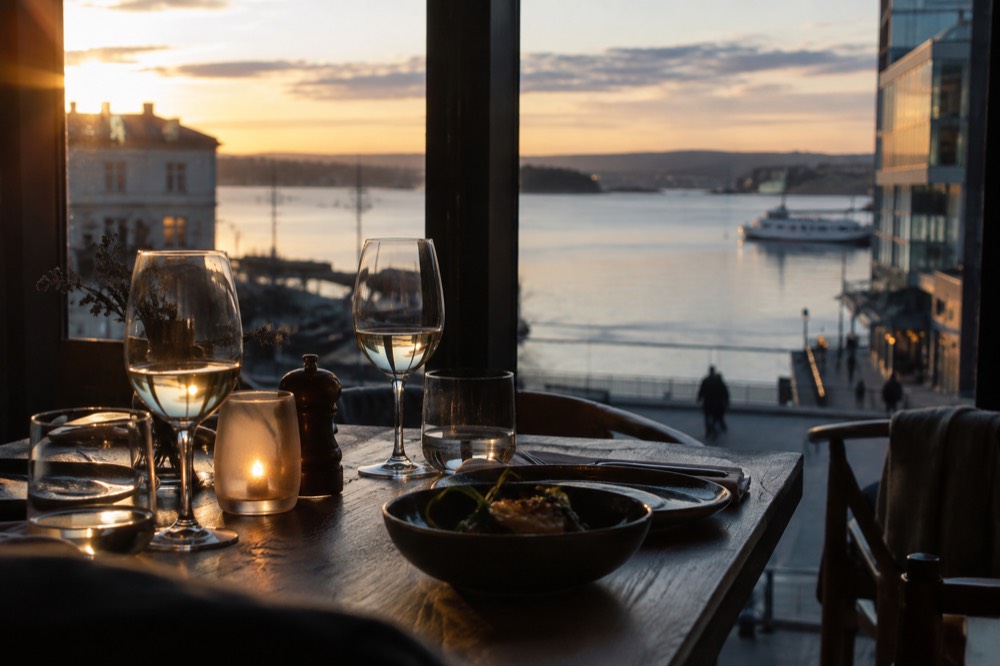
Oslo's best restaurants cluster in a handful of neighborhoods: Grünerløkka for casual and trendy eating, Bjørvika and Tjuvholmen for waterfront dining, and the center around Karl Johans gate for classics. Food runs about 33% above the EU average, so the smart play is one proper restaurant meal a day plus street food, bakeries, and supermarket picnic supplies the rest of the time.
Oslo is not a city you stumble into great food by accident. The restaurant scene is compact, seasonal, and priced in a way that punishes improvisation: Norway is the sixth most expensive country in Europe on Statistics Norway's 2025 price-level survey, with food 33% above the European average and alcohol more than double it. That is the honest starting point, and it is also why eating well here rewards a plan. The kitchens that matter are spread across a handful of districts, the drinking rules reshape what dinner looks like, and the gap between a good cheap meal and an expensive mediocre one is wider than in almost any other European capital. This guide walks through the neighborhoods, the dishes, the costs, and the practical rules, with a bookable food walk or two for the days you would rather have a local make the decisions.
What Are the Best Restaurants in Oslo?
The best restaurants in Oslo concentrate in five areas: Grünerløkka for the city's most interesting casual kitchens and natural-wine bars, Bjørvika and the Barcode strip for modern Nordic dining near the water, Tjuvholmen and Aker Brygge for upmarket seafood with a view, Vulkan and Grünerløkka's riverfront for food halls and market eating, and the streets around Karl Johans gate for the classic, tourist-facing rooms. None of these is a trap, but each rewards knowing what it is before you sit down.
A useful frame: Oslo's dining reputation was built on the new-Nordic wave, and the city still holds Michelin-starred rooms worth planning a trip around, which our separate Oslo Michelin restaurants guide covers in depth. But the scene most visitors actually enjoy is broader. The city's strongest everyday eating is its bakery culture, its seafood counters, and its immigrant kitchens, particularly the Pakistani and Thai food in the Tøyen and Grønland district, some of the best-value plates in the city.
The other thing to understand is seasonality. Norwegian kitchens build menus around what is available: shellfish in late summer and autumn, game and root vegetables through winter, lamb and cloudberries in autumn, and an explosion of berries and new potatoes in the brief height of summer. A restaurant's October menu and its July menu can share almost nothing, and that is a feature, not inconsistency.
If you want a structured introduction rather than self-navigation, a guided food walk solves the first-day problem efficiently. The Grünerløkka food culture walk is the neighborhood-specific option, and the city-center alternative is covered in our where to eat in Oslo overview.
Which Neighborhood Should You Eat In?
Choose Grünerløkka if you want the city's best concentration of casual restaurants, bars, and coffee; choose Bjørvika or Tjuvholmen for modern Nordic rooms and waterfront tables; choose Grønland and Tøyen for the cheapest good food in the city; choose Aker Brygge if a fjord view matters more than the kitchen; and choose the center for classic venues near the sights. Most visitors do best staying in or near Grünerløkka for dinner and treating the waterfront strips as a one-night splurge.
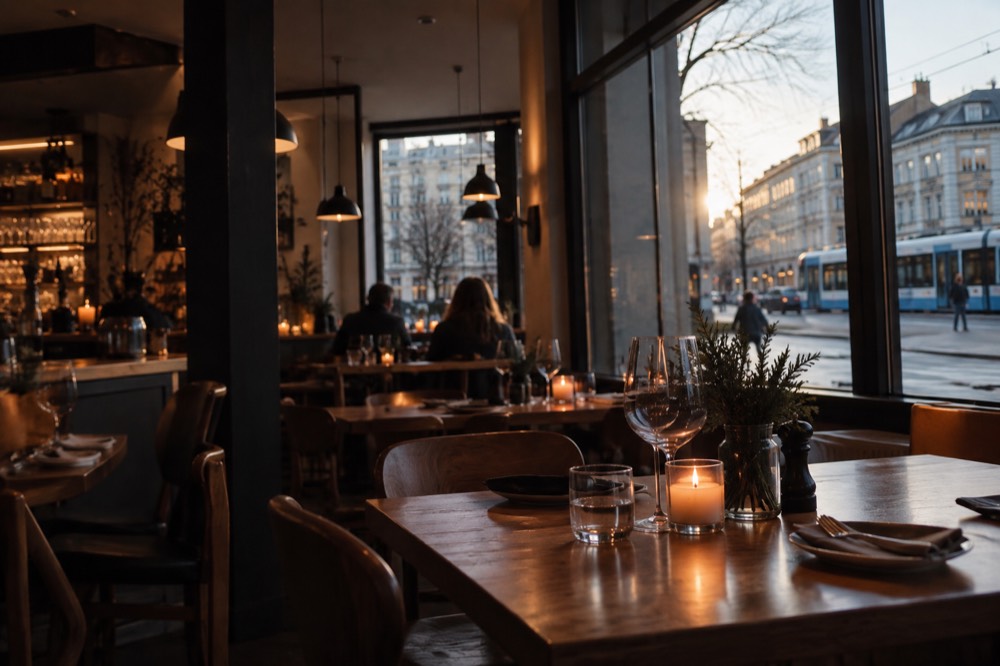
Grrünerløkka deserves its reputation. The district, which our Grünerløkka neighborhood guide covers in full, packs more interesting kitchens per block than anywhere else in the city, and the Mathallen food hall at Vulkan gives you a dozen counters under one roof when a group cannot agree. Mathallen is the practical answer for a first night: you can sample Norwegian cheeses, seafood, and baked goods without committing to one menu, and our Mathallen Oslo guide explains how to work it.
Grønland and Tøyen are where the value is. The district along the river east of the center holds the city's most affordable restaurants, and the difference in the bill between dinner here and dinner on Aker Brygge can fund an entire extra day of eating. The trade-off is atmosphere: you are coming for the food, not the setting.
Bjørvika, between the Opera House and the MUNCH museum, is the newest dining strip. The Barcode towers hold a string of modern rooms that fill with office crowds at lunch and theatergoers before evening performances, and the seafood near the water is genuinely good. Tjuvholmen and Aker Brygge are the postcard option: outdoor tables facing the fjord, boats in view, prices to match the real estate.
The table below is the quick version of the decision.
| Neighborhood | What it does best | Best for | Trade-off |
|---|---|---|---|
| Grünerløkka | Casual kitchens, natural wine, coffee, Mathallen food hall | Most dinners | Book ahead on weekends |
| Grønland / Tøyen | Best-value restaurants, Pakistani and Thai kitchens | Budget eating | Plain settings |
| Bjørvika / Barcode | Modern Nordic, seafood near the Opera House | A splurge dinner | Quieter on weekends |
| Tjuvholmen / Aker Brygge | Waterfront tables, fjord views | A special occasion | You pay for the view |
| Oslo center | Classic venues near Karl Johans gate and the sights | Convenience | Uneven quality |
What Does Eating Out in Oslo Cost?
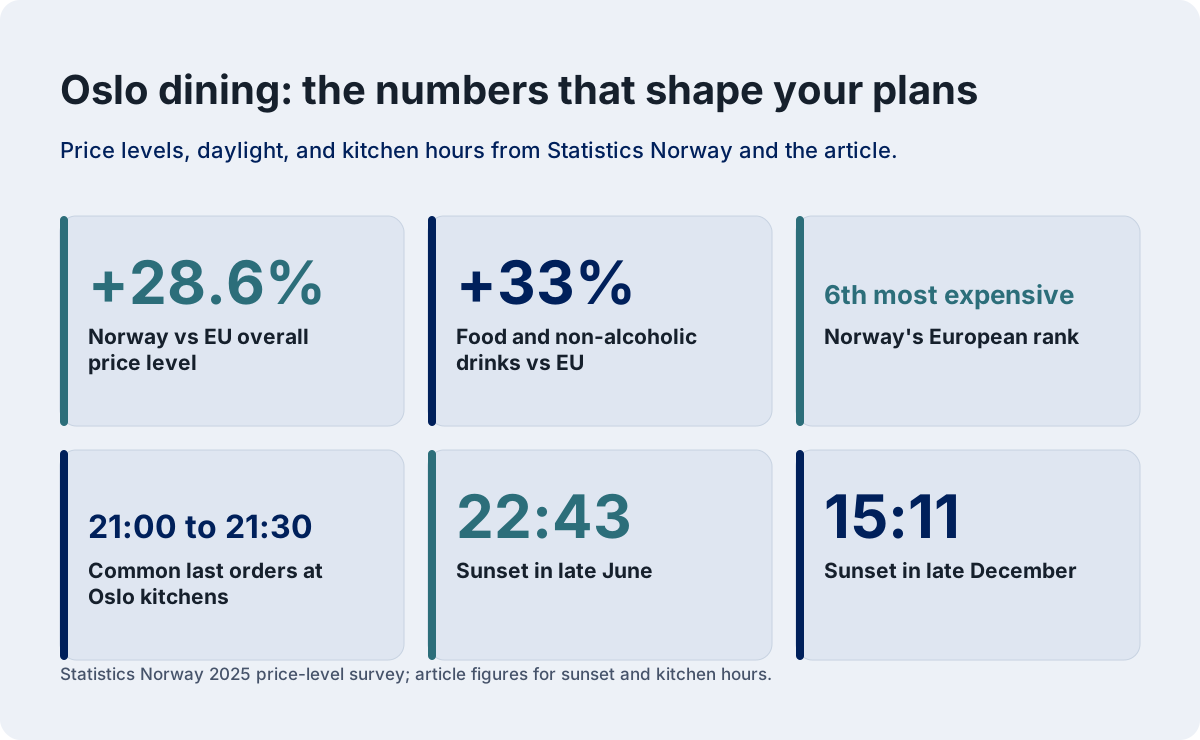
Eating out in Oslo costs roughly a third more than the European average for food, and more than double for alcohol, per Statistics Norway's 2025 price-level survey, which put Norwegian household prices 28.6% above the EU overall. A mid-range dinner is a real expense, but the pressure is uneven: restaurants and drinks carry the premium, while coffee, bakery items, and supermarket supplies are far kinder. Budget for one proper restaurant meal a day and eat well cheaply the rest of the time.
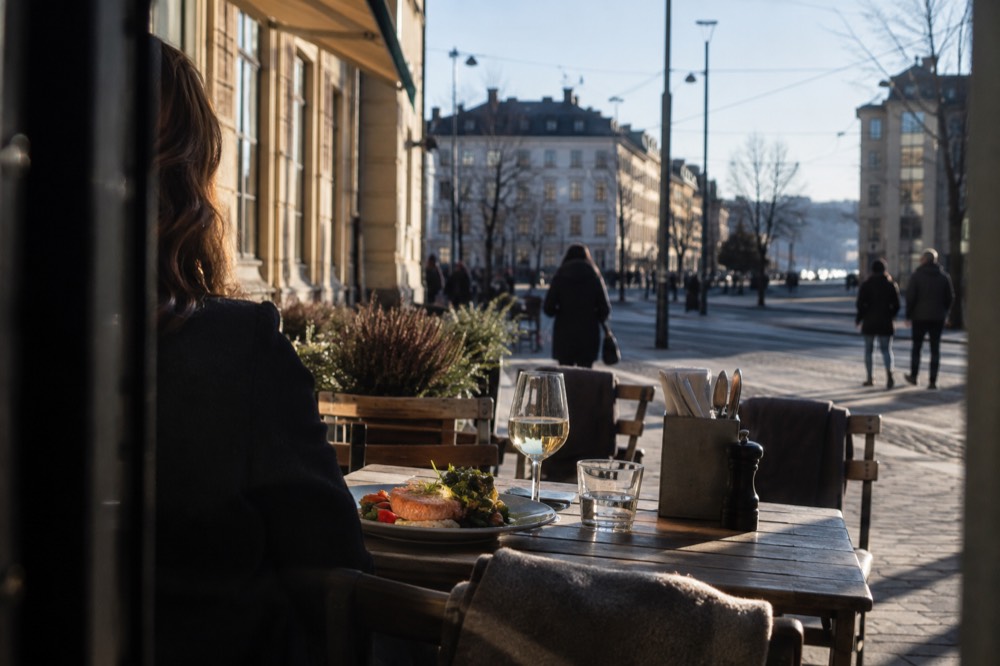
The numbers behind that come from Statistics Norway's European price-level comparison, the 2025 purchasing-power-parity survey published in June 2026. It is the most defensible cost data available for the country, and it is worth reading closely because it explains where the money actually goes.
| Category | Norway vs EU average (2025) |
|---|---|
| Overall price level | +28.6% |
| Food and non-alcoholic drinks | +33% |
| Alcohol and tobacco | More than double |
| European rank | 6th most expensive |
What that means on the ground: the expensive part of an Oslo dinner is the drinks, not the plate. A restaurant main is dear but not shocking by big-city standards; a bottle of wine at restaurant markup, on top of the world's already taxed alcohol, is what turns a reasonable bill into a bruising one. Diners who drink tap water and skip wine routinely halve their restaurant spend, and Oslo's tap water is excellent, a point our Oslo tap water guide explains.
The cheap side of the city is real. Bakery cinnamon buns, supermarket picnic supplies, and the Grønland kitchens make a low-cost eating day entirely doable, and our Oslo cheap eats and Oslo on a budget guides map that out dish by dish. Street food is covered separately too, in the Oslo street food guide.
How Do Oslo's Alcohol Rules Shape Dinner?
Alcohol rules reshape Oslo dining more than in most cities: wine and spirits are sold only through the state monopoly Vinmonopolet, supermarkets stop selling beer in the evening and carry nothing above 4.7% ABV, and everything is closed on Sundays, so a restaurant's wine markup reflects a genuinely taxed supply chain. Practically, this means drinks are the expensive half of the bill, many diners drink less here than at home, and a guided beer walk is one of the few ways to taste Norwegian brewing without buying whole bottles.
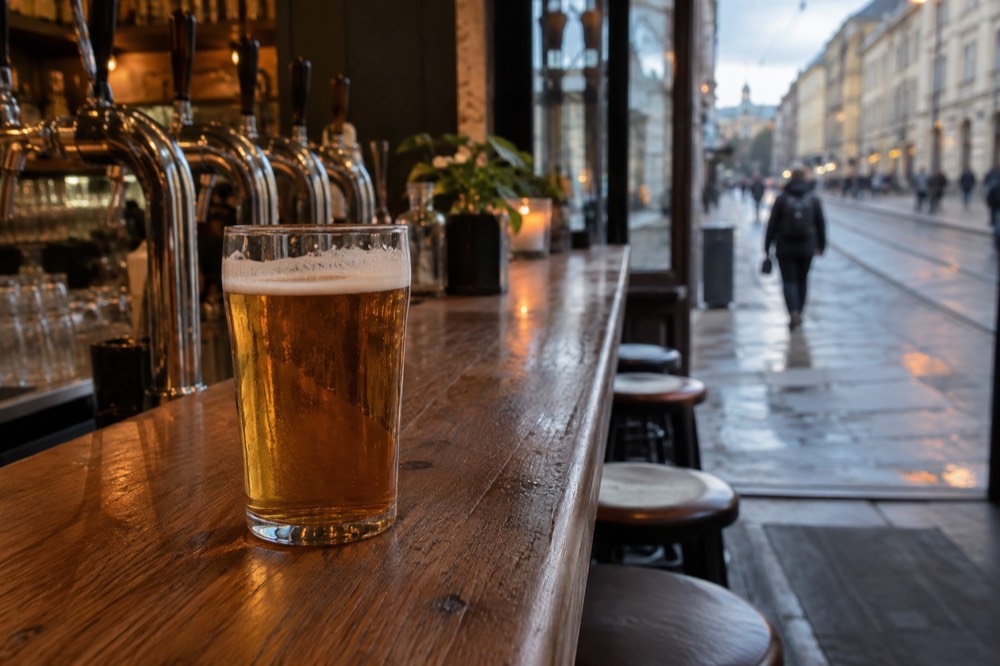
Vinmonopolet, the state monopoly, is the only retail outlet for wine and spirits in Norway. It closes on Sundays and public holidays, closes early on Saturdays, and varies hours by store, so visitors hoping to stock a self-catered dinner need to plan around it. Supermarkets sell only beer and cider, and only up to the low-strength limit, with a fixed evening cut-off on sales. The upshot for restaurant diners is that the wine list carries Norway's alcohol taxation at full weight, and the difference between a dinner with and without drinks is larger than almost anywhere in Europe.
| Where | What it sells | Key rules |
|---|---|---|
| Vinmonopolet | Wine, spirits, strong beer | Closed Sundays and public holidays; early Saturday close; hours vary by store |
| Supermarkets | Beer and cider only, low strength | Evening cut-off on beer sales; nothing stronger stocked |
| Restaurants and bars | Full range, by the glass or bottle | Service included; no mandatory tipping |
Tipping follows from the pricing system: service is included in Norwegian menu prices, and rounding up or leaving something for good service is a voluntary courtesy rather than an expectation, a norm our tipping in Oslo guide covers in detail.
For travelers who do want to drink well, Norway's craft brewing is the bright spot, and it is genuinely good. A guided beer and culture walk is the efficient way into it: you taste across several venues with someone who can explain the local scene, which matters when a single bar bill can otherwise run to a full dinner's worth. The beer and culture walk is the bookable option, and our best bars in Oslo and price of beer in Oslo guides cover the same ground for self-guided evenings.
What Should You Actually Order in Oslo?
Order seafood, always: cold-water shrimp, langoustine, cod, and the salmon Norway is famous with are the reason to eat out here. Beyond that, look for reindeer and elk in the autumn and winter game season, lamb dishes in autumn, brunost cheese and waffles anywhere, and the cinnamon bun, which is arguably Oslo's true national dish. In summer, strawberries and new potatoes are treated with near reverence.
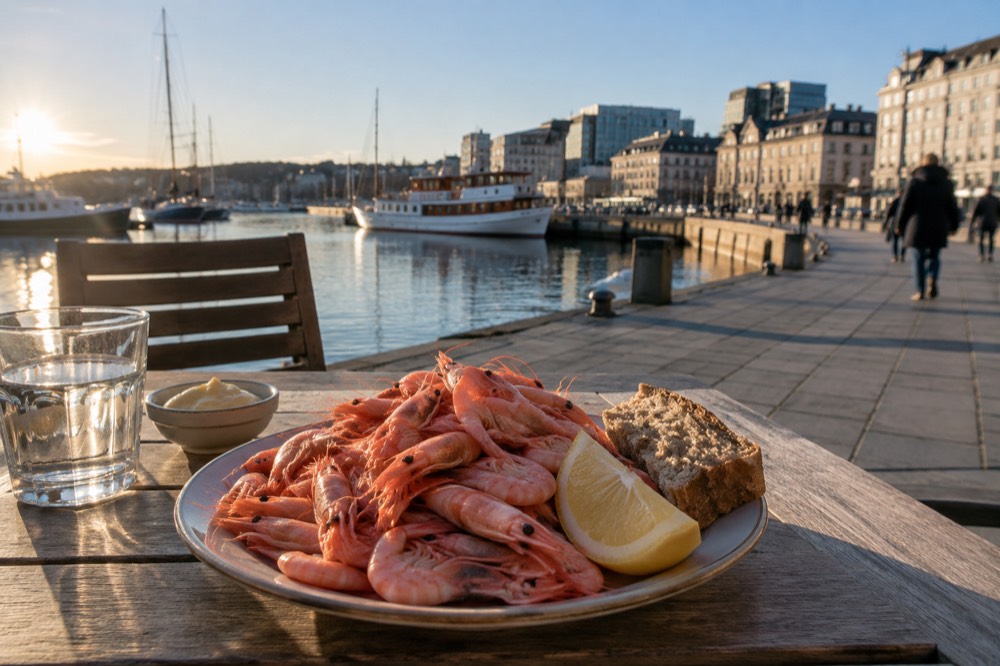
Start with the shrimp. Cold-water prawns, peeled and piled with white bread, mayonnaise, and lemon, are a Norwegian institution rather than a menu cliché, and the fjord's cold water is what makes them sweet. The classic way to eat them is on a boat in the Oslofjord, and the evening cruise with a shrimp buffet is exactly that product: a three-hour dinner on the water built around the dish. It is one of the few Oslo experiences where the food and the setting are the same purchase.
Beyond seafood, the seasonal calendar drives everything. Game season, from autumn through winter, puts reindeer, elk, and grouse on menus, usually with berries and root vegetables. Autumn is lamb season, and the old Norwegian dish of lamb and cabbage stew appears everywhere. Winter menus lean on the storage crops, and this is when the city's best kitchens show their skill. Summer is short and intense: new potatoes, strawberries, and the first berries of the season command genuine excitement, and terrace tables become the city's most contested furniture.
The everyday classics are cheap and worth seeking out: the cinnamon bun at any serious bakery, waffles with brunost or sour cream and jam, open-faced sandwiches on dense Norwegian bread, and the hot dog, which Norwegians eat standing up with a potato flatbread wrap and an unembarrassed pride. None of these needs a reservation or a translation app.
Where Do Locals Eat in Oslo?
Locals eat in Grünerløkka and along the Akerselva river, in the Grønland district's immigrant kitchens, at the Mathallen food hall, and at home, more than visitors expect, because restaurant prices push everyday eating into houses and cabins. The restaurants that fill with Oslo residents rather than visitors cluster around the river east of the center, and the city's coffee culture, among the strongest in Europe, carries a surprising share of daily social life.
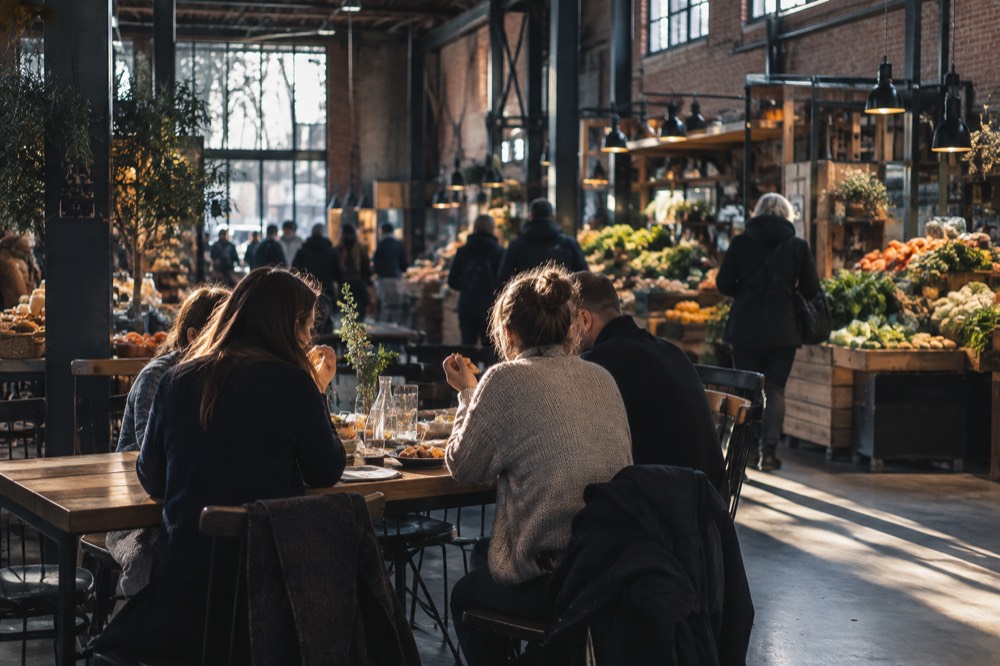
The honest answer includes the home kitchen. With food 33% above the EU average, many Oslo residents treat restaurants as an occasional pleasure rather than a default, and the city's social eating happens around coffee to a degree that surprises visitors. Oslo's coffee scene is genuinely world-class, and our Oslo coffee guide and the is Oslo known for coffee piece explain why the espresso bars here hold their own anywhere.
When residents do eat out, the river is the spine of it. The Akerselva divides east from west Oslo, and its banks hold the food hall, the breweries, and the casual rooms that fill with locals on weekends. The east side, Grønland and Tøyen, holds the kitchens that feed the neighborhood daily. The west, Majorstuen and Frogner, is quieter and more traditional, and our Oslo neighborhoods guide maps which side suits which kind of trip.
A food walk is the shortcut to eating where locals eat, because the guide's job is precisely to separate the rooms that survive on location from the rooms that survive on regulars. The Grünerløkka walk is the strongest of these in the city, and a city-center version exists for visitors based downtown, which our Oslo guided tours overview compares.
When Is the Best Time of Year to Eat in Oslo?
The best months for eating out in Oslo are June and July, when terraces open, the shellfish season builds, and the long evenings stretch dinner past 22:00, and September, when game and lamb season begins and the tourist crush fades. Midwinter is the season for candlelit indoor dining and the Christmas-market food stalls, and August, despite being high summer, is the city's wettest month, at 103 mm on the 1991 to 2020 normals, so it is the least reliable terrace month of the summer.
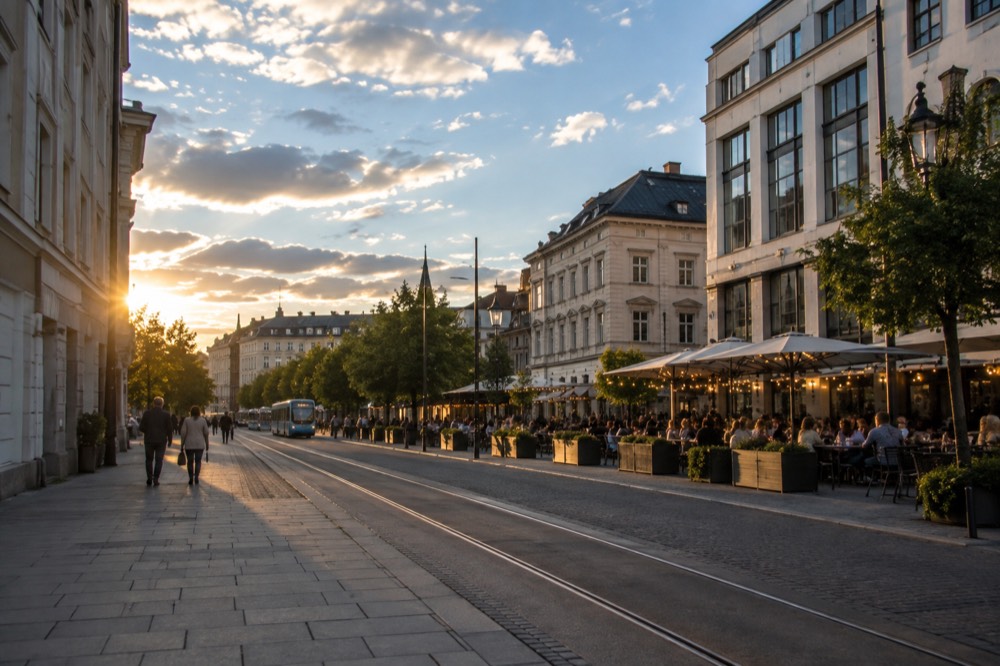
Daylight shapes dinner here more than visitors expect. In late June the sun sets at 22:43 and it never gets properly dark, so outdoor eating runs absurdly late; in late December the sun sets at 15:11, and the whole city moves indoors by mid-afternoon. The swing, from 5 hours 53 minutes of daylight in December to 18 hours 50 in June, is the single biggest planning fact for Oslo, and our Oslo daylight hours guide and best time to visit Oslo guide cover it in detail.
| Month | Normal mean temp | Normal precip | Eating weather |
|---|---|---|---|
| March | 1.3 °C | 41 mm | Indoor, first terrace days |
| June | 15.3 °C | 80 mm | Terrace season, late light |
| July | 17.7 °C | 87 mm | Peak terrace season |
| August | 16.5 °C | 103 mm | Wettest month, book indoors |
| October | 6.6 °C | 93 mm | Game season, candlelight |
| December | −1.4 °C | 54 mm | Christmas food, dark by 15:30 |
The seasonal food calendar is worth building a trip around if you care about it: shellfish peaks late summer into autumn, game runs autumn and winter, lamb is autumn, and berry and new-potato season is a brief July phenomenon Norwegians treat as an event. December brings the Christmas market and its food stalls, covered in our Oslo Christmas market guide, plus the year's most Norwegian eating tradition of all, ribbe and pinnekjøtt at home tables, which restaurants do serve around the holidays.
How Do You Get a Table, and Other Practical Tips?
Book ahead for weekend dinners anywhere good, expect kitchens to close early by southern European standards, with last orders commonly around 21:00 to 21:30, and expect Sunday to be the quietest restaurant day in the city, with many kitchens shut or running reduced hours. Card payment is universal, service is included, water is free from the tap, and no visitor needs cash anywhere in Oslo's restaurant scene.
The booking culture surprises visitors from countries where you can decide at 19:00 and walk in. Oslo's good rooms fill for Friday and Saturday dinner days ahead, and the compact size of the scene means there are not five backup options around the corner. Book the one or two dinners you care about before you fly, and leave the rest to bakeries, food halls, and the Grønland kitchens, which need no reservation at all.
Opening hours run earlier than the Mediterranean and later diners should plan accordingly. Lunch service peaks at noon, dinner tables turn from 18:00, and a 21:00 reservation is a late one here. Sunday is the day everything runs at reduced steam, partly because of the alcohol retail closures, and partly because it is a home-cooking day in Norwegian culture.
A few final practicalities. Norway is in Schengen but not in the EU, so it sits outside EU VAT and non-resident visitors can claim a VAT refund on qualifying purchases, and the currency is the krone, not the euro, which our Oslo currency and cash guide explains. Service is included in menu prices and tipping is voluntary. And if you are planning the whole eating side of a trip, the where to eat in Oslo overview and the rest of Oslo Travel Guide's food pages are the place to start.
Common Questions About the Best Restaurants in Oslo
What is the best neighborhood for restaurants in Oslo?
Grünerløkka has the city's densest concentration of good casual restaurants, plus the Mathallen food hall. Bjørvika and Tjuvholmen hold the modern Nordic and waterfront rooms, and Grønland has the best-value kitchens.
Is it expensive to eat in Oslo?
Yes, moderately. Statistics Norway's 2025 survey puts food 33% above the EU average and alcohol more than double. One restaurant meal a day, with bakery, street food, and supermarket supplies the rest of the time, is the standard budget strategy.
What food is Oslo known for?
Cold-water shrimp, salmon and cod, reindeer and elk in game season, lamb and cabbage stew in autumn, brunost cheese, waffles, cinnamon buns, and strawberries in July.
Where do locals eat in Oslo?
Along the Akerselva river and in Grünerløkka, in the Grønland district's immigrant kitchens, at the Mathallen food hall, and in the city's coffee bars, which carry a large share of daily social life.
Do you need to book restaurants in Oslo in advance?
For Friday and Saturday dinner at any good restaurant, yes, often several days ahead. Weekday lunches, food halls, bakeries, and the Grønland kitchens need no reservation.
Can you buy wine in supermarkets in Oslo?
No. Wine and spirits are sold only through Vinmonopolet, the state monopoly, which closes on Sundays and public holidays. Supermarkets sell only low-strength beer and cider, with an evening cut-off.