Oslo Street Food: Where to Eat Cheap and What to Order
Oslo is one of Europe's most expensive restaurant cities, which is exactly why its street food scene matters. This guide covers where the food stalls actually are, what to order, and how to eat well without sitting down for a 400 NOK main.
Short answer
The best street food in Oslo is concentrated in three places: the Mathallen food hall at Vulkan, the stalls around Grünerløkka, and the kiosk and sausage stands of the city center. Expect to pay roughly half of restaurant prices for the same quality, with pølser (hot dogs) the cheapest option and market-hall plates the best value for a full meal.
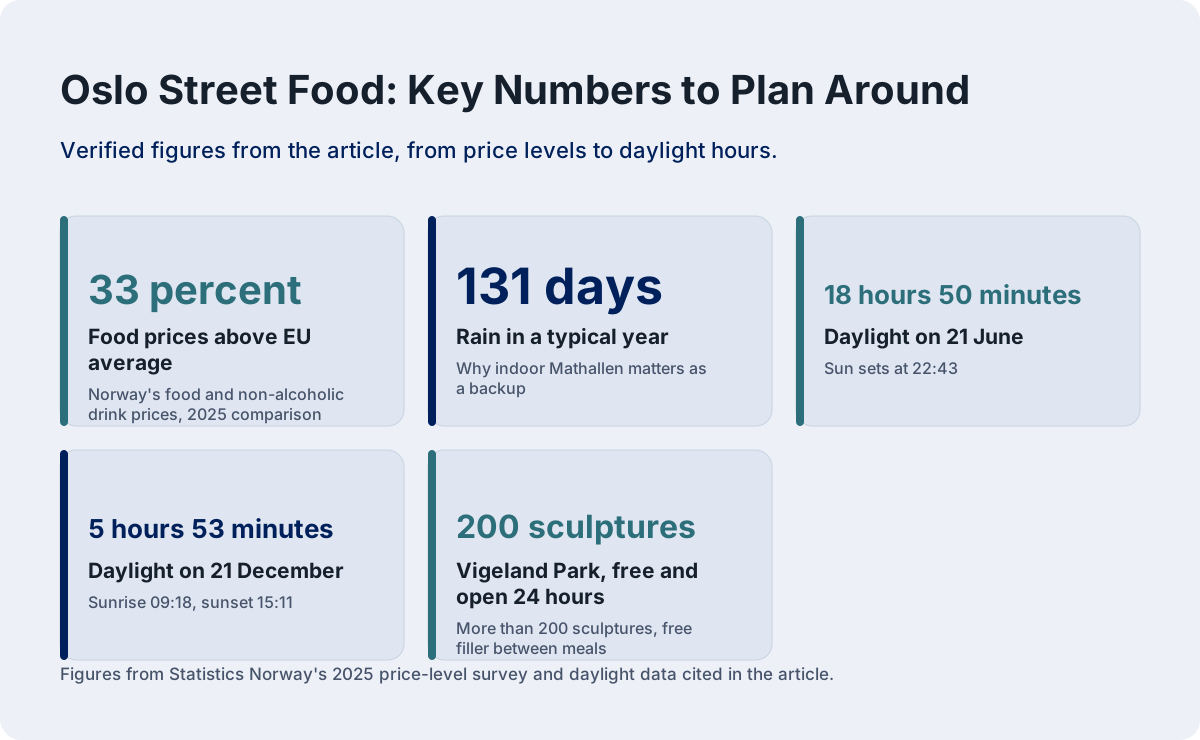
Norway is the sixth most expensive country in Europe, and food and non-alcoholic drink prices run 33 percent above the European average on Statistics Norway's 2025 comparison. That single statistic explains why Oslo street food has become a scene rather than a curiosity: when a restaurant main routinely costs what a whole street-food meal should, the stalls, kiosks and market halls stop being a fallback and become the plan. This guide is about eating well in Oslo without a table reservation, and about knowing which neighborhoods actually deliver.
What Exactly Counts as Street Food in Oslo?
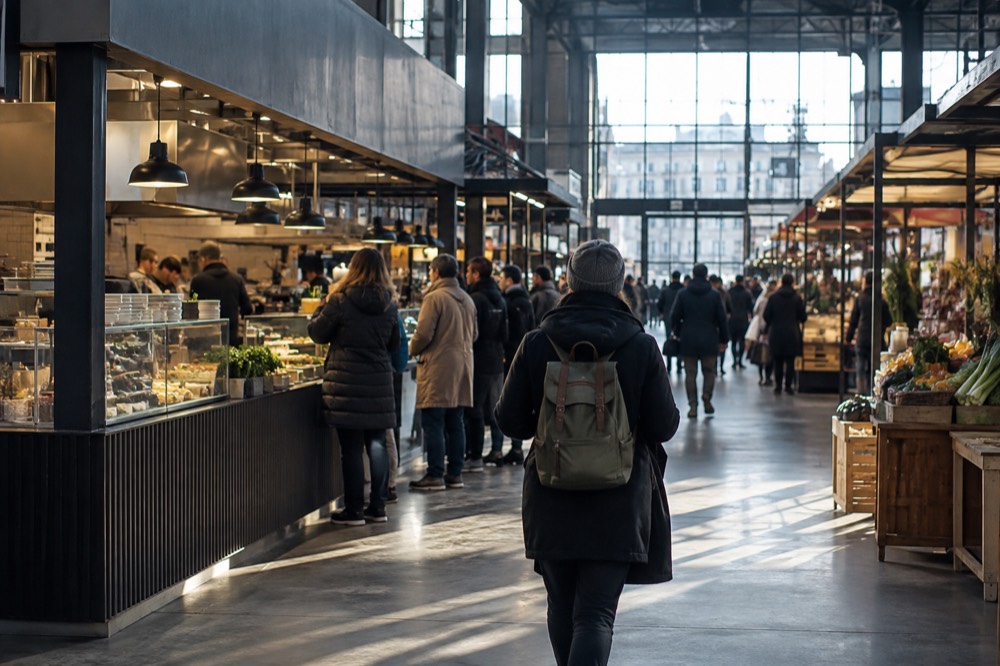
Oslo's street food spans four distinct formats: the classic sausage kiosk (pølsebod), the indoor market hall with independent stalls, the seasonal outdoor food market, and the growing cluster of takeaway windows around Grünerløkka and Vulkan. Each has its own price band and its own hours, and the cheapest of them, the hot dog kiosk, has been a Norwegian institution for decades rather than a trend. Knowing which format suits your day matters more than knowing any single stall.
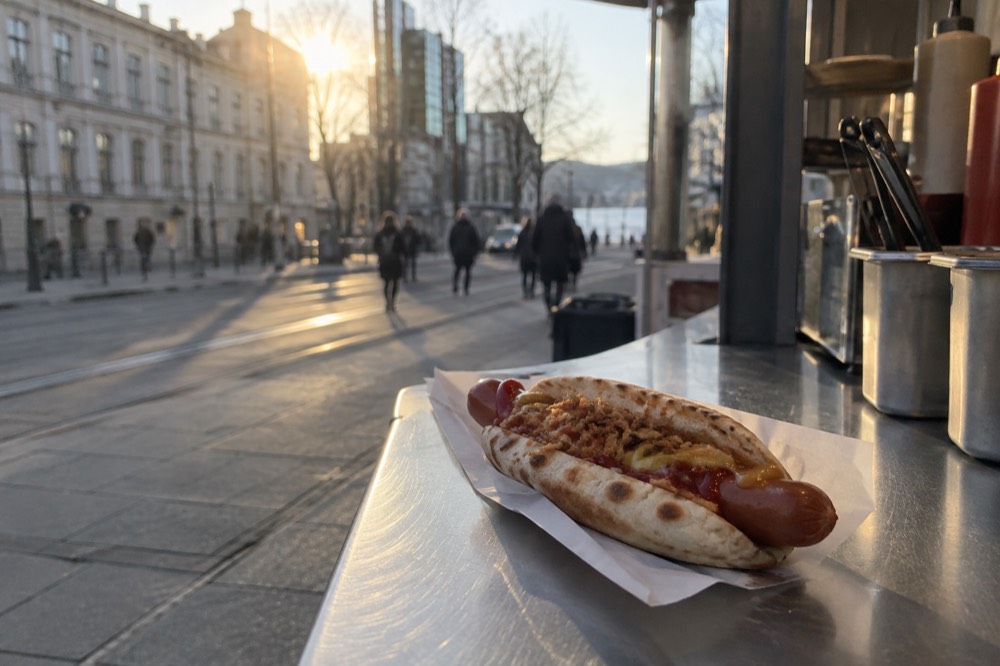
The pølsebod is the oldest layer. Norwegians eat roughly 100 million hot dogs a year by common industry estimate, though no verified per-capita figure exists in our research, so treat that as context rather than a statistic to quote. What is certain is that every kiosk in the city center sells pølser with lompe (a soft potato flatbread) or in a bun, and that a kiosk hot dog is the single cheapest hot meal in Oslo. Kebab shops, often attached to the same kiosks, form the second layer: grill counters around Grønland and in the east that plate generous portions late into the night.
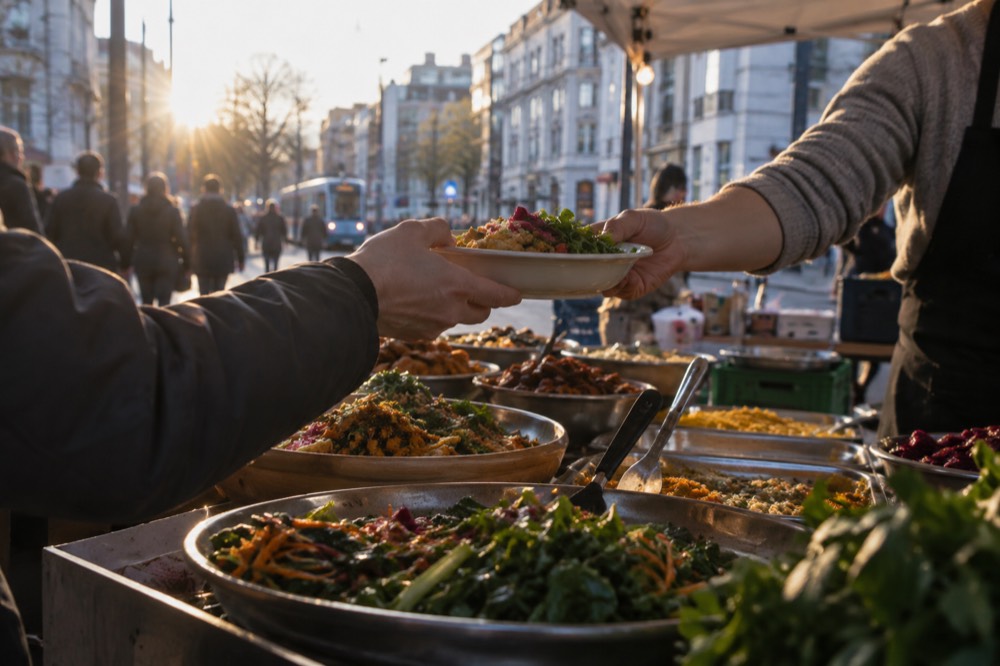
The third layer is the market hall. Mathallen Oslo at Vulkan, a converted industrial building by the Akerselva river, holds more than a dozen independent vendors under one roof, from Norwegian seafood counters to a Spanish pinxtos bar. The fourth layer is seasonal: outdoor food markets and food-truck gatherings that appear in summer and thin out completely once the dark season sets in, which is a real planning constraint we cover below.
Where Is the Best Street Food in Oslo?
The heaviest concentration is Grünerløkka and the Vulkan area around Mathallen, followed by Grønland and the streets behind Oslo Central Station, where the kebab grills and budget counters cluster. For a first visit, base yourself around the Akerselva river between the Grünerløkka bridge and Vulkan: you can walk the whole strip in twenty minutes and hit a kiosk, a market hall and several takeaway windows without a transit ticket. The harbor-front stalls at Aker Brygge are the most scenic but the priciest.
Grünerløkka is the neighborhood to commit to. It is Oslo's old working-class district turned creative quarter, and its street-level food reflects that: cheap, varied and open late. The stalls here change more often than anywhere else in the city, which is why we recommend the area rather than naming individual vendors that may not survive the season. Our Grünerløkka neighborhood guide covers the streets and the river walk that ties the food stops together.
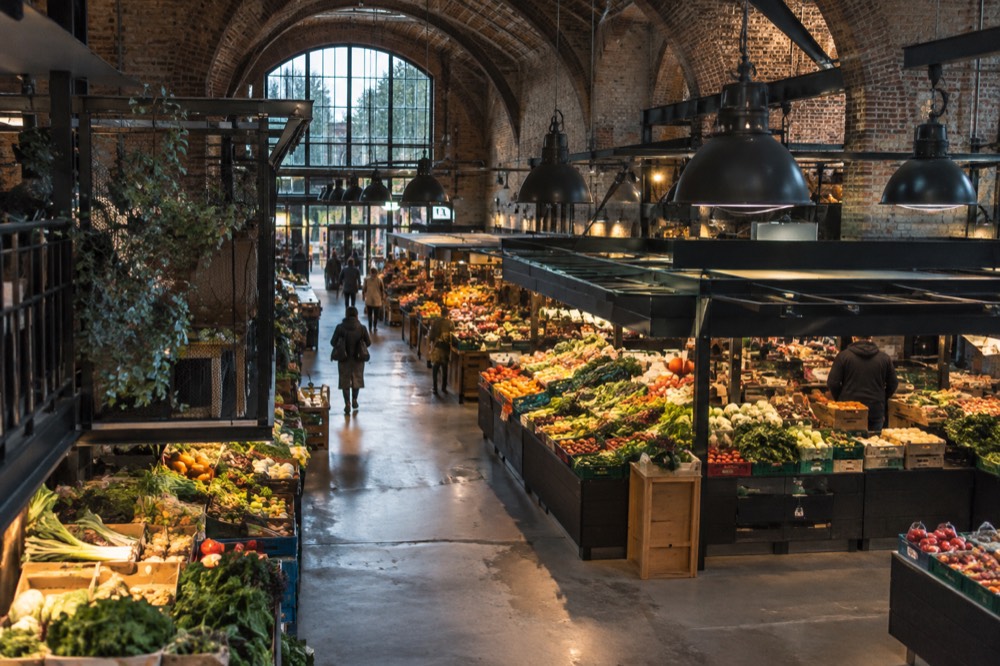
Mathallen is the anchor at the top of the district. Built inside a former ironworks at Vulkan, it holds the city's most serious concentration of small food businesses, and it doubles as the best bad-weather eating option in Oslo: when the rain that falls on 131 days of a typical year arrives, an indoor hall keeps your plan alive. Our Mathallen Oslo guide goes deep on the vendors and the building's history.
Grønland, east of the center, is the budget layer the guidebooks underplay. The area around the mosque and the Tøyen end of Grønlandsgate carries the city's densest run of grill counters, bakeries and grocery delis, and it is where much of Oslo actually eats late. Pair it with our Tøyen and Grønland area guide if you want the fuller picture of the district.
A food walk is one way to shortcut the uncertainty of which stall is worth it on any given week, and the harbor's boat trips are what most visitors pair with a food-focused day: eat your way through Grünerløkka in the afternoon, then finish on the water.
How Much Does Street Food in Oslo Cost?
Street food in Oslo runs roughly half of restaurant prices for comparable food, but it is still not cheap by European standards: Norway's food prices sit 33 percent above the EU average, and no stall escapes that. A kiosk hot dog is the floor, kebab plates in Grønland sit in the middle, and market-hall plates at Mathallen approach casual-restaurant money. The honest framing is not that street food is cheap, it is that it is the cheapest credible way to eat a full meal in this city.
We will not publish invented per-item prices: our verified research could not confirm a reliable figure for a specific sausage or kebab in a specific Oslo outlet, and a wrong number here would be worse than none. What we can state with a source is the structural picture from Statistics Norway's 2025 price-level survey, and the practical spread between formats.
| Format | Where | Rough price level | What you get |
|---|---|---|---|
| Pølsebod (hot dog kiosk) | City center, everywhere | Lowest tier | One or two hot dogs, standing or walking |
| Kebab and grill counters | Grønland, east side | Low to mid tier | A full plate, often with salad and bread |
| Takeaway windows | Grünerløkka, Vulkan | Mid tier | Handheld meals, often international |
| Mathallen market hall | Vulkan | Mid to high tier | Restaurant-quality plates, seated or standing |
| Harbor stalls | Aker Brygge | Highest tier | Same food, harbor view premium |
Two structural notes from the verified facts. First, alcohol is where Norwegian pricing gets extreme: alcohol and tobacco cost more than double the European average, and wine and spirits are only sold at Vinmonopolet, the state monopoly, which closes on Sundays and public holidays and early on Saturdays. A street-food meal with a beer is therefore two different purchases at two different venues, and the beer is the expensive half. Our price of beer in Oslo guide breaks down that half of the bill.
Second, tipping is not part of the street-food transaction. Service is included in Norwegian prices by law and custom, and nobody expects a tip at a counter, so the price on the board is the whole price.
Is Mathallen Oslo Worth the Visit?
Yes, and it is the single best street-food destination in the city for a first-time visitor, because it concentrates more than a dozen independent vendors under one roof within a fifteen-minute riverside walk of the city center. It costs nothing to enter, the vendors' prices are posted openly at each counter, and the building itself, a converted ironworks, is one of the more atmospheric food spaces in Scandinavia. Go at lunch rather than dinner for the shortest queues.
Mathallen sits inside the Vulkan industrial complex, a set of red-brick factory buildings on the Akerselva river that once housed an iron foundry. The hall's stalls cover the full spread: Norwegian seafood, charcuterie, cheese, coffee roasters, and a rotating cast of hot-food counters. Because every vendor is an independent business, quality varies by counter, and the hall's own strength is that a bad stall does not survive.
The practical advice is timing. Weekday lunch is calm; Saturday midday is the busiest window in the Oslo food week; Sunday is limited, because Norwegian Sunday trading laws restrict what can open and when. If your only free slot is Sunday, check the hall's own site for which stalls are running before you walk over.
The walk to get there is half the point. From the city center, cross to the east side and follow the Akerselva river north: the path passes waterfalls, old factory housing and the Grünerløkka bridges, and takes about twenty minutes at a strolling pace. Our Oslo walking route guide maps the full riverside stretch for anyone who wants to build a longer loop.
What Should You Actually Order in Oslo?
The canonical Oslo street foods are the pølse with lompe, fresh shrimp bought at the harbor and eaten on the pier, and whatever the Mathallen counters are plating that day. Shrimp is the most Norwegian of the three: buy a paper cone or bag of reker at the fish counters near the harbor, and eat them by the fjord with a slice of bread. It is the dish that most connects the city's street food to the Oslofjord itself.
The pølse deserves its own paragraph because it is the one locals defend. A lompe is a soft potato flatbread, and the classic order is a grilled hot dog wrapped in one, with crispy fried onion and ketchup or mustard. Every kiosk makes it slightly differently and every Norwegian has an opinion about which kiosk is best. It is also the only genuinely cheap hot food in the city center, the thing you buy at 23:00 when everything else has closed. The wider set of guides lives on Oslo Travel Guide. The wider set of guides lives on Oslo Travel Guide.
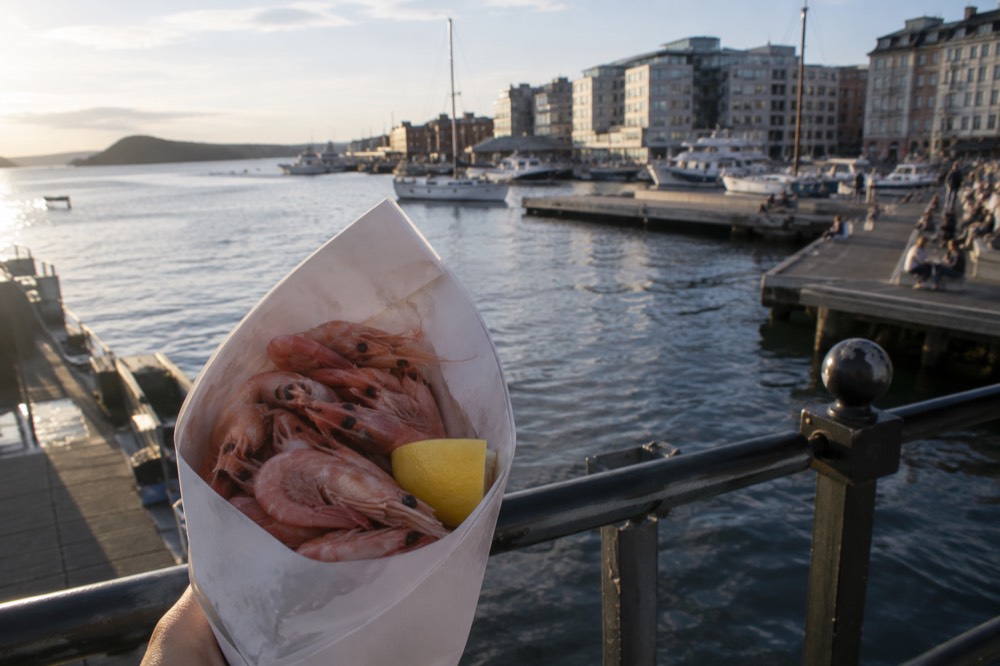
Shrimp season runs through summer, and the ritual around it is worth knowing: buy at the counter, sit on a pier or a bench facing the water, peel by hand, and drop the shells over the side or back into the bag. Norwegians treat this as a complete evening. The harbor piers at Aker Brygge and the quays east of City Hall are where the fish counters concentrate.
Beyond those two, the honest answer is that Oslo's street-food identity is international: the grill counters of Grønland, the takeaway windows of Grünerløkka and the rotating Mathallen stalls pull from the Middle East, South and East Asia, and the rest of Europe. The Norwegian content is the ingredients, and the seafood in particular. Our best restaurants in Oslo guide covers the sit-down end of the same food culture for anyone who wants one proper restaurant night alongside the stalls.
Can You Do a Street Food Day on a Budget?
Yes, and doing so is the standard advice for Oslo, not a compromise. Structure the day as one kiosk breakfast, one market-hall plate at lunch when the value is best, and one grill-counter dinner in Grønland, with the free sights, the Vigeland sculpture park and the Opera House roof, filling the gaps. Food is 33 percent above the EU average but the outdoors is free, so the cheapest good day in Oslo spends money only at the counters and nothing on attractions.
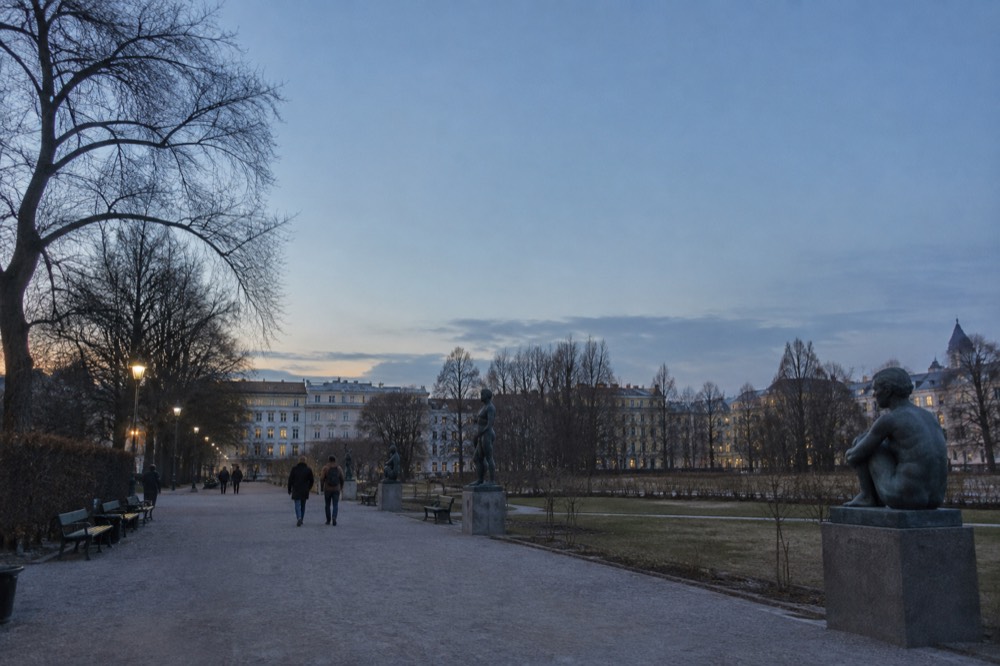
Vigeland Park is free, open 24 hours a day, all year, with no ticket, and holds more than 200 sculptures. The Opera House roof is also free to walk on. Between those two and the riverside walk along the Akerselva, a full day in Oslo costs nothing until you eat, which is the structural reason a street-food day works so well here. Our free things to do in Oslo guide lists the rest of the free layer.
| Budget day plan | Morning | Afternoon | Evening |
|---|---|---|---|
| Food stop | Kiosk pølse and coffee | Mathallen counter plate | Grønland grill dinner |
| Free filler | Opera House roof walk | Akerselva river path to Vulkan | Harbor-side bench at Aker Brygge |
| Total food spend | Lowest tier | Mid tier | Low to mid tier |
The one trap to avoid is drink. A beer with your street food can cost more than the food itself, given that alcohol and tobacco run at more than double the European average, and supermarkets stop selling beer at a fixed evening cut-off. Tap water, meanwhile, is excellent and free everywhere in Norway. Our Oslo on a budget guide goes deeper on the full cost picture, and our is Oslo expensive explainer has the itemized numbers.
Do Food Tours Cover the Street Food Scene?
Yes, and a guided food walk is the most efficient way to eat the city when you only have a day or two, because the guide's job is exactly the thing a visitor cannot do alone: know which stall is worth it this month. Oslo has three credible food-walk formats, a street-food-focused tour, a city-centre Norwegian food walk, and a Grünerløkka neighborhood food walk, each covering different ground. All three run around two and a half to three hours and include tastings.
The street-food tour is the closest match to this page's subject. The listing describes a three-hour walking tour built around Oslo's food stalls and cheap eats, and it carries a strong rating from a growing review base; the live listing shows the current price, rating and review count, which we do not retype here.
The Grünerløkka food culture walk is the neighborhood version: a couple of hours in the district this guide keeps pointing at, run by a local operator and rated well on a smaller review base. It is the better pick if you have already seen the center and want the east side explained while you eat it.
The city-centre Norwegian food walk takes a different angle again: three hours of Norwegian food traditions through the center, the strongest option for visitors whose priority is understanding what Norwegian food is rather than where the cheapest stall sits.
| Food walk | Format | Duration | Best for |
|---|---|---|---|
| Street-food walking tour | 3 hours | Multiple stalls, cheap-eats focus | First visit, budget priority |
| Grünerløkka food culture walk | About two and a half hours | One neighborhood, local operator | East side, second visit |
| City-centre Norwegian food walk | 3 hours | Norwegian traditions, center | Learning the cuisine |
When Is Street Food Season in Oslo?
Summer is the season, roughly May through September, when the outdoor markets run, the harbor shrimp counters are at their best and the city eats outside late into the evening light. From October the outdoor layer shuts down and the scene retreats indoors to Mathallen, the grill counters and the kiosks, all of which run year-round. The one month to plan around carefully is August, which is Oslo's wettest on the 1991 to 2020 normals at 103 mm, not November as most people assume.
The daylight matters as much as the rain. On 21 June Oslo gets 18 hours and 50 minutes of daylight, with the sun setting at 22:43 and the gap filled with deep twilight rather than true night; on 21 December it gets 5 hours 53 minutes, with sunrise at 09:18 and sunset at 15:11. A street-food day in June can stretch past 22:00 on a bench by the fjord. The same day in December has to fit between breakfast and mid-afternoon, which is why the indoor halls carry the winter. Our Oslo daylight hours guide has the full monthly table.
Temperature is the third variable. July's normal mean is a mild 17.7 °C, August 16.5, September 12.2. Outdoor eating is comfortable through September. By October, with a normal mean of 6.6 °C and 93 mm of rain, the pier-shrimp ritual is over and the market hall is the plan. Our best time to visit Oslo guide weighs all of this for the trip as a whole.
Is Street Food in Oslo Safe and Vegetarian-friendly?
Street food in Oslo is safe by any European standard: Norway's food hygiene regime is strict, stalls are inspected like restaurants, and tap water everywhere is excellent and free to drink. Vegetarian and vegan coverage is genuinely strong in the market halls and takeaway windows, weaker at the traditional kiosks where the pølse is the product, though most kiosks now stock a vegetarian sausage. The one dietary system that needs planning is alcohol-free and halal eating, which the Grønland counters handle well.
Norwegian tap water is among the cleanest in Europe and is free on request anywhere, so the default drink with street food costs nothing. Vegetarian coverage tracks the format: Mathallen and the Grünerløkka takeaway windows routinely carry vegetarian and vegan mains, while the classic pølsebod is built around meat, with a vegetarian sausage as the concession. Anyone with allergies should ask directly at each counter, as stall menus change frequently and printed allergen lists are not always current.
How Does Oslo Street Food Compare with a Restaurant Meal?
A street-food meal typically costs half to two-thirds of a comparable restaurant meal, and the gap comes almost entirely from service: you order at a counter, carry your own food and clear your own table, which removes the labor cost that Norwegian wage levels push high. What you lose is the seated evening and the kitchen's full range; what you gain is variety, speed and the ability to eat four different cuisines in one walk. Most visitors do best mixing both, stalls for lunch and one restaurant night.
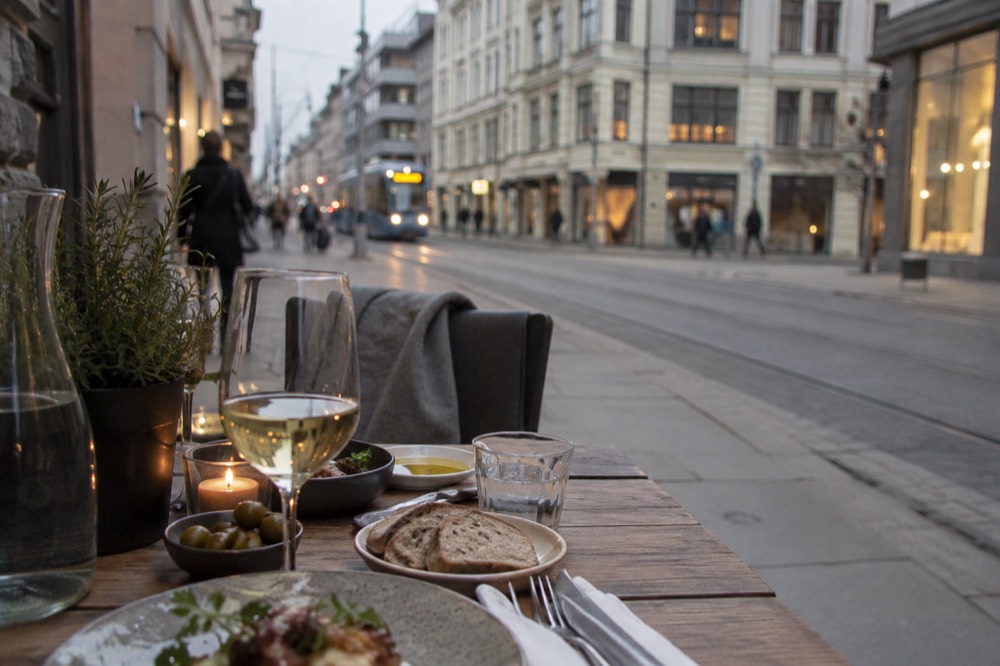
The restaurant end of Oslo food culture is worth one evening of any trip, and it is a genuinely strong scene for a city this size. Our where to eat in Oslo guide and the Oslo cheap eats guide sit alongside our restaurant guides for exactly that reason: the cheap-eats layer and the sit-down layer are complements, not rivals.
| Street food | Restaurant | |
|---|---|---|
| Cost for a full meal | Lower tier | Higher tier |
| Time needed | Minutes | One to two hours |
| Variety in one sitting | High, multiple stalls | One kitchen |
| Weather dependence | Partial, halls excepted | None |
| Best for | Lunch, walking days | Evening, groups |
One structural point worth knowing: because Norway is in the Schengen Area but not in the EU, and outside EU VAT, non-resident visitors can claim a VAT refund on qualifying purchases, though food consumed on the spot generally does not qualify. The currency everywhere is the Norwegian krone, and card payment is universal, so you never need cash for a kiosk.
Common Questions About Oslo Street Food
What is the best street food in Oslo?
The canonical three are the pølse with lompe from a kiosk, fresh shrimp bought at a harbor fish counter and eaten on the pier, and whatever the Mathallen stalls are plating that day. The pølse is the cheapest hot meal in the city, the shrimp is the most Norwegian ritual, and Mathallen is the best single destination for quality.
Is street food in Oslo cheap?
Cheap by Norwegian standards, not by European ones. Food prices in Norway run 33 percent above the EU average and no stall escapes that, but a street-food meal typically costs half to two-thirds of a restaurant meal, which makes it the cheapest credible way to eat a full meal in the city.
Where should I eat street food in Oslo?
Grünerløkka and the Vulkan area around Mathallen for the densest concentration, Grønland for the budget grill counters, and the Aker Brygge harbor stalls for the view at a premium. A first-time visitor should walk the Akerselva river strip between the Grünerløkka bridge and Vulkan, which links a kiosk, a market hall and several takeaway windows in twenty minutes.
Can you drink beer with street food in Oslo?
Not usually at the stall itself. Alcohol and tobacco cost more than double the European average, wine and spirits are sold only at Vinmonopolet, which closes Sundays and public holidays, and supermarkets stop selling beer at a fixed evening cut-off. Tap water, by contrast, is excellent and free everywhere.
Is a food tour in Oslo worth it?
For a short trip, yes: the guide's value is knowing which stall is worth it this month, which a visitor cannot know. Oslo has three credible formats, a street-food walk, a Grünerløkka neighborhood food walk and a city-centre Norwegian food walk, each two and a half to three hours with tastings included.