3 Days in Oslo: The Perfect Itinerary
Three days is the sweet spot for Oslo: long enough for the museums, the fjord and at least two neighborhoods, short enough that you never have to rush. Here is how to spend them.
Short answer
Three days in Oslo is enough for the city center, the Bygdøy museums, a fjord cruise and one or two neighborhoods like Grünerløkka. Budget roughly 580 to 995 NOK for an Oslo Pass depending on length, and expect museums at 180 to 280 NOK each if you pay individually. Daylight and season matter more here than in most capitals.
Three days is the number that keeps coming up when travelers describe a first Oslo trip that felt complete rather than crammed. The city is compact, the public transport is fast, and the single biggest constraint is not distance but opening hours and daylight, which swing from 5 h 53 m in late December to 18 h 50 m in late June. A winter three-day plan and a summer one are genuinely different documents.
This itinerary assumes you are starting from zero: no Oslo Pass yet, no museum tickets, no strong opinion about fjords. It uses real, current prices in Norwegian kroner, because that is what you will actually pay at the counter, and it flags the two or three decisions that are worth making before you arrive. If you want the full list of options first, start with things to do in Oslo and come back here for the sequencing.
Is 3 Days in Oslo Enough?
Three days is enough to see Oslo properly without rushing, provided you group the city sensibly: center and waterfront on day one, the Bygdøy museum peninsula on day two, and neighborhoods plus the fjord or the islands on day three. What three days does not cover is the surrounding region, so a fjord day trip beyond the Oslofjord, Lillehammer or the Bergen railway all need a fourth day. Most visitors who stay three days leave feeling they saw the city rather than a blur of it.
The reason grouping matters is geography. Oslo's headline sights sit in three clusters that are each walkable internally but awkwardly spaced from each other: the center (Opera House, Karl Johans gate, Akershus Fortress, the National Museum), the Bygdøy peninsula (Fram, Kon-Tiki, Norsk Folkemuseum, the Maritime Museum), and the hill-and-forest layer above the city (Holmenkollen, Nordmarka). Spread randomly across three days, that geometry costs you an extra hour of transport every day. Clustered, it costs almost nothing.
Three days also happens to be the point where the Oslo Pass maths starts working in your favor, which we break down in the cost section below. And if you are deciding between two and three days, the honest difference is the second cluster: two days covers the center well, and the third day is what buys you Bygdøy plus the water. Our 2 days in Oslo guide shows exactly what a tighter version looks like.
Day 1: The Center, the Waterfront and the First View
Spend day one entirely on foot between the Opera House, the harbor, Akershus Fortress and Karl Johans gate, finishing at Aker Brygge or the Barcode district. Everything on this list is within a 25 minute walk of everything else, almost all of it is free to see from the outside, and the one paid stop worth booking is the National Museum if you want The Scream on day one. This is the day that costs you almost nothing and gives you the city's whole shape.
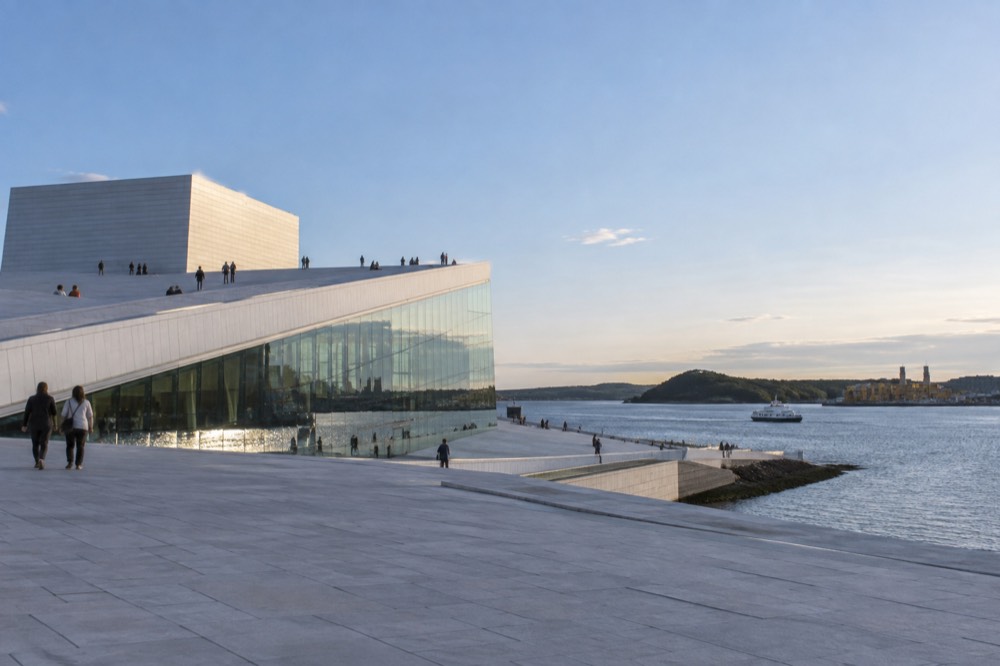
Start at the Opera House, and specifically on its roof. The sloping marble roof is public space, free to walk, and gives you the single best orientation view in the city: the Oslofjord, the islands, Aker Brygge and the fortress in one sweep. From there it is a flat ten minute walk along the water to Akershus Fortress, whose grounds are free to wander; the castle interior and the Resistance Museum inside are ticketed, and the fortress grounds themselves are the better part on a first visit.
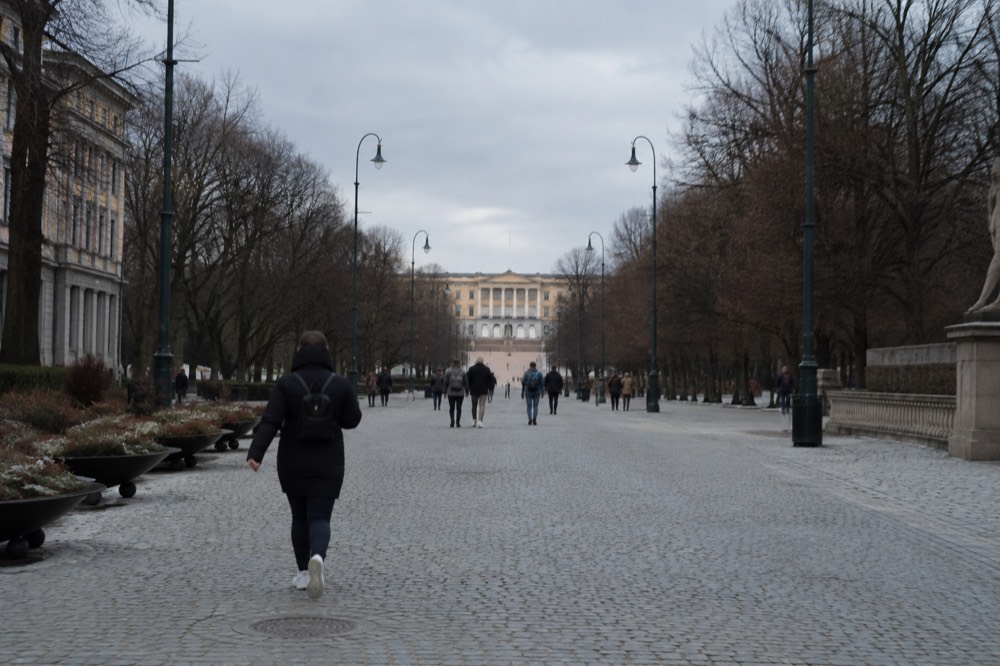
Work inland to Karl Johans gate, the processional street running from the Central Station to the Royal Palace. The palace park behind it is public and free. Then drop back toward the water for the second half of the day: Aker Brygge on the west side of the harbor for the food hall and the waterfront, and Tjuvholmen just beyond it, where the Astrup Fearnley museum sits among the fjord-facing architecture. Our Aker Brygge guide covers that stretch in detail.
If the weather is good, end the day with the water itself. The silent electric fjord cruise runs 90 minutes from a pier minutes from the Opera House, and it is the single best-reviewed activity in the city, which makes it a reasonable day-one splurge rather than something to save. If the weather is bad, swap in the National Museum or MUNCH instead; both are covered later in this itinerary.
The hop-on hop-off bus earns its place on exactly this day for one reason: the day-one cluster is walkable, but the stops you will want on days two and three, Holmenkollen and Vigeland Park, sit at the top of a hill and beyond it. A 24 or 48 hour ticket lets you ride the whole loop once to see the city's shape, then use it as transport for the outliers. The full-day bus plus fjord combo is the alternative if you would rather have everything, including the cruise, organized in one booking.
Day 2: Bygdøy, the Museum Peninsula
Day two belongs to Bygdøy, the peninsula southwest of the center that holds the Fram Museum, the Kon-Tiki Museum, the Norwegian Maritime Museum and Norsk Folkemuseum, all within a walkable cluster. Getting there is half the decision: in season the ferry from Rådhusbrygge 3 runs every 20 minutes and is included with the Oslo Pass, and out of season, bus 30 runs year-round on an ordinary Ruter ticket. Budget the whole day; four museums plus travel is a full one.
The key transport fact, and the one most guides get wrong: the Bygdøy ferry and the Oslofjord island ferries are two different systems. The Bygdøy ferry is run by a private operator, Ruter tickets are not valid on it, but the Oslo Pass is. It runs seasonally, from mid-March to early October in 2026, departing Rådhusbrygge 3 and calling at Dronningen (for Norsk Folkemuseum) then Bygdøynes (for Fram, Kon-Tiki and the Maritime Museum). Outside that window, bus 30 from the center covers the peninsula year-round.
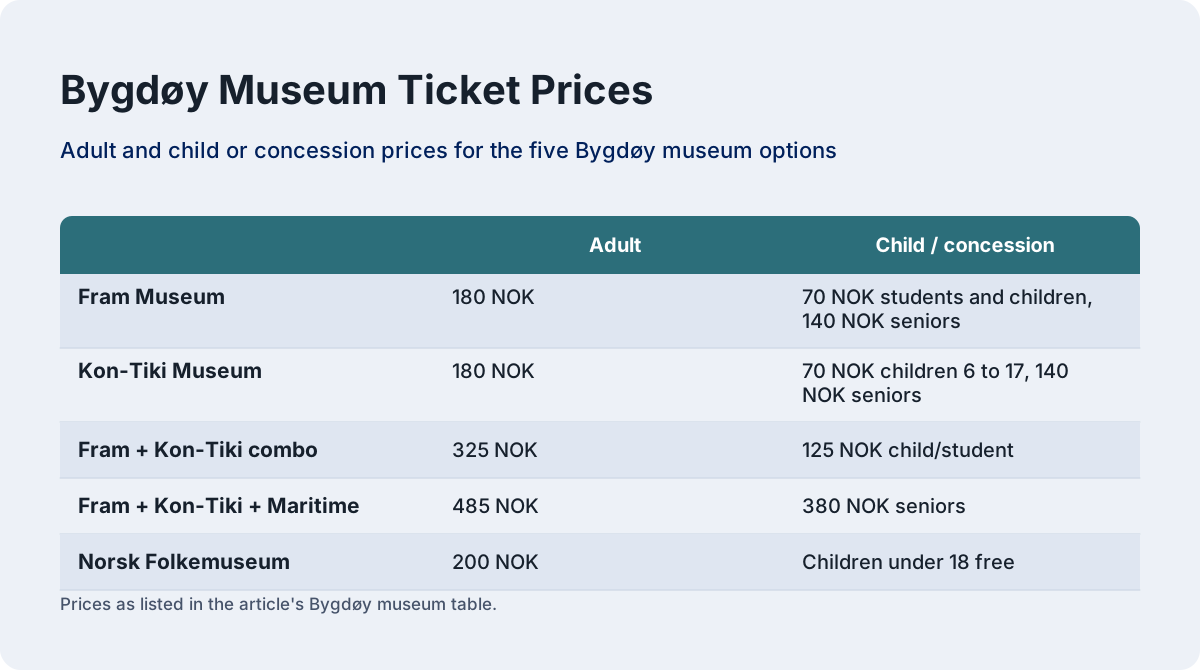
The museum cluster at Bygdøynes is genuinely walkable: Fram and Kon-Tiki are adjacent, and the Maritime Museum sits with them. Fram, the polar ship museum, charges 180 NOK adult; Kon-Tiki charges 180 NOK adult with children 6 to 17 at 70 NOK; and the two museums sell a combined ticket at 325 NOK, or 485 NOK adding the Maritime Museum. Norsk Folkemuseum, at the Dronningen end, is 200 NOK with children under 18 free, and it is where the Gol stave church stands.
| Museum (Bygdøy) | Adult | Child / concession | Notes |
|---|---|---|---|
| Fram Museum | 180 NOK | 70 NOK students and children, 140 NOK seniors | Oct-Apr 10–17, May-Sep 09:30–18 |
| Kon-Tiki Museum | 180 NOK | 70 NOK children 6–17, 140 NOK seniors | Family ticket 2+5: 400 NOK |
| Fram + Kon-Tiki combo | 325 NOK | 125 NOK child/student | Sold at both museums |
| Fram + Kon-Tiki + Maritime | 485 NOK | 380 NOK seniors | The full peninsula ticket |
| Norsk Folkemuseum | 200 NOK | Children 0–17 free | Stave church, open-air grounds |
One thing you cannot do on Bygdøy in 2026: see the Viking ships. The former Viking Ship Museum closed in 2021 and will reopen as the Museum of the Viking Age in 2027, per the museum's own statement, with no month attached. Viking-age objects are viewable at the Historical Museum in the center meanwhile, and Viking Planet, a VR-based venue downtown, is the bookable substitute. Our Museum of the Viking Age page tracks the reopening.
If four museums sounds like too much of one day, the honest cut is Fram plus Kon-Tiki, which pair naturally as Norway's two great exploration stories, plus a walk between the piers. Save Norsk Folkemuseum for a morning when you have more energy for its open-air grounds, or fold it into a half-day with the Bygdøy guide.
Day 3: Neighborhoods, Views and the Fjord Islands
Day three is the day to leave the checklist behind: pick one hill viewpoint, one neighborhood and, in summer, one island in the Oslofjord. Holmenkollen and Vigeland Park make the classic morning pairing, reachable on metro line 1 or on the hop-on hop-off loop, and Grünerløkka east of the center is the neighborhood that rewards an unhurried afternoon. In summer, the public ferries to Hovedøya or Langøyene run on an ordinary Ruter ticket from Aker brygge and turn the day into a swim.
Holmenkollen needs 15 to 20 minutes on the metro from the center, and the ski jump with its museum and tower is the payoff. There is no standalone jump ticket sold through any booking platform, so the honest routes are the museum's own counter or the half-day combination tour that bundles Holmenkollen with Vigeland Park, which is also the only reliable car-free way to do both in one morning. Vigeland Park itself, the sculpture park in Frogner, is free and open 24 hours a day, every day of the year, with over 200 sculptures and no ticket at all.
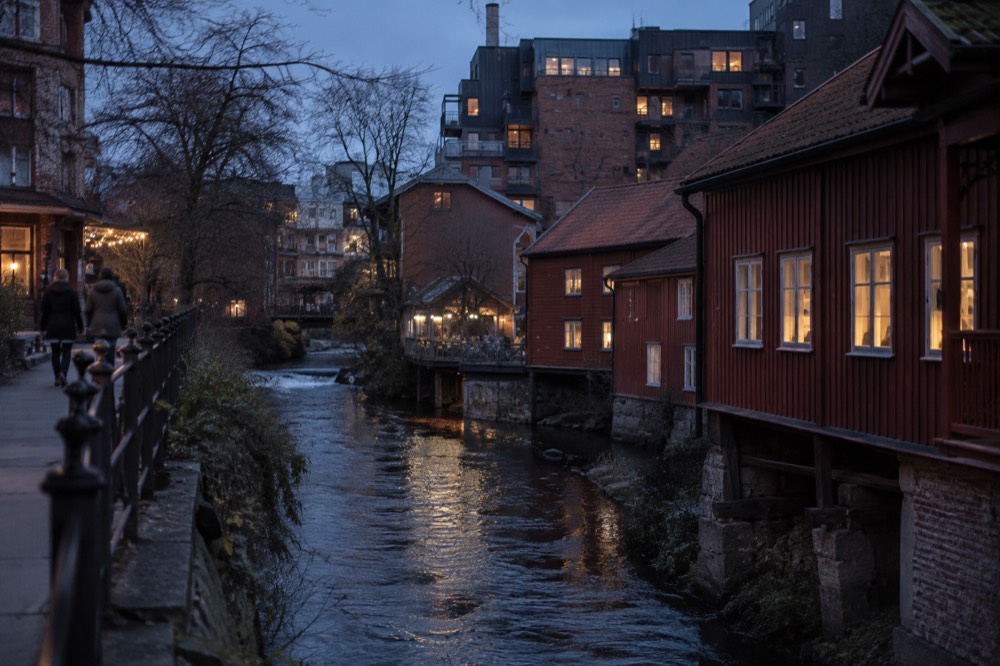
Grünerløkka, across the Akerselva river, is Oslo's former workers' district turned café-and-vintage quarter, and the river walk down from it toward the center is one of the city's better free hours. The Grünerløkka guide maps it. If you would rather eat your way through it than walk it, the neighborhood food walk is the one strong bookable product there.
In summer, the islands change the day entirely. The B1 ferry circles Hovedøya, Gressholmen and the others from Aker brygge on an ordinary Ruter zone 1 ticket, with the B2 to Langøyene, the swimming and camping island, running in the warmer months. Hovedøya's ruined Cistercian abbey is a 15 minute crossing. Water temperatures in July and August typically sit at 15 to 20 °C, which is refreshing rather than warm. For a fuller treatment of the boats, see the Oslofjord cruise guide.
If a third day in winter rather than summer, the islands drop off and the forest comes on: the torchlit forest walk with a campfire, or snowshoeing in Nordmarka, both reachable from the city without a car. Metro line 1 to Frognerseteren puts you at the trailhead of the groomed Nordmarka network, which Skiforeningen maintains and reports on live.
The bus earns its second mention here because day three is the day it saves the most time: Holmenkollen, Vigeland and a return to the center is an awkward triangle on public transport with waiting, and a straight loop with commentary in between. The listing offers 24 and 48 hour options, so a ticket bought on day one can still be running on day three.
How Much Does 3 Days in Oslo Cost?
A realistic three days in Oslo is driven mostly by museums, one or two paid activities and restaurant meals, and the Oslo Pass at 580 NOK for 24 hours or 845 NOK for 48 is the main lever: it covers over 30 museums plus all public transport in zones 1 through 4N, including the Vy airport train, and it pays for itself at roughly three museums plus transport per day. Norway is the sixth most expensive country in Europe, so the budget concentrates in restaurants and drinking out.
Norway is the sixth most expensive country in Europe on Statistics Norway's 2025 price-level comparison, with household prices 28.6 percent above the EU average, food 33 percent above, and alcohol and tobacco more than double the European average. What that means for a three-day budget is specific: the pain concentrates in restaurants and any drinking out, while museums, transport and the outdoors, which are mostly free, are not unusually expensive by capital-city standards. Other pages covering the same trip are gathered on Oslo Travel Guide. Other pages covering the same trip are gathered on Oslo Travel Guide.
| Item | Cost | Notes |
|---|---|---|
| Oslo Pass 24h / 48h / 72h | 580 / 845 / 995 NOK | 30+ museums, all Ruter zones incl. airport Vy train |
| MUNCH | 280 NOK | 200 NOK after 18:00, under 25s 100 NOK |
| National Museum | Around 220 NOK | Under 25s 100 NOK, under 18s free |
| Bygdøy museums (individually) | 180–200 NOK each | Combos from 325 NOK |
| Fjord cruise (90 min electric) | From $46.29 | Best-reviewed activity in the city |
| Vigeland Park | Free | Open 24 hours, all year |
| Opera House roof | Free | Public space, no ticket |
The pass arithmetic for this exact itinerary: day two's Bygdøy museums alone total 560 NOK bought separately, against a 580 NOK 24-hour pass that also carries the ferry out and the transport back. Add the Bygdøy ferry inclusion, which a Ruter ticket does not cover, and day two is the strongest pass day by far. The is the Oslo Pass worth it guide runs the full break-even table.
Two costs worth planning around rather than discovering. Alcohol: Vinmonopolet, the state monopoly, is the only place selling wine and spirits, it closes on Sundays and public holidays and early on Saturdays, and supermarket beer stops at 4.7 percent ABV with an evening cutoff. And the airport run: Flytoget is 268 NOK one-way, while the Vy regional train covers the same distance in about 23 minutes for roughly half that, and the Oslo Pass covers the Vy train outright. The Flytoget vs Vy comparison has the detail.
When Should Each Day Happen? Season and Daylight
The season decides your day three more than any other factor: summer gives you 18 hours of daylight and the island ferries, winter gives you six and the forest, and the same itinerary reads as two different trips. Late June has sunrise at 03:53 and sunset at 22:43, while late December runs 09:18 to 15:11. There is no midnight sun in Oslo, but summer evenings stay light well past 23:00.
What that means practically: in summer, this itinerary has room for a fourth half-activity every day, because the evening stays usable until midnight. In winter, day two's museum day should be planned around the fact that it is dark before 16:00, and the outdoor stops, the Opera House roof, the fortress grounds, Vigeland, need to be morning stops. The evening myths-and-legends walking tour exists precisely for those dark winter afternoons, and it is one of the better-reviewed products in the city.
| Month | Normal mean temp | Normal precip | Daylight on the 15th |
|---|---|---|---|
| January | −2.3 °C | 58 mm | 6 h 45 m |
| March | 1.3 °C | 41 mm | 11 h 45 m |
| June | 15.3 °C | 80 mm | 17 h 08 m |
| July | 17.7 °C | 87 mm | 18 h 02 m |
| August | 16.5 °C | 103 mm | 15 h 38 m |
| October | 6.6 °C | 93 mm | 10 h 13 m |
One counterintuitive planning fact: August is Oslo's wettest month on the official 1991 to 2020 normals, at 103 mm, not November or any of the winter months. July is the warmest at a 17.7 °C normal mean, which is mild rather than hot. The best time to visit Oslo guide and the weather by month breakdown carry the full table.
The 90-minute electric cruise is the one activity that works in every season on this itinerary, because the boats are enclosed and heated in winter and open-decked in summer, and the fjord reads differently in each. With 6,664 reviews and a 4.5 rating it is the most-reviewed product in the city, which is why it appears on day one of this plan rather than as an afterthought.
How Do You Get Around During 3 Days in Oslo?
You get around Oslo on foot and on the Ruter network, and you rarely need anything else: the T-bane metro, trams, buses and the island ferries share one ticket system across zones, with central Oslo and the entire metro network inside zone 1. Buy in the Ruter app, not on board, since on-board purchase is more expensive, and let the journey planner count zones rather than doing it by hand. A car is a liability for all three days of this itinerary.
The zone detail that matters for this plan: everything in it, except the airport, sits inside zone 1. Gardermoen airport is zone 4N, and a multi-zone Ruter ticket covers the Vy trains that serve it, which is the mechanism behind the cheap airport transfer. The 30-day zone 1 pass fell from 805 to 655 NOK in May 2026, a cut worth knowing about only if you are staying longer than three days.
| Journey | Best option | Cost |
|---|---|---|
| Airport to center | Vy train, ~23 min | ~134 NOK, or covered by Oslo Pass |
| Airport to center | Flytoget, ~20 min | 268 NOK |
| Center to Bygdøy (in season) | Ferry from Rådhusbrygge 3 | ~70 NOK one-way, free with Oslo Pass |
| Center to Bygdøy (off season) | Bus 30 | Ordinary Ruter ticket |
| Center to the islands | B1/B2 ferry from Aker brygge | Ordinary Ruter zone 1 ticket |
| Center to Holmenkollen | Metro line 1 | Ordinary Ruter ticket |
The two piers are not interchangeable, and mixing them up is the most common transport mistake in the city: the Bygdøy ferry leaves Rådhusbrygge 3 and takes no Ruter ticket, while the island ferries leave Aker brygge and take nothing but. The getting around Oslo guide and the Oslo ferries page cover both systems in full.
What Would You Change for a Shorter or Longer Stay?
With two days, cut day three's neighborhood and keep the Bygdøy cluster, which is the part of Oslo hardest to see elsewhere; with four or five, add a fjord day trip toward Flåm or a forest morning in Nordmarka. The sequence itself holds at any length, because the clusters do not re-sort, only the pace changes. Three days is the shortest version that includes the water as well as the streets.
The two-day cut is the one most people actually face, and the right sacrifice is the islands and Grünerløkka, not the museums. The one day in Oslo plan compresses it further to a single, brutal, doable day. Going the other way, the 4 days in Oslo and 5 days in Oslo versions spend the extra time on the region: the Norway-in-a-Nutshell route toward the Sognefjord, or the hiking around the city that needs a whole morning to itself.

Common Questions About 3 Days in Oslo
Is 3 days in Oslo enough?
Yes, for the city itself. Three days covers the center, the Bygdøy museums, one hill viewpoint and either the fjord islands in summer or the forest in winter. It is not enough to add regional trips like the Bergen railway or Flåm, which each need a full extra day.
What is the best order for the days?
Center first, Bygdøy second, neighborhoods and water third. That order front-loads the free orientation day, puts the museum-heavy day second while energy is high, and leaves the flexible day last so you can swap it for whatever the weather allows.
Is the Oslo Pass worth it for 3 days?
Usually yes. The 48-hour pass at 845 NOK covers over 30 museums plus all transport in zones 1 through 4N, including the Vy airport train and the Bygdøy ferry, which no ordinary Ruter ticket covers. Day two's museums alone total 560 NOK bought individually.
What should I skip if I only have 3 days in Oslo in winter?
Skip the islands, since the swimming season is over and the B2 ferry is summer-only, and put the time into the forest instead: Nordmarka's groomed trails are reachable on metro line 1, and a torchlit walk or snowshoe tour turns the short daylight into the point of the day.
Do I need to book anything in advance?
Book the fjord cruise and any combination bus tour in advance in summer, when departures fill, and the popular small-group walks. Museums generally sell at the door, and the Oslo Pass is bought on arrival or at the Visitor Centre. Nothing on day one of this itinerary needs a booking at all.
Can you see the Viking ships in Oslo?
Not at present. The former Viking Ship Museum closed in 2021 and reopens as the Museum of the Viking Age in 2027, per the museum's own statement. Viking-age objects are on display at the Historical Museum in the center, and Viking Planet downtown is the bookable VR alternative.