Skiing Near Oslo: Slopes, Trails and Toboggans You Can Reach by Metro
Oslo is the only European capital where a ski hill, a groomed forest trail network and a toboggan run all sit on the metro map. This guide covers the slopes at Tryvann, the Nordmarka trail system, the season, the gear and the cheapest ways up.
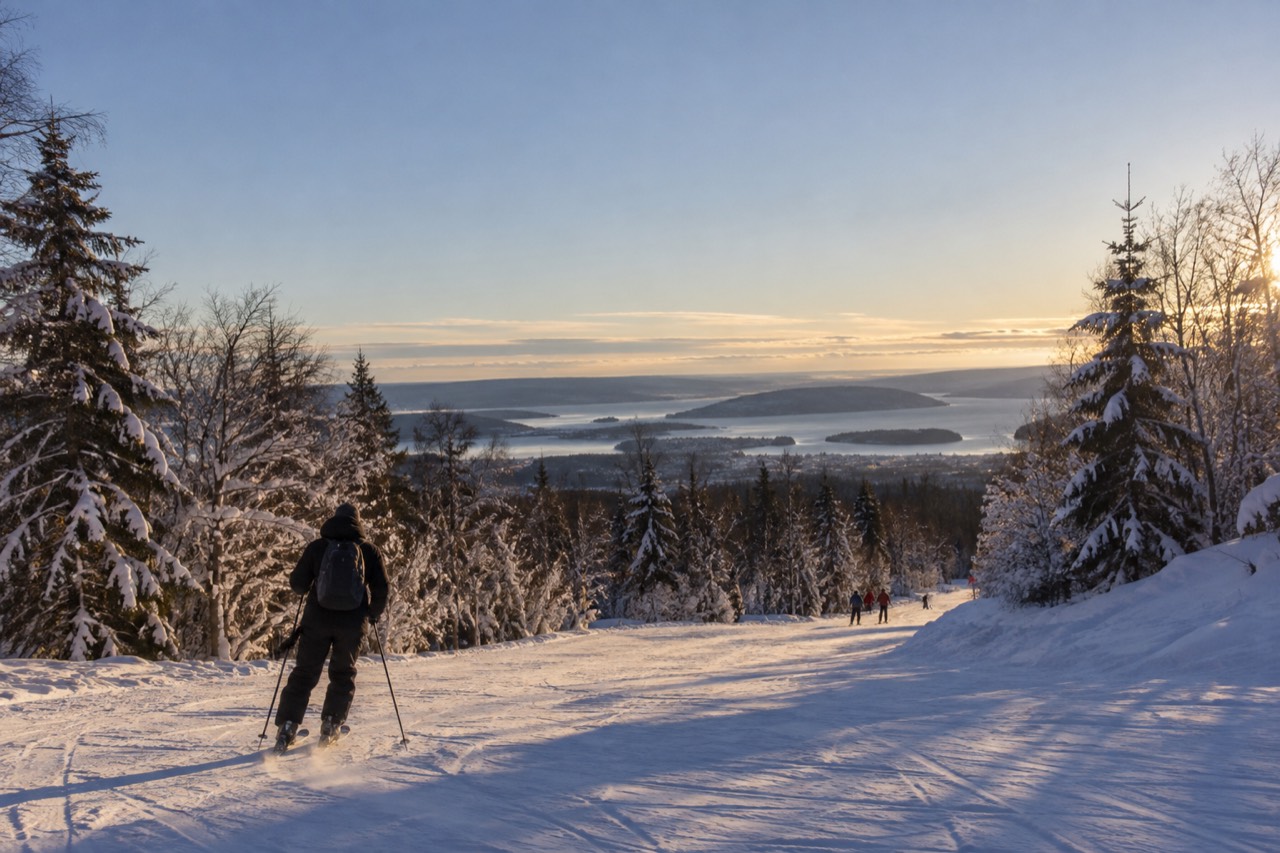
Short answer
You can ski inside Oslo itself. Oslo Vinterpark at Tryvann sits at the top of metro Line 1 with lifts and slopes for all levels, Nordmarka holds a groomed cross-country network starting at Frognerseteren and Sognsvann, and the Korketrekkeren toboggan run shares the same metro line. No car is needed for any of them.
Few capital cities put a working ski resort on a metro line. Oslo does. The T-bane runs from the city center up into Holmenkollen and beyond, and at the top of Line 1 you can step off the train, click into skis and be on a lift within minutes. That single fact changes what a winter city break here can be: no rental car, no mountain transfer, no lost day getting to the snow. Planning facts like this one are what Oslo Travel Guide exists to document, and skiing is the clearest example of the city working as advertised.
Cross-country is the deeper story. Nordmarka, the forest that begins where the metro ends, holds a trail network groomed by Skiforeningen, the Norwegian ski association, with live condition reports published on its own site. Downhill at Oslo Vinterpark, tobogganing on the Korketrekkeren, and a learn-to-ski product that fits in a half-day complete the picture. This page covers all four, plus season, gear and transport, with everything reachable on an ordinary ticket.
Can You Actually Ski in Oslo Without Leaving the City?
Yes. Oslo is one of very few capitals where skiing happens inside the city limits, not outside them. Oslo Vinterpark at Tryvann is a lift-served downhill area at the top of metro Line 1, roughly half an hour from the center. The Nordmarka forest above it carries a groomed cross-country network with entry points at Frognerseteren and Sognsvann, and the Korketrekkeren toboggan run shares the same metro line. None of it needs a car, and all of it rides on a standard Ruter ticket.
The geography explains it. Oslo rises from sea level at the Oslofjord to well over 400 meters at Holmenkollen and higher again into Nordmarka, and the forest is public land. Winter settles early at that elevation even when the city streets are bare, which is why Osloians treat a February Saturday on skis as a normal metro commute rather than a trip. The Skiforeningen association grooms the trails and publishes snow-depth and condition reports, so you can check what is skiable before you leave the hotel.
This is also the cultural heart of the sport. Norwegians will tell you, without much prompting, that modern skiing was developed here, and the Holmenkollen ski jump and its museum stand as a monument to that claim. Skiing near Oslo is not a novelty bolted onto a city break. It is the thing a large share of the local population does every weekend from December to March, and the infrastructure reflects it.
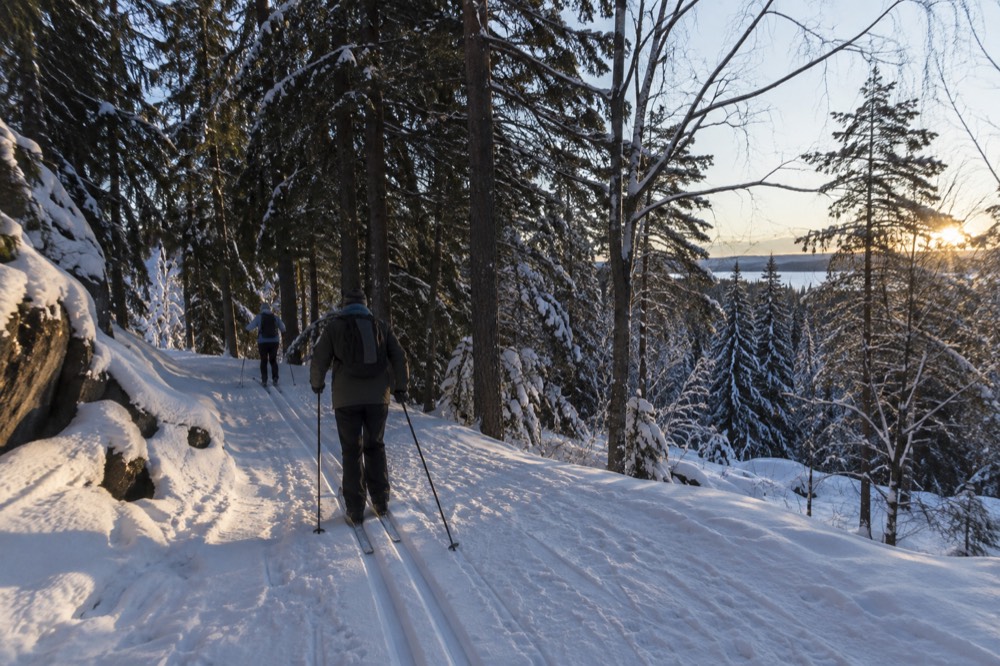
Where Do Beginners Learn to Ski Near Oslo?
Beginners have two honest routes. The first is Oslo Vinterpark at Tryvann, which has dedicated novice slopes and a ski school, reachable directly by metro Line 1. The second is a guided learn-to-ski experience, a half-day product with instruction and gear handled for you, built precisely for visitors who have never been on skis. Both work for adults and children, and neither requires you to drive anywhere or work out equipment rental on your own.
If you want the mountain to teach you, Tryvann is the answer. The resort publishes its lift-pass prices per season, so check the operator's own site for current day passes before you go; what is fixed is the access, with Line 1 stopping at Vinterbakken and the top station at Frognerseteren a short walk from the trail network. Novice terrain sits at the bottom of the hill, so a nervous first-timer never has to ride a lift to start.
If you would rather have a guide from the first minute, the learn-to-ski experience is the only product of its kind on the city's tour roster: a half-day session where instruction and equipment are part of the package. Oslo is, unusually for a European capital, a place where learning to ski can be a morning activity and the MUNCH museum an afternoon one. The listing carries the current price and a rating built from real guest reviews, and it is the product this site recommends as the default first ski for a visitor.
The trio above is deliberate. The learn-to-ski experience is the pick for winter; the silent electric fjord cruise and the wooden sailing-ship cruise are the two fjord products that fill the rest of an Oslo itinerary, and both run in ways that pair well with a cold day on skis. Booking one morning of instruction and one afternoon on the water is the shape of a very good winter day in this city.
The internal guide to winter in Oslo covers the rest of the cold-season program, including the museum days and sauna culture that fill the hours when the slopes close.
What Is Oslo Vinterpark at Tryvann?
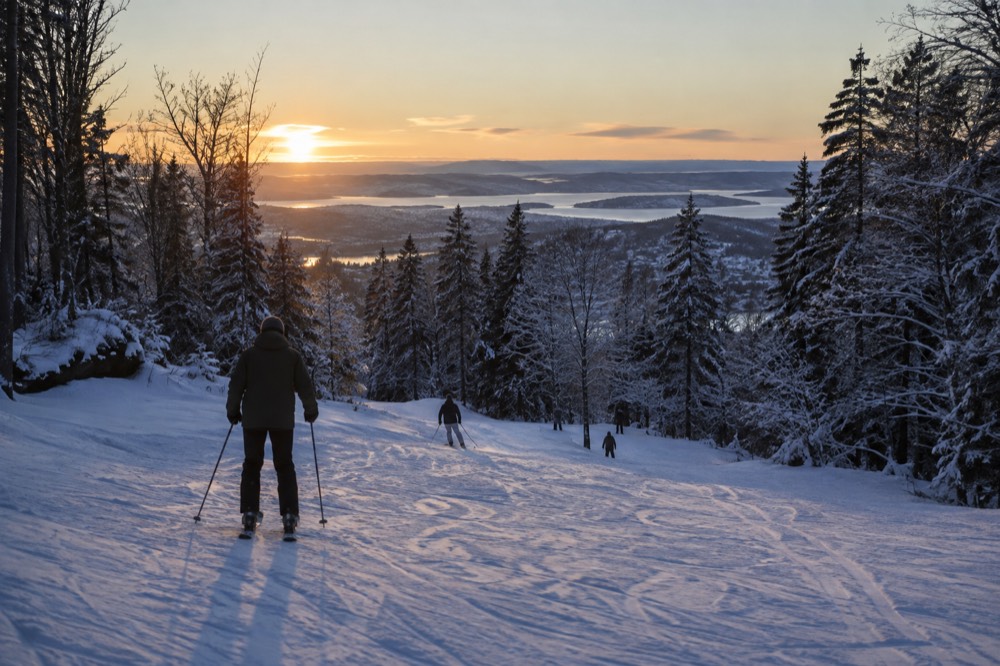
Oslo Vinterpark at Tryvann is the city's downhill area, sitting at the top of the Holmenkollen metro line inside the Oslo city limits. It offers lift-served slopes for beginners through advanced skiers, a terrain park, night skiing on floodlit runs and on-site rental. Lift passes are priced per season by the operator, so the current figure belongs on the resort's own site rather than in a guide.
The hill is modest by Alpine standards and that is the point. What you are buying is not vertical meters, it is convenience: a genuine ski resort on a public transport line, open through the week, with floodlights that extend the day well past the December sunset. The terrain park is well regarded locally, and the slope mix includes enough green and blue terrain that a family can share one lift pass and still ski at different levels.
| What | Where | How to get there | Best for |
|---|---|---|---|
| Oslo Vinterpark downhill | Tryvann, top of Holmenkollen hill | T-bane Line 1, Vinterbakken stop | Beginners, families, park skiers |
| Night skiing | Floodlit runs at Tryvann | Same, evenings | After-work and after-sightseeing laps |
| Ski rental | On site at Vinterpark | Included in resort facilities | Visitors without gear |
| Toboggan run | Korketrekkeren, from Frognerseteren | T-bane Line 1, Frognerseteren stop | Non-skiers and children |
Check the resort's live status before you set out. Conditions at the top of the hill and conditions downtown can be two different weathers, and the Vinterpark site publishes slope and lift status. The metro ride itself, roughly half an hour from the Nationaltheatret area, is the warm-up: the train climbs through residential Holmenkollen into pine forest, and you can watch the snow line arrive through the window.
One caution worth stating plainly. A standalone ski jump museum ticket at Holmenkollen does not exist as a bookable product on its own, and ski jump access works best as part of a sightseeing combination; the Holmenkollen area guide covers that decision separately. For skiing itself, Tryvann is the destination and the metro is the transport.
Where Does Cross-Country Skiing in Nordmarka Start?
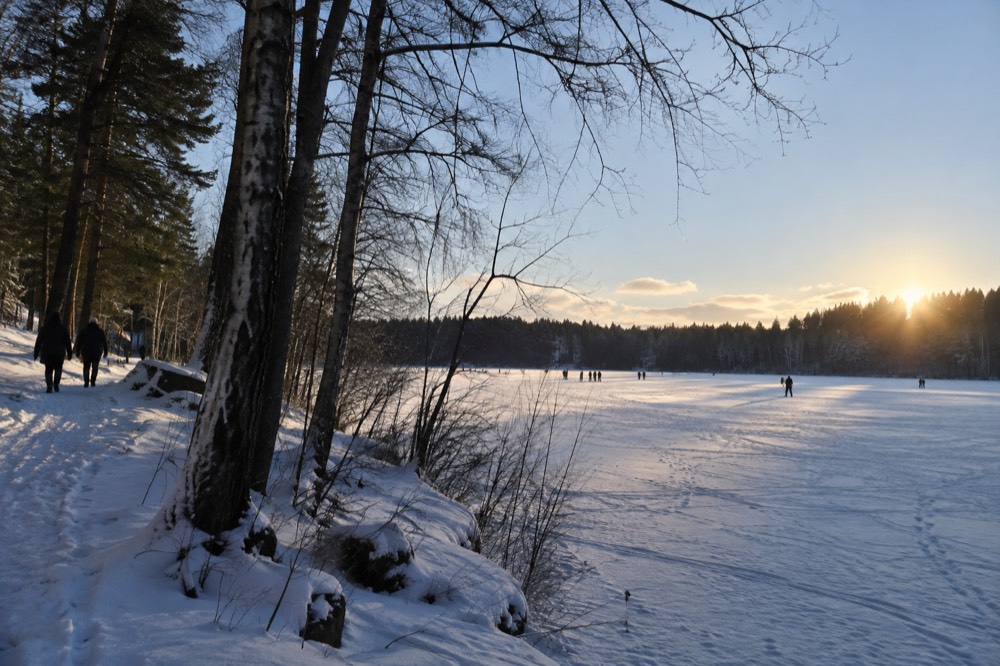
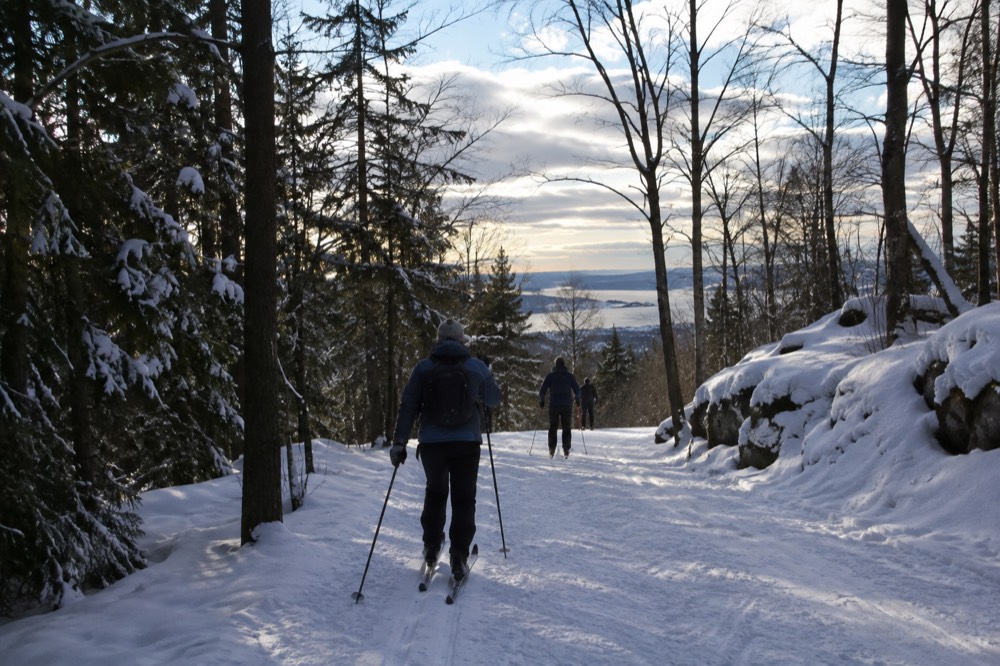
Nordmarka, the protected forest that begins above Holmenkollen, is the cross-country heart of skiing near Oslo. The main car-free entry points are Frognerseteren at the end of metro Line 1 and Sognsvann at the end of Line 5, both of which put you directly onto groomed trails. Skiforeningen maintains the network and publishes live trail and snow-depth reports, so you can see what has been groomed that morning before choosing your start point.
Frognerseteren is the classic start. The station sits at the top of the hill, the trails leave from beside it, and the famous restaurant there is where half of Oslo ends up after a loop. Sognsvann, a lake at the end of Line 5, is the flatter, friendlier alternative, ideal for a first outing on narrow skis, and it doubles as the trailhead for the lake circuits described in the Sognsvann guide. Both stations hold equipment lockers and waxing space, a Norwegian practicality that visitors tend to find startling the first time.
| Entry point | Metro line | Character | Notes |
|---|---|---|---|
| Frognerseteren | Line 1, terminus | High, hilly, classic Nordmarka loops | Restaurant at the station |
| Sognsvann | Line 5, terminus | Flat lakeside circuits, beginner-friendly | Popular with families |
| Holmenkollen | Line 1 | Links up toward the trails | Ski jump and museum here |
| Østhorn / Vettakollen | Line 1 | Lower, shorter forest loops | Good when upper trails are icy |
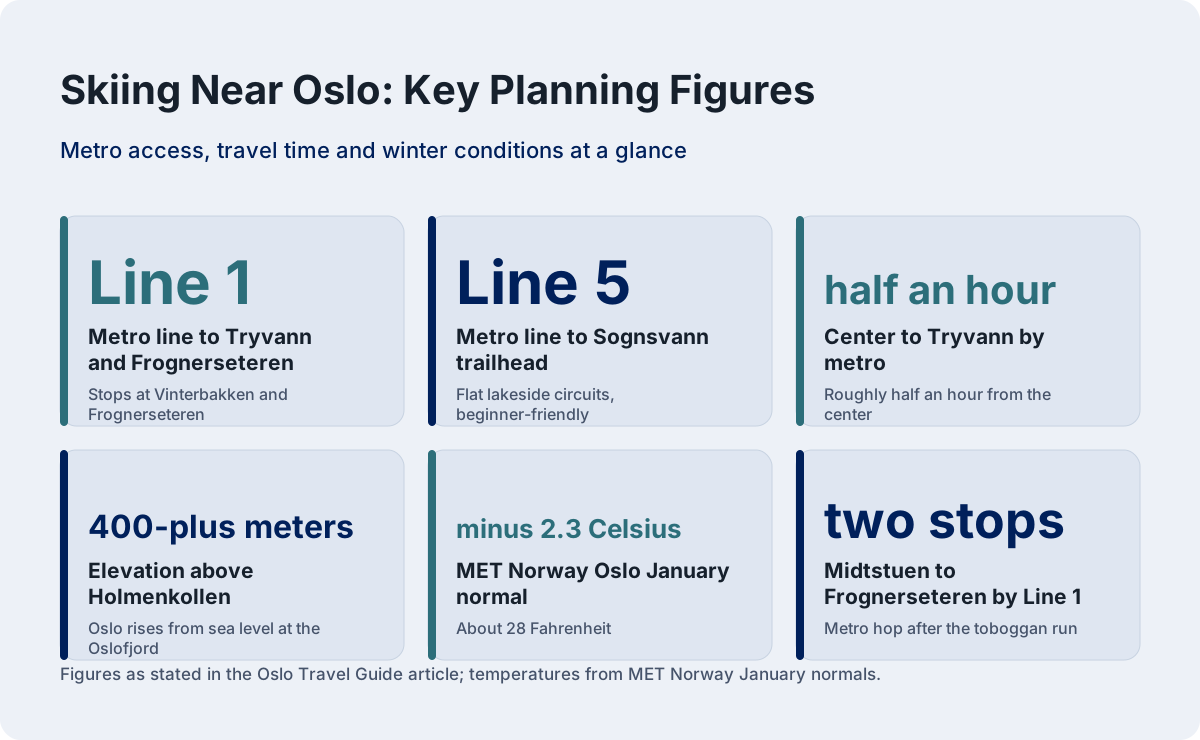
The infographic above is the planning fact most skiers miss. Late December gives you under six hours of daylight, so the floodlit sections of the network and the evening lifts at Tryvann are not extras, they are how the city skis in the darkest weeks. By mid-March the days stretch past twelve hours and the season is usually still running.
What Is the Korketrekkeren Toboggan Run?
The Korketrekkeren is a toboggan run that descends from Frognerseteren through the forest toward Midtstuen, on the same metro Line 1 as the ski areas. It is one of the few major toboggan runs in the world reachable by public transport, and it is generally free or low-cost to use, with sleds rentable near the top. You ride the metro up, toboggan down, and repeat until your legs object.
The run follows a prepared, banked course and it is fast enough that adults take it seriously, which is the fun of it. The classic pattern is exactly the one the locals use: metro to Frognerseteren, drag the sled a few meters to the start, ride down to Midtstuen, and hop back on Line 1 two stops down the same line. It works for children, for teenagers and for adults who have decided skiing is not their sport, and it is covered in more detail in the winter day trips roundup.
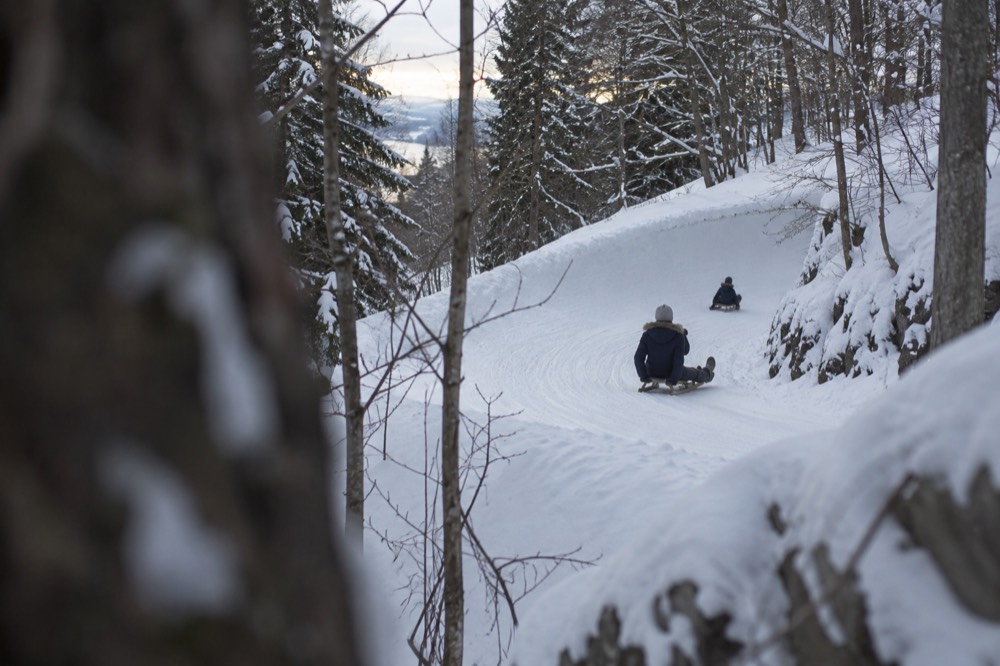
Confirm the snow base before you go. The run needs a groomed surface, and in a thin-snow December it can open late; the live reports that cover Nordmarka's trails also tell you whether the toboggan course is running. Sleds and gear hire operate at the top on a commercial basis, and the safest assumption is cash-free card payment, as everywhere in Norway.
What Should You Wear and Pack for a Ski Day in Oslo?
Dress for a Norwegian winter day in the hills, not for a resort vacation: layered clothing, windproof outer layers, proper gloves and a hat, and solid footwear if you are walking rather than skiing. Temperatures in the hills sit below the city's street reading, MET Norway's January normal for Oslo is minus 2.3 Celsius (about 28 Fahrenheit), and wind on exposed Nordmarka trails can drop the felt temperature sharply. Sunglasses and sunscreen matter, snow glare is real at this latitude.
The Norwegian approach is function over fashion, and nobody at a trailhead will look twice at practical gear. The layering logic is simple: a base layer that wicks, a mid layer you can shed once you warm up, and a shell that blocks the wind. For cross-country especially, you generate heat fast, and overdressing is the more common mistake.
| Item | Why | Alternative if you travel light |
|---|---|---|
| Windproof shell | Nordmarka trails are exposed | Rent or buy secondhand in Oslo |
| Thermal base layers | Sweat then chill is the risk | Merino from any Oslo sports shop |
| Proper gloves | Toboggan ropes are icy | Cheap ski gloves are fine |
| Hat and buff | Heat loss at 400-plus meters | Scarf works |
| Sunglasses | Low sun on snow | Sunscreen under a cap |
Oslo's sports shops sell everything on this list, and the rental operations at Tryvann and around the trailheads cover ski equipment. If you are packing deliberately rather than buying, the packing guidance in the Oslo in winter guide goes into the full cold-season wardrobe, including what the sauna culture does to your evening outfit choices.
When Does the Ski Season Near Oslo Run?
The season typically runs from December into early April, and it is longer at the top of the hill than in the city streets. Tryvann and the Vinterpark usually open once the snow base holds, often in early December, while Nordmarka's groomed trails depend on Skiforeningen's assessment and can run well into spring at the higher elevations. February is statistically the driest winter month, at 46 mm of precipitation on MET Norway's 1991 to 2020 normals, which is why locals treat it as prime ski month.
The calendar logic is daylight as much as snow. December skiing exists, but it happens under floodlights: the sun rises after 09:00 and sets before 15:30, and the trails and slopes light up to compensate. January deepens the cold. February combines reliable snow with days stretching back past nine hours. March is the locals' secret, warm afternoons, long light and snow that often holds to the end of the month.
| Month | Snow reliability | Daylight (mid-month) | Notes |
|---|---|---|---|
| December | Opening, variable base | Under 6 hours | Floodlit evening skiing |
| January | Strong, coldest | 6 h 45 m | Best-value weekday skiing |
| February | Strong, driest month | 9 h 14 m | Prime season |
| March | Reliable, softening | 11 h 45 m | Longest comfortable days |
| Early April | Higher trails only | 14 h 34 m and rising | Spring snow, quiet |
The museum-day fallback matters too. A February visit that loses a day to a storm has the city's indoor options, and the rainy day in Oslo guide is the same playbook for a whiteout. Nothing about a winter trip here is weather-proofed, but everything is weather-flexible.
What If You Do Not Ski at All?
Non-skiers still get the winter. The Korketrekkeren toboggan run needs no technique, the Holmenkollen ski jump and its museum need no snow skills, and a torchlit forest walk with a campfire, or guided snowshoeing in Nordmarka, are bookable winter experiences built for people who will never click into a binding. All of them ride the same metro lines as the skiers, and one of them, the snowshoeing, covers exactly the forest the cross-country crowd skis through.
The guided snowshoeing product is the strongest of these: a three-and-a-half-hour outing into Nordmarka with a guide and equipment provided, rated highly by the guests who have taken it. It needs no experience, the pace is set for the group, and it delivers the deep-forest winter that most city visitors never see. The listing carries its current price and rating, and it is the product to book if your party splits between skiers and everyone else.
The torchlit evening walk is the dark-season companion piece: a walk through the forest by torchlight ending at a campfire, run through the months when the afternoon ends at four. For the plan that wraps all of it together, the Oslo in December guide covers the darkest weeks, the Christmas market and the specific mood of a midwinter visit.
How Do You Get to the Ski Areas Without a Car?
Every major ski destination near Oslo sits on the T-bane. Line 1 serves Holmenkollen, Vinterbakken for Tryvann and Frognerseteren for Nordmarka and the toboggan run; Line 5 serves Sognsvann. All of it is inside Ruter zone 1, so an ordinary ticket covers the whole journey, and the Oslo Pass covers it too. Buses reach other entry points, but the metro is the ski transport in this city.
That zone fact is worth underlining. The entire metro network sits inside zone 1, and the ski stations are on it, so there is no fare calculation to do and no mountain supplement. The fare structure details live in the Ruter tickets guide, and the getting around Oslo guide covers the wider system, including trams, buses and the ferries that become the summer version of this same story.
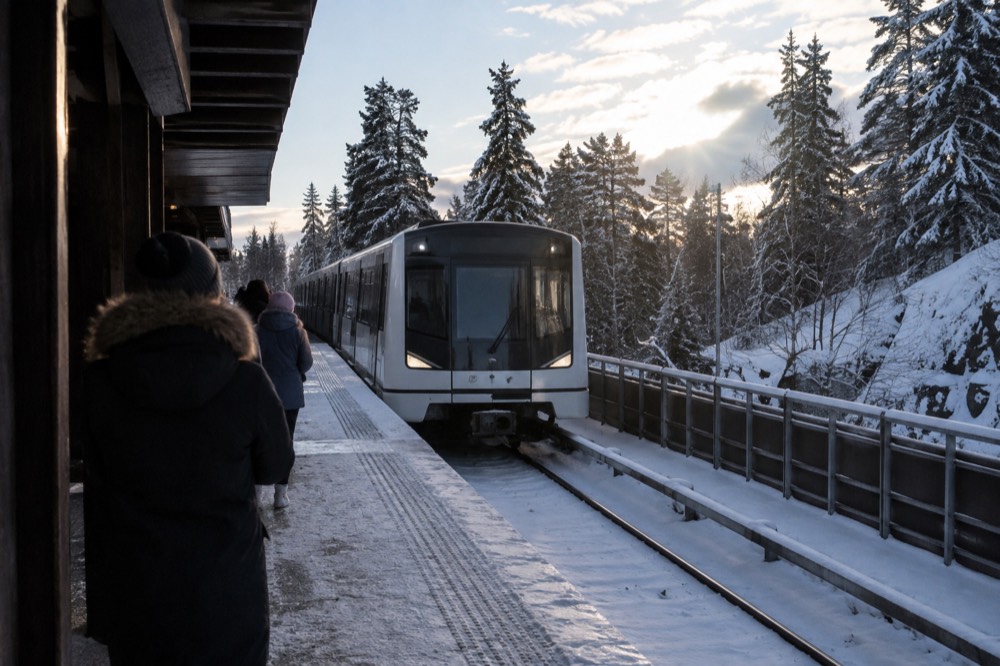
One practical warning: the T-bane is Oslo's ski lift as well as its metro, and weekend mornings in February prove it. Trains fill with skis and sleds from around 09:00, and the return journeys fill again from mid-afternoon. Travel early, travel with your gear compact, and expect company. It is, honestly, part of the charm: a metro full of Norwegians heading uphill in the dark is the most Oslo scene there is.
Is Learning to Ski in Oslo Worth Booking a Tour For?
For a first-timer on a short visit, yes. A guided learn-to-ski half-day removes the three friction points that defeat beginners, gear rental, technique and confidence, and it does so inside a schedule that still leaves the afternoon for the city. The product carries a strong rating from real guests and the price is. For a confident skier, skip the tour: the metro and the Vinterpark are all you need.
The honest split is experience. If you have skied before, Oslo's hills are self-service by design and a tour adds little. If you have not, the rental counter alone, boots, skis, poles, wax, is where morning energy goes to die, and an instructor's first hour does more for your balance than a week of guessing. The product in the card below is the one this site points beginners at, and it is the related pick for this whole page.
Pairing it with a rest-day on the water is the move experienced visitors make. The fjord cruises below are the two this site rates highest, and a winter afternoon on a silent electric boat after a morning on skis is a genuinely Oslo combination.
Common Questions About Skiing Near Oslo
Can you ski in Oslo itself?
Yes. Oslo Vinterpark at Tryvann is a lift-served downhill area inside the city limits at the top of metro Line 1, and the Nordmarka cross-country network starts at Frognerseteren and Sognsvann, both metro termini. No car is needed.
How do you get to the ski slopes in Oslo?
Take T-bane Line 1 from the center toward Frognerseteren: Vinterbakken serves Oslo Vinterpark and Frognerseteren serves the trail network and the toboggan run. Sognsvann is on Line 5. All are inside zone 1 on an ordinary ticket.
When does the ski season in Oslo run?
Roughly December to early April. Tryvann usually opens once the base holds in early December, the groomed Nordmarka trails follow the snow, and March often keeps good conditions with much longer daylight than midwinter.
Can beginners learn to ski in Oslo?
Yes, two ways: the ski school and novice slopes at Oslo Vinterpark, or a guided half-day learn-to-ski experience with instruction and equipment included. The guided option suits visitors who want everything handled in one booking.
Do you need to rent a car to ski near Oslo?
No. Every main ski destination in this guide sits on the metro, and the whole network is in zone 1, so a standard ticket covers the trip. A car adds cost and parking problems, not access.
What can non-skiers do in the Oslo winter?
The Korketrekkeren toboggan run, the Holmenkollen ski jump and museum, guided snowshoeing in Nordmarka, and a torchlit forest walk with a campfire are all bookable or reachable without skiing skills, all on the same metro lines.