Can You See Northern Lights in Oslo? The Honest Answer
Oslo sits at 59.91 degrees north, well south of the auroral zone, so the northern lights are genuinely rare in the city. Here is what a sighting actually takes, how the Tromsø comparison works, and what to book instead of a tour that does not exist.
Short answer
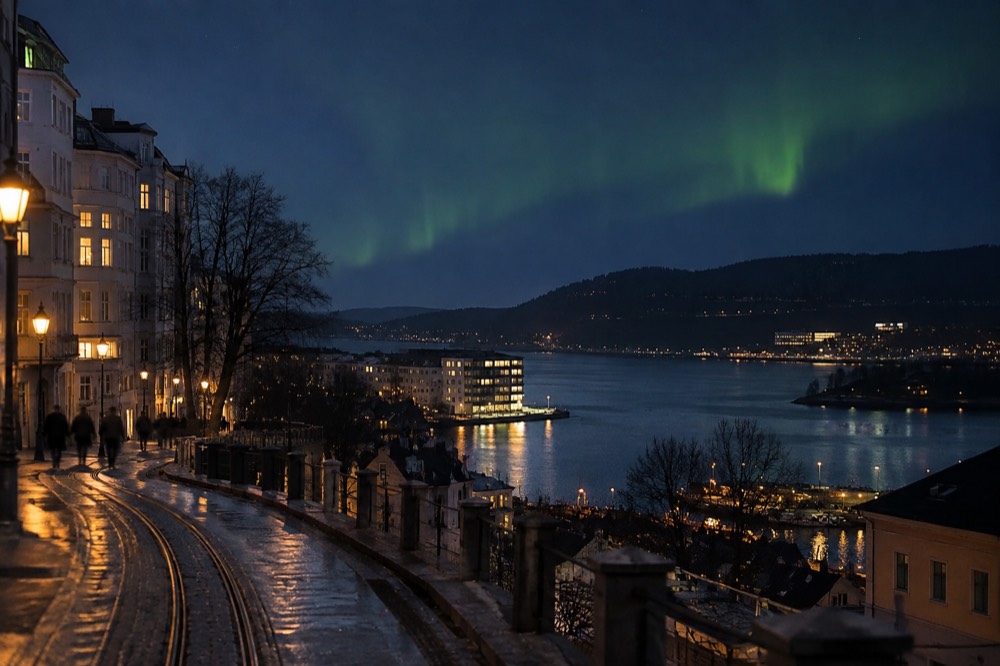
Rarely. Oslo is at 59.91 degrees north, far south of the Arctic Circle, so the aurora only reaches the city during strong geomagnetic storms, typically Kp 5 or higher, combined with a clear sky and low light pollution. A handful of times a year at best. There is no northern lights tour from Oslo, and Tromsø is the honest destination for a booked aurora trip.
Can You See Northern Lights in Oslo? The Honest Answer
No, not reliably. Oslo sits at 59.91 degrees north, roughly six and a half degrees south of the Arctic Circle, and the auroral oval, the ring of aurora around the magnetic pole, sits well north of the city on ordinary nights. The northern lights reach Oslo only during strong geomagnetic storms, typically Kp 5 or higher, and even then you need a clear sky and a dark spot away from streetlights. That combination arrives a handful of times a year, never on a schedule.
That is the short version, and it is the version most guides soften with hedging. This page will not. The University of Tromsø's space-weather centre, which publishes the Oslo-specific aurora outlook, states plainly that sightings from the capital need high geomagnetic activity, and the same institution's material on how far south the aurora reaches ties visibility at Oslo's latitude to strong storm levels. The aurora is real in Norway. It simply belongs to the north of the country.
What follows is the honest planning picture: what a sighting from Oslo actually requires, how far you are from the real aurora zone, whether the train north helps, the September question, and the tour question, which has an answer most visitors do not expect.
Can You See Northern Lights in Oslo?
Yes, but rarely, and never on demand, and the reason is pure geography rather than bad luck. Oslo's latitude of 59.91 degrees north places it far below the Arctic Circle at 66.5 degrees, where the midnight sun and the core auroral zone begin. On a night of strong geomagnetic activity, Kp 5 or above, the auroral oval dips far enough south that a green arc can appear over Oslo's northern horizon. Most winters deliver a few such nights, usually reported by photographers who drove out of the city to Nordmarka's edge to watch them. Treat any sighting as a bonus, never as a plan, because nothing about it can be booked, scheduled or promised in advance.
The physics of it is worth one paragraph because it explains every practical rule that follows. The aurora is caused by charged particles from the sun striking the upper atmosphere along the auroral oval, a ring centered on the magnetic pole. The oval's southern edge moves equatorward when geomagnetic activity rises, which is measured on the Kp index from 0 to 9. At Oslo's latitude you generally need Kp 5 or stronger before the display climbs into your sky, and the stronger the storm, the better the show. The NOAA Space Weather Prediction Center publishes a three-day geomagnetic forecast, and UiT's space-weather pages publish aurora guidance specific to Norway, both free to check from a phone.
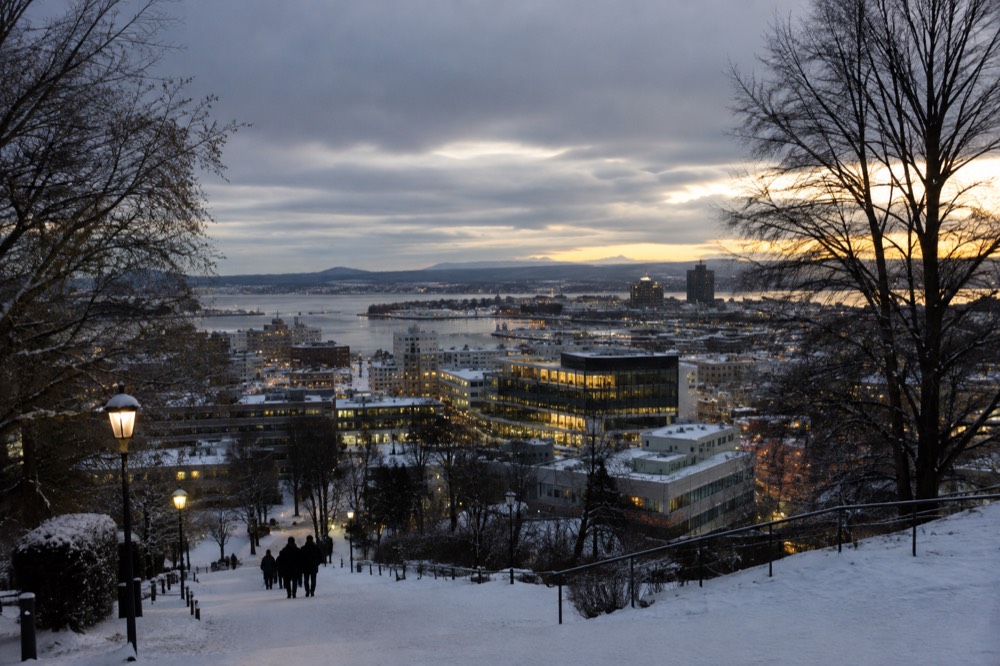
Light pollution is the second half of the problem. Central Oslo, Karl Johans gate, Aker Brygge, the Barcode skyline, sits under a dome of artificial light that washes out anything but the brightest displays. Even on a good storm night, a sighting from a city-centre hotel window is close to impossible. Photographers who catch the aurora from the Oslo area do it from dark spots at the edge of the forest, and even those images usually show a faint horizon glow rather than the rippling curtains people picture from Tromsø.
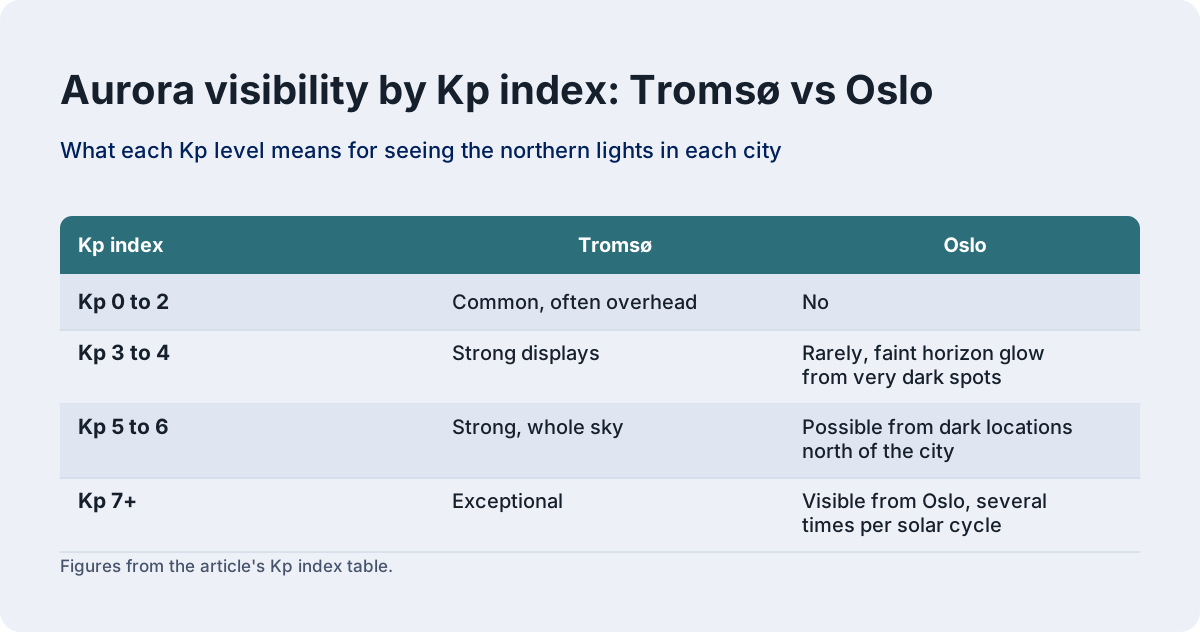
The table below sets out what each Kp level realistically means for Oslo, and it is the single most useful thing to understand before you start refreshing aurora apps.
| Kp index | Aurora visible in Tromsø | Aurora visible in Oslo |
|---|---|---|
| Kp 0–2 | Common, often overhead | No |
| Kp 3–4 | Strong displays | Rarely, faint horizon glow from very dark spots |
| Kp 5–6 | Strong, whole sky | Possible from dark locations north of the city |
| Kp 7+ | Exceptional | Visible from Oslo, several times per solar cycle |
One more thing worth saying plainly, because it is the mirror-image mistake: there is no midnight sun in Oslo either. The same latitude that keeps the aurora away keeps the midnight sun away. In late June the sun sets at 22:43 and rises at 03:53, and the hours between are deep twilight rather than true night. If you are planning around either polar phenomenon, our page on Oslo daylight hours by month covers the full swing from 5 hours 53 minutes in December to 18 hours 50 minutes in June.
Northern Lights Oslo: What the City Itself Offers
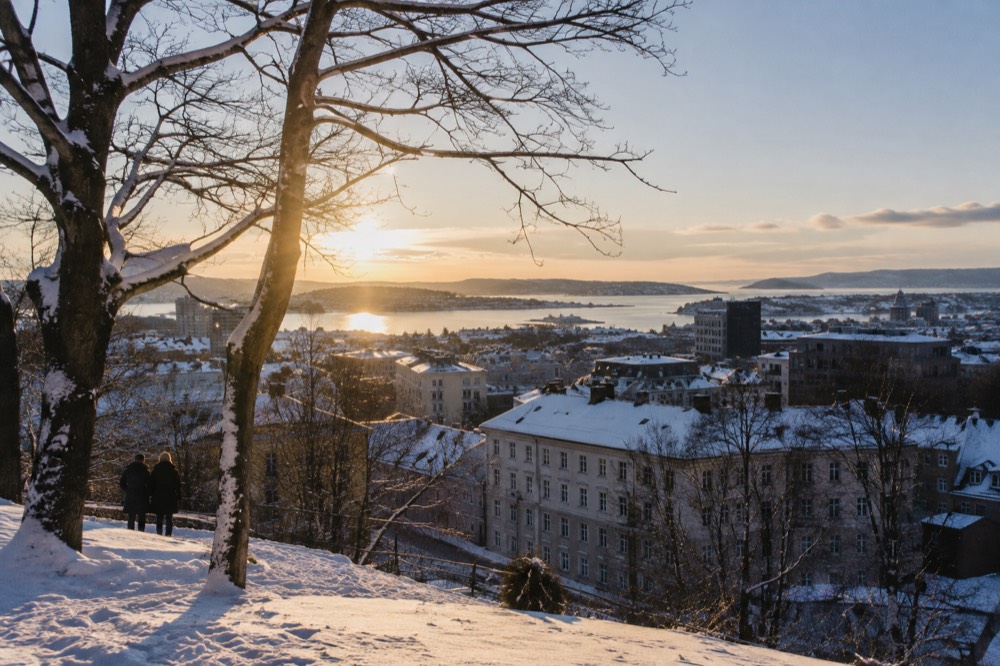
Realistically: dark skies, forecasts and luck, in that order, and nothing you can put a booking on. The Oslo-area aurora strategy is not a tour or a ticket, it is a clear winter night, a Kp 5-plus forecast, and a spot with a dark northern horizon. The best candidates are the edges of Nordmarka, the forest that begins at the end of Metro Line 1 at Frognerseteren, and lakeshores like Sognsvann, where the city glow falls away behind you. All of them are reachable on an ordinary Ruter ticket, which is the one genuinely Oslo thing about the whole pursuit: the aurora chase here starts at a metro station, not a tour office.
The practical routine, for a visitor who wants to try it while in the city, looks like this. Watch the Kp forecast for the dates of your stay. Watch the cloud forecast on yr.no, which is MET Norway's own service and the one locals actually use, because a Kp 7 storm behind an overcast sky is worth nothing. If both align, take Line 1 to Frognerseteren or Line 5 to Sognsvann in the evening, walk a few hundred meters from the station, and give your eyes twenty minutes to adjust. Bring serious warmth: MET Norway's normals put January's mean at minus 2.3 degrees Celsius, but clear sky, which is exactly what you need for aurora, is when the temperature drops hardest.
Be honest with yourself about the odds. Even a well-executed Oslo-area night fails most of the time, because the Kp level simply is not there on most nights. Locals who photograph the aurora from the Oslo region treat it as a lucky by-catch of ordinary winter photography, not a goal. If seeing the northern lights is the purpose of your trip to Norway, the honest move is to split the trip, and our guide to the Oslo to Tromsø route covers how to do that by air or rail.
Those three are the products that actually exist for an Oslo winter evening, and that matters here. This site checks every bookable product against live listings, and there is no aurora tour from Oslo on any of them, a point this page returns to in full below. The torchlit forest walk is the closest thing to a dark-sky night out that you can put a booking on: a guided walk by torchlight through the forest at the city's edge, ending at a campfire. It runs in the evening, in winter, in exactly the conditions an aurora night would need, so if the sky happens to cooperate you are at least standing in the right kind of darkness.
How Far Is Oslo from the Northern Lights?
About 400 kilometers to the auroral zone's usual southern edge, which is the distance that decides everything about your planning. The auroral oval typically sits over the far north of Norway during moderate activity. Oslo at 59.91 degrees north is south of that band on ordinary nights. Tromsø, in the far north, sits directly under the oval and sees the aurora on most clear nights between September and March. That gap is the entire difference between "possible in a strong storm" and "the default evening sky", and no amount of local knowledge or driving closes it.
The comparison is easiest to hold in your head as three zones. Tromsø and the far north are under the oval: aurora is routine there, and the local industry is built around it. Trondheim and central Norway sit at aurora's edge: sightings are common during active periods. Oslo and the south are outside the zone: sightings require the storm to come to you. A visitor who spends three nights in Tromsø during the season has a strong chance of at least one display. A visitor who spends three nights in Oslo has, realistically, a small chance of a faint one, and the difference is latitude, not effort.
| City | Position | Aurora status | Best months |
|---|---|---|---|
| Tromsø | Far north, under the oval | Routine on clear nights | September to March |
| Trondheim | Central Norway, edge of the zone | Frequent in active periods | September to March |
| Oslo | South, outside the zone | Rare, storm-level only | October to March, Kp 5+ |
Distance, though, is not the whole story, and this is where the planning gets interesting. Tromsø is a two-hour flight from Oslo, and the train alternative runs to Bodø, further south, with a bus or flight onward. Norway's geography means "how far" has two answers: the physical distance is hundreds of kilometers, but the practical distance is one domestic flight. Plenty of visitors do Oslo for the city and Tromsø for the sky in the same week, and that split is what our best time to visit Oslo planning material is built to support.
Can You Take a Train from Oslo to See the Northern Lights?
Not in one ride, and not as a same-evening plan, because Norway's rail network simply does not reach the aurora capital. There is no train from Oslo to Tromsø; the rail network ends at Bodø, well south of Tromsø, and the classic rail-plus-aurora itinerary means the day train to Bodø and a flight or long bus onward. The train is a genuine and beautiful way to travel north, but it is a journey of a day or more each way, so it suits a multi-day northern Norway itinerary, not an evening excursion from the capital.
The route that exists: trains from Oslo Central Station run to Trondheim, roughly seven hours through some of the country's best scenery, and from Trondheim the line continues to Bodø, crossing the Arctic Circle shortly before the end. Bodø itself sits north of the Arctic Circle, under or near the oval on active nights, and it is a legitimate budget-aurora base. From Bodø, Tromsø is a short flight or a scenic but slow coastal journey. Done as a round trip, Oslo to Bodø and back is two full days of rail travel before you have seen anything at all.
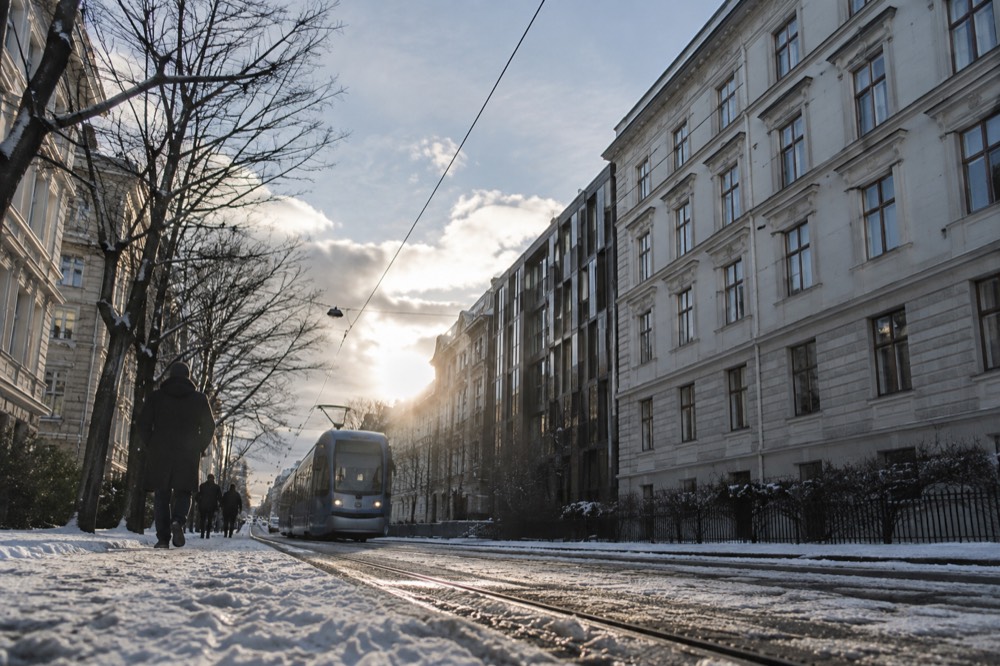
If the rail journey itself is the attraction, and for many visitors it is, the honest framing is this: take the train north for the mountains, the fjord arms and the Arctic Circle crossing, and treat any aurora as a bonus at the destination. Travelers who book the trip the other way round, train north purely for the lights, are stacking a two-day journey on top of a weather-and-Kp gamble, and the odds do not justify it. Our page on the Oslo to Tromsø route compares the flight and rail options in detail.
For context on the other end of the seasonal coin, the same geography that keeps the aurora south of Oslo also keeps the midnight sun north of it, a point our Oslo midnight sun page covers. Both phenomena belong above the Arctic Circle, and both are sold in Oslo by mistake more often than any other pair of claims about the city.
Can You See the Northern Lights in Oslo in September?
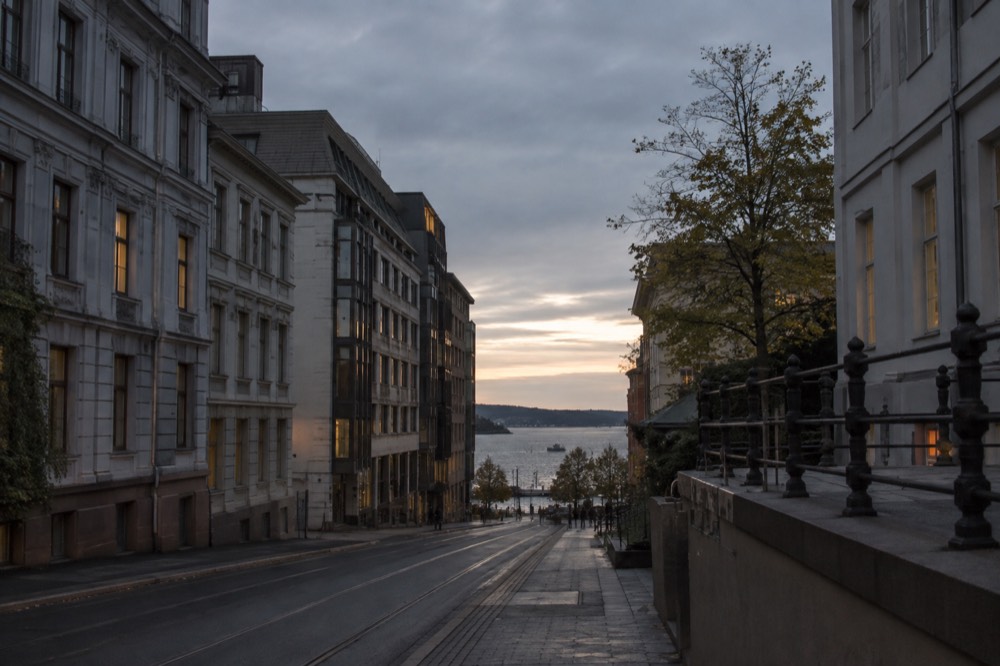
Almost never, and September is the wrong month to try, because the darkness the aurora needs has not properly returned. The aurora does not follow a calendar, but the conditions for seeing it from Oslo do: you need darkness, and September nights in Oslo are short on it. On 15 September the city gets 12 hours 54 minutes of daylight, with sunset near 19:38, and the hours after dusk are still twilight-tinged rather than properly black. Real astronomical darkness does not settle over Oslo in useful quantity until October, and the aurora season for the south of Norway is realistically October to March.
September is also, statistically, a poor sky month. August is Oslo's wettest on the 1991 to 2020 normals at 103 millimeters, and September carries 82 millimeters, which means cloud cover is a frequent obstacle even when geomagnetic activity exists. The combination that a September Oslo sighting needs, a strong storm, a clear sky and enough darkness, is not impossible, but it is rare enough that no local would plan around it. The September aurora question is usually really a Tromsø question: in the far north, September is the start of the season there, because darkness returns to those latitudes earlier and more completely.
| Month | Daylight in Oslo (15th) | Dark enough for aurora? | Notes |
|---|---|---|---|
| September | 12 h 54 m | Barely, late evening only | 82 mm normal rain, cloudy |
| October | 10 h 13 m | Yes | Season opens |
| December | ~5 h 53 m | Maximum darkness | Sun sets 15:11 on the solstice |
| January | ~6 h 45 m | Maximum darkness | Clear nights are the coldest |
| March | ~11 h 45 m | Yes, early season ends | Snow still on the ground in Nordmarka |
If you are in Oslo in September and hoping for the sky, the honest advice is to enjoy the city instead: the water is at its warmest for swimming off the Oslofjord islands, the light is long and golden, and the crowds are thinner than midsummer. Our Oslo weather by month guide carries the full picture. And if the aurora is the reason you picked September, redirect the trip: Tromsø in September is already in season, with dark nights and the first clear-sky windows of the year.
Can You Do a Northern Lights Tour from Oslo?
No, and this is the one question on this page with a flat answer: there is no northern lights tour from Oslo, on any platform this site checks. This site's research team verified the Oslo product catalog across every booking channel it uses, and zero aurora tours from Oslo exist, because there is nothing for a tour operator to deliver: the aurora is not reliably within reach of the city. Any listing that claims an Oslo northern lights tour should be treated as a red flag. The honest options are to travel to Tromsø, where the aurora tours are, or to spend your Oslo evenings on the winter experiences that do exist and are genuinely good.
This is information gain, not a gap in the market. An operator cannot drive you to a phenomenon that is 400 kilometers away and visible a handful of nights a year. What Oslo's winter actually sells, and sells well, is a different set of products: a torchlit forest walk with a campfire at the city's edge, learn-to-ski half-days in the hills above the city, evening history walks through the dark-season centre, and the museums that anchor a cold afternoon. These are real, reviewed and bookable, and they are what this site's Oslo in winter guide is built around.
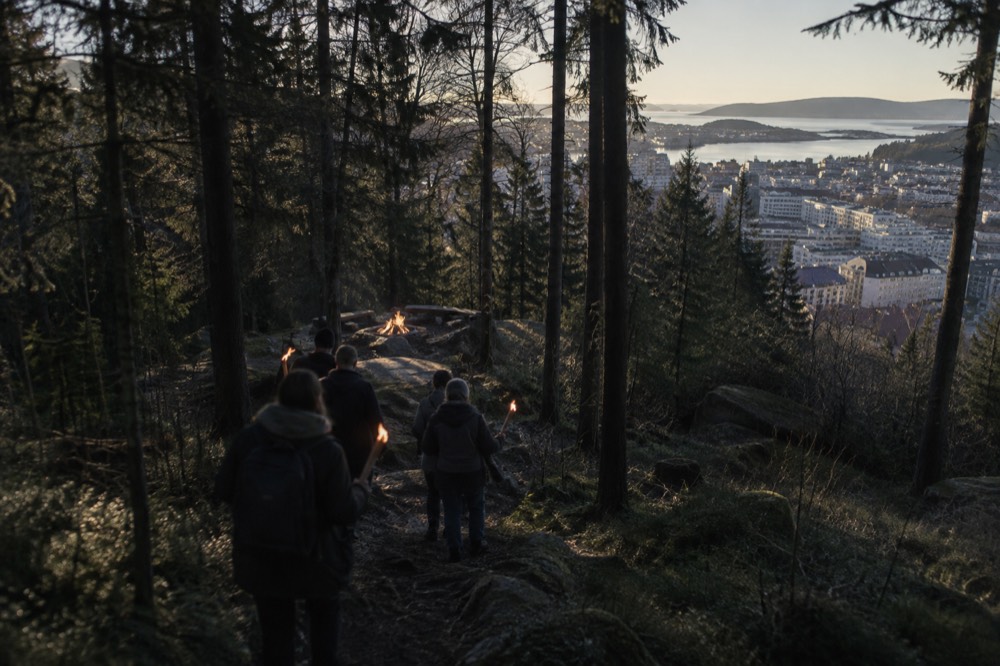
The torchlit walk deserves a specific mention because it occupies the exact slot in an Oslo evening that an aurora tour would if one existed. It runs about three and a half hours, in the forest, after dark, in the months when the sky is at its darkest, and it ends around a fire. The listing describes it as the signature Oslo winter experience inside the city limits, and the reviews back that up. It is not an aurora product and should not be bought as one, but it is the evening-in-the-dark that Oslo can actually deliver on a schedule.
For the evenings you would otherwise spend waiting on a Kp forecast, the evening myths-and-legends walk is the other product built for Oslo's dark season. It is a two-hour themed walk through the city's history and folklore, running in the hours after sunset, and it is the kind of evening that makes a 15:11 sunset feel like a feature rather than a loss. The listing notes it as a product Oslo genuinely needs from October to March, which is the same window in which your faint aurora chances exist.
What to Do Instead on an Oslo Winter Evening
Treat the dark itself as the attraction, because that is the one thing Oslo's winter delivers on schedule and the aurora does not. Oslo's winter evenings are long, cold and reliably dark, and the city has a real culture of using them: forest walks by torchlight, saunas, museums open late, and a food-and-drink scene built for being indoors. The visitor who arrives hoping for the aurora and leaves having done none of this has missed the better half of the season. The honest reframe is that Oslo sells darkness itself, and the darkness is genuinely atmospheric, whether or not the sky cooperates on any given night.
The winter experience table below is the practical answer. Every product on it is verified live on this site's roster, with real review histories, and none of them depends on the weather hundreds of kilometers to the north.
| Experience | Duration | What it is | Best for |
|---|---|---|---|
| Torchlit forest walk with campfire | 3 h 30 m | Guided night walk, fire at the end | The signature dark-season evening |
| Learn-to-ski half-day | 3 h 30 m | Instruction in the hills above the city | First-timers, active visitors |
| Evening myths and legends walk | 2 h | Themed history walk after sunset | Culture over cold |
| Museum afternoons | 1–2 h | Kon-Tiki, Fram, MUNCH and more | The coldest, wettest days |
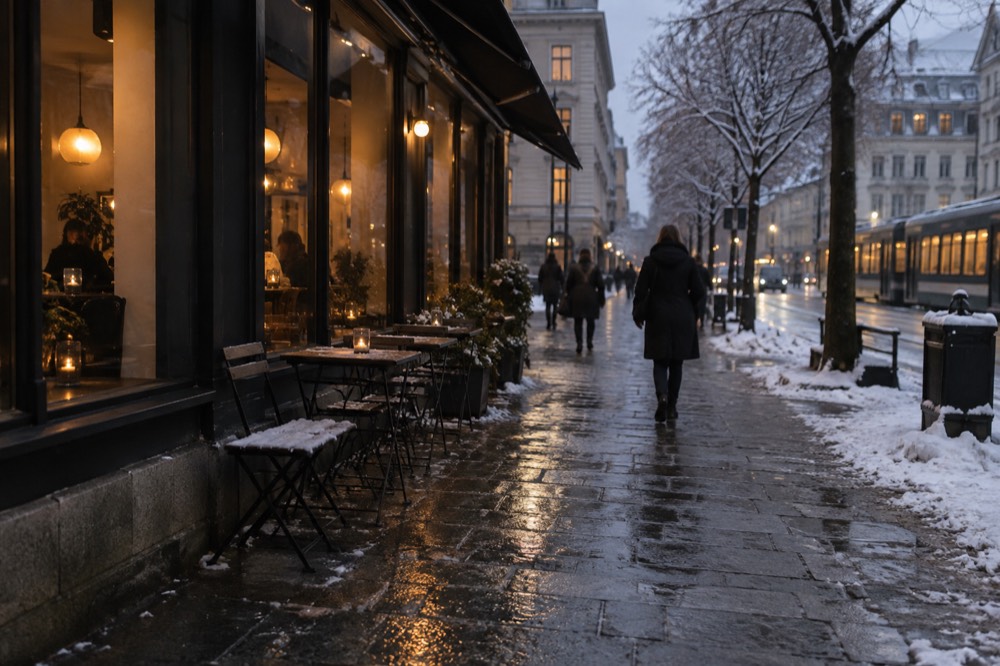
Beyond bookable products, the free dark-season options are strong. Vigeland Park is open 24 hours a day, all year, at no cost, and the sculptures under snow and floodlight are a different park from the summer version. The Opera House roof is a public walk, free, and the winter light on the marble is at its best in the low-angle afternoon. Our free things to do in Oslo guide collects the full set, and our Oslo at night page covers the bars, the late museums and the sauna culture that fill the hours between dusk and bed.
There is one more planning point that belongs on this page because it shapes every winter evening: the cold is manageable but real. MET Norway's normals put December at minus 1.4 and January at minus 2.3 degrees Celsius, and clear nights, the nights you would want for sky-watching, run colder than that. Dress for it the way Norwegians do, in layers, with real shoes, and the long dark becomes something you can stay out in rather than something you retreat from. The planning detail on Oslo Travel Guide exists for exactly this kind of evening.
Snowshoeing in Nordmarka rounds out the trio of forest products, and it shares something with the aurora question: it is the activity that makes an Oslo winter trip worth booking, precisely because it uses the season instead of fighting it. Guided, about three and a half hours, in the same forest that an aurora chaser would head to for dark skies. If the storm of the decade happens to coincide with your visit, you will be in the right place. If it does not, you will have had the winter evening anyway.
Common Questions About the Northern Lights in Oslo
Can you see northern lights in Oslo?
Rarely. Oslo is at 59.91 degrees north, well south of the auroral zone, so a sighting needs a strong geomagnetic storm, typically Kp 5 or above, plus a clear sky and a dark spot away from city lights. A handful of nights per year at best, and never on a schedule you can plan around.
Can you take a train from Oslo to see the northern lights?
Not directly to the aurora zone. Norway's rail network ends at Bodø, north of the Arctic Circle, and reaching Tromsø means a train of a day or more plus a flight or bus onward. The train north is a beautiful multi-day itinerary, not a same-evening aurora excursion.
How far is Oslo from the northern lights?
Roughly 400 kilometers to the auroral zone's usual southern edge during moderate activity, and a long way from Tromsø, which sits under the oval in the far north. In practice the distance is one domestic flight, which is how most visitors combine Oslo with an aurora stay in Tromsø.
Can you see the northern lights in Oslo in September?
Almost never. September nights in Oslo still carry too much twilight, with sunset near 19:38 mid-month and only 12 hours 54 minutes of daylight, and the month's cloud cover is high. Real darkness returns in October. In Tromsø, by contrast, September already opens the season.
Can you do a northern lights tour from Oslo?
No. Verified across every booking channel this site uses, zero northern lights tours from Oslo exist, because the aurora is not reliably within reach of the city. The honest options are to travel to Tromsø for an aurora tour, or to book one of Oslo's real winter experiences instead.
Where is the best place in Oslo to watch for the aurora?
The dark edges of Nordmarka, reachable by Metro Line 1 to Frognerseteren or Line 5 to Sognsvann, give you a dark northern horizon on an ordinary ticket. Central Oslo's light dome washes out all but the strongest displays, so a sighting from the city centre is close to impossible even on a good night.