Holmenkollen Ski Jump: Tickets, Hours and How to Get There
The Holmenkollen ski jump is the most recognizable structure on the Oslo skyline and the easiest big landmark to reach by metro. Here is what a ticket covers, what it costs, and how to plan the trip up the hill.
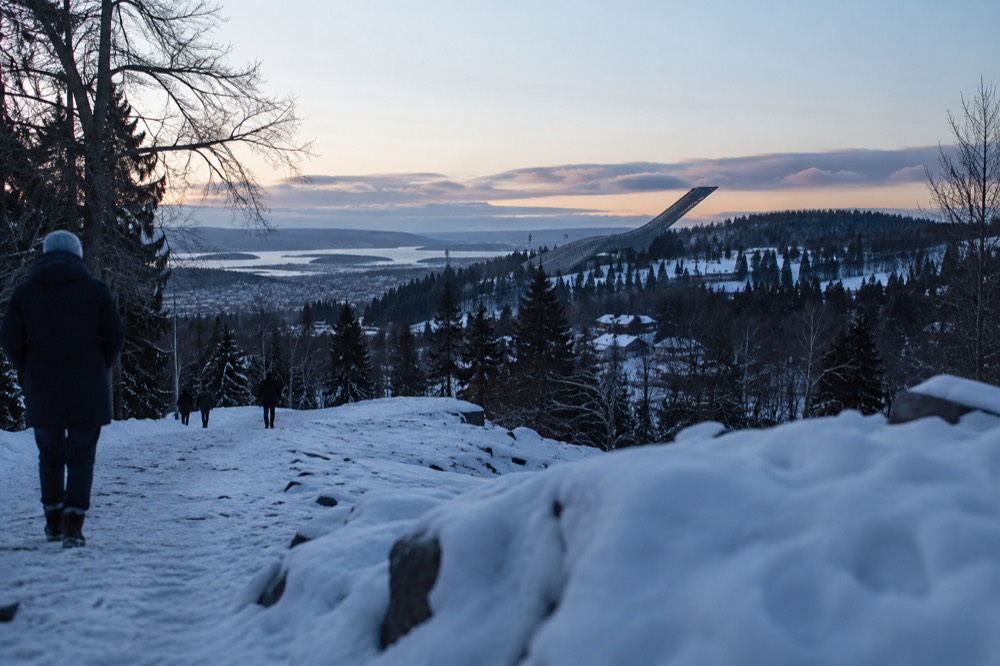
Short answer
The Holmenkollen ski jump and its Ski Museum cost 195 NOK for an adult ticket, which covers the museum and the jump tower observation deck. It is open year-round, 10:00 to 16:00 October through April and 10:00 to 17:00 May through September, and T-bane Line 1 stops at Holmenkollen roughly 15 to 20 minutes from Nationaltheatret.
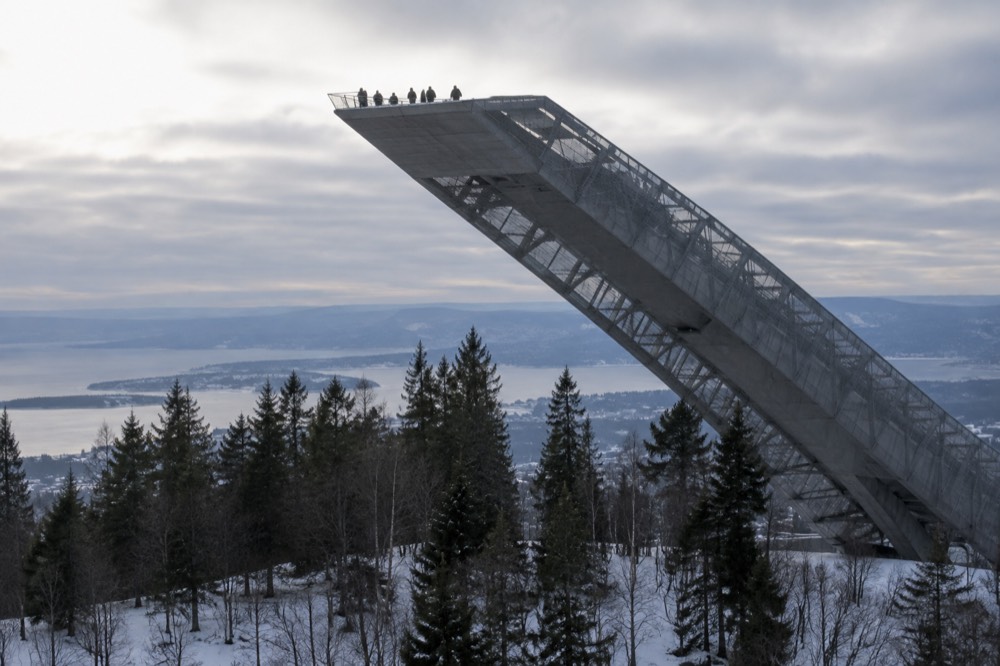
The ski jump at Holmenkollen has been part of Oslo's identity for more than a century, and the current tower is the structure you see from almost anywhere in the city, a steel spine leaning out over the forested hills northwest of the center. Below it sits the Ski Museum, and below that the T-bane station that makes the whole visit possible without a car. This guide covers the numbers a visitor actually needs: the 195 NOK ticket, the seasonal hours, the metro ride up, and the honest answer on booking, which is that no standalone ski jump ticket is sold on the booking platforms this site works with, only combination tours.
One thing to get straight at the start, because it shapes every other decision on this page: the ski jump is not a ski resort and not a viewpoint you have to hike to. It is a museum attraction with a tower, sitting at the top of a metro line, wrapped in the same forest that Oslo residents use for cross-country skiing all winter. You can be standing at the base of it half an hour after leaving your hotel, and the museum inside the mountain under the jump is older than the tower itself. For the wider picture of the city from up there, our best views in Oslo guide ranks where this panorama sits against Ekebergparken and the Opera House roof.
What Is the Holmenkollen Ski Jump?
The Holmenkollen ski jump is a functioning competition arena and national ski landmark, with the world's oldest ski museum built into the base of the structure and an observation deck at the top of the jump tower. The adult ticket, 195 NOK, covers both the museum and the tower. It sits inside the Nordmarka forest fringe about 15 to 20 minutes by metro from central Oslo, and it has hosted ski jumping competitions on this same hillside through a long series of rebuilt structures.
The hill you are looking at is the latest in a long line of jumps on this site. The structure has been rebuilt several times over the decades, each version bigger than the last, and the present tower is the modern steel incarnation of a hillside that has carried ski jumping competitions for generations. The arena still holds competition events, most famously the Holmenkollen Ski Festival each spring, when the stands fill and the whole hill becomes the loudest place in the city. On a normal day outside event weekends the arena is quiet, and the visit is a museum-and-tower experience rather than a sports spectacle.
The Ski Museum, inside the mountain beneath the jump, traces Norwegian skiing from Stone Age artifacts through polar exploration to modern competition. The museum's own framing is that it is the oldest ski museum in the world, and the collection includes equipment from the polar expeditions that made Norwegian skiing a national identity rather than just a winter pastime. Plan on an hour inside if you read the exhibits properly, longer if the polar section pulls you in.
The tower itself is the payoff. A lift and stairs take you to an observation deck near the top of the jump, looking down the inrun that ski jumpers launch from, and out over Oslo and the Oslofjord on a clear day. The deck is outdoors and windy; the museum's own pages note that opening hours shift by season, covered below, and that the zipline down the hillside runs seasonally. If your interest is the panorama more than the sport, the Holmenkollen area guide walks the wider neighborhood, including the walk from the station.
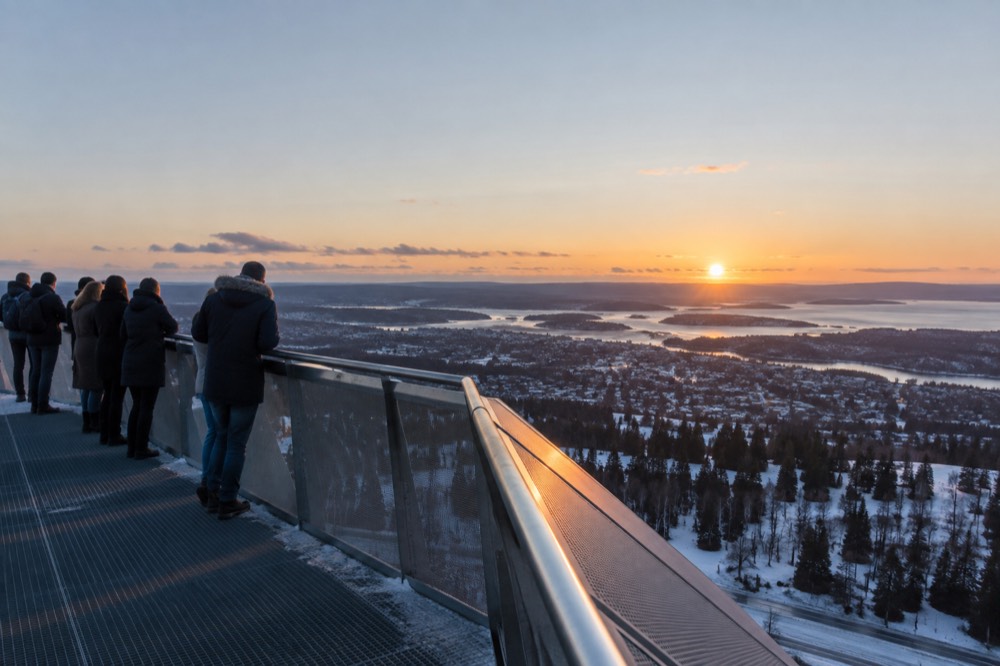
How Much Do Holmenkollen Tickets Cost, and What Does the Ticket Include?
An adult ticket to the Ski Museum and jump tower at Holmenkollen costs 195 NOK, bought on site or through the venue's own channel, and it includes the museum collections and the tower observation deck in one entry. There is no standalone tower-only or museum-only ticket sold separately, and no standalone ski jump ticket exists on the booking platforms this site covers, only combination tours that include the stop.
The 195 NOK figure is the venue's published adult price. Concession pricing exists for children, students and seniors, but the exact concession figures were not captured in this site's verified research pass, so check the venue's own site before you go rather than relying on a rounded number from a guide. The same applies to the Oslo Pass: Holmenkollen is one of the major Oslo attractions, but this site's verified source record does not confirm current pass coverage for the Ski Museum specifically, so treat the VisitOSLO pass inclusions list as the authority and check it against your pass before you ride up.
| Item | Price / detail | Notes |
|---|---|---|
| Adult ticket, Ski Museum + tower | 195 NOK | Single ticket covers both |
| Children, students, seniors | Concessions available | Confirm current figures on the venue's own site |
| Oslo Pass coverage | Check the VisitOSLO inclusions list | Not independently confirmed in this site's research pass |
| Zipline down the hillside | Seasonal, separate activity | Runs in the warmer months, check before visiting |
| Arena grounds and viewpoints outside | Free | The surrounding parkland costs nothing |
The budget angle worth stating plainly: the grounds around the jump, including the viewing areas at the base and the forest paths heading deeper into Nordmarka, are free and open. If your day is short or your budget is tight, you can ride the metro up, walk the arena, take in the view from below the tower and ride back down without buying anything, and the paid ticket is for the museum and the deck. That trade-off, free grounds versus paid interior, is the same one we lay out across free things to do in Oslo.
If you would rather have someone else handle the logistics of the hill, there are tours that fold Holmenkollen into a half-day circuit with other landmarks, and those are the honest booking route for the jump, since no standalone ticket product exists on the platforms this site uses. The trio below is the shortlist for that decision: the half-day landmark tour that includes the jump, and two fjord options for the other half of your day.
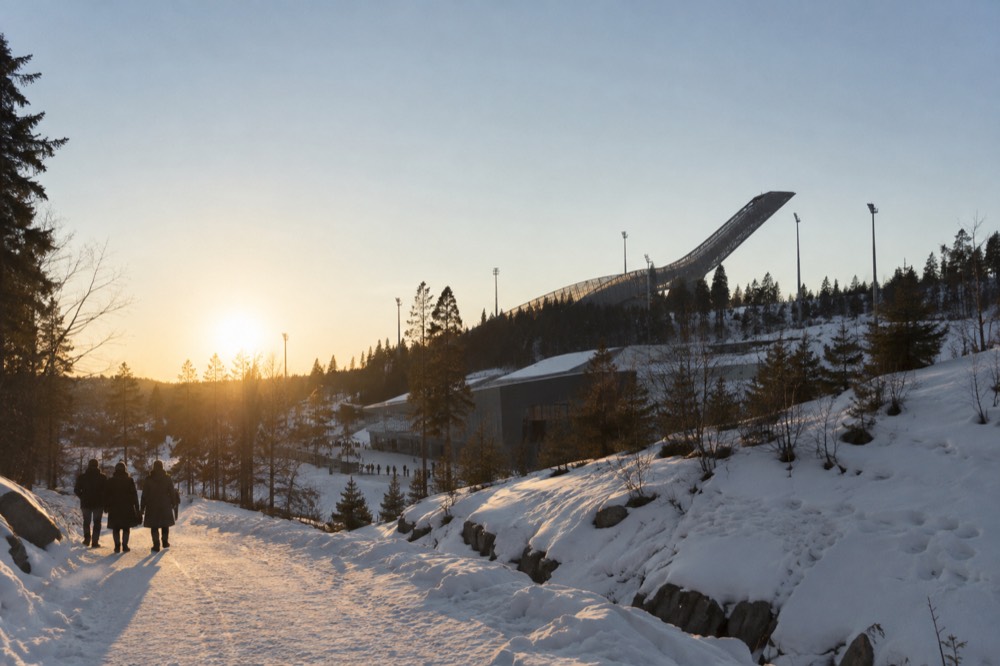
How Do You Get to Holmenkollen from Central Oslo?
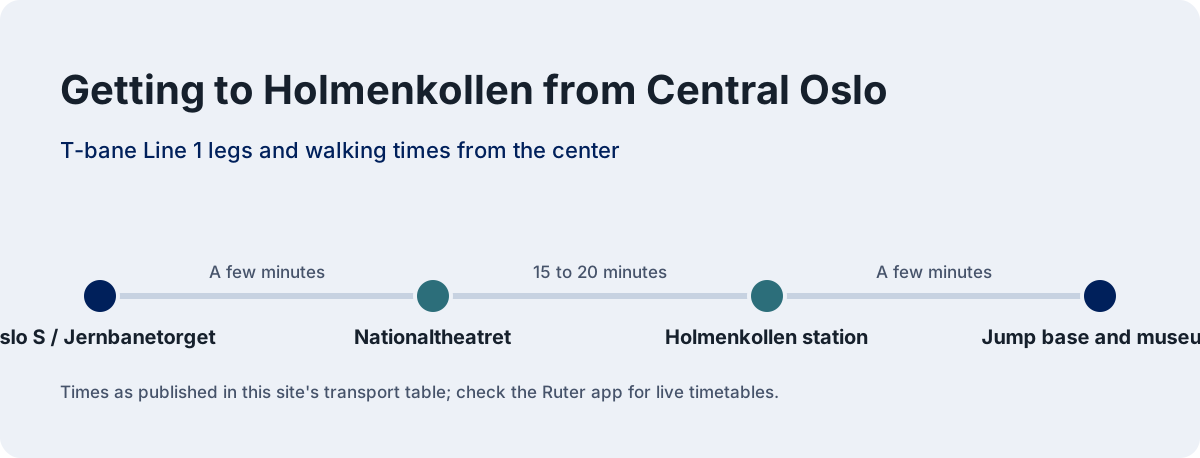
T-bane Line 1 runs directly to Holmenkollen station, roughly 15 to 20 minutes from Nationaltheatret in the center, and the walk from the platform to the ski jump is short and signposted uphill. Line 1 is part of the ordinary zone 1 metro network, so a standard Ruter ticket covers the whole trip, and the same line continues one stop further to Frognerseteren at the forest edge.
Line 1 is the branch of the Oslo metro that dead-ends in the hills, and Holmenkollen is the second-to-last stop. Trains run frequently through the day and less often in the late evening, so check the Ruter app for the live timetable rather than trusting a printed pattern. The station sits below the arena, and the walk up to the jump base takes only a few minutes on a paved path. Anyone with mobility concerns should know the path rises steadily; the getting around Oslo guide covers the metro system in full, and our Oslo metro page explains zones and tickets.
| From | To | Method | Time |
|---|---|---|---|
| Nationaltheatret (center) | Holmenkollen station | T-bane Line 1 | About 15 to 20 minutes |
| Oslo S / Jernbanetorget | Nationaltheatret transfer | Any westbound T-bane or tram | A few minutes, then Line 1 |
| Holmenkollen station | Jump base and museum | Signposted uphill path | A few minutes on foot |
| Holmenkollen station | Frognerseteren (forest edge) | Same Line 1, one more stop | About 2 minutes |
The reverse trip matters as much as the ride up. Coming down, Line 1 delivers you back into the center in under half an hour, which makes Holmenkollen one of the few big-landmark visits in Europe that fits comfortably into a morning without a car, a bus tour or a taxi. Visitors staying near the station cluster around Karl Johans gate or the waterfront can treat the whole excursion, up, visit and down, as a half-day block.
One caution on ticketing: Ruter tickets are bought in the app, at a retailer or on board at a higher price, and the metro is inside zone 1, so no multi-zone ticket is needed for Holmenkollen itself. The zone system only starts to matter if you continue outward, for instance toward the airport, where zone 4N applies; the Ruter tickets guide explains the zone rules in full.
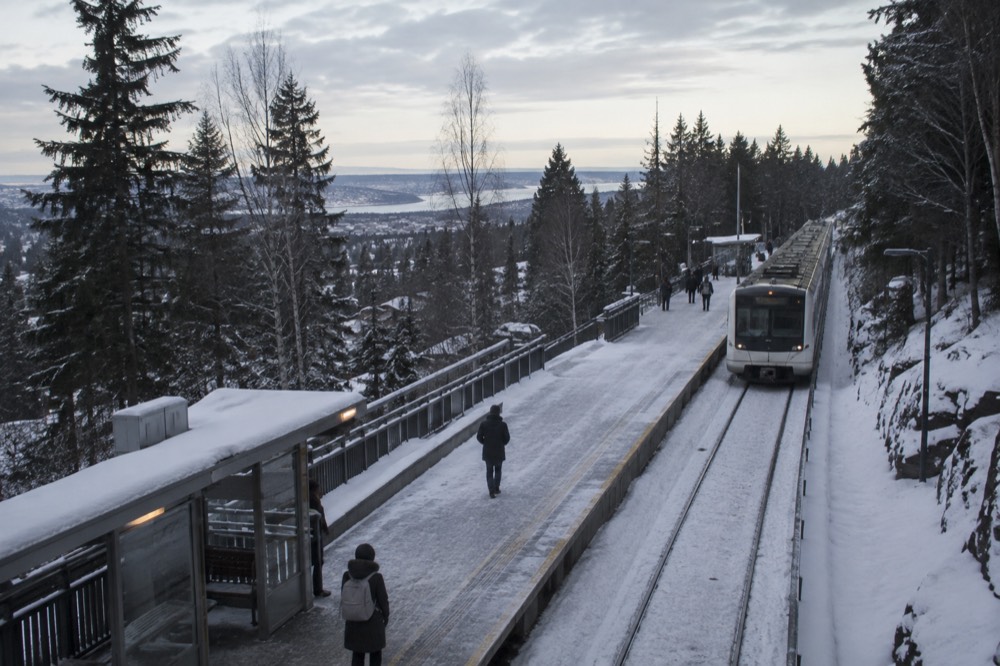
What Are the Opening Hours at Holmenkollen Through the Year?
The Ski Museum and jump tower at Holmenkollen are open every month of the year, with two seasonal patterns: 10:00 to 16:00 from January through April and again from October through December, and 10:00 to 17:00 from May through September. The venue's own published hours confirm this split, and the last tower entry closes before the stated closing time, so arrive with margin.
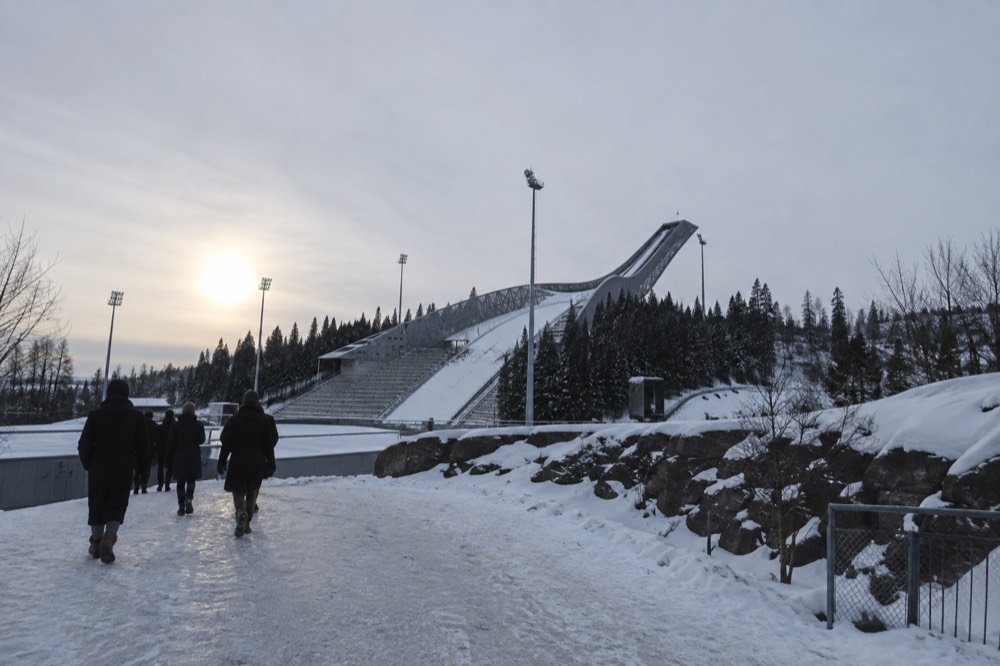
The seasonal split rewards a little planning. The summer window gives you an extra hour and, more importantly, the deck in daylight late into the evening, because Oslo's midsummer days run to nearly 19 hours of light. The winter window means the museum closes at 16:00, which in January, when the sun rises around 09:04 and sets around 15:49, leaves you a narrow band of daylight for the view from the top. That is not a reason to skip it; the tower over a snow-covered arena in low winter light is one of the more dramatic sights in the city. It is a reason to time your arrival for late morning rather than mid-afternoon.
| Period | Hours | Daylight context |
|---|---|---|
| January to April | 10:00 to 16:00 | Short days midwinter, lengthening fast by March |
| May to September | 10:00 to 17:00 | Long evenings, deck in light until late |
| October to December | 10:00 to 16:00 | Days shortening toward the December solstice |
The zipline that runs down the hillside beside the jump is a separate, seasonal activity and does not follow the museum's calendar. If it is on your list, check its current operating window before building a day around it, because it does not run through the cold half of the year.
Is Holmenkollen Better in Winter or in Summer?
Both seasons work, but they deliver different attractions: winter brings snow-covered stands, cross-country ski trails in the surrounding Nordmarka forest and a low-light panorama from the tower, while summer brings the longer 17:00 closing time, the seasonal zipline, green forest walking and an evening deck in full daylight. There is no bad season, only a different one, and the deciding factor is usually what you want from the forest around the jump.
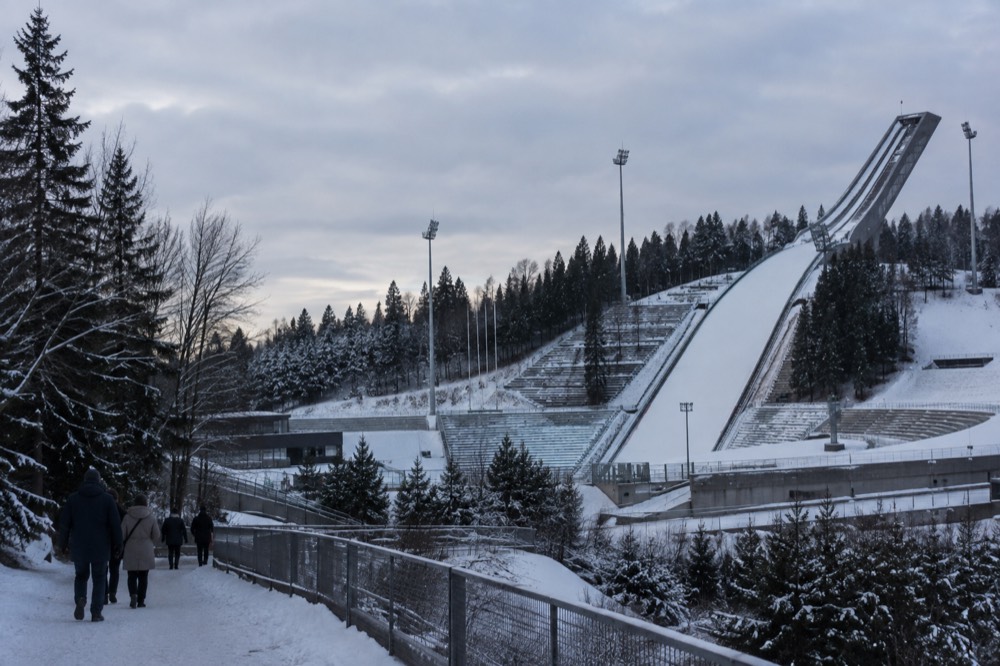
Winter is when Holmenkollen makes the most sense as a destination rather than a stop. The arena sits at the gateway to Nordmarka, the forest that Skiforeningen grooms into one of the world's great cross-country trail networks, and the metro delivers skiers to the trailheads here and at Frognerseteren all season. On a winter weekend the station platform fills with people carrying skis, and the museum's own subject matter, a thousand years of Norwegian skiing, lands differently when you have just ridden up through snow-covered birch. The trade-off is the short day covered above, and the cold: Oslo's January normal mean is −2.3 °C (about 28 °F), with real cold snaps below that.
Summer turns the visit into an easy half-day with a walk attached. The tower deck stays in light until late, the grounds are green, and the trails that carry skis in January carry runners and walkers in July. The zipline runs in this window. If you are building a summer day, the natural pattern is the museum and tower in the late afternoon, timed so you come down the hill for a long evening, or the reverse, a morning in the forest and the museum on the way back. The seasonal detail, including the weather normals month by month, is in Oslo in winter and Oslo in summer.
| Season | What the visit gives you | What to weigh |
|---|---|---|
| Winter, December to March | Snow-covered arena, ski trails, atmospheric tower view | Short daylight, cold, 16:00 closing |
| Spring, April to May | Snow retreating, museum quiet, longer light | Muddy trails, variable weather |
| Summer, June to August | 17:00 closing, zipline, green forest walks | Busiest at the deck in peak weeks |
| Autumn, September to November | Fall color in Nordmarka, thin crowds | Days shortening fast by October |
What Else Is Near Holmenkollen: Frognerseteren and Nordmarka
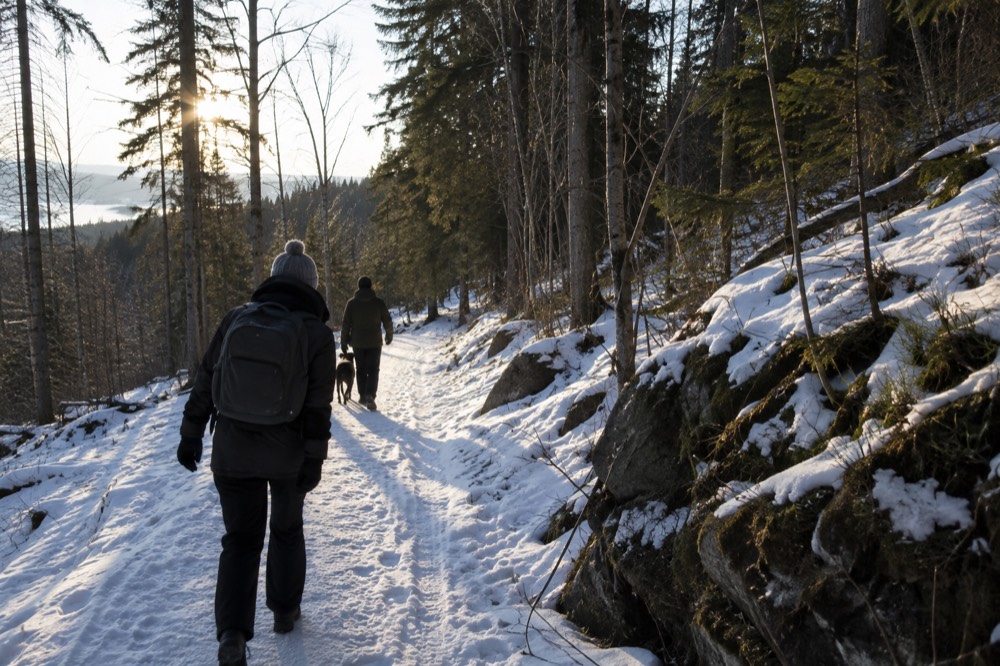
One stop further up Line 1, Frognerseteren is the end-of-line station at the edge of Nordmarka forest, with trailheads, viewpoints and a well-known hilltop restaurant, and it pairs naturally with the ski jump in a single metro trip. Beyond it, Nordmarka's groomed trail network and lakes, including Sognsvann on a different line, make the Holmenkollen visit the gateway to a half-day or full day outdoors.
Frognerseteren sits at the top of the hill, and the walk between the ski jump area and the station, or simply the extra two minutes on the train, opens up the forest fringe. The restaurant there is a classic Oslo institution, a place the city has been going to for waffles and the view for generations, and it functions as the natural refueling stop after the museum. In winter the trails start almost at the platform; in summer the same paths run through open pine and birch toward lakes and shelters deeper in the forest.
Nordmarka as a whole is the scale of the thing most visitors underestimate. This is not a park; it is a working forest the size of a small municipality, with marked routes from short loops to full-day hikes, and the Nordmarka guide covers the trailheads and access in detail. If you want a lake swim or a flat family walk instead of a climb, Sognsvann, reached on a different metro branch, is the easier water-side option, and the hiking near Oslo guide ranks the routes.
| Place | What it is | How it connects |
|---|---|---|
| Frognerseteren | Hilltop station, restaurant, trailheads | One stop beyond Holmenkollen on Line 1 |
| Nordmarka trails | Groomed ski trails in winter, hiking network in summer | Access on foot from Frognerseteren |
| Sognsvann | Forest lake, flat walking, summer swimming | Different metro branch, its own station |
| Tryvann / Oslo Vinterpark | Small ski area with lifts | Short trip from Holmenkollen area, seasonal |
The pairing logic is simple: the ski jump is a half-day at most on its own, and the forest above it is the reason to give the trip more time. A morning at the museum and tower, lunch at Frognerseteren and an afternoon walk back down through the trails is the classic Oslo weekend pattern, and nothing in it requires a car, a tour or a booking.
Can You Book a Tour That Includes the Holmenkollen Ski Jump?
Yes, but only as part of a combination tour: no standalone ski jump or Ski Museum ticket is sold on the booking platforms this site covers, and the honest booking routes are the venue's own ticket channel on site or online, or a sightseeing tour that includes the Holmenkollen stop. The half-day tour that pairs Holmenkollen with Vigeland Park is the main option, and a full-day bus and fjord combination also reaches it.
This is the point where a lot of guides quietly imply a product that does not exist, so it is worth being direct. The ski jump page on this site does not offer a ticket CTA for the jump alone, because there is no such product to link. What exists and is verifiable are tours with Holmenkollen as one stop among several. The half-day landmark tour is the focused one: it covers the ski jump and Vigeland Park in a single circuit, which matters because those two sights sit on opposite sides of the city from each other and both involve hills. For a visitor with one day and no appetite for metro logistics, that tour is the efficient answer.
The paragraph above discussed the half-day landmark tour, and its solo card sits below. For anyone weighing it against doing the trip independently, the honest comparison is time versus control: the metro ride up costs a fraction of the tour price and runs all day, but the tour removes every transfer and adds the guiding, and it is the only practical way to fit Holmenkollen and Vigeland Park into one morning.
The full-day alternative folds the landmark circuit together with a fjord cruise, aimed squarely at first-time visitors and cruise passengers who have one day ashore and want the city, the hill and the water in a single booking. It is a long day, and it compresses everything, but for a one-day Oslo itinerary it is the package that exists for exactly that purpose.
For visitors who prefer to keep the hill independent and only want transport flexibility elsewhere in the city, the hop-on hop-off bus is the remaining option in this family, and it pairs with a self-guided metro trip up to Holmenkollen rather than replacing it. The trade-offs between the bus and the metro are laid out in the hop-on hop-off Oslo guide.
Practical Tips for Visiting the Holmenkollen Ski Jump
Go in the morning in winter to catch daylight at the deck, buy the 195 NOK ticket on site or through the venue's own channel, ride Line 1 rather than driving, and budget an hour for the museum plus time at the tower. Bring layers for the observation deck in every season, and if you are combining the visit with Vigeland Park or the fjord, decide in advance whether a tour or the metro does the job better.
A few specifics that make the visit smoother. The deck is exposed; even on a mild summer day the wind at the top of the tower is real, and in winter it is the coldest place in your itinerary, so treat the museum as the warm-up and the deck as the finale. The museum is inside the mountain, so it is a genuine warm stop, which also makes this one of the better bad-weather sights in the city alongside the options in our rainy day in Oslo guide. Photography is better in the afternoon from the deck facing the city, when the sun sits behind you over the forest, and the Oslo photography spots guide covers the angles.
Families should know the museum works well for children, with sleds, polar equipment and the sheer spectacle of the jump to hold attention, and the grounds outside give them room to run. The Oslo with kids guide places Holmenkollen in a full family itinerary. Visitors planning a longer stay can slot the hill into the patterns in 3 days in Oslo, where it typically anchors the afternoon of a forest-and-landmark day.
For planning the whole trip around the hill, the best time to visit Oslo guide covers the seasonal logic citywide, and the site's things to do in Oslo page is the full index if you are still shaping the itinerary. This page is part of Oslo Travel Guide, the site's coverage of the city's landmarks, transport and costs, all sourced from official Norwegian channels.
If you are still choosing how to spend a half-day on the hill, the same three options from the top of this page are the shortlist: the half-day landmark tour that includes the jump and Vigeland Park, and the two fjord boats for the rest of your day in the city.
Common Questions About the Holmenkollen Ski Jump
How much does the Holmenkollen ski jump cost?
An adult ticket to the Ski Museum and jump tower costs 195 NOK, covering both the museum and the observation deck in a single entry. Concessions exist for children, students and seniors, but the current concession figures should be confirmed on the venue's own site. The arena grounds and surrounding forest are free.
How do I get to the Holmenkollen ski jump?
Take T-bane Line 1 to Holmenkollen station, about 15 to 20 minutes from Nationaltheatret in central Oslo, then follow the short signposted uphill path to the arena. The trip is inside zone 1, so an ordinary Ruter ticket covers it, and Line 1 runs year-round.
What are the Holmenkollen ski jump opening hours?
The museum and tower are open year-round: 10:00 to 16:00 from January through April and October through December, and 10:00 to 17:00 from May through September. Arrive with margin, because the last tower entry closes before the stated closing time.
Can I book a Holmenkollen ski jump ticket online?
No standalone ski jump ticket is sold on the booking platforms this site covers. The honest routes are the venue's own ticket channel, buying on site, or a combination sightseeing tour that includes the Holmenkollen stop, of which the half-day tour pairing the jump with Vigeland Park is the main one.
Is Holmenkollen worth visiting in winter?
Yes. The arena under snow, the ski trails starting at the station and the museum's skiing history all land hardest in winter. The trade-off is short daylight, with the sun setting before 16:00 in December and January, so time your visit for late morning to get the view from the tower in daylight.
What else can I do near the Holmenkollen ski jump?
Ride one stop further on Line 1 to Frognerseteren, at the edge of Nordmarka forest, for trailheads, viewpoints and a hilltop restaurant. In winter the groomed cross-country trails start there; in summer the same network carries walkers and runners deeper into the forest.