Museum of the Viking Age in Oslo: Closure, Reopening and What to See Now
The building known to two generations of visitors as the Viking Ship Museum has been shut since October 2021. The ships are now inside a vast new structure rising on the same spot, and the museum will reopen as the Museum of the Viking Age in 2027. Until then, here is exactly what is closed, what moved, and what you can actually see in Oslo today.
Short answer
The Viking Ship Museum on Bygdøy closed on 1 October 2021 for a full rebuild and will reopen as the Museum of the Viking Age in 2027. All three Viking ships have been moved into the new building. Until it opens, Viking Planet in the city center and the Viking-age objects at the Historical Museum are the honest substitutes.
The most searched museum question in Oslo right now points at a building you cannot enter. The former Viking Ship Museum on the Bygdøy peninsula closed its doors on 1 October 2021, and the museum's own site states it plainly: "The former Viking Ship Museum is closed" and "It will reopen as the Museum of the Viking Age in 2027." No month, no season, just the year. Roughly 4,400 people a month still search "viking ship museum oslo", and most of the results they find are stale. This page is the honest version: what closed, where the ships went, when the new museum opens, and what to do with a Bygdøy day in the meantime. For the wider peninsula picture, start with the Bygdøy museums peninsula guide.
Is the Viking Ship Museum in Oslo Open Right Now?
No. The Viking Ship Museum on Bygdøy closed on 1 October 2021 for a complete demolition-and-rebuild of its exhibition building, and it has not admitted a visitor since. The museum's official position is that it will reopen as the Museum of the Viking Age in 2027, a date given as a year only, with no month attached. Any listing, ticket page or itinerary that sells or schedules entry to it in 2026 is selling something that does not exist.
The closure is not a renovation of galleries behind scaffolding. The old building, famous for holding the Oseberg ship in its hall since it opened, was too small for the collection and for modern visitor numbers, so the project replaced it with a structure several times larger wrapping around the original footprint. The museum's own project pages describe it as one of the largest museum constructions underway in Europe.
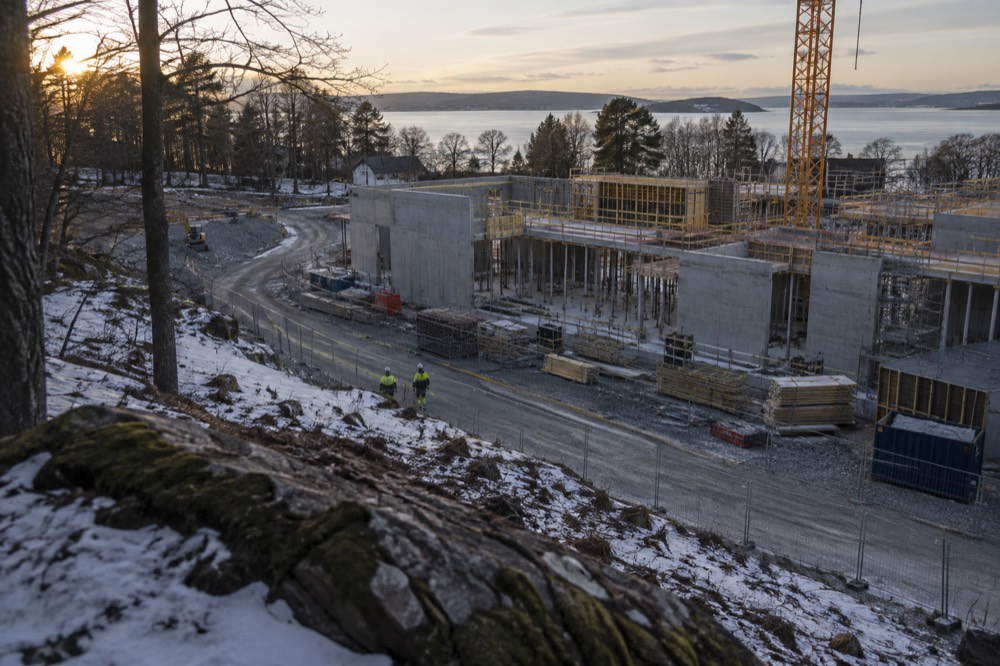
That scale is why the reopening date keeps slipping in rumor mills. The official wording has held steady at 2027, and the museum has not published a month. A specific date you may see quoted elsewhere, a first-of-November reopening, traces back to an unconfirmed secondary report and should not be trusted for planning. If your trip is in 2026, plan around the substitutes below, and if it is late 2027 or beyond, check the museum's own site close to your travel date.
What Happened to the Three Viking Ships?
All three ships, the Oseberg, the Gokstad and the Tune, have been moved out of the old halls and into the new building, along with the Oseberg sledges and thousands of smaller finds. The moves were engineering events in their own right, each ship crated and rolled across the construction site, with the Oseberg going first and the Tune last. Nothing Viking is viewable on Bygdøy while the work finishes.
The Oseberg ship moved in September 2025, the Gokstad followed in October and November of that year, and the Tune ship, the smallest and most fragile of the three, completed the set in February 2026. The museum's project updates describe the move of the Oseberg sledges and more than 5,000 remaining objects as the next phase, alongside rehabilitation of the old building's preserved sections. In plain terms: the ships are safe, indoors, and invisible to the public until the galleries open.
For visitors this creates a genuine gap, because the Oseberg and Gokstad ships were the reason most people took the ferry to Bygdøy at all. They were burial ships, excavated from mounds in Vestfold in the nineteenth century, and the old museum displayed them hull-up in halls built around them. The new Museum of the Viking Age is designed to show the same collection with far more of the finds out of storage, which is the upside of waiting. The downside is the wait itself.
What Can You See in Oslo Instead While It Is Closed?
Viking Planet, an interactive Viking experience near the city hall, is the main bookable substitute, with a VR movie included in the ticket. The Historical Museum in central Oslo holds genuine Viking-age objects, including swords, jewelry and smaller finds, in its medieval and Viking galleries. Between those two, a visitor in 2026 can still get a real Viking fix, just not the ships.
Viking Planet sits in the center of Oslo rather than on Bygdøy, which makes it the practical choice on a short visit or a wet day. The ticket runs about two hours at a relaxed pace and includes the VR film experience, and it is the product that actually sells while the museum is shut. It is a modern, screen-led experience rather than a hall of artifacts, so set expectations accordingly: families and casual visitors rate it highly, and visitors who want the physical objects should pair it with the Historical Museum.
The Historical Museum, run by the University of Oslo, is the honest answer for real Viking-age material. The closed museum's own site directs visitors there, with the wording that "you can see other exquisite objects from the Viking Age at the Historical Museum in the middle of Oslo city centre." Its admission price was not verifiable at the time of this site's research sweep, so check the museum's own site before you go, and note that an Oslo Pass covers it.
A third option is to fold the Viking theme into the rest of what Oslo does well. The Fram Museum and the Kon-Tiki Museum, both on Bygdøy and both open, carry the same exploration-and-seafaring story forward into the polar and Pacific eras, and the Kon-Tiki Museum guide covers what that ticket buys you. For a deeper cut of the whole museum landscape, the Oslo museums overview ranks what is open now.
| Substitute | What it is | Where | Best for |
|---|---|---|---|
| Viking Planet | Interactive Viking experience with a VR movie included in the ticket | Central Oslo | Families, wet days, short visits |
| Historical Museum | Genuine Viking-age objects, swords, jewelry and finds | Central Oslo | Visitors who want real artifacts |
| Kon-Tiki Museum | Heyerdahl's balsa raft and the Ra expedition boats | Bygdøy, Bygdøynes pier | Seafaring and exploration stories |
| Fram Museum | The original polar ship, walkable aboard | Bygdøy, Bygdøynes pier | Polar history, all ages |
Where Is the Museum of the Viking Age and How Do You Get There?
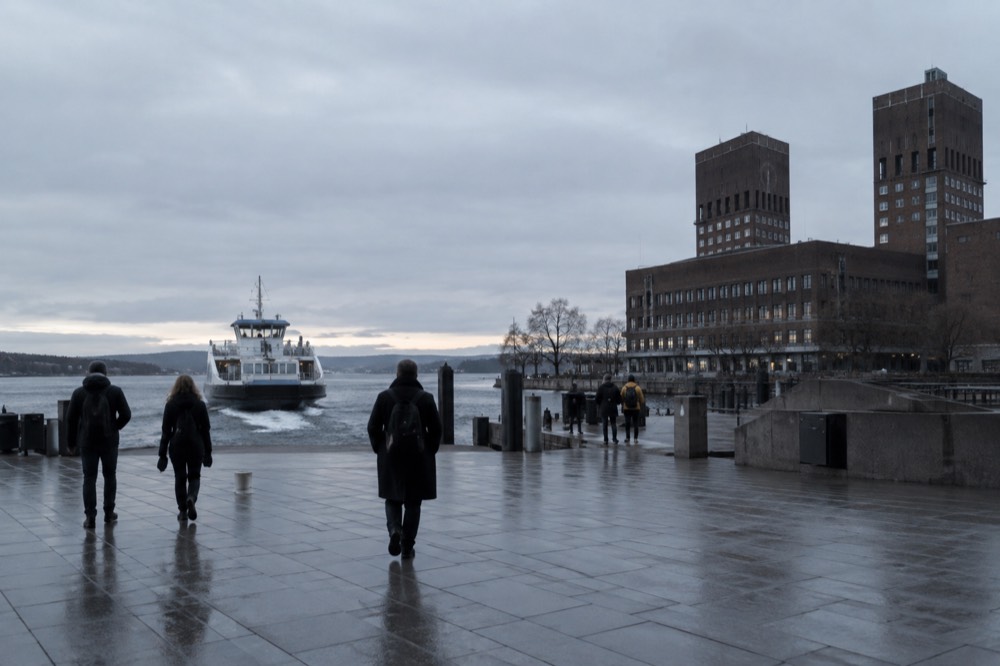
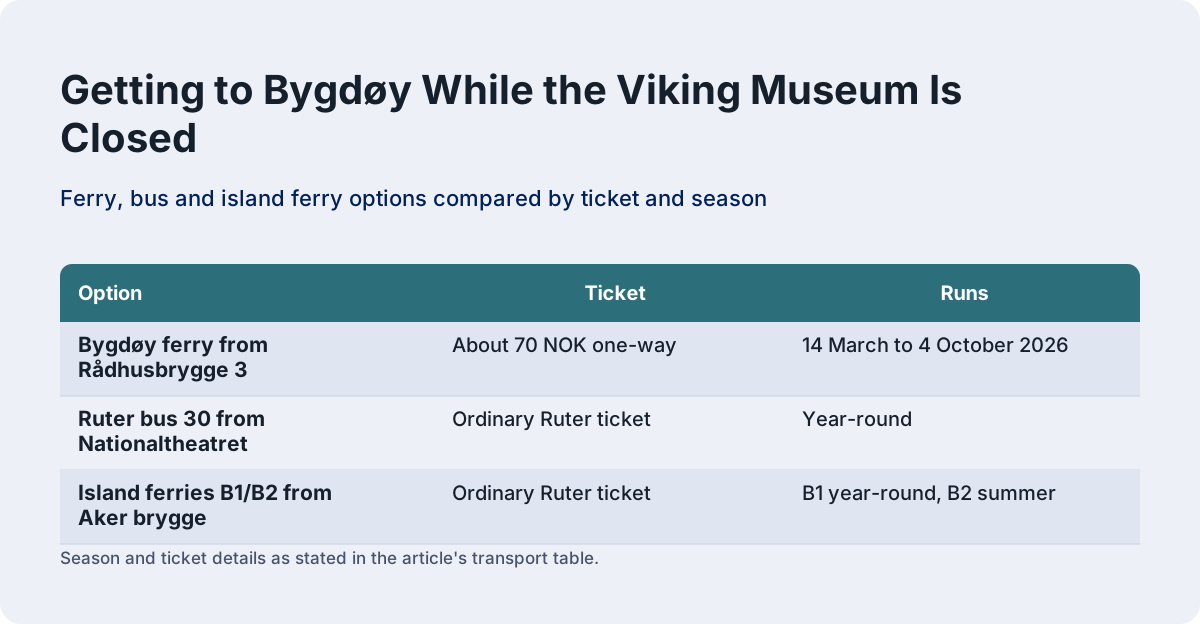
The museum stands on the Bygdøy peninsula southwest of the city center, on the same site as the old Viking Ship Museum, beside the Norwegian Museum of Cultural History. In season you reach Bygdøy by passenger ferry from Rådhusbrygge 3, every 20 minutes, about 10 minutes across; the rest of the year, Ruter bus 30 runs there year-round on an ordinary ticket.
The ferry detail matters because two different boat systems leave from the same waterfront and visitors mix them up constantly. The Bygdøy ferry is a seasonal sightseeing boat, running 14 March to 4 October in 2026, from Rådhusbrygge 3, platform F, at roughly 70 NOK one-way, and Ruter tickets are not valid on it, though the Oslo Pass is. The Oslofjord island ferries are a completely different system, they are Ruter lines, and they leave from Aker brygge. Two piers, two operators, two ticket rules.
Out of ferry season, bus 30 from Nationaltheatret serves the Bygdøy museums in about 15 minutes on a standard Ruter ticket. Once on the peninsula, the museums cluster walkably: the Dronningen pier serves the Norwegian Museum of Cultural History, the Bygdøynes pier serves Kon-Tiki, Fram and the Norwegian Maritime Museum, and the paths between the two run about 15 to 25 minutes on foot. The closed Viking museum site sits inland of the Dronningen side, behind hoardings.
| Option | Route | Runs | Ticket |
|---|---|---|---|
| Bygdøy ferry | Rådhusbrygge 3 to Dronningen and Bygdøynes | 14 March to 4 October 2026, every 20 min | About 70 NOK one-way, Oslo Pass valid, Ruter tickets NOT valid |
| Ruter bus 30 | Nationaltheatret to the Bygdøy museums | Year-round | Ordinary Ruter ticket |
| Island ferries B1/B2 | Aker brygge to Hovedøya, Gressholmen, Langøyene | B1 year-round, B2 summer | Ordinary Ruter ticket, different system entirely |
When Exactly Does the New Museum Open?
The official answer is 2027, stated as a year with no month, and the museum has not sharpened it despite repeated reporting that tries to. Internal targets reported secondhand point to late 2027, but funding decisions and the sheer volume of remaining object moves make any specific date unsafe to plan around. Treat 2027 as the year it could open, and check the museum's own site as your trip approaches.
The reason for the caution is that this date has moved before. Museum megaprojects routinely slip, and this one involves moving an entire national collection, more than 5,000 objects beyond the ships themselves, rehabilitating parts of the old building, and fitting out galleries for a display that is being built from scratch. The museum's English pages are the only source that carries the official line, and they say 2027. Other pages covering the same trip are gathered on Oslo Travel Guide.
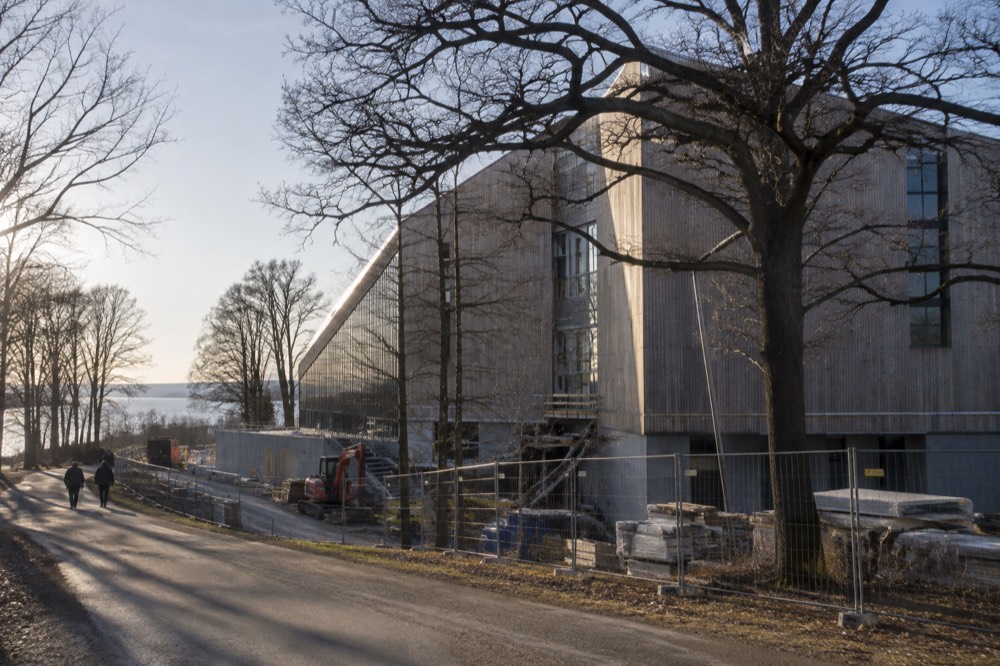
If you are booking a 2027 trip in advance, the honest advice is to build the itinerary without the museum and treat its opening as a bonus if it lands before your dates. Visitors with flexibility might aim for the second half of 2027 rather than spring, on the simple logic that a late-year target leaves less room for disappointment than an early one. But that is planning judgment, not a published date, and no page on this site will turn the year into something more precise.
What Does a Bygdøy Day Cost Without the Viking Museum?
A full Bygdøy day of the open museums, the Kon-Tiki at 180 NOK, the Fram at 180 NOK and the Norwegian Museum of Cultural History at 200 NOK, totals 560 NOK at full adult price, against a 24-hour Oslo Pass at 580 NOK that also covers every ferry, tram and metro ride inside zones 1 through 4N. Three museums plus transport puts the pass roughly at break-even, and any fourth stop tips it.
The pass math is the useful part, because Bygdøy is where the Oslo Pass earns its keep. The 2026 adult prices are 580 NOK for 24 hours, 845 NOK for 48 hours and 995 NOK for 72 hours, with children 6 to 17 at 290, 420 and 495 NOK. The pass includes the Bygdøy ferry, the island ferries, all Ruter transport in zones 1, 2, 3, 4V and 4N, and entry to more than 30 museums, each once per 24-hour period. The full breakdown lives in the Oslo Pass guide.
| Venue | Adult | Concessions | Notes |
|---|---|---|---|
| Kon-Tiki Museum | 180 NOK | Children 6-17: 70, seniors 140, students 70 | Family ticket 2+5: 400 NOK |
| Fram Museum | 180 NOK | Children 70, students 70, pensioners 140 | Open all year, longer hours May to September |
| Norwegian Museum of Cultural History | 200 NOK | Children 0-17 free, students 140 | Open-air sections best in the green season |
| Kon-Tiki + Fram combo | 325 NOK | Senior 250, child/student 125 | Bought at either museum |
| Kon-Tiki + Fram + Maritime Museum | 485 NOK | Senior 380 | The full Bygdøynes cluster |
| Museum of the Viking Age | Closed | Closed | Reopens 2027, no tickets on sale |
One more cost lever: the Oslo Pass covers the Vy train to and from Oslo Airport Gardermoen, but not the Flytoget airport express at 268 NOK. The Vy run takes about 23 minutes against Flytoget's 20 and rides on the pass, which is the single biggest saving the pass offers an arriving visitor. That fact is worth more than any museum discount on the peninsula.
Is Bygdøy Still Worth the Trip in 2026?
Yes. The peninsula holds four open museums, a working ferry, beaches at Huk and Paradisbukta, and the Oscarshall pleasure palace, none of which depend on the Viking collection. A visitor who skips Bygdøy because one museum is shut misses the Fram, the Kon-Tiki, an entire open-air folk museum and one of the prettiest boat rides in the city.
Plan it as a half-day minimum, a full day if the weather holds. The classic loop is the ferry out to Bygdøynes, the Kon-Tiki and the Fram side by side there, then the walk or the ferry hop to Dronningen for the cultural history museum, and the bus 30 back if the ferry schedule is in a gap. The Fram Museum guide covers what the polar ship interior is like, and the free things to do in Oslo roundup covers the peninsula's no-ticket side, the beaches and the coastal path.
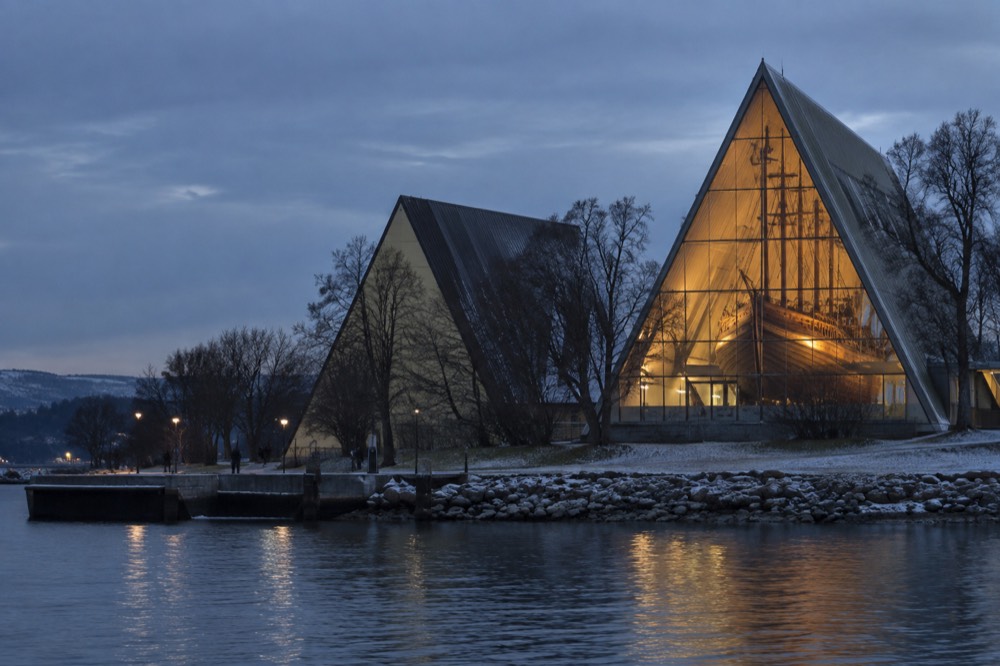
The Kon-Tiki deserves its stop even apart from the combo ticket. Thor Heyerdahl's balsa raft carried his crew across the Pacific, and the museum built around it tells that story alongside the Ra expeditions, and the ticket is among the best-reviewed museum entries in the city. It is a different century from the Vikings, but it is the same Norwegian instinct the new Museum of the Viking Age will celebrate: building a vessel and trusting it against open water.
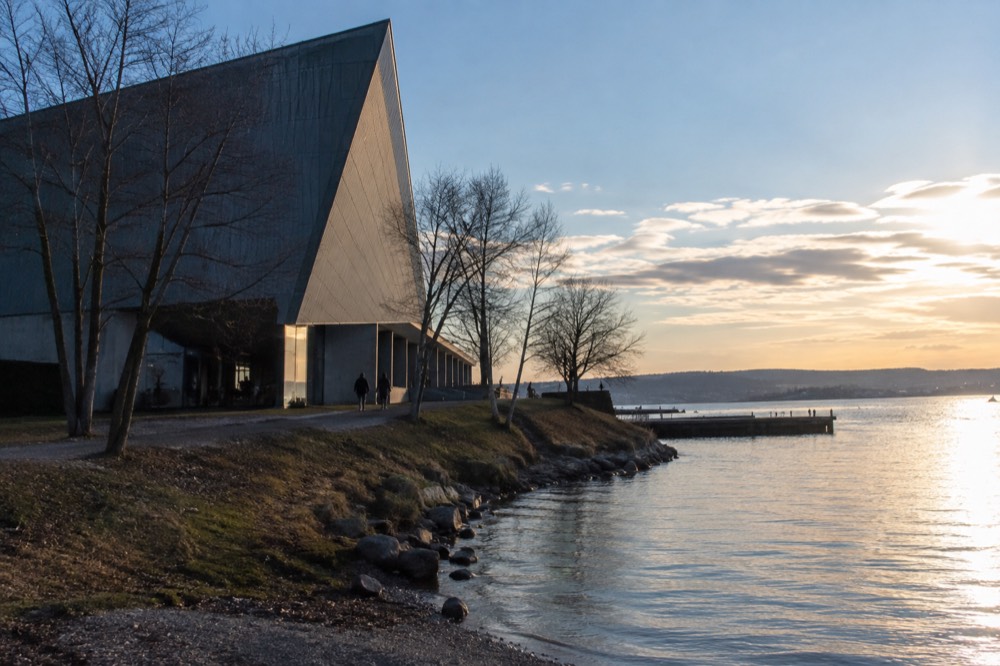
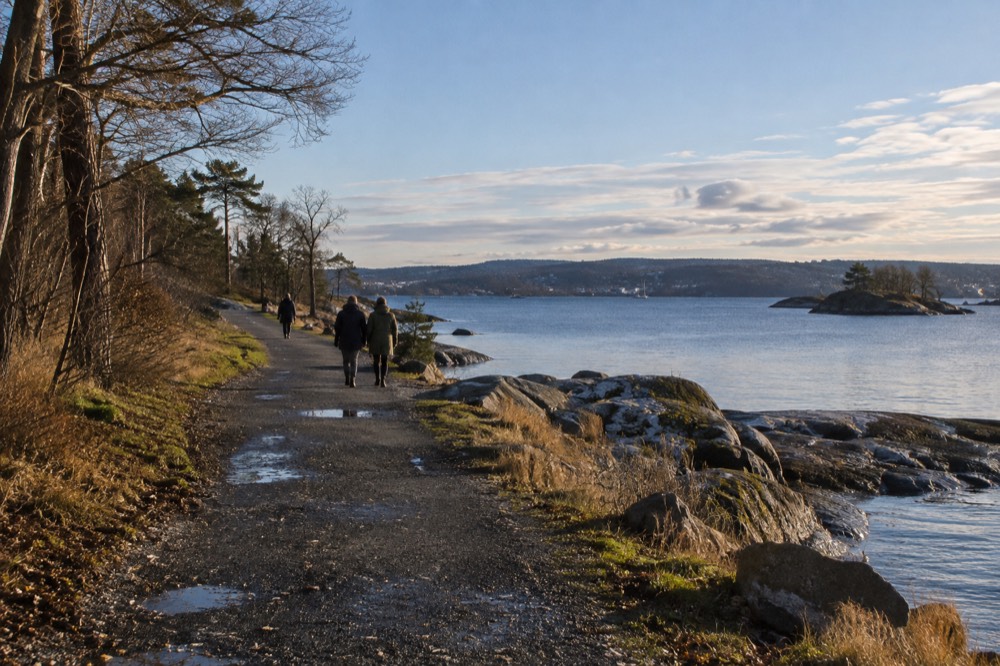
If museums are not the day's priority, Bygdøy still delivers. The beaches on the western side face the inner Oslofjord, the swimming spots are free and public, and July and August water temperatures typically sit at 15 to 20 °C, cool rather than balmy but genuinely swimmable on a warm afternoon. The peninsula is also flat and safe to cycle, and on a clear summer evening the light lasts past 22:00, with the sun setting at 22:43 at midsummer and never getting properly dark.
How Do You Plan a Trip Around a Museum That Is Not Open Yet?
Build the itinerary from what is open, book the Bygdøy museums and Viking Planet ahead in peak season, and leave a slot in any late-2027 trip that the Museum of the Viking Age can fill if it opens in time. The mistake to avoid is the reverse: scheduling a day around a closed building because an old article or a resold listing still describes it.
The stale-listing problem is real. Ticket platforms carried admission products for the closed museum after it shut, and search results still surface pages describing the old halls as if nothing changed. This site's rule is simple: no product selling entry to the Museum of the Viking Age appears anywhere in these pages, because none honestly exists. The bookable Viking experience in Oslo today is Viking Planet, and the bookable Bygdøy tickets are the Kon-Tiki, the Fram and their combos.
For a one-day or two-day structure, the one day in Oslo and 2 days in Oslo itineraries slot Bygdøy into the afternoon of a full day, with the morning given to the city center. The why the Viking museum closed answer page carries the short version of this story if you are planning quickly, and the things to do in Oslo master list is the page to rebuild a trip from. This site, Oslo Travel Guide, keeps every closure on this page rechecked against the museum's own statements, so the year 2027 stays the year 2027 until the museum itself says otherwise.
Common Questions About the Museum of the Viking Age
Is the Viking Ship Museum in Oslo open?
No. It closed on 1 October 2021 for a full rebuild and will reopen as the Museum of the Viking Age in 2027. No tickets are on sale and no listing that sells entry is honest.
When does the Museum of the Viking Age reopen?
The museum's official wording is "2027", with no month published. Reports of a specific November 2027 date are unconfirmed, so plan around the year only and check the museum's own site near your travel date.
Where are the Viking ships now?
All three ships, the Oseberg, the Gokstad and the Tune, have been moved into the new building on Bygdøy, along with the Oseberg sledges. They are in the structure but not on public display until the galleries open.
Can I see Viking things in Oslo while it is closed?
Yes. Viking Planet in the city center is the bookable interactive experience with a VR movie included, and the Historical Museum in central Oslo displays genuine Viking-age objects, including swords and jewelry.
Does the Oslo Pass cover the Museum of the Viking Age?
There is nothing to cover while it is closed. The pass does cover the other Bygdøy museums, the Bygdøy ferry and the island ferries, plus all Ruter transport in zones 1 through 4N, including the Vy airport train.
Is Bygdøy worth visiting without the Viking museum?
Yes. The Kon-Tiki Museum, the Fram Museum, the Norwegian Museum of Cultural History and the Norwegian Maritime Museum are all open, the ferry ride is one of the best in the city, and the beaches and coastal path are free.