Is Oslo Expensive? What a Trip Actually Costs in 2026
Yes and no. Norway is the sixth most expensive country in Europe, and Oslo sits at the top of it, but the parts of Oslo that make it worth visiting, the museums, the transport and the outdoors, cost less than most visitors expect.
Short answer
Oslo is expensive where you eat and drink, and cheap where you look. Statistics Norway puts household prices 28.6% above the EU average and alcohol at more than double. Yet the flagship sights, from Vigeland Park to the Opera House roof, are free, a 24-hour Oslo Pass is 580 NOK, and the Vy airport train is 134 NOK.
Norway is the sixth most expensive country in Europe on Statistics Norway's 2025 price-level survey, and Oslo is the most expensive city in it. That is the honest headline, and this page is not going to talk you out of it. But the number that matters is not the headline, it is the split. Alcohol and tobacco cost more than double the European average, food runs 33% above it, and those two lines are where a visitor's budget actually breaks. Museums, public transport, ferries, forests and the entire waterfront cost close to what they would in a mid-priced European city, and several of the best-known sights in Oslo cost nothing at all.
This page works through the real numbers, in Norwegian kroner, the currency you will actually be paying in. Every figure here comes from an official source: the statistics agency, the transport authority, the museum's own site or the tourist board. Where a number could not be verified, it does not appear.
So Is Oslo Expensive, or Is That a Myth?
Yes, Oslo is expensive, but unevenly, and the unevenness is the whole story. Prices facing Norwegian households run 28.6% above the EU average, food and non-alcoholic drinks sit 33% above it, and alcohol and tobacco cost more than double. Against that, the Oslo Pass is 580 NOK for 24 hours, the ferry to the museum peninsula is covered by it, and the two most visited sights in the city, Vigeland Park and the Opera House roof, charge nothing at all. A visitor who cooks nothing, drinks in bars and takes taxis everywhere will find Oslo brutal. A visitor who eats one restaurant meal a day, walks, and buys beer in a supermarket will find it roughly comparable to any other Scandinavian capital, and cheaper than a weekend in a top-tier European city in several specific places.
The myth cuts both ways. "Oslo is ruinously expensive" stops people from noticing that the museums are cheap for what they are: Fram is 180 NOK, Kon-Tiki is 180 NOK, Norsk Folkemuseum is 200 NOK and children under 18 get into the last two free or nearly so. "Oslo is fine, it's like anywhere" stops people from budgeting for the two things that genuinely hurt, restaurant dinners and bar drinks, where the SSB survey says the prices are more than double the European norm for the alcohol line alone.
The practical takeaway for planning: set your daily budget around food and drink, not around sights and transport, because those are the lines that can double your trip cost if you handle them casually.
How Expensive Is Oslo Compared to the Rest of Europe?
On Statistics Norway's 2025 purchasing-power-parity survey, Norway ranks as the sixth most expensive country in Europe. Relative prices facing Norwegian households stand 28.6% above the EU average. Food and non-alcoholic drinks are 33% above the European average, and alcohol and tobacco are more than double it. Restaurants and hotels sit in the same band as Denmark, above Sweden, so Oslo is not an outlier within Scandinavia, it is the regional norm at the top of the European table.
Those are index comparisons, not menu prices, and they are the most defensible numbers available because they come from the statistics agency itself rather than a crowdsourced price site. What they mean in practice is that the same basket of goods costs roughly a third more in Oslo than the European average, and that the gap widens dramatically the moment alcohol enters the basket.
Here is how the comparisons shake out, using only the verified index figures:
| Category | Norway vs EU average | What it means for a visitor |
|---|---|---|
| Overall household prices | +28.6% | Roughly a third more for the same basket |
| Food and non-alcoholic drinks | +33% | Supermarket shopping is dear but manageable |
| Alcohol and tobacco | More than double | The single biggest avoidable cost |
| Restaurants and hotels | Above Sweden, level with Denmark | Comparable within Scandinavia |
| Public transport | Not an outlier | A 24-hour pass costs less than one bar round |
| Museums and attractions | Not an outlier | 180-200 NOK for world-class museums |
If you want to go deeper on the food line specifically, we have a dedicated breakdown of eating out in Oslo without overspending and a full answer on the price of beer in Oslo, which is where the alcohol premium bites hardest.
Where Does the Money Actually Go in Oslo?
Three lines break budgets in Oslo: restaurant dinners, alcohol and taxis. Statistics Norway's survey puts alcohol at more than double the European average, restaurants in the same band as Denmark, and the airport taxi is a regulated per-operator fare that can exceed the entire day's budget of a careful traveler. None of those three are unavoidable.
Start with alcohol, because it is the biggest single multiplier. A glass of wine in a Norwegian restaurant carries both the double-the-EU-average alcohol tax base and restaurant markup on top of it. The workaround is structural and legal: supermarkets sell beer and cider up to 4.7% ABV during limited evening hours, and Vinmonopolet, the state monopoly, is the only place to buy wine and spirits for off-premise drinking. It keeps short hours, closes all day Sunday and early on Saturdays, so a Sunday arrival with no beer in the hotel room is a classic first-night mistake. Buy on arrival day, not the day you need it.
Restaurants are the second line. The survey places Norwegian restaurant prices above Sweden and level with Denmark, which in practice means a main course at a mid-range Oslo restaurant costs what a main course costs in Copenhagen. What saves the budget is that Oslo's casual eating scene is strong: food halls, bakeries and supermarket hot counters cover a full day of eating for what one sit-down dinner costs. Mathallen, the main food hall, is the obvious anchor, and it has its own guide to Mathallen and cheap eating.
Taxis are the third. Oslo's center is walkable end to end in under an hour, the metro covers the hills, and the ferries cover the water, so a taxi is genuinely a rare need. The one place travelers get caught is the airport run, covered in its own section below.

What Is Cheap in Oslo? More Than You Would Expect
The cheap list is long: Vigeland Park is free and open 24 hours a day all year, the Opera House roof is free to walk on, the entire metro network sits inside one fare zone, the island ferries are ordinary public transport, and the forests that ring the city, Nordmarka, are free with groomed ski trails in winter. Museum entry runs 180 to 200 NOK at the majors, with children under 18 free or heavily discounted at several of them. This is the part of Oslo that the "expensive" headline hides, and it is not a small part, it is most of what the city is known for.
The free list deserves its own inventory, because it includes genuinely top-tier sights rather than filler:
| Sight or activity | Cost | Notes |
|---|---|---|
| Vigeland Park (Frognerparken) | Free | Open 24 hours, all year, over 200 sculptures |
| Opera House roof | Free | Walk on the marble roof, no ticket |
| Akershus Fortress grounds | Free | The fortress exterior and grounds; museums inside are paid |
| Oslofjord islands | Ordinary Ruter ticket | Hovedøya's abbey ruins, beaches on Langøyene |
| Nordmarka forests | Free | Groomed ski trails in winter, hiking all summer |
| Ekebergparken sculpture park | Free | Large outdoor sculpture park with fjord views |
| Free walking tours | Tip-based | Several operators, roughly two hours |
Two of those free items need a note. The island ferries are ordinary public transport: lines B1 and B2 leave from Aker brygge on a standard Ruter ticket, and they are not to be confused with the seasonal Bygdøy museum ferry, which is a separate operator from Rådhusbrygge 3 that does not accept Ruter tickets but does accept the Oslo Pass. The distinction between those two boat systems trips up a lot of guides, and we cover it in detail on the page about Oslo's ferries.
The second note is the free walking tours, which are genuinely free, tip-based, and in a city with a 33% food premium they are the cheapest structured sightseeing that exists. The largest one in the city runs about two hours and has over two thousand reviews behind it.
For a fuller inventory of no-cost sightseeing, see free things to do in Oslo, which covers the free list in depth, including the swimming spots that cost nothing in summer.
Is the Oslo Pass Worth It for Saving Money?
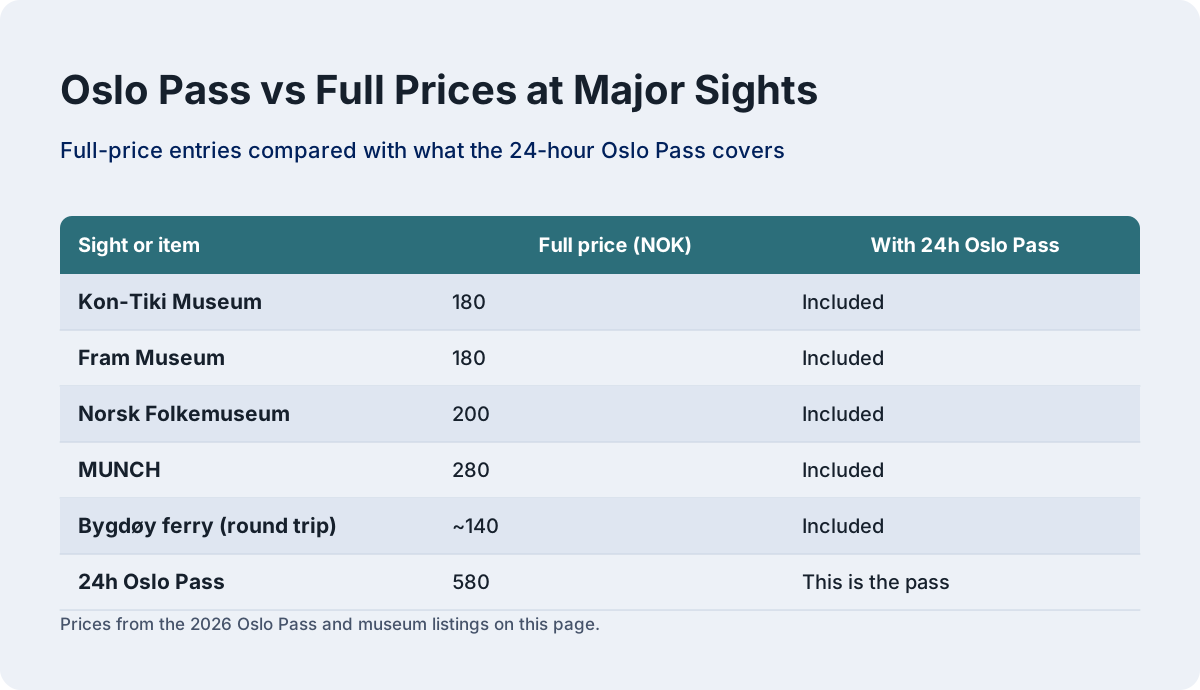
The 2026 Oslo Pass costs 580 NOK for 24 hours, 845 NOK for 48 and 995 NOK for 72, and it includes entry to over 30 museums plus all public transport in zones 1, 2, 3, 4V and 4N, which includes the Vy trains to and from Oslo Airport Gardermoen. The break-even is reachable in a single busy day: three Bygdøy museums at full price total 560 NOK before any transport, against a 580 NOK pass that also carries you there and back.
The maths is straightforward because the museum prices are fixed and published. Here is the working:
| Item | Full price (NOK) | With 24h Oslo Pass |
|---|---|---|
| Kon-Tiki Museum | 180 | Included |
| Fram Museum | 180 | Included |
| Norsk Folkemuseum | 200 | Included |
| MUNCH | 280 | Included |
| Bygdøy ferry (round trip) | ~140 | Included |
| Ruter transport, day | Pass price varies | Included |
| 24h Oslo Pass | 580 | This is the pass |
Three museums plus the museum ferry already clears the pass price, and everything after that, the metro to Holmenkollen, the island ferries, a second museum, is effectively free. The pass weakens if your day is mostly outdoors and free sights, and it weakens badly if you only visit one museum. We run the full comparison, including the child and senior pricing and the student discount that only applies in person at the Visitor Centre, on the dedicated pages for the Oslo Pass and whether the Oslo Pass is worth it.
One detail worth knowing now: the pass covers the airport train, but only the Vy trains, not Flytoget and not the airport coach. That single sentence saves more money than any other on this page, and it gets its own section below.
What Does the Airport Transfer Really Cost?
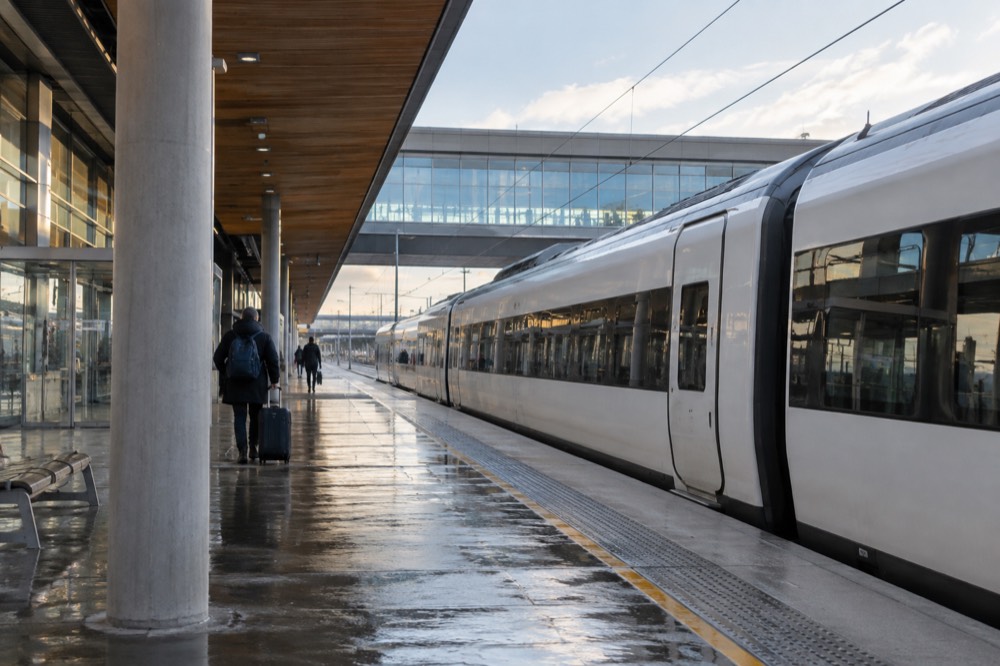
Flytoget, the airport express train, costs 268 NOK adult one-way and takes about 20 minutes to Oslo S, departing every 10 minutes. The Vy regional trains cover the same route in about 23 minutes and a multi-zone Ruter ticket covering zone 1 through zone 4N is valid on them, at roughly half the price, about 134 NOK for the point-to-point fare. The Oslo Pass covers the Vy trains outright and does not cover Flytoget.
That is the highest-value money fact in this guide, and most guides get it wrong or omit it entirely. The airport is in Ruter zone 4N, and the Vy trains that call there are ordinary public-transport trains. You do not need a special airport ticket, you need an ordinary Ruter ticket covering the zones, bought in the Ruter app where it is cheapest. The three-minute time difference between the two trains is invisible in practice; the price difference is not.
| Option | Adult one-way | Time to Oslo S | Notes |
|---|---|---|---|
| Flytoget express | 268 NOK | ~20 min | Every 10 minutes; not on the Oslo Pass |
| Vy regional train | ~134 NOK | ~23 min | Ruter multi-zone ticket valid; Oslo Pass covers it |
| Airport coach | Not verified | 45-65 min | Traffic-dependent; confirm the fare live |
| Taxi | Regulated per operator | Varies | The expensive option; agree the fare in advance |
The coach and taxi fares are deliberately left without numbers here because they were not verified against a primary source, and this site does not publish unverified prices. The train comparison above is fully sourced from the operators' own pages. For the complete picture, including how the two trains compare on comfort and luggage, see Flytoget vs Vy and the wider airport-to-city guide.
What Do Oslo's Museums Actually Cost?
The major Oslo museums cluster tightly between 180 and 280 NOK for adults: Fram and Kon-Tiki at 180, Norsk Folkemuseum at 200, the Ski Museum and Holmenkollen jump tower at 195, and MUNCH at 280 NOK, or 200 after 18:00. Under-18s are free at Norsk Folkemuseum, the Nobel Peace Center and MUNCH, and under-25s pay 100 NOK at MUNCH. Combination tickets on Bygdøy cut the cluster further: Kon-Tiki plus Fram is 325 NOK, and all three peninsula museums are 485 NOK.
The full published price list, from the museums' own sites:
| Museum | Adult (NOK) | Child / concession notes |
|---|---|---|
| MUNCH | 280 (200 after 18:00) | Under 25: 100; 17 and under free |
| Norsk Folkemuseum | 200 | Children 0-17 free |
| Ski Museum + Holmenkollen tower | 195 | See holmenkollen.com |
| Fram Museum | 180 | Children 70, students 70, pensioners 140 |
| Kon-Tiki Museum | 180 | Children 6-17: 70; family ticket 400 |
| Nobel Peace Center | 180 | Children 0-17 free |
| Astrup Fearnley Museet | 180 | Under 20 free |
| Vigeland Museum | 120 | The sculpture park itself is free |
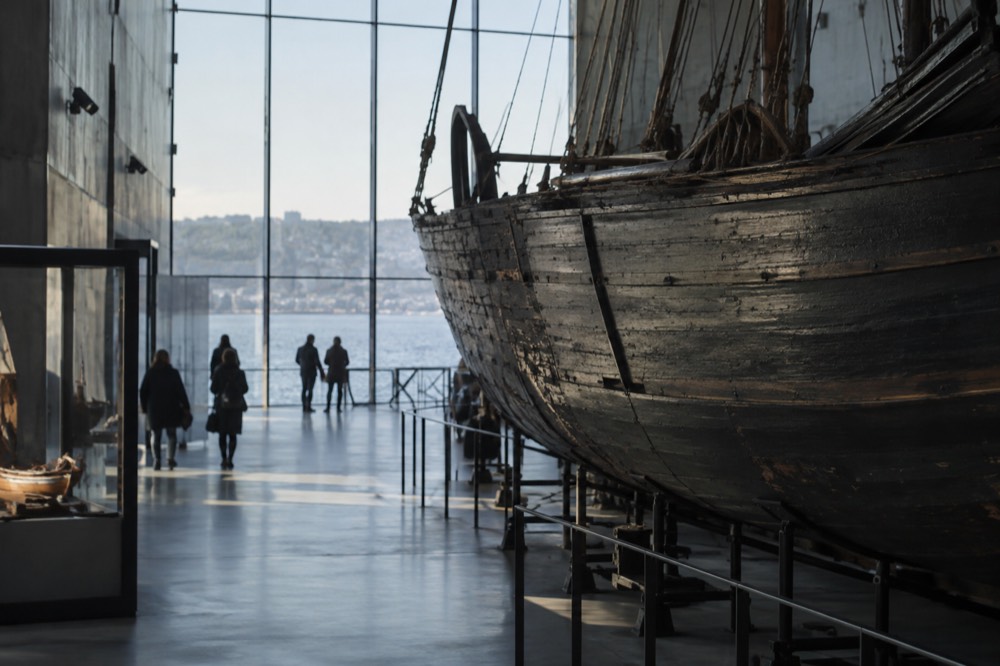
One museum is missing from that table and from every honest price list: the Museum of the Viking Age, the former Viking Ship Museum on Bygdøy, is closed for rebuilding and will reopen in 2027. Listings still selling entry to it exist and should be avoided; the honest substitute is Viking Planet, an interactive Viking experience in the city center, which is bookable. The closure and the reopening are covered on the Museum of the Viking Age page.
The Bygdøy combination tickets are the quiet bargain in that table. If you are doing the museum peninsula without an Oslo Pass, Kon-Tiki plus Fram at 325 NOK is a real saving against buying the two separately, and the three-museum ticket at 485 NOK is better still. Of course, the 24-hour pass at 580 NOK beats all of them if you are also using transport that day, which is exactly the calculation in the pass section above.
How Much Does Food and Drink Cost in Oslo?
Food and non-alcoholic drinks run 33% above the European average on the SSB survey, and alcohol is more than double, so the honest answer is that eating and drinking is where an Oslo budget lives or dies. A workable structure: one restaurant meal a day, supermarket or bakery food for the rest, and beer bought in supermarkets rather than bars, where the markup on top of the already-taxed base price is what produces the shocking bar bill.
What this site will not do is print a specific price for a beer, a coffee or a main course. Those figures were not verified against a primary source in this research pass, and an invented number dressed as a fact is worse than none. What can be said with full sourcing is the index comparison: the same restaurant meal that costs the European average costs roughly a third more in Oslo, and the same drink costs more than double the average once the alcohol taxes are stacked on.
The structural workarounds are real and worth planning around:
- Supermarkets sell beer and cider up to 4.7% ABV, with a fixed evening cut-off on sales.
- Vinmonopolet, the state monopoly, is the only outlet for wine and spirits, closed Sundays and public holidays, early close on Saturdays.
- Bakeries and supermarket hot counters cover breakfast and lunch at a fraction of cafe prices.
- Food halls, above all Mathallen, let you assemble a good dinner without restaurant service charges.
- Tap water in Oslo is excellent and free everywhere; there is no reason to ever buy bottled water. More on that on the tap water page.
Tipping, for the record, is not a budget line: service is included in Norwegian prices, and rounding up or leaving something like 5 to 10% for good service is voluntary rather than expected. The card terminal may prompt, but declining it is completely normal. The norms are laid out in full on tipping in Oslo.
What Does a Realistic Daily Budget Look Like?
A bare-bones Oslo day, free walking tour, supermarket food, one museum, walking and public transport, runs on a small fraction of a restaurant-and-bar day. The swing between a budget day and a comfortable day in Oslo is wider than in most European cities, because the expensive lines are the optional ones. Here is a planning framework built only from the verified figures on this page:
| Budget style | Daily structure | Verified cost anchors |
|---|---|---|
| Bare bones | Free sights, supermarket food, one museum | Museum 180 NOK; islands on an ordinary ticket |
| Light | Free walking tour, bakery lunch, two museums | Pass maths: 580 NOK covers a full day |
| Comfortable | Restaurant dinner, one bar round, museum pass | Alcohol at double the EU average is the swing |
| Full price | Taxis, dinners, bar drinks throughout | Airport taxi alone can exceed a budget day |
Notice what is not in the bare-bones row: suffering. The free sights in Oslo are not the second-rate ones, they include the single most visited attraction in the country. The budget traveler's Oslo and the comfortable traveler's Oslo share the same waterfront, the same parks and the same ferries, and the difference is almost entirely what happens after 18:00.
For trip-level planning rather than daily, the pages on how many days in Oslo is enough and the full Oslo trip cost breakdown extend this framework across a whole visit.
Does the Season Change the Cost?
Yes, and mostly through the flight and the daylight rather than the ground costs, which are stable year-round. Museum prices, transport fares and the Oslo Pass do not vary by season. What varies is the flight price, the amount of daylight you get for your money, and which free activities are available: winter gives you the forests and the dark-season walks, summer gives you the islands and the swimming, and both are free.
The ground-cost stability is worth stating plainly because it simplifies planning. A 180 NOK museum ticket is a 180 NOK museum ticket in January and in July. The Oslo Pass is the same price all year. What the season changes is what your money buys in experience terms: in late June you get 18 hours and 50 minutes of daylight, with the sun setting at 22:43, and in late December you get 5 hours and 53 minutes, with sunset at 15:11. That is more than a threefold swing, and it is the single most under-planned variable in an Oslo trip, covered in full on the Oslo daylight hours page.
One seasonal note that surprises people: August, not November, is Oslo's wettest month on the 1991-2020 normals, at 103 mm. If you are choosing a cheap shoulder month on the assumption that late summer is dry, the statistics disagree. The month-by-month picture, including temperatures and the best-value windows, is on the best time to visit Oslo.
The Cheap-first Way to Spend Day One
If the numbers above say anything, it is that the cheapest first day in Oslo is also one of the best ones. A free walking tour of the center, roughly two hours and tip-based, plus the free Opera House roof and an ordinary ticket for the metro or the ferry, adds up to a full day for the price of one museum entry. The structure of the city makes thrift feel like a plan rather than a compromise.
Start on a free walking tour of the center, roughly two hours, tip-based, run by the largest free-tour operator in the city with over two thousand reviews behind it. Walk the Opera House roof afterward, which costs nothing. Take the metro or the ferry depending on the season, both covered by an ordinary ticket or the pass. If there is money left in the day's budget, put it into one museum, and Kon-Tiki is the strongest ticket value on the peninsula at 180 NOK with over a thousand reviews behind it.
And if the day is more about the city's best-known free sight, Vigeland Park, there is a way to spend a little money on it well: a guided art walk of the sculptures, an hour and a half with a guide who can read the work, which is the only bookable way to get depth out of a park that charges nothing to enter.
That is the shape of an affordable Oslo: free structure, paid highlights, and the expensive lines, dinner and drinks, treated as deliberate choices rather than defaults. For the fuller treatment of the no-cost side of the city, see free things to do in Oslo, and for the opposite end of the planning question, the Oslo on a budget guide builds a complete low-cost itinerary. The site behind all of this, Oslo Travel Guide, keeps every price on its pages verified against the operator or the authority that sets it.
Common Questions About Oslo Costs
Is Oslo expensive compared to other European cities?
Yes, but unevenly. Norway is the sixth most expensive country in Europe, with household prices 28.6% above the EU average. Alcohol and tobacco cost more than double the European average and food runs 33% above it, while museums, public transport and the outdoors are close to the European norm, and several top sights are free.
How much money do I need per day in Oslo?
It depends almost entirely on food and drink choices. A day built on free sights, supermarket food and one museum can run on a very small budget, since museum entry is 180-200 NOK and the biggest sights are free. A day with a restaurant dinner and bar drinks roughly doubles or triples, because alcohol carries more than double the European average price.
Is the Oslo Pass worth the money?
Usually yes on a busy museum day. The 24-hour pass is 580 NOK and includes over 30 museums plus all public transport in zones 1 through 4N, including the Vy airport trains. Three Bygdøy museums alone cost 560 NOK at full price before any transport.
What is the cheapest way to get from Oslo Airport to the city?
The Vy regional trains. They take about 23 minutes against Flytoget's 20, and a multi-zone Ruter ticket covering zone 1 through 4N is valid on them, at roughly half the Flytoget fare of 268 NOK. The Oslo Pass also covers the Vy trains but not Flytoget.
Is food expensive in Oslo?
Food and non-alcoholic drinks run 33% above the European average, and restaurant meals sit in the Danish price band. The workaround is structural: bakeries, supermarket hot counters and food halls cover a day of eating for a fraction of restaurant prices.
Is alcohol really double the price in Norway?
On the SSB survey, yes: the alcohol and tobacco category costs more than double the European average. Supermarkets sell beer up to 4.7% ABV within limited hours, and Vinmonopolet, the state monopoly, is the only outlet for wine and spirits, closed Sundays and all public holidays.