Nordmarka: Oslo's Forest for Hiking, Skiing and Snowshoeing
Nordmarka is the marked forest that begins where Oslo's buildings stop, and you reach it on an ordinary metro ticket. This guide covers the trailheads, the seasons, the guided tours, and the planning facts most visitors get wrong.
Short answer
Nordmarka is a vast protected forest north of central Oslo, reached by T-bane Line 1 to Frognerseteren or Line 5 to Sognsvann, both inside Ruter zone 1. Access is free year-round. In winter it holds groomed cross-country ski trails; in summer it is Oslo's main hiking and swimming country, with guided snowshoeing, hiking and ski tours from about $72 to $113.
What Is Nordmarka?
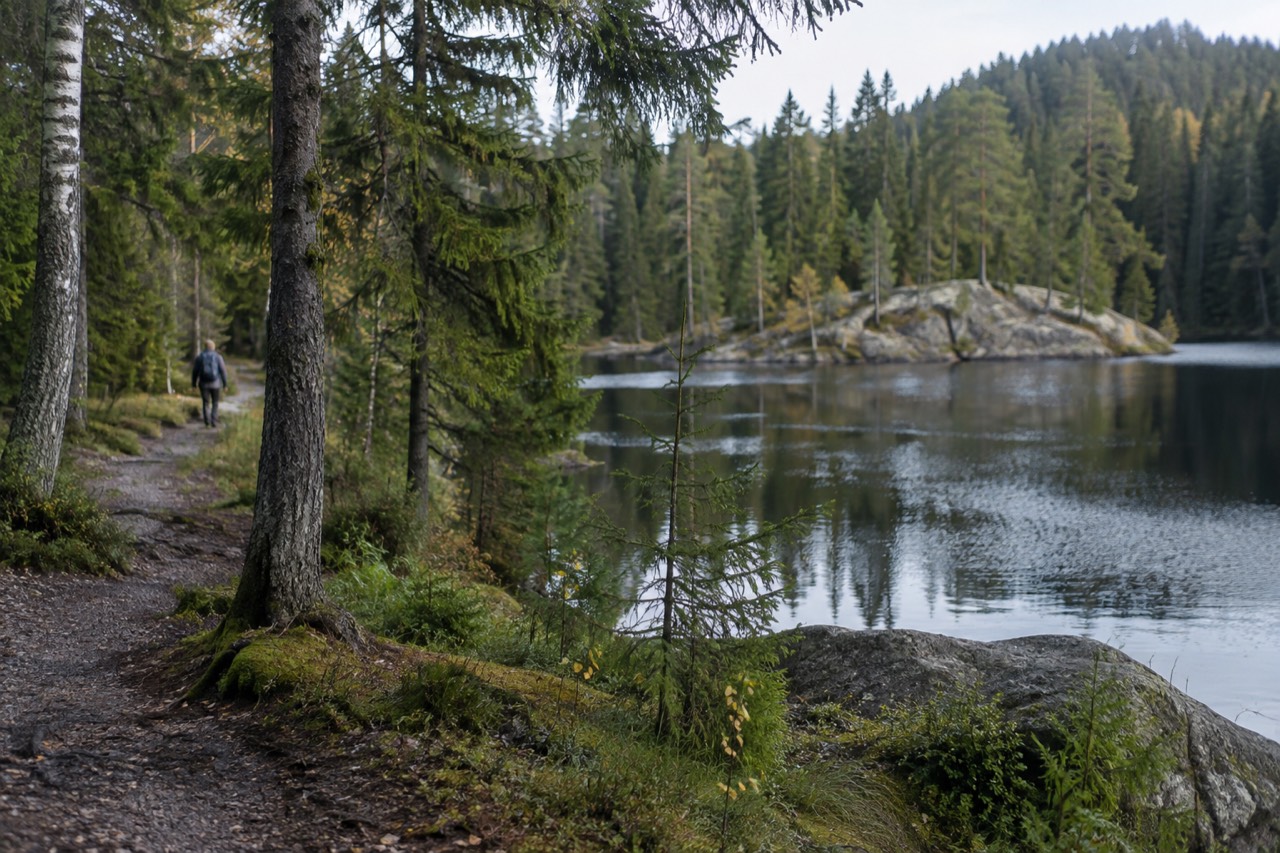
Nordmarka is the protected forest that covers the hills immediately north of Oslo, and it is the reason the city can honestly market itself as a capital with wilderness at the end of a metro line. It is not a park with an entrance and a gate; it is a working, marked, free-to-enter forest of trails, lakes and hills that starts where the last buildings stop and runs for many kilometres beyond. For a visitor, that single fact reframes the whole trip: on the same ordinary ticket that carries you between museums, you can be standing on a forest trail within half an hour of the city center.
The forest sits high above the city, and the climb out of Oslo is part of the experience. Metro Line 1 rises through Holmenkollen and terminates at Frognerseteren, one of the classic trailhead gateways to the area. Further east, Line 5 ends at Sognsvann, a lake surrounded by easy trails that has become the default beginner entrance. Between and beyond those two, the network of footpaths, ski trails and forest roads spreads north across a landscape of pine, birch, bare rock and dark water.
Nordmarka is managed and maintained as outdoor recreation country. In winter the ski trails are groomed by Skiforeningen, the association that has cared for this network for over a century, and its live trail and snow reports are the resource locals check before they go. In summer the same corridors become hiking routes between lakes and cabins. The water in the bigger lakes is swimmable in July and August, when typical temperatures sit in the 15 to 20 °C (59 to 68 °F) range, cool rather than warm, which is exactly how locals like it.
The reason this matters for a trip planner is simple: very few world capitals have anything comparable on public transport. A city that offers the Opera House roof, MUNCH and a genuine forest on one fare is a different proposition from a city that offers only the first two. If your question is whether Oslo deserves two or three days rather than one, Nordmarka is a large part of the answer, and our one day in Oslo itinerary shows where a forest excursion fits if time is short.
How Do You Get to Nordmarka Without a Car?
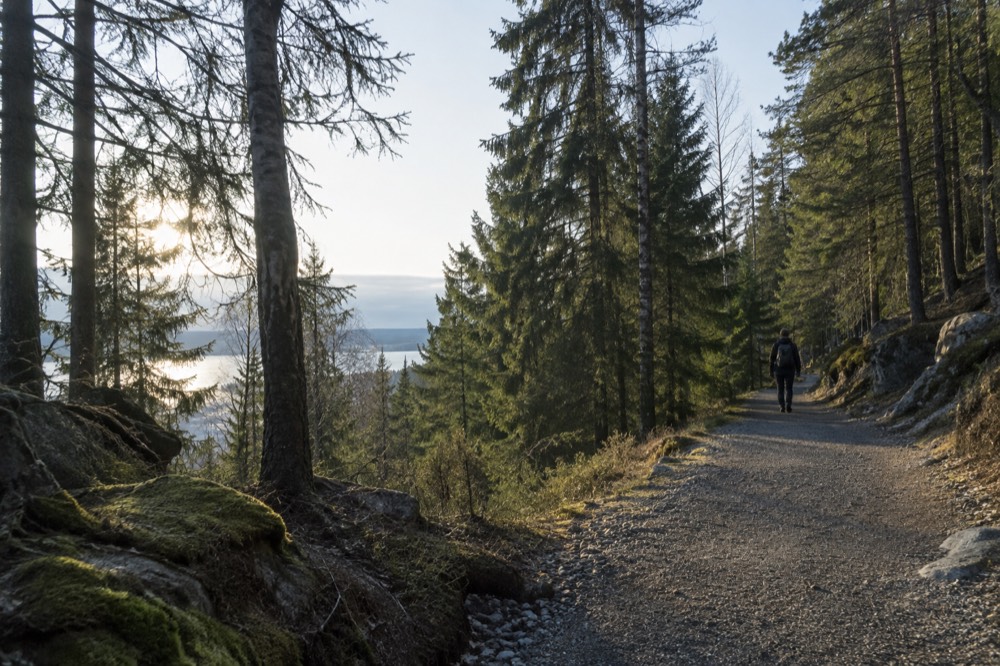
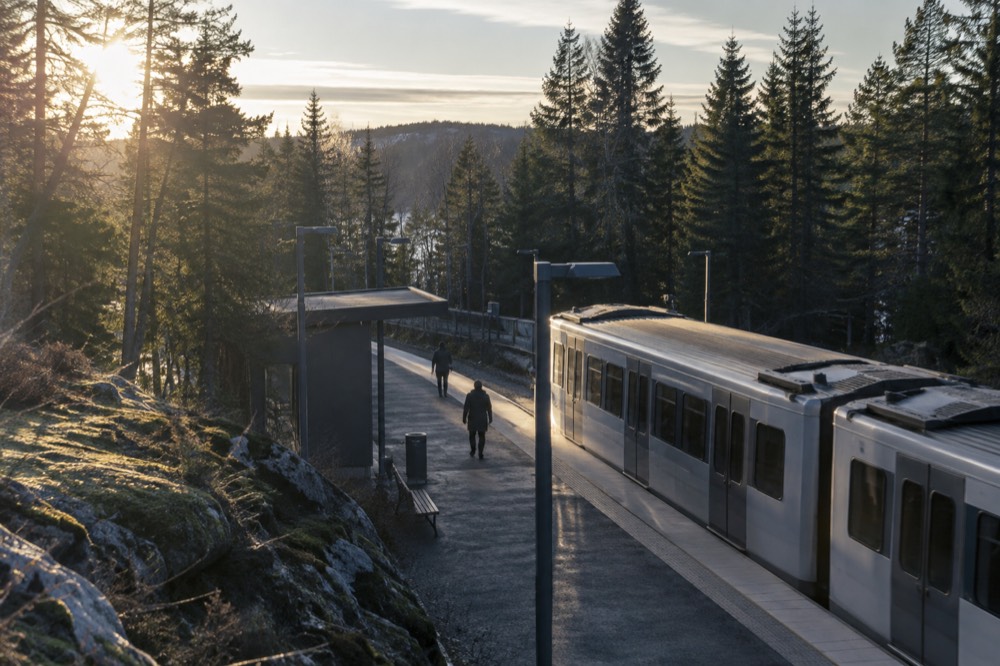
You take the metro. Line 1 to Frognerseteren and Line 5 to Sognsvann are the two main gateways, both inside Ruter zone 1, so the ride costs the same as any inner-city trip and is covered by the Oslo Pass. Frognerseteren sits at the top of the western line, reached in roughly twenty minutes from Nationaltheatret; Sognsvann is the northern terminus of Line 5, about the same ride from the center. No booking, no tour bus, no rental car: the forest starts where the T-bane stops.
The two stations serve different visitors, and choosing between them is the first real decision of the day. Frognerseteren is the high, dramatic entrance: you step out already well above the city, with trails running north into the deeper forest and views back over the Oslofjord on clear days. Sognsvann is the easy, family-friendly entrance, with a flat circuit around the lake that takes under an hour at a stroll and connects to longer routes for those who want them. Both stations have become destinations in their own right, and both are covered in more detail in our guide to getting around Oslo.
| Gateway | Line | Ride from the center | Character | Best for |
|---|---|---|---|---|
| Frognerseteren | T-bane Line 1 | About 20 minutes from Nationaltheatret | High trailhead, 469 metres above sea level, views over the city | Serious hikes, long routes, sunset views |
| Sognsvann | T-bane Line 5 | Around 20 minutes from central stations | Lake circuit, wide flat paths | Families, beginners, runners, short walks |
| Holmenkollen | T-bane Line 1 | About 15 minutes | Ski jump and museum stop on the way up | Combining a landmark with a forest start |
| Røa / Bogstad direction | T-bane Line 2 + bus or foot | 30 to 45 minutes | Western entrances, Bogstad estate and lake | Quieter trailheads, longer day loops |
Two practical notes make the trip smoother. First, zone 1 covers the entire metro network including both Nordmarka termini, so there is no fare calculation to worry about, and the Oslo Pass includes these rides alongside its museum entries. Second, the last trains back run later than most visitors expect on a Friday or Saturday but thin out on weekday evenings, so check the evening timetable in the Ruter app before you commit to a long dusk hike, especially between October and March when darkness arrives early. The rules for tickets, apps and validity windows are covered in full in our Ruter tickets guide.
If you would rather not navigate forest trails on your own, or you are travelling in winter when the snow changes everything, guided products run from the city into exactly this country, and the strongest ones cover snowshoeing, the signature winter experience of the Norwegian capital. The three below are the natural picks: the snowshoe tour that is this article's featured product, and the two fjord cruises that pair well with a forest day on a longer stay.
What Can You Actually Do in Nordmarka in Winter?
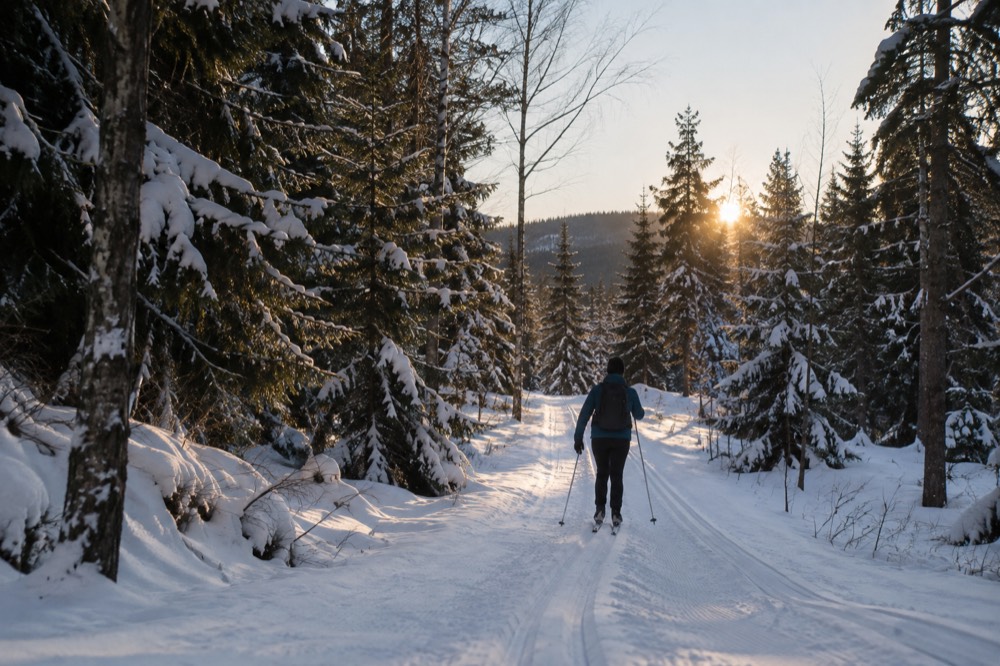
Winter is Nordmarka's main season, and cross-country skiing is its core activity: a groomed trail network cared for by Skiforeningen, with conditions published live on its site, reached by metro with your own boots or rented equipment. For visitors, the two bookable formats are guided snowshoeing, which needs no technique at all, and a learn-to-ski half-day, which turns the forest into a lesson slope. Both run around three and a half hours and include the gear.
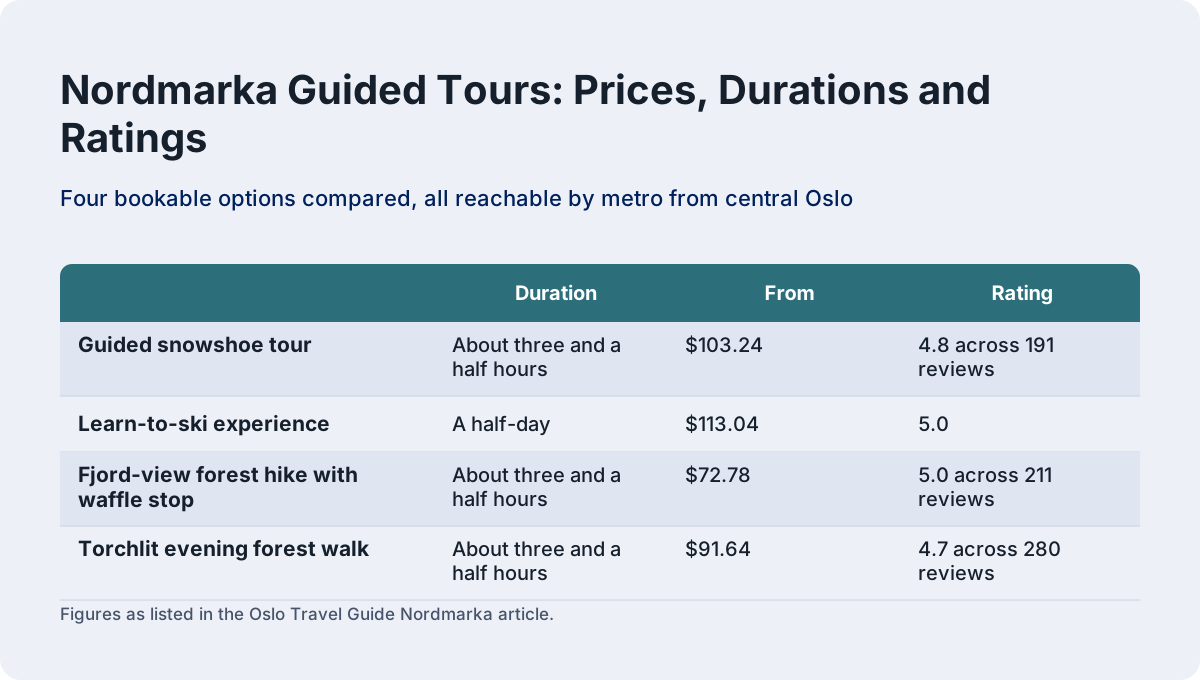
The guided snowshoe tour is the product we would put in front of almost any first-time winter visitor, and it is the related tour for this page. It runs about three and a half hours, from $103.24, holds a 4.8 rating across 191 reviews, and is built around exactly the scenario most travelers are in: no skis, no technique, no idea where the safe trails are, and a genuine wish to be out in a snowy Norwegian forest rather than looking at it through a museum window. Snowshoeing is walking, amplified. If you can walk, you can do it, and the tour handles equipment, route and pace.
Beyond snowshoes, the ski options split by ambition. Locals ski here from first snowfall to last, on trails that range from floodlit evening loops near the center to long mountain routes deep in the forest, and the grooming association's live reports are the honest source on what is open. For a visitor who has never skied, the learn-to-ski experience is the honest product: a half-day, from $113.04, rated 5.0 across 93 reviews, which teaches the basics in a city where skiing is a birthright rather than a resort luxury. The forest's network is flat-to-gentle by alpine standards, which is precisely what makes it forgiving terrain to learn on. More context on the full winter picture is in our skiing near Oslo guide.
Is a guide worth booking, or should you just ride the metro and walk in?
That depends on daylight, snow and confidence, and the honest answer is that winter tilts the scales firmly toward a guide. From late December through January the sun is up for under six hours a day, and the forest is genuinely dark outside that window. Snow hides the summer paths, signposts sit at skier eye-level, and frozen lakes look like trails. A guide carries the route, the headtorches, the warmth stops and the institutional knowledge of which trail was groomed yesterday. The button below checks live availability on the snowshoe tour, which allows free cancellation if the forecast turns against you.
What Are the Best Hikes in Nordmarka in Summer?
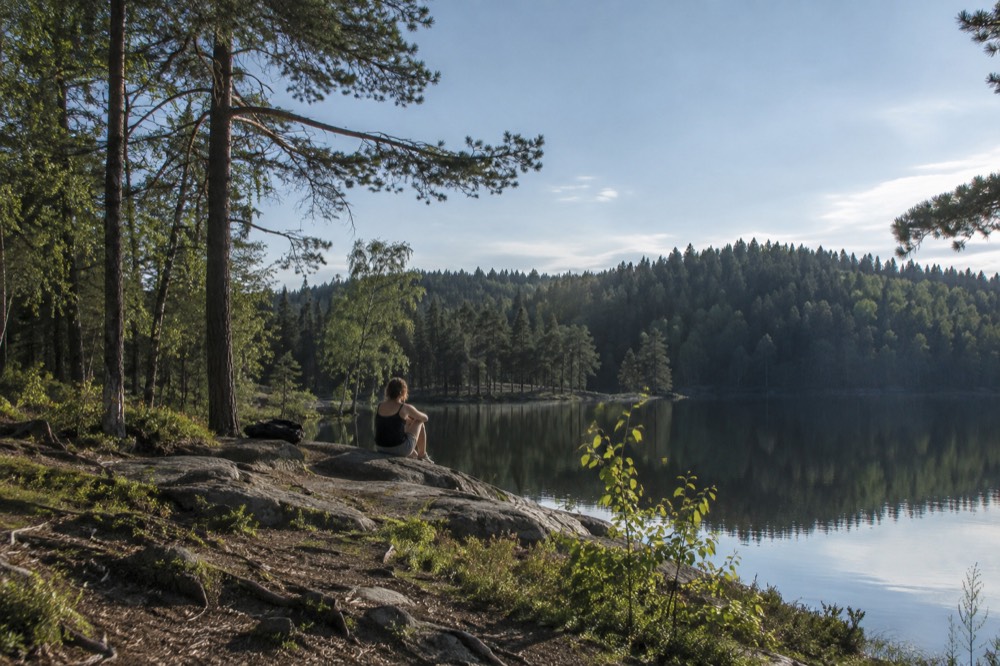
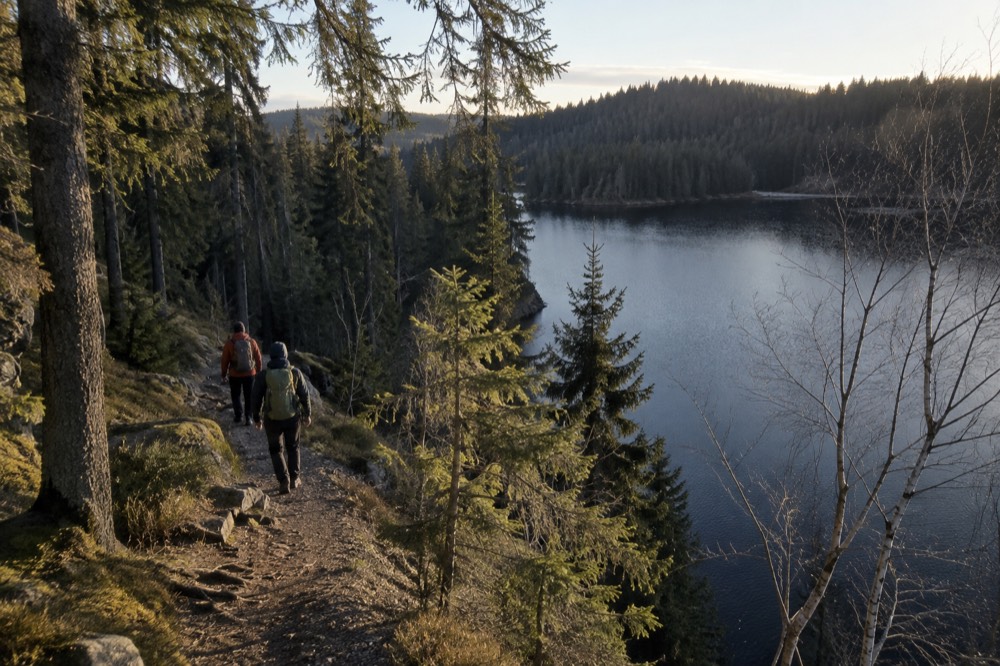
Summer turns the same network into hiking country, and the standout bookable option is a fjord-view forest hike with a chef-cooked waffle stop: about three and a half hours, from $72.78, rated a perfect 5.0 across 211 reviews. Independent hikers have it equally easy, with the Sognsvann lake circuit as the gentle default and longer routes climbing toward viewpoints over the Oslofjord, all on free trails from a zone 1 metro ride.
The guided fjord-view hike deserves a closer look because it solves a problem independent hiking in Nordmarka quietly has: the best viewpoints sit some distance into the network, on routes where navigation and stamina matter, and doing them justice while also finding lunch is a real logistics exercise. This product folds the logistics away. It runs roughly three and a half hours, costs from $72.78, and carries a flawless 5.0 rating from 211 reviews, built around a route to a fjord overlook and a forest stop where a chef cooks Norwegian waffles, which is the kind of detail that turns a walk into the story you tell about Oslo. Family and mixed-ability groups in particular get a lot out of handing the route to someone who walks it weekly.
For independent hiking, the practical starting grid looks like this:
| Route | Start from | Rough character | Who it suits |
|---|---|---|---|
| Sognsvann lake circuit | Sognsvann (Line 5) | Flat, wide, around 3 km | Families, strollers, first taste of the forest |
| Frognerseteren ridge routes | Frognerseteren (Line 1) | High start, rolling forest paths | Day hikers wanting depth without a long climb |
| Ullevålseter direction | Frognerseteren or Sognsvann | Long forest route to a classic cabin stop | Fit hikers, half-day loops |
| Fjord-view climbs | Various northern trailheads | Uphill to overlooks above the Oslofjord | Photographers, clear-day walkers |
Swimming deserves a mention, because it surprises people. The lakes in and around the network are clean, cold and genuinely used: July and August water temperatures typically run 15 to 20 °C, and on a warm weekend the shores fill with locals rather than tourists. Our Oslo swimming and beaches guide covers the water spots in the city itself, while Sognsvann is the natural forest version of the same idea.
What About the Torchlit Evening Forest Walk?
There is a third format that belongs to the dark half of the year, and it is one of Oslo's most distinctive products: a torchlit evening walk through the forest ending at a campfire, about three and a half hours, from $91.64, rated 4.7 across 280 reviews. It needs no fitness or skill, runs from the city, and is the signature answer to the question of what to do in Oslo after dark between October and March.
Darkness is not a bug in the Oslo winter calendar, it is the raw material, and this tour is built from it. Walking a snowy forest by torchlight, then gathering around an open fire, is a low-exertion experience that children, grandparents and tired business travelers can all share, and its 4.7 rating across 280 reviews suggests the format works as well in practice as it sounds on paper. The practical value for a short trip is efficiency: an evening slot that would otherwise go to a hotel bar becomes the most Norwegian three and a half hours of your stay, without surrendering a daylight hour that should belong to a museum or the waterfront. Everything else covered here is indexed on Oslo Travel Guide. Everything else covered here is indexed on Oslo Travel Guide.
The evening walk also fills a real scheduling gap for the two-day visitor. Daylight in midwinter is under six hours, roughly 09:18 to 15:11 at the solstice, which concentrates sightseeing into a tight window and leaves long evenings unallocated. Pair a daytime museum morning with a torchlit forest evening and the short day stops feeling like a limitation. Our Oslo at night guide covers the remaining after-dark options, from the opera district's waterfront to the bars of Grünerløkka.
How Does Daylight Change a Nordmarka Plan?
Daylight is the planning variable that outweighs weather, and in Oslo it swings enormously: from 5 hours 53 minutes at the winter solstice to 18 hours 50 minutes at midsummer, with the sun setting as late as 22:43 in late June and as early as 15:11 in late December. A forest plan that fits June comfortably will not fit December at all, and the schedule should be built around sunrise and sunset rather than around a generic idea of afternoon.
| Date | Sunrise | Sunset | Day length | What it means for the forest |
|---|---|---|---|---|
| 15 Jan | 09:04 | 15:49 | 6 h 45 m | Start before 10:00 or plan for darkness |
| 15 Mar | 06:34 | 18:19 | 11 h 45 m | Comfortable full-day hiking |
| 15 May | 04:40 | 21:48 | 17 h 08 m | Evening walks stay light |
| 21 Jun | 03:53 | 22:43 | 18 h 50 m | Twilight, never full darkness |
| 15 Sep | 06:44 | 19:38 | 12 h 54 m | Long days easing back |
| 21 Dec | 09:18 | 15:11 | 5 h 53 m | Torchlight and floodlit trails |
Two seasonal notes sharpen the picture further. Late June never reaches true night; the gap between sunset and sunrise is deep twilight, so a 23:00 stroll out of Frognerseteren is a realistic plan. And there is no midnight sun here: that belongs above the Arctic Circle at about 66.5 N, while Oslo sits at 59.91 N, a distinction our Oslo daylight hours page explains in full. On precipitation, the counterintuitive fact worth carrying is that August is Oslo's wettest month on the official normals, at 103 mm, so the deepest summer carries more rain risk than the shoulder months on either side of it.
Is Nordmarka Free, and What Does It Really Cost?
Access to the forest itself is free, all year, with no entrance, no trail fee and no booking, and the metro ride to reach it is an ordinary zone 1 ticket covered by the Oslo Pass. The real costs are the optional ones: guided tours from about $72 to $113, rental equipment if you ski or snowshoe independently, and food, none of which is compulsory. The Norwegian outdoors is priced at the door of the rental shop, not the trailhead.
For visitors weighing a guided tour against going alone, the honest comparison looks like this:
| Option | Cost basis | What you get | Best for |
|---|---|---|---|
| Independent metro hike | Zone 1 fare | Free trails, your own route and pace | Confident hikers in daylight |
| Guided snowshoe tour | From $103.24 | Guide, gear, route, about 3.5 hours | First winter visitors, no technique needed |
| Fjord-view hike with waffles | From $72.78 | Guided route, viewpoint, cooked stop | Families, food-motivated walkers |
| Learn-to-ski half-day | From $113.04 | Instruction and equipment, about 3.5 hours | Beginners wanting technique, not just a walk |
A budget framing also belongs here, because cost is where Oslo surprises people. Norway is the sixth most expensive country in Europe on the 2025 price-level comparison, with food about a third above the European average and alcohol more than double, so the things that hurt a budget in this city are restaurant meals and drinks. The forest inverts that completely: the single best-reviewed activity category in the city, the outdoors, is also the cheapest, with access itself at zero. A visitor who spends two afternoons in Nordmarka and eats picnics from a supermarket will feel Oslo's prices far less than one who never leaves the restaurant belt. Our Oslo on a budget and is Oslo expensive pages carry the full numbers.
What Should You Wear and Pack for Nordmarka?
Dress in layers for a hill climate, not a city climate: the forest sits higher, is windier and stays damper than central Oslo, and in winter proper boots matter more than a thick coat. In summer the essentials are water, a layer for wind on the ridges and something dry for after a swim. In winter, warm boots, a hat, gloves and a headtorch if you go near or after sunset are non-negotiable.
The most common mistake is treating the metro ride as a city trip and arriving in sneakers for a snowy trail. Snowshoe and campfire tours supply their specialist equipment, but your footwear and clothing are still yours to bring, and cold feet end more winter outings than fatigue does. For the torchlit evening walk in particular, remember that you will be standing still around a fire in January: dress for standing, not for walking.
When Is the Best Time to Visit Nordmarka?
For hiking and swimming, late June through early September gives the longest days, 15 to 18 hours of daylight, and swimmable lake temperatures. For snow activities, January through March is the reliable window, combining real winter snow with daylight that has stretched back past nine hours, which makes it the sweet spot for snowshoeing and ski tours. May and October are transitional and quiet, and December trades deep dark for torchlit atmosphere.
| Season | Conditions | Best activities | Watch out for |
|---|---|---|---|
| Dec to Feb | Deep snow, 6 to 9 hours of light | Snowshoeing, torchlit walks, skiing | Very short days, cold snaps well below the −2 °C January normal |
| Mar | Snow holding, light past 12 hours | Ski tours, snowshoeing, longer walks | Late-season ice on trails |
| Apr to May | Snow retreating, ground damp | Hiking, bird life, empty trails | Wet paths, variable weather |
| Jun to Aug | Long light, lakes swimmable | Hiking, swimming, evening walks | August rain, 103 mm on the normals |
| Sep to Oct | Autumn color, cooling | Hiking, photography | Shortening days, first frosts |
Timing also interacts with the rest of an Oslo itinerary, which is worth one paragraph of planning logic. Summer visitors competing with cruise crowds in the city center will find the forest comparatively empty, an inversion of most tourist patterns, while February visitors get the deepest winter and the lowest crowds everywhere, at the price of arranging days around a 09:00 sunrise. Our best time to visit Oslo guide treats the whole calendar in detail.
How Does Nordmarka Fit Into an Oslo Trip?
Give it a half-day minimum: a metro ride out, a lake circuit or guided tour, and a ride back is a comfortable four-hour block. Give it a full day if you are booking a guided product or skiing, and give it an evening instead if your days are museum-heavy, using the torchlit walk. Visitors on the classic two- or three-day Oslo plan usually slot it as the outdoor day alongside the museum day and the fjord day.
The natural pairing is fjord plus forest, because Oslo's two great free landscapes sit at opposite ends of the same transport system. A morning cruise on the silent electric boat, from $46.29 and rated 4.5 across 6,664 reviews, or the traditional wooden sailing ship, from $46.19 and 4.5 across 6,138 reviews, balances a Nordmarka afternoon, and both are covered from every angle on our things to do in Oslo overview. The full list of walking, museum and boat options, with prices and reviews compared, is in our Oslo guided tours guide, and visitors planning a longer stay will find the Oslo in winter page pulls the snow-season pieces together.
Common Questions About Nordmarka
Is Nordmarka free to visit?
Yes. The forest is free to enter year-round with no trail fees. Your only fixed cost is the metro fare, an ordinary Ruter zone 1 ticket that the Oslo Pass also covers. Guided tours, rental gear and food are optional extras.
How do I get to Nordmarka from central Oslo?
Take T-bane Line 1 to Frognerseteren for the high trailhead with fjord views, or Line 5 to Sognsvann for the flat lake circuit. Both rides take about twenty minutes from the central stations, both are inside zone 1, and no booking or car is needed.
Can you hike in Nordmarka in winter?
Yes, but on snow, with proper boots and preferably a guide. Snow covers the summer paths from December through March, and daylight drops below six hours in midwinter, so most winter visitors book a snowshoe or torchlit-walk tour, which supplies gear, route and safety.
Can you swim in the Nordmarka lakes?
Yes. The bigger lakes are clean and genuinely popular in summer, with July and August water temperatures typically 15 to 20 °C, cool rather than warm. Sognsvann is the easiest swimming lake to reach, a short walk from its metro terminus.
Do I need a guide for Nordmarka?
In summer, no: the Sognsvann circuit and the main marked routes are easy to walk independently. In winter, a guide is strongly recommended, because snow hides the paths, daylight is short, and frozen lakes can look like trails. The guided snowshoe and torchlit tours also supply all equipment.
Is Nordmarka suitable for children?
Yes. The Sognsvann lake circuit is flat and stroller-friendly in summer, and the torchlit evening walk with a campfire is a low-exertion winter format children can share. Long routes and the deeper winter trails suit older, well-equipped kids with adults who know the conditions.