5 Days in Oslo: A Complete First-Timer Itinerary
Five days is the sweet spot for Oslo: enough to see the museums, the fjord and the forests without rushing, and long enough for the city's rhythm to slow you down.
Short answer
Five days in Oslo splits cleanly into five blocks: the city center and Opera House, the Bygdøy museum peninsula, a fjord cruise, Holmenkollen and Vigeland Park, and Grünerløkka with the islands or a day trip. Budget from 580 NOK per day per adult with an Oslo Pass for transport and museums, plus food.
What Does a Perfect 5 Days in Oslo Look Like?
Five days in Oslo works best as five distinct blocks: day one for the compact city center and the Opera House, day two for the Bygdøy museum peninsula, day three for the Oslofjord, day four for Holmenkollen and Vigeland Park, and day five for Grünerløkka, the islands or a day trip beyond the city. That order front-loads the essentials and leaves the flexible day last, when you know what the weather is doing. Oslo rewards this structure because its sights are genuinely scattered: the center, the peninsula, the hills and the eastern neighborhoods are each a separate transit ride, and a day that mixes them badly burns hours.
The city is small by capital standards, but it behaves like a much larger one because the attractions sit in clusters separated by water, forest or hill. A first-timer who tries to "walk Oslo" in a single day discovers this by mid-afternoon. Spread across five days, the same geography becomes a pleasure: each day has a theme, a direction and a natural end point.
Five days is also the minimum that lets Oslo's quieter register open up. The harbor promenade, the swimming islands, the forest edge at Sognsvann and the café culture of Grünerløkka are the parts visitors remember, and none of them survive being squeezed between museum sprints. If you are weighing a shorter stay, our four-day Oslo plan trims day five, and the three-day version cuts the hills as well. Five days is the first length where nothing on this list has to go.
How Should You Structure Five Days in Oslo?
Structure the five days geographically, one district or direction per day, with the weather-dependent days kept flexible: center first, Bygdøy second, the fjord third, the western hills fourth, and the east plus islands last. Keep the Oslo Pass math in mind from the start, because a 24-hour pass at 580 NOK covers transport in zones 1 through 4N and entry at over 30 museums, which is how days two and four pay for themselves. The single most common planning mistake is treating Oslo as one walkable blob, then losing an hour a day in transit.
The pass detail matters more here than in most cities. VisitOSLO's own inclusion page states that the pass covers public transport in zones 1, 2, 3, 4V and 4N, including trains to and from Oslo Airport Gardermoen operated by Vy. It does not cover the Flytoget airport express, which costs 268 NOK on its own. Three Bygdøy museums at full price total 560 NOK, so a 24-hour pass that also carries you to the peninsula is close to break-even before you count anything else. Our full Oslo Pass guide runs the numbers across every pass length.
For the days themselves, this is the shape we recommend:
| Day | Theme | Anchor sights | Transit |
|---|---|---|---|
| 1 | City center | Opera House, Karl Johans gate, Akershus Fortress, Aker Brygge | On foot |
| 2 | Bygdøy peninsula | Fram, Kon-Tiki, Norsk Folkemuseum | Ferry or bus 30 |
| 3 | Oslofjord | Electric boat cruise, island ferries, Tjuvholmen | Boat from Aker brygge |
| 4 | Hills and sculpture | Holmenkollen, Vigeland Park, Frogner | T-bane line 1 and tram |
| 5 | East and beyond | Grünerløkka, Mathallen, Hovedøya or a day trip | Tram, bus or train |
If you would rather have the orientation done for you on day one, the bus-and-boat products below cover the same ground with commentary, and both pair well with the independent days that follow.
Whichever way you handle day one, the rest of the plan assumes you are moving on ordinary Ruter tickets or a pass. The getting around Oslo guide covers the ticket system in depth; the short version is that the entire metro network sits inside zone 1, and the airport sits in zone 4N, a distinction that trips up a lot of visitors.
Day 1: The City Center and the Opera House
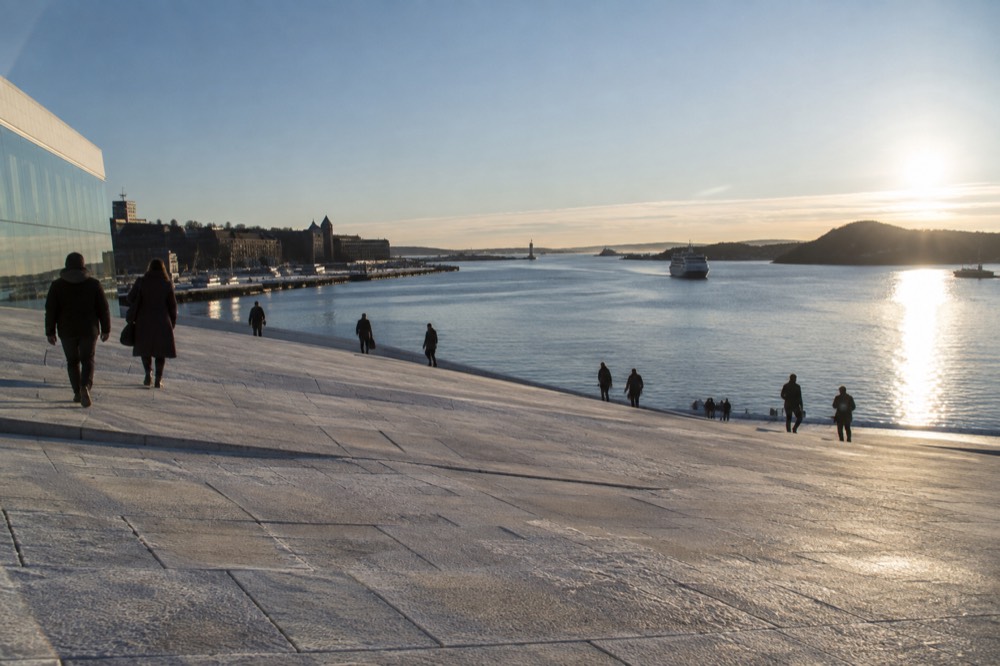
Spend day one entirely on foot in the compact center: the Opera House roof first, then Karl Johans gate to the Royal Palace, the harbor front at Aker Brygge, and Akershus Fortress to close, all within a two-kilometer walk with no transit needed. The Opera House roof is free to walk on and takes ten minutes to appreciate, which makes it the ideal first hour in the city. Nothing on this day requires a ticket except the fortress museums, and even the exterior and grounds alone justify the walk.
Start at Operahuset, the white marble building at Bjørvika whose sloping roof is a public plaza. You simply walk up it. The view from the top, across the Oslofjord to the south and the Barcode skyline behind you, is the single best free orientation in the city, and it costs nothing. Our Oslo Opera House guide covers the building and the rooftop route in detail.
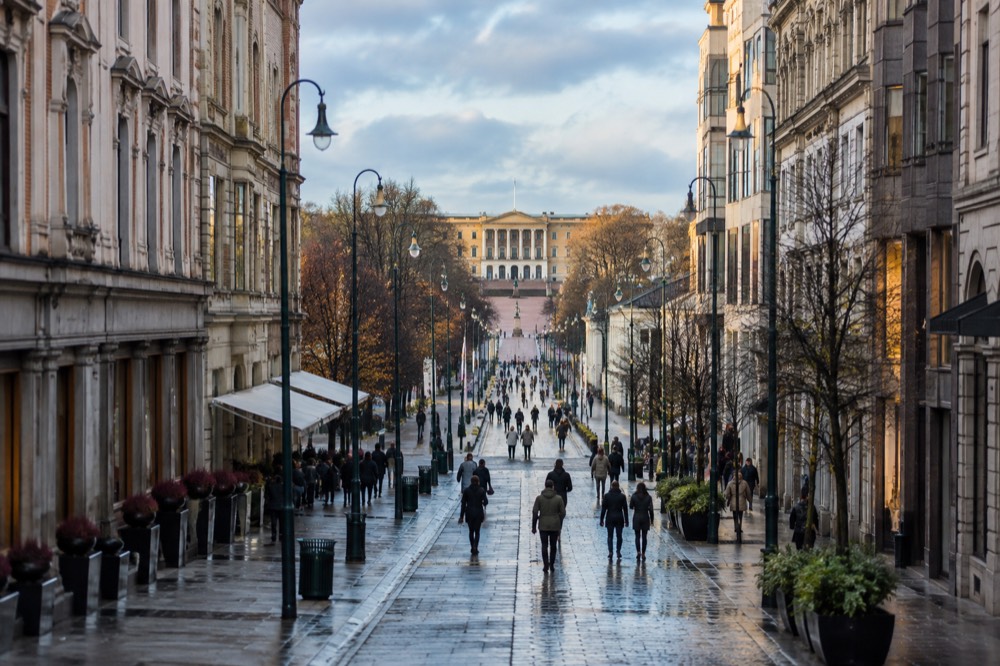
From there, walk northwest along Karl Johans gate, the main ceremonial street, which runs from the Central Station to the Royal Palace. The Royal Palace grounds are open to the public and free to wander; the changing of the guard happens daily outside at 13:30. Detour one block south for the Oslo Cathedral, then continue to the Palace and the adjacent National Theatre.
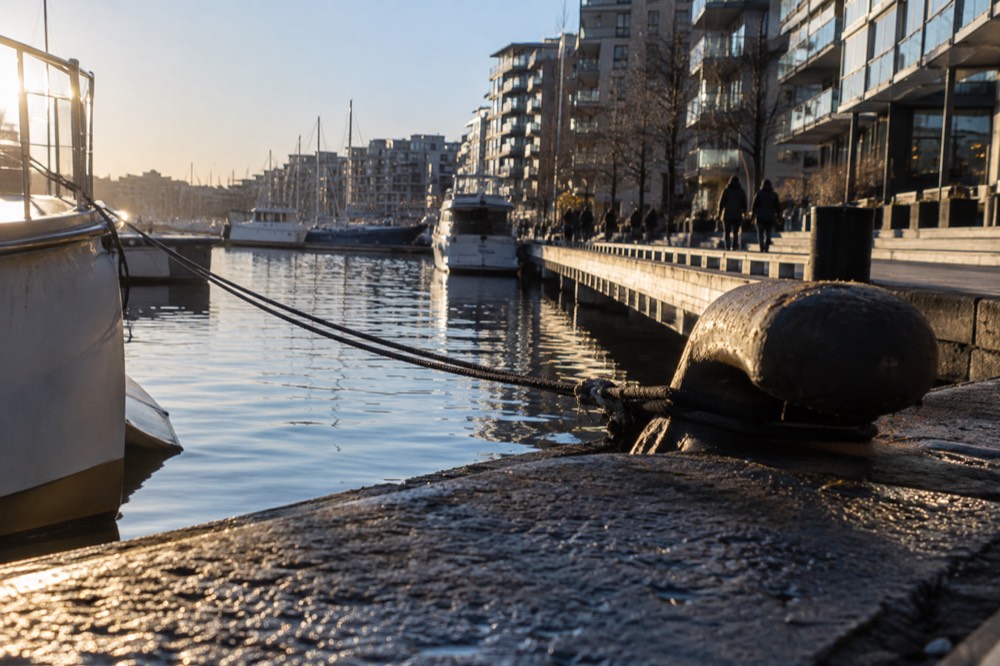
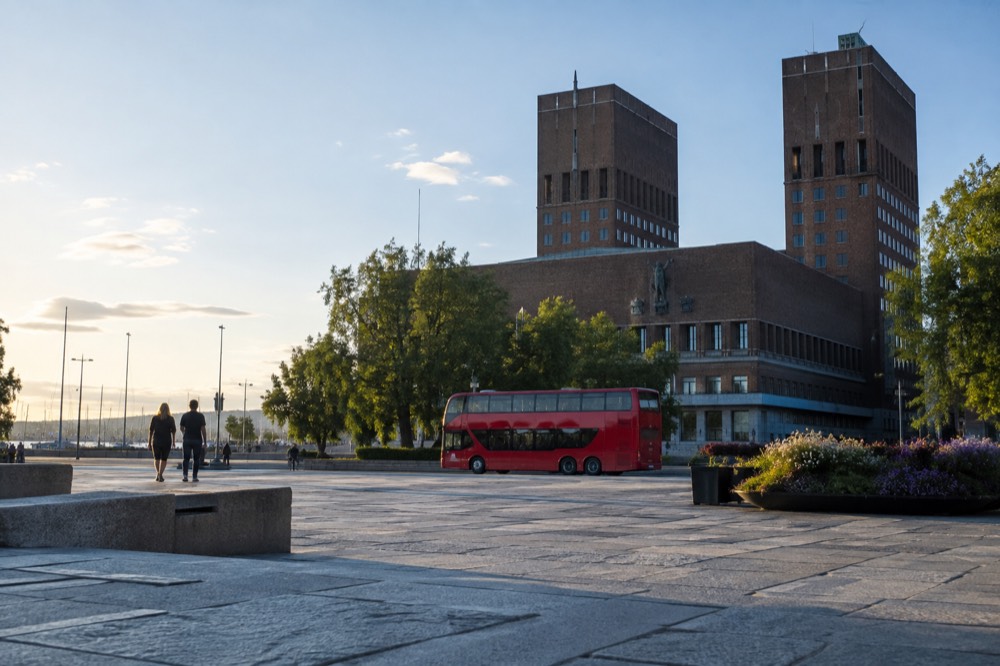
The afternoon belongs to the water. Aker Brygge, the former shipyard turned waterfront district, is a ten-minute walk southwest of the Palace, and its promenade is where Oslo's harbor life actually happens. From there it is a short walk to Akershus Fortress, the medieval castle guarding the harbor entrance; the grounds are free, the Resistance Museum inside covers the WWII occupation years, and the walls carry the best view back over the fjord. Close the day at Oslo City Hall, where the Nobel Peace Prize ceremony is held; the tower visit is worth the climb.
Day 2: The Bygdøy Peninsula Museums
Day two goes to Bygdøy, the museum peninsula southwest of the center, where the Fram Museum, the Kon-Tiki Museum and the Norsk Folkemuseum cluster within walking distance of each other. Take the seasonal ferry from Rådhusbrygge 3, which runs every 20 minutes and takes 10 minutes to the first stop, or bus 30 year-round; the ferry is included with an Oslo Pass but ordinary Ruter tickets are not valid on it. Plan a full day, because the peninsula deserves one.
The ferry detail matters, because it is the most confused topic in Oslo trip planning. The Bygdøy ferry and the Oslofjord island ferries are different systems with different ticket rules, departing from different piers. The Bygdøy ferry leaves from Rådhusbrygge 3, accepts the Oslo Pass, and rejects ordinary Ruter tickets. The island ferries leave from Aker brygge and accept ordinary Ruter tickets. Mixing them up costs a re-purchase at the pier. Our Bygdøy guide covers the whole peninsula.
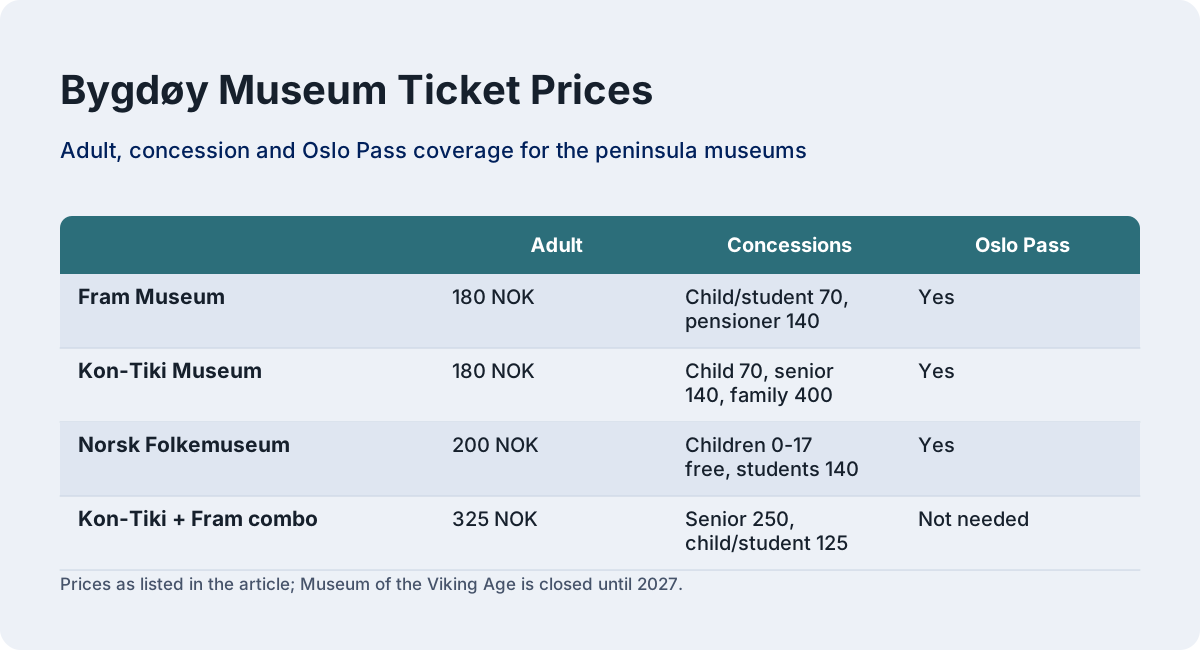
The museums themselves, with current adult admission:
| Museum | Adult | Concessions | Oslo Pass |
|---|---|---|---|
| Fram Museum | 180 NOK | Children 70, students 70, pensioners 140 | Yes |
| Kon-Tiki Museum | 180 NOK | Children 6-17: 70, seniors 140, family 400 | Yes |
| Norsk Folkemuseum | 200 NOK | Children 0-17 free, students 140 | Yes |
| Kon-Tiki + Fram combo | 325 NOK | Senior 250, child/student 125 | Not needed |
One thing to know before you plan: the Museum of the Viking Age, the former Viking Ship Museum, is closed for rebuilding and will reopen in 2027. The museum's own site directs visitors to Viking Age objects at the Historical Museum in the city center in the meantime, and Viking Planet covers the full story of the closure. Do not build a Bygdøy day around seeing the ships; they are not viewable.
If the weather turns, the peninsula still works: all three headline museums are indoors, and the Folkemuseum's indoor collections carry most of its weight outside July. In the other direction, a fine-weather Bygdøy day adds Huk beach on the peninsula's southern shore, one of the city's best swimming spots, reachable on foot from the museums.
Day 3: The Oslofjord by Boat
Day three is the water day: a fjord cruise in the morning, the harbor islands in the afternoon, and Tjuvholmen's Astrup Fearnley museum in between. The Oslofjord is why Oslo exists where it does, and it is the one part of the city you cannot experience from land; the fjord's islands, Hovedøya, Gressholmen and Langøyene, sit twenty minutes from the center by public ferry and cost nothing beyond an ordinary zone 1 ticket. This is also the day with the best bookable products attached to it.
The default fjord experience is the silent electric boat with audio guide, a 90-minute loop that is the single best-reviewed activity in the city. The alternative is the two-hour traditional sailing ship, a genuinely different product: a wooden boat under sail, with the same fjord. The evening shrimp-buffet cruise is the third format, a three-hour Norwegian institution rather than a generic dinner boat. Whichever you pick, book the morning slot: the fjord is calmer, the light is better and the afternoon stays free. Other pages covering the same trip are gathered on Oslo Travel Guide. Other pages covering the same trip are gathered on Oslo Travel Guide.
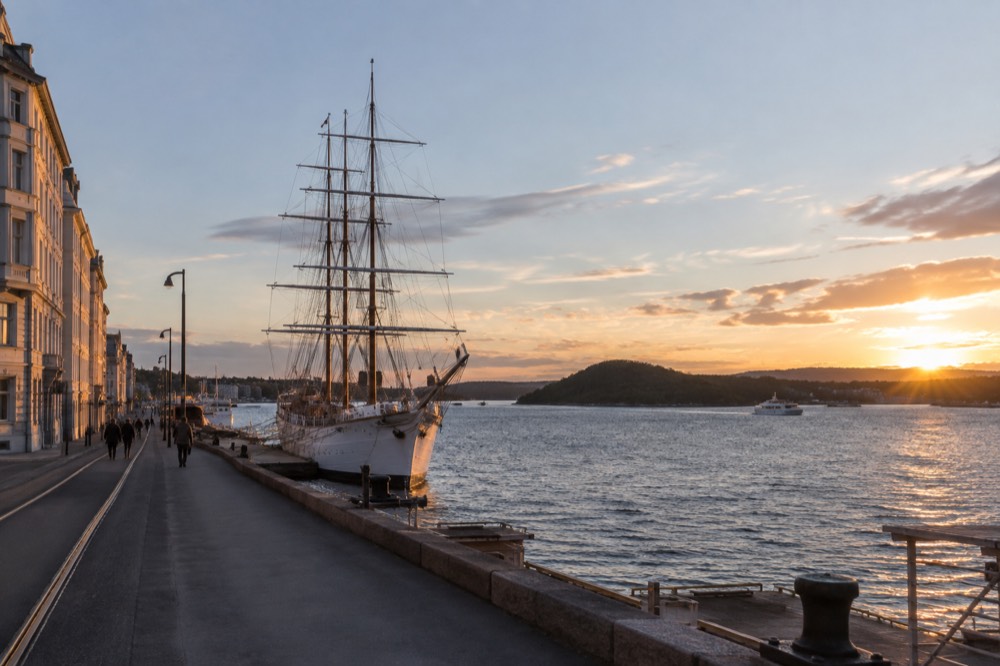
After the cruise, walk to Aker brygge and take the B1 island ferry to Hovedøya, the nearest island, where a ruined Cistercian abbey sits among trees twenty minutes from the city center. The island ferries are ordinary Ruter services: your zone 1 ticket covers them, and you can hop on and off. Our Oslo islands guide covers all of them, including Langøyene's beaches.
Close the day on Tjuvholmen, the narrow peninsula of galleries and apartment blocks southwest of Aker Brygge, where the Astrup Fearnley's sail-shaped building anchors a district that was shipyards a generation ago. If your five days fall between mid-March and early October, the Bygdøy ferry from day two also runs from the same pier area, which makes a combined harbor afternoon possible on days you shuffle.
Day 4: Holmenkollen and Vigeland Park
Day four goes west and uphill: the T-bane to Holmenkollen ski jump in the morning, then back down to Vigeland Park and the Frogner district for the afternoon. The ski museum and jump tower cost 195 NOK adult, Vigeland Park is free and open 24 hours a day year-round, and the metro ride to Holmenkollen takes about 15 minutes from the National Theatre on line 1. It is the day with the city's best views, both from the tower and from the train window on the way up.
Holmenkollen is Oslo's most recognizable structure, the ski jump that has anchored Norwegian winter sport for generations, rebuilt into the steel tower on the hillside today. The museum inside covers the country's skiing history, and the tower platform looks down the jump's in-run toward the fjord. There is no standalone jump ticket sold on the platforms this site uses, so the honest booking route is a combination product, and our Holmenkollen ski jump guide lays out the options.
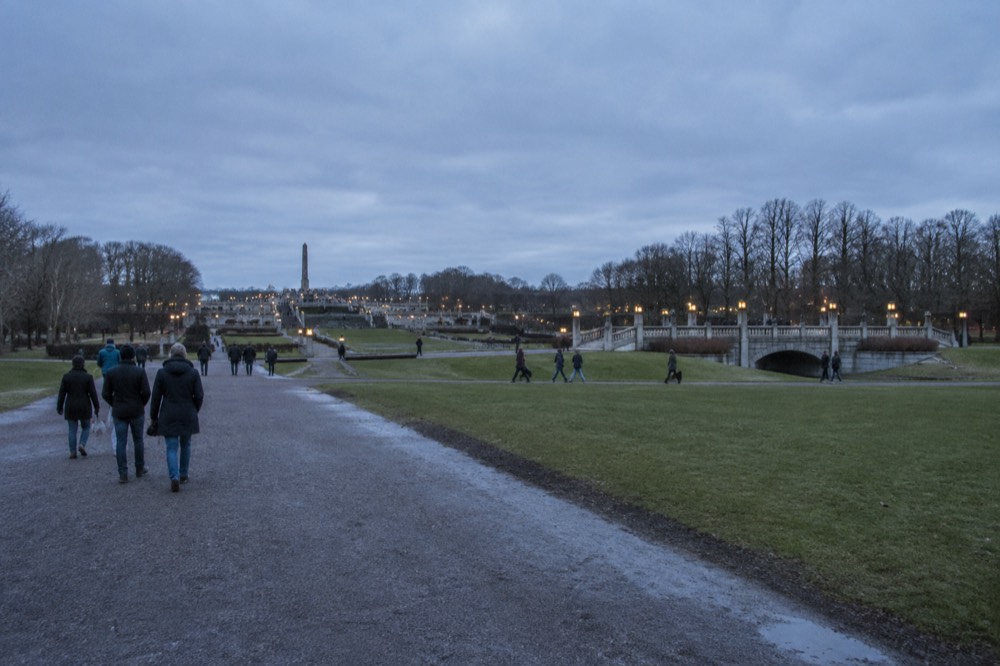
Vigeland Park is the afternoon, and it is the most visited sight in Norway for a reason: over 200 granite and bronze sculptures by Gustav Vigeland arranged along a formal axis in Frogner Park, free to enter, no ticket, no closing time. The Monolith, a 14-meter column of intertwined figures, is the centerpiece. Keep the sculptor and the park straight in your notes: Vigeland made the work, and both Vigelandsparken and Frogner Park are in use as names for the place. The separate Vigeland Museum, in the artist's former studio next to the park, costs 120 NOK.
The bus option above exists precisely for this day's problem: Holmenkollen and Vigeland sit on different transit lines, and a hop-on hop-off ticket stitches them together with the center in one loop. If you would rather stay on public transport, the tram from Majorstuen serves Frogner directly, and line 1 back from Holmenkollen passes Frogner on the way down if you time it. Either way, this is the day to check the weather first and swap it with day three if the forecast says so.
Day 5: Grünerløkka, the East, or a Day Trip
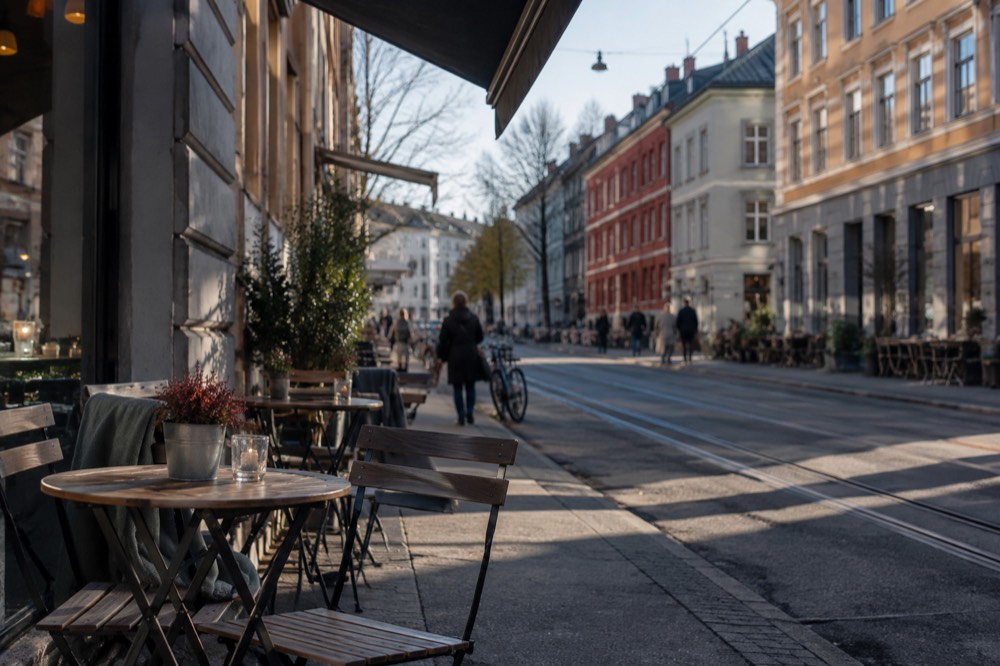
Day five is the flexible day: Grünerløkka and the river district in the morning, then either the swimming islands, the MUNCH museum, or a day trip beyond the city in the afternoon. Grünerløkka is Oslo's former workers' quarter turned café-and-vintage district along the Akerselva river, and it is the neighborhood where the city stops performing for visitors. This is also the day to cash in whatever the weather has denied you so far.
Walk the Akerselva from Grünerløkka upstream toward Vulkan and Mathallen, the food hall in a converted ironworks, which is the best lunch stop in this part of the city. The river path is a mile of waterfalls, bridges and old industrial buildings, and it is the closest thing Oslo has to a linear park. Our Grünerløkka guide maps the neighborhood street by street, and the Tøyen and Grønland guide covers the district just south, where the Botanical Garden is free.
For the afternoon, three strong options. MUNCH, the museum at Bjørvika, costs 280 NOK adult, 200 NOK after 18:00, and holds the world's largest Munch collection; our MUNCH guide covers it. The island ferries from Aker brygge run again if day three's weather was bad. And if you want out of the city entirely, the day trips from Oslo guide ranks the options, from Drøbak on the fjord to the Norway in a Nutshell loop, which is a long but doable single day by train and boat.
The full-day bus and fjord combination above is the alternative shape for day five: if your five days have been independent and you want one day where the logistics are someone else's problem, it covers the center, the viewpoints and a fjord cruise in a single booked package. It is also the standard answer for cruise passengers working with a shorter window, which our Oslo cruise port day guide addresses directly.
How Much Does 5 Days in Oslo Cost?
The efficient structure is a 72-hour Oslo Pass at 995 NOK across days one to three, when museum density is highest, plus ordinary tickets for days four and five; the biggest sights, the Opera House roof, Vigeland Park, the fortress grounds and the islands, cost nothing at all. Museums, transport and the outdoors are where Oslo is not unusually expensive; restaurants and especially alcohol are where it is. Statistics Norway's 2025 price-level survey puts the country sixth in Europe, with household prices 28.6% above the EU average and alcohol and tobacco more than double it.
That split is the honest way to think about Oslo costs, and it is the axis most guides flatten into "expensive". Food and non-alcoholic drink runs 33% above the European average, which you feel at dinner. Museums cluster at 180 to 200 NOK, which is mid-range for a European capital. Our is Oslo expensive guide runs the full breakdown, and Oslo on a budget lists the free layer.
A realistic per-day shape, using verified figures:
| Item | Cost | Notes |
|---|---|---|
| Oslo Pass 24h | 580 NOK | Museums plus zones 1-4N transport |
| Oslo Pass 72h | 995 NOK | Best value across days 1-3 |
| Bygdøy museums (3) | 560 NOK | Covered by pass |
| MUNCH adult | 280 NOK | 200 NOK after 18:00 |
| Fjord cruise | from $46.29 | 90-minute electric boat, audio guide |
| Holmenkollen museum + tower | 195 NOK | Covered by pass |
Two structural facts do real work here. Norway is in Schengen but not in the EU, outside EU VAT, so non-resident visitors can claim a VAT refund on qualifying purchases, and the currency is the krone, not the euro. Neither saves you money on a museum ticket, but both prevent small losses. The Oslo trip cost guide builds a full five-day budget from these same figures.
When Should You Take This Five-Day Plan?
Take this itinerary between mid-May and mid-September if you want the full version, because the Bygdøy ferry runs only from mid-March to early October and the island ferries' summer timetable runs early July to late August; winter shortens day five and the islands but keeps every museum, adds Holmenkollen under snow and opens the torchlit forest walks. August is the wettest month on the 1991-2020 normals at 103 mm, so pack for it even in high summer.
The daylight swing is the planning fact that surprises people most. On 21 June the sun rises at 03:53 and sets at 22:43, 18 hours 50 minutes of daylight, and it never gets properly dark. On 21 December it rises at 09:18 and sets at 15:11, under six hours. There is no midnight sun at Oslo's latitude of 59.91 N; that belongs to the far north. But a June evening on the fjord at 22:00 in full light is a real thing, and it effectively extends every day of this itinerary by three hours. The Oslo daylight hours guide has the month-by-month table.
| Season | Daylight (15th) | Ferry status | Best for |
|---|---|---|---|
| March | 11 h 45 m | Bygdøy from 14 Mar | Museums, snow-free streets |
| June | ~18 h | All ferries | Everything, plus swimming |
| August | 15 h 38 m | All ferries | Warmest water, most rain |
| October | 10 h 13 m | Bygdøy to 4 Oct | Fall color, fewer crowds |
| December | ~6 h | Island ferries reduced | Winter products, museums |
Winter swaps rather than shrinks the plan: the torchlit forest walk with campfire, snowshoeing in Nordmarka and the learn-to-ski half-day are all real, bookable Oslo products, and the Oslo in winter guide rebuilds this itinerary for the dark months. Whatever the season, book the fjord cruise and any bus tour ahead in July, which is the one month when the popular slots genuinely fill.
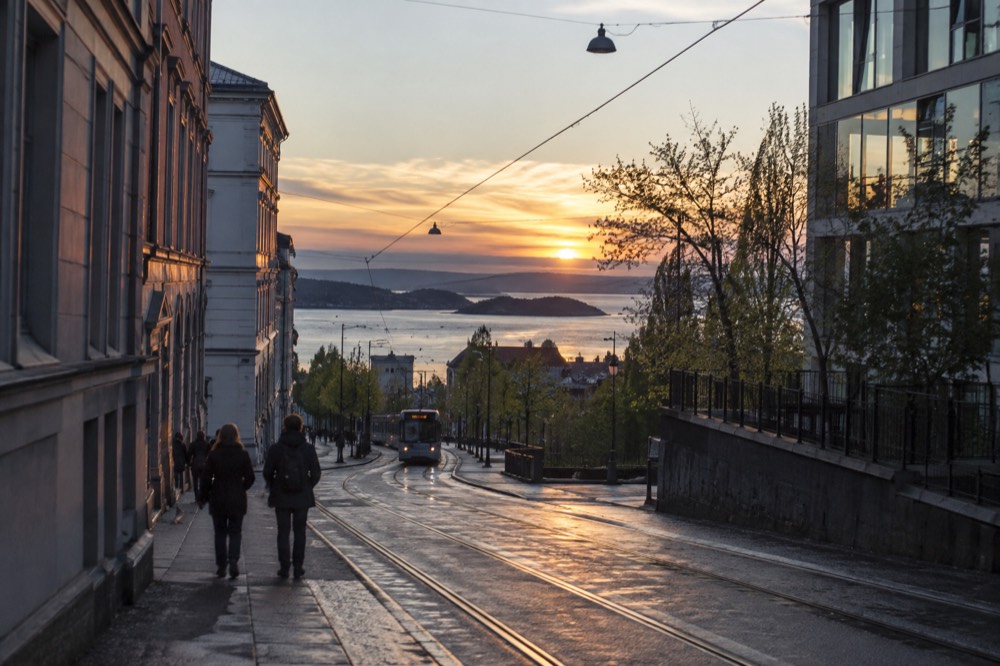
Before the practical questions, the short version of all five days: the center on foot, Bygdøy by ferry, the fjord by boat, the hills by metro, and the east on foot again, with the pass math settled before you arrive. That is a complete first visit to Oslo, and it is the plan this site would hand a friend.
Common Questions About 5 Days in Oslo
Is 5 days in Oslo too long?
No. Five days is the first length at which nothing in the city has to be cut: the center, Bygdøy, the fjord, Holmenkollen, Vigeland Park and Grünerløkka all fit without rushing, and day five leaves room for an island afternoon or a day trip. Three days covers the essentials; five lets the city slow down around you.
What is the best order for 5 days in Oslo?
City center first, Bygdøy second, the fjord third, the western hills fourth, and the flexible east-and-islands day last. That order puts the weather-dependent days where they can be swapped, and it front-loads the sights you would regret missing.
How much does 5 days in Oslo cost?
The efficient structure is a 72-hour Oslo Pass at 995 NOK for days one to three plus ordinary tickets for the last two days, with a fjord cruise from $46.29 and meals on top. Alcohol is the line that moves the total fastest, since it runs at more than double the European average in Norway.
Is the Oslo Pass worth it for 5 days?
Usually yes for days one through three, where the museum density is highest. A 24-hour pass at 580 NOK covers over 30 museums plus transport in zones 1 through 4N, including the Vy airport train but not Flytoget. Three Bygdøy museums alone total 560 NOK at full price.
Can you see the Viking ships in Oslo?
Not currently. The Museum of the Viking Age on Bygdøy is closed for rebuilding and will reopen in 2027. The museum directs visitors to Viking Age objects at the Historical Museum in the city center in the meantime.
Do you need a car for 5 days in Oslo?
No. Every day of this itinerary runs on foot, metro, tram, bus or ferry, and a car is a liability in the center where parking is expensive. The only reason to rent is a day trip beyond the transit network, and even then most popular day trips are reachable by train.