Oslo City Hall: What to See at the Nobel Prize Venue
Oslo City Hall is the twin-towered brick building that anchors the Oslo waterfront, the hall where the Nobel Peace Prize is handed over each December, and one of the few European city halls that doubles as a serious art gallery. Here is what to expect, what it costs to visit, and how to fold it into a day in the center.
Short answer
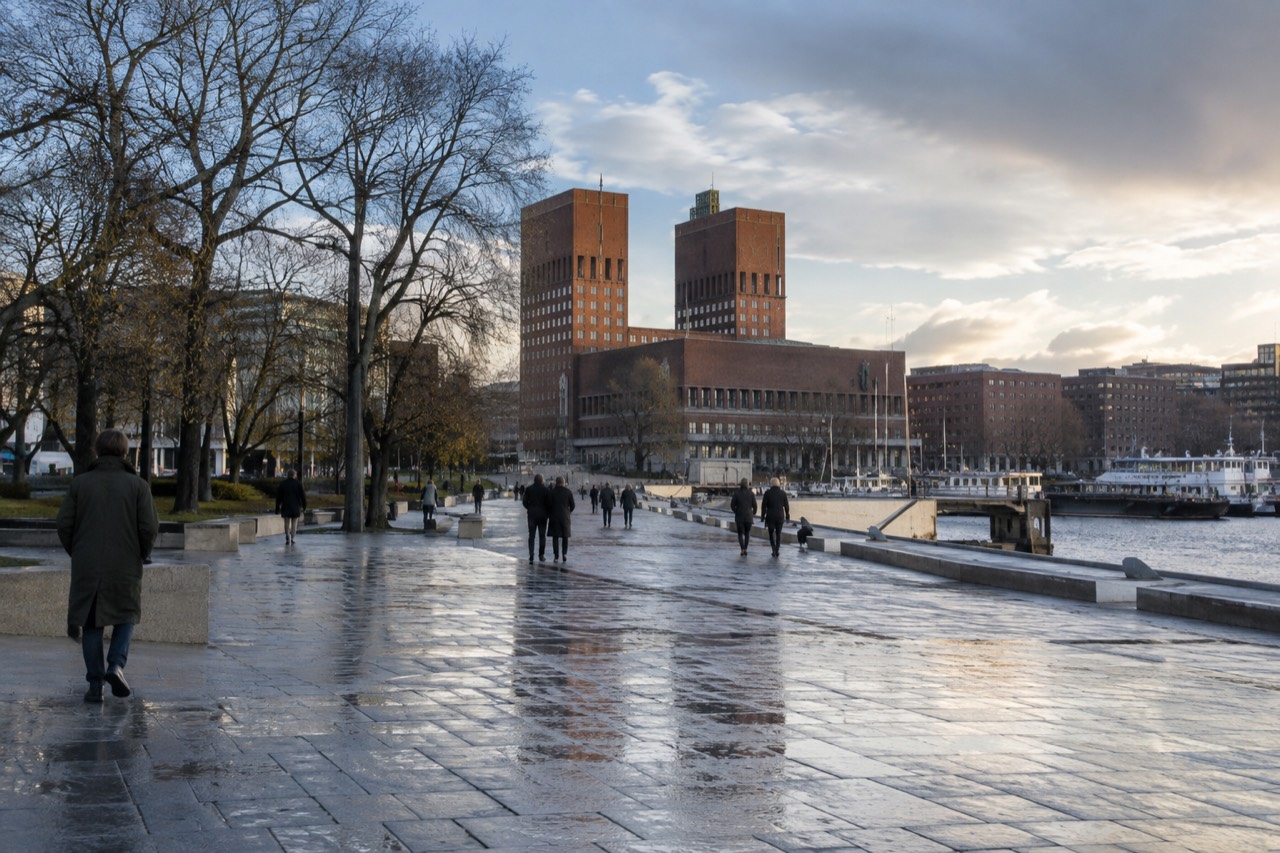
Oslo City Hall sits on the waterfront between the harbor piers and the Akershus fortress side of the center, and its Great Hall hosts the Nobel Peace Prize ceremony every 10 December. The building is a working city hall full of murals and art, steps from the Nobel Peace Center, Aker Brygge and the ferries to Bygdøy.
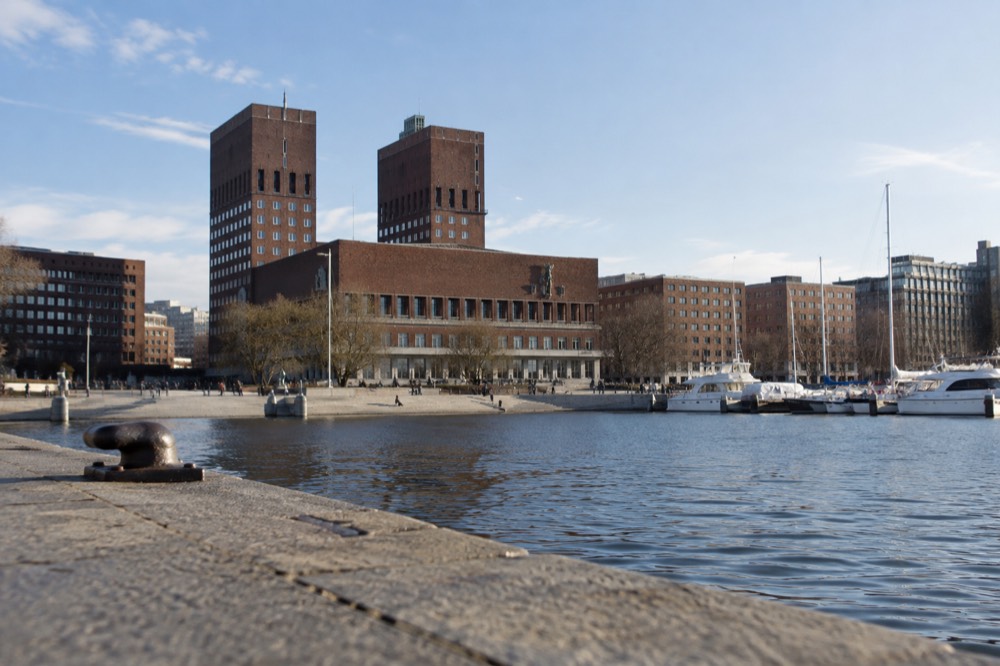
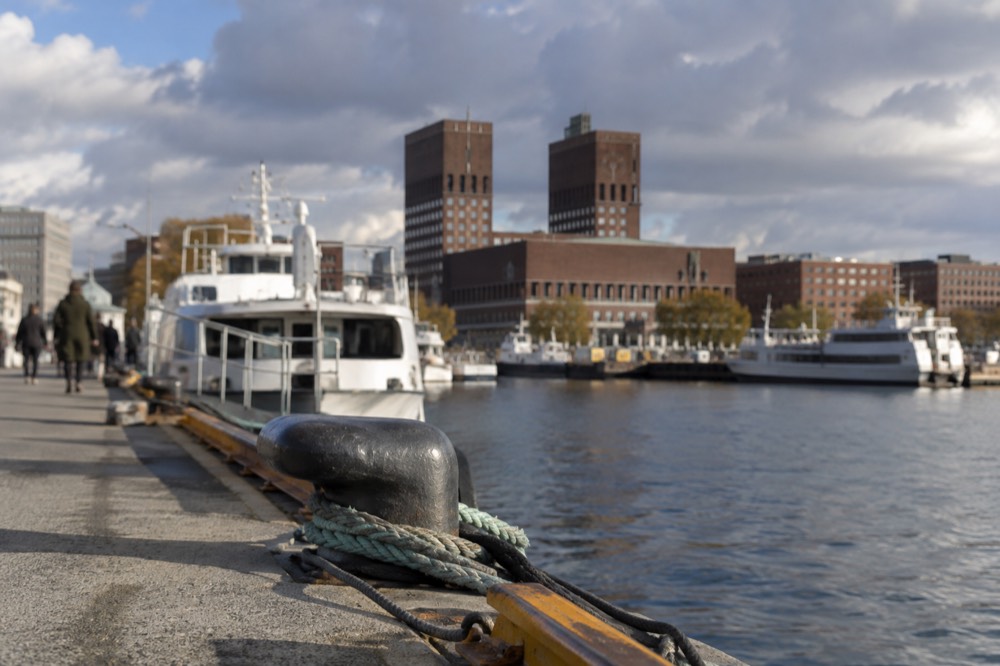
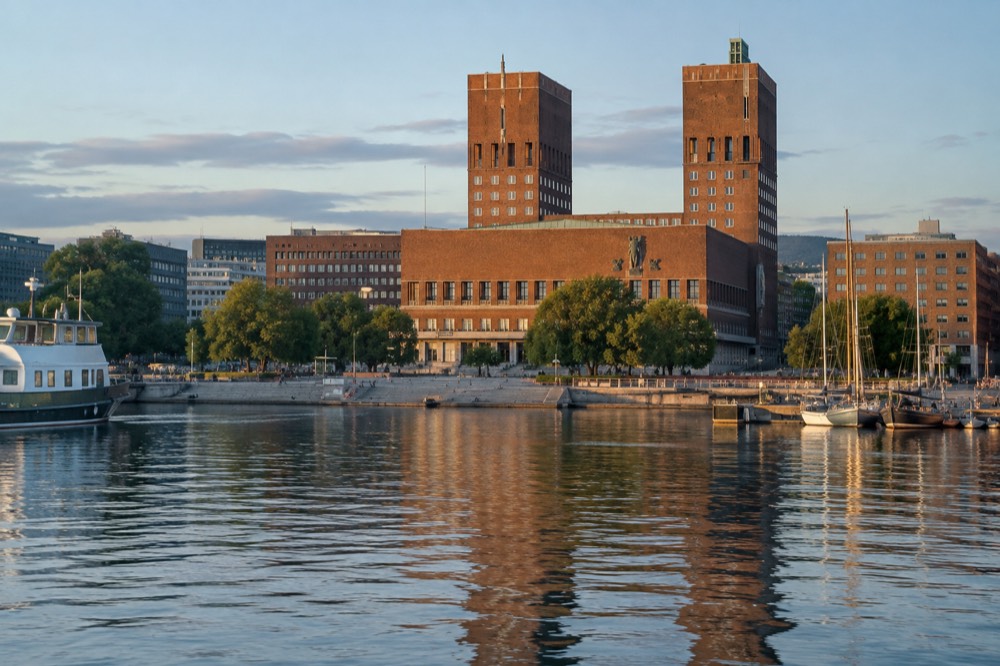
Oslo City Hall is the one building in the Norwegian capital that almost every visitor photographs and almost nobody plans for. The two brick towers, one square and one round, close off the eastern end of the harbor basin at Pipervika, and the fjord opens up directly in front of the main facade. On 10 December each year the world's cameras point at the Great Hall inside, because that is where the Nobel Peace Prize is handed over. The rest of the year it is a working municipal building that doubles as one of the largest showcases of Norwegian art from the first half of the twentieth century anywhere in the country.
This guide covers what the building actually is, how to time a visit, what the art inside amounts to, how to get there, and what to combine it with. The practical short version: the City Hall sits at the heart of the most walkable cluster in Oslo, the Nobel Peace Center and Aker Brygge are minutes away on foot, and the museum ferry to Bygdøy leaves from a pier you can see from the front steps.
What Is Oslo City Hall and Why Does It Matter?
Oslo City Hall is the city's municipal headquarters, a red-brick landmark completed around 1950, and the permanent venue of the Nobel Peace Prize ceremony, which is held in its Great Hall every 10 December. It is unusual among European city halls for doubling as a public art gallery, with murals, tapestries and sculptures integrated into the architecture rather than hung around it.
The building was the product of a long-running architectural competition and decades of interruption, and the result divides opinion in Norway to this day. Where most European city halls reach for stone, columns and symmetry, Oslo's goes for raw dark brick, monumental scale and a deliberately rough, working-class dignity. The interior flips that austerity into color: nearly every wall of any size carries a mural, a relief or a woven work, many of them made specifically for the rooms they sit in. The effect is less a government building with art in it and more a total artwork you happen to pay your council tax in.
The Nobel connection is what puts the building on the global calendar. Alfred Nobel's will endowed five prizes, and the peace prize is the only one awarded outside Sweden, a detail Norwegians are quietly proud of. The ceremony in the Great Hall on 10 December, the anniversary of Nobel's death, is broadcast worldwide, and the laureate's lecture is a separate event in the city. If you visit in early December you will find the building absorbed by preparations, which is worth knowing before you plan a mural-viewing afternoon around it.
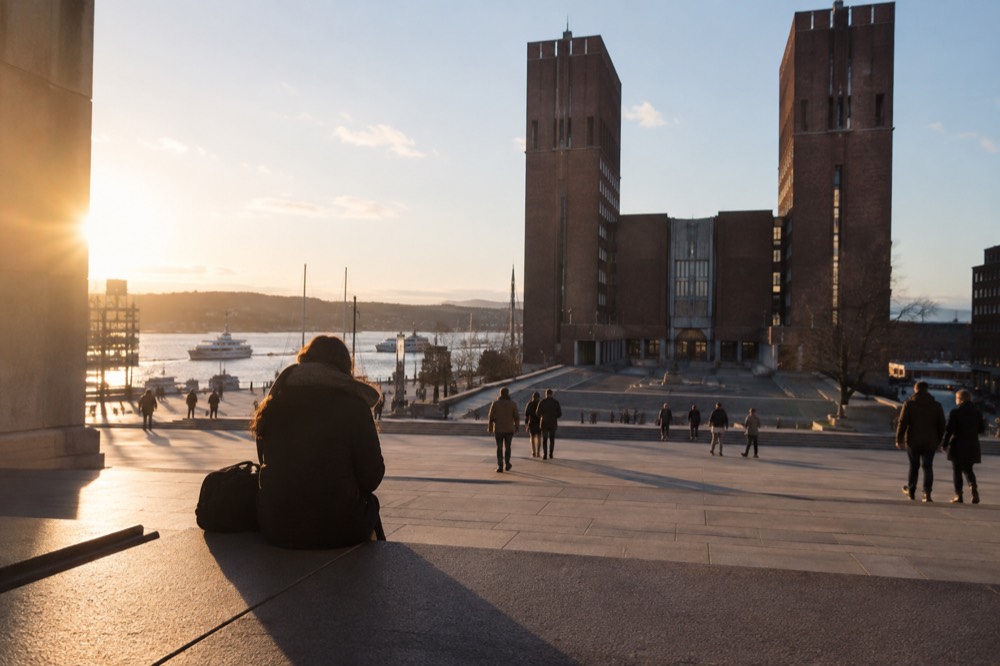
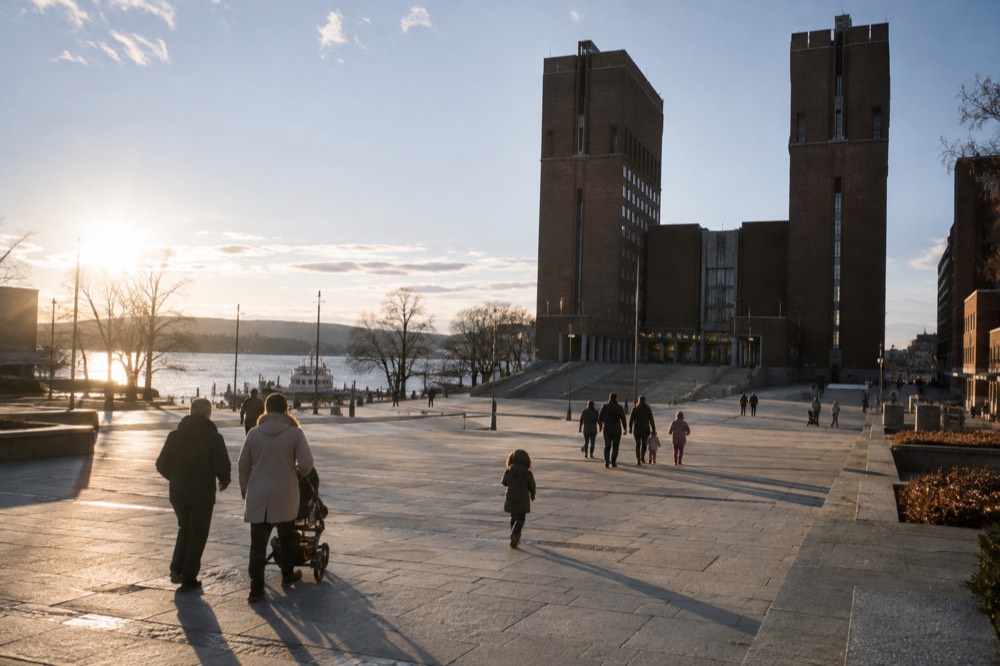
The location is the third reason the building matters. It stands at the point where the harbor, the modern waterfront of Aker Brygge and the older streets of the center all meet, and the plaza in front of it is where the whole waterfront opens up toward the Oslofjord. Practically every walking route through central Oslo passes it.
When Is Oslo City Hall Open and What Does a Visit Cost?
Check the City Hall's own published hours before you go, because a working municipal building closes for official events, and the ceremony period in December reshapes the whole schedule. As a rule the hall is open to the public on weekdays and limited weekend hours in summer, and the art-filled interiors are the reason to go inside rather than only viewing the facade.
The honest planning advice is that this is a building with a day job. Council meetings, ceremonies, receptions and state visits all take precedence over sightseeing, and rooms can close at short notice. The city's own visitor information is the source for current hours, and it is worth a two-minute check the evening before. That is doubly true in the first half of December, when the building is in Nobel mode, and on 17 May, Norway's national day, when the surrounding streets fill with parades rather than closures.
What you get for your patience is one of the more generous art experiences in a city that does not lack them. The Great Hall, the ceremonial staircase, the gallery levels and the mayor's parlor rooms are all part of the public route when open, and the murals inside span decades of Norwegian painting. Visitors who enjoy it most are the ones who treat it as a free-form gallery visit of an hour or so, not a checkpoint.
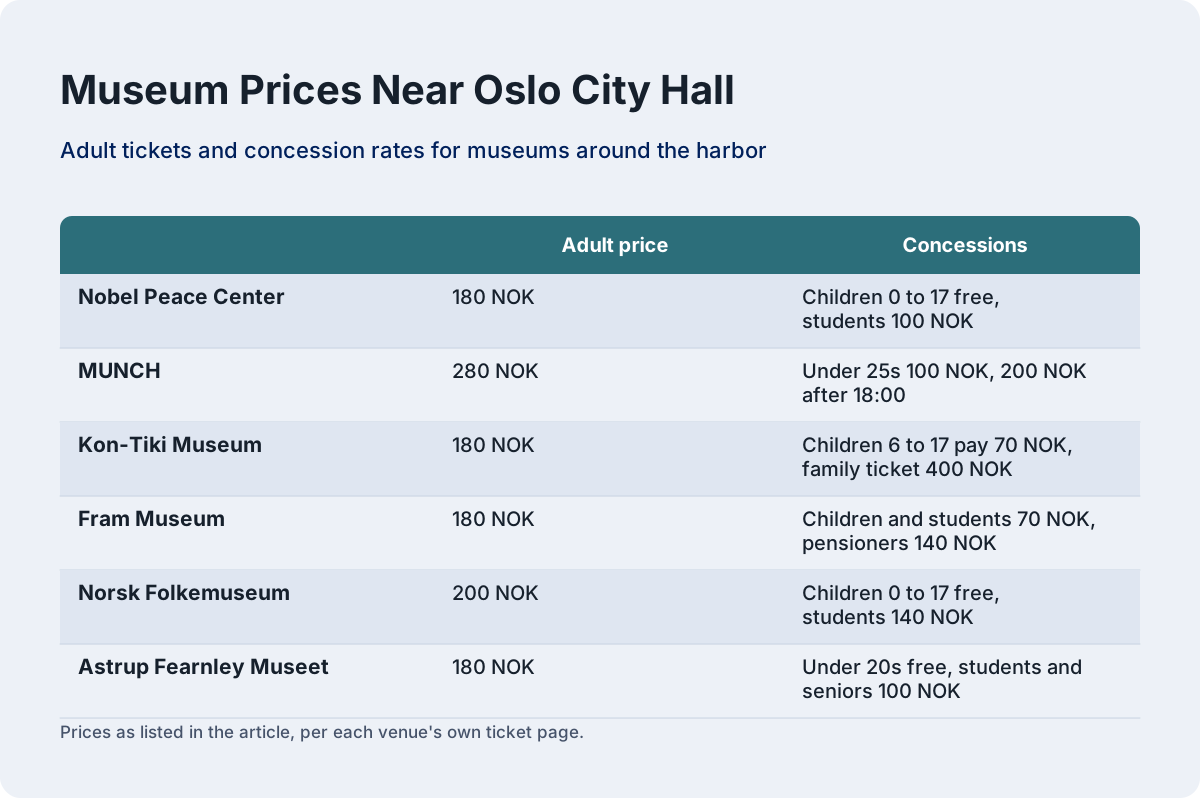
Cost-wise, the surrounding cluster is where the money goes. The Nobel Peace Center, the museum that tells the story of the prize, charges 180 NOK for adults with children 17 and under free, per its own ticket page. The other major museums within ferry or short bus range are itemized in the table below, and the Oslo Pass, at 580 NOK for 24 hours, 845 NOK for 48 hours and 995 NOK for 72 hours per the tourist board's current price page, covers over 30 of them plus public transport in zones 1 through 4N.
For structure, here is what the immediately surrounding cluster costs, using each venue's own published adult price:
| Venue | Adult price | Concessions and notes |
|---|---|---|
| Nobel Peace Center | 180 NOK | Children 0 to 17 free, students 100 NOK |
| MUNCH | 280 NOK | Under 25s 100 NOK, 17 and under free, 200 NOK after 18:00 |
| Kon-Tiki Museum | 180 NOK | Children 6 to 17 pay 70 NOK, family ticket 400 NOK |
| Fram Museum | 180 NOK | Children and students 70 NOK, pensioners 140 NOK |
| Norsk Folkemuseum | 200 NOK | Children 0 to 17 free, students 140 NOK |
| Astrup Fearnley Museet | 180 NOK | Under 20s free, students and seniors 100 NOK |
If you are building a full day around the City Hall, the guided options are where a fixed budget starts to make sense. The cheapest credible guided walk of the center comes in from $15.66 with a local guide, and the classic fjord cruise that leaves from the piers a few minutes away starts from $46.29 with an audio guide. Here are the three formats that pair most naturally with a City Hall visit:
What Happens at the Nobel Peace Prize Ceremony?
The Nobel Peace Prize is awarded in the City Hall's Great Hall on 10 December every year, the anniversary of Alfred Nobel's death, in a ceremony attended by the laureate, the Norwegian royal family and an invited audience. The event is broadcast internationally, and the laureate's lecture is delivered separately in Oslo during the same days.
The seating, the stage build and the camera positions take over the hall for days beforehand, so if your trip falls in the first ten days of December, expect the public route inside the building to be disrupted or closed. The flip side is that December in Oslo is its own kind of experience: the dark-season light, the Christmas streets and the torchlit and themed evening walks that only really make sense between October and March. The evening myths and legends walk, from $43.06, is built exactly for those months.
For most of the year the prize lives next door rather than inside. The Nobel Peace Center, a short walk along the waterfront, is the permanent exhibition venue, with displays on every laureate, the history of the prize and a rotating program of exhibitions on conflict and peace-making. At 180 NOK for adults, with children free, it is one of the more family-friendly museum tickets in the city, and it pairs naturally with the City Hall in a single waterfront loop.
The ceremony itself is invitation-only, but the city absorbs it well. The 10 December period brings lectures, concerts and the traditional torchlight procession honoring the laureate, and the whole waterfront around the City Hall takes on a festival edge. Visitors who specifically want to feel the Nobel atmosphere without an invitation should simply be in Oslo that week and follow the public program.
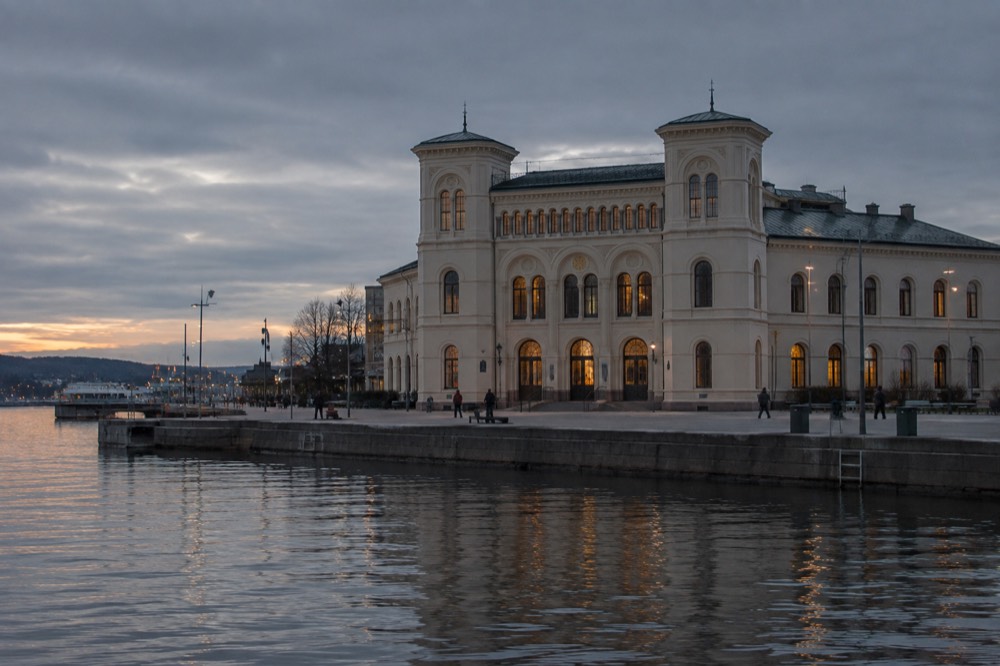
If the Nobel story is the thread that pulls your day together, the wider prize landscape is worth a sentence. The peace prize is the only one of Nobel's five awarded in Norway, and the contrast between the working brick of the City Hall and the sleek museum spaces next door tells you a lot about how Oslo balances ceremony and everyday life.
What Should You Look for Inside the Building?
The interior is the reason to go inside: monumental murals and woven works cover the ceremonial halls and staircases, many commissioned for the building itself, alongside sculptures and reliefs integrated into the walls. Give it an unhurried hour, and treat the Great Hall and the gallery levels as a single continuous art route rather than a list of highlights.
The Great Hall is the anchor. It is the room the world sees once a year, and the rest of the year it reads as what it is: an enormous brick-walled hall where the murals do the decorating that marble would do elsewhere. The ceremonial staircase and the upper gallery levels carry the rest of the public route, and the tapestries are the pieces most visitors remember, woven on a scale that photographs badly and impresses in person.
Two practical notes make the visit better. First, the light matters: the interiors are lit for the art rather than for phone cameras, and the harbor-side rooms change character completely with the time of day. Second, the scale rewards slowness. This is not a museum with a route and a cafe, it is a building you wander, and an hour of wandering beats a rushed twenty minutes.
The building also works as a primer on Norwegian art of the first half of the twentieth century, and it sits in a city where that story continues at full price elsewhere. MUNCH, the museum at Bjørvika that holds the largest Munch collection in the world, charges 280 NOK for adults with under-25s at 100 NOK, and the National Museum holds The Scream itself. If the City Hall's murals leave you wanting more, those are the two next stops, and both are covered by the Oslo Pass.
| Art stop | Adult price | Why it pairs with the City Hall |
|---|---|---|
| City Hall interiors | Check the city's own site for current arrangements | The mural collection, in situ |
| MUNCH | 280 NOK | The largest Munch collection anywhere, plus rotating shows |
| National Museum | Check the museum's own site | Holds The Scream and the national art collection |
| Vigeland Park | Free, open 24 hours | Over 200 sculptures, outdoors, always open |
| Astrup Fearnley Museet | 180 NOK | Modern and contemporary art at Tjuvholmen |
A guided walk is the efficient way to put the City Hall in context with the rest of the center, and the budget central walking tour is the cheapest credible option at $15.66 for two hours with a local guide. The tour covers the harbor-side landmarks around the building, which is exactly the ground you want interpreted.
How Do You Get to Oslo City Hall?
The City Hall sits directly on the waterfront at Pipervika, a few minutes' walk from the Nationaltheatret and Stortinget transit hubs, and it is the visual anchor of the harbor piers where the Bygdøy museum ferry and the Oslofjord island ferries leave. Almost every form of central Oslo transport lands you within a short walk.
The walk from the central station area takes in the whole main axis of the city, Karl Johans gate, and is flat and simple. From the Nationaltheatret side you arrive past the Royal Palace and the National Theatre; from the east you come through the parliament end of Karl Johans gate. Both converge on the plaza in front of the building, where the harbor opens up.
The piers matter more here than in most cities, and the distinction between them is the single most confused topic in Oslo travel planning. The Bygdøy museum ferry leaves from Rådhusbrygge 3, next to the City Hall, and runs seasonally from 14 March to 4 October, every 20 minutes, with a one-way fare around 70 NOK, and the Oslo Pass covers it while ordinary Ruter tickets do not. The Oslofjord island ferries, lines B1, B1X and B2, are a different system entirely: they are Ruter services, they leave from Aker brygge, and an ordinary zone 1 ticket covers them with no surcharge.
| Route | From | Ticket | Notes |
|---|---|---|---|
| Bygdøy museum ferry | Rådhusbrygge 3, Platform F | About 70 NOK one-way, Oslo Pass valid, Ruter tickets NOT valid | Seasonal, 14 March to 4 October, every 20 minutes, stops Dronningen then Bygdøynes |
| Island ferries B1, B1X, B2 | Aker brygge | Ordinary Ruter ticket, zone 1 | B1 runs year-round, B2 to Langøyene is summer-only |
| Bus 30 to Bygdøy | Central Oslo, including Nationaltheatret | Ordinary Ruter ticket | Year-round public alternative to the museum ferry, about 15 minutes |
| Vy train from the airport | Oslo S | Ruter ticket covering zone 1 through 4N, or Oslo Pass | About 23 minutes, roughly half the price of the airport express |
| Airport express train | Oslo S | 268 NOK adult single | About 20 minutes, every 10 minutes, not covered by the Oslo Pass |
That airport row deserves a sentence of explanation, because it is the highest-value money fact in Oslo and most guides get it wrong. The Oslo Pass covers the train to and from Gardermoen airport, but only the Vy trains, not the airport express and not the airport coach. The Vy train takes about 23 minutes against the express's 20 and costs roughly half as much when ridden on a multi-zone Ruter ticket. If you are landing with an Oslo Pass already in hand, the cheap train is already paid for.
What Can You Combine with a City Hall Visit?
The City Hall anchors the densest sightseeing cluster in Oslo: the Nobel Peace Center and Aker Brygge are a few minutes' walk west, the Akershus fortress is south along the water, and the Bygdøy museum peninsula is a 10-minute ferry ride from the pier in front of the building. A half-day loop is realistic; a full day is easy.
West along the waterfront comes Aker Brygge, the converted shipyard district that is now the city's main waterfront restaurant strip, and beyond it Tjuvholmen with the Astrup Fearnley museum at 180 NOK. South of the City Hall, the Akershus fortress and its resistance museum sit inside the old walls. This whole stretch is flat, waterside and continuously interesting, which is why the classic Oslo walking routes all use it.
The ferry in front of the building is the shortcut to Bygdøy, the museum peninsula. The Kon-Tiki Museum and the Fram Museum stand together at the Bygdøynes pier, each at 180 NOK for adults, with a combined ticket for the two at 325 NOK and a three-museum combination including the Maritime Museum at 485 NOK. The Kon-Tiki ticket is the best-reviewed museum ticket in Oslo on either major booking platform, at 4.5 across 1,116 reviews, and it makes a natural second half of a City Hall morning.
The one Bygdøy disappointment to plan around is the Viking museum. The former Viking Ship Museum is closed and will reopen as the Museum of the Viking Age in 2027, and the museum's own site directs visitors to Viking-age objects at the Historical Museum in the center instead. Viking Planet, the VR-based Viking experience in the city center, from $30.68, is the bookable substitute while the Bygdøy building is shut.
| Combination | Time needed | Rough adult cost |
|---|---|---|
| City Hall plus Nobel Peace Center walk | 2 to 3 hours | 180 NOK for the museum |
| City Hall, Aker Brygge, Tjuvholmen waterfront loop | Half day | Free walking, museum optional at 180 NOK |
| City Hall morning plus Bygdøy museums by ferry | Full day | Kon-Tiki and Fram combined 325 NOK, ferry about 70 NOK each way |
| City Hall plus fjord cruise from the piers | Half day | Cruise from $46.29 |
For the fjord leg, the decision is between formats rather than between operators, and the choice is genuinely wide. The silent electric boat with audio guide is the default first cruise, the highest-reviewed activity in the city at 4.5 across 6,664 reviews, while the traditional wooden sailing ship covers the same water in a completely different register for a similar from-price. The evening cruise with a shrimp buffet, from $90.22 for three hours, turns the same fjord into a Norwegian institution.
Is Oslo City Hall Worth Visiting in Winter or with Kids?
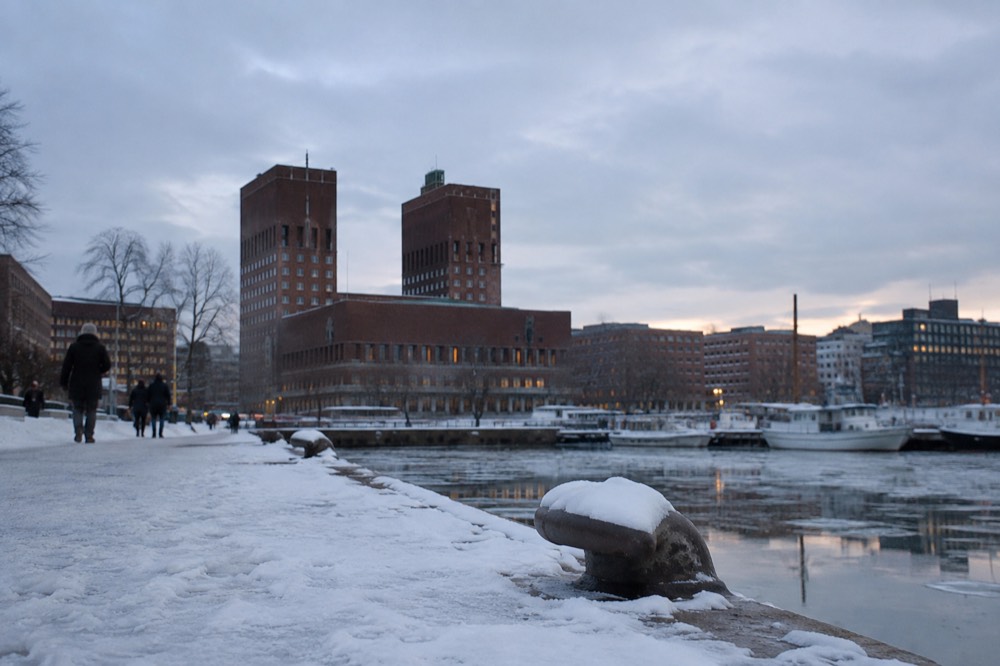
Yes, with one caveat: the building's public hours tighten outside summer and close around ceremony events in early December, but winter is exactly when the waterfront around it is at its most atmospheric, and the murals are an indoor activity the weather cannot touch. Families will find the short indoor route and the free plaza more useful than a full museum day.
Winter light is the thing that surprises visitors. On 21 December Oslo gets 5 hours 53 minutes of daylight, with sunrise at 09:18 and sunset at 15:11, against 18 hours 50 minutes at midsummer. That swing of more than a factor of three shapes every winter itinerary, and an indoor art-filled building that opens mid-morning is a good fit for a season where the afternoons vanish. There is no midnight sun in Oslo at 59.91 degrees north, and equally no polar night: winter days are short but real.
| Date | Sunrise | Sunset | Day length |
|---|---|---|---|
| 15 January | 09:04 | 15:49 | 6 h 45 m |
| 15 March | 06:34 | 18:19 | 11 h 45 m |
| 21 June | 03:53 | 22:43 | 18 h 50 m |
| 15 September | 06:44 | 19:38 | 12 h 54 m |
| 21 December | 09:18 | 15:11 | 5 h 53 m |
For families, the honest framing is that the City Hall is a stop, not a destination. Children tolerate an hour of murals well enough, and the plaza, the waterfront and the ferry ride to Bygdøy are the parts they will actually remember. The Nobel Peace Center next door is more child-friendly than most museums of its kind, with children 17 and under free, and the climbing park day ticket, from $44.68, is the outdoor anchor for families with energy to burn.
Winter visitors with a taste for the outdoors should also know what the season genuinely offers inside the city limits. The torchlit forest walk with a campfire, from $91.64, runs through the dark months, and guided snowshoeing in Nordmarka, from $103.24, is the activity that makes an Oslo winter trip worth booking. The learn-to-ski half-day, from $113.04 with a perfect 5.0 rating, makes Oslo the only European capital where a first ski lesson is a morning activity.
One cost note belongs in any Oslo planning conversation, and this page is as good a place as any. Norway is the sixth most expensive country in Europe on Statistics Norway's 2025 comparison, with household prices 28.6 percent above the EU average and alcohol and tobacco more than double the European average. Museums, transport and the outdoors are where Oslo is not unusually expensive, and a City Hall-centered day leans exactly on those three.
How Does the Oslo Pass Math Work Around the City Hall?
The 24-hour Oslo Pass at 580 NOK pays for itself on a single busy museum day: Kon-Tiki and Fram alone cost 360 NOK at the door, the Bygdøy ferry is included, and three Bygdøy museums at full price total 560 NOK before any transport. The pass also covers Vy airport trains, which can be worth the price difference on arrival day alone.
The arithmetic is straightforward because the tourist board publishes both sides. A 24-hour pass at 580 NOK against a day of two or three covered museums plus the museum ferry plus ordinary public transport in zones 1 through 4N breaks even comfortably. The 48-hour pass at 845 NOK and the 72-hour pass at 995 NOK reward slower pacing, and children 6 to 17 pay 290, 420 and 495 NOK respectively, with seniors from 67 paying 465, 675 and 795 NOK.
What the pass does not cover matters just as much. The airport express train at 268 NOK is excluded, the airport coach is excluded, and tours and fjord cruises are discounted rather than included. The pass is a museum-and-transport instrument, and a City Hall-centered day with a Bygdøy ferry leg and two museums is precisely its best case.
The pass is run by the city tourist board and bought from it or from authorized resellers, not from every booking platform, so if a booking site shows you an Oslo Pass product, read carefully what it actually is. The honest routes are the tourist board's own site and the resellers it lists.
What Do Locals Say About the Building?
Norwegians are divided on the City Hall's architecture in a way few cities are about their municipal headquarters: the raw brick and heavy towers were controversial when the building went up and still draw strong opinions both ways, while the interior art is broadly cherished. The Nobel ceremony gives the building a global standing its architecture alone never secured.
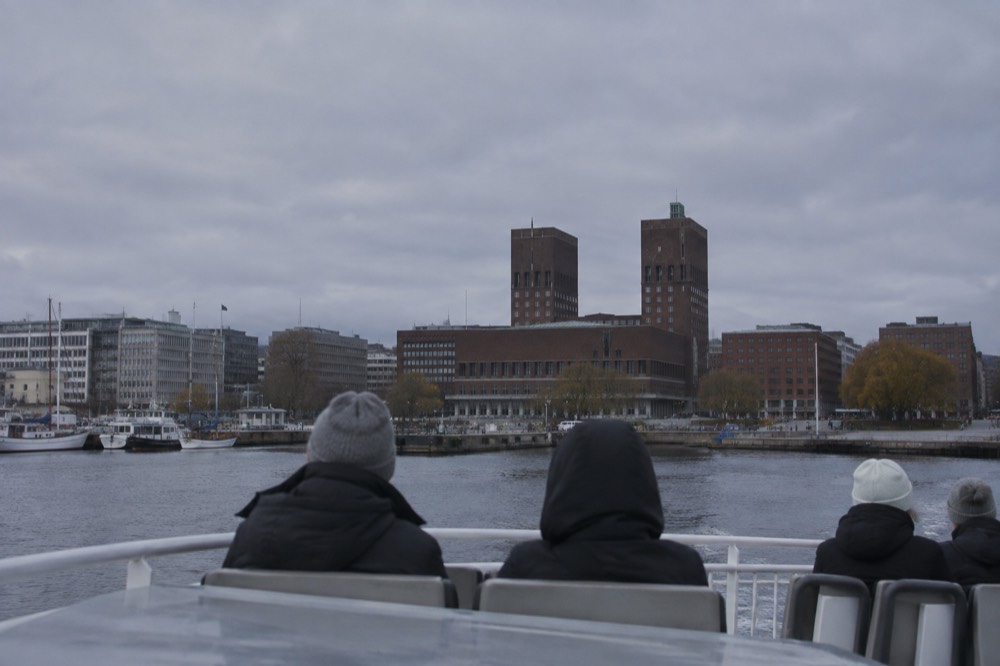
That division is worth knowing as a visitor, because it explains the building's strange energy. It is simultaneously the most photographed facade in the city, a working council chamber people argue about, and a gallery of some of the most significant Norwegian art of its era. The waterfront plaza in front, with the ferries, the fjord and the fortress beyond, is where the building is at its most photogenic, and the view back from a boat is the one most visitors take home.
The building also anchors the city's ceremonial calendar beyond the Nobel prize. National day on 17 May fills the surrounding streets with children's parades, and the waterfront around the City Hall is the natural place to watch them. The harbor-side location means the building fronts onto the same water that the fjord cruises, the island ferries and the Bygdøy ferry all use, so it is the fixed point around which the whole maritime side of the city turns.
For a deeper read on the surrounding district, the Aker Brygge waterfront guide covers the restaurant strip to the west, and the guide to the Bygdøy museum peninsula covers everything the ferry in front of the City Hall delivers you to. The Nobel Peace Center page handles the prize museum in detail, and the full Oslo fjord cruise guide works through the boat formats. For the wider picture of what the city offers, the things to do in Oslo overview is the site's master list, and the team at Oslo Travel Guide keeps every price on it checked against the venues' own pages.
Whether you come for the Nobel aura, the murals or simply because every walk along the waterfront ends up here, the City Hall rewards an hour of your attention and asks almost nothing in return. Pair it with a walk, a ferry and a museum, and you have the essential Oslo day.
Common Questions About Oslo City Hall
Is Oslo City Hall free to visit?
The building is a working city hall rather than a ticketed museum, but public access depends on the day's official schedule, so check the city's own published hours before you go. Rooms can close for council meetings, ceremonies and the Nobel preparations in early December. The waterfront plaza outside is free and always open.
Can you see the Nobel Peace Prize ceremony in Oslo City Hall?
The ceremony on 10 December is an invitation-only event in the Great Hall, attended by the laureate, the royal family and invited guests. The public side of Nobel week happens around the city, including the laureate's lecture and the torchlight procession. The Nobel Peace Center on the waterfront tells the prize story year-round.
How long does a visit to Oslo City Hall take?
Plan on about an hour inside to see the Great Hall, the ceremonial staircase and the gallery levels at a relaxed pace. The surrounding waterfront loop, taking in the Nobel Peace Center and Aker Brygge, adds another couple of hours on foot.
What is near Oslo City Hall?
The Nobel Peace Center is minutes away along the waterfront, Aker Brygge and its restaurant strip sit just west, the Akershus fortress lies south along the water, and the Bygdøy museum ferry leaves from the pier in front of the building. The Kon-Tiki and Fram museums are a 10-minute ferry ride away.
Does the Oslo Pass help around Oslo City Hall?
Yes. The pass covers the Bygdøy museum ferry from the pier in front of the building, the island ferries, over 30 museums including the Nobel Peace Center, and Vy trains to and from the airport. A 24-hour adult pass costs 580 NOK.
Is Oslo City Hall worth visiting with kids?
As one stop in a waterfront day, yes: the plaza, the ferry rides and the free-entry museums nearby carry the family appeal, and children 17 and under enter the Nobel Peace Center free. The building itself is best treated as a short indoor stop rather than the day's main event.