Norway's Resistance Museum at Akershus Fortress: A Visitor's Guide
Norway's Resistance Museum sits inside Akershus Fortress, the castle complex on Oslo's waterfront, and tells the story of the Norwegian resistance during the occupation years from 1940 to 1945. This guide covers what to expect inside, how to reach the fortress, how long to allow, and how to pair it with the rest of the Akershus grounds.
Short answer
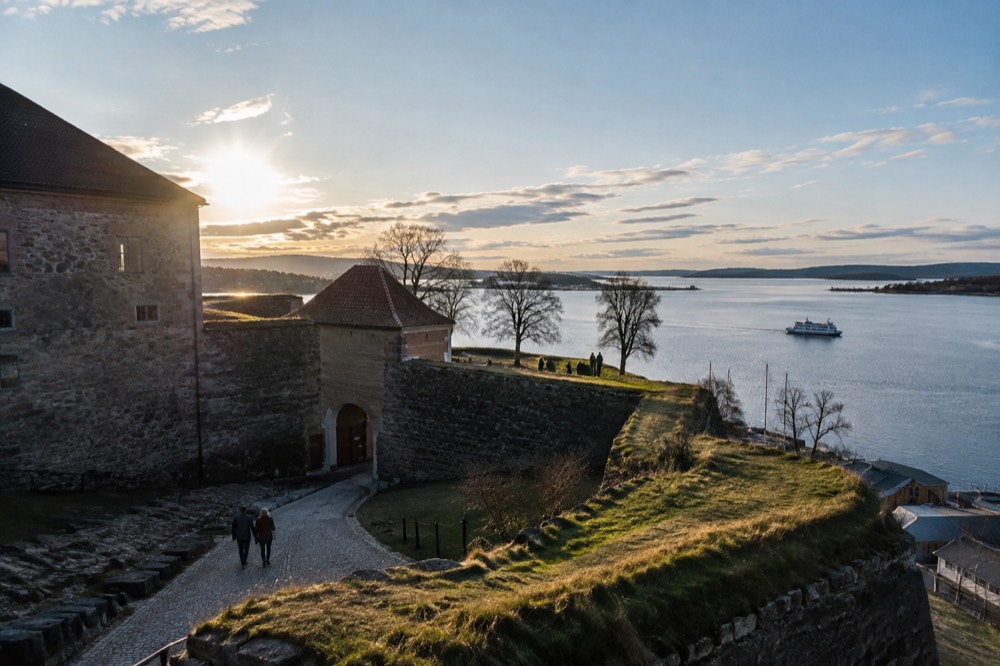
Norway's Resistance Museum is inside Akershus Fortress, a 10-minute walk from Oslo City Hall along the waterfront. It covers the Norwegian resistance during the 1940 to 1945 occupation, and most visitors allow around an hour inside. Check the museum's own site for current admission and hours before you go.
Akershus Fortress has guarded the mouth of the Oslofjord for centuries, and one building inside its walls holds the darkest and most gripping chapter of Oslo's modern history. Norway's Resistance Museum, known locally as Norges Hjemmefrontmuseum, documents the Norwegian resistance during the occupation years of 1940 to 1945, when the country was under German control and a small population organized everything from underground newspapers to escape routes over the mountains to Sweden.
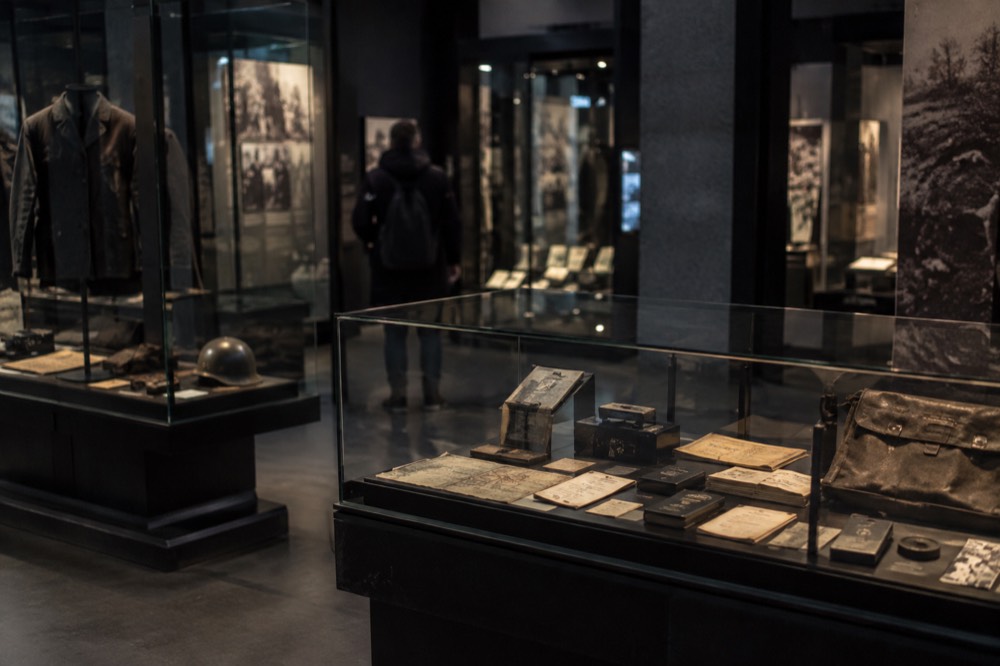
The museum is small by international standards, but it is dense. Visitors move through a chronological sequence of rooms where the exhibits are built almost entirely from original objects: forged identity papers, concealed radios, weapons, photographs, and personal belongings of people who lived through those five years. For many travelers it ends up being the most affecting hour they spend in Oslo, and it pairs naturally with a walk around the fortress grounds, which are free to roam and offer some of the best harbor views in the city.
This guide from our team at Oslo Travel Guide covers the practical side of a visit: what the museum contains, how to reach it, how long to allow, what it costs, and how to build a half-day around the fortress. The museum publishes its own hours and admission details, and those can shift with the season, so treat the official site as the final word on the day you visit.
What Is the Norway Resistance Museum?
The Norway Resistance Museum is a history museum inside Akershus Fortress in Oslo that documents the Norwegian home front during the German occupation from 1940 to 1945. Its Norwegian name is Norges Hjemmefrontmuseum, literally the Norway Home Front Museum, and its exhibits follow the occupation chronologically through original artifacts, photographs, and personal accounts. Most visitors spend about an hour inside, and the setting inside the fortress walls is part of the experience.
The word "home front" matters here. The museum is not primarily a military museum about battles fought abroad, it is about what happened inside Norway: the civilians who printed illegal newspapers in their basements, the sailors who ran escape routes, the teachers and clergy who resisted the attempt to Nazify Norwegian institutions, and the ordinary people who had to decide, daily, how far they would go.
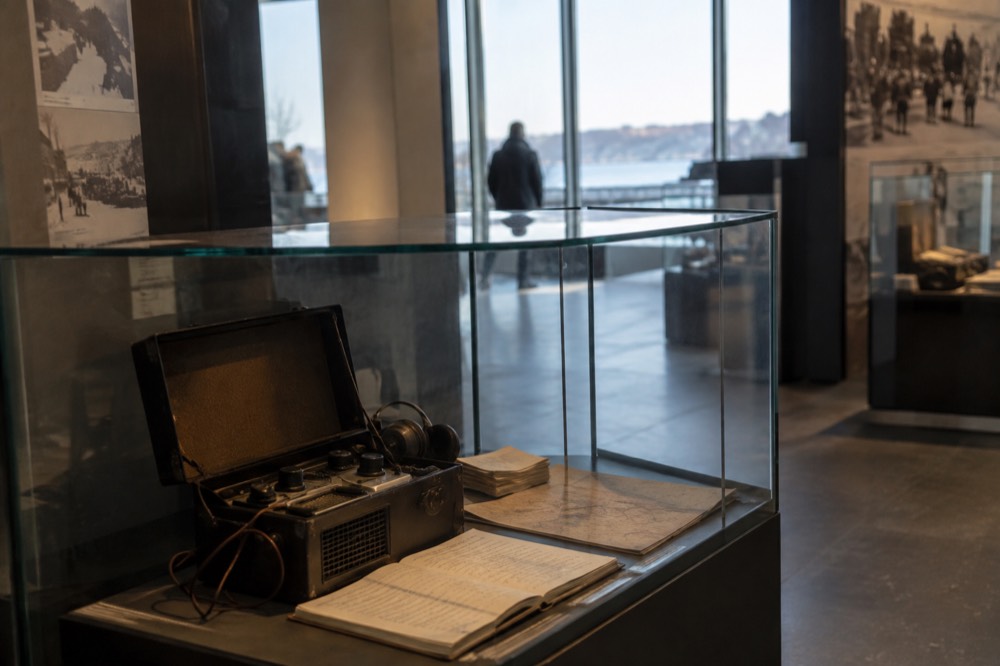
That framing is what makes the museum land with visitors who do not usually seek out war history. The exhibits are built around individual choices rather than grand strategy. You are looking at a forged ration card, a radio hidden in a bread tin, a pair of skis used to cross into Sweden, and the museum's curation lets those objects carry the story.
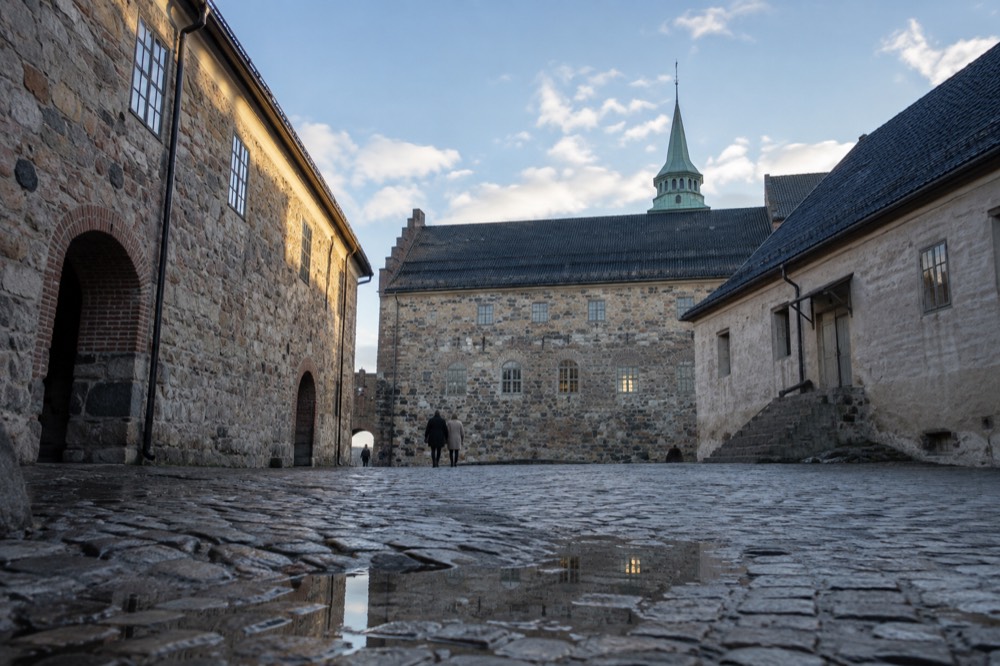
The museum's location is not incidental either. Akershus Fortress was used by the German authorities during the occupation, and parts of the grounds carry that history visibly. Walking out of the museum and onto the ramparts, with the Oslofjord spread below, is a quiet continuation of the visit rather than a separate activity.
Where Is the Norway Resistance Museum and How Do You Get There?
The museum is inside Akershus Fortress, on the peninsula directly southeast of Oslo City Hall, roughly a 10-minute walk from the city center. There is no dedicated metro or tram stop at the fortress itself; the standard approach is on foot from City Hall, Aker Brygge, or the Karl Johans gate axis, and the walk is flat and waterfront the whole way. Cruise passengers arriving at the Oslo cruise ports are also within easy walking distance.
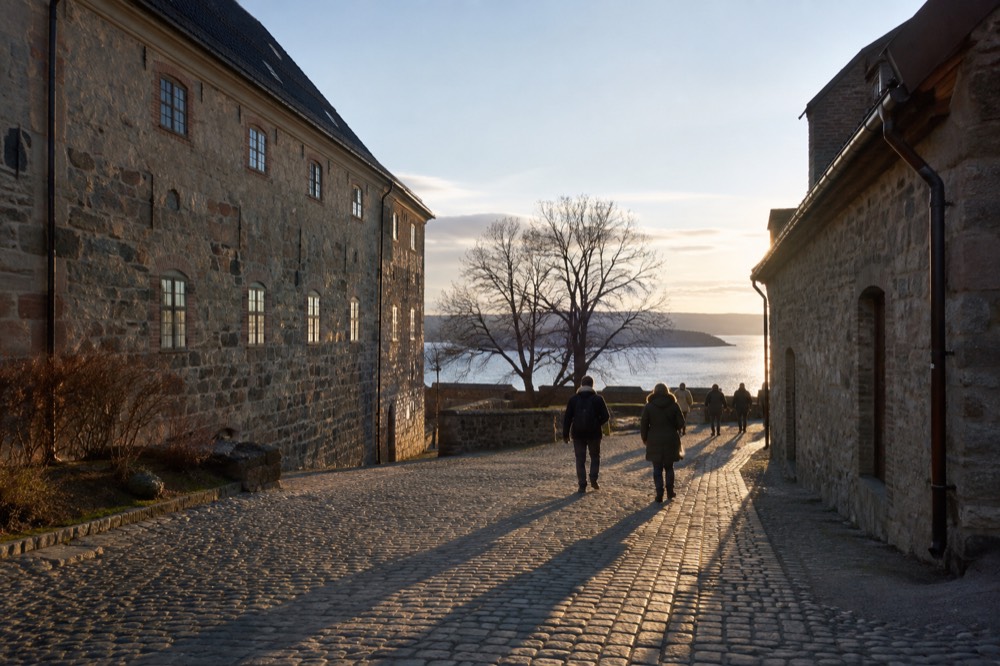
The fortress dominates the Oslo waterfront, so orientation is simple. If you stand at Rådhusbrygge 3, the City Hall pier, and look left along the water, the castle walls are the large stone complex on the rise. Enter through the main gate and follow the signs once you are inside the grounds; the museum's own signage is clear and in English as well as Norwegian.
A few practical notes on the approach:
| Approach | Where it starts | What to know |
|---|---|---|
| On foot from City Hall | Rådhusbrygge 3 area | About 10 minutes, flat, waterfront promenade the whole way |
| On foot from Aker Brygge | Aker brygge pier area | About 10 minutes, passes restaurants and the Tjuvholmen direction |
| From the Bygdøy ferry pier | Rådhusbrygge 3, Platform F | The museum ferry to Bygdøy leaves from the same pier area; the fortress is the landmark next door |
| From the island ferry pier | Aker brygge | The B1 island ferry departs nearby; combine a Hovedøya trip with the fortress |
| From Oslo Central Station | Oslo S | Roughly 25 minutes on foot via Karl Johans gate, or a short transit ride toward Nationaltheatret |
If you are building a day around the waterfront, the geography works strongly in your favor. The City Hall pier area is the departure point for the seasonal Bygdøy museum ferry, and Aker brygge is where the public island ferries leave from. Those are two different systems with different ticket rules, a distinction we cover in detail in our guide to Oslo's ferries, and the fortress sits right between them.
Visitors with mobility concerns should know that the fortress grounds are a mix of paved paths, cobblestones, and gravel, with some slopes around the ramparts. The grounds themselves are a public space and free to walk, and our accessibility guide for Oslo goes into more detail on the terrain you can expect across the city's older sites.
What Will You Actually See Inside the Museum?
The museum's exhibits run chronologically through the occupation, from the invasion and the collapse of Norwegian defenses in 1940, through the establishment of the resistance movement, to liberation in 1945. Displays combine original artifacts, photographs, models, and text panels, with English translations throughout. Expect forged documents, hidden radios, weapons, escape equipment, and material from the illegal press, presented in compact, dimly lit rooms.
The narrative arc is the strength of the curation. You begin with the shock of invasion and occupation, move through the gradual organization of resistance in its many forms, and end with liberation and the reckoning that followed. Because the rooms follow that sequence, the museum rewards being read in order rather than dipped into randomly.
A few themes recur across the exhibits and are worth having in mind before you go:
- The illegal press. Underground newspapers were among the most widespread forms of resistance, and the museum's collection of clandestine printing material is one of its core strengths.
- Escape routes. Routes over the mountains to neutral Sweden carried refugees, and the equipment and stories around them are displayed in detail.
- Everyday defiance. The exhibits give real weight to the teachers, clergy, and ordinary workers who refused to join collaborationist organizations, and to the costs that refusal carried.
- Intelligence and communication. Concealed radios and coded messages appear repeatedly, and the technical ingenuity on display is genuinely striking.
Families with school-age children often find the museum works better than expected, because the objects are concrete and the story is told at human scale. That said, some material deals with executions, torture, and deportation, so parents of younger children may want to preview rooms or keep the visit shorter. Our guide to Oslo with kids has alternatives if the material proves too heavy for your group on the day.
If Oslo delivers one of its rainy afternoons during your trip, and August, its wettest month on the official normals, is quite capable of doing so, an indoor hour inside the fortress walls is a good use of it. For a completely different indoor mood, the Paradox Museum is the city's strongest interactive family ticket, a hall of illusions in the center that inverts the resistance museum's seriousness entirely.
For visitors who want the resistance story carried out of the museum and into the streets where it happened, a themed guided walk covering Oslo and Norway during the occupation years exists on the tour roster. It is a longer and pricier commitment than the museum, but it is the only product in the city built specifically around the war years, and its reviews are about as strong as guided walks get.
How Long Does a Visit Take, and When Should You Go?
Most visitors spend between 45 minutes and 90 minutes inside the museum, with an hour being the typical sweet spot for reading the main panels. Add another 30 to 60 minutes for the fortress grounds, ramparts, and harbor views, which are free and open to walk. Mornings on weekdays are the quietest period; weekends and cruise-ship days bring the largest groups through the gate.
The museum's footprint is modest, and the pace is set by how much of the text you read rather than by how far you walk. Visitors who read the panels closely and linger over the artifact cases will use the full 90 minutes. Visitors moving faster, or with children in tow, will compress it toward the lower end.
Season matters more here than at Oslo's bigger museums, for two reasons. First, opening hours at smaller Norwegian museums often narrow outside the summer season, and the museum's own site is the place to confirm the day's hours. Second, the fortress grounds themselves change character with the weather: the rampart walk in summer, with the Oslofjord glittering below, is a very different experience from the same walk in a January wind, under six hours of daylight.
Oslo's daylight swing is extreme, from 5 hours 53 minutes at the winter solstice to 18 hours 50 minutes at midsummer, a factor of more than three, and our daylight hours guide breaks down what that means month by month. If you are visiting between October and March and want the rampart views in daylight, plan the fortress for the middle of the day.
| Season | Daylight feel | Fortress grounds | Museum crowd level |
|---|---|---|---|
| June to August | Light until late evening, sunset past 22:00 in late June | Rampart walk at its best, busiest paths | Highest, cruise season peak |
| September to October | Shortening fast, sunset before 19:00 by mid-October | Autumn color on the grounds, quieter | Moderate |
| November to February | Under 8 hours of daylight midwinter | Stark and atmospheric, dress for cold | Lowest, some hours may be reduced |
| March to May | Lengthening quickly, snow possible into April | Grounds greening, quiet before summer | Low to moderate |
One planning note worth stating plainly: check the museum's published hours for the exact date you plan to visit, especially around Norwegian public holidays, when smaller museums commonly close or shorten the day. Building your fortress visit for the morning also leaves the afternoon free for the waterfront, which is where much of Oslo's best time is spent.
How Much Does It Cost, and Does the Oslo Pass Cover It?
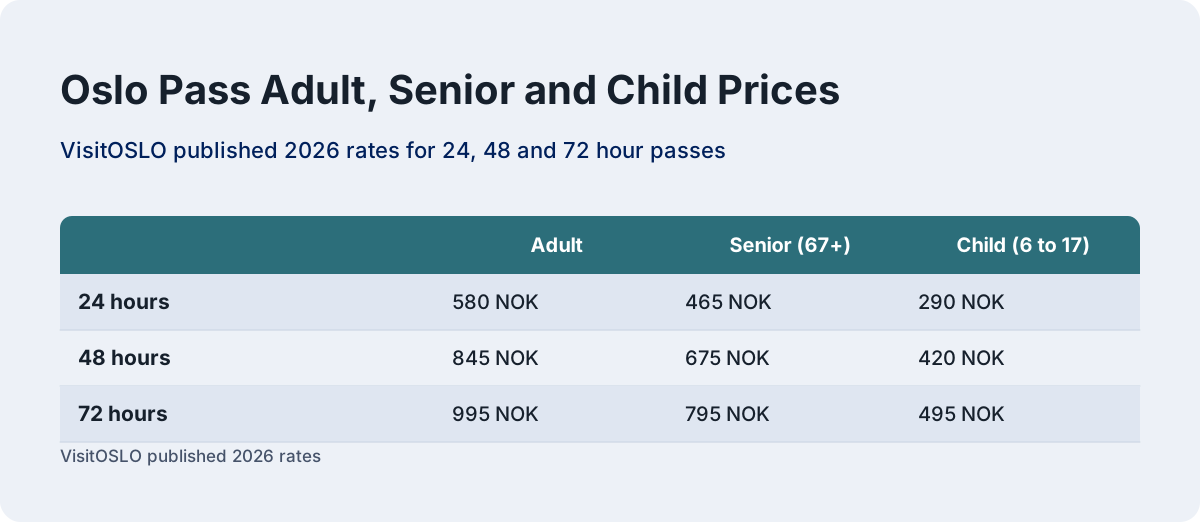
The museum publishes its own admission prices and hours, and we do not print a number here that we have not verified against the venue's own site, so treat the official listing as the source of truth. The Oslo Pass covers free entry at over 30 museums and attractions, with current adult prices of 580 NOK for 24 hours, 845 NOK for 48 hours, and 995 NOK for 72 hours. Confirm the current inclusion list on the pass's own page before assuming coverage.
The Oslo Pass is worth understanding before any museum-heavy day in Oslo, because the break-even math is genuinely favorable when a day includes several covered venues. The pass also includes public transport across Ruter's central zones and the Vy trains to and from Oslo Airport Gardermoen, though not the Flytoget airport express, a distinction most guides get wrong and which our Flytoget versus Vy comparison explains in full.
| Oslo Pass | Adult | Senior (67+) | Child (6 to 17) |
|---|---|---|---|
| 24 hours | 580 NOK | 465 NOK | 290 NOK |
| 48 hours | 845 NOK | 675 NOK | 420 NOK |
| 72 hours | 995 NOK | 795 NOK | 495 NOK |
Those prices are VisitOSLO's published 2026 rates. Whether the Resistance Museum specifically is on the covered list should be confirmed on the pass's inclusion page, which the tourist board keeps current, because inclusion lists change and a wrong assumption here costs you a walk back down the hill.
The honest framing for budgeting is this: Oslo is not a uniformly expensive city, and museums, public transport, and the outdoors are the parts where it is genuinely reasonable. Where Oslo bites is alcohol and restaurant spending, which SSB's European price-level survey puts at more than double the European average for alcohol and tobacco. A museum-and-walking day is one of the cheaper shapes an Oslo day can take, and our is Oslo expensive guide itemizes where the money actually goes.
What Else Is at Akershus Fortress?
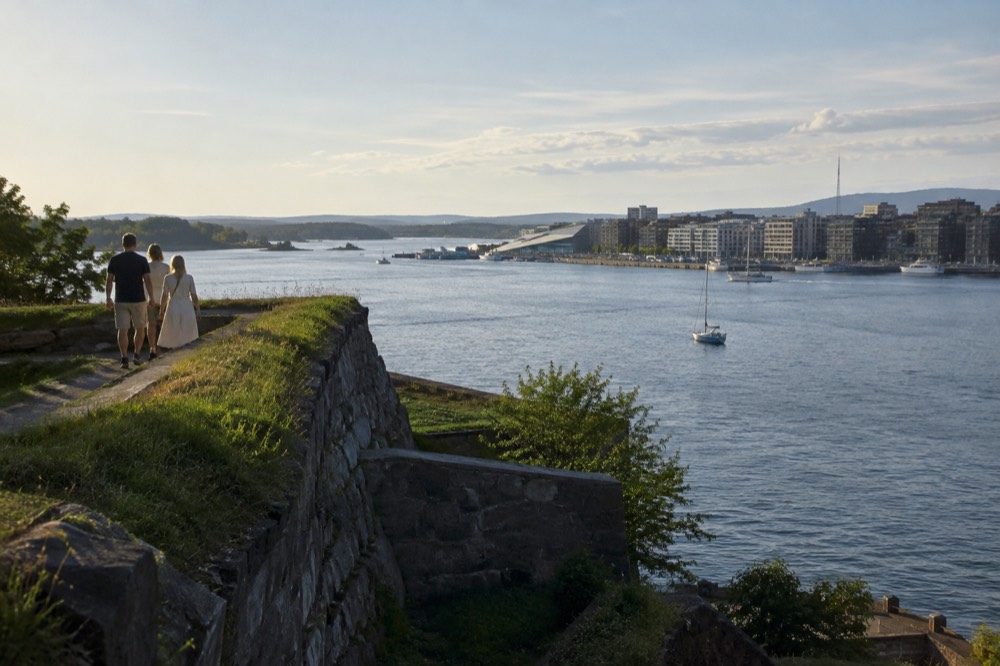
Akershus Fortress is a working military area and a public historic site in one, and most of the grounds are free to walk: ramparts with harbor views, the castle itself, historic buildings, and grounds used by locals as a park. The complex also contains other museums and monuments, and the whole peninsula can fill a half-day easily. The fortress has guarded Oslo since the medieval period and remains a military command area, so some zones are closed to the public.
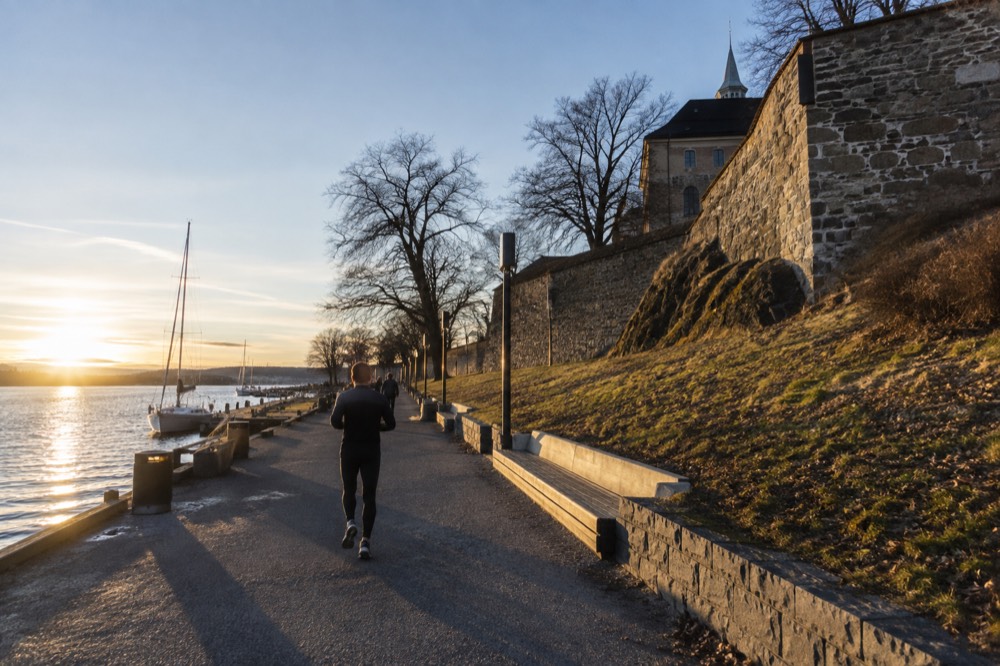
The rampart walk is the free highlight. From the walls you look straight down the Oslofjord, across to Aker Brygge and Tjuvholmen, and out toward the islands. On a clear evening in June, when the sun sets after 22:00, the light across the water is the reason people end up staying far longer than planned.
The wider fortress complex rewards slow exploration:
| What | What it is | Practical note |
|---|---|---|
| The castle | The historic fortress buildings, including halls and chapel | Separate ticketed visit; check official site for hours and tours |
| The ramparts | Walkable walls and grounds with harbor views | Free, open as a public space |
| The Resistance Museum | The WWII home front museum | This guide's subject; confirm hours on the official site |
| The grounds and monuments | Memorials, historic buildings, lawned areas | Free to walk; some military zones are signed as closed |
| Harbor views | Panoramas across the Oslofjord to Aker Brygge and the islands | Best light varies wildly by season; see the daylight guide |
Our full guide to Akershus Fortress covers the castle, the grounds, and the photography angles in more depth, and it is worth reading alongside this page if the fortress is a priority on your itinerary.
The fortress also sits inside a wider cluster of Oslo history. The Oslo City Hall is the landmark you walked past to get here, and the Nobel Peace Center on the waterfront nearby carries Oslo's peace-institution story into the present day. Between the three, the waterfront between City Hall and Aker Brygge is effectively a history district on foot.
Is the Norway Resistance Museum Worth Visiting?
For most visitors, yes, and especially for anyone with even a passing interest in WWII history. The museum is compact, emotionally direct, and built from original objects rather than screens and reconstructions, and its setting inside a fortress that lived through the events it describes adds weight that a city-center museum could not match. Visitors indifferent to war history will still get a solid hour from it, but the fortress grounds and views alone justify the walk out.
The honest caveat is about expectations. This is not a large, modern, interactive museum in the style of the bigger Oslo institutions. The presentation is traditional: cases, panels, objects, light. Visitors who want immersive or interactive formats are better served elsewhere in the city, and the Paradox Museum, an interactive illusion hall, is the natural contrast pick on the ticket roster.
What the museum does better than almost anything else in Oslo is connect a small country's experience to universal questions about complicity, courage, and ordinary life under occupation. Reviewers for Oslo's history walks consistently describe the occupation material as the part of the city's story that stays with them, and this museum is where that story is concentrated.
For travelers deciding how to weight their Oslo time, the practical answer is that the Resistance Museum earns its slot in a first visit whenever the weather is indifferent or the itinerary already includes the waterfront. It costs little time, it sits inside a free and beautiful site, and it leaves you with more to think about than most attractions twice its size.
What Other History Sites and Tours Pair with It?
The strongest pairings are the fortress grounds themselves, the Oslo City Hall and Nobel Peace Center on the adjacent waterfront, and the themed occupation history walk that covers Oslo and Norway during the war years in the streets where it happened. Beyond the city center, the Bygdøy museum peninsula extends the story, though the Museum of the Viking Age there remains closed until its reopening as a new museum in 2027.
The occupation walk deserves a specific mention because it is unusual: a guided tour dedicated entirely to the 1940 to 1945 years, which the general city walks skip or compress. It runs around two and a half hours and is priced accordingly, so it suits visitors for whom this history is a genuine priority rather than a passing interest. Its rating is perfect, over a smaller review base, which is typical of specialist tours with devoted audiences.
On Bygdøy, the museum peninsula reached by the seasonal ferry from Rådhusbrygge 3 or by bus year-round, the Kon-Tiki and Fram museums carry Norway's exploration story rather than its war story, and both are among the best-reviewed museum tickets in the city. The Kon-Tiki ticket in particular anchors a Bygdøy day well.
One closure to plan around: the former Viking Ship Museum on Bygdøy is closed, and the official wording is that it will reopen as the Museum of the Viking Age in 2027, with no month confirmed. Our Museum of the Viking Age page tracks that reopening, and Viking Planet in the city center is the honest substitute ticket in the meantime.
How Do You Plan a Half-Day Around the Fortress?
A workable half-day is: start at Oslo City Hall, walk the 10 minutes to the fortress, give the Resistance Museum an hour, walk the ramparts for the views, then exit toward Aker Brygge for food, or take the seasonal Bygdøy ferry from Rådhusbrygge 3 to extend into a museum afternoon. The whole loop is walkable, and nothing in it requires a car or a transit ticket unless you add the ferry or a Bygdøy leg.
Here is a sample shape for a half-day, assuming a mid-morning start:
| Time | Activity | Notes |
|---|---|---|
| 09:30 | Oslo City Hall area | Orientation, coffee on the waterfront |
| 10:00 | Walk to Akershus Fortress | 10 minutes, flat, along the water |
| 10:15 | Resistance Museum | Allow 45 to 90 minutes; confirm opening hours first |
| 11:45 | Ramparts and grounds | Free, open walking; best light varies by season |
| 12:30 | Exit toward Aker Brygge | Restaurants and waterfront seating |
| 13:00 onward | Options | Bygdøy ferry from Rådhusbrygge 3, island ferry from Aker brygge, or Nobel Peace Center |
The two ferry systems off this route are worth keeping straight, because they are the most commonly confused pair in Oslo. The Bygdøy museum ferry leaves from Rådhusbrygge 3, runs seasonally from mid-March to early October, and does not accept ordinary Ruter tickets, though the Oslo Pass covers it. The island ferries B1, B1X and B2 leave from Aker brygge, are ordinary Ruter services, and ride on a standard ticket. Our ferries guide and our Oslo islands page cover both in detail.
If the weather turns, the fortress half-day inverts easily into an indoor day: the museum itself, the Nobel Peace Center, the National Museum, and MUNCH are all within a short radius of this waterfront, and our rainy day in Oslo guide sequences them.
Common Questions About the Norway Resistance Museum
What is the Norway Resistance Museum?
A history museum inside Akershus Fortress in Oslo documenting the Norwegian home front during the German occupation from 1940 to 1945. Its Norwegian name is Norges Hjemmefrontmuseum, and its chronological exhibits are built from original artifacts including forged documents, concealed radios, and illegal press material.
Where is the Norway Resistance Museum located?
Inside Akershus Fortress, on the waterfront peninsula southeast of Oslo City Hall. It is roughly a 10-minute flat walk from the City Hall piers and about 25 minutes on foot from Oslo Central Station via Karl Johans gate.
How long does a visit to the Resistance Museum take?
Most visitors spend between 45 and 90 minutes inside, with an hour typical for reading the main panels. Add 30 to 60 minutes more for the free fortress grounds and rampart walk, which offer some of the best harbor views in Oslo.
Does the Oslo Pass cover the Norway Resistance Museum?
The Oslo Pass covers free entry at over 30 museums and attractions, but inclusion lists change, so confirm the current list on the pass's own page before your visit. Current adult pass prices are 580 NOK for 24 hours, 845 NOK for 48 hours, and 995 NOK for 72 hours.
Is the Norway Resistance Museum suitable for children?
School-age children often engage well because the exhibits are concrete objects at human scale, but some material deals with executions, torture, and deportation. Parents of younger children may want to preview rooms or keep the visit shorter.
What else is there to see at Akershus Fortress?
The castle itself, the walkable ramparts with Oslofjord views, monuments and historic buildings across the grounds, and the free public park areas. Some zones remain a working military area and are signed as closed. The grounds are free to enter and open year-round.