Oslo Opera House Visitor Guide: Roof Walk, Interior and Planning
The Oslo Opera House is the one building in the city that almost every visitor walks on before they walk in. Its sloping marble roof is a public plaza in its own right, free to access at any hour, and it anchors the whole regenerated Bjørvika waterfront. Here is what to expect, what it costs, and how to fold it into a day in Oslo.
Short answer
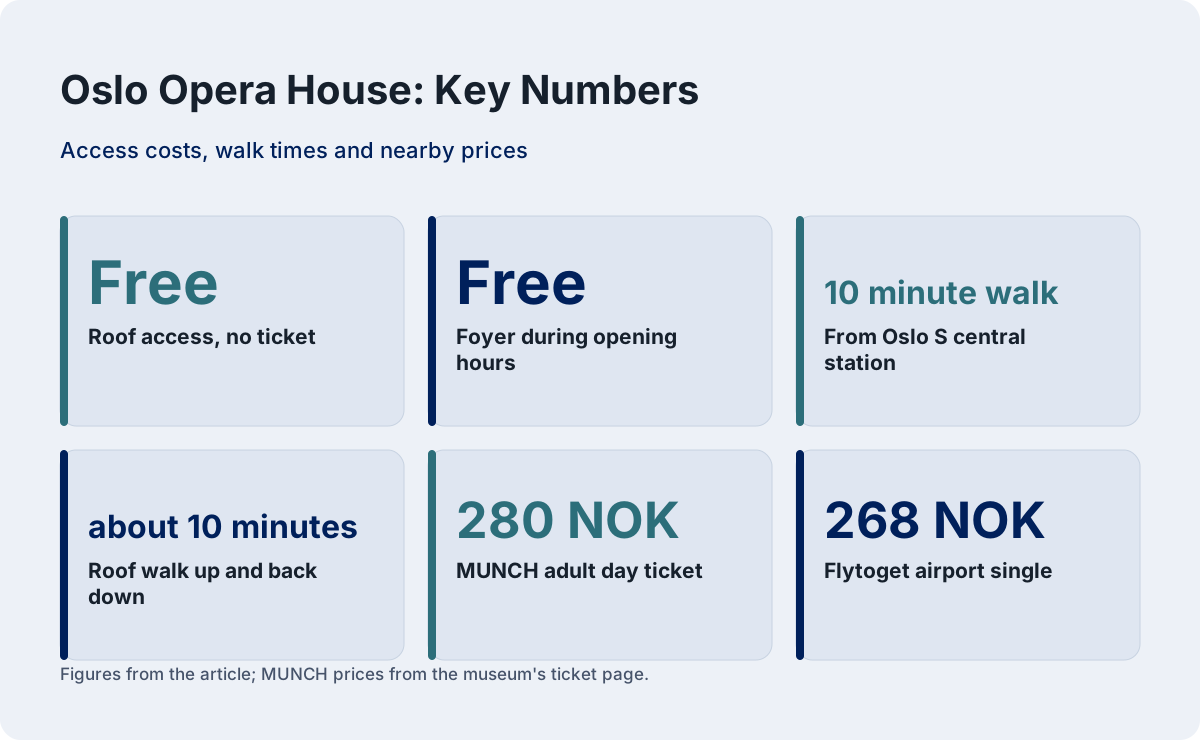
The Oslo Opera House sits on the Bjørvika waterfront, a 10 minute walk east of Oslo S. The sloping marble roof is free and open to the public with no ticket required, and the interior foyer is also free to enter during opening hours. Most visitors spend 30 to 60 minutes here, longer if you pair it with the MUNCH museum or the Aker Brygge waterfront.
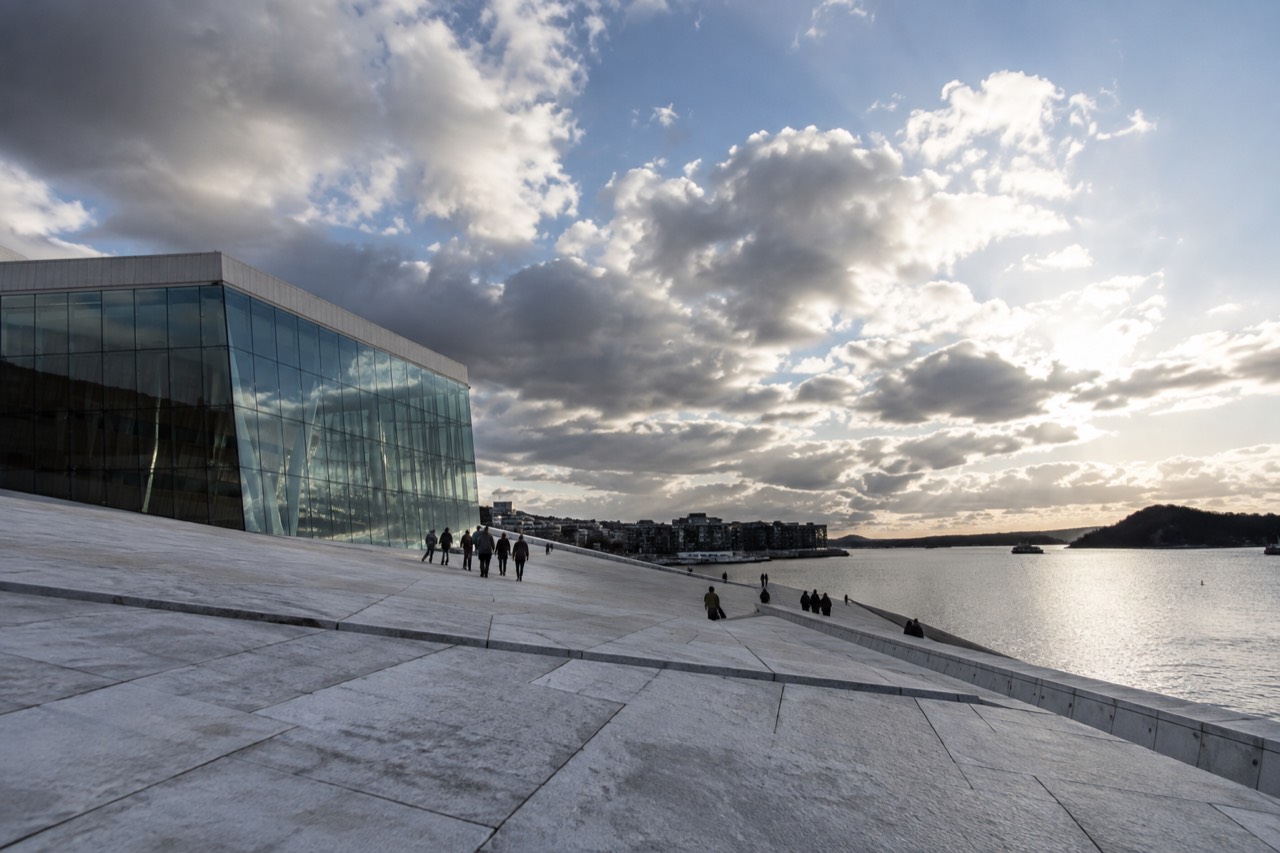
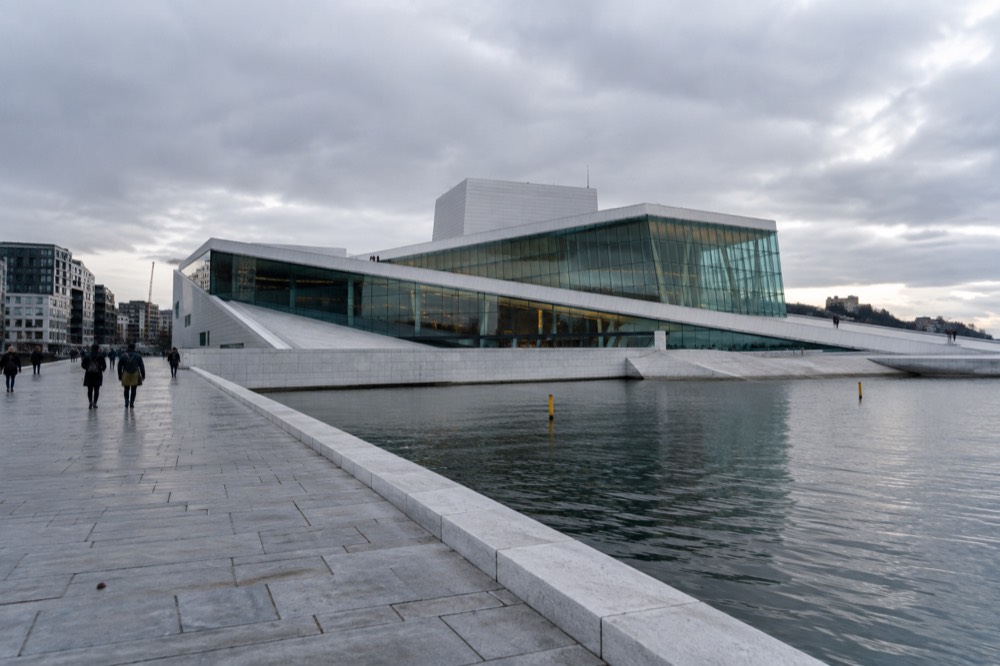
The Oslo Opera House is the building that changed how Oslo presents itself to the water. For decades the city turned its back on the Oslofjord; the Opera House, opened on the Bjørvika shoreline, made the waterfront the front door instead. The building's defining gesture is its roof: a sloping plane of white marble and granite that invites you to climb it, deliberately designed so the public could walk up and over a national institution rather than around it.
The roof is free, the foyer is free, and the location is a 10 minute walk from the central station. That combination makes it one of the highest-value stops in a city where SSB's 2025 price-level survey puts household costs 28.6% above the EU average. A full guide to the building, the roof walk and the surrounding Bjørvika district follows, with real NOK figures for everything that costs money and honest notes on what does not. For the wider picture of the city this building anchors, start with our complete things to do in Oslo overview.
What Is the Oslo Opera House and Why Is It Famous?
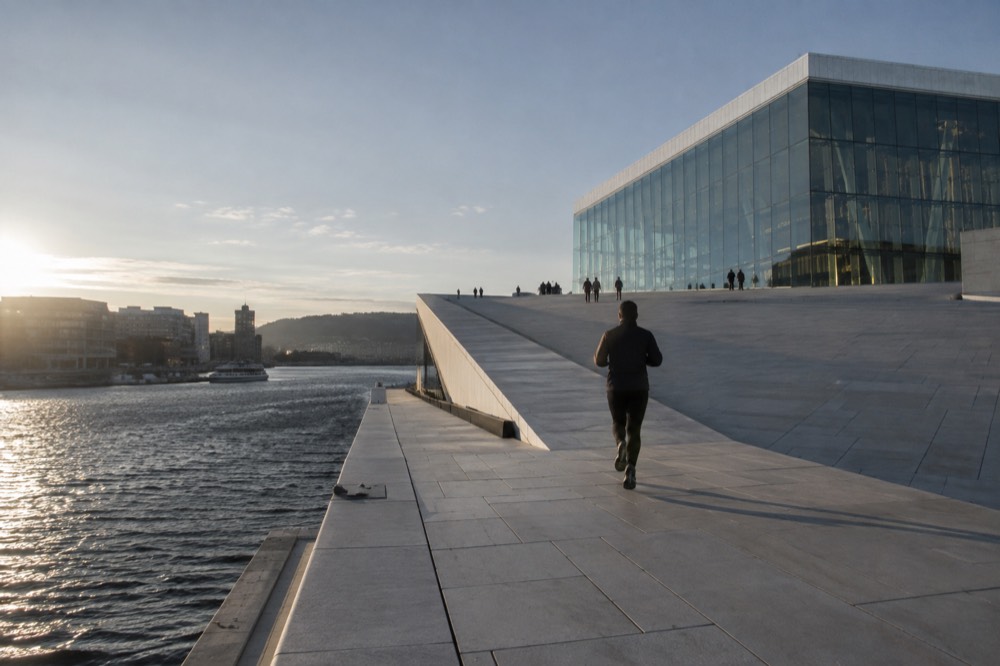
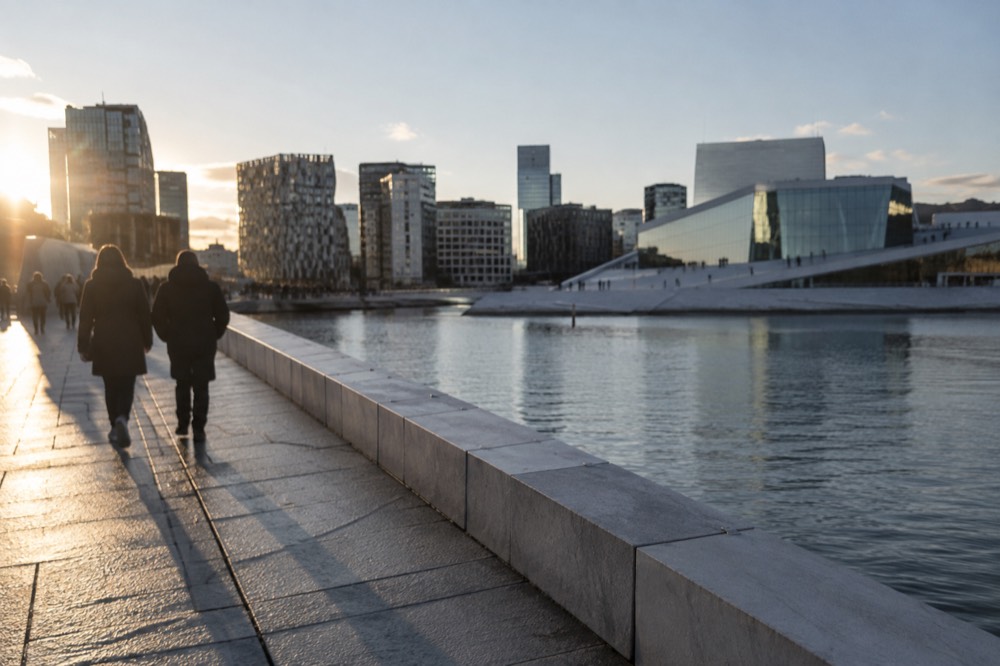
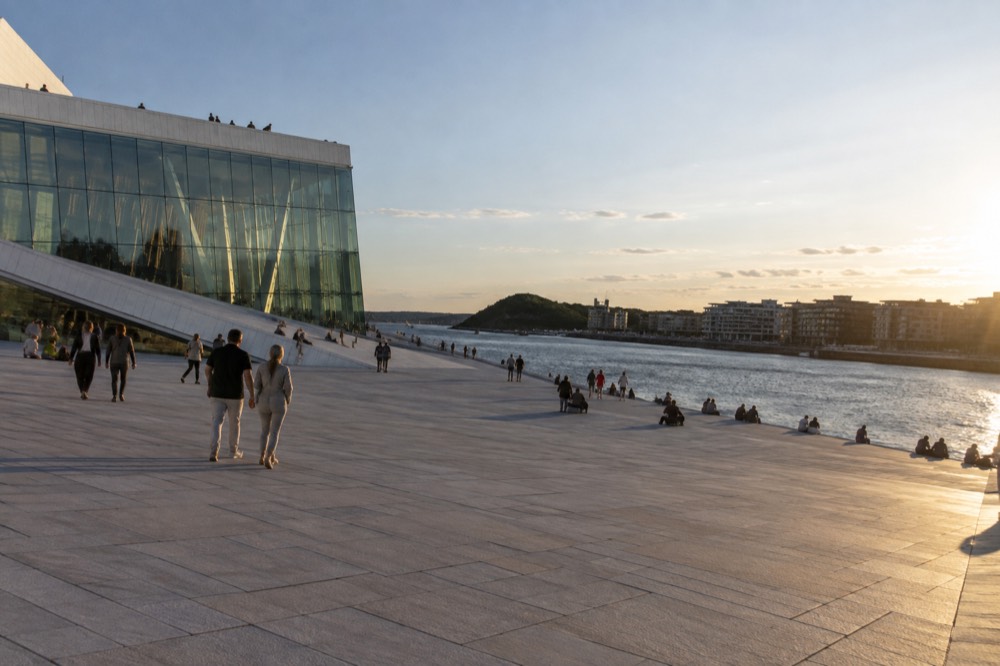
The Oslo Opera House is the home of the Norwegian National Opera and Ballet, and it is famous for one thing above all: its walkable roof, a sloping public plaza of white marble that rises from the Oslofjord waterfront to a height you can climb in a few minutes without a ticket. The building sits on the Bjørvika peninsula east of the city center, directly across the water from Akershus Fortress, and it anchors the Barcode district of towers behind it. The roof is treated as public ground, which is unusual for a national opera house anywhere in the world, and it is the single most photographed vantage point in Oslo. The design brief asked for a building that belonged to the public, and the roof is the answer.
The fame is not only architectural. The building reset the relationship between Oslo and its fjord, and the whole Bjørvika waterfront redevelopment followed it: the MUNCH museum further along the shore, the Sørenga seawater pool at the tip of the peninsula, the Deichman main library behind the Opera House. A visit here is really a visit to an entire district that did not exist in this form a generation ago.
For orientation, the essentials in one table:
| Essential | Detail |
|---|---|
| What it is | Home of the Norwegian National Opera and Ballet |
| Location | Bjørvika waterfront, Oslo east city center |
| Roof access | Free, no ticket, publicly accessible |
| Foyer access | Free during building opening hours |
| Guided tours | Offered by the opera house itself; check the official site for times |
| Nearest landmark | Oslo S central station, about a 10 minute walk |
| Best pairing | MUNCH museum, about 10 to 15 minutes along the waterfront |
One note on how this building is usually seen: most visitors experience it entirely from the outside and the roof, and that is a legitimate visit. The foyer, with its oak-lined interior and views through the glass facade to the fjord, is free to enter and worth 15 minutes on its own. Everything beyond the foyer, meaning the auditorium and backstage areas, requires either a performance ticket or a guided tour booked through the opera house's own channels.
Can You Really Walk on the Roof for Free?
Yes, completely free. The Opera House roof is public space with no ticket, no queue and no staffed checkpoint, and you can walk up the marble slope to the top and back down in about 10 minutes at your own pace. The slope is gentle but real, and the surface is marble and granite, which means it can be slippery in rain, icy in winter and hot underfoot on rare summer extremes. The reward at the top is a view west over the Oslofjord, Akershus Fortress and the City Hall, and it costs nothing at all. This is one of the honest answers to what you can do in Oslo for free, alongside Vigeland Park, which the Vigeland Museum confirms is open 24 hours a day, all year, with no ticket.
The roof is deliberately designed as an approach rather than an add-on. You are meant to arrive from the water side, climb, and descend into the building, so the walk itself is the entrance sequence. In practice most people climb from the western promenade facing Akershus, which gives the classic postcard angle back toward the fortress and the fjord islands.
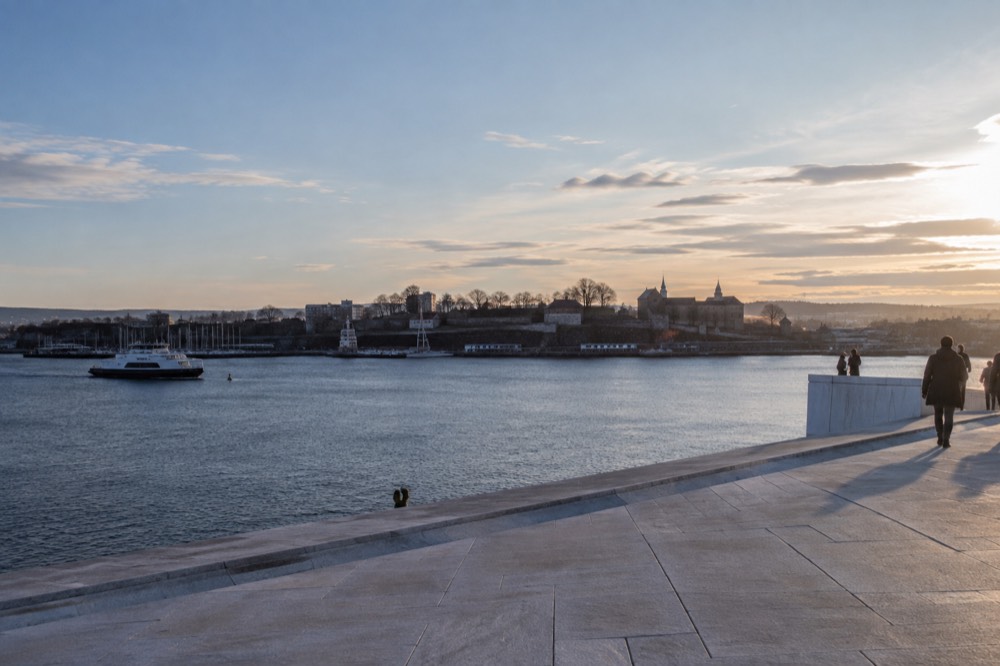
A few practical points worth knowing before you climb. On a dry summer day the walk is straightforward, with occasional crowds at the summit in late morning and afternoon. In rain the marble becomes slick, and descending is the moment to be careful. In winter, ice and snow are possible on the slope and nobody salts it for you, so footwear matters. Early morning and evening are the quietest slots, and the low light then is better for photography.
The surface is the one genuinely underrated risk here. Norwegian winter weather is real: MET Norway's normals put January's mean at −2.3 °C (−4 °F) in Oslo, and the roof is not heated. Nobody patrols it, which is the point, but that also means nobody prepares it for you. If you are visiting between December and March, treat the slope with respect.
The roof is also the best free orientation platform in the city center. From the top you can read the whole inner Oslofjord: the Rådhusbrygge piers where the Bygdøy ferry leaves, Aker Brygge where the island ferries leave, the fjord islands themselves, and Akershus Fortress closing off the harbor to the west. Spend five minutes up there naming what you see and the rest of your Oslo planning gets easier.
If you want a guide to put the building in context rather than exploring solo, these are the three most useful bookable options in the city for a first visit:
The budget central walking tour in that list passes through the Opera House area as part of its central loop, which suits visitors who want the building explained rather than just climbed. The fjord cruise gives you the other half of the Opera House experience: the view of the building from the water, which is the angle its designers cared most about, since the facade was composed to be seen from the fjord.
What Can You See Inside the Oslo Opera House?
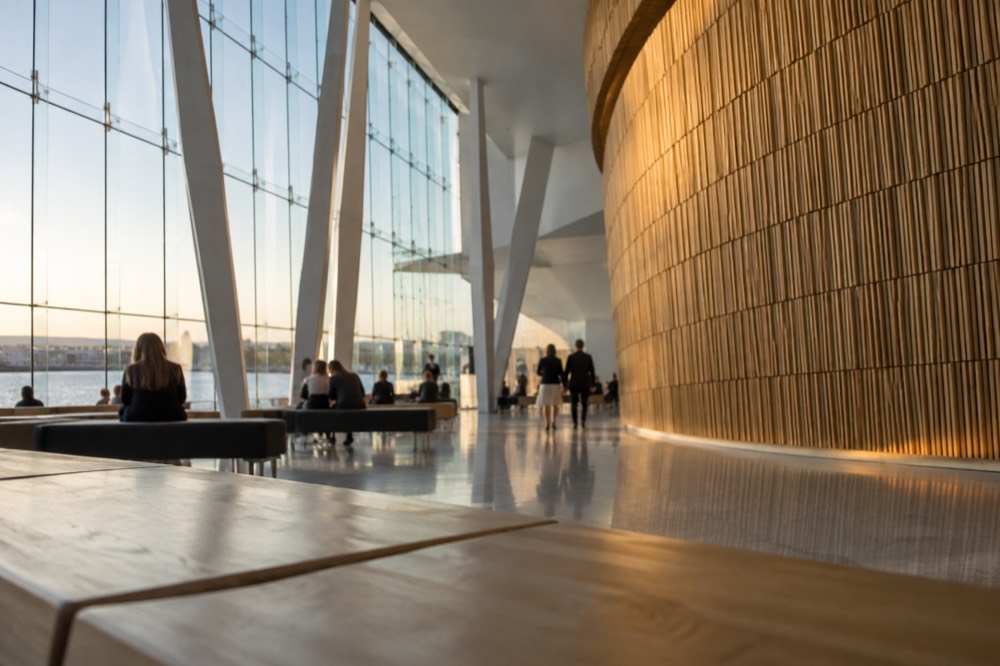
Inside, the free public areas are the foyer and its oak-lined interior, the glass-walled lobby with fjord views, and the wave wall that wraps the auditorium; the auditorium itself and the backstage workshops are only visible on a guided tour or with a performance ticket. The foyer is one of the great free interiors in Scandinavia, and the contrast between the cold white exterior and the warm timber inside is the building's second signature move after the roof. Allow 20 to 30 minutes for the foyer if you are not seeing a performance. Guided tours of the stage and backstage areas are run by the opera house itself and booked through its official site, and they are the only way to see the auditorium in daylight.
The interior is built around a few set pieces. The wave wall, a curved surface of oak, leads you from the foyer up through the building toward the auditorium doors. The glass facade faces the fjord and frames the water and the passing boats. And the public spaces double as galleries for rotating art installations, part of the building's public-art program, so there is usually something to look at beyond the architecture itself.
What each part of the building offers, and what it costs:
| Part of the building | Access | Cost |
|---|---|---|
| Roof and exterior slopes | Public, no ticket | Free |
| Foyer and lobby | Public during opening hours | Free |
| Rotating art installations | Public areas | Free |
| Auditorium and backstage | Guided tour only | Tour fee, book via the official site |
| Performance | Ticket required | Varies by production and seat |
Attending a performance is a different proposition from visiting the building, and it is worth separating the two in your planning. The Norwegian National Opera and Ballet runs a full season, and ticket prices vary widely by production. If seeing a performance is your goal, book through the opera house's own box office, which is the honest and cheapest route; a guided architectural tour is the alternative if you want the interior without the evening commitment.
Either way, the free tier of this building is unusually generous. Compare it with the paid museums nearby: MUNCH, the museum's own ticket page confirms, charges 280 NOK for adults during the day, 200 NOK after 18:00, with under-25s at 100 NOK and 17-and-under free. The Opera House gives away its best feature, the roof, and its second best, the foyer, for nothing.
How Do You Get to the Oslo Opera House?
The Opera House is a 10 minute walk east from Oslo S, the central station, along a signed waterfront route, and it is served by trams, buses and the T-bane via stops at Jernbanetorget and Stortinget; there is no need for a taxi from anywhere in the city center. The walk from the station is flat and obvious once you are facing the water: exit toward the fjord, and the white marble slope is visible across the harbor basin. From the Barcode district behind the building you are seconds away, and from Aker Brygge on the west side of the harbor it is a 20 to 25 minute walk around the water, or a short tram ride.
The transport options, with what each costs where the figure is confirmed:
| Method | Route | Cost and notes |
|---|---|---|
| On foot from Oslo S | Direct, 10 minutes, flat | Free |
| Tram or bus | Stops at Jernbanetorget or nearby stops | Ordinary Ruter ticket; buy in the app, on-board costs more |
| T-bane metro | To Jernbanetorget or Stortinget, then walk | Ruter zone 1 covers the whole metro network |
| From Gardermoen airport | Vy train to Oslo S, then walk | Ruter multi-zone ticket covers Vy; the Oslo Pass also covers Vy to the airport |
| From Gardermoen airport | Flytoget to Oslo S, then walk | 268 NOK adult single, about 20 minutes |
That airport row deserves a flag, because it is the most valuable transport fact in Oslo and most guides state it wrong. The Oslo Pass covers public transport in zones 1, 2, 3, 4V and 4N, VisitOSLO's own wording, including trains to and from Oslo Airport Gardermoen operated by Vy. It does not cover Flytoget, the separate airport express, which charges 268 NOK for an adult single. The Vy train takes about 23 minutes against Flytoget's 20, so the three minute difference is the price of a full lunch. The airport itself is Ruter zone 4N, not 2Ø as some sources claim, which is why a multi-zone Ruter ticket is what the Vy option needs.
Ruter's ticketing is app-first: single tickets bought on board a bus or boat cost more, and a single-zone ticket is valid for 60 minutes from activation, with 30 minutes added per additional zone. Exact single and day-ticket prices are published in Ruter's own PDF fare table, and the app is the cheapest place to buy, so check the live fare there rather than trusting a number quoted second-hand.
If you are walking from the west side of the city, the harbor route past Akershus Fortress is the scenic approach and it takes in the City Hall piers on the way. That is the route that turns the Opera House visit into a full waterfront walk, and it passes Rådhusbrygge 3, where the seasonal Bygdøy ferry departs, a separate system from the Ruter island ferries at Aker Brygge, which is a distinction worth remembering because the two piers are routinely confused.
When Is the Best Time to Visit the Opera House?
The best time to visit is late afternoon or early evening between May and August, when the fjord light is at its best, the roof is dry more often than not, and the building's white marble glows in the low western sun; winter visits are perfectly good but demand proper footwear and deliver only about six hours of daylight. Oslo's daylight swing is extreme, and it shapes everything about when to go. On 21 June the sun rises at 03:53 and sets at 22:43, giving 18 hours and 50 minutes of light. On 21 December it rises at 09:18 and sets at 15:11, under six hours. There is no midnight sun at Oslo's latitude of 59.91 N, but in late June the hours between sunset and sunrise are deep twilight rather than true darkness.
The monthly picture, from MET Norway's sunrise data and Blindern station normals:
| Date | Sunrise | Sunset | Day length | Normal mean temp |
|---|---|---|---|---|
| 15 January | 09:04 | 15:49 | 6 h 45 m | −2.3 °C |
| 15 March | 06:34 | 18:19 | 11 h 45 m | 1.3 °C |
| 15 May | 04:40 | 21:48 | 17 h 08 m | 11.4 °C |
| 21 June | 03:53 | 22:43 | 18 h 50 m | 15.3 °C |
| 15 July | 04:21 | 22:23 | 18 h 02 m | 17.7 °C |
| 15 September | 06:44 | 19:38 | 12 h 54 m | 12.2 °C |
| 15 October | 07:55 | 18:08 | 10 h 13 m | 6.6 °C |
| 21 December | 09:18 | 15:11 | 5 h 53 m | −1.4 °C |
Two weather notes that run against expectation. August, not November, is Oslo's wettest month on the 1991 to 2020 normals, at 103 mm, so a summer visit is not a dry guarantee. And July's normal mean of 17.7 °C is mild rather than hot; the extremes in the 13 months to August 2026 included a high of 32.9 °C on 15 July 2026 and a low of −17.2 °C on 11 January 2026, both at the Blindern station. Pack for the shoulder seasons as though they were winter-adjacent, because in Oslo they are.
For photography specifically, the roof faces the setting sun across the water in the evening, which makes late day the premium slot in summer. In winter, midday is the only slot with usable light, and the low sun angle turns the marble pale gold for an hour either side of noon.
How Much Time Should You Spend at the Opera House?
Most visitors spend 30 to 60 minutes at the Opera House itself: 10 to 15 minutes on the roof, 15 to 20 in the foyer, and the rest photographing the exterior from the waterfront; add about 90 minutes if you take a guided tour, and half a day if you fold in the surrounding Bjørvika sights. The building rewards a slow loop rather than a single climb. The classic sequence is the western facade from the promenade, the climb, the summit view, the descent into the foyer, and then a walk around the northern side to see the building against the Barcode towers.
A realistic time budget for the different visit styles:
| Visit style | Time | What it covers |
|---|---|---|
| Quick stop | 30 minutes | Roof climb and exterior photos |
| Standard visit | 60 minutes | Roof, foyer, waterfront angle |
| With guided tour | About two hours | Roof, foyer, auditorium and backstage |
| Bjørvika half-day | 3 to 4 hours | Opera House, MUNCH, Deichman library, Sørenga |
The half-day version is the one worth planning for, because Bjørvika has quietly become the densest cultural quarter in the city. MUNCH sits 10 to 15 minutes along the waterfront, the Deichman main library is directly behind the Opera House, and the Sørenga seawater pool is at the tip of the peninsula, free public access, with realistic July and August water temperatures of 15 to 20 °C. You can swim in the Oslofjord and then walk to a Munch painting in under 20 minutes, which is not a combination many capitals offer.
If you are short on time, an Oslo layover or a cruise-port day for instance, the Opera House is the single most efficient stop in the city: it is walkable from the station, free, quick, and unmistakably Oslo. The roof climb plus the harbor view delivers the essence of the place in half an hour, and you can be back at Oslo S for a train within the hour.
For a fuller first-day plan, our one day in Oslo itinerary puts the Opera House in its proper place in a route that also covers the fortress, the waterfront and the main museums, and the free things to do in Oslo guide collects the other no-cost sights worth pairing with the roof walk.
What Else Is There to Do Near the Opera House?
Within a 15 minute walk of the Opera House you have MUNCH, the Deichman main library, the Sørenga seawater pool, the Barcode district, Akershus Fortress across the water, and the Aker Brygge waterfront with its island ferry pier, making Bjørvika the natural base for a full day in eastern central Oslo. The district is compact and flat, and everything on this list is walkable. The harbor crossing to Aker Brygge on foot takes 20 to 25 minutes around the water, or you can ride a tram and be there in minutes.
The nearby options with their real costs:
| Sight | Distance from Opera House | Cost |
|---|---|---|
| Deichman main library | 2 minutes, behind the building | Free |
| MUNCH | 10 to 15 minutes along the waterfront | 280 NOK adult day, 200 NOK after 18:00, under-25s 100 NOK, 17 and under free |
| Sørenga seawater pool | 15 minutes at the peninsula tip | Free public access |
| Akershus Fortress | 20 to 25 minutes around the harbor | Grounds free; museums charge admission |
| Aker Brygge waterfront | 20 to 25 minutes on foot | Free to wander |
| Island ferries from Aker Brygge | 20 to 25 minutes on foot | Ordinary Ruter ticket, lines B1, B1X and B2 |
That last row is worth expanding on, because the Oslofjord islands are the best-kept half-day in the city. The Ruter island ferries are ordinary public transport: a regular ticket or an Oslo Pass covers them, they depart from Aker Brygge, and they stop at Hovedøya with its ruined Cistercian abbey, Gressholmen, Bleikøya, Nakholmen and, on the seasonal B2 line, Langøyene. The Bygdøy museum ferry is a different system entirely, departing from Rådhusbrygge 3, running seasonally, and not accepting Ruter tickets, though the Oslo Pass does cover it. Keeping those two straight saves real confusion at the waterfront.
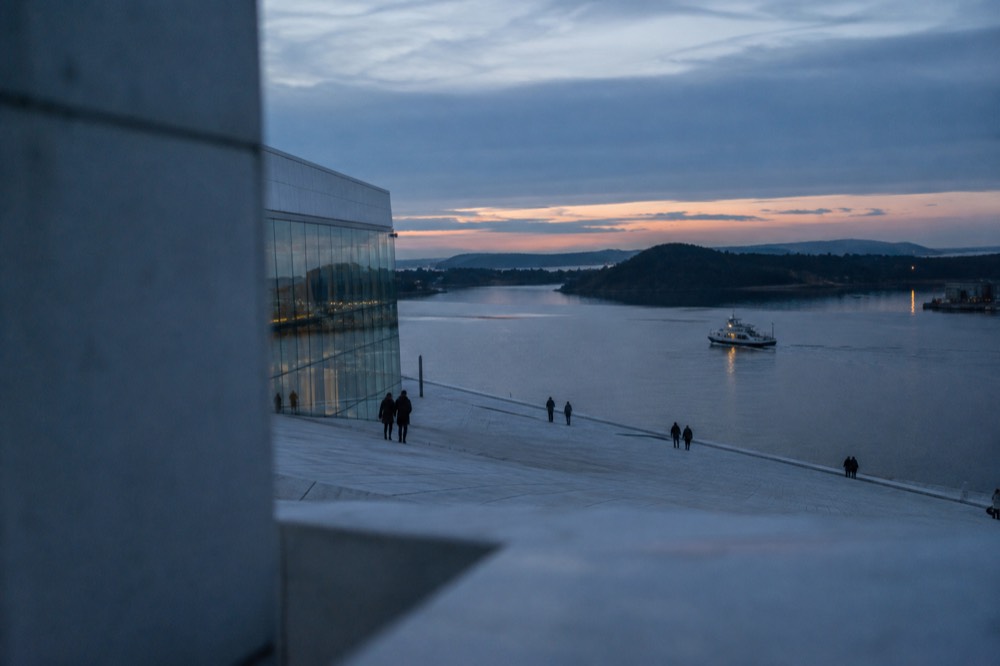
The fjord itself is best understood from the water rather than the shore. The silent electric fjord cruise is the city's single best-reviewed activity, and it passes the Opera House from the seaward side, which is the angle the building was designed around. The guided premium version covers the same water with live commentary, and the traditional wooden sailing ship gives you the fjord under canvas, a genuinely different experience from the electric boats. Our Oslofjord cruise guide compares all the fjord boat options in depth.
Back on land, the evening options around Bjørvika are growing. The district's restaurants cluster in the Barcode rows and along the Sørenga boardwalk, and the harbor promenade stays lively in summer when the light lasts past 22:00. For a deeper dive into the after-dark side of the city, the Oslo at night guide covers the waterfront and beyond.
How Much Does a Visit to the Opera House Area Cost?
The Opera House itself costs nothing to visit: the roof and foyer are free, so a full visit costs 0 NOK; the money in a Bjørvika day goes to MUNCH at 280 NOK, transport on a Ruter ticket, and food, which is where Oslo's prices bite, with food 33% above the European average and alcohol and tobacco more than double, per SSB's 2025 survey. Norway is the sixth most expensive country in Europe on that survey, and households face prices 28.6% above the EU average. But the expense is concentrated: museums, public transport and the outdoors, including this building, are where Oslo is genuinely not unusually expensive.
A realistic budget for one person, one day, in NOK:
| Item | Cost | Notes |
|---|---|---|
| Opera House roof and foyer | 0 NOK | Free, no ticket |
| MUNCH admission | 280 NOK | 200 NOK after 18:00; under-25s 100 NOK |
| Ruter day travel | Fare per Ruter's PDF table | App purchase is cheapest |
| Coffee and a simple lunch | Varies by venue | Food is 33% above the EU average |
| Dinner with alcohol | Varies by venue | Alcohol is more than double the EU average |
| Total, culture and transport only | Under 400 NOK | Excluding food |
The alcohol row is the one that surprises visitors most. Wine and spirits are sold only through Vinmonopolet, the state monopoly, which is closed every Sunday and on public holidays, with early Saturday closing and hours that vary by store. Supermarkets sell beer and cider only up to 4.7% ABV. Restaurants carry the same cost structure plus service, which is why a restaurant beer is a genuinely expensive item in Oslo. Tipping, by contrast, is not expected: service is included in prices, and rounding up is a voluntary gesture rather than an obligation.
The Oslo Pass changes the arithmetic if you are museum-hopping. The 2026 adult prices are 580 NOK for 24 hours, 845 NOK for 48 hours and 995 NOK for 72 hours, and the pass covers entry at over 30 museums and attractions plus Ruter transport in zones 1, 2, 3, 4V and 4N, including the Vy airport trains. Three Bygdøy museums at full price, for instance Kon-Tiki and Fram at 180 NOK each plus the Maritime Museum, already approach the 24-hour pass price before you count the transport. Whether the pass pays off for you depends on your museum pace, and the is the Oslo Pass worth it guide runs the full break-even maths.
Is the Oslo Opera House Worth Visiting with Kids?
Yes, and often more so than with adults, because the roof is effectively a giant sloping playground with a view, the climb is short and safe in dry weather, and the building's public spaces are free and unstuffy; families should watch the marble surface in rain and winter ice, and pair the visit with Sørenga's free seawater pool in summer. Children tend to treat the roof the way its designers hoped everyone would, as terrain to explore rather than architecture to admire. The slope is gentle, the edges are designed with safety in mind, and the summit gives kids the same harbor panorama as everyone else.
The family-friendly pairings nearby are mostly free, which is a quiet argument for Oslo as a family city. The Deichman library, two minutes behind the building, has dedicated children's floors and costs nothing. Sørenga's seawater pool is high-appeal in summer, with water temperatures of 15 to 20 °C, and free public access. MUNCH is moderate for kids but free for anyone 17 and under. And the island ferry to Hovedøya is a boat ride plus ruins to explore, on an ordinary Ruter ticket with children discounted. Four of the five best kid activities in this district cost nothing beyond a transport ticket. The Oslo with kids guide extends this across the whole city, including the climbing park and the Paradox Museum, the strongest rainy-day family ticket in the center.
The one caution worth repeating: the roof in winter. Ice on a sloping marble plane is a real slip hazard for adults and children alike, and the surface is not treated like a public sidewalk. If the temperature is below freezing, keep small children on the lower, gentler sections or save the climb for a milder day.
What Do People Get Wrong About the Oslo Opera House?
The three most common mistakes are treating the building as view-only and skipping the free foyer, underestimating how slippery the marble roof gets in rain and ice, and confusing the Bjørvika waterfront piers with the Aker Brygge and Rådhusbrygge piers on the other side of the harbor, which serve completely different boats. All three are avoidable with ten minutes of planning. The foyer is free, warm and one of the best interiors in the city; the roof demands decent footwear between November and March; and the ferry systems, Bygdøy from Rådhusbrygge 3 seasonally, islands from Aker Brygge on Ruter tickets, are separate in every way that matters.
A fourth mistake is timing. Visitors who arrive at midday in December find the light already fading, because the sun sets at 15:11 around the solstice. Visitors who assume August is reliably dry find the wettest month in Oslo, at 103 mm on the normals. The daylight table above is the single most useful planning tool for this building, more than any opening-hours list, because the roof's whole appeal depends on light and surface conditions.
Finally, a mistake of expectation: this is not an all-day attraction on its own. Budget an hour, enjoy it fully, and spend the rest of the day on the waterfront, the museums or the fjord. The visitors who enjoy Oslo most are the ones who treat the city as a set of short, high-quality stops rather than a checklist of long ones, and the Opera House is the model for that approach: free, fast, memorable. As Oslo Travel Guide puts it in our planning pieces, this is a city best taken in short, generous sips.
If the wider city is on your list after the waterfront, the Kon-Tiki Museum across the harbor on Bygdøy is the best-reviewed museum ticket in Oslo, and it pairs naturally with the Fram Museum next door for a polar-history afternoon reached by the seasonal ferry or bus 30.
And if you want the building and the city explained together in one morning, the budget central walking tour is the cheapest credible guided option, covering the Opera House within a loop of the city's headline sights.
For the full spread of what the city offers beyond this district, start with the things to do in Oslo overview, or dig into the Oslofjord cruise options for the seaward half of the experience. Whatever you choose, the roof will still be there at the end of the day, free, waiting for one last climb before the light goes.
Common Questions About the Oslo Opera House
Can you walk on the Oslo Opera House roof for free?
Yes. The roof is public space with no ticket, no queue and no checkpoint, and the climb to the top takes a few minutes. The marble surface can be slippery in rain and icy in winter, so footwear matters between November and March.
How much time should I spend at the Oslo Opera House?
Plan on 30 to 60 minutes for the roof and the free foyer. Add about 90 minutes if you book a guided tour of the auditorium and backstage areas, or half a day if you fold in MUNCH, the Deichman library and Sørenga along the same waterfront.
Is the inside of the Oslo Opera House free?
The foyer and lobby are free to enter during building opening hours, including the oak-lined interior and the fjord-facing glass facade. The auditorium and backstage areas require either a guided tour booked through the opera house or a performance ticket.
How do I get to the Oslo Opera House from Oslo Central Station?
Walk. It is about 10 minutes east from Oslo S along a flat, signed waterfront route, and the white marble roof is visible from the harbor basin. Trams and buses stop nearby at Jernbanetorget if the weather is against you.
What is the best time of day to visit the Oslo Opera House?
Late afternoon or early evening from May to August, when the low western sun lights the marble and the fjord. In winter, aim for midday, because the sun sets before 15:30 in December and the roof is best climbed in daylight.
What else is near the Oslo Opera House?
MUNCH is 10 to 15 minutes along the waterfront, the Deichman main library is directly behind the building, Sørenga's free seawater pool sits at the peninsula tip, and Akershus Fortress and Aker Brygge are a 20 to 25 minute walk around the harbor.