Astrup Fearnley Museet: What to Expect at Oslo's Modern Art Museum
The Astrup Fearnley Museet is Oslo's museum of modern and contemporary art, sitting at the water's edge on Tjuvholmen. Here is what a ticket costs, what you will actually see inside, and how to fit it into a day in the city.
Short answer
The Astrup Fearnley Museet is a private museum of modern and contemporary art on the Tjuvholmen peninsula in Oslo. Adult admission is 180 NOK, students and seniors pay 100 NOK, and everyone under 20 enters free. Plan on one to two hours. It pairs naturally with the Tjuvholmen Sculpture Park and the Aker Brygge waterfront, both a short walk away.
Oslo's art scene splits into two halves, and the Astrup Fearnley Museet owns the modern one. The National Museum holds the older Norwegian canon, including The Scream, while this glass-and-steel building on the Tjuvholmen peninsula shows contemporary international and Norwegian art from the last few decades. It is small by capital-city standards, which is exactly why it works as a stop between the waterfront and the sculpture park outside its door.
This guide covers the practical side: what tickets cost, what is inside, how to reach the peninsula, and how the museum compares with Oslo's other art institutions. Every price below comes from the museum's own published figures, in Norwegian kroner, because that is what you will actually pay at the counter.
What Is the Astrup Fearnley Museet?
The Astrup Fearnley Museet is a privately founded museum of modern and contemporary art, located on the Tjuvholmen peninsula just west of Aker Brygge in central Oslo. It holds a permanent collection of international and Norwegian contemporary art and runs a changing program of temporary exhibitions. Adult admission is 180 NOK, with free entry for everyone under 20, and most visitors spend between one and two hours inside.
The museum is unusual in Oslo's museum landscape in that it is not a state institution. Its collection was assembled privately and continues to grow through acquisitions and gifts, which gives the programming a different flavor from the national galleries up the hill. You will find work by international contemporary artists alongside Norwegian names, and the balance shifts with each temporary exhibition.
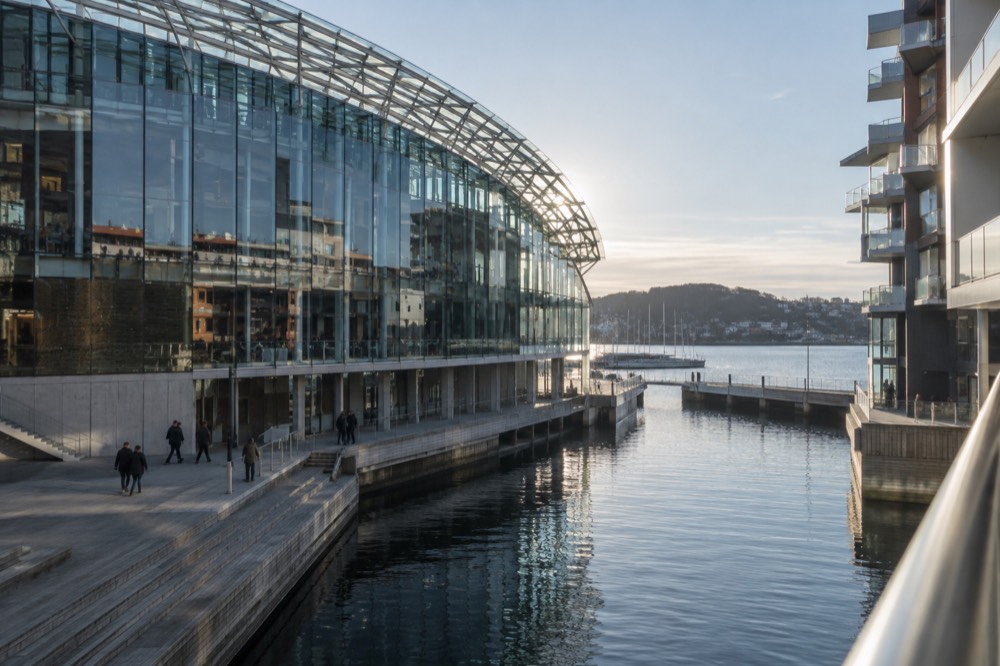
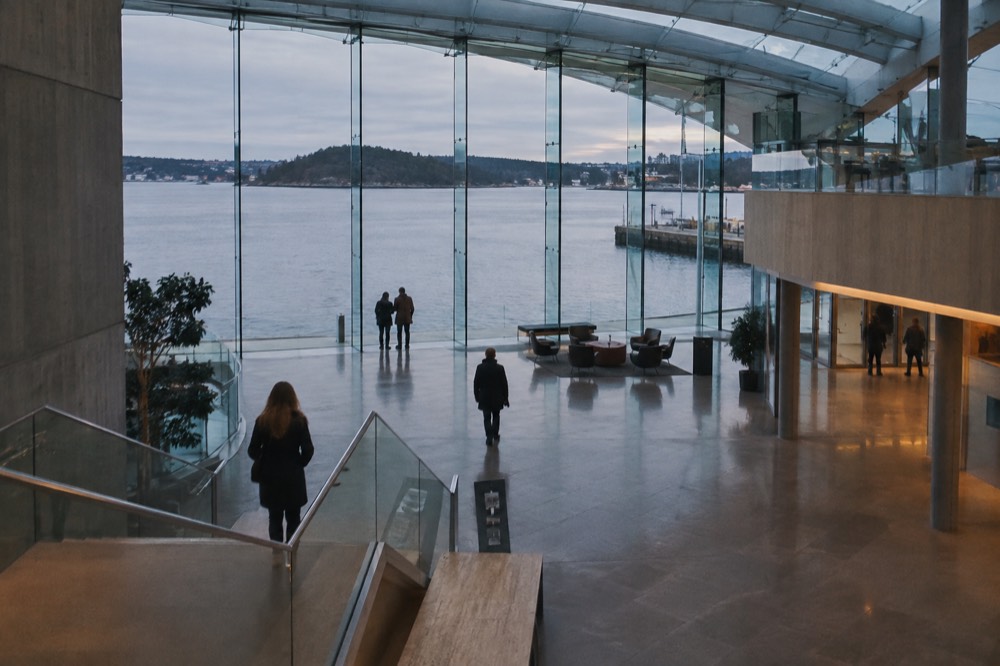
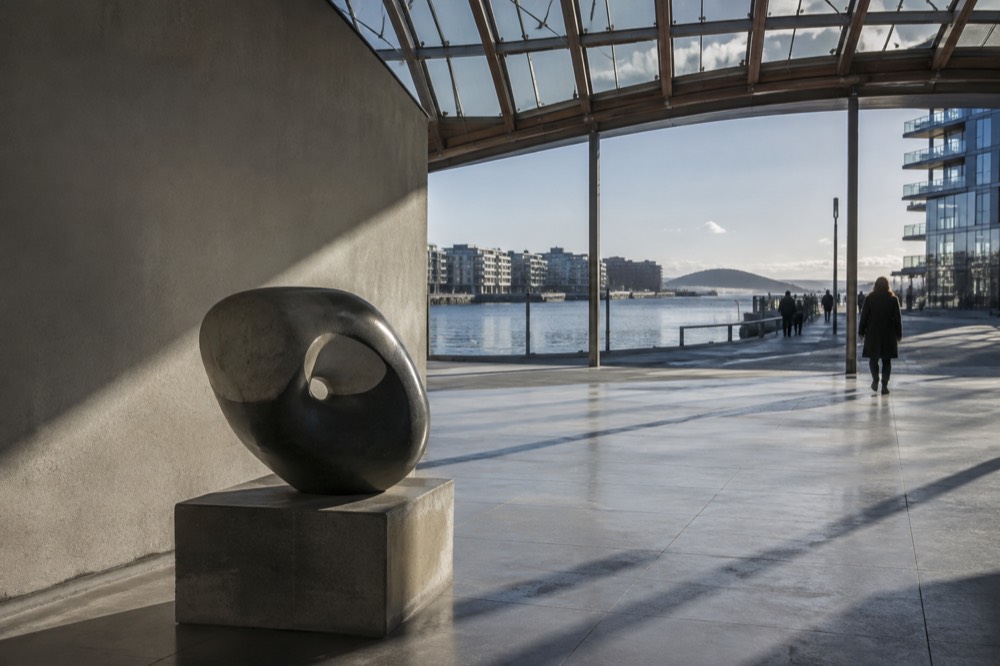
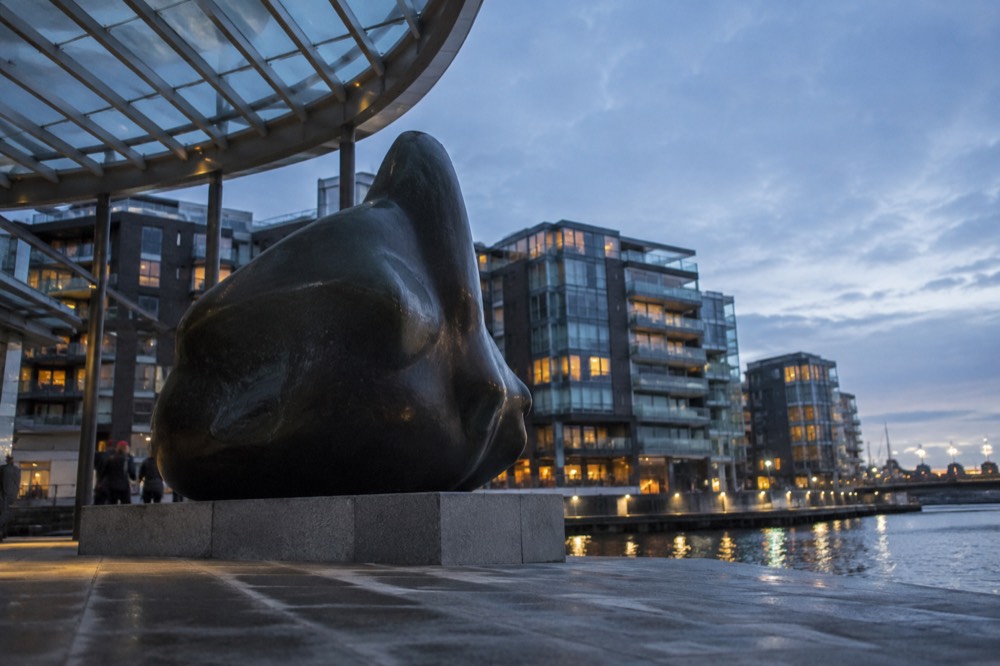
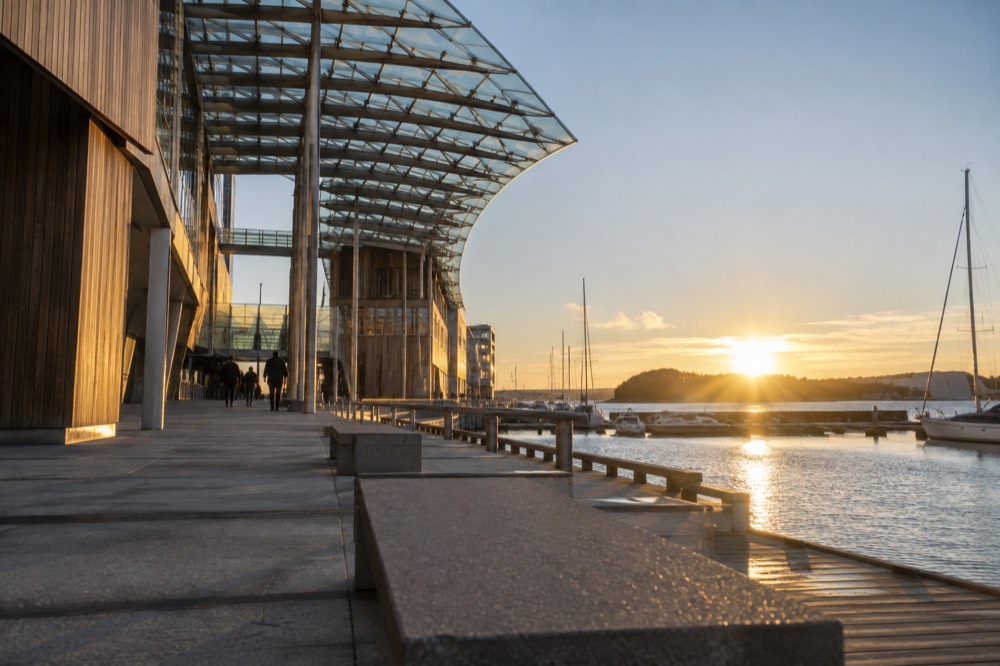
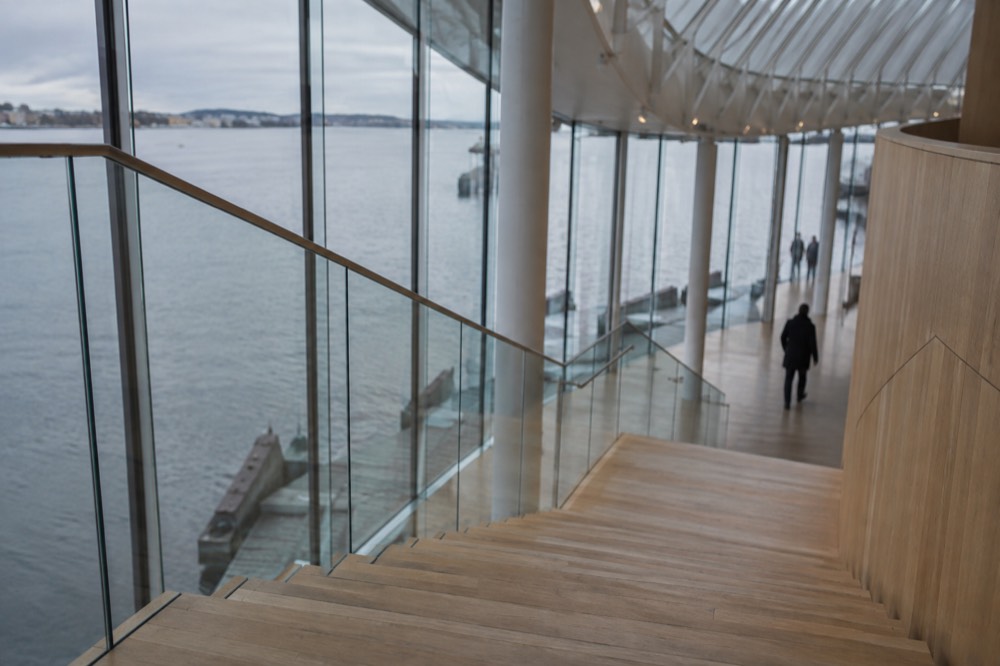
The building itself is part of the draw. It sits at the tip of Tjuvholmen, one of Oslo's newer waterfront districts, with glass facades that pull light off the canal and the Oslofjord beyond. The surrounding neighborhood was redeveloped from former shipyards into a dense cluster of galleries, restaurants and apartments, and the museum anchors the whole quarter. For more on the area, see our Tjuvholmen neighborhood guide.
Keep expectations calibrated. This is a focused contemporary art museum, not an encyclopedic one. If your main interest is Edvard Munch or the Norwegian romantic tradition, the MUNCH museum in Bjørvika and the National Museum are the better matches, and both are covered in their own guides on this site.
How Much Do Astrup Fearnley Tickets Cost?
Adult admission to the Astrup Fearnley Museet is 180 NOK. Students and seniors pay 100 NOK, and visitors under 20 enter free. During exhibition changeovers the museum sells reduced tickets at 130 NOK for adults and 80 NOK for students and seniors. There is no timed entry requirement for a standard visit, so you can buy at the door.
Here is the full price structure from the museum's own visitor information:
| Ticket type | Price | Notes |
|---|---|---|
| Adult | 180 NOK | Standard admission |
| Student / senior | 100 NOK | Valid ID may be requested |
| Under 20 | Free | Applies to all visitors under 20 |
| Reduced (changeover) | 130 NOK adult / 80 NOK student-senior | Applies when galleries are between exhibitions |
Two things are worth knowing before you budget. First, the changeover pricing is real and worth checking: if you arrive in the gap between two temporary exhibitions, you may pay 130 NOK to see a reduced amount of art. The museum's own site publishes what is currently open, so glance at it before you set out. Second, the Oslo Pass covers free entry at over 30 museums and attractions in the city; check VisitOSLO's current inclusion list to confirm the Astrup Fearnley is on it before counting on the pass here.
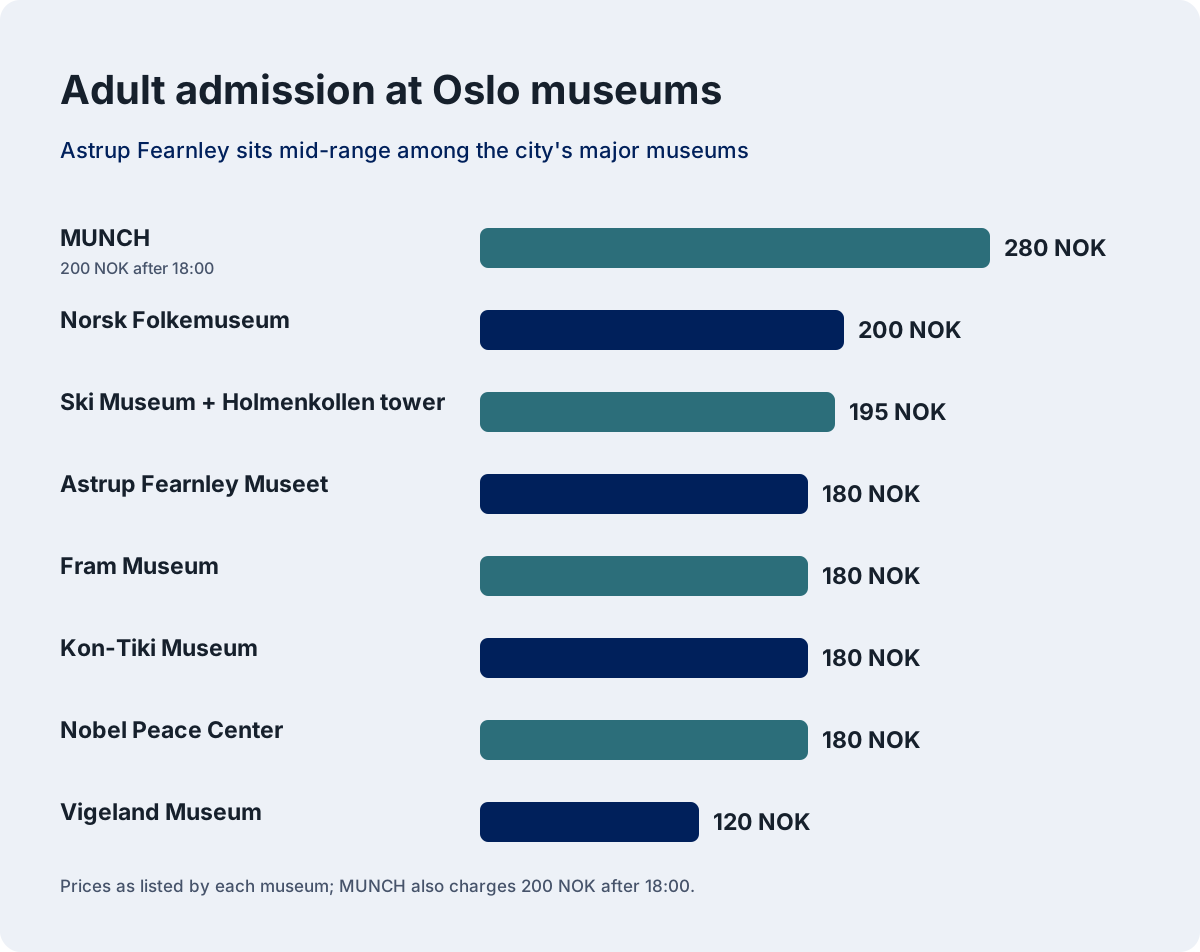
For a sense of scale, three other Oslo museums charge exactly the same 180 NOK adult price: the Fram Museum, the Kon-Tiki Museum and the Nobel Peace Center. A family with teenagers gets an unusually good deal here, since everyone under 20 walks in free, a policy the larger state museums do not match across the board.
How Do You Get to the Museum?
The Astrup Fearnley Museet sits at the southern tip of the Tjuvholmen peninsula, about 15 minutes on foot from the Nationaltheatret area of central Oslo and about 10 minutes from Aker Brygge. There is no metro station on the peninsula itself, so the last stretch is always a walk along the waterfront. Most visitors combine the museum with a stroll through Aker Brygge's restaurant row.
Tjuvholmen is connected to the mainland by short bridges, and the walk in is genuinely pleasant in any season that is not actively raining. From the Rådhusbrygge piers, where the Bygdøy ferry departs in summer, you simply follow the waterfront west past the Aker Brygge district and over the canal. The whole route is flat and paved.
If you are using public transport, buy a Ruter ticket in the app before boarding; a single zone 1 ticket is valid for 60 minutes from activation, which covers a tram plus the walk. The city's tram network stops within a few hundred meters of the peninsula. Our getting around Oslo guide explains the ticket system in full, including the zone rules and the Oslo Pass transport coverage.
One warning that catches visitors every summer: the Bygdøy museum ferry and the Oslofjord island ferries are different systems with different ticket rules. The Bygdøy ferry leaves from Rådhusbrygge 3 and does not accept Ruter tickets, while the island ferries leave from Aker Brygge and do. If you are planning a day that mixes the museum peninsula with the art peninsula, read our Oslo ferries guide first so the piers do not catch you out.
What Can You See Inside the Museum?
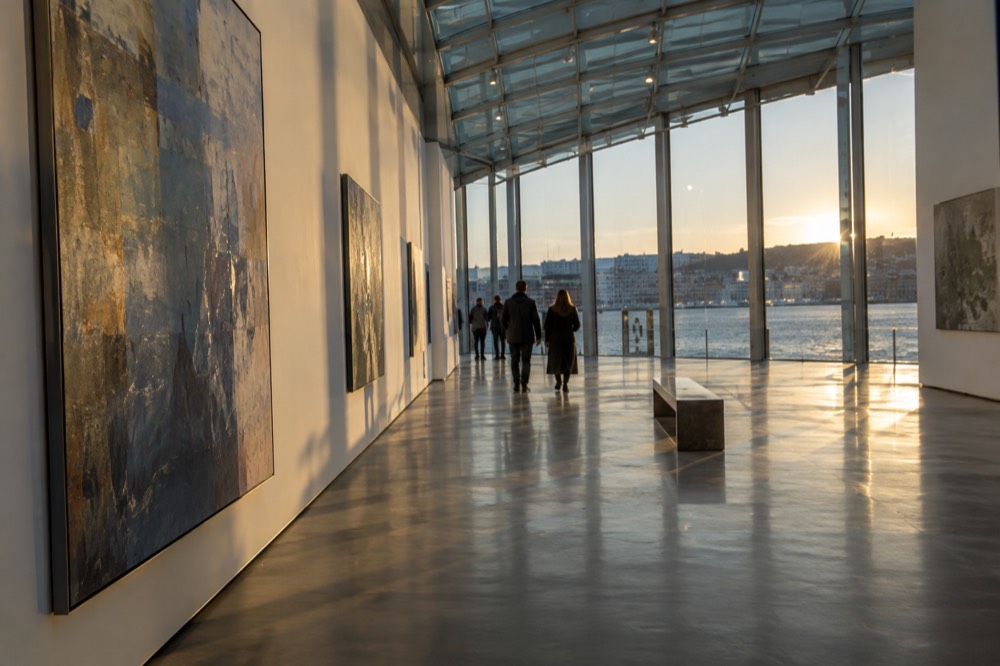
The Astrup Fearnley Museet shows a permanent collection of international and Norwegian contemporary art, plus a rotating program of large temporary exhibitions that typically occupy the main halls. The collection leans toward painting, sculpture and installation work from recent decades, and the galleries are arranged across the building's connected halls rather than a single floor. Expect a mix of familiar contemporary names and Norwegian artists rarely shown outside the Nordic countries.
The temporary exhibition program is the museum's engine. Because the institution is privately run, its curatorial choices are often bolder than the state museums', and a single visit can be dominated by one large monographic show. That is also the reason for the changeover pricing mentioned above: between exhibitions, parts of the building may be closed while the next show is installed. Other pages covering the same trip are gathered on Oslo Travel Guide. Other pages covering the same trip are gathered on Oslo Travel Guide.
The permanent collection is where the museum's identity really lives. It was assembled over decades by private collectors, and it includes works by international artists who shaped contemporary art alongside a strong Norwegian contingent. The museum publishes current exhibition details on its own site, and that is the honest place to check what will be on the walls during your dates, because a contemporary art museum's content genuinely changes from season to season.
Families should not write the place off. Contemporary installation art is often more accessible to children than older painting, the under-20 free entry removes the financial risk entirely, and the museum's size means a bored child is never more than a few minutes from the exit. For a fuller list of indoor options, see our rainy day in Oslo guide.
If contemporary art is one part of your day and polar history is another, the two peninsulas pair well. The Kon-Tiki Museum on Bygdøy sells one of the best-reviewed museum tickets in the city, and you can read about the Kon-Tiki Museum in its own guide on this site.
How Does the Astrup Fearnley Compare with Oslo's Other Museums?
The Astrup Fearnley Museet is Oslo's dedicated modern and contemporary art museum, priced mid-range at 180 NOK adult. It is smaller and more focused than the National Museum, cheaper than MUNCH at 280 NOK, and comparable in price to the Bygdøy museums at 180 NOK each. Choose it for contemporary art in a waterfront setting; choose the others for their respective specialties.
Here is how the adult admission prices stack up across the city's major museums, all from the venues' own published figures:
| Museum | Focus | Adult price |
|---|---|---|
| MUNCH | Edvard Munch, modern art | 280 NOK (200 NOK after 18:00) |
| Norsk Folkemuseum | Norwegian cultural history | 200 NOK |
| Ski Museum + Holmenkollen tower | Winter sports history | 195 NOK |
| Astrup Fearnley Museet | Contemporary art | 180 NOK |
| Fram Museum | Polar exploration | 180 NOK |
| Kon-Tiki Museum | Thor Heyerdahl's expeditions | 180 NOK |
| Nobel Peace Center | Peace prize and laureates | 180 NOK |
| Vigeland Museum | Gustav Vigeland's sculpture | 120 NOK |
The pattern is clear: Oslo's museums cluster in a fairly narrow price band, and none of them are the reason the city has a reputation for being expensive. Statistics Norway's 2025 price comparison puts Norwegian food prices 33% above the European average and alcohol at more than double, but museum admission is genuinely reasonable by Western European standards. Our is Oslo expensive guide breaks down where the money actually goes on an Oslo trip.
What separates the Astrup Fearnley from the pack is not price but pace. You can see the whole museum properly in 90 minutes, which makes it the rare capital-city art museum that fits inside a half-day itinerary without monopolizing it. If you are working with limited time, our one day in Oslo itinerary shows how to sequence the waterfront sights.
Is the Astrup Fearnley Museet Worth Visiting?
For visitors with a genuine interest in contemporary art, yes, the Astrup Fearnley Museet is worth the 180 NOK admission and one to two hours of your time. For visitors indifferent to contemporary art, the free Tjuvholmen Sculpture Park outside the door and the waterfront walk deliver much of the experience at no cost. The under-20 free entry makes it an easy call for families with older children.
The honest case against is that a contemporary art museum is the most polarizing museum type there is. If the current temporary exhibition is an artist you love, the visit is a highlight; if it is not, you have paid 180 NOK for a building. That is why checking the exhibition calendar before you go matters more here than at any other museum in the city.
The honest case for is threefold. The collection has real depth in Norwegian contemporary art that you will not see anywhere else, the building is one of the more striking pieces of architecture on the Oslo waterfront, and the location makes it nearly free to include in any day you are already spending in the Aker Brygge and Tjuvholmen area. The marginal cost of the visit, in time, is close to zero.
A reasonable compromise for the undecided: walk the peninsula and the sculpture park first, look at the museum from the outside, and decide at the door. The ticket desk is right there, and there is no timed entry to plan around.
What Else Is on the Tjuvholmen Peninsula?
Tjuvholmen packs a sculpture park, a small city beach, a cluster of galleries and a restaurant-heavy waterfront into a few walkable blocks around the museum. The sculpture park is free and always open, the beach is a public seawater spot, and the whole peninsula connects by footbridge to Aker Brygge's larger dining and shopping district. You can cover it all in an unhurried afternoon.
The Tjuvholmen Sculpture Park sits between the museum and the water, and it is the peninsula's best free attraction. The works are contemporary, in keeping with the museum's identity, and the park is open around the clock with no ticket, which puts it in the same category as the Vigeland sculpture park at Frogner, Oslo's other great free outdoor art space.
The beach at Tjuvholmen is one of the city's official swimming spots. Realistic summer water temperatures in the Oslofjord run around 15 to 20 °C in July and August, which is bracing rather than warm. Swimmers should note that August is Oslo's wettest month on the 1991 to 2020 climate normals, at 103 mm of precipitation, so a beach day late in the summer carries more weather risk than most visitors expect.
| Tjuvholmen sight | What it is | Cost |
|---|---|---|
| Astrup Fearnley Museet | Contemporary art museum | 180 NOK adult, under 20 free |
| Tjuvholmen Sculpture Park | Outdoor contemporary sculpture | Free, always open |
| Tjuvholmen beach | Public seawater swimming spot | Free |
| Aker Brygge waterfront | Restaurants and shopping, next peninsula over | Free to browse |
| Oslofjord shoreline walk | Paved waterfront path toward Frogner | Free |
Photographers should give the peninsula time at the end of the day. The low western light across the fjord makes Tjuvholmen one of the better photography spots in Oslo in summer, when the sun sets as late as 22:43 in late June and the twilight stretches on for hours afterward. There is no midnight sun at Oslo's latitude of 59.91 N, but the long evening light comes close in feel.
When Is the Best Time to Visit?
The Astrup Fearnley Museet is an indoor attraction, so the season matters less than the exhibition calendar and the crowds. Midweek mornings are the quietest time inside, while weekends and rainy afternoons draw the most visitors. Check the museum's site for current opening hours and for what exhibitions are on the walls during your dates, since the changeover periods reduce both the art on show and the ticket price.
The one seasonal factor worth planning around is the summer competition for your time. Between late June and August, Oslo gets up to 18 hours 50 minutes of daylight, and spending any of it indoors needs a reason. The museum earns its slot on a summer day mainly as a short stop on a longer waterfront walk, or as a rainy-afternoon fallback, and August's status as the wettest month means that fallback gets used more often than visitors expect.
Winter flips the logic. In late December the sun rises at 09:18 and sets at 15:11, leaving under six hours of daylight, and indoor hours become the backbone of any Oslo itinerary. A contemporary art museum with a good cafe and a waterfront setting is a genuinely good dark-season stop, and the museum is close enough to central Oslo that the short walk from the tram never becomes an expedition. Our Oslo in winter guide builds out the full cold-weather plan.
What Should You Know Before You Go?
Bring your ticket money in Norwegian kroner or a card, expect one to two hours for the visit, and combine the museum with the free sculpture park and waterfront outside. Photography rules vary by exhibition, so check signage in each gallery. The museum is fully indoors, which makes it a reliable option in any weather, and the under-20 free entry applies without any paperwork.
A few practical notes that make the visit smoother:
- The museum is privately run, so its exhibition program changes the experience more than at the state museums. Check what is showing before you commit the afternoon.
- Students and seniors get a reduced 100 NOK ticket, and carrying ID avoids any discussion at the desk.
- The changeover periods, when reduced 130 NOK tickets apply, are the worst value per artwork and the best value if you mainly want to see the building.
- The peninsula's restaurants are among the pricier in Oslo, in a city where restaurant prices are already high. Eating before or after you arrive saves real money.
On that last point, the money picture deserves one honest paragraph. Norway is the sixth most expensive country in Europe on Statistics Norway's 2025 comparison, with household prices 28.6% above the EU average and alcohol more than double the European level. Museums, by contrast, sit in the reasonable band, and the outdoors is free. An Oslo day built around art museums, sculpture parks and waterfront walks is one of the cheaper ways to spend time in one of Europe's dearest countries, and the Astrup Fearnley fits that plan perfectly. If you are keeping a close budget, our Oslo on a budget guide lists the free options in detail.
For anyone building a bigger art-focused day, the sensible sequence is the Astrup Fearnley and Tjuvholmen in the morning, the waterfront walk to Aker Brygge for lunch, and then a tram across to MUNCH or the National Museum in the afternoon. That is a full and genuinely varied art day, and it is exactly the kind of plan that pairs well with a longer stay in the city.
Common Questions About the Astrup Fearnley Museet
How much does the Astrup Fearnley Museet cost?
Adult admission is 180 NOK. Students and seniors pay 100 NOK, and visitors under 20 enter free. During exhibition changeovers, reduced tickets apply at 130 NOK for adults and 80 NOK for students and seniors.
How long does a visit to the Astrup Fearnley Museet take?
Most visitors spend between one and two hours. The museum is compact compared with the National Museum, and a thorough visit to the permanent collection plus the current temporary exhibition fits comfortably inside a half-day plan.
Is the Astrup Fearnley Museet included in the Oslo Pass?
The Oslo Pass includes free entry at over 30 museums and attractions in Oslo. Check VisitOSLO's current inclusion list to confirm the Astrup Fearnley is covered before relying on the pass for this specific museum.
Is the Tjuvholmen Sculpture Park free?
Yes. The sculpture park between the museum and the water is free and open around the clock, with no ticket required. It is one of the better free art experiences in a city where the outdoor sights, from Vigeland Park to the Opera House roof, cost nothing.
Is the Astrup Fearnley Museet good for kids?
It can be. Contemporary installation art is often more engaging for children than traditional painting, everyone under 20 enters free, and the museum's small size means an uninterested child is never far from the exit. The sculpture park and beach outside give families a fallback in the same visit.
How do I get to the Astrup Fearnley Museet?
The museum sits at the southern tip of the Tjuvholmen peninsula, about a 15 minute walk from the Nationaltheatret area and about 10 minutes from Aker Brygge. There is no metro on the peninsula itself, so the final stretch is always on foot along the waterfront.