National Theatre Oslo: A Visitor Guide to the City's Main Stage
The National Theatre stands at the heart of Oslo's main ceremonial street, between the parliament end of Karl Johans gate and the Royal Palace, and the blocks around it hold more of the city's classic sightseeing than any other single spot. This guide covers how to reach it, what you can see without a ticket, and how to build a full day around it.
Short answer
The National Theatre sits on Karl Johans gate in central Oslo, in Ruter zone 1, with its own train and metro station served by lines across the city. The building's exterior and surrounding theatre district are free to enjoy, the surrounding museums charge between 180 and 280 NOK, and an Oslo Pass at 580 NOK for 24 hours covers transport plus over 30 museums.
The National Theatre anchors the most photographed stretch of Karl Johans gate, the avenue that runs from the central station up to the Royal Palace steps. Few visitors plan the theatre as a destination in itself, and that is a reasonable instinct: this is a working national stage, not a museum, and the experience most travelers want is the district around it. The theatre square, the fountains, the palace view down the avenue, and the cluster of museums and restaurants within a short walk make this the natural center of gravity for a first-time visit.
This guide takes the theatre as its landmark and builds outward. You will find how to reach it by train, tram, or on foot, what the surrounding streets hold, how the Oslo Pass interacts with the museums nearby, and which guided experiences slot naturally into an evening here. Everything priced below comes from official sources, and where a figure could not be verified it is left out rather than guessed.
What Is the National Theatre in Oslo?
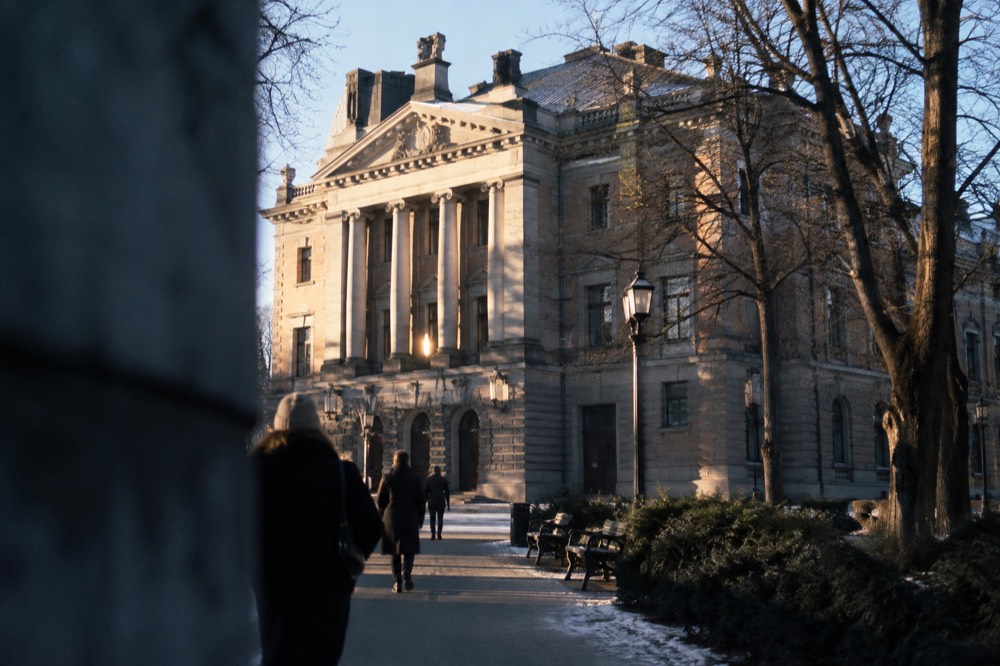
The National Theatre is Norway's main stage for spoken drama, an ornate late-19th-century stone building that stands in its own square directly on Karl Johans gate, roughly midway between the parliament end of the street and the Royal Palace. It is a working theatre with a resident company, not a visitor attraction with turnstiles, so the exterior, the square, and the surrounding district are what most travelers experience. The building faces east along the avenue, and from its steps the view runs down toward the parliament and the waterfront beyond, which is exactly the framing most Oslo photographs are built on.
The theatre's position is its real asset for a visitor. Karl Johans gate is the city's ceremonial spine, and the theatre square sits at the point where the street widens and the trees begin. The Royal Palace sits at the top of the avenue; the parliament, the cathedral, and the central station sit toward the bottom. A walk of the full street passes all of them, and the theatre square is the natural halfway pause. Our Karl Johans gate guide walks that route in detail.
What you should not expect is a museum interior. The theatre operates as a performance venue, and access to the auditorium depends on there being a performance or an organized open day rather than a standing visitor ticket. That makes planning simple: treat the exterior and the square as the sight, and check the theatre's own website for performance schedules if seeing a play in Norwegian or a visiting production appeals. Even without understanding Norwegian, concerts and dance programming can be worth an evening.
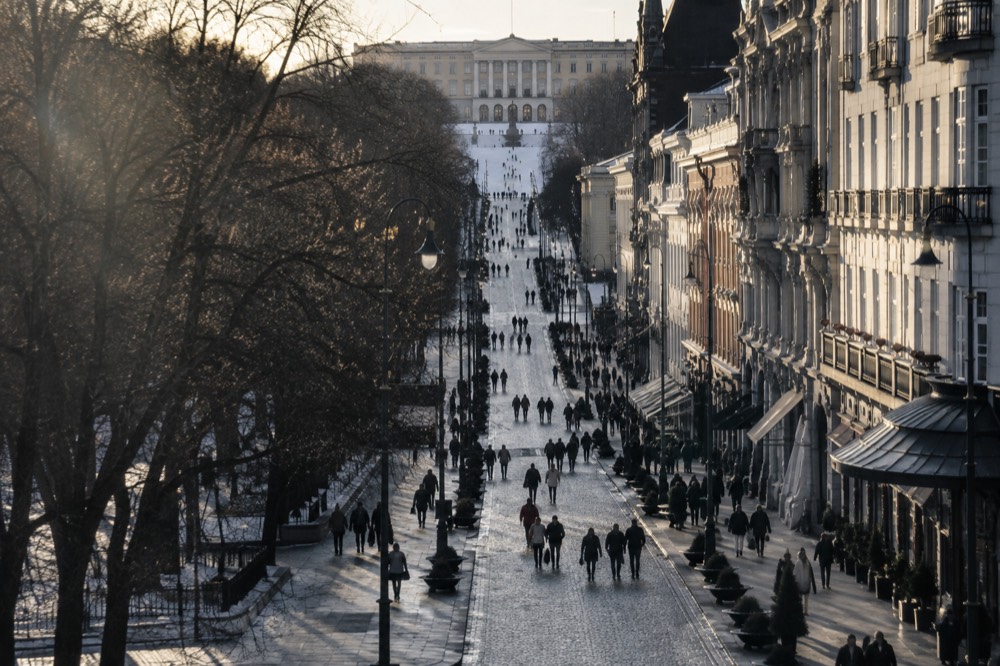
The square in front of the theatre doubles as one of Oslo's default gathering places. On national day, the 17th of May, the avenue fills with a children's parade that passes directly in front of the theatre, and the square is one of the best vantage points on the whole route. Our 17 May in Oslo guide covers that day in full, and it is worth reading if your visit overlaps it, because the city operates differently for those hours.
How Do You Get to the National Theatre?
The National Theatre has its own station, Nationaltheatret, one of central Oslo's main rail and metro hubs, sitting in Ruter zone 1 and served by metro lines, trams, and trains from across the city, including the airport trains from Oslo Gardermoen. From Oslo Central Station it is a single stop, or roughly a 10-minute walk along Karl Johans gate if you prefer to stretch your legs. Cyclists and pedestrians dominate the surrounding blocks, and the theatre square itself is fully pedestrianized.
The transport picture around the theatre is genuinely simple, and the table below covers the main ways in. One point worth internalizing early: Ruter's zone system prices every local journey, central Oslo is zone 1, and the entire metro network sits inside zone 1. A single zone-1 ticket is valid for 60 minutes from activation, and validity extends by 30 minutes per additional zone. Ruter's own guidance is to let the journey planner in the app count zones rather than working them out by hand.
| Route to the theatre | How it works | What it costs |
|---|---|---|
| Metro or tram from anywhere in zone 1 | Nationaltheatret station, ordinary Ruter ticket | Zone-1 Ruter fare; check the app for the current price |
| Train from Oslo Central Station | One stop, or a 10-minute walk | Zone-1 Ruter fare |
| Flytoget airport express | Direct to Nationaltheatret from Gardermoen, about 20 minutes | 268 NOK adult single, 134 NOK child and concession |
| Vy local trains from Gardermoen | Same station, about 23 minutes | Covered by the Oslo Pass; otherwise a multi-zone Ruter ticket |
| On foot from the central station | Straight up Karl Johans gate | Free |
That airport row carries the single most valuable transport fact in Oslo, and most guides get it wrong. The Oslo Pass includes public transport in zones 1, 2, 3, 4V and 4N, and VisitOSLO's own wording is explicit: that includes transport to and from Oslo Airport Gardermoen with public trains operated by Vy. It does not include Flytoget, which is a separate company charging 268 NOK for an adult single. The Vy train takes about 23 minutes against Flytoget's 20, and riding it on a pass or a multi-zone Ruter ticket is the money-smart route. Our Flytoget vs Vy guide breaks the comparison down fully.
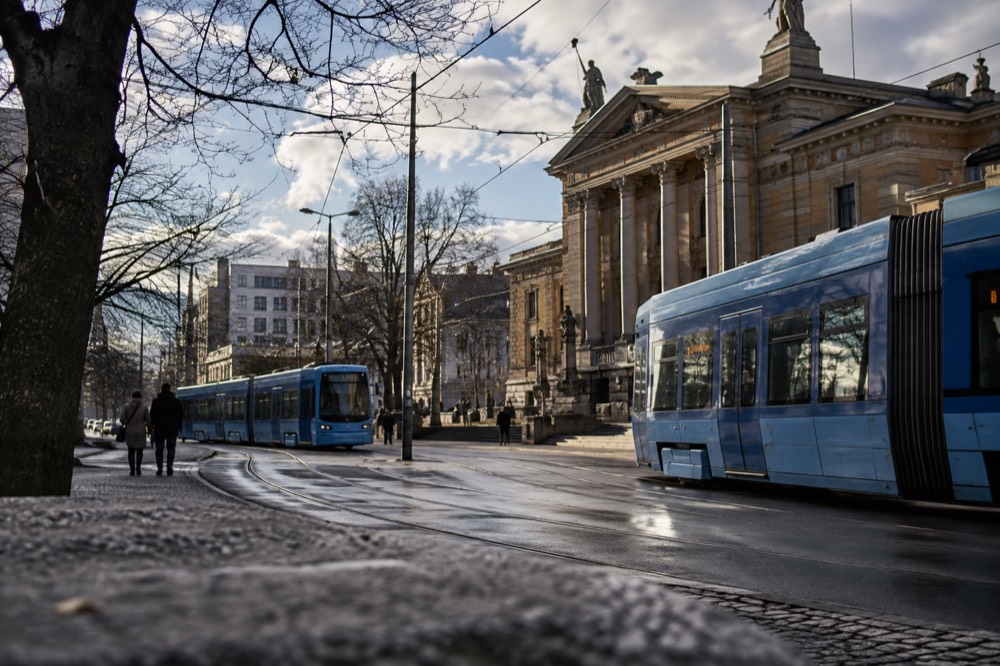
If you are staying in the center, you may never need any of this. The theatre sits within comfortable walking distance of most central hotels, and the streets around it are flat, tree-lined, and pleasant. Our where to stay in Oslo guide maps the neighborhoods, and anything in the Sentrum or Frogner areas puts you on foot from the theatre square.
A walking introduction is also the cheapest way to get oriented, and the theatre is a fixed stop on the city's free walking tours. The largest of them, the Free Highlights Walking Tour, runs about two hours on a tip basis and covers the avenue's main landmarks; it is the default budget answer for a first day.
Can You Go Inside the National Theatre?
Inside access depends on the performance schedule rather than a standing visitor ticket: the National Theatre is a working venue, so the reliable way in is to book seats for a performance, with the theatre's own website carrying the current program, box office hours, and any guided tours or open-house days it offers. The exterior, the steps, and the square are freely accessible at all hours, and for most visitors that is the experience that matters. Photography from the square is unrestricted, and the building photographs best in late afternoon light.
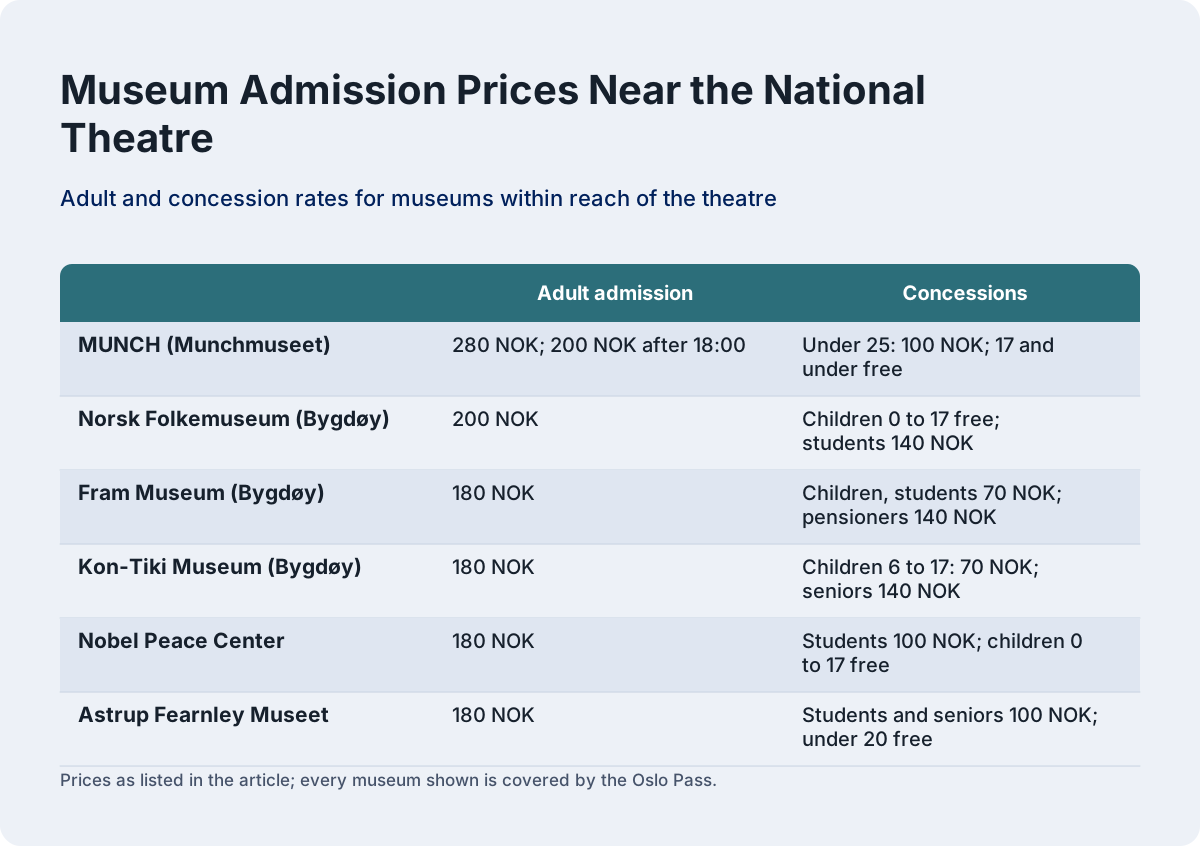
The honest framing is that the theatre is a landmark you look at and a venue you book into, not a museum you tour. Norway's heavyweight visitor museums sit elsewhere in the city, and the theatre district's indoor draws are concentrated a short walk away. If indoor culture is the priority of your day, the museums within easy reach of the theatre square carry real, verified admission prices, and the table below shows what they cost at the door.
| Museum within reach of the theatre | Adult admission | Concessions |
|---|---|---|
| MUNCH (Munchmuseet) | 280 NOK; 200 NOK after 18:00 | Under 25: 100 NOK; 17 and under free |
| Norsk Folkemuseum (Bygdøy) | 200 NOK | Children 0 to 17 free; students 140 NOK |
| Fram Museum (Bygdøy) | 180 NOK | Children, students 70 NOK; pensioners 140 NOK |
| Kon-Tiki Museum (Bygdøy) | 180 NOK | Children 6 to 17: 70 NOK; seniors 140 NOK |
| Nobel Peace Center | 180 NOK | Students 100 NOK; children 0 to 17 free |
| Astrup Fearnley Museet | 180 NOK | Students and seniors 100 NOK; under 20 free |
Every one of those is covered by the Oslo Pass, which is what makes the pass worth doing the arithmetic on around a theatre-district day. The pass costs 580 NOK for 24 hours, 845 NOK for 48 hours, and 995 NOK for 72 hours at adult rates, and it bundles over 30 museums with all public transport in zones 1 through 4N, including the Vy airport trains and the Bygdøy museum ferry. Three Bygdøy museums alone at full price total 560 NOK, and adding the transport to reach them tips the balance decisively. Our is the Oslo Pass worth it page runs the full break-even sums.
One caution worth carrying across the whole district: the former Viking Ship Museum on Bygdøy remains closed, and the museum's own wording is that it will reopen as the Museum of the Viking Age in 2027. No month has been confirmed, and any listing still selling entry to the closed building should be treated with suspicion. Our Museum of the Viking Age page tracks what is actually viewable in the meantime, including Viking-age objects at the Historical Museum in central Oslo.
What Is Near the National Theatre?
Within a short walk of the theatre square you have the Royal Palace and its park at the top of Karl Johans gate, the parliament and the cathedral toward the bottom, the waterfront at Aker Brygge and the Opera House beyond, and the museum peninsula of Bygdøy a ferry or bus ride away, making the theatre the natural pivot for a full day's sightseeing. The palace park is free and always open, the waterfront promenade is free, and the paid museums cluster on Bygdøy and in Bjørvika. Few cities pack this much within one comfortable walking radius.
Start upward. The Royal Palace sits at the head of the avenue, its changing-of-the-guard ceremony a fixed midday ritual, and the surrounding palace park is public and free at all hours. Our Royal Palace Oslo guide covers the guard schedule and the park's layout. From the palace grounds, Frogner's residential streets lead west toward the Vigeland sculpture park, which is genuinely free and open 24 hours a day, all year, with no ticket; over 200 sculptures make it one of the real no-cost answers in an expensive city. Our Vigeland Park guide walks it properly.
Head the other way and the avenue drops toward the parliament, the cathedral, and Oslo Central Station, with the Barcode district and the Opera House beyond. The Opera House roof is free to walk on, and the building's sloping marble apron is the city's most distinctive piece of contemporary architecture. Our Oslo Opera House guide covers what to see there and how the two theatres, the national stage for drama and the national opera house, frame the two ends of the center.
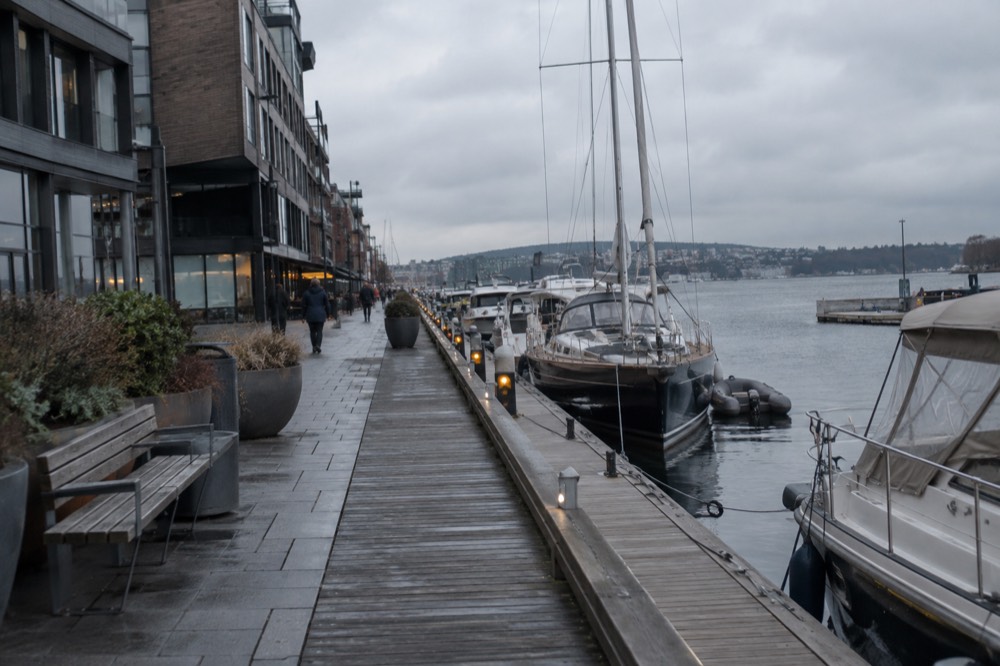
South of the theatre, a 10-minute walk brings you to the water. Aker Brygge and Tjuvholmen form the city's modern waterfront, and from the City Hall piers two different boat systems depart, a distinction that trips up a remarkable number of visitors. The Bygdøy museum ferry leaves from Rådhusbrygge 3, runs seasonally from mid-March to early October, costs about 70 NOK one-way, is included with the Oslo Pass, and does not accept ordinary Ruter tickets. The Oslofjord island ferries are ordinary Ruter services, covered by a standard zone-1 ticket, and leave from the Aker Brygge side. Different operators, different ticket rules, different piers. Our Oslo ferries guide keeps them straight.
| Boat trip from the theatre-district waterfront | Departure point | Ticket |
|---|---|---|
| Bygdøy museum ferry (Dronningen, Bygdøynes) | Rådhusbrygge 3 | About 70 NOK one-way; Oslo Pass valid; Ruter tickets not valid |
| Oslofjord island ferries B1, B1X, B2 | Aker Brygge | Ordinary Ruter zone-1 ticket or Oslo Pass |
| Seasonal notes | Both systems | Bygdøy ferry runs mid-March to early October; B2 to Langøyene runs summer only |
Out of ferry season, Ruter bus 30 serves Bygdøy year-round on an ordinary ticket, stopping at the museum cluster. The Kon-Tiki and Fram museums sit together at Bygdøynes, and a combination ticket for Kon-Tiki plus Fram costs 325 NOK adult, with the three-museum combination including the Maritime Museum at 485 NOK. Those sums, again, are all absorbed by the pass.
When Is the Best Time to Visit the Theatre District?
Late May through early September gives the theatre district its best conditions, with July's normal mean temperature at 17.7 °C and 18 hours of daylight at midsummer, while winter visits trade daylight for twilight atmosphere, with the sun up for under six hours in late December. The square itself is enjoyable in any season, but the surrounding walking district rewards long evenings. There is no midnight sun at Oslo's latitude of 59.91 N; late June instead delivers a sun that sets at 22:43 and rises at 03:53, with deep twilight rather than true night in between.
The daylight swing across the year is enormous, from 5 hours 53 minutes on the winter solstice to 18 hours 50 minutes on the summer one, a factor of more than three. MET Norway's sunrise data, quoted in local time, shows what that means month by month for planning a theatre-square day. The full index of guides sits on Oslo Travel Guide.
| Date | Sunrise | Sunset | Day length |
|---|---|---|---|
| 15 Jan | 09:04 | 15:49 | 6 h 45 m |
| 15 Mar | 06:34 | 18:19 | 11 h 45 m |
| 21 Jun | 03:53 | 22:43 | 18 h 50 m |
| 15 Sep | 06:44 | 19:38 | 12 h 54 m |
| 21 Dec | 09:18 | 15:11 | 5 h 53 m |
Temperature is the milder half of the story. Oslo's July normal of 17.7 °C is gentler than most visitors expect, and it is the winter that is extreme, with January's normal at −2.3 °C. Observed extremes in the recent record at the Blindern station ran from 32.9 °C in mid-July to −17.2 °C in mid-January, so pack for range rather than for an average. One planning surprise worth flagging: August, not November, is Oslo's wettest month on the official 1991 to 2020 normals, at 103 mm. Our Oslo weather by month guide carries the full table, and our best time to visit Oslo guide weighs the seasons against crowd levels and prices.
Winter has its own case. The theatre square under snow, with the avenue lit toward the palace, is one of the city's best scenes, and the dark months are exactly when the evening walking tours come into their own. The myths-and-legends format, a two-hour walk rated 4.8 across 510 reviews, is built for the October-to-March season, and the Oslo in winter guide builds a full cold-weather itinerary around it.
Where Should You Eat and Drink Around the Theatre?
The blocks around the National Theatre hold some of Oslo's most traditional restaurants and bars, but they are also where Norway's price level bites hardest, with restaurant and alcohol prices well above the European average, so the smart moves are a lunch special, a food tour, or the waterfront's cheaper options rather than defaulting to the avenue's dining rooms. Statistics Norway's 2025 price-level survey puts overall household prices 28.6 percent above the EU average, food 33 percent above, and alcohol and tobacco at more than double the European average. That is the honest backdrop to every menu on Karl Johans gate.
None of this makes the district a food desert. It makes it a district where a little planning changes the bill substantially. Lunch menus in Norwegian restaurants are traditionally cheaper than the same kitchen's dinner, the waterfront food halls at Aker Brygge and Mathallen Oslo's market hall in Grünerløkka both offer counter service at gentler prices, and our Oslo cheap eats guide maps the honest low-cost options across the center. Our best restaurants in Oslo guide covers the other end of the scale for a splurge night.

Alcohol deserves its own sentence, because the rules surprise people. Wine and spirits are sold only through Vinmonopolet, the state monopoly, which is closed every Sunday and on public holidays and closes early on Saturdays, with hours varying by store. Supermarkets sell beer and cider only up to 4.7 percent ABV, with a legally mandated evening cut-off on sales. A restaurant beer is priced accordingly, and our price of beer in Oslo guide and best bars in Oslo guide cover what that means in practice.
The most efficient way to eat well around here is to let a guide do the choosing. The Grünerløkka food-and-culture walk, a two-and-a-half-hour neighborhood tour rated 4.5 across 249 reviews, works the market-and-neighborhood side of the city and pairs naturally with a theatre-district evening. It is the related pick for this page because it solves the "where do locals actually eat" question in one booked afternoon.
If beer culture rather than food is the interest, the Beer and Culture Walk runs three hours, is rated a perfect 5.0 across its review base, and is genuinely more useful in Norway than it sounds, because the alcohol rules above make a guided route through the city's beer landscape the practical way to understand them. Our Oslo nightlife guide covers the after-dark district for anyone planning their own route.
What Guided Experiences Pair Well with the Theatre District?
The best pairings are a daytime orientation walk, an afternoon food or beer tour in the adjacent neighborhoods, and an evening on the water, with the fjord's evening cruise, a three-hour shrimp-buffet trip rated 4.5 across 2,115 reviews, the classic Oslo night out that ends within walking distance of the theatre square. The district sits so centrally that nearly every tour in the city starts or finishes within a few minutes' walk of it, which makes the theatre a sensible hotel-side anchor for a touring day.
The daytime options sort by budget and format. The free walking tours, tip-based and running about two hours, cover the avenue's landmarks and cost nothing up front, and the largest of them is by far the most-reviewed free walk in the city. The paid group walks add depth, the small-group format capped at ten people is the middle option, and a private guide is the flexible top end. Our Oslo guided tours guide compares them all in one table, and our Oslo free walking tours page covers the tip-based options and how they work.

The evening options are where Oslo distinguishes itself. The shrimp-buffet evening cruise is a Norwegian institution rather than a generic dinner boat: three hours on the Oslofjord, a cold buffet of the fjord's own shrimp, and a departure and return point within walking distance of the theatre district. It is the single best pairing with a theatre-square hotel, because the two halves of the day, water and avenue, need no transport between them. The fjord deserves more than an evening if you have the days, and our Oslofjord cruise guide compares the silent electric boats, the wooden sailing ships, and the island-hopping formats.
For a day built entirely around the water, the island ferries from Aker Brygge ride on an ordinary zone-1 ticket, and the full-day five-island boat tour, rated 4.6 across 273 reviews, is the guided version. Our Oslo islands guide covers Hovedøya's ruined abbey, Langøyene's beaches, and the seasonal schedules. Our Oslo at night guide assembles the after-dark options, from the myths-and-legends walk to the waterfront, for anyone whose theatre day runs long.
One honest note on what does not exist, because the theatre district's booking desks get asked: there are no northern lights tours from Oslo. The city sits at 59.9 N, well south of the auroral zone, and an Oslo sighting needs a strong geomagnetic storm, a clear sky, and a dark spot, a combination that comes round a handful of times a year. Anyone set on the aurora should plan Tromsø as a separate trip; our northern lights in Oslo guide explains the physics and the honest odds. The same goes for husky sledding: that is a Tromsø product, not an Oslo one.
How Much Does a Theatre-District Day Cost?
A full day built around the National Theatre can cost anywhere from nothing at all, if you walk the avenue, the palace park, and the waterfront and skip the museums, to roughly 1,000 NOK per person with an Oslo Pass, a Bygdøy museum cluster, and an evening on the water, with the biggest single variable being alcohol and restaurant spending rather than any ticket. The sightseeing itself is unusually cheap for a capital: the square is free, the palace park is free, Vigeland Park is free, the Opera House roof is free, and the museums are 180 to 280 NOK each at the door.
The pass arithmetic is the one calculation worth doing before you buy anything. At 580 NOK for 24 hours, the pass pays for itself on three major museums plus transport, and the Bygdøy day does it in one stroke: three museums at 560 NOK full price, plus the ferry out and the buses home, all inside a single 24-hour window. Against that, a day of free sights and a zone-1 walking radius needs no pass at all. Our Oslo Pass guide carries the full price table, including the senior and child rates, and our Oslo trip cost guide builds complete per-day budgets for every travel style.
| Theatre-district day | What it includes | Rough cost per adult |
|---|---|---|
| The free day | Avenue, palace park, theatre square, Opera House roof, waterfront walk | 0 NOK plus food |
| The museum day | Oslo Pass 24h, Bygdøy museums, ferry, all transport in zones 1 to 4N | 580 NOK |
| The full day with an evening | Museum day plus evening fjord cruise | 580 NOK plus the cruise fare |
| The budget day | Free walking tour, free sights, supermarket lunch | Tip money plus food |
The expensive hours are the evening ones. Norway is the sixth most expensive country in Europe on the 2025 price-level survey, and the categories that push it there are alcohol and restaurants, not museums or transport. A theatre-district dinner with drinks will cost more than every ticket in the table above combined, which is why the food tours, the lunch specials, and the market halls earn their place in this guide. The money goes farthest in the daytime, and the city is generous with its free outdoor sights precisely where the theatre sits.
For anyone weighing Oslo against its neighbors on cost, our is Oslo expensive guide answers the question with the same sourced figures rather than reassurance, and it is the page to read before setting a daily budget. Tipping, for the record, is not expected in Norway: service is included in prices, and rounding up or a small gratuity for good service is common but voluntary, a norm our tipping in Oslo guide covers in detail.
A final planning note on currency and cards. Norway is in the Schengen Area but not in the European Union; it is an EEA state through EFTA, uses the Norwegian krone rather than the euro, and sits outside EU VAT so non-resident visitors can claim a refund on qualifying purchases. Card payment is near universal, and our Oslo currency and cash guide covers the practicalities. Every price in this guide is in NOK because that is what you will actually pay at the door.
Oslo Travel Guide, this site, keeps every figure on this page sourced from official channels, and prices do change: the Oslo Pass rates and museum admissions above are the current published ones, and the theatre's own site is the authority on its performance schedule. Build your day around the square, let the pass do the arithmetic where it wins, and keep the expensive hours for the things that are genuinely worth them.
Common Questions About the National Theatre in Oslo
What is the National Theatre in Oslo?
It is Norway's main national stage for spoken drama, an ornate stone building on Karl Johans gate roughly midway between the parliament and the Royal Palace. It is a working theatre rather than a museum, so the exterior and the square are the freely accessible sights, and the auditorium opens for performances.
How do I get to the National Theatre in Oslo?
The theatre has its own station, Nationaltheatret, in Ruter zone 1, served by metro lines, trams, and trains. From Oslo Central Station it is one stop or a 10-minute walk up Karl Johans gate. Both airport trains call there: Flytoget at 268 NOK adult single, and Vy's trains, which the Oslo Pass covers.
Can you go inside the National Theatre?
Inside access depends on the performance schedule rather than a standing visitor ticket. Book seats for a performance, or check the theatre's own website for guided tours or open days. The exterior, steps, and square are freely accessible at all hours.
What is near the National Theatre in Oslo?
The Royal Palace and its free park at the top of the avenue, the parliament and cathedral toward the bottom, the Opera House and waterfront within a 10-minute walk, and the Bygdøy museum peninsula a ferry or bus ride away. The theatre square is the natural pivot for all of it.
Is the area around the National Theatre free to visit?
Yes. The square, the avenue, the palace park, the Opera House roof, and the waterfront promenade are all free. The paid items are the museums, at 180 to 280 NOK adult admission, and an Oslo Pass at 580 NOK for 24 hours covers over 30 of them plus all public transport in zones 1 through 4N.
When is the best time to visit the theatre district?
May through early September for long evenings and mild weather, with July's normal mean at 17.7 °C and 18 hours of daylight at midsummer. Winter brings under six hours of daylight in late December but a beautifully lit avenue and the dark-season evening tours. August is the wettest month on the official normals, at 103 mm.