Getting Around Oslo: Public Transport, Tickets, Ferries and Airport Trains Explained
Oslo runs one of Europe's simplest transport systems: a single ticket, a single app, and a metro, tram, bus and ferry network that all accept it. Here is how the zones, the passes and the two very different airport trains actually work.

Short answer
Oslo public transport is run by Ruter and covers the metro, trams, buses and island ferries on one zonal ticket bought in the Ruter app. Central Oslo is zone 1, the airport is zone 4N, and a 24-hour Oslo Pass costs 580 NOK including Vy airport trains, over 30 museums and the Bygdøy ferry.
Oslo is a city where the transport is genuinely good, and that is not a sentence you can write about many capitals. One company, Ruter, runs the metro, the trams, the buses and the island ferries on a single zonal ticket, and you buy it in one app. The whole system is explained below, including the airport train choice that most guides get wrong and the ferry distinction that catches out even careful planners. For the wider picture of what to fill your days with, start with our complete Oslo attractions overview.
How Does Oslo's Public Transport System Work?
Oslo's metro, trams, buses and island ferries all run on one ticket system operated by Ruter, divided into zones, with central Oslo and the entire metro network inside zone 1. You buy a ticket in the Ruter app, on a travel card, or on board buses and boats at a higher price, and the same ticket is valid across every mode. There is no separate fare for the metro versus the tram.
The network has five legs. The T-bane metro has five lines fanning out from the city center, and the whole network sits inside zone 1, which means a single central ticket reaches even the forest edge at Frognerseteren or the trailheads at Sognsvann. The trams cover the inner neighborhoods, the buses reach the rest, and two kinds of boat complete the picture: the public island ferries, which are ordinary Ruter services, and the separate Bygdøy museum ferry, which is not. That last distinction matters enough that it gets its own section below.
Frequency is good by any standard. The metro runs every few minutes through the day, and the trams are dense enough in the center that you rarely wait. Service thins in the late evening and on weekends, but the city is compact enough that walking often beats waiting. For a deeper look at the metro lines and where they actually take you, see our Oslo metro guide, and the Oslo tram guide covers the street-level network.

One thing visitors consistently underestimate is how far north the city actually extends. The border between built-up Oslo and the forest is a metro ride away, not a day trip. Line 1 ends at Frognerseteren, 429 meters above sea level, and the trails of Nordmarka begin there. If hiking is on your list, our hiking near Oslo guide explains which stop serves which trailhead.
What Tickets Do You Need and What Do They Cost?
Tickets are priced by zone, not by distance, and a single zone 1 ticket is valid for 60 minutes from activation, with 30 minutes added for each extra zone you buy. The app is the cheapest place to buy, on-board purchase costs more, and Ruter's 30-day zone 1 pass currently costs 655 NOK after a cut from 805 NOK. Single, 24-hour and 7-day prices should be checked live in the app before you travel.
The zone logic is simple once you see it. You pay for the number of zones your journey crosses, and Ruter's own advice is not to count zones by hand but to let the journey planner in the app do it for you. A trip inside central Oslo is one zone. A trip to the airport crosses into zone 4N, which is the airport's correct zone, a detail worth stating plainly because at least one automated read of Ruter's own zone map has returned the wrong answer.

For the prices that are confirmed, the table below is what you can plan against. The 30-day figure is the one Ruter has published cleanly, and it dropped substantially in spring 2026, which tells you something about the direction of travel for commuters. Visitors on shorter trips should read the live single and day-ticket prices in the app rather than trusting a number from a guide, including this one.
| Ticket | Zone | Price | Notes |
|---|---|---|---|
| Single | Zone 1 | Check in the Ruter app | Valid 60 minutes |
| Single | Multi-zone | Check in the Ruter app | 30 extra minutes per additional zone |
| 30-day pass | Zone 1 | 655 NOK | Cut from 805 NOK in spring 2026 |
| On-board single | Bus or boat only | More expensive | Cash limited, small notes |
| Oslo Pass 24h | Zones 1, 2, 3, 4V, 4N | 580 NOK | Includes museums and airport Vy trains |
The Oslo Pass deserves its own arithmetic because it is both a transport ticket and a museum ticket, and the two halves are worth separating. At 580 NOK for 24 hours it is barely more than three Bygdøy museum entries at full price, and it also covers the Bygdøy ferry, which no ordinary Ruter ticket does. Our full is the Oslo Pass worth it analysis runs the numbers for different trip lengths.
Once the daytime system makes sense, the evening is when the city changes character, and a couple of guided options slot neatly into a transport-first day. If you would rather someone else lead the way after dark, these are the three that fit best around a day of riding trams and ferries.
How Do You Get from Oslo Airport to the City Center?
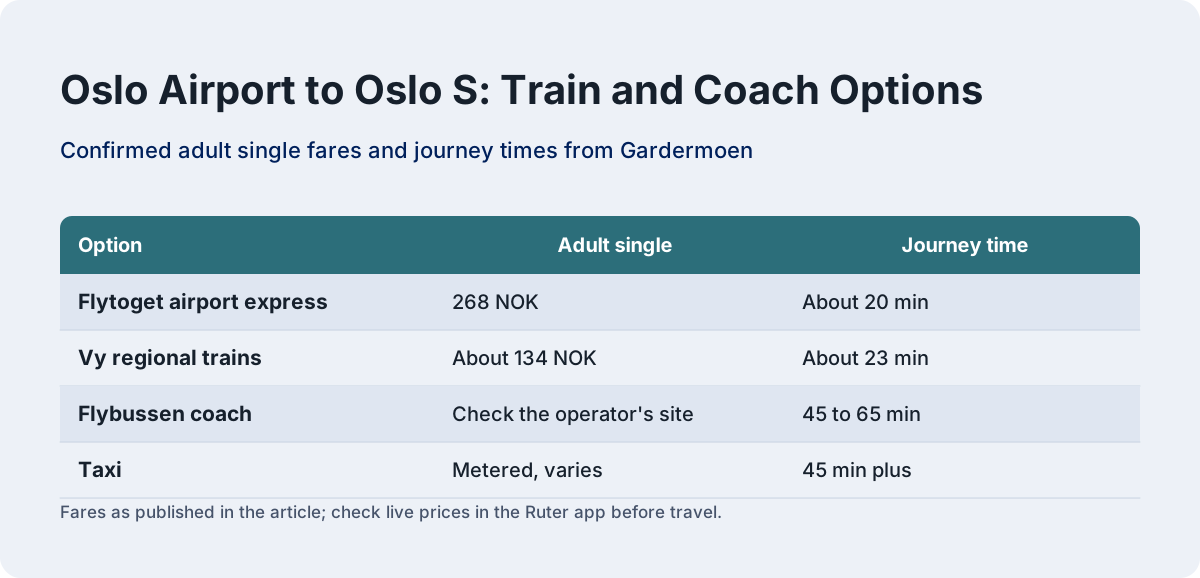
There are two trains from Gardermoen to Oslo S: Flytoget, the airport express at 268 NOK taking about 20 minutes, and Vy's regional trains at roughly half the price taking about 23 minutes, and the Oslo Pass covers the Vy trains but not Flytoget. The airport sits in Ruter zone 4N, so a multi-zone Ruter ticket rides the Vy trains too.
This is the single most valuable practical fact in Oslo transport, and most guides get it wrong or skip it. VisitOSLO's own wording is that the Oslo Pass includes public transport in zones 1, 2, 3, 4V and 4N, "including transport to and from Oslo Airport Gardermoen with public trains operated by VY." Flytoget is a separate company, it is not covered, and its adult single costs 268 NOK against roughly 134 NOK for the Vy alternative. The time difference is about three minutes.
| Option | Adult single | Journey time | Notes |
|---|---|---|---|
| Flytoget airport express | 268 NOK | About 20 min | Every 10 minutes, not on the Oslo Pass |
| Vy regional trains | About 134 NOK | About 23 min | Covered by Oslo Pass and Ruter tickets |
| Flybussen coach | Check the operator's site | 45 to 65 min | Traffic dependent |
| Taxi | Metered, varies | 45 min plus | Regulated per operator, agree a fare first |
The mechanism that saves money is that the Vy trains are ordinary Ruter-zone services. A Ruter ticket covering zone 1 through zone 4N is valid on them, so you do not buy a special airport supplement, you buy the right zones. Buying Vy's own point-to-point fare at the machine is the expensive way to take the cheap train. Our Flytoget vs Vy comparison breaks this down further, and the Oslo airport to city center guide covers every option including buses and transfers.

If your arrival day is tight and you would rather not think about timetables at all, there is also a private airport transfer product on our roster, and a full-day sightseeing combo that suits cruise passengers with one day on shore. For most visitors, though, the train decision above is the whole airport question.
How Do the Ferries Work, and Which Pier Do You Need?
Oslo has two separate ferry systems: the public island ferries, lines B1, B1X and B2, which depart from Aker brygge and take ordinary Ruter tickets, and the seasonal Bygdøy museum ferry, which departs from Rådhusbrygge 3, costs about 70 NOK one-way, and does not accept Ruter tickets at all. The Oslo Pass covers both.
Mixing these two up is the most common transport mistake in the city. The island ferries are part of the ordinary network: line B1 runs a year-round circle to Hovedøya, Lindøya, Gressholmen, Bleikøya and Nakholmen, while B2 to Langøyene runs in the summer season. A standard zone 1 ticket covers them, with no surcharge, and you can hop on and off at will. Hovedøya holds the ruins of a Cistercian abbey and makes an easy half-day trip, which our Hovedøya guide covers in detail.
The Bygdøy ferry is a different animal. It runs only from mid-March to early October, departs from Rådhusbrygge 3 at Platform F, and serves two stops on the museum peninsula: Dronningen for the Norwegian Museum of Cultural History, and Bygdøynes for the Kon-Tiki and Fram museums. The operator's own site states plainly that Ruter tickets are not valid on it. Outside the ferry season, Ruter bus 30 serves Bygdøy year-round on an ordinary ticket. The wider set of guides lives on Oslo Travel Guide. The wider set of guides lives on Oslo Travel Guide.
| Ferry | Departure pier | Ticket | Season |
|---|---|---|---|
| Island ferries B1, B1X, B2 | Aker brygge | Ordinary Ruter ticket | B1 year-round, B2 summer |
| Bygdøy museum ferry | Rådhusbrygge 3, Platform F | About 70 NOK, or Oslo Pass | Mid-March to early October |
| Bus 30 to Bygdøy | Central Oslo stops | Ordinary Ruter ticket | Year-round |

For the full picture on the island boats, including which island suits swimming and which suits a picnic, see the Oslo islands guide and the Oslo ferries guide. If you would rather have someone plan the island day for you, the ferry-and-foot island hopping tour on our roster does exactly that, and it is one of the better-reviewed products in the city.
Is Oslo Walkable, or Do You Need Transport at All?
Central Oslo is genuinely walkable: the main sights from the Opera House to the Royal Palace sit within about two kilometers of each other, and Karl Johans gate strings them together on foot. But the city's best experiences, the forests at Nordmarka, the islands and the museums of Bygdøy, all sit outside walking range, so most visitors use a mix of feet and public transport.
The honest framing is that Oslo rewards walking in the center and punishes the assumption that everything is in the center. A first day can be done almost entirely on foot, and our one day in Oslo itinerary is built around exactly that. By day two or three you will be on a tram, a metro train or a boat, and that is fine, because that is what they are for.

Cycling is the third leg. The bike share system covers the central city, and a guided bike tour is a fast way to cover the highlights if your time is short; the three-hour version on our roster is the highest-reviewed in the city. Our Oslo bike share guide explains how the docks and the app work. Taxis exist and are expensive, as everything to do with cars in Norway tends to be, and the taxis and rideshare guide covers when they are actually worth it: mainly late at night, with luggage, or in bad weather.
What Is the Best Way to Get Around Oslo with Kids, Luggage or Limited Mobility?
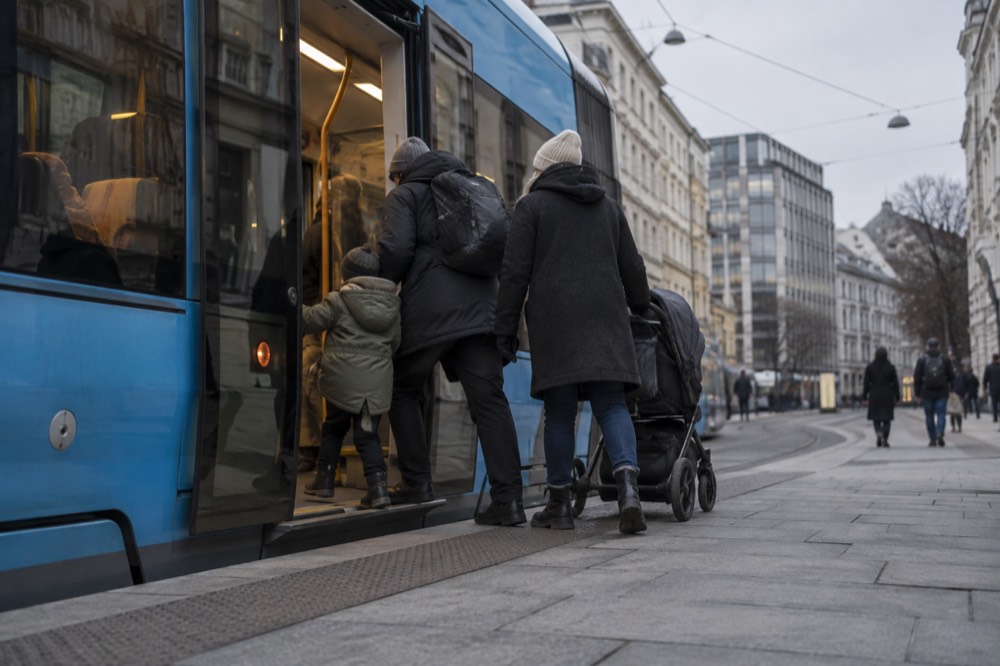
The metro and trams are step-free at most central stations, buses kneel and take prams, and children under six travel free on Ruter services, with child discounts from six to seventeen. The Oslo Pass child rate is 290 NOK for 24 hours, and several major museums, including the Norwegian Museum of Cultural History, admit children under 18 free.
Practical details first. The metro's newer trains are level with the platform, and the network's central stations have lifts; the oldest surface stops can be a step up, so check the Ruter app's accessibility information for a specific station if that matters to you. Buses take prams without fuss, and drivers are used to them. The island ferries are small boats with a short gangway, manageable for most, and the Bygdøy ferry is similar.
For families planning a full trip rather than a single day, our Oslo with kids guide ranks the child-friendly sights, and the accessibility guide covers step-free routes, accessible museum entrances and the boat network in detail. Luggage is the other common question: the airport trains take suitcases easily, and our luggage storage guide lists the left-luggage options around Oslo S for a last day with a late flight.
What Should You Know Before Riding, That the Maps Do Not Tell You?
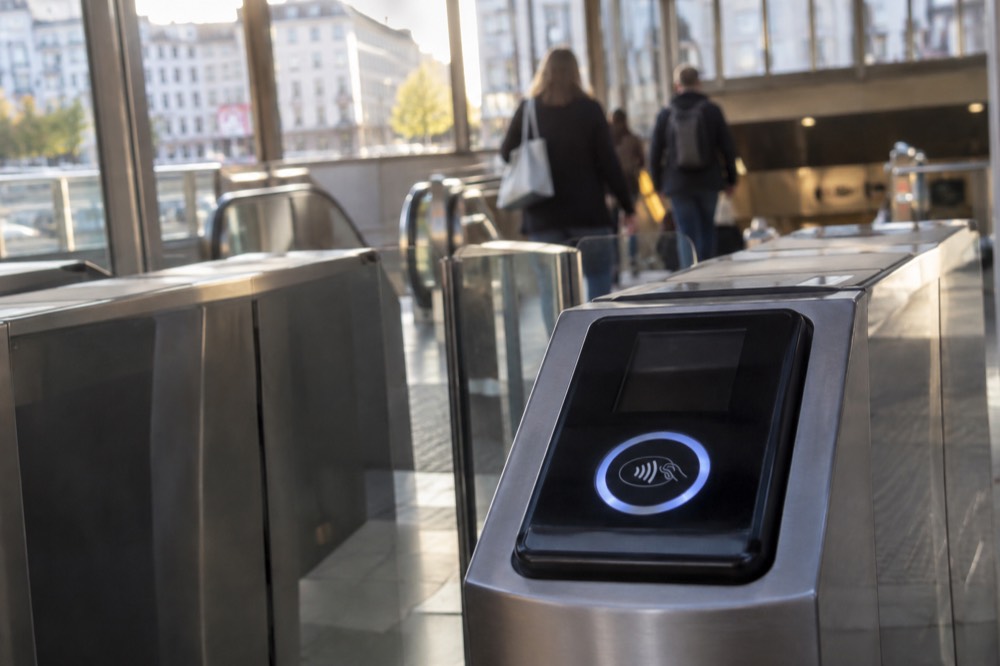
Validate before you board, buy in the app rather than on board, and remember that a single ticket's clock starts when you activate it, not when you board. Norway is in the Schengen Area but not in the EU, uses the krone rather than the euro, and contactless card payment works everywhere in the system.
A few closing details that make the difference between a smooth day and a fined one. Ticket inspections happen, and "I did not know" is not a defense, so activate the ticket in the app before the doors close, not after. On-board purchase exists only on buses and boats, costs more, and takes limited cash. The Ruter app itself is the planning tool: it calculates zones, sells tickets and shows live departures, and there is no reason to use anything else for the public network.
Money last. Norway is in the Schengen Area but not in the European Union, and the currency is the krone, not the euro. You will not need cash for transport at all. For the wider cost picture, including why alcohol and restaurants are where the money goes in this city, read is Oslo expensive and the trip cost breakdown.
By evening, the transport question answers itself: the city center is compact, walkable and safe, and the best evening products are on foot or on the water. The Beer and Culture Walk is the strongest of them for anyone who wants the neighborhood context that a tram window does not give you, and Norway's alcohol rules make a guided introduction genuinely useful rather than just a novelty.
The myths and legends evening walk covers the same central streets with a different lens, the darker history rather than the drinking culture, and it is the product Oslo genuinely needs once the dark season arrives in October.
And if the day has left you tired of walking, the shrimp-buffet evening cruise is the third strong evening option: three hours on the water with a Norwegian institution of a meal, departing from the central piers the transport network already delivered you to.
Common Questions About Getting Around Oslo
Is Oslo public transport easy to use?
Yes. One operator, Ruter, runs the metro, trams, buses and island ferries on a single zonal ticket bought in one app, with English throughout and live departure information. The only real trap is the Bygdøy ferry, which is a separate system that takes no Ruter ticket.
Can I buy Oslo transport tickets on the bus?
Yes, on buses and boats only, and at a higher price than the app, with limited cash accepted in small notes. The Ruter app is the cheapest and simplest place to buy, and it also plans journeys and calculates zones.
Does the Oslo Pass cover the airport train?
It covers the Vy trains to and from Gardermoen, which take about 23 minutes, but not the Flytoget airport express, which is a separate company. This is the most commonly misstated transport fact about Oslo.
How much is a single ticket in Oslo?
Single, 24-hour and 7-day prices are not published in a machine-readable form and should be checked live in the Ruter app before you travel. A zone 1 single is valid for 60 minutes, with 30 minutes added per additional zone.
Do the ferries take the same ticket as the metro?
The island ferries from Aker brygge do, on an ordinary Ruter ticket. The Bygdøy museum ferry from Rådhusbrygge 3 does not, it costs about 70 NOK one-way and is covered only by the Oslo Pass, and it runs seasonally from mid-March to early October.
Is the Oslo Pass worth it for transport alone?
Usually not for transport alone, since ordinary tickets are cheaper. It becomes worth it when you add museums: three full-price Bygdøy entries total 560 NOK against a 580 NOK 24-hour pass that also carries you there, to the islands and on the airport Vy train.