Royal Palace Oslo: What to See at the Slottet and Around It
The Royal Palace sits at the western end of Karl Johans gate and works as the anchor for everything else in central Oslo. This guide covers the guard ceremony, the free park behind the building, and the sights within a short walk.
Short answer
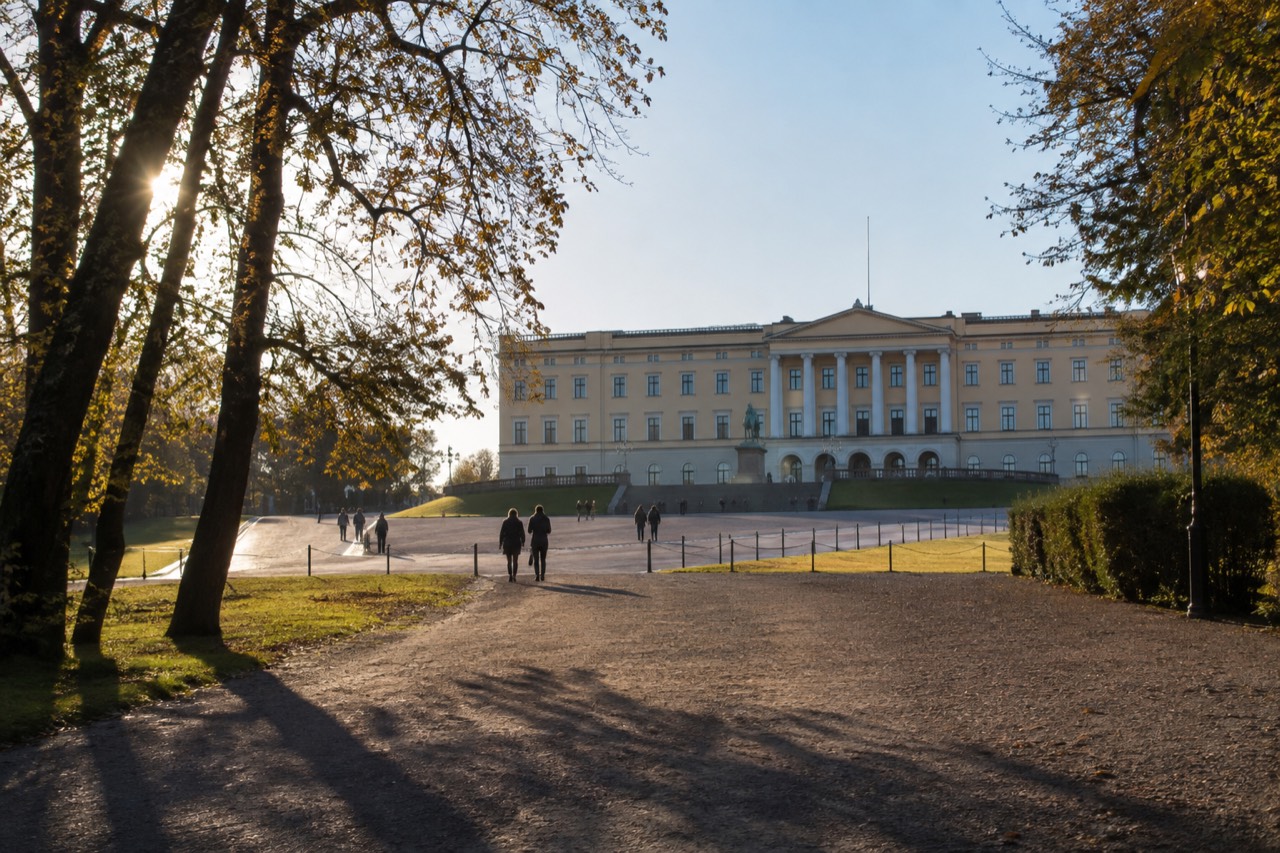
The Royal Palace is the King of Norway's official residence, standing at the west end of Karl Johans gate. You cannot wander the building freely, the surrounding Palace Park is free and open to the public, and the changing of the guard takes place daily outside the gates. Most visitors spend 30 to 60 minutes here before moving on.
The Royal Palace, the Slottet in Norwegian, is the building most visitors photograph first in Oslo, usually from the Palace Square with the whole length of Karl Johans gate stretching away behind them. It is a working royal residence, not a museum, which shapes everything about how you visit: the outside and the park are yours to enjoy for nothing, while the inside opens only on limited, guided terms. That balance is what this page explains.
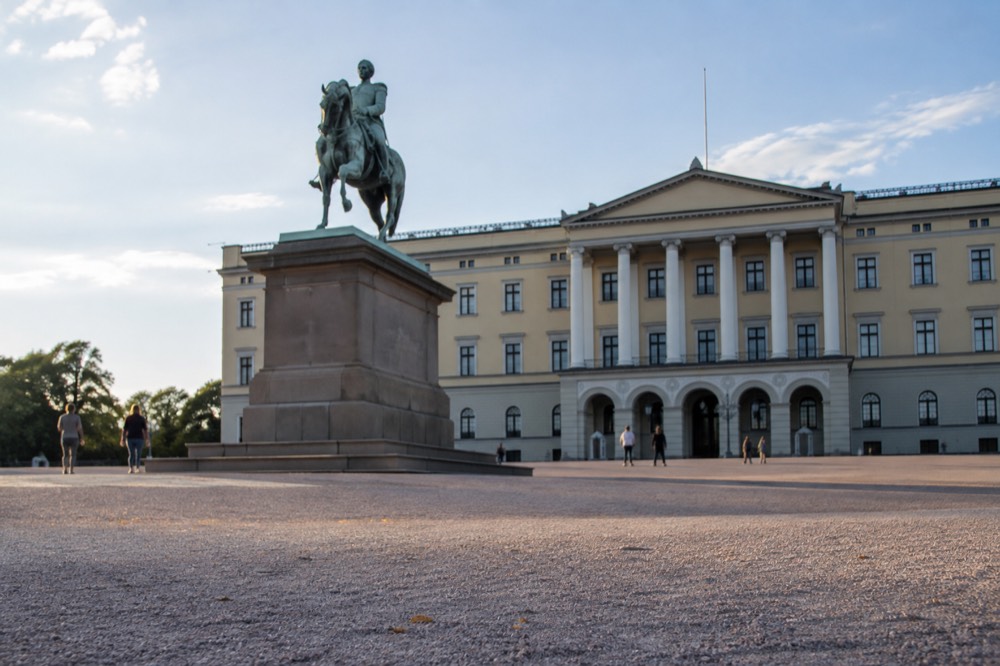
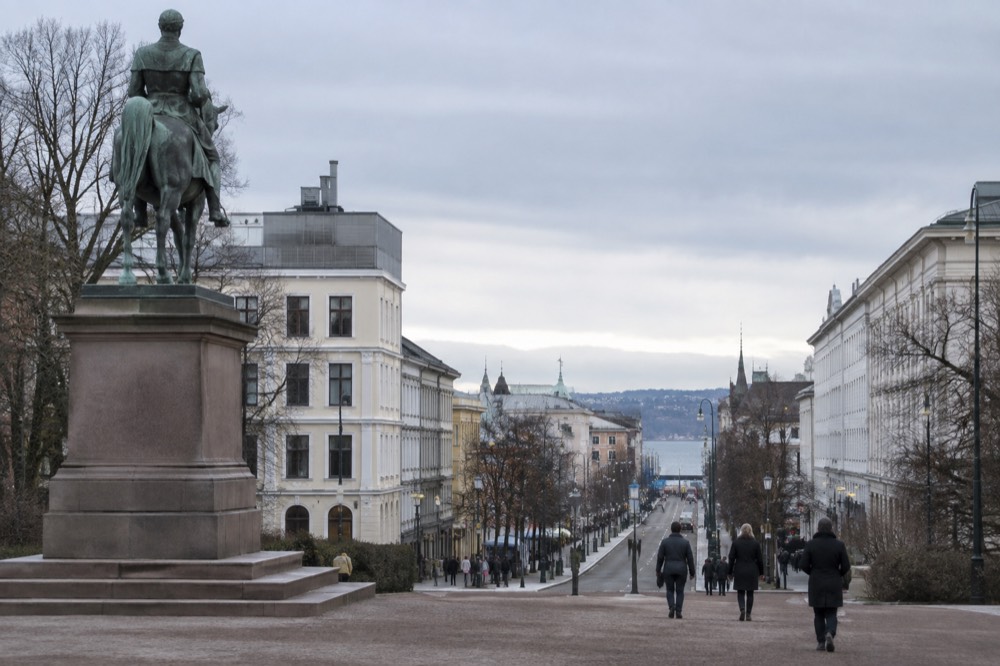
The palace also works as a compass for the city. Stand with your back to the building and you are looking straight down Oslo's main ceremonial street toward the Parliament, the National Theatre, the University and eventually the harbor. Almost every first-day walk in the city passes this spot, which is why it pays to know what is worth your time here and what is a five-minute photo stop.
Where Is the Royal Palace and What Exactly Is It?
The Royal Palace is the monarch's official residence in Oslo and the endpoint of Karl Johans gate, the city's main street. It is a working palace, the King conducts official duties here, and the building itself is only viewable inside on limited guided tours when the court permits. The Palace Square in front and the Palace Park behind are both public and free. The setting is deliberately theatrical. The building faces east down the main street, framed by the equestrian statue of King Karl Johan in the square, and the park rolls away behind it in English landscape style, with gravel paths, old trees and lawns. Because the palace sits on a small rise, the square doubles as one of the city's natural gathering points: national day celebrations, victory celebrations and public events all converge here. For orientation, this is the fixed western point of central Oslo. Everything else in the center, the Parliament building, the National Theatre, the University campus, the shopping stretch of Karl Johans gate, lies in a rough line between the palace and the harbor. A visitor who learns this one axis rarely gets lost in Oslo afterward.
The palace is also the reason the main street exists in its current form. Karl Johans gate was aligned on the building, so the street, the square and the palace read as a single composition. That makes the walk from the harbor up to the gates one of the classic Oslo strolls, and it is the spine of most guided city walks, including the budget central walking tour that covers the palace, the Parliament and the harbor in one two-hour loop. The table below fixes the geography in one glance, so you can see how tight the central cluster around the palace really is.
| Sight near the palace | Direction from the square | Walk time |
|---|---|---|
| Karl Johans gate shopping stretch | Downhill, east | 2 to 10 minutes |
| Stortinget, the Parliament | Downhill, east | 5 minutes |
| National Theatre | Downhill, east | 7 minutes |
| University of Oslo historic campus | Downhill, southeast | 10 minutes |
| Oslo Central Station | Downhill, east | 15 minutes |
| Harbor, Aker Brygge and the piers | Downhill, south | 15 minutes |
Can You Go Inside the Royal Palace?
Only on a guided tour, and only when the Royal Household opens the doors, which is not year-round. The palace is the King's official residence, so there is no free-flow museum visit and no ticket you can buy on the day at the door. The grounds, the square and the Palace Park are fully public and cost nothing, and for most visitors they are the whole experience. The practical consequence: plan your visit around the outside, and treat an interior tour as a bonus you check for in advance rather than something you build a day around. The court publishes its own visitor information for the palace, and opening arrangements change from season to season, so check the official source before you travel if going inside matters to you. What you will see from the outside costs nothing and takes about as long as you want it to. The facade from the square, the view down the main street, the guard posts at the gate and the park behind are all free and always accessible, and the park in particular rewards more time than most people give it.
This is also where the palace fits into a bigger central-Oslo day. Because the building itself asks little of your schedule, most visitors pair it with the guard ceremony, a walk down the main street, and one or two of the paid sights nearby. The three bookable options below are the ones that pair most naturally with a palace stop, from the cheapest guided walk in the city center to the fjord cruise that finishes the same walking route at the water.
If you would rather plan the day yourself, the honest summary is this: the palace and its park want an hour, the walk down Karl Johans gate wants another hour with stops, and the harbor area at the bottom is where the fjord boats leave from. You can read a fuller route in the one day in Oslo itinerary, which uses the palace as its starting point.
When and Where Does the Changing of the Guard Happen?
The changing of the guard takes place daily outside the palace, in the middle of the day, when the new guard marches from its barracks through the city streets to relieve the old guard at the palace gates. The ceremony is free to watch, needs no ticket, and the exact schedule is published by the Royal Household, so check the official announcement rather than a guidebook's fixed time. The march is the part most people miss. The guard detachment forms up by the barracks near the harbor end of the route and walks up through the center, so if you position yourself along the last stretch of Karl Johans gate you often see and hear the band and the escort before the ceremony proper begins at the square. Once the detachments meet at the palace, the handover is brief, formal and very photogenic, with music on days the full band turns out.
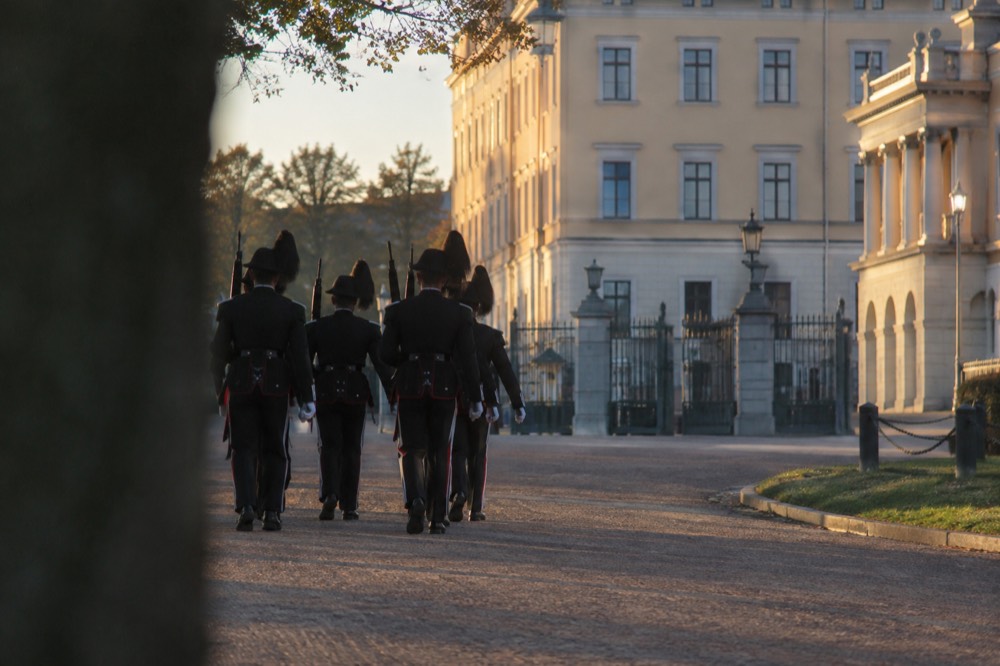
A few practical notes make the ceremony easier to enjoy. Arrive early for a spot at the front of the barrier line, dress warmer than you think you need to from October to March, and keep clear of the guard posts themselves, the sentries are working, not posing. The ceremony happens in all weather, which is part of its charm in a Norwegian winter: a small crowd, falling snow and a brass band is a genuinely memorable version of it. Photography is fine from the public areas.
After the ceremony, most visitors walk straight down the main street. If the weather is bad, the honest alternative is to swap the palace day for museum time, and the rainy day in Oslo guide covers exactly that pivot.
What Can You See in the Palace Park?
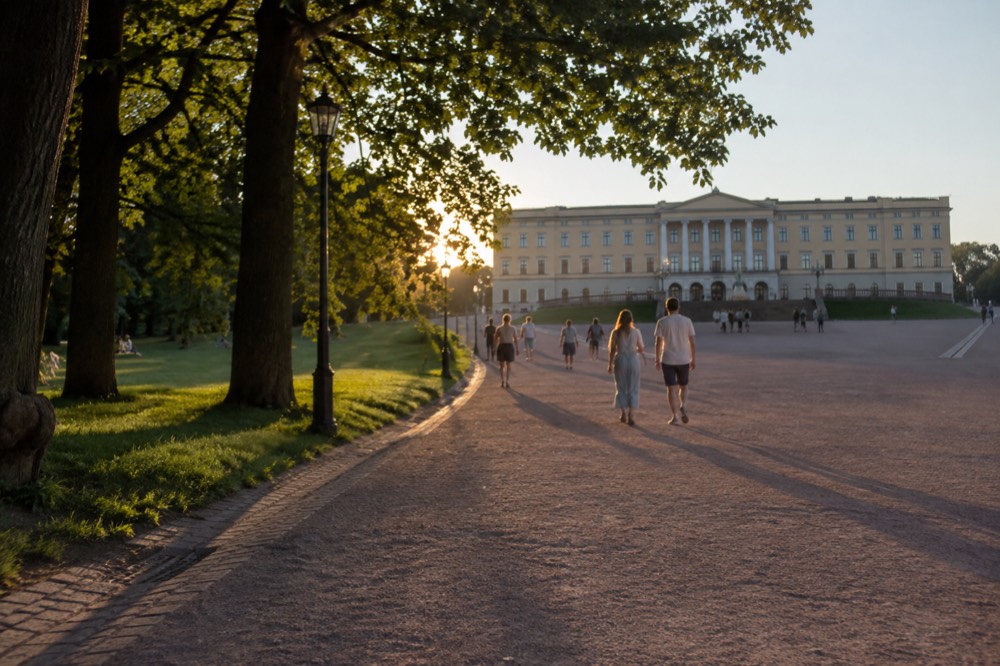
The Palace Park, the Slottsparken, is a free public park wrapping around the back and sides of the palace, open around the clock, with gravel paths, mature trees, lawns, ponds and a scattering of statues and royal monuments. It is one of the genuinely free things to do in Oslo, costs nothing, and in summer it fills with locals on the grass within sight of the King's windows. The park is larger than the square suggests and rewards a slow loop. The paths behind the building climb gently and give framed views back toward the facade, and the northern edge of the park connects toward the Majorstuen neighborhood, which puts you within a short walk of cafés and the Frogner side of the city. In winter the same paths become a quiet, snow-lined walk, and because the park is lit and central, it stays usable at the dark end of the day, which matters in December when Oslo has under six hours of daylight.
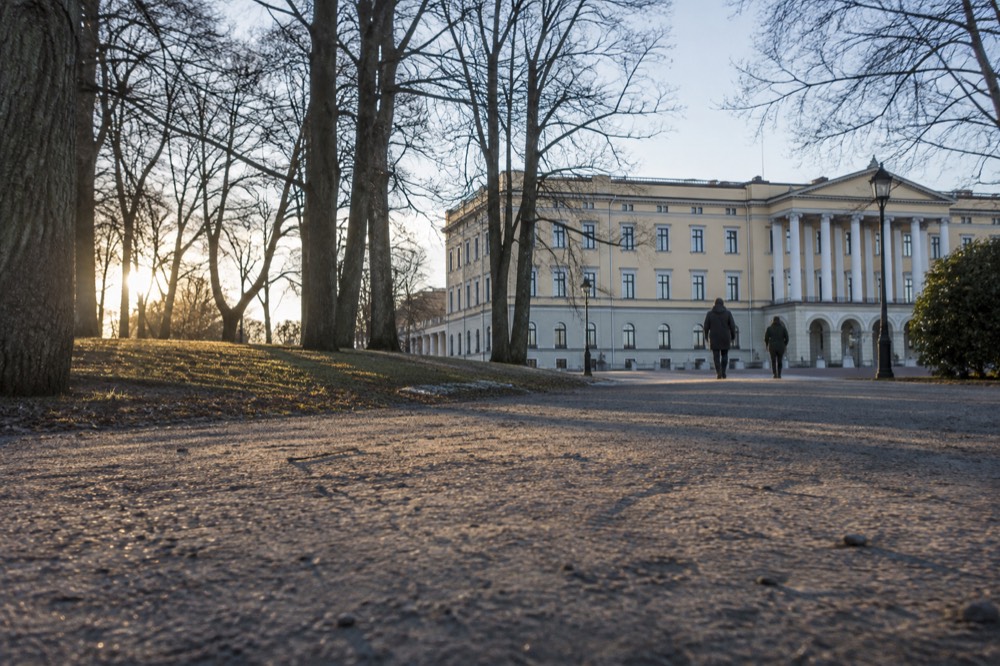
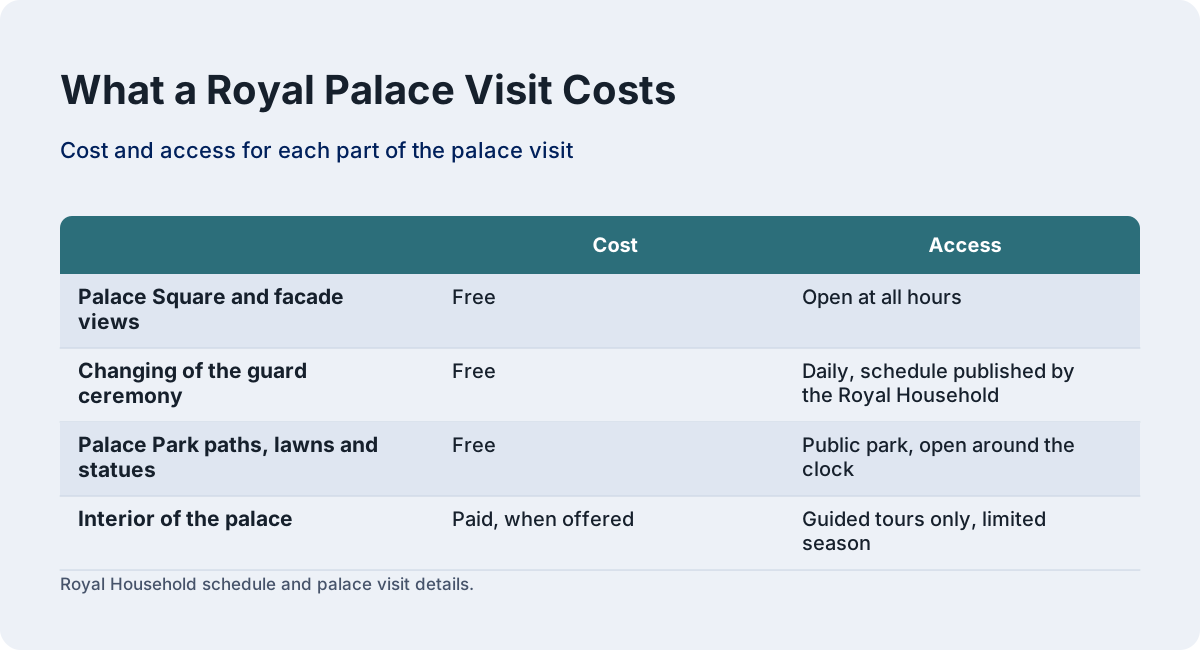
Two distinctions keep your planning honest. The park is free and always open, like Vigeland Park further west, which is also free and open around the clock, so you can string the two together on a long walking day. And the palace itself, whatever the park suggests, is not a museum you can drift into: the contrast between the public grounds and the private building is the defining feature of the visit. The table below sets out what is free, what is paid and what needs booking in the palace area, so you can budget the stop honestly.
| Part of the palace visit | Cost | Access |
|---|---|---|
| Palace Square and facade views | Free | Open at all hours |
| Changing of the guard ceremony | Free | Daily, schedule published by the Royal Household |
| Palace Park paths, lawns and statues | Free | Public park, open around the clock |
| Interior of the palace | Paid, when offered | Guided tours only, limited season, book in advance |
| Public toilets and cafés | Pay per use | In the surrounding streets, not in the palace |
How Do You Get to the Royal Palace?
The palace is at the top of Karl Johans gate and is one of the easiest sights in Oslo to reach: it is a short walk from the National Theatre and Stortinget areas, it sits inside Ruter zone 1, and every central tram, the metro lines serving the west side and several buses stop within a few minutes of the gates. From the harbor end of the main street, the walk up to the square takes about 15 minutes at a steady pace. Because central Oslo including the whole metro network sits inside Ruter zone 1, a single ordinary ticket covers any combination of tram, bus, metro and the island ferries on the same journey, and a single-zone ticket stays valid for 60 minutes from activation, long enough to reach the palace from almost anywhere in the center. The getting around Oslo guide explains the ticket system in full, and the Oslo Pass covers the same zone 1 network plus over 30 museums if you are planning a heavy sightseeing day.
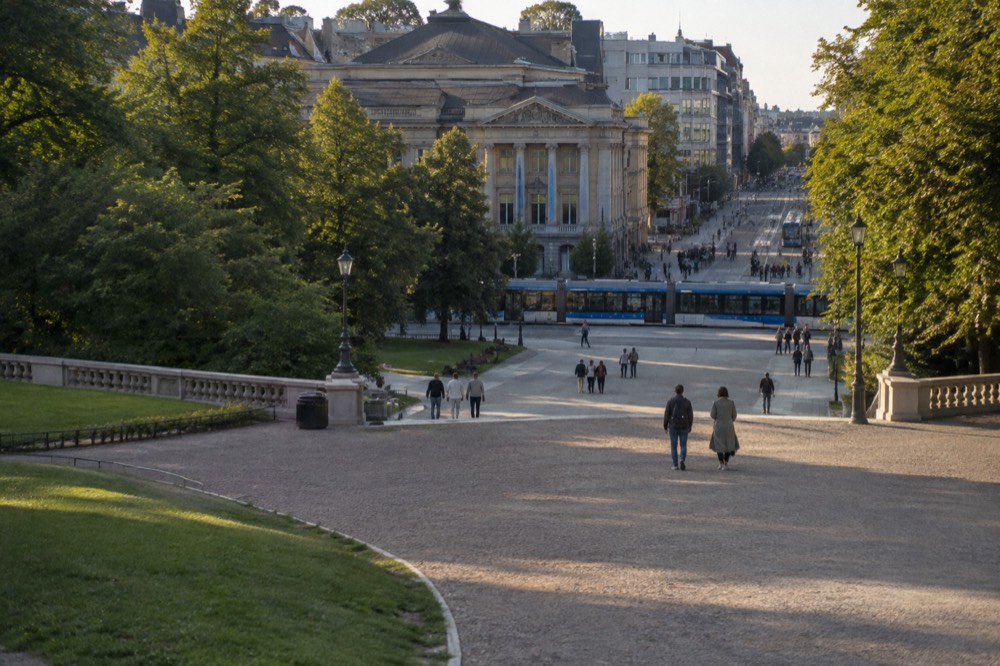
The walk itself is the best way in. Starting from the Central Station or the harbor, the route up Karl Johans gate passes the Parliament, the National Theatre and the University, with the palace facade growing at the end of the street the whole way, and that single walk is the reason most guided tours of the center include the palace without making it a destination of its own. If you are arriving from the airport, note the one detail most guides get wrong: the Oslo Pass covers the Vy trains to and from Gardermoen but not Flytoget, which is a separate company, and the difference is real money. The Oslo airport to city centre guide breaks down all the options.
What Else Should You Pair with a Palace Visit?
The palace anchors a walkable cluster: the National Theatre and the University sit on the same street, the Parliament is five minutes downhill, the Nobel Peace Center and the harbor are at the bottom, and the Frogner side of the city, including Vigeland Park, lies west of the palace park. A palace stop fits naturally into the first half of any central Oslo day, and most visitors combine it with two or three of these. The most efficient pairing is palace, guard ceremony, then walk downhill to the harbor and finish on the water. The fjord cruise that leaves from the central piers is the single best-reviewed activity in the city, and the silent electric boat version runs on a short loop that fits easily into an afternoon after a morning at the palace.
For a museum pairing, the honest choice depends on the weather. On a good day, take bus 30 or the seasonal ferry to Bygdøy and do the peninsula museums: the Kon-Tiki Museum is the best-reviewed museum ticket in the city and pairs naturally with the Fram Museum next door, and a combined Kon-Tiki plus Fram ticket costs 325 NOK for an adult, against 180 NOK each bought separately. On a wet day, the indoor cluster in the center wins, and the Oslo museums guide ranks the options.
The table below is the practical version of that decision: what to pair with the palace stop depending on time of day, weather and how much walking your legs have left. The wider set of guides lives on Oslo Travel Guide. The wider set of guides lives on Oslo Travel Guide.
| If you have | Pair the palace with | Why it works |
|---|---|---|
| One hour | The walk down Karl Johans gate | Same street, no transport, ends at the harbor |
| Half a day | Guard ceremony, then the National Theatre and harbor area | All within a 20-minute walking radius |
| A full day | Bygdøy museums by bus or seasonal ferry | The palace is the morning, the peninsula is the afternoon |
| A wet afternoon | Central museums and the Paradox Museum | Indoor options a short tram ride from the square |
| An evening | The harbor, then a fjord or dinner cruise | The palace park closes the day, the water starts the night |
Is the Palace Area Worth It in Winter or at Night?
Yes, with the right expectations. In winter the palace park becomes a snow-covered walk, the guard ceremony still runs daily and the dark mid-afternoon light around the facade is one of the most photogenic versions of Oslo. At night the square is lit, the facade is illuminated and the view down the main street is quiet and atmospheric, though the park paths are unheated and dark at the winter end of the year. Oslo's winter daylight is the real constraint, not the cold. On 21 December the sun rises at 09:18 and sets at 15:11, giving under six hours of daylight, so a winter palace visit is really a late-morning plan: catch the guard in the middle of the day, walk the park while it is light, and move indoors before the dark settles in. The Oslo in winter guide covers the whole cold-season picture, including the forest and snowshoe options that make a short-winter-day city genuinely work.
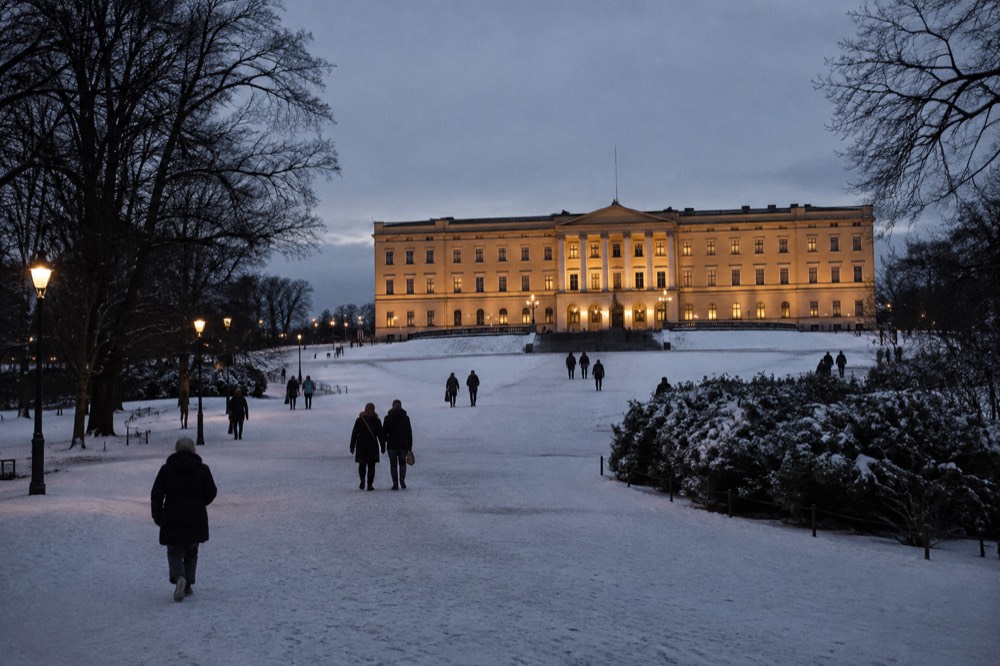
At night the palace area shifts character rather than closing. The square stays public, the facade lighting makes it a common stop on evening walks, and the themed evening history walks that run through the center in the dark months use this end of the main street as a stage. Summer is the opposite problem: in late June the sun sets at 22:43 and it never gets properly dark, so the park is usable until absurd hours and the evening light on the facade is at its best long after most visitors have gone to dinner. The Oslo at night guide picks up both ends of that spectrum. The table below shows how the same palace visit changes shape with the season, using MET Norway's own daylight figures for the city.
| Season | Daylight window | Best palace plan |
|---|---|---|
| Late December | 09:18 to 15:11, under 6 hours | Guard ceremony at midday, park walk in the early afternoon light |
| March | Sunrise around 06:34, sunset 18:19 | Full day available, park and main street both comfortable |
| Late June | 03:53 to 22:43, over 18 hours | Evening visit, facade in low light after 21:00 |
| September | Sunrise around 06:44, sunset 19:38 | Guard ceremony, then the harbor before dusk |
How Much Does a Palace Visit Cost to Plan Around?
The palace stop itself costs nothing: the square, the ceremony and the park are all free, and the only money you might spend is on an interior tour if the court is running one, on transport, or on the paid sights you pair with it. A realistic central Oslo day built around the palace, with one museum and one fjord cruise, is a modest-budget day by Norwegian standards, because the free elements here are genuinely strong. Norway is the sixth most expensive country in Europe on Statistics Norway's 2025 comparison, with household prices 28.6 percent above the EU average and alcohol and tobacco more than double the European average, so the money goes furthest where Oslo is not unusually dear: the outdoors, public transport and the major museums. The palace area is the best possible example, since its core experiences are free. The is Oslo expensive guide unpacks the whole cost picture with the real figures.
If you are buying an Oslo Pass for the day, the arithmetic is straightforward. The 24-hour adult pass costs 580 NOK and includes over 30 museums plus all public transport in the central zones, so it pays for itself on any day combining three or more covered museums with transport. The palace, being free, does not enter that arithmetic at all, which is exactly why it belongs on the morning side of a pass day. The chart below shows how the main paid pieces of a palace-centered day compare.
One budget note worth carrying the length of your trip: tipping in Norway is voluntary and service is included in prices, so a palace day with a café stop does not need a tip line in your mental ledger. The tipping in Oslo guide covers the norm in one page.
For everything this page has described, the palace, the walk down the main street and the water at the bottom, the three options below are the ones that fit most visitors: the cheapest credible guided walk in the center, the best-reviewed museum ticket for the Bygdøy half of the day, and the fjord cruise that finishes the route.
Common Questions About the Royal Palace in Oslo
Can you go inside the Royal Palace in Oslo?
Only on a guided tour, and only when the Royal Household opens the doors, which is not year-round. The palace is the King's working residence, so there is no free-flow visit and no same-day ticket desk. The square, the guard ceremony and the Palace Park behind the building are all public and free.
How much does it cost to visit the Royal Palace in Oslo?
Nothing for the parts most visitors experience. The Palace Square, the changing of the guard and the Palace Park are all free and need no ticket. The only costs are an interior guided tour if one is running, your transport, and any paid sights you pair with the palace stop.
When is the changing of the guard at the Royal Palace?
Daily, in the middle of the day, when the new guard marches from the barracks through the city center to the palace gates. The exact time is published by the Royal Household and can shift with the season and the court's calendar, so check the official schedule before you set your morning around it.
Is the Palace Park free and open to the public?
Yes. The Slottsparken is a public park, free to enter and open around the clock, with paths, lawns, ponds and statues around the back and sides of the palace. It is one of the genuinely free things to do in Oslo and works in every season.
How do I get to the Royal Palace from Oslo city centre?
Walk up Karl Johans gate from the Central Station or harbor end, which takes about 15 minutes, or take any central tram, metro or bus to the Nationaltheatret or Stortinget stops, both a few minutes from the square. All of it sits inside Ruter zone 1, so an ordinary single ticket covers the ride.
What is the best time of day to see the Royal Palace?
Mid-morning through early afternoon, so you can catch the guard ceremony in the middle of the day and still have daylight for the park. In winter, go late morning, since Oslo has under six hours of daylight in late December. In summer, the evening light on the facade lasts until after 22:00.