Oslo Cathedral: A Practical Visitor Guide to the City's Main Church
Oslo Cathedral stands at the top of Karl Johans gate, where the city's main street meets Stortorvet and the old market square. This guide covers how to reach it, what to see inside, what a visit costs, and what to pair it with.
Short answer
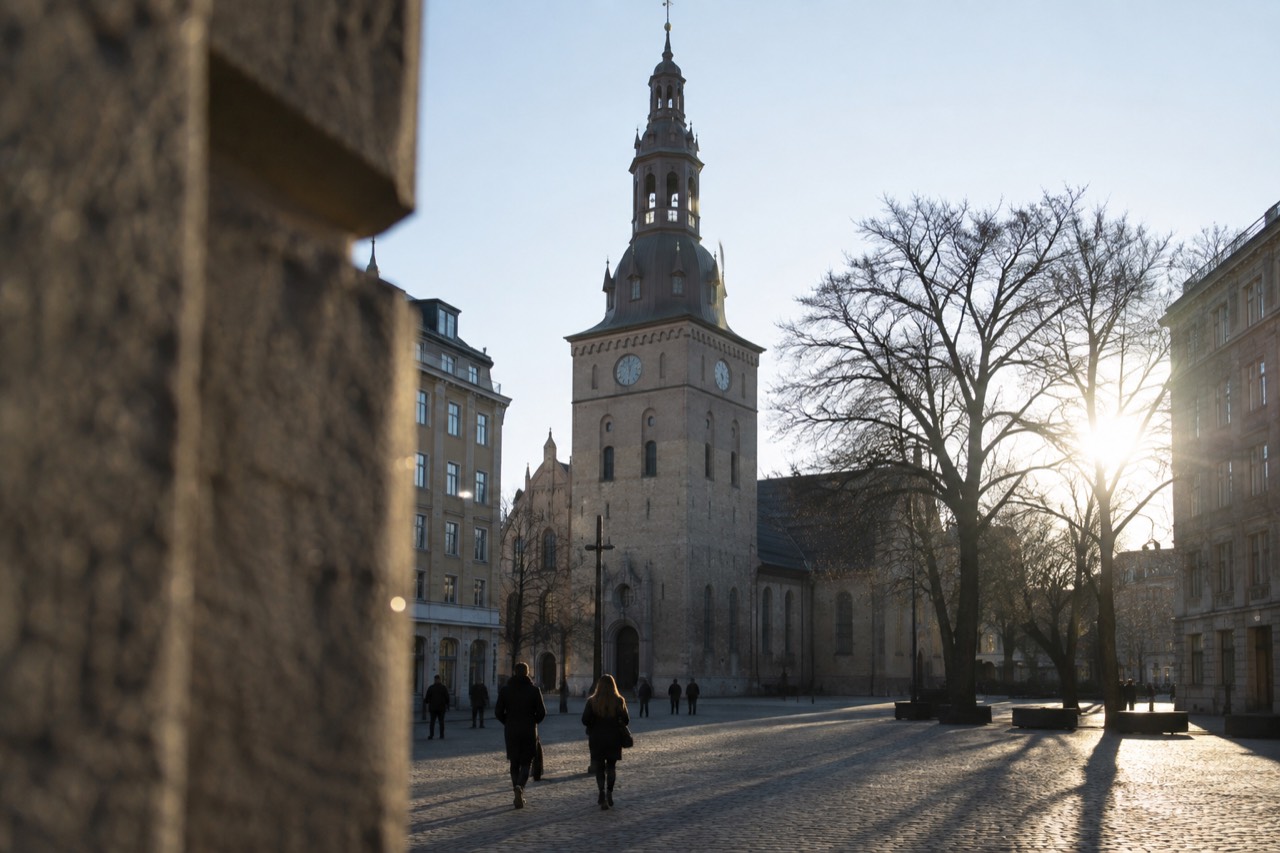
Oslo Cathedral is the city's main church, sitting at the east end of Karl Johans gate by Stortorvet, minutes from the Central Station and the tram stops on Dronning Eufemias gate and Storgata. It is a working Lutheran church rather than a ticketed museum, so a visit is short, quiet and easy to fold into a walk along the main street.
Oslo's main street runs uphill from the Central Station, and the first landmark it delivers you to is the cathedral. Oslo Cathedral, or Oslo domkirke, anchors the Stortorvet square at the eastern end of Karl Johans gate, a brick church with a tower that has watched over this corner of the city center for centuries. It is the church the city uses: state occasions, royal services and the big national celebrations of 17 May all pass through here, which is why the square outside fills with crowds every Constitution Day.
It is not a museum, and that shapes what kind of visit you get. There is no ticket desk, no roped-off route and no audio guide kiosk. What there is instead is a quiet, working interior a few steps from the busiest pedestrian street in Norway, plus a square that doubles as one of the city's natural meeting points. This guide from Oslo Travel Guide covers the practical side: getting there, what you are looking at, what it costs, and how to build a half-day around it.
What Is Oslo Cathedral and Why Is It Worth Visiting?
Oslo Cathedral is the main church of Oslo and the seat of the city's Lutheran bishop, a working place of worship rather than a paid attraction, best known for its position at the east end of Karl Johans gate and its role in Norway's national ceremonies. A visit takes most travelers twenty to forty minutes, and its real value is as the anchor point for the whole eastern half of the city center.
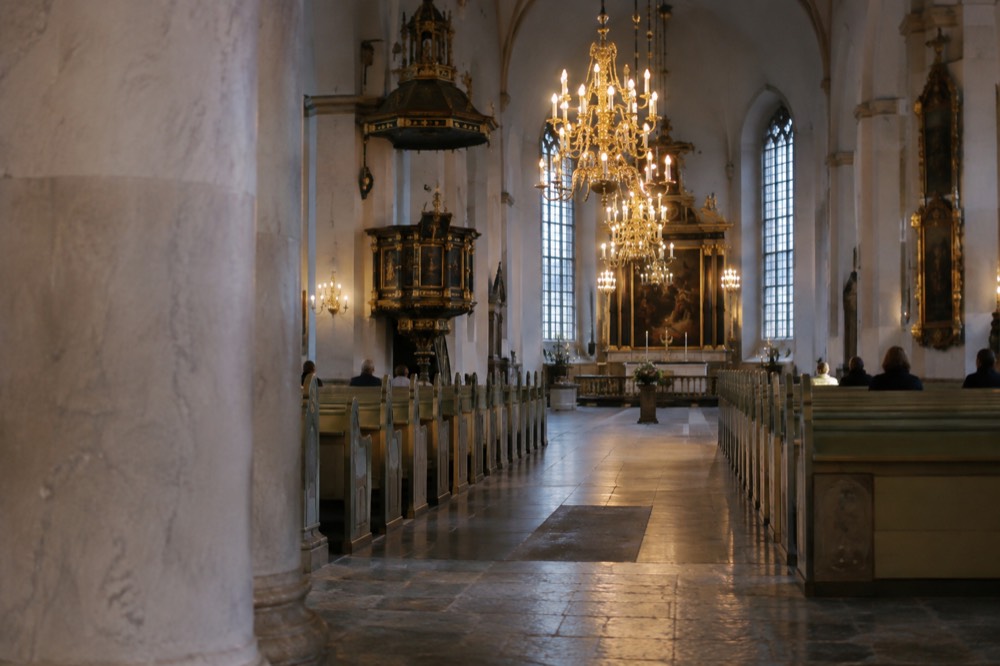
The cathedral's appeal is partly location, partly contrast. Step inside from Stortorvet on a busy Saturday and the street noise drops away almost completely. The interior is restrained, in the way Norwegian churches tend to be: pale walls, a tall pulpit, stained glass, and a ceiling that rewards a slow look up. It is a church built for a congregation first and sightseers second, and that honesty is part of why it feels different from the grander, more ticket-driven churches of southern Europe.
The building has also been altered, restored and reworked repeatedly across its life, so what you see is a layering of periods rather than a single frozen moment. Guides love to list dates and architects here, and several of those claims circulate in conflicting versions online. This guide sticks to what matters for a visit: the church is open to the public outside service times, it sits directly on the main street, and it is one of the few major Oslo sights that asks nothing of your wallet.
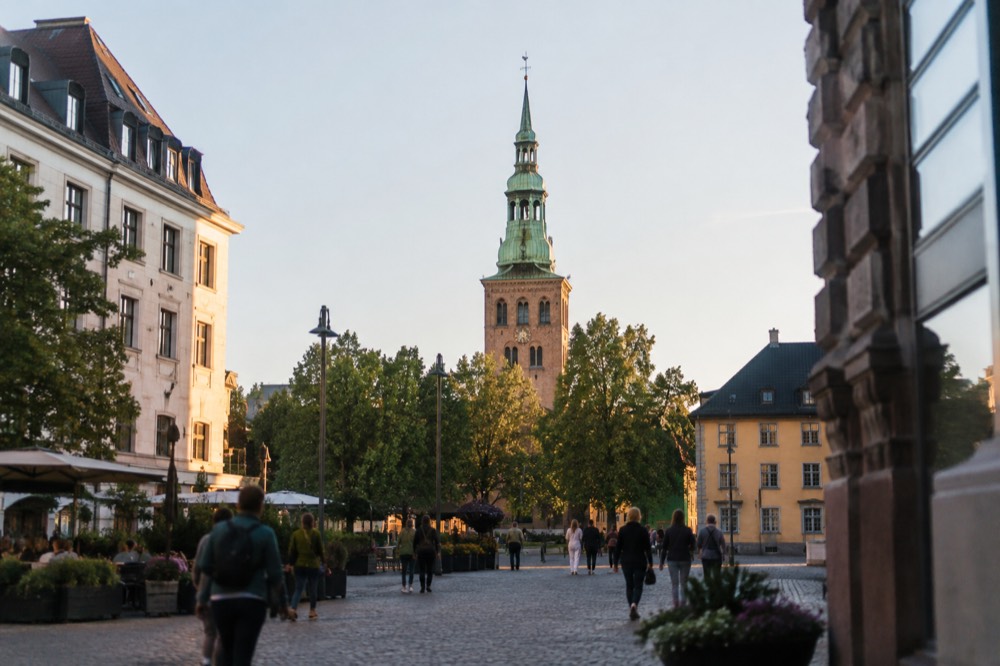
The square outside deserves its own five minutes. Stortorvet has been the city's marketplace for centuries, and it still behaves like one, with stalls, flower sellers and a constant flow of people cutting between Karl Johans gate and Grønland. The statue in the middle, of King Christian IV pointing, marks the spot tradition gives for the founding of Christiania, the city that later took back the name Oslo. Photographers tend to shoot the cathedral tower from the southwest corner of the square, where the tram wires and rooftops drop out of frame.
Where Is Oslo Cathedral and How Do You Get There?
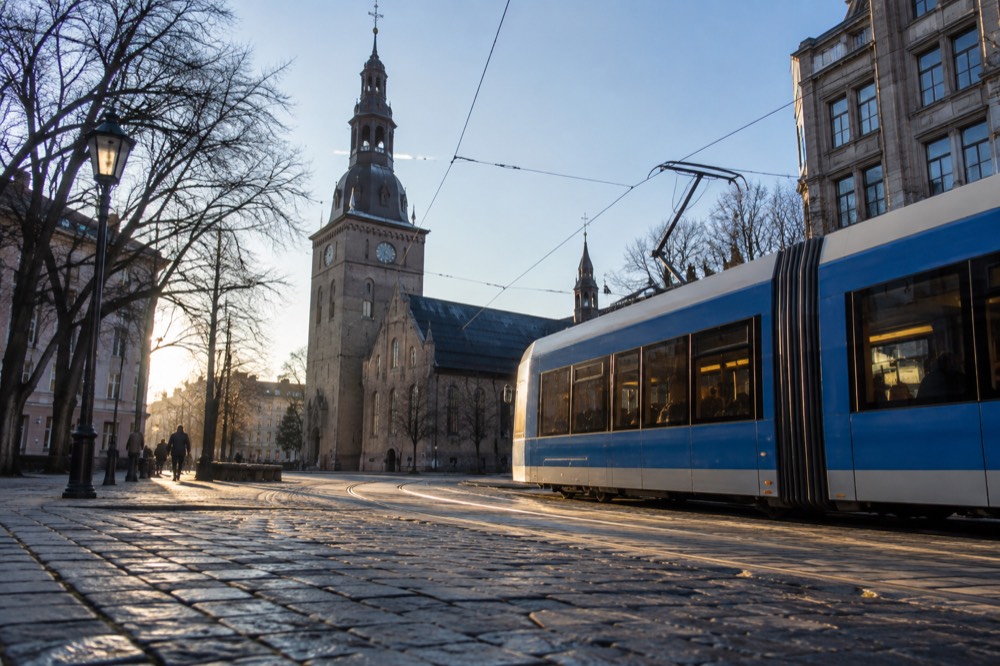
Oslo Cathedral stands on the north side of Stortorvet, one block west of Oslo Central Station and at the eastern end of Karl Johans gate. The walk from the Central Station takes about five minutes, trams stop at Stortorvet literally beside the church, and the entire eastern city center, from Grønland to the Barcode district, is within a fifteen minute walk.
This is one of the easiest sights to reach in the entire city. If you arrive by train or by the airport trains to Oslo S, you exit the station, walk up Karl Johans gate past the Parliament building, and the tower is in front of you before you have finished your coffee. Coming from the Opera House or the MUNCH museum in Bjørvika, it is a straight ten to twelve minute walk up Dronning Eufemias gate and through the square.
| Way in | Where it drops you | Notes |
|---|---|---|
| On foot from Oslo S | Karl Johans gate, 5 minutes | Simplest option; the street is pedestrian-priority |
| Tram to Stortorvet | Beside the cathedral | Several tram lines serve the stop |
| Bus along Storgata | Storgata, 2 minutes | Serves the eastern side of the square |
| Metro to Jernbanetorget | Below Oslo S, 6 minutes | All metro lines converge here |
| From the Opera House | Dronning Eufemias gate, 12 minutes | Flat, signposted walk |
A note on tickets if you are using public transport: Oslo's trams, buses, metro and ferries all run on the Ruter system, where one ticket covers all of them in the zones you have paid for, and central Oslo including the entire metro network sits inside zone 1. Buy in the Ruter app rather than on board, because on-board purchases cost more. The rules around the airport trains trip up a lot of visitors, so if you are heading in from Gardermoen, read the detail in our guide to getting from Oslo Airport to the city center before you buy anything.
Because the cathedral sits at the hinge of the main street, it works best as the start or end of a walk rather than a destination in its own right. A natural route runs cathedral, Parliament, National Theatre, Royal Palace and back, which is the spine of the classic one day in Oslo itinerary. If you prefer someone else to hold the map, the guided options below cover exactly this territory.
What Can You See Inside Oslo Cathedral?
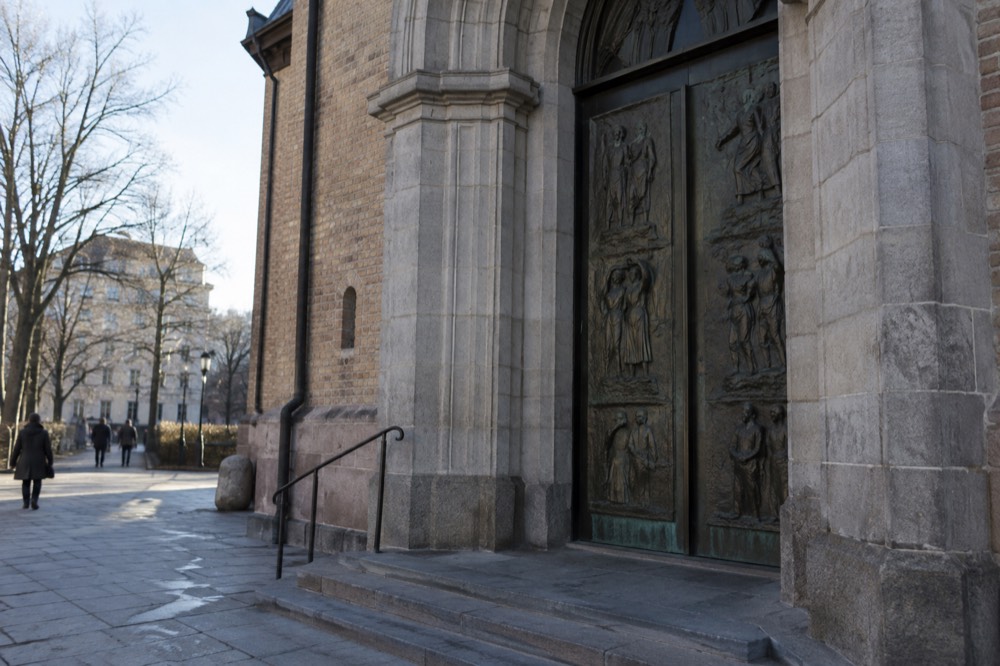
Inside, the highlights are the tall nave with its painted ceiling decoration, the large pulpit on the left side, the stained glass windows, and the bronze-clad main doors at the western entrance, all viewable in a slow circuit of twenty minutes. The church is deliberately uncluttered, so the eye is drawn upward and to the light rather than to objects in cases.
Norwegian church interiors run quiet and pale, and the cathedral is the definitive example. The ceiling decoration and the gilded details give the nave its warmth; the windows do the rest. Visitors tend to spend longest on the pulpit, which dominates the nave's left wall, and on the western doors facing the main street, which carry relief work in bronze. Photography is generally tolerated outside service times, but flash and tripods are not, and common sense applies: this is a working parish church, not a set.
Service times change through the year, and the church closes to sightseeing during them, along with major national events. The pattern worth knowing is Sunday morning, when the building belongs to the congregation. Midweek midday is the quiet window: few tourists, organ practice sometimes drifting through, and the square outside at its calmest. Check the church's own website for current opening hours before you build an itinerary around them, because hours shift with the church calendar in a way museum hours do not.
A practical pairing rule: give the cathedral the calm slot, then spend your energy elsewhere. The two most reliable energy-spenders near this end of town are the National Museum, which holds The Scream, a fifteen minute walk west, and the Bygdøy museum peninsula, a short ferry or bus ride away. Our Oslo museums guide lays out the full field if you are deciding how many to fit in.
How Much Does It Cost to Visit Oslo Cathedral?
Oslo Cathedral does not sell admission tickets; it is a working church, and entry for sightseeing is handled the way Norwegian churches handle it, informally and without a paywall, though donations are welcome and services are of course open to all. The cost of a cathedral visit is therefore really the cost of everything around it: transport, coffee and the museums you pair it with.
This matters more in Oslo than in most capitals, because Norway is the sixth most expensive country in Europe on Statistics Norway's 2025 price-level survey, with prices facing households 28.6 percent above the EU average. The honest framing is not that Oslo is expensive everywhere. It is expensive where alcohol, restaurants and taxis are concerned, and genuinely reasonable where museums, public transport and the outdoors are concerned. A day built around the cathedral, the main street and the free sights costs very little by Norwegian standards.
| Item | Typical cost | Notes |
|---|---|---|
| Cathedral entry | No ticket | Working church; donations welcome |
| Ruter day travel | Zone 1 ticket | Cheapest in the app; covers trams, buses, metro, ferries |
| Coffee near Stortorvet | Varies by café | The expensive category; SSB puts eating out well above EU average |
| Bygdøy museums | 180-280 NOK each | Kon-Tiki and Fram both 180 NOK adult |
| Oslo Pass 24h | 580 NOK | Covers 30+ museums plus Ruter transport |
If you are watching the budget, the pattern that works is simple: walk the cathedral and the main street, eat like a local rather than a tourist, and put your money into one or two museums rather than five. Our Oslo on a budget and free things to do in Oslo guides carry the full playbook, and both start within sight of the cathedral tower.
For travelers who want a guide without the private-guide price, the cheapest credible guided walk in the city covers the center for less than the cost of a museum ticket, and it starts close to this end of town.
What Is Near Oslo Cathedral?
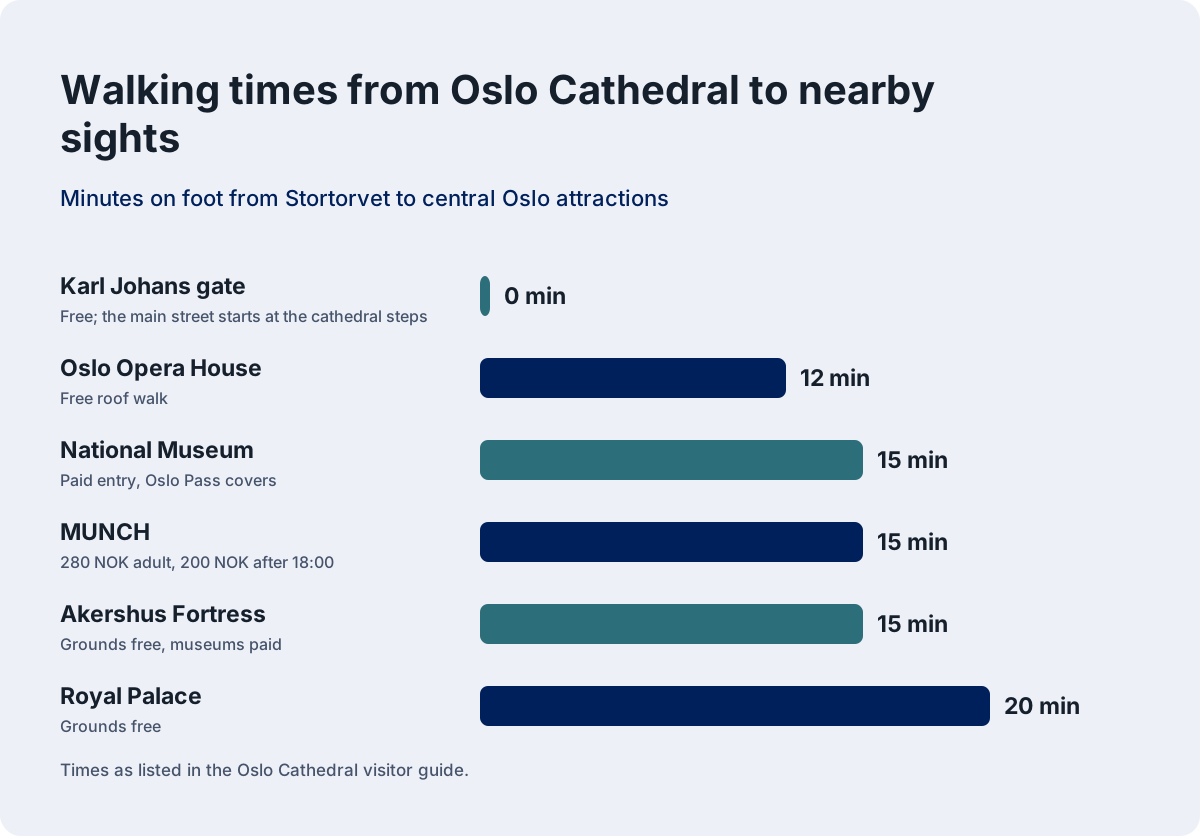
Within a ten minute walk of the cathedral you have Karl Johans gate in full, the Parliament, the National Theatre, the Royal Palace at the far end, the Opera House to the southeast, and the Grønland and Vulkan neighborhoods to the east, plus the ferry piers for Bygdøy and the islands about fifteen minutes south. Few Oslo sights stand alone, and this one stands at the densest crossroads in the city.
The main street itself is the obvious first move. Our Karl Johans gate guide walks it building by building, from the cathedral steps to the Palace gardens. Halfway along, the National Theatre and the University's historic facade bracket the street; at the top, the Palace and its grounds. It is about 1.3 km end to end, flat, and it hands you most of central Oslo's architecture in one straight line.

South and east of the square, the city changes character fast. Grønland, ten minutes east, is where the inexpensive eateries cluster, and our Oslo cheap eats guide concentrates there. Vulkan and Grünerløkka, fifteen to twenty minutes northeast along the river, hold the bars, the Mathallen food hall and the young-city energy. Southeast, past the Central Station, the Opera House roof is free to walk up, and the Oslo Opera House deserves the hour most visitors give it.
| Nearby sight | Direction | Walking time | Cost |
|---|---|---|---|
| Karl Johans gate | West | 0 min | Free |
| Oslo Opera House | Southeast | 12 min | Free roof walk |
| Royal Palace | West | 20 min | Grounds free |
| National Museum | West | 15 min | Paid entry, Oslo Pass covers |
| MUNCH | Southeast | 15 min | 280 NOK adult, 200 NOK after 18:00 |
| Akershus Fortress | South | 15 min | Grounds free, museums paid |
| Bygdøy museums | Southwest | Ferry or bus 30 | 180-200 NOK each |
The Bygdøy run deserves its own morning rather than a rushed afternoon tag-on. The museum peninsula holds the Kon-Tiki Museum, the Fram Museum and the Norwegian Museum of Cultural History, plus the closed Museum of the Viking Age, which will reopen as the Museum of the Viking Age in 2027 and cannot be visited before then. Between the two open museums, Kon-Tiki is the better-reviewed ticket and the easier half-day, and it is the natural pairing with a cathedral-and-center morning.
Getting to Bygdøy has a trap in it that catches a surprising number of visitors: the museum ferry from Rådhusbrygge 3 and the public island ferries from Aker brygge are different systems with different ticket rules. Ruter tickets are not valid on the Bygdøy ferry, though the Oslo Pass is, and the Bygdøy ferry only runs seasonally, roughly mid-March to early October. Outside that window, bus 30 serves the peninsula year-round on an ordinary Ruter ticket. Our Bygdøy guide and the Oslo ferries guide untangle the rest.
When Is the Best Time to Visit Oslo Cathedral?
The best time to visit Oslo Cathedral is midweek outside Norwegian school holidays, in the May to September window, when the square is lively, the walking routes are dry and the church is most likely to be open through the afternoon; visit mid-morning or midday to avoid Sunday services, and in winter trade atmosphere for very short daylight.
Oslo's daylight swing is extreme, and it should shape your whole itinerary, not just this stop. On 21 June the sun rises at 03:53 and sets at 22:43, giving 18 hours 50 minutes of light and no true darkness in between, only deep twilight. On 21 December the sun rises at 09:18 and sets at 15:11, under six hours of daylight. A cathedral visit at 15:30 in December happens in the dark, under streetlight, which is atmospheric in its own way but is not what most visitors picture.
| Season | Daylight feel | Cathedral visit |
|---|---|---|
| March-May | Rapidly lengthening, 11h45m to 17h08m by mid-May | Reliable afternoons, thin crowds before summer |
| June-August | 18h50m at peak, twilight all night | Busiest square; go early or late in the day |
| September-October | Falling fast, 12h54m to 10h13m | Quiet, golden light on the brick tower |
| November-February | Under 7 hours by midwinter | Dark by 15:11; pair with evening plans |
August deserves a specific warning because it inverts the expectation: it is Oslo's wettest month on the 1991-2020 normals, at 103 mm, wetter than November. Summer visitors who assume August is the safe month get caught out. If rain does hit, the cathedral is a genuinely useful shelter stop on a museum day, and our rainy day in Oslo guide builds a full plan around exactly that scenario.
Winter has its own argument. The dark months suit the church, and they suit the evening city. From October to March, an evening walk through the center has a different character, and there is a themed evening walk built on exactly that: the myths and legends of the old town, which starts from this end of the city and runs about two hours.
How Do You Fit the Cathedral Into an Oslo Itinerary?
Most visitors give Oslo Cathedral thirty to forty minutes inside a morning or afternoon that also covers Karl Johans gate and either the Royal Palace end of the street or the Opera House and waterfront end; with a full day, add the Bygdøy museums or a fjord cruise, and with two or more days the cathedral becomes a fixed first-morning stop on day one.
The reason it lands on day one is orientation. Standing at Stortorvet, you can see the whole logic of central Oslo: the main street running west, the station and waterfront behind you, the river neighborhoods to the east. Travelers who start here rarely need a map again. That is also why the free and low-cost walking tours of the city cluster their starting points within a few blocks of this square; it is the natural place to begin.
For the fuller build-out, our itineraries handle the sequencing: 2 days in Oslo, 3 days in Oslo and the weekend in Oslo plans all slot the cathedral into the first morning. If your time is a single day, the cruise-port version of the plan, in our Oslo cruise port day guide, compresses it further: cathedral and main street first, one museum, then the boat.
The fjord deserves at least one evening or afternoon of any stay, and the harbor is a fifteen minute walk from Stortorvet. The choice below is the default: the silent electric boat, the single best-reviewed activity in the city, which pairs naturally with a day that began at the church.
Common Questions About Oslo Cathedral
Is Oslo Cathedral free to enter?
Oslo Cathedral does not sell admission tickets; it is a working Lutheran church, and like Norwegian churches generally it admits visitors outside service times without a paywall, with donations welcome. Check the church's own website for current opening hours, which shift with the church calendar.
How do I get to Oslo Cathedral?
The cathedral sits on Stortorvet at the east end of Karl Johans gate, about five minutes' walk from Oslo Central Station. Trams stop at Stortorvet beside the church, the metro runs to Jernbanetorget under the station, and buses serve Storgata two minutes away.
What is near Oslo Cathedral?
Karl Johans gate, the Parliament, the National Theatre, the Royal Palace, the Opera House, Grønland and the Vulkan and Grünerløkka neighborhoods are all within a twenty minute walk. The Bygdøy museum peninsula and the Oslofjord island ferries are a short ride south.
How long does a visit take?
Most travelers spend twenty to forty minutes inside, plus time in Stortorvet square. It works best as the anchor of a half-day that also covers the main street, rather than as a standalone destination.
When is the best time to visit?
Midweek, mid-morning or midday, outside Sunday services and outside the July-August peak. May to September gives the most reliable weather and daylight; winter visits after about 15:00 happen in the dark, since the sun sets at 15:11 on 21 December.
Can I visit the cathedral on a rainy day?
Yes, and it is a useful one: the interior is calm and covered, and the church sits minutes from the National Museum, the Opera House and the Central Station, which makes it an easy stop on a museum-heavy rainy-day plan.