Flytoget vs Vy: Which Oslo Airport Train Should You Take?
The Flytoget airport express and Vy's regional trains run on the same tracks from Gardermoen to Oslo S, but they cost wildly different amounts. Here is the honest breakdown of which one deserves your money.

Short answer
Flytoget costs 268 NOK adult one-way and reaches Oslo S in about 20 minutes, departing every 10 minutes. Vy's R10, R11 and R12 trains take about 23 minutes, and a Ruter ticket covering zone 1 through zone 4N rides them for roughly half the price. The Oslo Pass covers Vy to the airport but not Flytoget.
Flytoget vs Vy: Which Oslo Airport Train Should You Take?
Two trains leave Oslo Airport Gardermoen for the city center, they use the same tracks, they arrive within three minutes of each other, and one of them costs roughly double the other. That is the whole Flytoget vs Vy question in a single sentence, and it is the question every visitor asks within an hour of landing in Norway. The answer is not the same for everyone, because the cheap option carries a small amount of friction and the expensive one buys convenience, and the right choice depends on how many people you are, what you are carrying, and whether you already hold an Oslo Pass.
The price spread matters more in Oslo than in most cities. Norway is the sixth most expensive country in Europe on Statistics Norway's 2025 price-level survey, with household prices 28.6% above the EU average, so an avoidable 134 NOK per person is a real saving rather than rounding error. A family of four taking the wrong train burns more than 500 NOK on nothing, which is a museum entry or a very decent lunch. This guide lays out both trains, the ticket rules nobody explains properly, and the one detail most guides get flat wrong: which train the Oslo Pass actually covers.
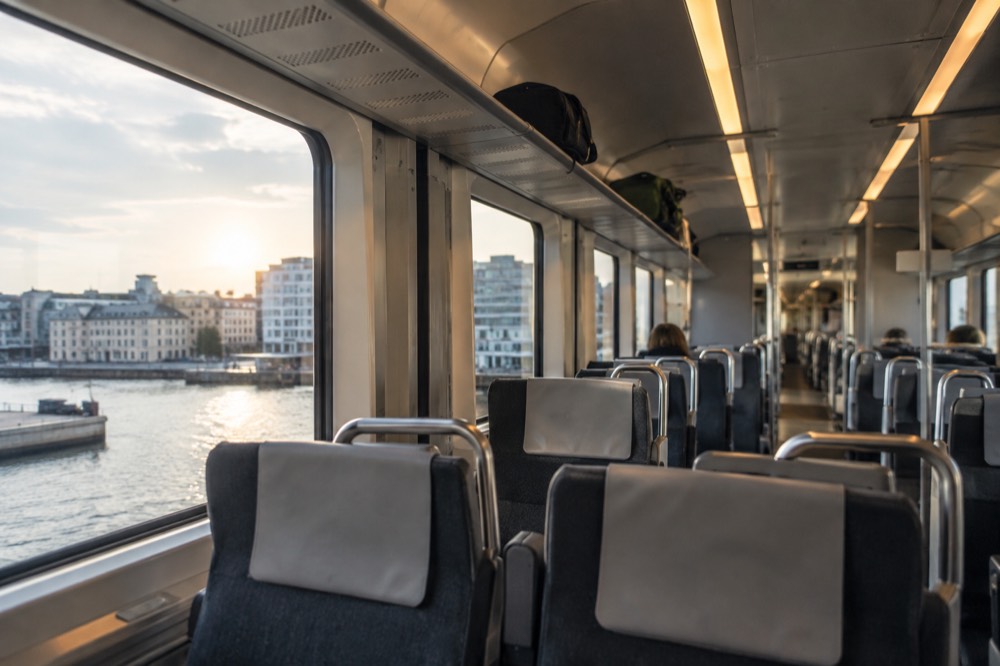
What Is the Difference Between Flytoget and Vy?
Flytoget is a dedicated airport express service running nonstop to Oslo S and Nationaltheatret every 10 minutes, taking about 20 minutes and costing 268 NOK for an adult single. Vy is Norway's national railway operator, whose R10, R11 and R12 regional and local trains call at Gardermoen on their way through Oslo, take about 23 minutes, and ride on an ordinary Ruter zone ticket that costs roughly half as much. The trains share tracks and stations; the difference is entirely in ticketing, frequency and comfort.
The mechanics are simple once someone spells them out. Gardermoen sits about 50 km north of the city, and the airport station sits directly under the terminal, so both options involve zero transfers and a short walk from baggage claim. Flytoget's trains are purpose-built airport shuttles: sleek, quiet, generous luggage racks, airline-style seating, and a timetable built entirely around flight arrivals. Vy's trains are ordinary commuter and regional stock, because their real job is connecting towns across eastern Norway, and the airport just happens to be a stop on the way. If you board an R11 from Gardermoen, you are riding a train whose final destination is somewhere like Drammen or Kongsberg, and Oslo S is simply where you get off.
That distinction explains everything about the price. Flytoget charges a premium fare because it can: it is faster by about three minutes, more frequent, and it markets itself as the airport train. Vy's fare structure is the ordinary public-transport one, and here is the part that saves you money: the airport is inside Ruter zone 4N, central Oslo is zone 1, and Vy's airport trains accept ordinary Ruter tickets. You are not buying a special airport product at all. You are buying a multi-zone public transport ticket, the same kind a commuter from Lillestrøm would hold.
Avinor, the airport operator, publishes the public transport options on its own site, and both trains appear there side by side. For a fuller picture of every way into the city, including buses and taxis, see our guide to getting from Oslo Airport to the city centre.
Price Comparison: Flytoget vs Vy at the Counter
An adult single on Flytoget is 268 NOK, while a Vy point-to-point ticket between the airport and Oslo costs about 134 NOK, and a Ruter multi-zone ticket covering the same journey on Vy's trains costs less still. In practice the gap is roughly a factor of two per person, each way. For a couple returning to the airport at the end of a trip, that is more than 500 NOK saved by taking Vy.
The concession structure matters as much as the headline. Flytoget charges 134 NOK for seniors, students, youths, military and children, exactly half the adult fare, and children under 16 travel free with an adult. So a family with two adults and two children under 16 pays for two adults only on Flytoget, which narrows the gap considerably. On the Vy side, the Ruter ticketing system has its own child and youth discounts, and under-6s ride free, so the arithmetic for families needs to be done per household, not assumed.
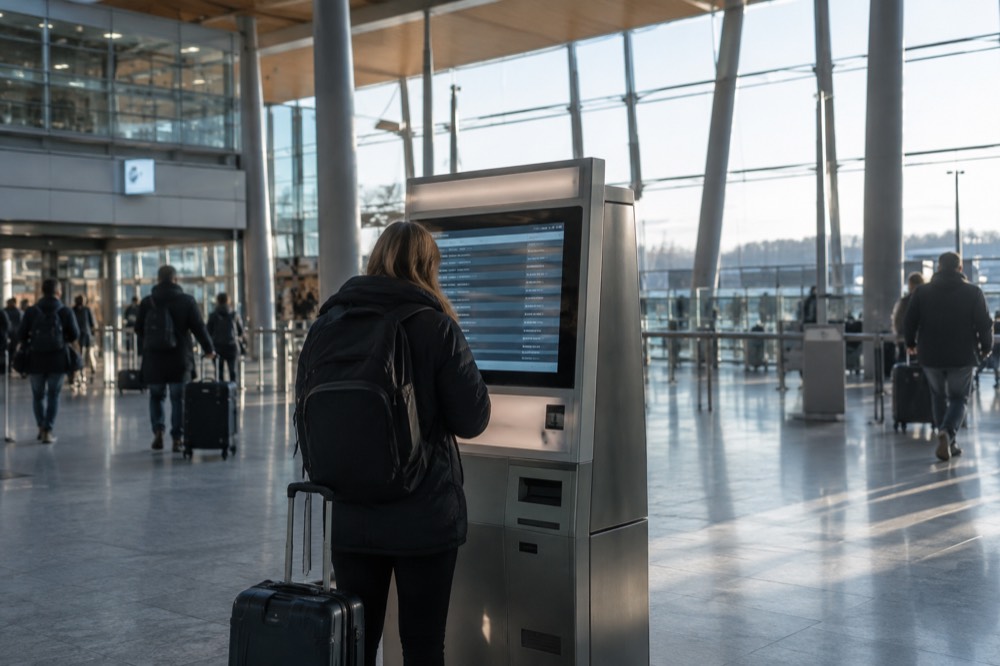
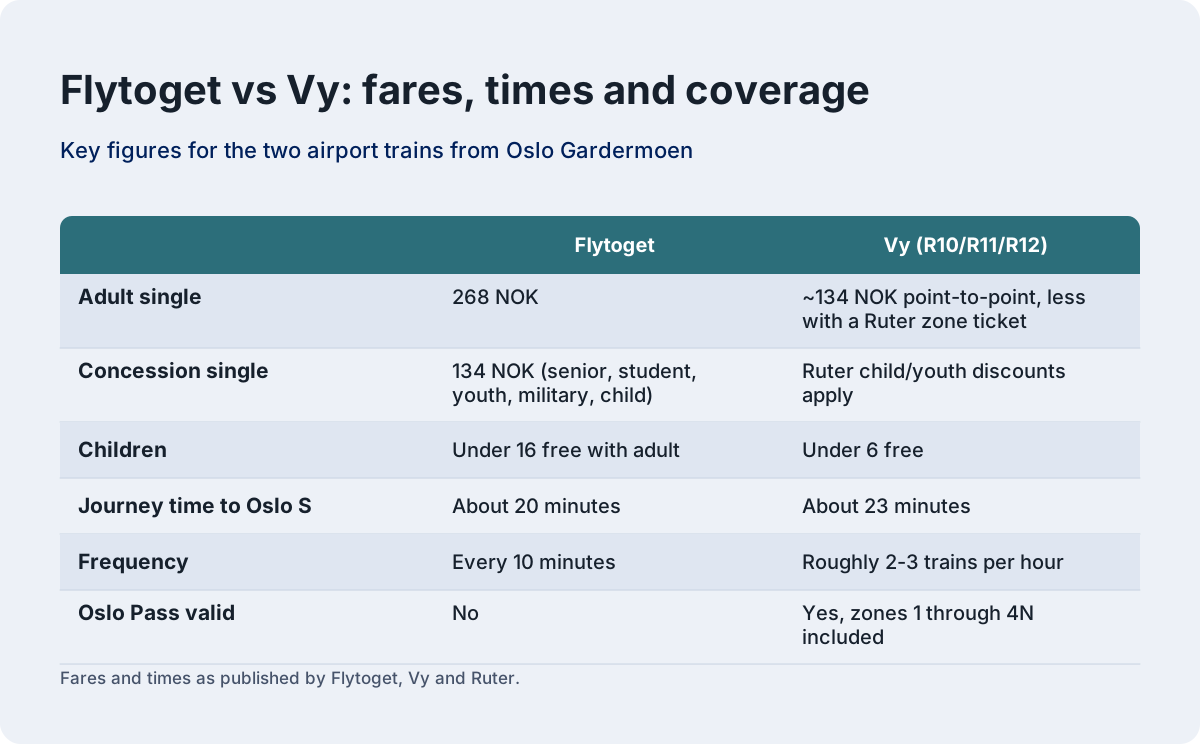
Here is the full comparison in one place:
| Flytoget | Vy (R10/R11/R12) | |
|---|---|---|
| Adult single | 268 NOK | ~134 NOK point-to-point, less with a Ruter zone ticket |
| Concession single | 134 NOK (senior, student, youth, military, child) | Ruter child/youth discounts apply |
| Children | Under 16 free with adult | Under 6 free |
| Journey time to Oslo S | About 20 minutes | About 23 minutes |
| Frequency | Every 10 minutes | Roughly 2-3 trains per hour |
| Ticket validity | 90 days from purchase | Ruter single valid 60 minutes plus 30 per extra zone |
| Oslo Pass valid | No | Yes, zones 1 through 4N included |
| Luggage space | Purpose-built racks | Commuter-level racks |
One warning about the cheap route: buying Vy's own point-to-point fare at the machine is the expensive way to take the cheap train. The genuinely cheap version is a Ruter ticket covering zone 1 through 4N bought in the Ruter app, which is what the Oslo Pass includes and what regular commuters use. Ruter's own guidance is to let the journey planner count the zones rather than guessing, because the zone map has quirks and the airport's zone, 4N, is not obvious from geography alone. Our Ruter tickets explained guide covers the app, the zones and the validity rules in detail.
If you land late, travel with a lot of luggage, or simply want the door-to-door version of this journey, there is a third way that skips trains altogether.
A private transfer costs more than any train, but it collects you at arrivals and drops you at an address rather than at a station, which after a long-haul flight with small children or ski baggage is worth paying for. The other two options in that band are not airport products at all: they are the two best-reviewed ways to see the Oslofjord once you have actually arrived, which is a reminder that the train ride is only the first 40 minutes of the trip.
Which Train Is Faster, Really?
Flytoget reaches Oslo S in about 20 minutes against Vy's 23, a difference of roughly three minutes that Avinor and Vy both publish. But Flytoget departs every 10 minutes while Vy's airport trains run two or three times an hour, so the real time cost of choosing Vy is the wait on the platform, not the ride. On a bad connection, Vy can cost you half an hour; on a good one, the difference is under five minutes end to end.
Vy's own framing on its airport page is refreshingly honest: its trains take about three to four minutes longer than the airport express but usually cost about half the price. That three-minute penalty is real but almost meaningless against the saving, unless you are racing for a cruise departure or a tight connection. What actually decides your arrival time is which train happens to be next on the board when you clear baggage claim.

Both trains stop at Oslo S, the main central station, and Flytoget continues to Nationaltheatret, which serves the western end of the center and the hotel strip around Karl Johans gate. If your hotel is near the National Theatre or the Royal Palace, Flytoget's continuation saves a transfer or a walk. Vy's trains also continue past Oslo S toward Drammen, stopping at Nationaltheatret on some services, so check the destination screen rather than assuming. For orientation once you are off the train, our Oslo Central Station guide maps the exits, the transport hub and the walkable hotel zones.
For anyone whose schedule does not flex, or who lands at an awkward hour with heavy bags, the private door-to-door option removes the platform-wait variable entirely.
The transfer takes about an hour from kerb to door depending on traffic, and the listing carries a cancellation policy you can check before you commit. For most travelers, though, the train remains the better answer, and the rest of this guide is about picking the right one.
Does the Oslo Pass Cover the Airport Train?
The Oslo Pass covers Vy's trains to and from Oslo Airport Gardermoen, and it does not cover Flytoget or Flybussen. VisitOSLO's own wording is that public transport in zones 1, 2, 3, 4V and 4N is included, "including transport to and from Oslo Airport Gardermoen with public trains operated by VY." If you hold a pass, the airport journey is already paid for, on the Vy side only.
This is the single most valuable practical fact on this site, and the reason it is worth a section of its own is that most guides either omit it or state it wrong. The pass's transport coverage is genuinely broad: buses, trams, the metro and the public island ferries across those zones, plus the Bygdøy museum ferry in season. But the airport clause names Vy specifically, and Flytoget is a separate company with its own ticketing that accepts no Ruter product at all. A traveler who buys a 580 NOK 24-hour pass and then boards Flytoget at 268 NOK has paid twice for the same 50 kilometers.

The current pass prices are 580 NOK for 24 hours, 845 NOK for 48 hours and 995 NOK for 72 hours at adult rate, with senior and child rates below that. The pass also includes entry to more than 30 museums and attractions, which is where the real value sits: three Bygdøy museums alone at full price total 560 NOK against a 24-hour pass that also carries you there and back. Whether that maths works for your itinerary is a bigger question, and our is the Oslo Pass worth it breakdown runs the numbers properly.
If you arrive without a pass and leave with one, the strategy writes itself: take whichever train is next on arrival, then use the pass's Vy coverage for the departure. There is no rule against mixing the two.
How Do You Buy a Vy Ticket to the Airport?
You buy a Ruter ticket covering zone 1 through zone 4N in the Ruter app, at a Ruter ticket machine, or at a service point, and that ticket is valid on Vy's airport trains with no supplement. A single ticket for one zone is valid for 60 minutes from activation, and validity increases by 30 minutes for each additional zone, so a multi-zone airport ticket lasts long enough for a comfortable connection.
The app is the cheapest channel, and Ruter states plainly that buying on board the bus or boat costs more, so the move is to sort the ticket before you reach the platform. If you prefer not to install an app for a short trip, the machines at Gardermoen station sell Ruter tickets alongside Vy's own point-to-point fares, and this is where you need to be awake: the Vy-branded ticket to "Oslo" is the more expensive version of the same ride. Look for the Ruter ticketing interface, set the journey to the airport, and let the planner price the zones. The rest of the planning pages sit on Oslo Travel Guide. The rest of the planning pages sit on Oslo Travel Guide.
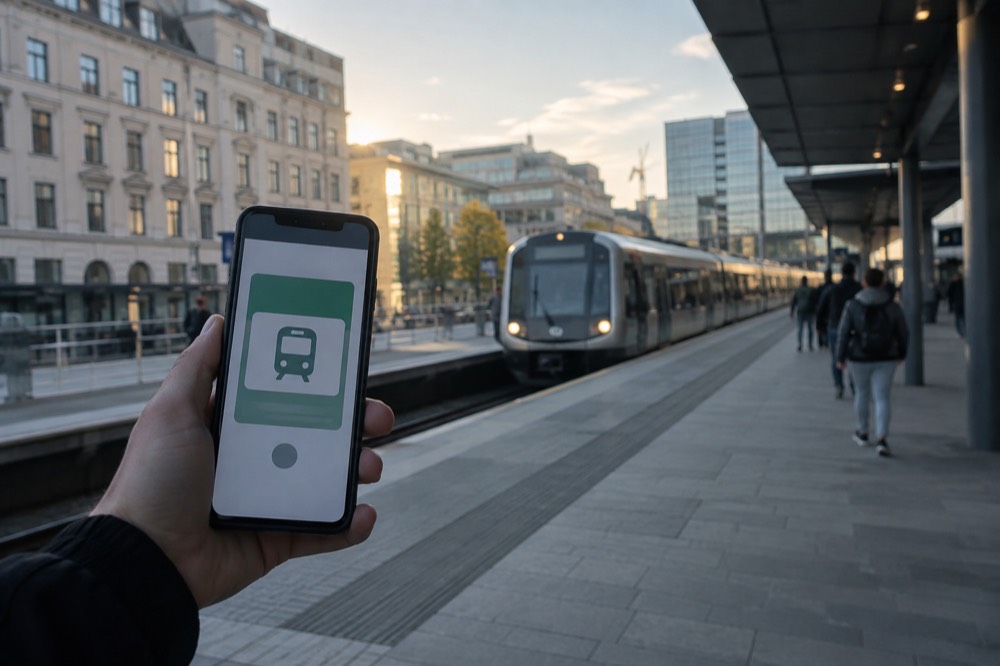
Flytoget, by contrast, could not be simpler: tickets from its own machines, its app or its website, valid 90 days from purchase, no zones, no planning. That simplicity is genuinely part of what the 134 NOK difference buys, and it is fair to say so. Nobody should feel foolish for paying it at the end of a 14-hour flight.
For the departure journey, note the asymmetry: the Ruter airport ticket bought in the city covers you from any zone 1 station, so you can board Vy at Nationaltheatret rather than hauling bags to Oslo S. Our getting around Oslo guide covers how the zones, trams and metro fit together once the airport leg is behind you.
| Buying channel | Works for Flytoget | Works for Vy airport trains | Notes |
|---|---|---|---|
| Flytoget app and machines | Yes | No | Valid 90 days from purchase |
| Ruter app | No | Yes | Cheapest channel for the Vy route |
| Ruter machines at stations | No | Yes | Same fares as the app |
| On board purchase | No | Buses and boats only, higher price | Not available on trains |
| Oslo Pass | No | Yes, zones 1 through 4N | Includes the Bygdøy ferry too |
Luggage, Frequency and Comfort Compared
Flytoget offers purpose-built luggage racks, wide doors and airline-style seating with departures every 10 minutes, while Vy's trains carry commuter-level racks and run two or three times an hour to the airport. With one suitcase each, both are comfortable; with a family, a bike box or ski baggage, Flytoget's design and frequency give it a real edge, and that edge is what the fare premium actually purchases.
The luggage point deserves honesty rather than cheerleading. Vy's regional trains have racks, and for a normal roller bag nobody struggles, but at peak commuter hours the airport passenger competes for floor space with daily commuters, and a family of four with four large bags will feel the difference. Flytoget's trains were drawn for this exact passenger: wide aisles, dedicated racks near every door, and a passenger mix that is almost entirely travelers, so nobody glares at a suitcase.
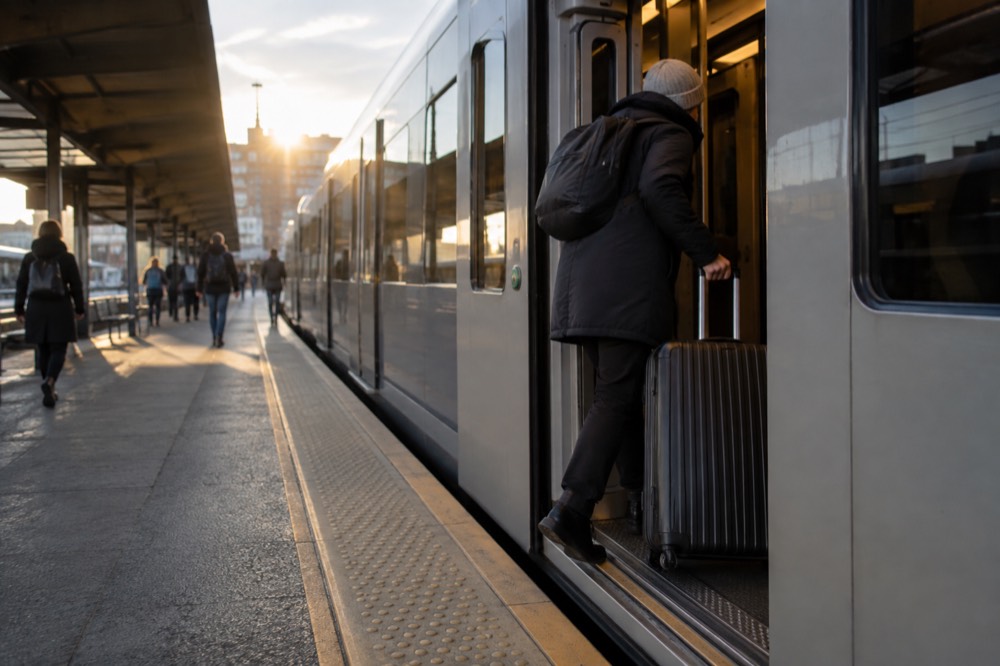
Frequency is the quieter advantage. Ten-minute headways mean you never plan around Flytoget, you just walk down and board. Vy's airport calls cluster around commuter patterns, so there can be a 20 or 30 minute gap at midday or late evening. Check the departure board in the arrivals hall before committing: if a Vy train leaves within ten minutes and Flytoget within two, the three-minute journey difference is noise and the price difference is not.
Both services are step-free from the terminal to the train, and both reach the same platforms under the airport, so accessibility is equal on that leg. Where they diverge is at the city end for onward connections, which our Oslo metro guide picks up if your final address is beyond walking distance of Oslo S.
Which Should You Choose? A Decision Table
Take Flytoget if you are one traveler with light luggage, in a hurry, or landing at an awkward hour, because 134 NOK is a fair price for a guaranteed seat and a ten-minute headway. Take Vy if you hold an Oslo Pass, are two or more adults, have time to spare, or simply prefer spending the difference on a museum. The trains are close enough that the decision is about money and friction, not about quality.
The honest summary is that both are good trains and neither is a trap. Flytoget is one of the better airport expresses in Europe for what it does, and Vy's route is one of the better airport bargains in Europe for what it costs. The mistake is not choosing either one; it is choosing Flytoget by default, out of unfamiliarity, when the Vy alternative would have suited you better.
| Your situation | Best choice | Why |
|---|---|---|
| One adult, carry-on only, in a hurry | Flytoget | Speed and frequency, small absolute saving |
| Two or more adults | Vy | The gap doubles per person |
| Family with children under 16 | Compare both | Flytoget's free under-16 rule narrows the gap |
| Holding an Oslo Pass | Vy | The pass includes Vy to the airport, not Flytoget |
| Heavy luggage or ski bags | Flytoget | Purpose-built racks, traveler-only passenger mix |
| Late-night arrival | Check the board | Whichever leaves next; Vy runs thinner off-peak |
| Staying near Nationaltheatret | Flytoget | Direct continuation past Oslo S |
| On a tight budget | Vy | Ruter multi-zone ticket is the cheapest rail option |

If you have already made your choice and are now thinking about what to do with the money you saved, the fjord is where it goes. The two most-booked boat trips in the city are the silent electric cruise and the traditional wooden sailing ship, and both leave from piers a short walk from the stations this guide has been describing.
The electric boat is the single best-reviewed activity in the city and the default first fjord trip; the wooden sailing ship is a completely different experience on the same water. Whichever train you took in from Gardermoen, both piers are closer than the airport is far.
What About the Airport Coach and Taxis?
The Flybussen coach runs from Gardermoen to central Oslo every 20 minutes, takes 45 to 65 minutes depending on traffic, and costs less than Flytoget but more than Vy, while taxis are the most expensive option by a wide margin and are priced per operator. Neither is covered by the Oslo Pass, and neither beats the train on speed in normal traffic.
The coach earns its place for one specific traveler: someone whose hotel or final address sits directly on the coach's route, for whom a stop outside the door beats a transfer at Oslo S. Its published online price sits below Flytoget's fare, with on-board purchase costing more, but check the current fare on the operator's own site before relying on it, because coach pricing moves with fuel and season. In road congestion, which Oslo has plenty of at rush hour, the coach's 45-minute best case can stretch well past an hour while both trains remain locked to their 20-odd minutes.
Taxis from Gardermoen are regulated per operator, prices vary substantially between companies, and no honest guide quotes a single figure for the ride. The practical advice is to agree the fare or check the operator's posted rates before loading bags, and to remember that a private pre-booked transfer, like the one this site lists, typically undercuts a rank taxi for the same door-to-door service while fixing the price in advance. For a fuller treatment of taxis and ride-hailing in the city, see Oslo taxis and rideshare explained.
| Option | Time to center | Rough cost | Oslo Pass | Best for |
|---|---|---|---|---|
| Flytoget | ~20 min | 268 NOK adult | No | Speed and simplicity |
| Vy train | ~23 min | ~134 NOK or a Ruter ticket | Yes | Price and pass holders |
| Flybussen coach | 45-65 min | Below Flytoget, above Vy | No | Hotels on its route |
| Taxi | Traffic-dependent | Highest, per operator | No | Fixed price is not guaranteed |
| Private transfer | ~1 hour | Check the listing | No | Groups, luggage, odd hours |
Common Questions About Flytoget vs Vy
Is Flytoget worth the extra money?
It depends entirely on the fare gap at your moment of travel and how much you value a ten-minute headway. Flytoget costs roughly double Vy's price for a journey only about three minutes faster. For a solo traveler with light luggage, the convenience can be worth it; for two or more adults, the savings on Vy are substantial and the trains are comfortable.
Does the Oslo Pass cover the Flytoget airport train?
No. The Oslo Pass includes public transport in zones 1, 2, 3, 4V and 4N, and VisitOSLO's wording specifically covers trains to and from Gardermoen operated by Vy. Flytoget is a separate company and accepts no Ruter or Oslo Pass ticketing.
How much cheaper is Vy than Flytoget?
An adult point-to-point Vy ticket costs about 134 NOK against Flytoget's 268 NOK, and a Ruter multi-zone ticket covering the same Vy trains can cost less still. The gap is roughly a factor of two per person each way, so it compounds quickly for groups.
Which Oslo airport train is faster?
Flytoget takes about 20 minutes to Oslo S against Vy's 23 minutes, a difference Avinor and Vy both publish. Flytoget also departs every 10 minutes while Vy's airport trains run two to three times an hour, so the platform wait often matters more than the ride.
Can I use a Ruter ticket on the airport trains?
Yes, on Vy's trains only. Gardermoen is in Ruter zone 4N and central Oslo in zone 1, so a Ruter ticket covering those zones is valid on Vy's R10, R11 and R12 services. Flytoget does not accept Ruter tickets under any circumstances.
Where do the airport trains stop in Oslo?
Both serve Oslo Central Station. Flytoget continues to Nationaltheatret, convenient for the western city center and the Karl Johans gate hotel strip. Some Vy services also call at Nationaltheatret onward toward Drammen, so check the destination screen before boarding.
Whatever you decide, do decide, because the default at Gardermoen is to follow the crowd onto the more expensive train. Planning the rest of the trip is where this site earns its keep: start with the complete things to do in Oslo list, or let oslotravelguide.com handle the details one question at a time.