Oslofjord Cruise Guide: Picking the Right Boat and the Right Day
The Oslofjord is not the cliff-walled fjord of the west coast, it is a broad, island-dotted waterway that starts in the middle of the capital, and the cruise you book should match what you actually want from a couple of hours on the water.
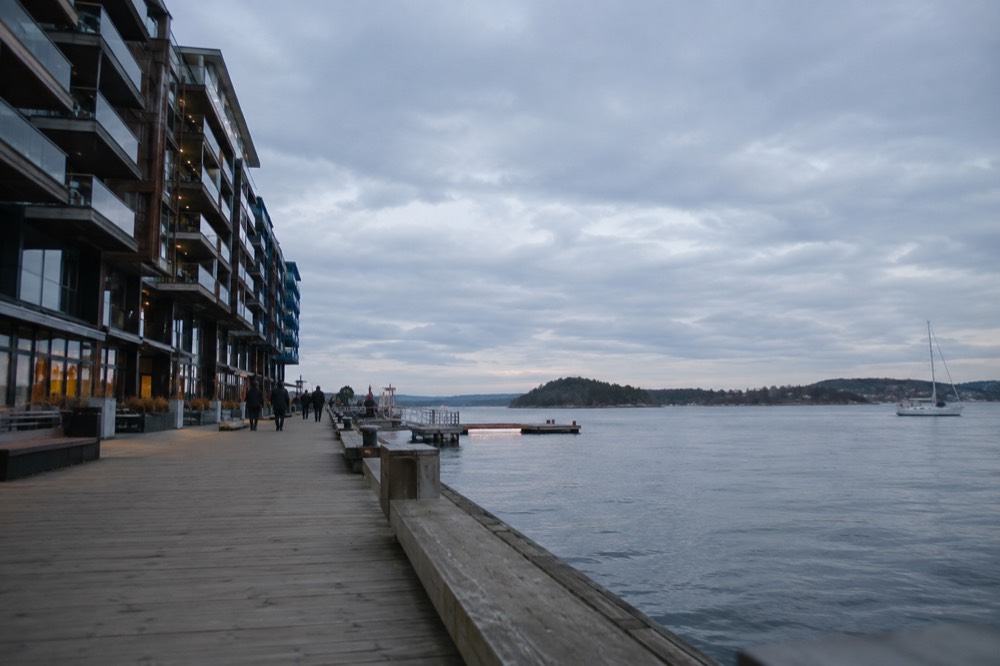
Short answer
An Oslofjord cruise runs 90 minutes to 6 hours, from roughly $42 to $91 depending on boat and format, and departs from piers next to City Hall. The fjord's character is islands, not cliffs: Hovedøya, Gressholmen and Langøyene pass close aboard, and the best value depends on season, budget and whether you want a guide, food or just silence.
The Oslofjord is the only European fjord you can board a boat for a hundred meters from a city hall. The water starts at Aker Brygge and Rådhusbrygge, threads between islands that belong to the city's own ferry network, and opens out toward the outer reaches over a couple of hours of sailing. People arrive expecting the sheer rock walls of the western fjords and are sometimes disappointed, which is a planning failure, not a fjord failure. Know what this body of water actually is, pick the boat that matches it, and the trip earns its place in your itinerary.
This guide covers the decision from every side: which cruise format fits which traveler, what the honest costs look like, when the fjord season peaks, what passes your rail, and how a paid cruise compares with simply riding the public island ferries. Every tour figure on this page comes from a verified live listing, and every transport and climate figure comes from an official Norwegian source, so nothing here is a guess dressed up as advice.
What Is the Oslofjord and Why Do Cruises Leave from Downtown?
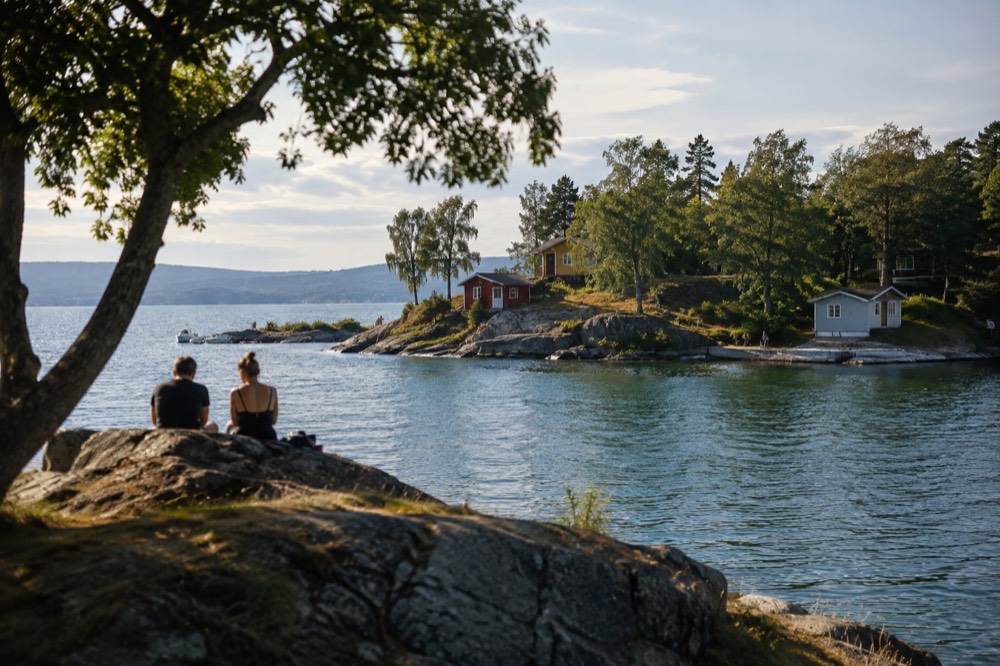
The Oslofjord is a long inlet of the Skagerrak that runs roughly 100 km north to the capital, and its northern end sits directly against the city center, which is why cruise boats cast off beside City Hall rather than from a distant harbor. Its Oslo stretch is defined by islands, not by cliffs: Hovedøya with its ruined Cistercian abbey, the green cabin islands of Lindøya and Nakholmen, the swimming beaches of Langøyene. Depth and drama belong to western Norway. Proximity, islands and calm sheltered water belong here. The difference matters because it sets expectations: this is a water-level view of a city and its archipelago, a two-hour circuit that never leaves sight of land for long, rather than an all-day spectacle. It is the single most accessible fjord experience in Norway, and for many visitors the only one that fits their schedule.
The geography also explains the departure points. Boats leave from the piers at Aker Brygge and Rådhusbrygge, both a five minute walk from the Nationaltheatret tram and metro hub. From downtown the channel widens quickly past Akershus Fortress, and within twenty minutes of casting off you are between islands. The Akershus Fortress wall is one of the first views on almost every route, seen from the water in a way no walk delivers.
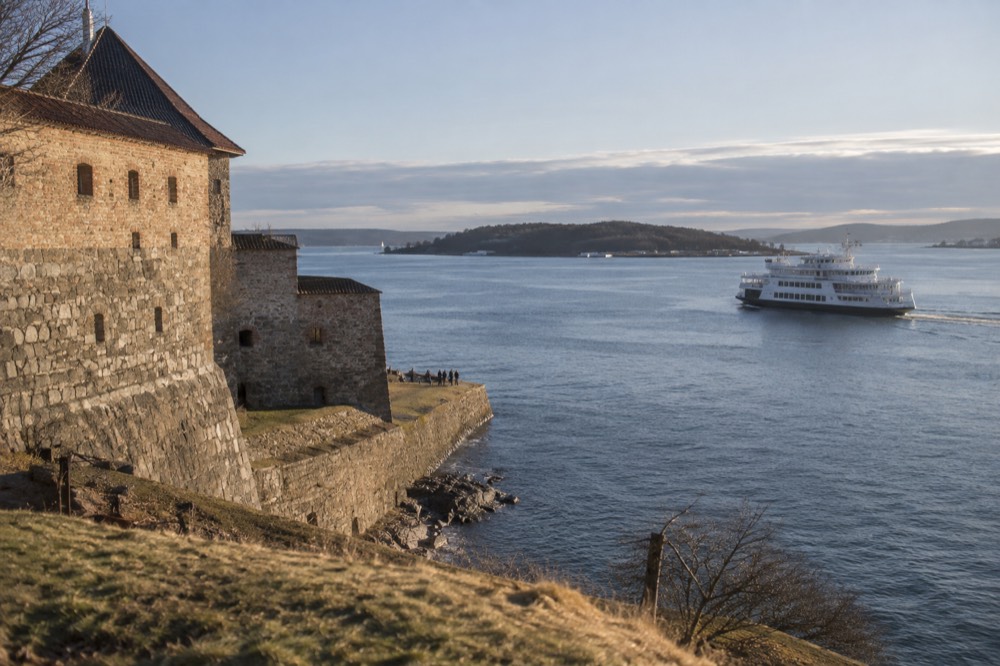
One warning that even good guides get wrong: the Bygdøy museum ferry and the Oslofjord island ferries are different systems. The museum boat leaves from Rådhusbrygge 3, is not covered by ordinary Ruter tickets, and runs only from 14 March to 4 October. The island ferries, lines B1, B1X and B2, are ordinary Ruter services leaving from Aker Brygge, covered by a normal zone 1 ticket and by the Oslo Pass. Two piers, two ticket rules, two operators. Mixing them up strands people.
Which Oslofjord Cruise Format Should You Choose?
Choose by format before you compare prices: a silent electric boat, a wooden sailing ship, a guided premium boat, a shrimp-buffet dinner cruise, or a full-day island tour, because these are genuinely different experiences at overlapping prices, and the wrong format wastes your money more surely than the wrong operator. The electric and wooden boats cost about the same, within a dollar or two of each other at the entry level, yet one is a quiet modern ride with an audio guide and the other is a sail-powered vessel with masts, ropes and a heritage feel. The dinner cruise costs roughly twice the entry price and replaces afternoon sightseeing with a Norwegian dining institution. The five-island full-day tour costs in the same range as the dinner boat but spends six hours on the water with stops. Duration, not dollars, is the real axis: 90 minutes, 2 hours, 3 hours or 6.
| Format | Typical duration | Best for | Watch out for |
|---|---|---|---|
| Silent electric boat, audio guide | 1 h 30 m | First-timers on a tight schedule | Audio, not a live guide |
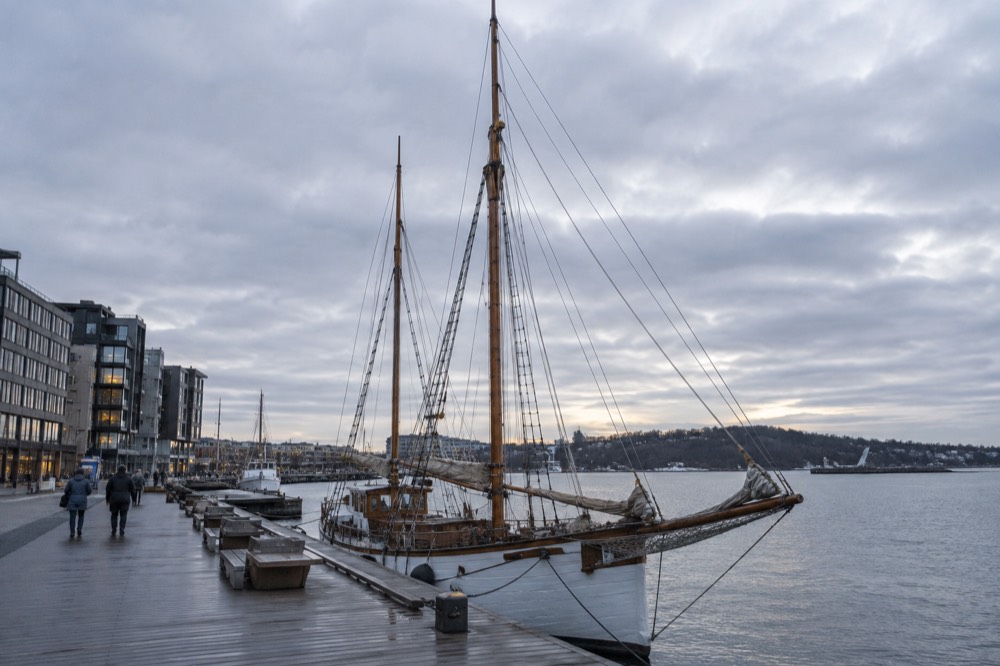
| Traditional wooden sailing ship | 2 h | Heritage feel, photographs | Less commentary |
| Guided premium silent boat | 2 h | Small groups, live narration | Higher price tier |
| Evening cruise with shrimp buffet | 3 h | Dinner on the water | Evening-only departures |
| Five-island full-day boat tour | 6 h | A whole fjord day with stops | Needs a full free day |
The comparison below is the shortlist. The five-island tour covers the most water, the electric boat is the city's single best-reviewed activity, and the wooden ship is the most photogenic hull on the fjord.
For a first-time visitor with an afternoon free, the audio-guide electric cruise is the default: short, cheap relative to everything else in Norway, and the highest-reviewed product of its kind in the city. If your trip has a romantic or celebratory purpose, the wooden sailing ship changes the mood completely for almost the same money, and the hull itself becomes the memory. Travelers who want narration from a person rather than headphones should step up to the guided premium silent boat. The details for all of these, including live pricing and departure dates, sit on each tour listing, where you can also Check availability for your dates.
If your question is honestly "is this worth it rather than which one", the answer is that the fjord is the one Oslo sight you cannot see from land. Museums you can substitute; this view, of the city from the water with the islands strung out behind, exists only on a boat.
How Much Does an Oslofjord Cruise Cost?
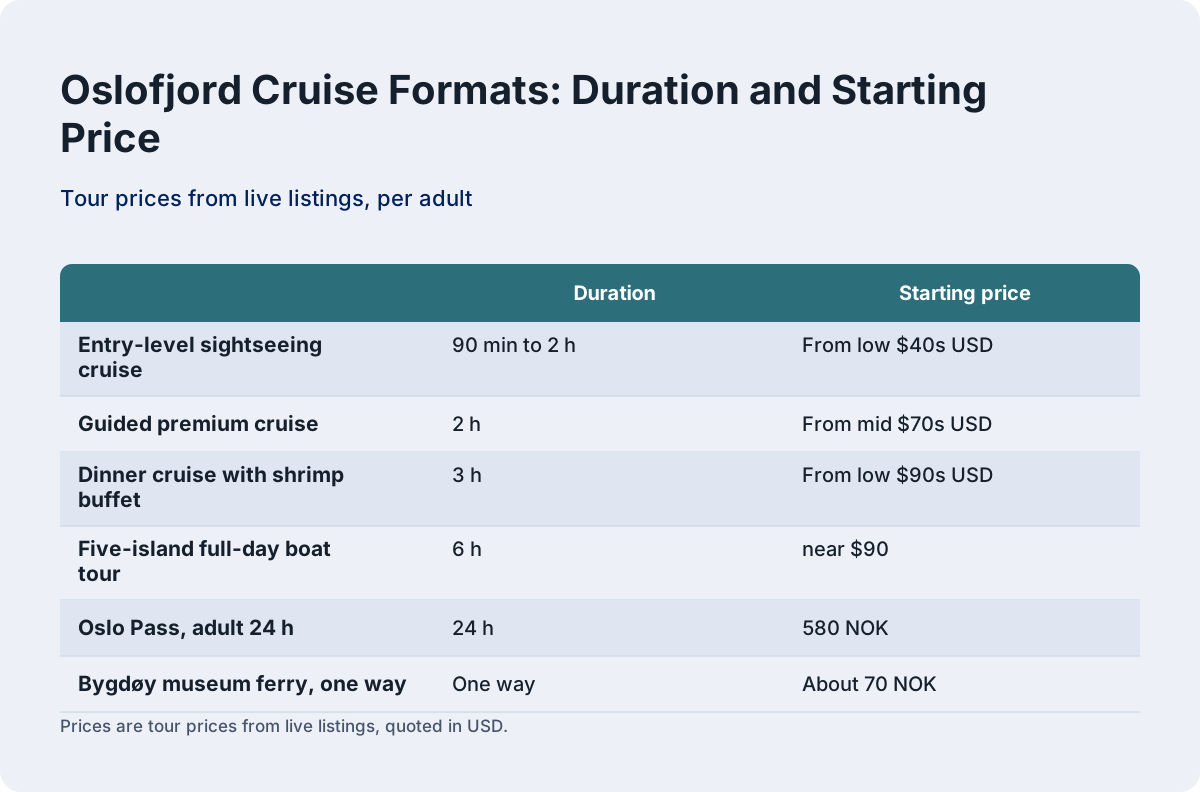
A paid Oslofjord cruise starts around $42 to $46 per adult for the 90-minute and two-hour sightseeing formats, runs into the $70s for the guided premium boat, and lands near $90 for the shrimp-buffet dinner cruise and the six-hour island tour, so the total spread is roughly a factor of two between the cheapest and most expensive fjord experiences in the city. Those are tour prices from live listings, quoted in USD at booking. Around them sits a second, local cost layer in Norwegian kroner: transport to the pier, the optional Oslo Pass, and anything you eat or drink on board or after. The cruise itself is rarely the budget problem. Norway's price level is, per Statistics Norway's 2025 comparison, sixth highest in Europe, with alcohol and tobacco more than double the European average, so the shrimp buffet and especially the bar tab are where a fjord evening gets expensive, not the ticket.
| Cost item | Typical figure | Notes |
|---|---|---|
| Entry-level sightseeing cruise | From low $40s USD | 90 min to 2 h, per live listings |
| Guided premium cruise | From mid $70s USD | Live guide, premium boat |
| Dinner cruise with shrimp buffet | From low $90s USD | 3 h, buffet included |
| Oslo Pass, adult 24 h | 580 NOK | Includes island ferries and Bygdøy boat |
| Bygdøy museum ferry, one way | About 70 NOK | Slightly more on board |
| Island ferry on a Ruter ticket | Ordinary zone 1 fare | B1, B1X, B2 from Aker Brygge |
Two honest ways to save. First, the public island ferries ride on an ordinary Ruter ticket or the Oslo Pass, so a fjord crossing costs a fraction of a cruise if you only want water, islands and a swim. Second, the 24-hour Oslo Pass at 580 NOK covers the island ferries, the Bygdøy boat and more than 30 museums, which makes it the backbone of a budget fjord day when combined with a single paid cruise. More on that trade-off in the island-ferry section below.
The dinner cruise deserves its own note, because it is not a generic dinner boat. The shrimp buffet is a genuine Norwegian summer institution, served peel-your-own at shared tables while the boat drifts past the islands, and the format's review volume puts it among the most-booked fjord evenings in the city. Budget it as a restaurant meal with a fjord attached, and the price lands in a different, fairer category.
When Is the Best Time of Year for an Oslofjord Cruise?
The Oslofjord cruise season runs roughly April through September with its peak in June and July, and the best single month is June, when the 17.7 °C (63.9 °F) July-level warmth has not yet peaked but daylight stretches to nearly 19 hours with sunset past 22:40 and the evening light on the water is at its best. Winter boats do exist in limited formats, but the classic cruise calendar is a warm-season product, and several routes only run in the high-summer timetable window. The climate numbers back the instinct: MET Norway's 1991 to 2020 normals put July at a mean of 17.7 °C and August at 16.5 °C, genuinely mild, and August is the wettest month of the year at 103 mm, a detail that surprises visitors who assume autumn storms arrive later. June's 80 mm is also on the damp side, so the "best" month is a trade between light and rain risk, not a dry guarantee.
| Month | Mean temp | Normal precipitation | Daylight on the 15th | Cruise verdict |
|---|---|---|---|---|
| Apr | 6.2 °C | 48 mm | 14 h 34 m | Cool, quiet, possible |
| May | 11.4 °C | 60 mm | 17 h 08 m | Season starting, good |
| Jun | 15.3 °C | 80 mm | 18 h 18 m | Peak daylight |
| Jul | 17.7 °C | 87 mm | 18 h 02 m | Warmest, busiest |
| Aug | 16.5 °C | 103 mm | 15 h 38 m | Warm but wettest month |
| Sep | 12.2 °C | 82 mm | 12 h 54 m | Mild, season closing |
Daylight is the part of the equation that visiting Americans routinely misjudge. At 59.91° N the swing from midwinter to midsummer is enormous, from 5 hours 53 minutes of daylight on 21 December to 18 hours 50 minutes on 21 June, and there is no midnight sun at this latitude, only long twilight. For a cruise this cuts both ways: a June evening trip sails in light until absurdly late, while a September departure at 18:00 is already a dusk trip. Check the sunset table for your exact dates before booking an evening format.
The shoulder months reward flexible travelers. May and early June have fewer boats, cheaper lodging, and an archipelago coming green; September's islands are at their calmest before the season shuts. If your dates are locked to school holidays, July it is: book the dinner cruise and premium formats well ahead, because those seats go first.
What Will You Actually See from the Boat?
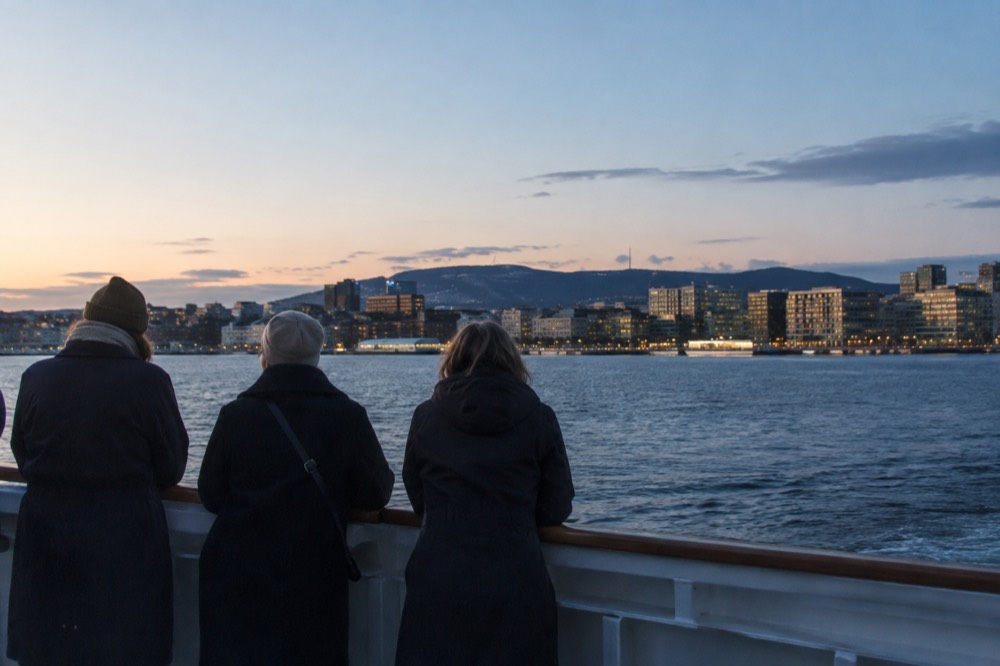
Most Oslofjord cruises pass Akershus Fortress, the Opera House waterfront, Hovedøya's abbey ruins, the cabin-lined shores of Lindøya and Nakholmen, and the green swimming island of Langøyene, with the more ambitious routes continuing out past Gressholmen toward the narrower outer fjord. The first ten minutes are city: the fortress wall, the modern roofline of Bjørvika, the Oslo Opera House seen from water level, its marble slopes rising straight out of the fjord. Then the buildings thin out and the islands take over. Hovedøya is close enough to read the ruin through the trees. The small islands that follow are covered in tiny painted cabins, a distinctly Oslo sight, summer houses stacked on rocks a fifteen minute ferry ride from a capital city.
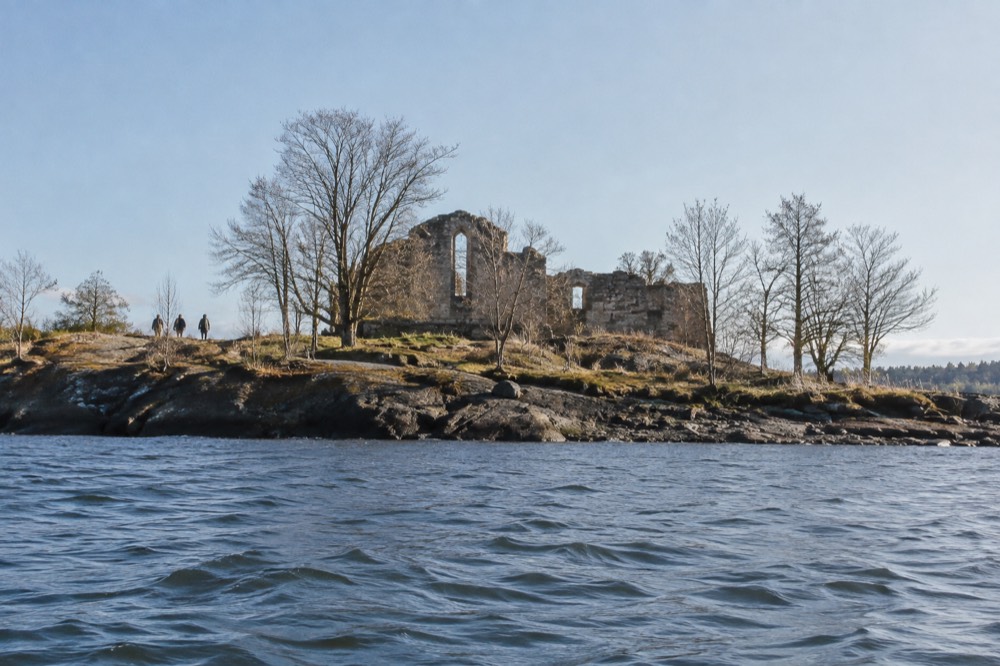
Hovedøya rewards the most attention of any island on the standard route. The Cistercian monastery there was dissolved in the Reformation era and its roofless nave and cloister still stand among mature trees, a genuine medieval ruin on an island you can also reach for the price of a bus ticket. Longer tours and the island-hopping formats usually pause or pass slow here. On the five-island full-day tour the stops are the point: you land, walk, swim if it is warm, and re-board, rather than watching everything slide past a rail.
The wooden sailing ship adds something no commentary can: the boat itself. Under sail, with the city astern and the islands ahead, the two-hour trip becomes less a tour than a passage. If photographs matter to you, this is the hull; if information matters, the audio-guide or live-guided formats carry more.
Wildlife is modest and honest: seabirds, the occasional seal reported in the outer reaches, and jellyfish in late summer. Nobody should book an Oslofjord cruise for the fauna. Book it for the light, the islands and the city-from-water geometry, all of which deliver every single trip.
Where Do Oslofjord Cruises Depart from and How Do You Get There?
Almost every Oslofjord cruise departs from the piers at Aker Brygge or the adjacent Rådhusbrygge in front of City Hall, both roughly a five minute walk from the Nationaltheatret metro and tram hub, so a hotel anywhere on a metro line is at most twenty minutes from boarding. The sightseeing operators use the Aker Brygge side; the seasonal Bygdøy museum ferry uses Rådhusbrygge 3; the public island ferries leave from the Aker brygge piers nearby. Confusion between the last two is the single most common practical mistake on the waterfront, and the fix is knowing which system you are riding before you leave the hotel.
| Route | Pier | Ticket | Season |
|---|---|---|---|
| Sightseeing and dinner cruises | Aker Brygge piers | Tour ticket | Roughly Apr to Sep |
| Island ferries B1, B1X, B2 | Aker brygge | Ruter ticket or Oslo Pass | B1 year-round, B2 summer |
| Bygdøy museum ferry | Rådhusbrygge 3 | Own fare or Oslo Pass | 14 Mar to 4 Oct |
| Bus 30 to Bygdøy museums | Street stops | Ruter ticket | Year-round |
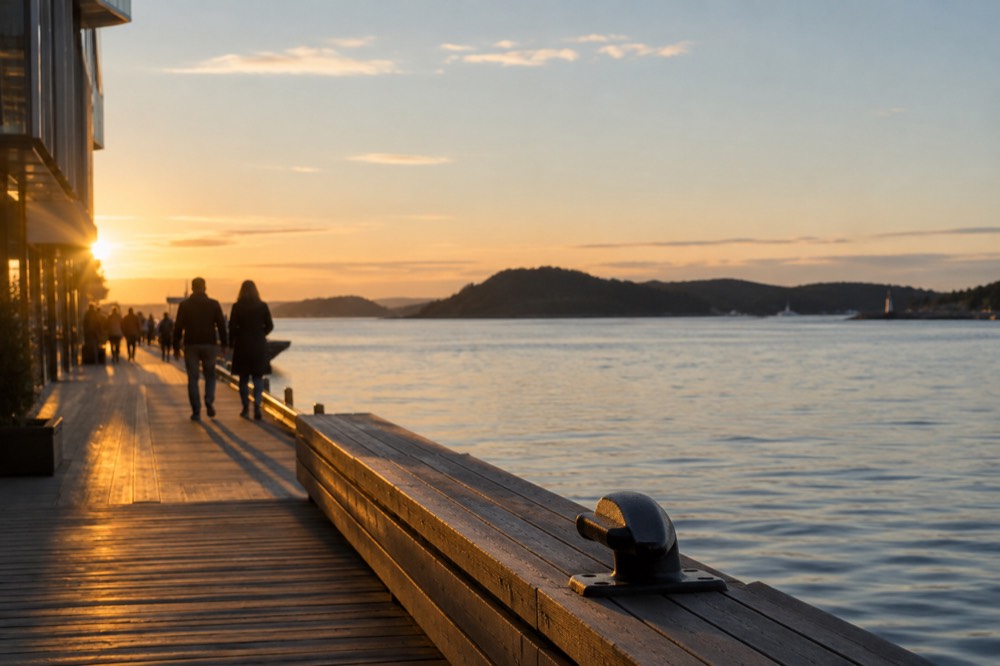
Arrive twenty minutes early. Boarding at Aker Brygge is orderly, but queues form for the best rail positions in high summer, and the piers themselves are a pleasant place to wait, with the fortress on one side and the Tjuvholmen boardwalk on the other. If you are staying in Grünerløkka or another east-side neighborhood, take the tram rather than the metro: both land within a few hundred meters, and the tram ride crosses the center street level.
Access from the airport, for same-day arrivals: the Vy train from Gardermoen reaches Oslo S in about 23 minutes, and the Oslo Pass covers it, while the Flytoget express takes about 20 minutes at 268 NOK adult and is not covered by the pass. A cruise afternoon is a realistic first-day activity if your flight lands before noon.
Cruise or Public Ferry: Is a Paid Oslofjord Cruise Better Than the Island Boats?
For pure transportation and island time, the public B1 and B2 ferries from Aker brygge beat any tour on price, riding on an ordinary Ruter zone 1 ticket or the Oslo Pass, but a paid cruise adds narration, comfort, routing beyond the ferry lines and, on the full-day tour, guided island stops, so the honest split is budget travelers on the ferry and experience buyers on the boats. This is the question this site gets to answer properly, because the two products are not competitors, they are different tools. The ferry gets you to Hovedøya and Langøyene to walk and swim for the cost of a bus fare, plus the flexibility of hopping on and off all day. The cruise gets you the passage between islands, commentary, and a hull designed for viewing rather than commuting.
The full-day five-island format is the genuine hybrid: it rides out beyond where the scheduled ferries wander efficiently, links the islands into one loop, and lands you ashore at each stop with a plan. It is also the natural upgrade path for anyone who starts on the free things to do in Oslo list and decides one paid day on the fjord is worth it, which, for a summer visit, it is.
For families, note the format difference in practical terms: ferries are short hops with room to pace, ideal with restless children, while a 6-hour tour needs kids who enjoy boats as objects in themselves. For solo travelers and photographers, the electric or guided formats at 90 minutes to 2 hours hit the sweet spot of low commitment and high view density.
Planning a Full Fjord Day Around Your Cruise
A well-built Oslofjord day pairs a morning cruise with an afternoon on the islands or the Bygdøy museums, anchored by a 24-hour Oslo Pass at 580 NOK adult, which covers the island ferries, the Bygdøy boat, the museums and Vy trains including the airport line, so the pass and one paid cruise together cost less than many single activities in other capitals. The sequencing matters more than the components. Morning light is best looking back at the city, so take the sightseeing cruise first; eat near the pier or on a dinner cruise later; spend the warmest midday hours swimming off Langøyene or walking the abbey on Hovedøya; and close with the fortress wall at dusk from the waterfront.
A sample summer day:
| Time | Activity | Cost basis |
|---|---|---|
| 10:00 | 90-minute electric cruise from Aker Brygge | Tour ticket |
| 12:00 | Lunch at Aker Brygge or a packed meal on Hovedøya | Variable |
| 13:30 | B1 ferry to Hovedøya, abbey and shoreline walk | Ruter ticket or Oslo Pass |
| 16:00 | Ferry on to Langøyene for swimming | Same ticket |
| 19:00 | Return ferry, dinner at Tjuvholmen | Variable |
Clothing, since the fjord is colder than the street even in July: the water temperature in the bathing season runs roughly 15 to 20 °C, and wind on an open boat drops the felt temperature several degrees, so a real layer even on a warm afternoon is the difference between enjoying the rail and hiding inside. Flat shoes for boarding, sunglasses low in the west late in the day, and you are dressed correctly for the fjord.
Is an Oslofjord Cruise Worth It for a First-Time Visitor?
Yes, for nearly every first-time visitor, an Oslofjord cruise is worth booking, because the fjord is the one essential Oslo experience that cannot be replicated from land, the entry price is low relative to Norway's cost level, and even the shortest format delivers the city's defining view in under two hours, with the honest caveat that visitors expecting western-Norway cliff scenery should recalibrate before they board. The complaint this activity actually receives is almost never about the boat, the crew or the value; it is about expectations formed by photographs of Geirangerfjord. The Oslofjord is an island fjord beside a capital city, and judged as that, it is superb. Judged as something else, it disappoints.
Worthiness also scales with format honesty. Two hours of electric silence or canvas overhead is a memory; the same two hours on a loud motor launch with no commentary is not, and that difference is exactly what the format comparison above is for. Choose the format that matches your reason for being on the water, book the seasonal window with the daylight and rainfall numbers in mind, and the fjord does the rest.
The trio below covers the three formats most first-time visitors end up choosing among, with live dates and pricing on each listing.
One final planning note from the editor's desk at Oslo Travel Guide: this site's sister publication covers long-haul Norway fjord cruises in depth, the big-ship, deep-fjord, multi-day itineraries of the west coast, so if your actual question is Bergen rather than Oslo, start there and come back for the electric boat. This page's job is the two hours of water that start a hundred meters from City Hall, and those two hours are the best value on the Oslo waterfront.
Common Questions About Oslofjord Cruises
How long is an Oslofjord cruise?
Formats run from 90 minutes for the shortest electric-boat sightseeing trip, through 2 hours for the wooden sailing ship and guided premium boats, 3 hours for the shrimp-buffet dinner cruise, and up to 6 hours for the full-day five-island tour. Pick by how much of your day you want to give the water.
What is the best month for an Oslofjord cruise?
June, on balance: nearly 19 hours of daylight with sunset past 22:40, a 15.3 °C monthly mean, and full summer timetables on the island ferries. July is warmest at a 17.7 °C mean but busiest, and August is the city's wettest month at 103 mm, so late-summer bookings should carry a flexible plan.
Can I ride the Oslofjord ferries instead of booking a cruise?
Yes. The B1, B1X and B2 island ferries from Aker brygge are ordinary Ruter services covered by a normal zone 1 ticket or the Oslo Pass, and they reach Hovedøya, Gressholmen, Bleikøya and, in summer, Langøyene. You lose the narration, routing and comfort of a cruise, not the water.
Where do Oslofjord cruises depart from?
The sightseeing and dinner cruises leave from the Aker Brygge piers beside City Hall, a five minute walk from the Nationaltheatret hub. The public island ferries also leave from Aker brygge; the separate Bygdøy museum ferry leaves from Rådhusbrygge 3 on its own ticket.
Is the Oslofjord like the western Norwegian fjords?
No. It is a broad, island-dotted inlet whose Oslo stretch is about archipelagos, cabin-covered rocks and medieval abbey ruins rather than sheer cliff walls, because the cliffs and deep water belong to the west coast. Expecting Geiranger is the main reason people under-rate this trip; expecting a capital city seen from the water, they rate it highly.
Does the Oslo Pass cover fjord cruises?
It does not cover the commercial sightseeing cruises, but it does cover the public island ferries and the Bygdøy museum ferry, plus the metro and buses that get you to the piers and more than 30 museums. A pass plus one paid cruise is the standard structure of a budget fjord day.