How to Spend 2 Days in Oslo: The Complete Itinerary
Two days is enough to see Oslo's essentials if you plan the geography right: the harbor and Opera House on day one, the museum peninsula or the western hills on day two, and a fjord boat in between.
Short answer
Two days covers Oslo's core: the Opera House, Karl Johans gate, Akershus Fortress, a fjord cruise, and either the Bygdøy museums or Vigeland Park plus Holmenkollen. Budget 580 NOK for a 24-hour Oslo Pass and plan around the harbor, since most of what matters sits within a 20-minute walk or boat ride of it.
How to Spend 2 Days in Oslo: The Complete Itinerary
Oslo is smaller than its reputation suggests. The city that regularly tops world quality-of-life rankings packs its main sights into a compact harbor basin, a museum peninsula and one wooded hillside, and a visitor with 48 hours can genuinely cover the essentials without rushing. The trick is geography: almost everything worth seeing sits either within walking distance of the harbor or on one of two predictable transport lines, so the plan below is built around where things actually are rather than around a list of attractions.
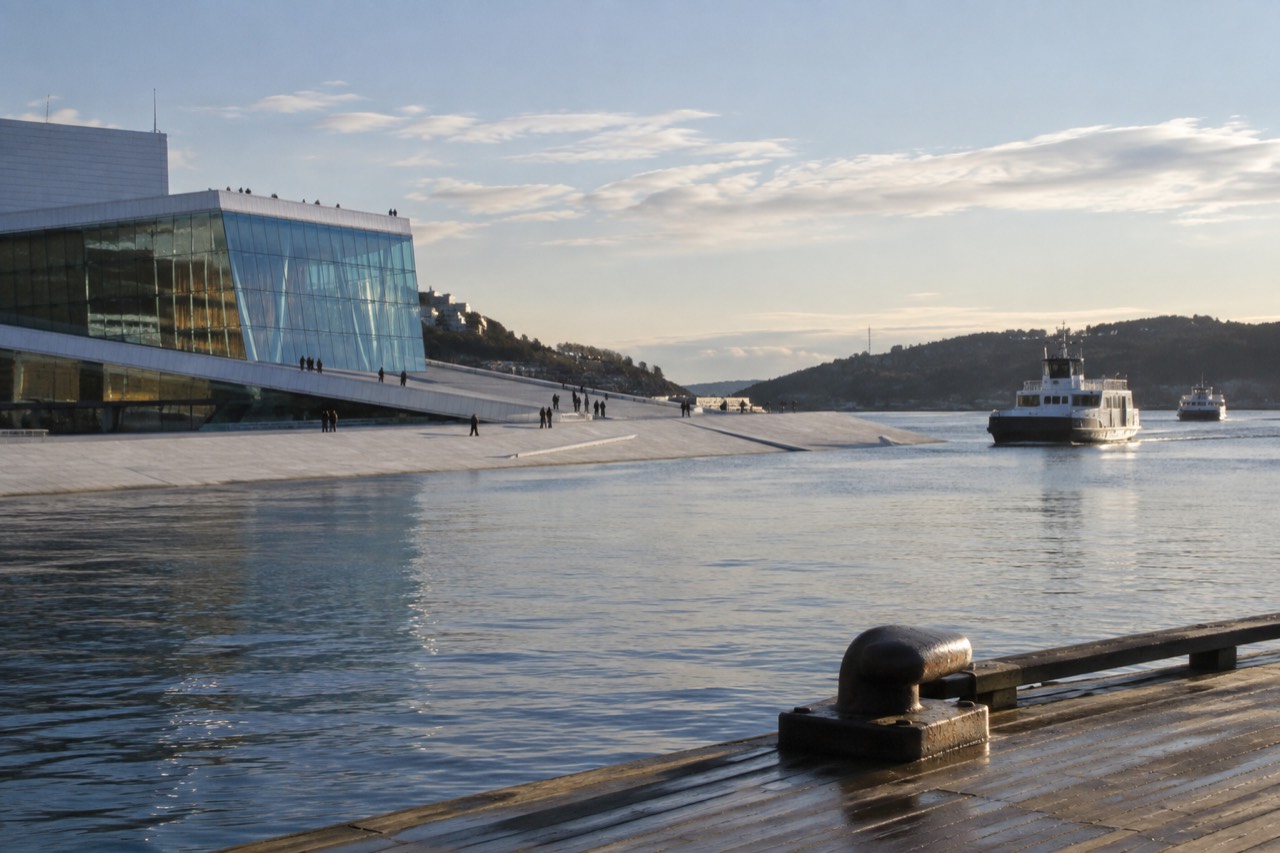
The harbor is the anchor. From the piers at Rådhusbrygge you can see the City Hall, the Akershus Fortress walls, the Aker Brygge waterfront and the white marble slope of the Opera House, and from there the fjord itself carries you to museums, islands and swimming beaches. This itinerary uses that logic: day one is the city center and the water, day two is either the Bygdøy museum peninsula or the western hills, and the choice between them is the one real decision you have to make. This is the planning approach Oslo Travel Guide builds every itinerary around, because it is the one that survives contact with a real map.
Is Two Days in Oslo Enough?
Two days is enough for Oslo's highlights but not for both of its two big half-day excursions, so you have to choose: the Bygdøy museums or Vigeland Park plus Holmenkollen. The harbor, Opera House, Karl Johans gate, Akershus Fortress and a fjord cruise all fit comfortably into day one, and day two carries one peninsula or one hillside, not both. A third day is what turns a rushed visit into a relaxed one, but two is a real trip, not a teaser.
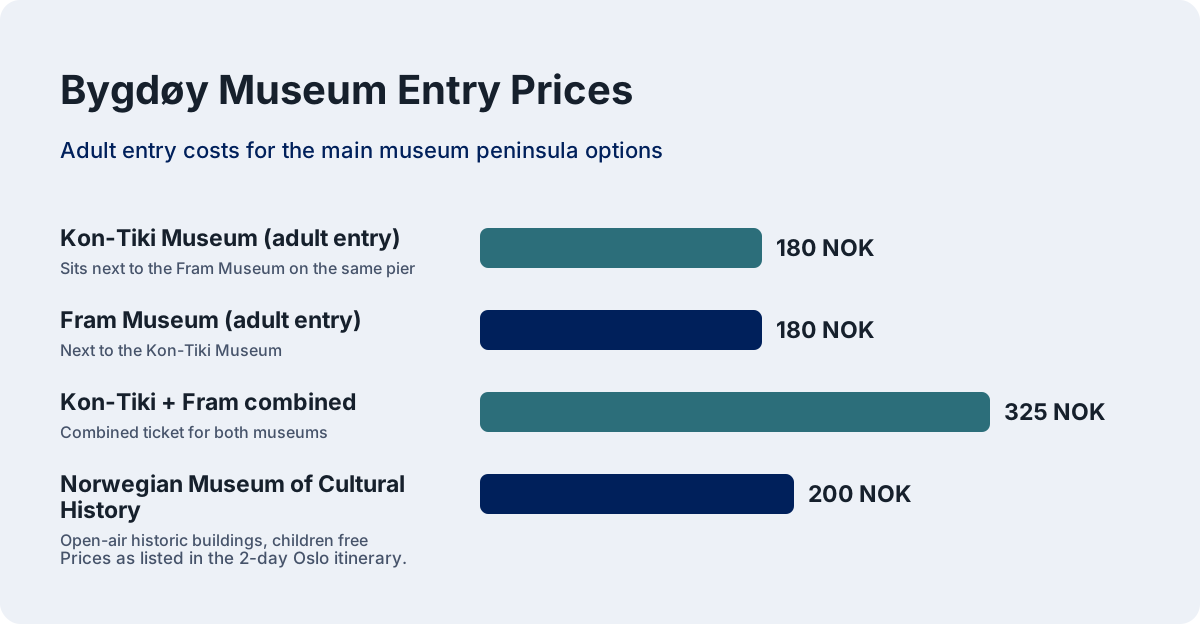
The honest answer depends on what kind of traveler you are. Museum people should give Bygdøy the whole of day two: the Kon-Tiki Museum and the Fram Museum sit next to each other on the same pier, adult entry is 180 NOK each or 325 NOK combined, and the Norwegian Museum of Cultural History adds open-air historic buildings to the mix. Outdoors people should go west instead: Vigeland Park is free and open around the clock, and the metro to Holmenkollen takes about 15 to 20 minutes from the Nationaltheatret station.
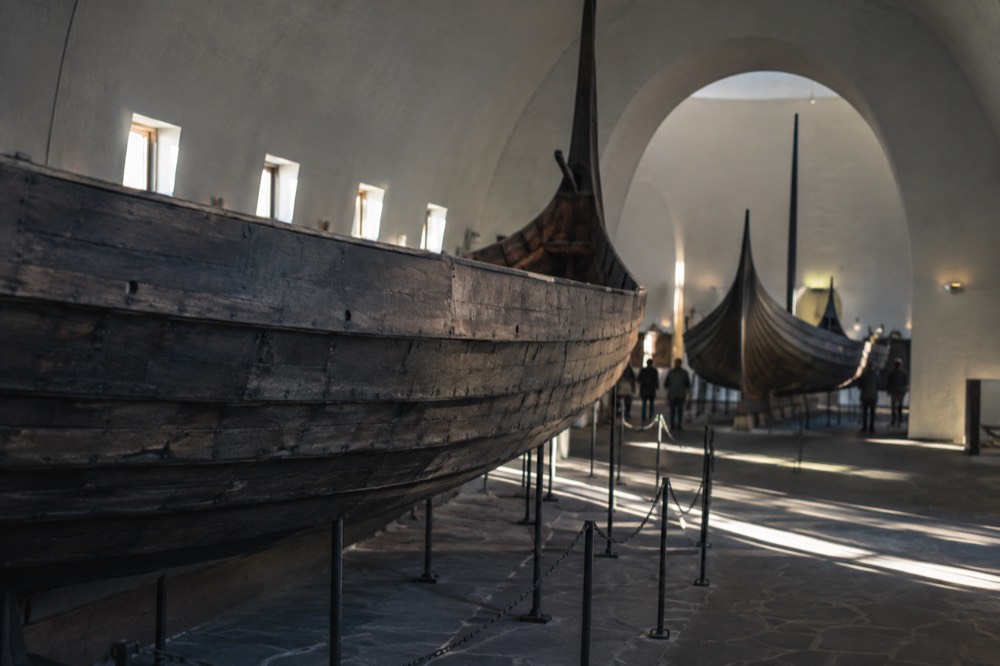
One closure shapes every Oslo plan right now: the Museum of the Viking Age on Bygdøy is shut until 2027 while its rebuilding finishes, so the Viking ships are not viewable in the city. The museum's own site directs visitors to Viking-age objects at the Historical Museum in the center instead, and Viking Planet, a VR-based Viking experience near the harbor, is the bookable substitute. Our Museum of the Viking Age guide covers the closure in full.
What Does a 2-Day Oslo Itinerary Look Like?
Day one: harbor, Opera House roof, Karl Johans gate, Akershus Fortress and a fjord cruise. Day two: either the Bygdøy museums (Kon-Tiki, Fram, Folk Museum) or Vigeland Park and Holmenkollen, plus Grünerløkka for food and evening. Two anchor neighborhoods, one boat trip, one big morning excursion, and evenings free for the waterfront. The shape of the plan matters more than the exact order, because Oslo's compactness forgives most sequencing mistakes.
Here is the skeleton, with realistic timings. Note that summer daylight runs long: in late June the sun sets at 22:43 and it never gets properly dark, while in late December it rises at 09:18 and sets at 15:11, so winter days need tighter scheduling and indoor backups.
| Slot | Day 1 | Day 2 (museums) | Day 2 (outdoors) |
|---|---|---|---|
| Morning | Opera House roof, harbor walk | Ferry to Bygdøy, Kon-Tiki + Fram | Vigeland Park, early |
| Midday | Karl Johans gate, lunch | Norsk Folkemuseum | Metro to Holmenkollen |
| Afternoon | Akershus Fortress grounds | Return ferry, Aker Brygge | Metro back, Sognsvann or rest |
| Evening | Fjord cruise or dinner cruise | Grünerløkka dinner | Grünerløkka dinner |
If you would rather not plan the logistics yourself, the full-day bus-plus-fjord combination covers the city tour and the fjord in a single booked product, which suits visitors arriving off a cruise ship or with only fragments of time. For everyone else, the plan below is built on public transport and your own feet, which is both cheaper and more flexible.
Day 1: The Harbor, the Opera House and the Oslofjord
Start at the Opera House, walk its roof at 09:00 before the crowds, then work west along the harbor through the Akershus Fortress grounds to the City Hall piers. Afternoon is the fjord cruise, and the evening belongs to Aker Brygge or a dinner boat. Everything on day one is within a 25-minute walk of anything else. The whole day can be done on foot with one boat trip in the middle.
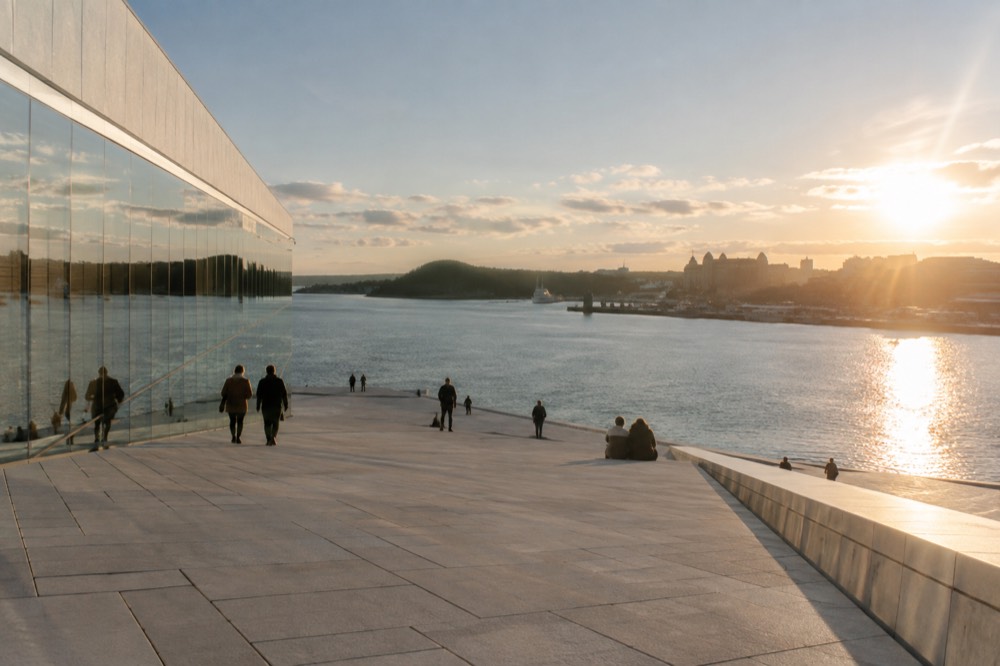
The Opera House roof is the correct first stop, and it costs nothing. The building slopes down into the water on its harbor side and the public is meant to walk up the marble: the roof is free to access, no ticket, and the view over the fjord and the Bjørvika skyline is the single best free panorama in the center. Our Oslo Opera House guide covers what else the building offers, including performances and the interior.
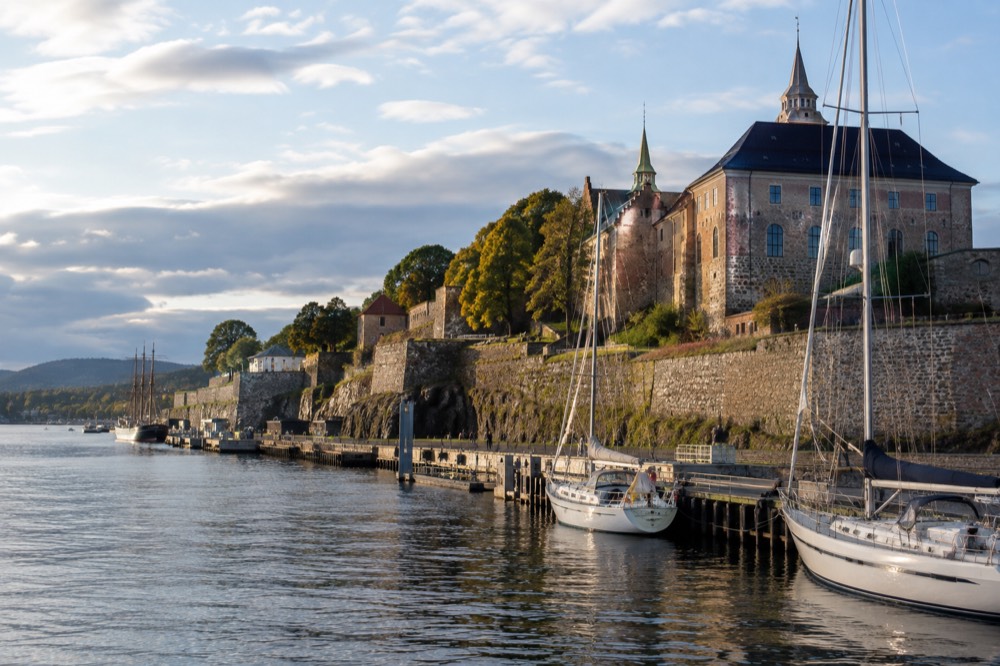
From there, walk west along the water. The route passes the new Bjørvika district, the MUNCH museum on its own promontory, and the historic Akershus Fortress walls, whose grounds are free to wander and open most of the day. The fortress sits on its own headland above the fjord, and the walk around its seaward side to the City Hall takes about 20 minutes at a slow pace. If you want the interior story, the Akershus Fortress guide details the museums inside the complex.
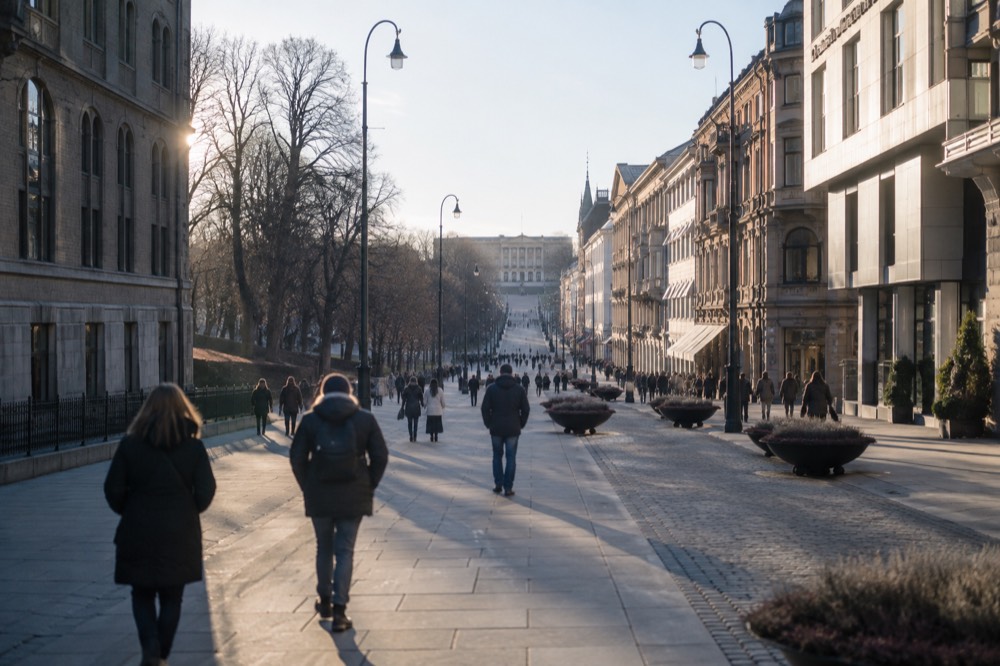
Karl Johans gate, the main ceremonial street running from the Central Station to the Royal Palace, is a 10-minute detour inland and best done around lunch. It is touristy, wide and unremarkable as shopping streets go, but the palace at the top end and the National Theatre along it make it worth the stroll. Our Karl Johans gate guide maps what is actually worth stopping for.
The afternoon belongs to the fjord. The basic sightseeing cruise runs 90 minutes with an audio guide, departs from the piers next to City Hall, and is the single best-reviewed activity in the city, so it doubles as the day's rest period: you sit, the shoreline slides past, and you finish back at the harbor in time for dinner. If your day runs late, the evening version with a shrimp buffet is a Norwegian institution rather than a generic dinner boat, running three hours as the light goes down.
Book the cruise for the afternoon of day one rather than day two, because day two's excursion is weather-dependent and you want the flexible day free for it. Both cruise options are bookable with free cancellation, so there is no penalty for locking one in early and moving it if the forecast turns.
Day 1 Evening: Aker Brygge, Tjuvholmen and Dinner
Aker Brygge, the converted shipyard wharf directly west of City Hall, is the default evening: waterside restaurants, the Astrup Fearnley museum and the Tjuvholmen sculpture beach, all within a 10-minute walk of the harbor piers. Expect restaurant prices well above most of Europe, and expect the water view to be worth some of it. Dinner with drinks in this neighborhood is a genuine expense, not a rounding error.
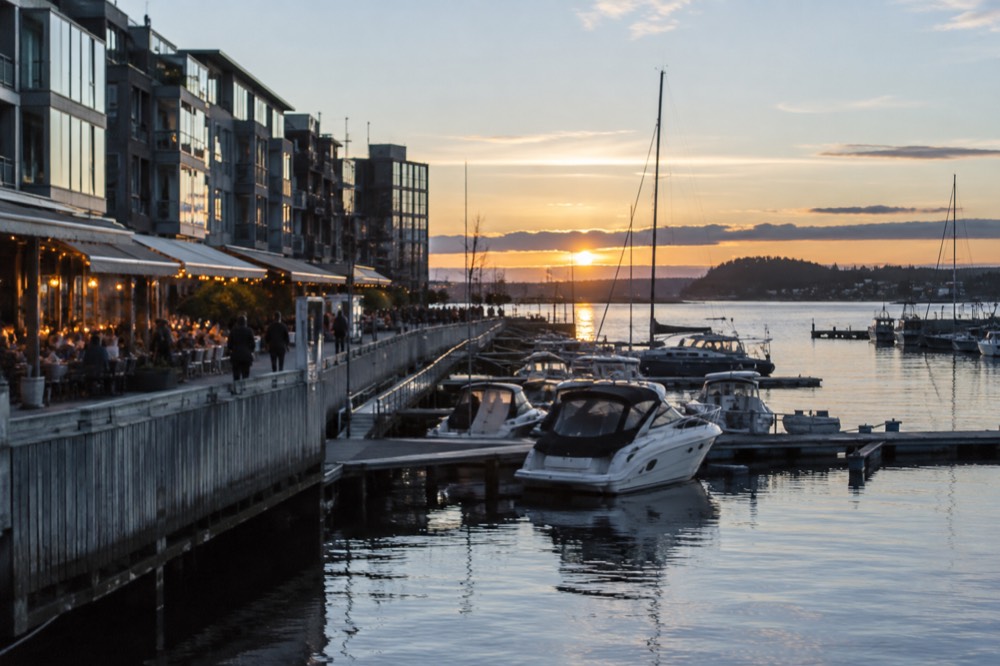
Norway's cost structure explains the bill. Statistics Norway's 2025 price-level survey puts the country sixth most expensive in Europe, with restaurant and hotel prices above Sweden and roughly level with Denmark, and alcohol more than double the European average. That last figure is why a single beer with dinner stings and why locals pre-drink at home. Our is Oslo expensive guide breaks down where the money actually goes and where the city is not unusually dear: museums, transport and the outdoors.
The budget alternatives are real. Mathallen, the food hall in the Vulkan complex on the Akerselva river, offers dozens of counters at lower prices than the waterfront, and the Grünerløkka neighborhood behind it is where the city's cafe and bar life actually lives. Supermarkets sell beer only up to 4.7% ABV and stop at a fixed evening hour, and anything stronger requires a Vinmonopolet, the state monopoly, which closes early on Saturdays and all day Sunday.
Day 2: Bygdøy's Museums or the Western Hills?
Bygdøy is the museum peninsula: Kon-Tiki at 180 NOK, Fram at 180 NOK, 325 NOK combined, and the open-air Norwegian Museum of Cultural History at 200 NOK with children free. The western alternative is Vigeland Park, free and always open, plus Holmenkollen reached by metro line 1 in about 15 to 20 minutes. Pick one and do it properly. Trying both in one day leaves you exhausted and in transit.
Getting to Bygdøy is its own small lesson in Oslo transport, because the two boat systems are different. The seasonal Bygdøy ferry runs from Rådhusbrygge 3 between mid-March and early October, costs about 70 NOK one-way, is included with the Oslo Pass, and does not accept ordinary Ruter tickets. The island ferries, by contrast, are ordinary Ruter services from the Aker Brygge piers. Out of ferry season, bus 30 runs to the museums year-round on a standard Ruter ticket. Our Bygdøy guide and the Oslo ferries guide keep the two systems straight.
The museums cluster sensibly. The ferry's first stop, Dronningen, serves the Folk Museum; the second, Bygdøynes, serves Kon-Tiki, Fram and the Maritime Museum, which stand together. Allow two to three hours for Kon-Tiki and Fram combined: the Fram is the actual polar ship that carried Nansen and Amundsen, and you walk aboard it. Our Kon-Tiki Museum and Fram Museum pages carry the current hours and combination-ticket math.
The western option is cheaper and greener. Vigeland Park holds over 200 sculptures across a vast free park that never closes, and it is Oslo's most visited sight precisely because it costs nothing and asks nothing. The metro from the city center to Holmenkollen takes about 15 to 20 minutes, and the ski jump tower with its museum costs 195 NOK if you want the view from the top. The Holmenkollen ski jump guide explains how to pair the two, and the Vigeland Park guide covers the sculptures.
If neither walking nor metros appeals, or the weather turns, the hop-on hop-off bus is the fallback that connects the harbor, Vigeland and Holmenkollen without transfers. It is also the one product that solves the day-two-west logistics in a single ticket, which is why it anchors this itinerary's related picks.
How Much Do 2 Days in Oslo Cost?
The fixed costs of two days are knowable in advance: a 24-hour Oslo Pass at 580 NOK covers transport and over 30 museums, the Bygdøy museums run 180 to 200 NOK each, and the fjord cruise is a separate fare. Oslo is expensive at the restaurant table and the bar, where alcohol runs more than double the European average, and not especially expensive at the museum door or on the tram. The pass pays for itself with three museums plus transport.
| Item | Cost (NOK) | Notes |
|---|---|---|
| Oslo Pass, 24h adult | 580 | Over 30 museums, Ruter zones 1-4N, Bygdøy ferry |
| Oslo Pass, 48h adult | 845 | Same coverage, two full days |
| Kon-Tiki + Fram combined | 325 | Adult, both museums |
| Norsk Folkemuseum | 200 | Children 0-17 free |
| Vigeland Park | 0 | Free, open 24 hours |
| Opera House roof | 0 | Free public access |
| Holmenkollen museum + tower | 195 | Ski jump tower view |
The pass math is genuinely worth doing for a two-day trip. Three Bygdøy museums at full price total 560 NOK, against a 580 NOK 24-hour pass that also carries you on all Ruter transport, the Bygdøy ferry and, notably, the Vy airport train. That last inclusion is the detail most guides get wrong: the Oslo Pass covers the train to and from Gardermoen, but only Vy's, not the Flytoget airport express, which is a separate company at 268 NOK adult one-way. Our is the Oslo Pass worth it guide runs the full break-even table.
Food is where budgets break. Statistics Norway's comparison puts food and non-alcoholic drink 33% above the European average, and alcohol more than double it, so the spread between a big day and a modest one is almost entirely where you eat and whether you drink. Street food, supermarket picnics and the food halls close the gap without much loss of quality of life.
Getting Around During Your Two Days
Oslo's center is walkable and day one needs no transport at all beyond the boat you choose; day two needs either the bus 30 or ferry to Bygdøy, or metro line 1 to Holmenkollen. Buy tickets in the Ruter app, where a single zone 1 ticket is valid for 60 minutes from activation, and never buy on board, where it costs more. Two days in the city barely scratches the zone system.
| Method | Where it fits | Ticket |
|---|---|---|
| Walking | All of day one | Free |
| Bygdøy ferry | Harbor to museum peninsula, mid-Mar to early Oct | ~70 NOK, Oslo Pass yes, Ruter no |
| Bus 30 | To Bygdøy year-round | Ordinary Ruter ticket |
| Metro line 1 | To Holmenkollen, Frognerseteren | Ruter zone 1 |
| Island ferries B1/B2 | Aker Brygge to the fjord islands | Ordinary Ruter ticket |
The zone rules are simpler than they look. Central Oslo and the entire metro network sit inside zone 1, the airport is zone 4N, and the journey planner in the Ruter app counts zones for you, which is the method Ruter itself recommends rather than tallying them by hand. A single one-zone ticket is valid for 60 minutes from activation, with 30 minutes added per extra zone. Our Ruter tickets guide and getting around Oslo guide carry the current fare details.

One practical note for anyone extending the trip: the 30-day zone 1 pass was cut from 805 to 655 NOK in May 2026, which matters mainly to longer stays, but it signals the direction of Oslo's transit pricing. For two days, the app and a pass are all you need, and the Oslo Pass guide compares the two directly.
What If It Rains, or You Have a Few Extra Hours?
Oslo's rainiest month on the 1991-2020 normals is August at 103 mm, not November, so pack a rain layer even in summer and keep museum backups in every plan. The best wet-weather moves are MUNCH at 280 NOK, the National Museum, the Paradox Museum and the Kon-Tiki and Fram pair, all of which are indoor and harbor-adjacent. A rainy day two simply becomes a museum day.
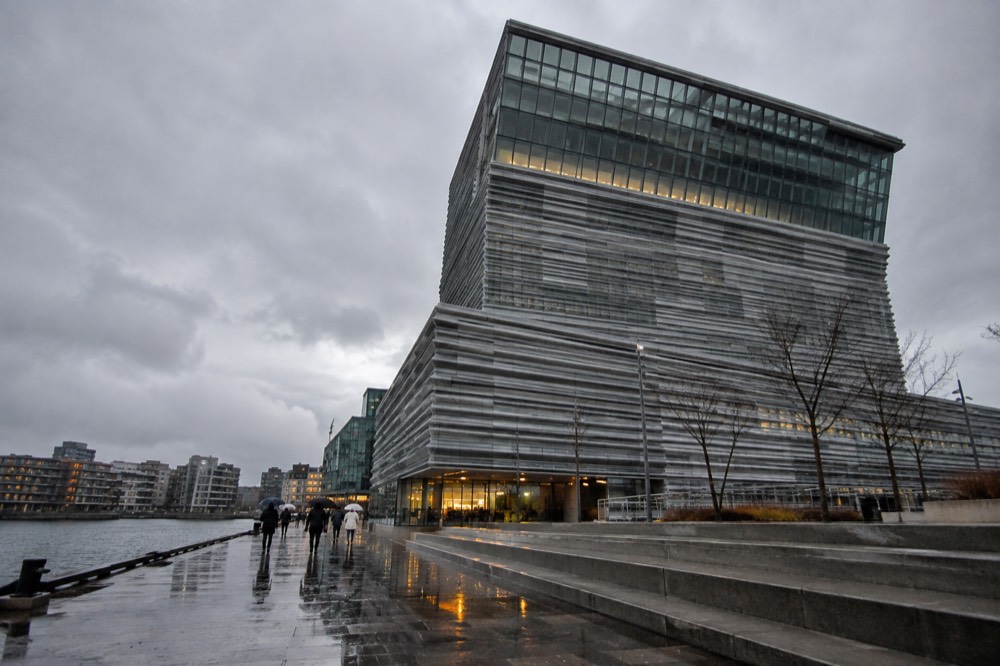
The museum substitutes are strong. MUNCH, the waterfront museum holding the largest Munch collection in the world, costs 280 NOK adult, drops to 200 NOK after 18:00 on its late nights, and admits under-25s for 100 NOK; our MUNCH guide has the hours. The National Museum holds The Scream. The Paradox Museum is the family-friendly illusion option that consistently sells as the best non-Bygdøy ticket. Our rainy day in Oslo guide ranks them all.
If the weather is good and you have a spare half day instead, the fjord islands are the locals' answer. The B1 and B2 ferries from Aker Brygge run on ordinary Ruter tickets, Hovedøya has a ruined Cistercian abbey 10 minutes from the pier, and Langøyene has the best swimming beaches. Our Oslo islands guide covers them.
For a first visit with limited patience for logistics, the full-day bus-and-fjord combination remains the simplest single purchase: it compresses the city tour and the fjord cruise into one booked product, which is exactly the shape of day one above. Visitors who prefer self-guided days can skip it without loss.
Common Questions About 2 Days in Oslo
Is 2 days in Oslo enough?
Yes, for the highlights. Two days covers the Opera House, the harbor, Akershus Fortress, a fjord cruise and either the Bygdøy museums or Vigeland Park and Holmenkollen. A third day adds the fjord islands, Grünerløkka and the National Museum at a relaxed pace.
What is the best 2-day Oslo itinerary?
Day one: Opera House roof, harbor walk, Karl Johans gate, Akershus Fortress and an afternoon fjord cruise. Day two: either the Bygdøy museums (Kon-Tiki, Fram, Folk Museum) or Vigeland Park plus Holmenkollen, with dinner in Grünerløkka.
Is the Oslo Pass worth it for 2 days?
Usually yes. The 24-hour pass costs 580 NOK and three Bygdøy museums alone total 560 NOK at full price, so the pass pays for itself with the ferry and transport included. The 48-hour pass at 845 NOK suits a two-full-day visit better.
Can you see the Viking ships in Oslo?
No. The Museum of the Viking Age on Bygdøy is closed until 2027 while its rebuilding finishes. Viking-age objects are on display at the Historical Museum in the center, and Viking Planet is the bookable VR-based substitute.
What is the cheapest way to get from Oslo Airport to the city?
The Vy regional train, which takes about 23 minutes and rides on an ordinary Ruter multi-zone ticket, or is included outright with the Oslo Pass. The Flytoget airport express costs 268 NOK adult one-way and is not covered by the pass.
What is the rainiest month in Oslo?
August, at 103 mm on the 1991-2020 normals from MET Norway. Not November, which is the common guess. Pack a rain layer in summer and keep museum backups in your plan.