Aker Brygge: Oslo's Waterfront Neighbourhood, Explained
Aker Brygge is where Oslo turned a shipyard into a neighbourhood. Here is what it actually offers, what it costs, and how the two ferry systems from its piers really work.
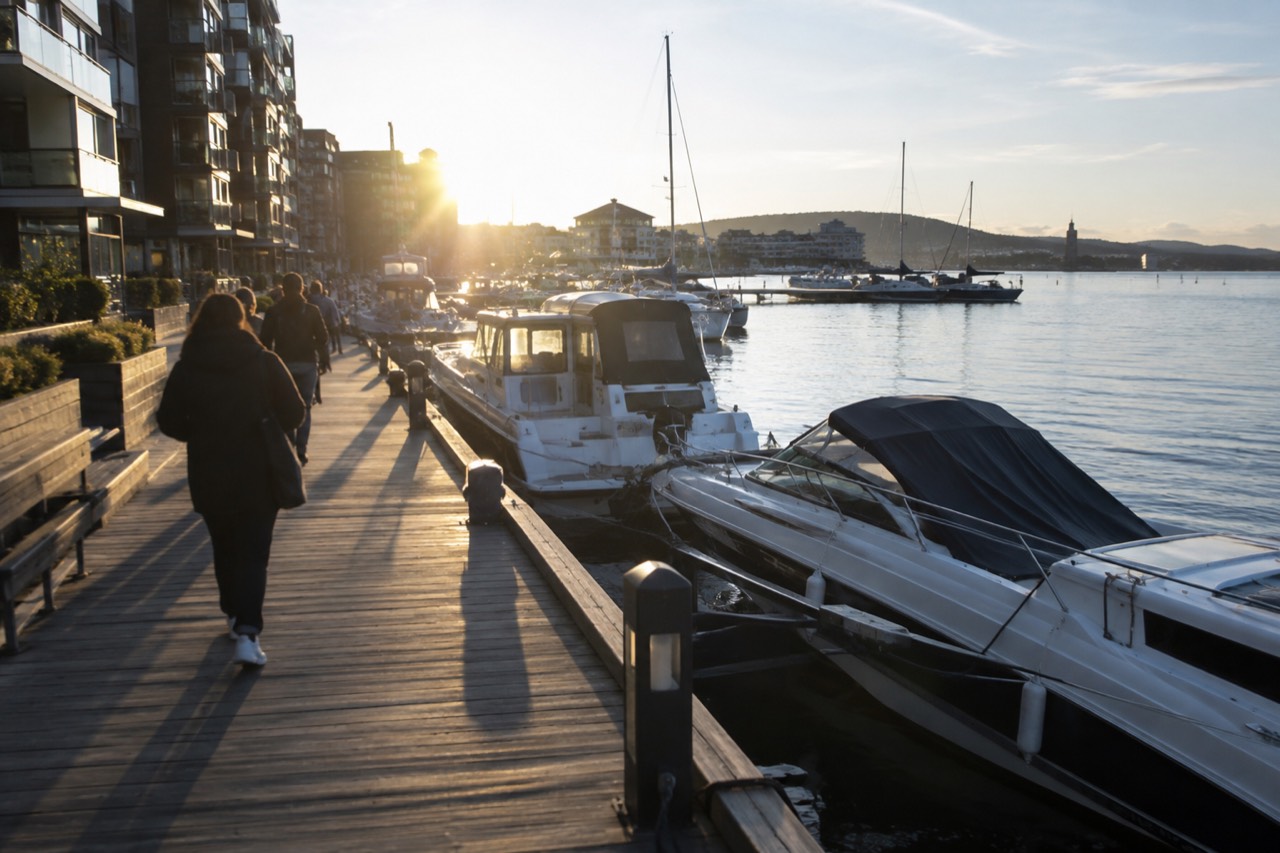
Short answer
Aker Brygge is Oslo's inner waterfront district, a 10 minute walk from the National Theatre, built on the old Akers Mekaniske Verksted shipyard. Expect restaurants, a food hall, two museums, the Sørenga seawater pool, and the departure pier for the Oslofjord island ferries, which ride on an ordinary Ruter ticket.
Aker Brygge began as heavy industry. The Akers Mekaniske Verksted shipyard built and repaired ships on this strip of shoreline until the yard closed, and the brick workshop halls and narrow gauge layout of the district are what the conversion left standing. Today it is the most concentrated stretch of waterfront dining, shopping and ferry traffic in Oslo, and it sits close enough to the City Hall that you can be standing at its piers within fifteen minutes of leaving Karl Johans gate.
That history matters for how you read the place. This is not a preserved old town, it is a redevelopment wearing the shipyard's bones, brick facades beside glass apartment towers, and the mixture is exactly what people either love or find overpriced. Both reactions have some evidence behind them. The food here is real and the prices reflect Oslo's standing as one of Europe's more expensive capitals, while the ferries, the seawater pool and the free museum-quality architecture around it cost very little.
This page covers the district properly: what to do, where the two different ferry systems from this shoreline actually go and which tickets they accept, what eating here genuinely costs, how to arrive without a car, and how the Oslo Pass maths works out if you base a day here. The team at Oslo Travel Guide keeps the figures on this page to officially published ones, NOK first, because that is what you will be paying in.
What Is Aker Brygge, and Where Does It Start?
Aker Brygge is Oslo's inner waterfront district on the west side of the Pipervika bay, roughly between the City Hall piers and Tjuvholmen to the south, about a ten minute walk from the National Theatre. It occupies the site of the Akers Mekaniske Verksted shipyard, and its brick halls and new towers came out of the conversion that followed the yard's closure. Nothing here is ancient, and that is the honest starting point for every expectation you bring.
The geography is simple once you have it. Pipervika is the innermost notch of the Oslofjord, and the City Hall (Rådhuset) closes its east side. Walk west along the water from the Rådhusbrygge piers and you are in Aker Brygge within a couple of minutes. Keep walking south past the apartment blocks and you cross into Tjuvholmen, the newer extension built out into the fjord on reclaimed land, home to the Astrup Fearnley Museet. North of the shopping halls the district meets the main road and the National Theatre sits a few blocks up.
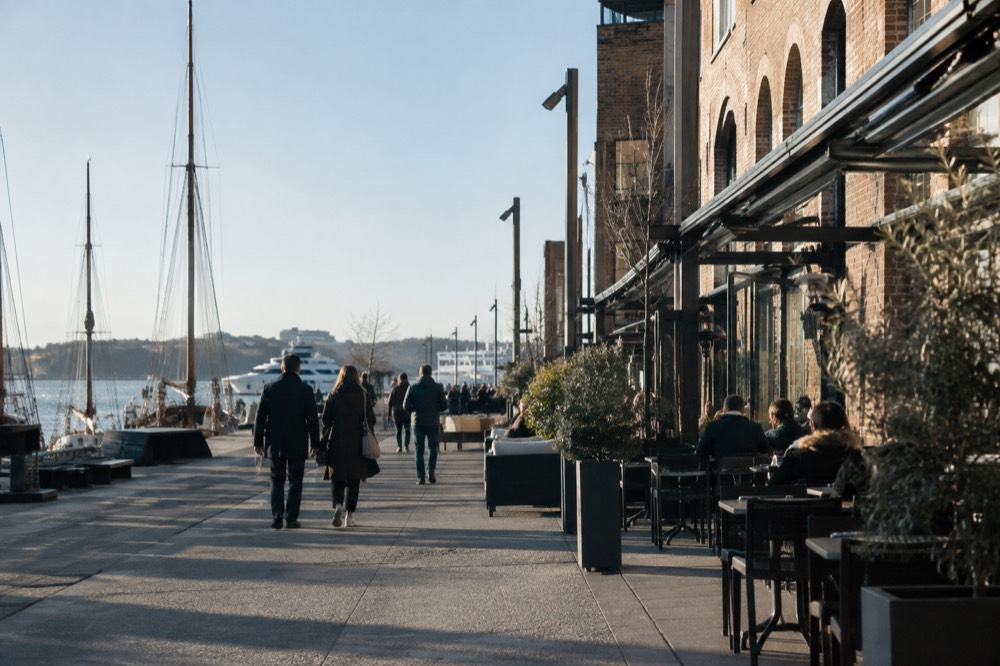
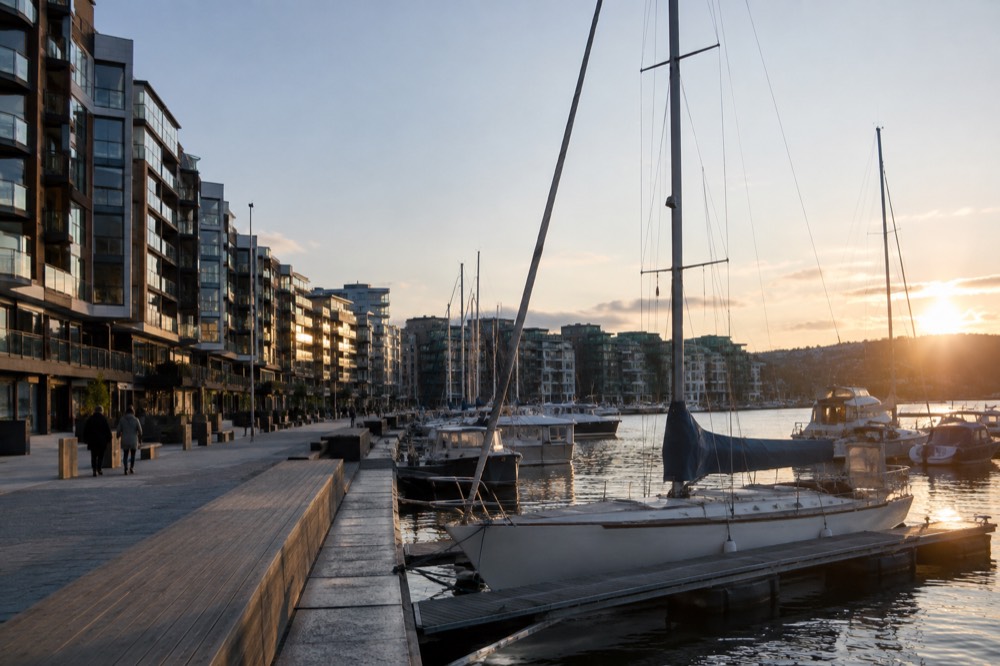
Two anchors structure a visit. Strandpromenaden, the waterside promenade itself, runs the whole length with boats moored along it, and it is free, open and walkable at any hour. And the piers at the south end are where the Oslofjord island ferries leave, which turns the district into a launchpad as well as a destination. The Tjuvholmen extension continues the promenade past the art museum and out to a small sand beach, so a single waterfront walk from the City Hall covers three districts without a single street crossing.
The naming confuses visitors more than the layout does. Locals say both Aker Brygge for the whole strip and refer to its sub-parts, Sørenga is the southernmost block with the seawater pool, and Fjordbyen is the planning term for the whole waterfront program. You do not need any of the planning vocabulary. You need "west side of the City Hall, follow the water south."
What Are the Best Things to Do at Aker Brygge?
The core activities are walking the promenade, eating at the restaurants and food hall, visiting the Nobel Peace Center and Astrup Fearnley Museet, swimming at the Sørenga seawater pool, and catching the island ferries from the Aker Brygge pier. Everything except the two museums is free to enter or rides on an ordinary Ruter ticket, which makes this one of Oslo's better value half-days.
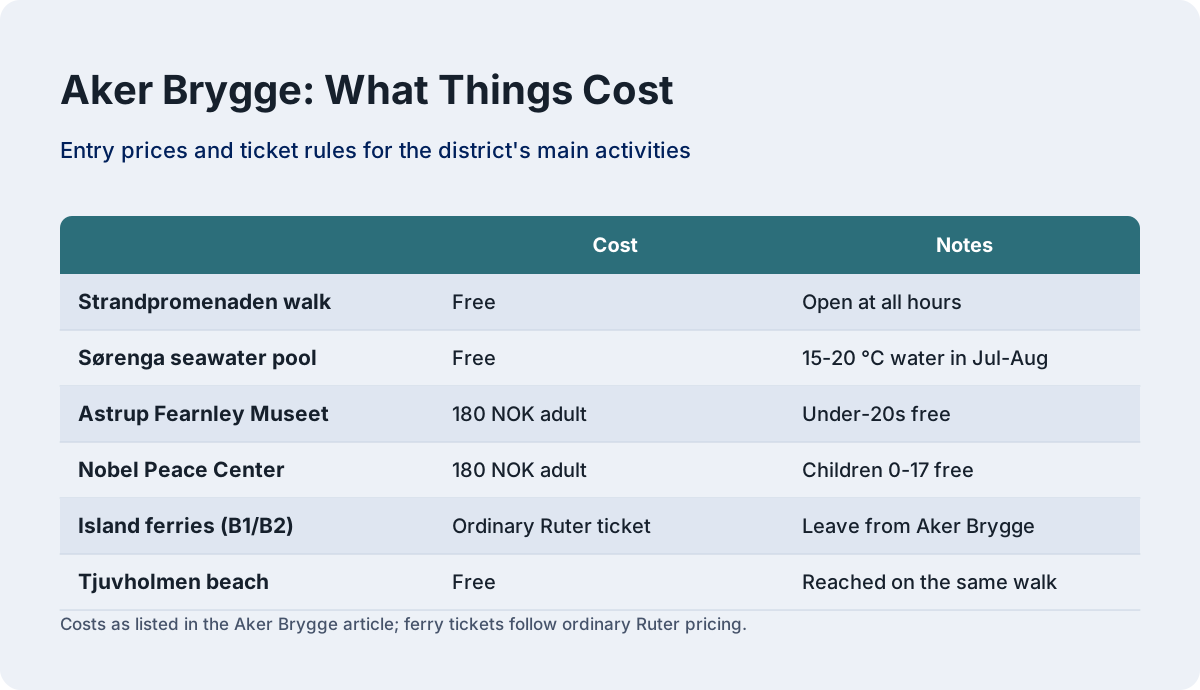
Start with the promenade and let it set the pace. The moored boats, the tug and the sight of the Akershus Fortress across the bay are the free core of the district, and the walk from the City Hall piers to Tjuvholmen's tip takes about 25 minutes at sightseeing speed. The Astrup Fearnley Museet sits at the Tjuvholmen end with adult admission at 180 NOK, students and seniors 100 NOK, and under-20s free, figures from the museum's own site. Back at the City Hall end, the Nobel Peace Center costs 180 NOK for adults with children 0 to 17 free.
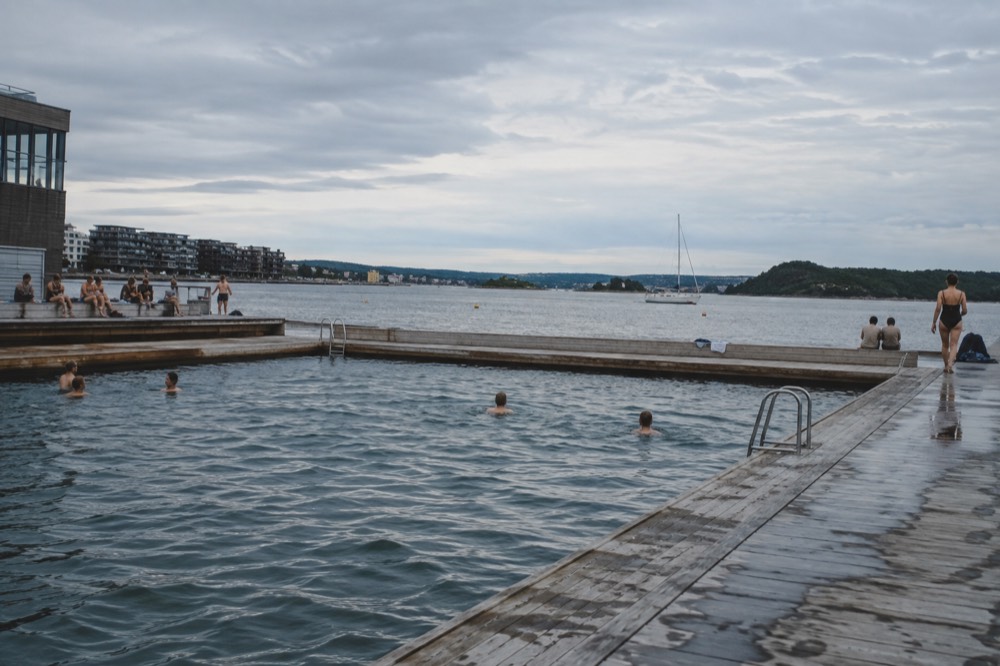
Then there is the water itself. Sørenga's seawater pool is one of Oslo's official public bathing spots, free to access, and July and August water temperatures typically sit between 15 and 20 °C, which is brisk rather than warm. The pool has facilities and kiosks in season. South of the pool, Tjuvholmen adds its small beach. Between them, the district covers a full summer afternoon without spending anything on entry.
| Activity | What it is | Cost | Notes |
|---|---|---|---|
| Strandpromenaden walk | Waterside promenade, shipyard buildings to Tjuvholmen | Free | Open at all hours |
| Sørenga seawater pool | Public bathing complex at the south end | Free | 15-20 °C water in Jul-Aug |
| Astrup Fearnley Museet | Contemporary art museum, Tjuvholmen | 180 NOK adult | Under-20s free |
| Nobel Peace Center | Peace prize exhibitions, near City Hall | 180 NOK adult | Children 0-17 free |
| Island ferries (B1/B2) | Public boats to Hovedøya, Gressholmen, Langøyene | Ordinary Ruter ticket | Leave from Aker Brygge |
| Tjuvholmen beach | Small sand beach at the district's south tip | Free | Reached on the same walk |
If you would rather have the district interpreted than just walked, a guided walk covers the waterfront as part of a central Oslo loop, and the budget option in the list below is the cheapest credible one in the city.
The trio above is chosen for contrast. The central walking tour is a low fixed price for a guide, the free highlights walk is tip-based and runs around two hours, and the food walk moves to Grünerløkka, the district where eating is genuinely cheaper than here, a useful contrast if food is your reason for visiting Oslo at all.
Where Do You Eat and Drink at Aker Brygge?
Eating at Aker Brygge ranges from the Mathallen food hall's stall prices to sit-down waterfront restaurants that sit at the top of Oslo's price scale, and the difference between the two can double the cost of a meal. The district has Oslo's densest concentration of outdoor waterside seating in summer, and SSB's price survey puts Norway's food prices 33% above the European average, so the numbers here deserve planning rather than improvisation.
The Mathallen food hall, in the brick halls at the district's north end, is the honest budget route: stalls, counters and shared tables rather than table service, and prices per dish rather than per menu. Its full character is covered on the Mathallen Oslo page. The sit-down restaurants along Strandpromenaden are the opposite end, waterside terraces serving seafood at prices that reflect both the view and Norway's cost structure. SSB's 2025 purchasing-power survey placed Norway sixth among Europe's most expensive countries, with restaurant and hotel prices above Sweden and just under Denmark's.
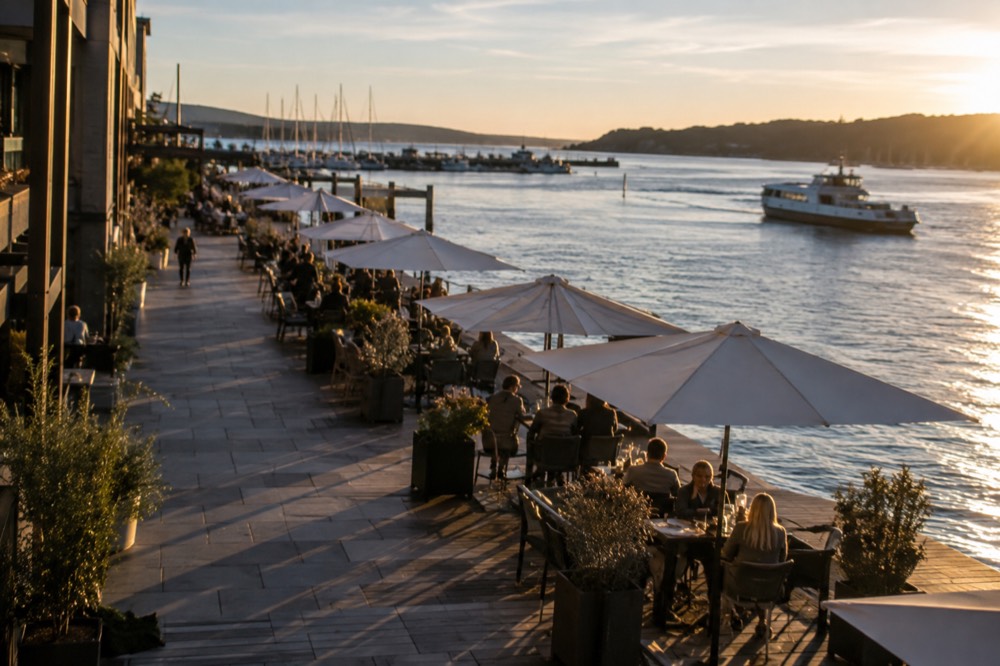
Alcohol is the line item to plan around. Vinmonopolet, the state monopoly, is the only shop selling wine and spirits in Norway, it is closed every Sunday and on public holidays, closes early on Saturdays, and its hours vary by store, so buying a bottle for a waterside picnic takes deliberate timing. Supermarkets sell beer and cider only. Statistics Norway's survey puts alcohol and tobacco at more than double the European average price, and a single round of drinks on a terrace here will make that figure feel concrete. The planning move that saves real money is eating one meal here and one somewhere cheaper, and the Grünerløkka district to the northeast is the standard answer for that second meal.
If food is the main reason you are in Oslo, a guided food walk trades a fixed price for several stops with a local explaining what you are eating, and the neighbourhood version in Grünerløkka is the strongest of them.
Is Aker Brygge Expensive Compared with the Rest of Oslo?
As a place to stand, walk and swim, no: every one of those things is free. As a place to eat and drink, yes, and by a measurable margin: SSB's price survey puts Norwegian food 33% above the European average and alcohol at more than double, and Aker Brygge's waterside terraces sit at the top of the local range rather than the middle. The district is best treated as a free venue with optional expensive extras.
The honest cost comparison is between categories, not between neighbourhoods alone. Museums in Oslo are not unusually expensive by European standards, 180 NOK is a standard adult ticket at both the Astrup Fearnley and the Nobel Peace Center, and public transport is cheaper than in most capitals after the May 2026 fare cut. The two genuinely expensive categories are restaurants and alcohol, and those are precisely the two that Aker Brygge concentrates. A visitor who walks the promenade, swims at Sørenga and takes a ferry has spent almost nothing. A visitor who sits down for dinner and a bottle of wine has spent like a visitor to the sixth most expensive country in Europe.
| Category at Aker Brygge | Typical cost level | Why |
|---|---|---|
| Walking, swimming, ferries | Minimal | Promenade and Sørenga pool free, ferries on ordinary Ruter tickets |
| Museum visits | Moderate | 180 NOK standard adult, concessions and child policies cut it |
| Food hall eating | Mid-range | Stall pricing, Mathallen |
| Waterside restaurants | High | Top of Oslo's restaurant range |
| Terrace drinks | Very high | Alcohol more than double the EU average per SSB |
For the wider picture of what Oslo costs across a whole trip, the is Oslo expensive breakdown uses the same SSB figures, and the Oslo on a budget guide collects the free and cheap options in one place. This district appears in both: free to walk, expensive to sit.
How Do You Get to Aker Brygge, and Where Do the Ferries Go?
Aker Brygge is a 10 to 15 minute walk from the National Theatre and Oslo Central Station is two tram stops or a short ride away, with several tram and bus lines stopping at the district's edges. From the Aker Brygge pier itself, Ruter's island ferries B1, B1X and B2 run to Hovedøya, Gressholmen, Bleikøya, Nakholmen and Langøyene on ordinary Ruter tickets. The separate Bygdøy museum ferry does not leave from here at all, it leaves from Rådhusbrygge 3.
Getting in is easy by every mode except car. The tram stops nearest the district are Aker Brygge itself and nearby stops along the western bay, and buses serve the main road at its back. On foot, the route from the National Theatre along the water is the pleasant one, and the getting around Oslo guide covers the ticket system in full. One zone 1 ticket covers the whole metro network and central Oslo, and a single ticket's 60 minute validity extends by 30 minutes for each additional zone you buy.
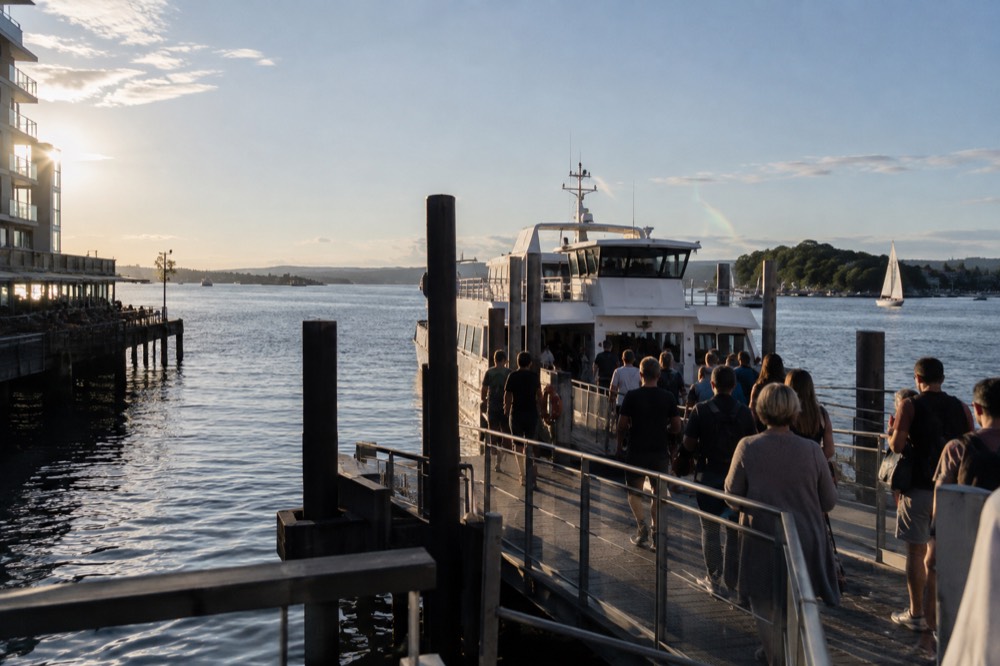
The ferry geography is where most guides quietly fail, so it is worth stating twice in one article's lifetime and never again. The island ferries are Ruter public transport: line B1 runs a year-round circle to Hovedøya, Lindøya, Gressholmen, Bleikøya and Nakholmen, B2 adds Langøyene in the summer season, and B1X is a summer extra to Hovedøya. They accept any valid Ruter ticket or the Oslo Pass, with no surcharge, and their summer timetable in 2026 ran 4 July to 30 August with an autumn timetable to 18 October. The Bygdøy museum ferry is a different operator entirely, running from Rådhusbrygge 3 further east, roughly every 20 minutes, from 14 March to 4 October 2026, and Ruter tickets are not valid on it, only the Oslo Pass.
| Route | Departure pier | Ticket | Season |
|---|---|---|---|
| B1 island circle (Hovedøya, Gressholmen, etc.) | Aker Brygge | Ordinary Ruter ticket / Oslo Pass | Year round, reduced off-summer |
| B2 to Langøyene | Aker Brygge | Ordinary Ruter ticket / Oslo Pass | Summer season |
| B1X extra to Hovedøya | Aker Brygge | Ordinary Ruter ticket / Oslo Pass | Summer season |
| Bygdøy museum ferry | Rådhusbrygge 3 | Oslo Pass only, not Ruter tickets | 14 Mar to 4 Oct 2026 |
Where those island ferries land is worth a sentence: Hovedøya has the ruined Cistercian abbey and is the closest green escape, while Langøyene is the swimming and beach island. The Oslo islands guide covers each one, and the Hovedøya page goes deep on the abbey island a ten minute ride from this pier.
A short boat trip is also the most popular single activity in the city, and the silent electric cruise is the default version of it.
Is Aker Brygge Worth a Full Day?
Yes, if you build it as a water day rather than a shopping day. The promenade, the two museums, the Sørenga pool, one meal and one island ferry ride fill a full day comfortably, and the Oslo Pass at 580 NOK for 24 hours can pay for itself on the museums, the transport and the Bygdøy ferry alone. Treated as a two-hour restaurant stop, it is the most expensive two hours in the city, treated as a base for the fjord, it is the best located one.
The pass arithmetic deserves its own look, because this district is where it works hardest. Three Bygdøy museums at full price, Kon-Tiki at 180 NOK, Fram at 180 NOK and the Maritime Museum, already total more than a 24 hour pass costs before you have boarded a single ferry, and the pass also covers the museum ferry out to them and the island ferries from this pier.
| Oslo Pass (adult, 2026) | Price | What it covers that matters here |
|---|---|---|
| 24 hours | 580 NOK | 30+ museums, Ruter zones 1-4N, both ferry systems |
| 48 hours | 845 NOK | Same, over two days |
| 72 hours | 995 NOK | Same, over three days |
The full pass case, including the airport train detail that most guides state wrong, is on the Oslo Pass page. The short version of that detail: the pass covers Vy trains to and from Gardermoen, not Flytoget, and the difference is 268 NOK each way on the airport express.
A different way to fill a day from this shoreline is the evening boat with the shrimp buffet, an Oslo institution rather than a generic dinner cruise, running three hours out into the fjord.
When Is the Best Time of Year to Visit Aker Brygge?
Summer, unambiguously, and specifically June through August, when the terraces are open, the island ferries run their full schedules, the seawater pool is swimmable at 15 to 20 °C, and daylight runs past 22:00. From late September the outdoor life contracts, the B2 island ferry stops, and the district becomes an indoor food hall and museum proposition, which still works, just differently.
The numbers behind that are Oslo's, not the district's. On 21 June the sun rises at 03:53 and sets at 22:43, with 18 hours 50 minutes of daylight and no true darkness in between, while on 21 December there are 5 hours 53 minutes, sunrise 09:18, sunset 15:11. August deserves its own caution: it is Oslo's wettest month on the 1991 to 2020 normals at 103 mm, wetter than November, so a summer visit here is a daylight bet rather than a dry one. The seasonal detail, including which months suit which activities, is in the best time to visit Oslo guide.
| Season | Waterfront life | Water | Ferries |
|---|---|---|---|
| Jun-Aug | Terraces open, full crowd | 15-20 °C, swimmable | Full summer timetable |
| Sep-Oct | Quieter, indoor dining grows | Cold | Autumn timetable to 18 Oct |
| Nov-Feb | Food hall, museums, lights | Closed to swimming | B1 reduced circle only |
| Mar-May | Terrace season returns | Brisk | Bygdøy ferry from 14 Mar |
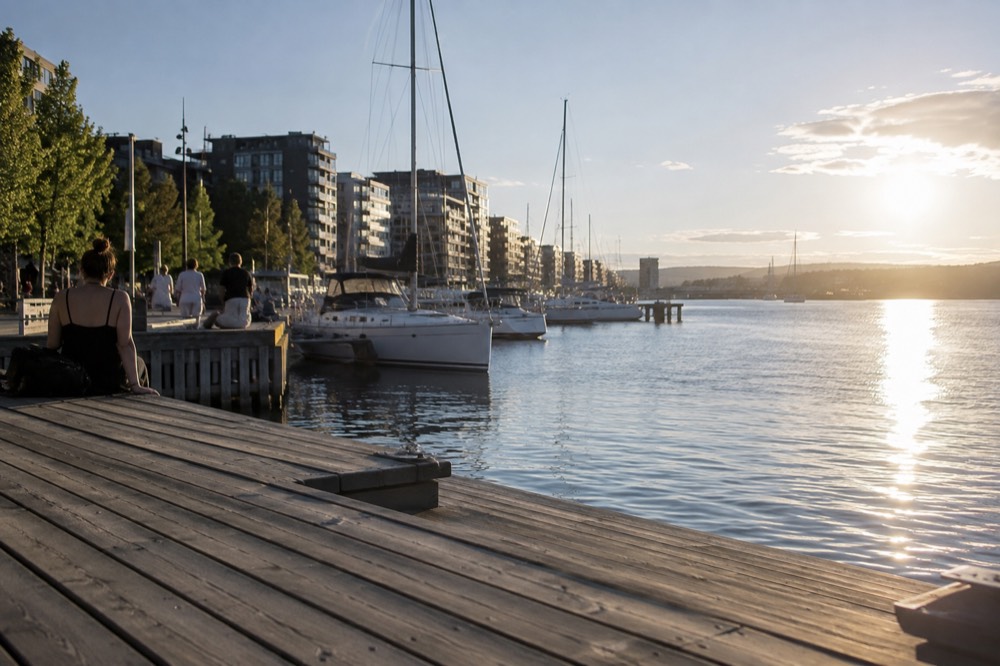
Winter has one genuine compensations here: the darkness that shrinks the day also makes the harbour lights and the Akershus silhouette across the water the whole point of a short evening walk, and the evening myths-and-legends walk uses that atmosphere well.
What Is Within Walking Distance of Aker Brygge?
A remarkable amount of central Oslo sits inside a 20 minute radius: the City Hall and its piers, Karl Johans gate, the Royal Palace, the National Theatre, and the Akershus Fortress across the bay, with the Tjuvholmen extension continuing south. The Opera House on the east side of the bay is a 30 to 35 minute walk around the water, and it is free to walk on its roof.
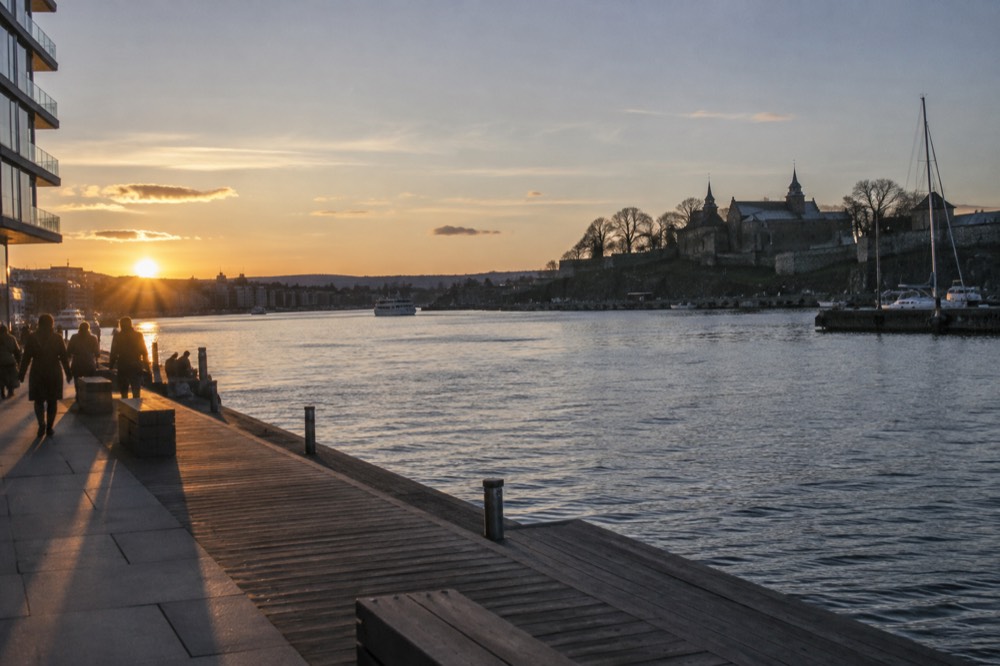
That radius is why the district works as a base rather than an excursion. North of the shopping halls, Karl Johans gate runs from the National Theatre to the Central Station past the Karl Johans gate street spine and the palace grounds. East across the bay, the Akershus Fortress and its resistance museum anchor one of the best free-to-roam historic sites in the city, and the Akershus Fortress page covers what is free and what is ticketed there.
If you are planning days rather than districts, the one day in Oslo itinerary puts a waterfront segment together with the classics, and the master list of activities is the natural next stop. For arriving here from the cruise port or the airport, the relevant transport pages handle both routes into the city.
Common Questions About Aker Brygge
Is Aker Brygge free to visit?
Yes. The promenade, the marina, the Sørenga seawater pool and Tjuvholmen beach all cost nothing. Only the museums (180 NOK standard adult) and the eating and drinking carry charges, and the island ferries ride on ordinary Ruter tickets.
How do I get from Oslo Central Station to Aker Brygge?
On foot it is around 20 to 25 minutes along the bay. By tram, several lines from stops near the station run to the district's edge, all inside Ruter zone 1, and a single zone ticket is valid for 60 minutes from activation.
Can you swim at Aker Brygge?
Yes, at the Sørenga seawater pool at the south end, one of Oslo's official public bathing spots. Realistic July and August water temperatures are 15 to 20 °C. It is free, with facilities and kiosks in season.
Do Ruter tickets work on the ferries from Aker Brygge?
On the island ferries, yes. Lines B1, B1X and B2 to Hovedøya, Gressholmen, Langøyene and the other islands accept any valid Ruter ticket with no surcharge. The Bygdøy museum ferry does not leave from Aker Brygge, it leaves from Rådhusbrygge 3, and it accepts only the Oslo Pass.
Is Aker Brygge the same as Tjuvholmen?
No, but they run together. Aker Brygge is the converted shipyard district; Tjuvholmen is the newer extension built on reclaimed land to the south, with the Astrup Fearnley Museet and its small beach. The promenade connects them with no street crossing.
What is the best time of day to visit Aker Brygge?
Evenings in summer. The sun sets as late as 22:43 in late June, the terraces are at their fullest, and the light across the bay toward Akershus is the district's best hour. Off-season, midday works better, centered on the food hall and museums.