Best Time to Visit Oslo: A Month-by-Month Guide
Oslo rewards timing more than most capitals: the same city offers eighteen-hour June evenings, a snow-covered forest, and a museum peninsula that changes its opening hours with the seasons. Here is what each period actually delivers.
Short answer
Late May through early September is the best time to visit Oslo for fjord boats, islands and long daylight, with June offering up to 18 hours 50 minutes of light. For museums, lower prices and fewer crowds, aim for May, September or early October. For winter atmosphere and snow-based activities, plan for January through March. Avoid relying on August for dry weather, it is Oslo's wettest month.
What Is the Best Time to Visit Oslo?
The best time to visit Oslo is late May through early September if the fjord, the islands and long evenings are the point of your trip, and May or September if you want the same city with fewer visitors and lower prices. Winter, from January through March, is its own trip: reliable snow in the forest, short days of under eight hours, and a genuinely different activity set. There is no single wrong month, but each month buys you a different city.
Oslo sits at 59.91 degrees north, and that single fact shapes everything on this page. The same city that gives you a 22:43 sunset in late June hands you a 15:11 sunset in late December. That swing, more than temperature, is what you are actually choosing between when you pick dates.
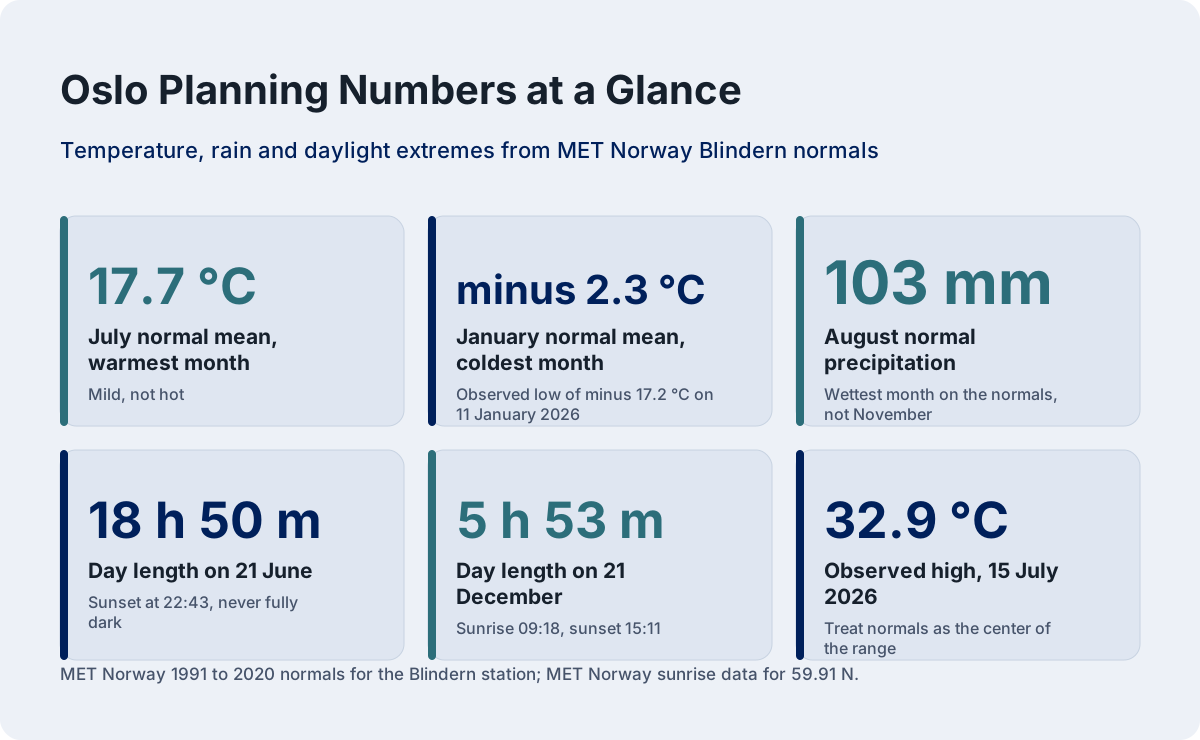
Two things this page will not do: sell you a single "perfect" week, or pretend Oslo's summer is warmer than it is. July's normal mean is 17.7 °C, which is mild, not hot, and August is the wettest month on the 1991 to 2020 normals at 103 mm, not November as many guides claim. Every figure below comes from MET Norway's official station data for Blindern.
Budget is a season too. Norway is the sixth most expensive country in Europe on Statistics Norway's 2025 price-level survey, and hotel rates in Oslo track demand: midsummer and the weeks around Christmas cost the most, while May, September and early November soften noticeably. You can dig into the full cost picture in our Oslo trip cost guide and the is Oslo expensive breakdown.
Oslo Month by Month: Weather, Crowds and Prices
May and September are the strongest all-round months: temperatures of 11 to 12 °C, thinner crowds, and every major attraction open. June through August adds swimming weather, the full island ferry schedule and every outdoor terrace, at the price of peak crowds. December and January trade daylight for snow, Christmas markets and the lowest accommodation rates outside the holidays.
MET Norway's 1991 to 2020 normals for the Blindern station give the real baseline. July's normal mean of 17.7 °C is the warmest month, and the coldest is January at minus 2.3 °C. The observed 2025/26 year was colder than normal in winter, with a low of minus 17.2 °C on 11 January 2026 and a high of 32.9 °C on 15 July 2026, so treat the normals as the center of the range, not the ceiling.
| Month | Normal mean °C | Normal precip mm | What it means for a visit |
|---|---|---|---|
| Jan | −2.3 | 58 | Snow-reliable, very short days, quiet |
| Feb | −2.0 | 46 | Ski season at its best, still dark mornings |
| Mar | 1.3 | 41 | Snow plus returning light, 11 h 45 m days |
| Apr | 6.2 | 48 | Thaw, unpredictable, cheap |
| May | 11.4 | 60 | Shoulder sweet spot, museum ferry restarts |
| Jun | 15.3 | 80 | Longest days, full summer program |
| Jul | 17.7 | 87 | Warmest, peak season, busiest |
| Aug | 16.5 | 103 | Wettest month, locals on vacation |
| Sep | 12.2 | 82 | Second sweet spot, autumn color starts |
| Oct | 6.6 | 93 | Darker, rainy, quiet and cheap |
| Nov | 2.2 | 85 | First snow possible, museums are the draw |
| Dec | −1.4 | 54 | Christmas market, snow, 5 h 53 m days |
One pattern worth naming: the two wettest normal months in Oslo are August (103 mm) and October (93 mm), not the winter months people expect. Summer rain in Oslo tends to come in showers rather than all-day drizzle, but packing for August should mean packing for rain.
Crowds follow a predictable curve. The Bygdøy museums, the MUNCH museum and the fjord boats are busiest from mid-June to early August and in the Christmas week. Late May and September give you the same opening hours, the same ferry schedules in September's case, and noticeably shorter lines. For the deeper monthly breakdown, see Oslo weather by month.
If you are matching your dates to the fjord rather than the thermometer, the three highest-value activities to book ahead are below: the electric fjord cruise that anchors most visitors' trips, the Kon-Tiki ticket for the Bygdøy day, and a food walk for the evening.
Oslo's Daylight Swing: The Planning Fact Most Guides Skip
Daylight in Oslo ranges from 5 hours 53 minutes on 21 December to 18 hours 50 minutes on 21 June, a swing of more than a factor of three. In late June the sun sets at 22:43 and it never gets fully dark. In late December the sun rises at 09:18 and sets at 15:11. Your sightseeing capacity in winter is roughly a third of what it is in summer, so plan winter days around one anchor activity, not three.
These times come from MET Norway's own sunrise data for 59.91 N, and they deserve a place in your planning that temperature never earns. A June visitor can do a museum, a fjord cruise and a long evening walk and still have light at 22:00. A December visitor gets one of those.
| Date | Sunrise | Sunset | Day length |
|---|---|---|---|
| 15 Jan | 09:04 | 15:49 | 6 h 45 m |
| 15 Feb | 07:54 | 17:08 | 9 h 14 m |
| 15 Mar | 06:34 | 18:19 | 11 h 45 m |
| 15 Apr | 06:00 | 20:34 | 14 h 34 m |
| 15 May | 04:40 | 21:48 | 17 h 08 m |
| 21 Jun | 03:53 | 22:43 | 18 h 50 m |
| 15 Jul | 04:21 | 22:23 | 18 h 02 m |
| 15 Aug | 05:31 | 21:09 | 15 h 38 m |
| 15 Sep | 06:44 | 19:38 | 12 h 54 m |
| 15 Oct | 07:55 | 18:08 | 10 h 13 m |
| 21 Dec | 09:18 | 15:11 | 5 h 53 m |
Two honest corrections to what you may have read elsewhere. First, there is no midnight sun in Oslo: that requires latitude north of the Arctic Circle at roughly 66.5 N, and Oslo is nearly seven degrees south of it. Late June gives deep twilight rather than true night, which is wonderful but is not the sun circling the horizon. Second, note the time zone: Norway uses CET in winter and CEST in summer, so a summer sunset time is on summer time. Our Oslo daylight hours guide goes deeper if this is the deciding factor for you.
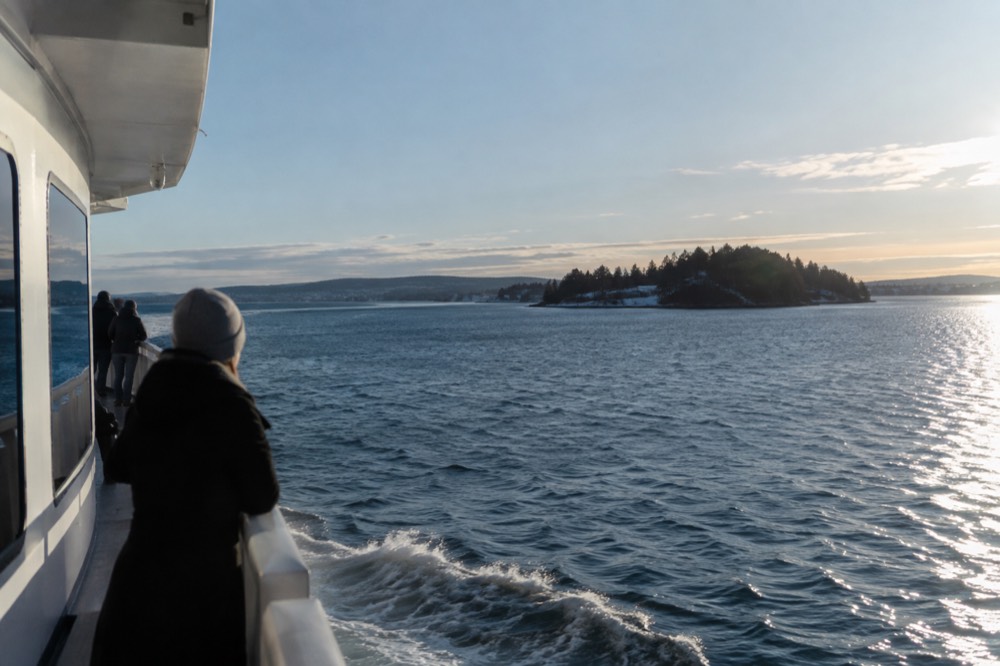
The cruise runs year-round, but the experience differs by season: summer sailings give you the full island panorama in evening light, while autumn and winter trips are quieter, darker and often closer to having the deck to yourself. The live listing carries the current departure schedule for the period you are targeting.
Best Time for Museums and the Bygdøy Peninsula
Every major Oslo museum is open year-round, so museums are the winter and shoulder-season answer rather than a reason to pick midsummer. The practical seasonal constraint is the Bygdøy museum ferry: it runs only from 14 March to 4 October 2026, from Rådhusbrygge 3. Outside that window, Ruter bus 30 reaches the same museums on an ordinary ticket. Interior cultural museums hit their stride from November through March.
The Museum of the Viking Age remains closed while it is rebuilt, with the museum's own stated reopening year being 2027, so no 2026 itinerary should count on it. Its substitute for Viking-curious visitors is Viking Planet, and our Museum of the Viking Age page tracks the closure in detail. The good news on Bygdøy is that nothing else major is shut: Fram, Kon-Tiki, the Norsk Folkemuseum and the rest were all confirmed operating normally in the most recent checks.
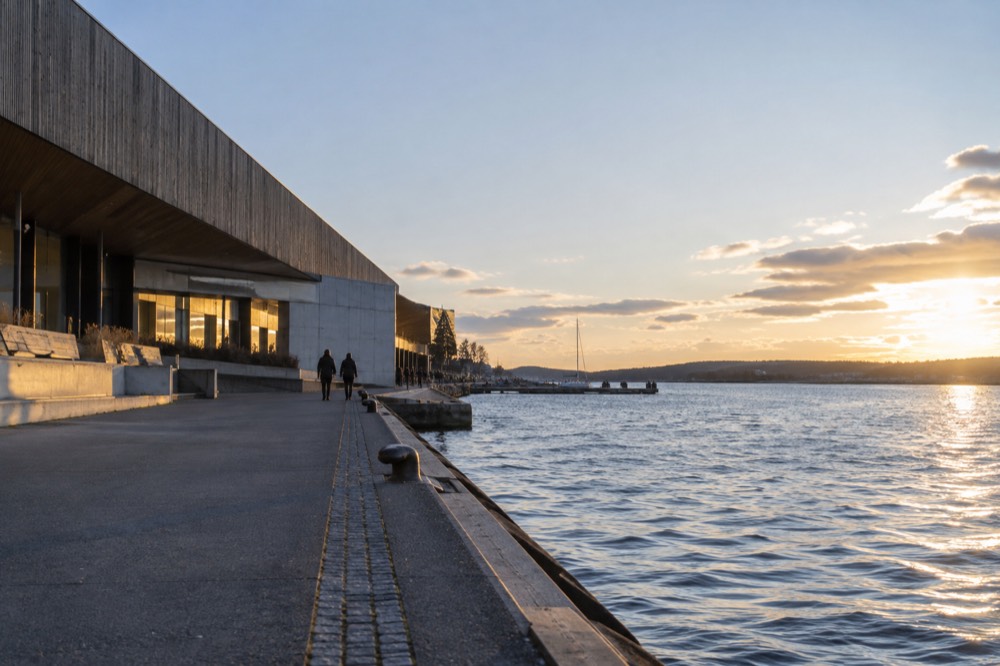
Winter museum days are short-day days by design. With daylight ending around 15:00 in December, an indoor anchor like the Fram Museum or the National Museum, which holds The Scream, fills the dark afternoon perfectly. Museum hours are seasonal: Fram runs 10:00 to 17:00 from October to April and 09:30 to 18:00 from May to September. The rest of the planning pages sit on Oslo Travel Guide. The rest of the planning pages sit on Oslo Travel Guide.
The Kon-Tiki Museum ticket is the natural anchor for a Bygdøy day in any season, and it is the best-reviewed museum ticket in the city.
The combination logic is worth knowing before you pick dates: a combined Kon-Tiki and Fram ticket costs 325 NOK at the door, and adding the Maritime Museum takes the combo to 485 NOK. Those prices are set by the museums themselves, so check their sites near your travel date. The Oslo Pass covers all of them, which is one input in the is the Oslo Pass worth it calculation.
Best Time for the Oslofjord, Boats and Islands
The Oslofjord season runs with the ferry schedules: the island ferries run year-round on line B1, but the summer-only B2 to Langøyene and the B1X frequency run roughly from July through August, and the Bygdøy ferry only from mid-March to early October. Water temperatures for swimming realistically reach 15 to 20 °C in July and August. Outside summer you can still cruise, you just cannot comfortably swim.
The two ferry systems are different, and mixing them up costs real money. The Bygdøy museum ferry departs Rådhusbrygge 3, does not accept Ruter tickets, and is included with the Oslo Pass. The public island ferries, lines B1, B1X and B2, depart Aker Brygge, run on an ordinary Ruter zone 1 ticket, and serve Hovedøya, Gressholmen, Langøyene and the other islands. Our Oslo ferries guide and the Oslo islands page cover both systems in detail.
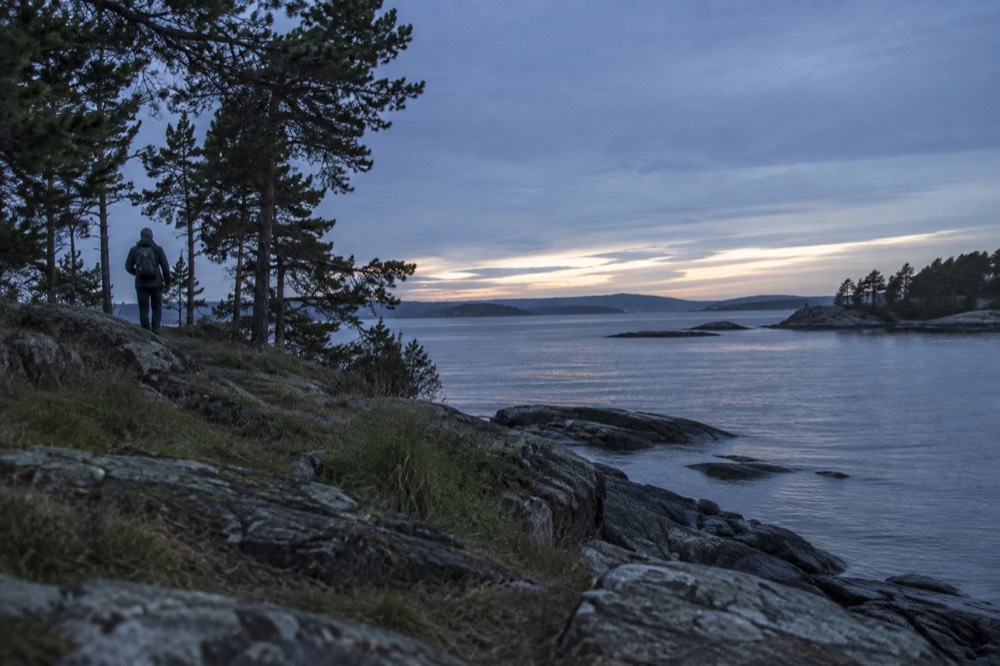
For the commercial sightseeing boats, season matters less than you might think. The silent electric fjord cruise, the single best-reviewed activity in Oslo across the major booking platforms with a 4.5 rating over thousands of reviews, runs through the year. What changes is the experience: a 90-minute summer cruise in evening light versus a quieter cold-season sailing where the islands sit in blue dusk.
That electric cruise is the one most visitors should anchor a first Oslo day around, and it works in every season on this page.
If you want the full water day rather than a 90-minute circuit, island hopping on the public ferries is the Oslo-specific move: ferry to Hovedøya, walk the ruined Cistercian abbey, ferry onward. The full-day five-island boat tour covers similar ground in one organized block. For everything on choosing between the boats, see the Oslofjord cruise guide.
Oslo in Winter: Snow, Darkness and a Different Activity Set
Oslo is a legitimately good winter city from January through March, with snow-reliable forest trails in Nordmarka, torchlit evening walks, snowshoeing and learn-to-ski half-days, all reachable by metro from the center. Daylight is the constraint: plan one anchor activity per day and put it between 10:00 and 15:00. December trades some of that for the Christmas market at the expense of the shortest days of the year.
Winter activities here are real products, not consolation prizes. Guided snowshoeing in Nordmarka, the torchlit forest walk with a campfire, and a learn-to-ski half-day all run in the cold months, and Oslo is one of very few European capitals where a ski lesson is a metro ride from the center. Metro line 1 to Frognerseteren puts you at the trailhead; see skiing near Oslo for the full picture.
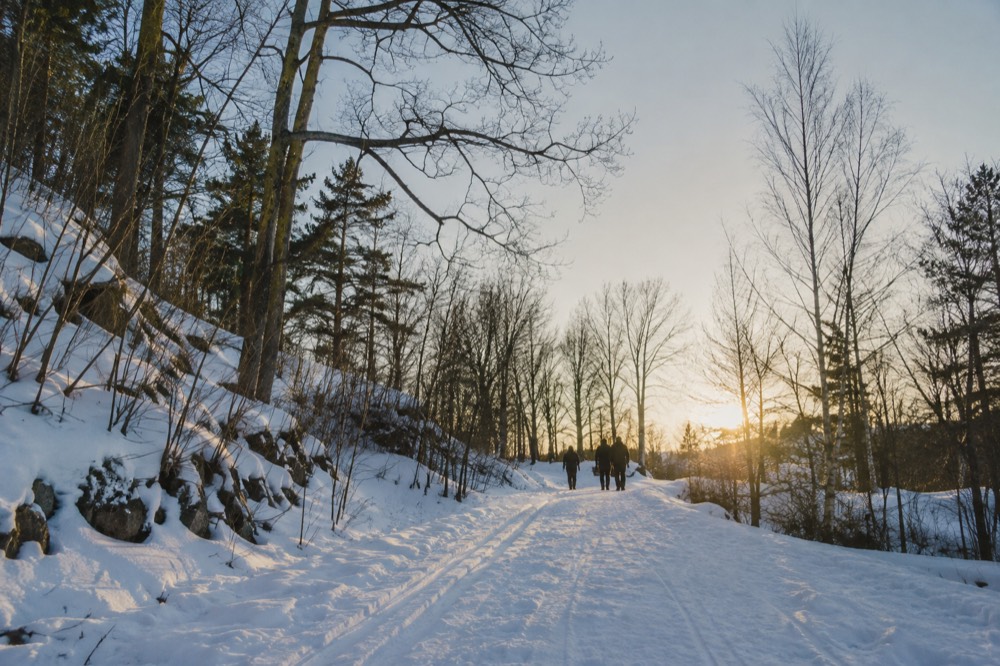
Temperatures are manageable rather than arctic. The January normal mean is minus 2.3 °C, and the observed low in the most recent winter was minus 17.2 °C. Pack for minus ten as a floor, in Celsius terms, and layer. Our Oslo in winter guide has the packing and itinerary detail.
One planning note that catches visitors out: snow depth in the city itself is not something to bank on in November and early December. The normals data measures precipitation, not lying snow, and no verified city snow-cover figure exists, so book winter activities in the January-to-March window if deep snow matters to you. The evening myths-and-legends walking tour is the dark-season product that fills the long winter nights after the outdoor activity ends, and it runs in exactly the October-to-March window when the days are shortest.
Events, Shoulder-Season Sweet Spots and When to Avoid Oslo
The two dates that transform the city are 17 May, the national day, which turns central Oslo into a family street party from early morning, and late August into September, when the calendar of festivals and returning locals gives the city energy without peak-season crowds. Avoid mid-August if you want everything open: many restaurants and smaller businesses take their own summer break then, and it is also the wettest month.
17 May is unlike the military parades elsewhere in Europe: children's parades, Russefeiring students in overalls, and the city center closed to cars. It is a spectacular day to witness and a genuinely awkward one for sightseeing, since museums close and transport is disrupted. Our 17 May in Oslo guide helps you decide which side of that trade you are on.
| Season | Best for | Trade-off |
|---|---|---|
| Late May | Museums plus ferries, thin crowds, 17 h 08 m daylight | Cool evenings, sea too cold to swim |
| Late June | Longest days, terraces, swimming possible | Peak prices, busiest museums |
| Early September | Warm sea, autumn color, locals back | Ferry frequency tapering |
| 17 May | The national day itself | Closures, crowds, transport disruption |
| January to March | Snow, forest activities, low hotel rates | Daylight under 8 h, cold |
| Mid-August | Festivals | Wettest month, some closures |
| Christmas week | Market, lights, atmosphere | Highest rates, 5 h 53 m days |

Shoulder season is also the food season. The Grünerløkka food-and-culture walk, the neighborhood food tour through Oslo's most characterful district, runs across the warmer months and slots naturally into a May or September evening, followed by exploring what to eat via our best restaurants in Oslo picks.
Rain planning is its own small skill here. If you land a wet week, and October through December will deliver some, the indoor set is deep: MUNCH, the National Museum, Paradox Museum and the Bygdøy museums can absorb two full days. Our rainy day in Oslo itinerary covers exactly that scenario.
Finally, whatever month you choose, the Oslo planning homepage pulls the season you land in into a full itinerary, and the things to do in Oslo list is the fastest way to see which activities match your dates. Book the three anchors below early for midsummer or Christmas-week trips: those are the two windows where capacity genuinely tightens.
Common Questions About the Best Time to Visit Oslo
What is the best month to visit Oslo?
May and September are the best all-round months: every major attraction is open, crowds are thinner than midsummer, and normal temperatures sit at 11 to 12 °C. If long evenings and swimming matter more, choose late June or July, accepting peak crowds and prices.
What is the warmest month in Oslo?
July is the warmest month, with a normal mean of 17.7 °C from MET Norway's 1991 to 2020 station normals. The warmest observed day in the recent record was 32.9 °C on 15 July 2026. Oslo summers are mild rather than hot, so pack layers for evenings.
What is the rainiest month in Oslo?
August is Oslo's wettest month on the official normals, at 103 mm, ahead of October at 93 mm. Many guides name November, which is wrong: November's normal is 85 mm. Pack rain gear for August trips, not just for autumn.
Is Oslo worth visiting in winter?
Yes, from January through March, with adjusted expectations. Snow-based activities in Nordmarka, torchlit walks, a learn-to-ski half-day and the full museum set make it a real winter city trip. The constraint is daylight: 5 hours 53 minutes on 21 December, rising to about 9 hours by mid-February.
When does the Bygdøy museum ferry run?
The Bygdøy ferry runs seasonally, from 14 March to 4 October 2026, departing Rådhusbrygge 3 every 20 minutes. It accepts the Oslo Pass but not ordinary Ruter tickets. Outside the season, Ruter bus 30 serves the peninsula year-round on a normal ticket.
Does it ever get dark in Oslo in summer?
It gets dark, but not fully, in late June. The sun sets at 22:43 on 21 June and rises at 03:53, and the gap is deep twilight rather than true night. There is no midnight sun in Oslo: that requires latitude north of the Arctic Circle, roughly 66.5 N, and Oslo sits at 59.91 N.