Akershus Fortress Oslo: What to See and How to Plan a Visit
Akershus Fortress sits on its own headland above the Oslofjord, walking distance from City Hall and Aker Brygge, and it combines a castle, several museums, harbor views and a stretch of public parkland in one stop. This guide covers what is inside, how to reach it, what is free, and how to pair it with the rest of a first day in Oslo.
Short answer
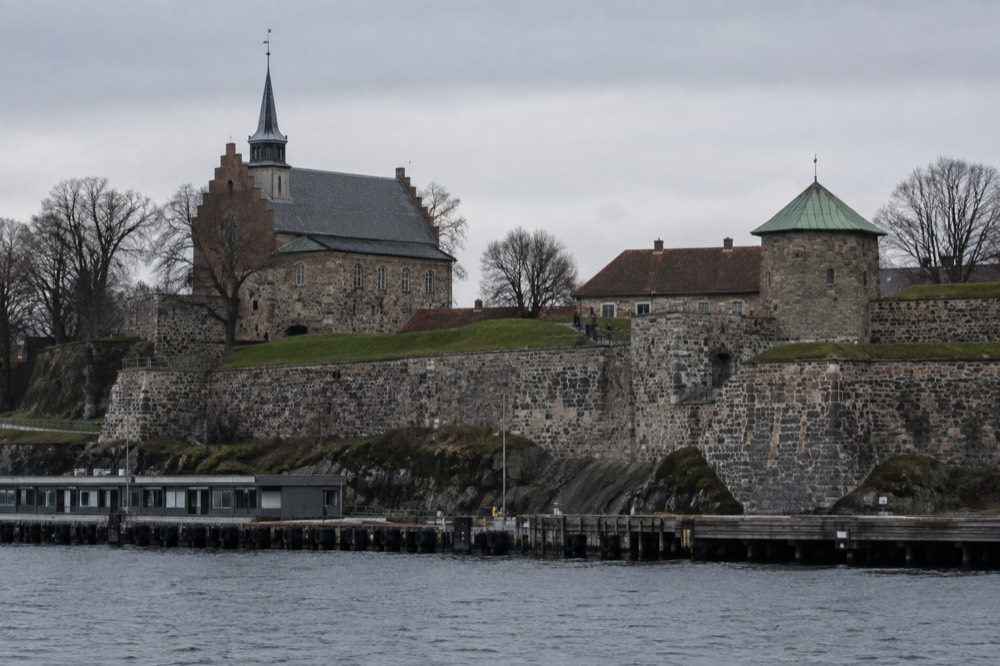
Akershus Fortress is a castle and fortress complex on the Oslofjord waterfront, about 10 minutes on foot from Oslo City Hall. The grounds and ramparts are walkable without a ticket, while the castle interior and the museums inside the fortress, including the Norwegian Resistance Museum, are paid separately. Allow two to three hours, more if you add the museums.
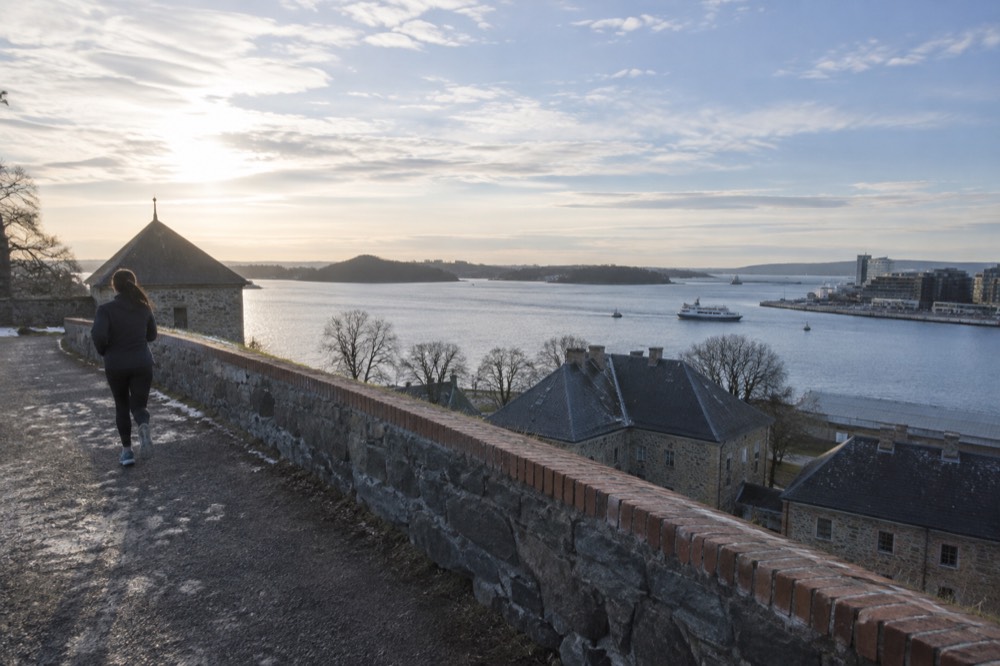
Few cities put a working medieval-style fortress within a ten minute walk of their cruise terminals, but Oslo does. Akershus Fortress occupies a headland at the mouth of the inner harbor, directly across the water from Aker Brygge, and it packs a castle, the Norwegian Resistance Museum, a model of the military complex, and open rampart walks into one compact peninsula. Most first-time visitors see only the outside walls from a fjord boat and never actually climb up. That is a missed stop, because the ramparts are free to walk and give one of the best elevated views over the Oslofjord, the Opera House and the container port.
This page covers the fortress the way a planner needs it: what is inside, what costs money, how to get there, how much time to budget, and how to slot it into a first day. If you are still sketching the whole trip, our one day in Oslo itinerary puts the fortress in its usual late-morning slot, and things to do in Oslo gives the full menu of everything else.
What Exactly Is Akershus Fortress?
Akershus Fortress is a castle and fortified complex on a promontory beside the inner Oslofjord, and it has functioned as a military site, a royal residence and a prison over its long history. Today the area mixes open public ground, a paid castle interior, several museums, and an active military presence, so parts of the site remain off limits and uniformed personnel are a normal sight on the paths.
The headland also carries memorials and formal grounds tied to Norway's WWII history, which is what brings many visitors beyond the photo stop, and the whole complex is small enough to wander without a route and rewarding enough to plan one anyway.
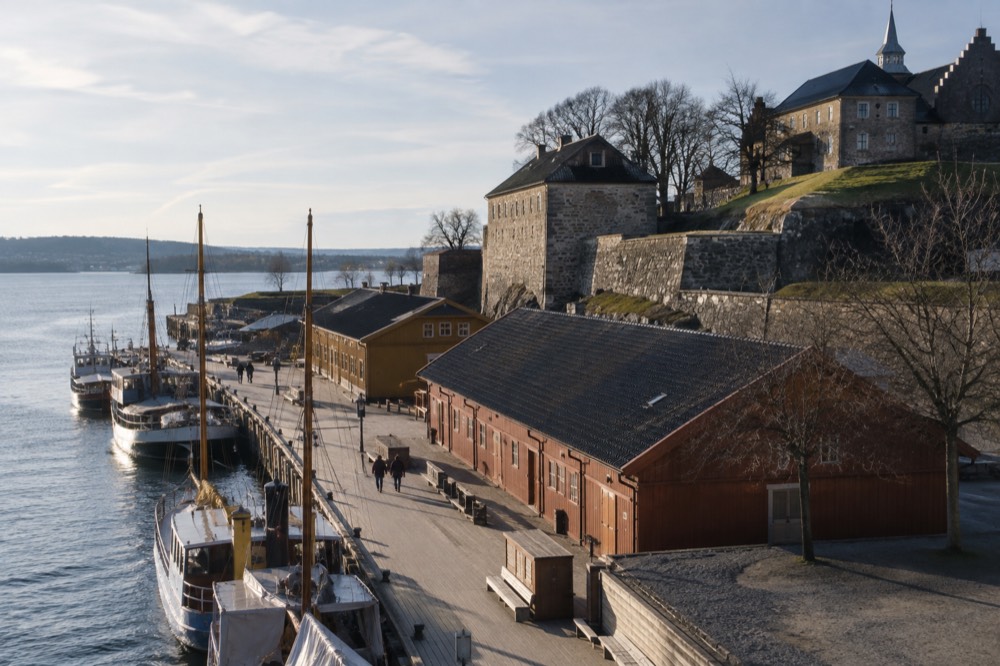
The fortress is not one building you ticket your way into, it is a zone. You walk in through the gates without paying, and you decide on the spot whether the castle rooms, the Norwegian Resistance Museum or the other paid interiors are worth their individual entries. The walls themselves, the rampart walks, the harbor-facing lawns and the views are the free part, and for a lot of visitors they are the best part. The complex sits next to Aker Brygge, so a fortress visit chains naturally into the waterfront restaurants and the piers where the fjord boats leave.
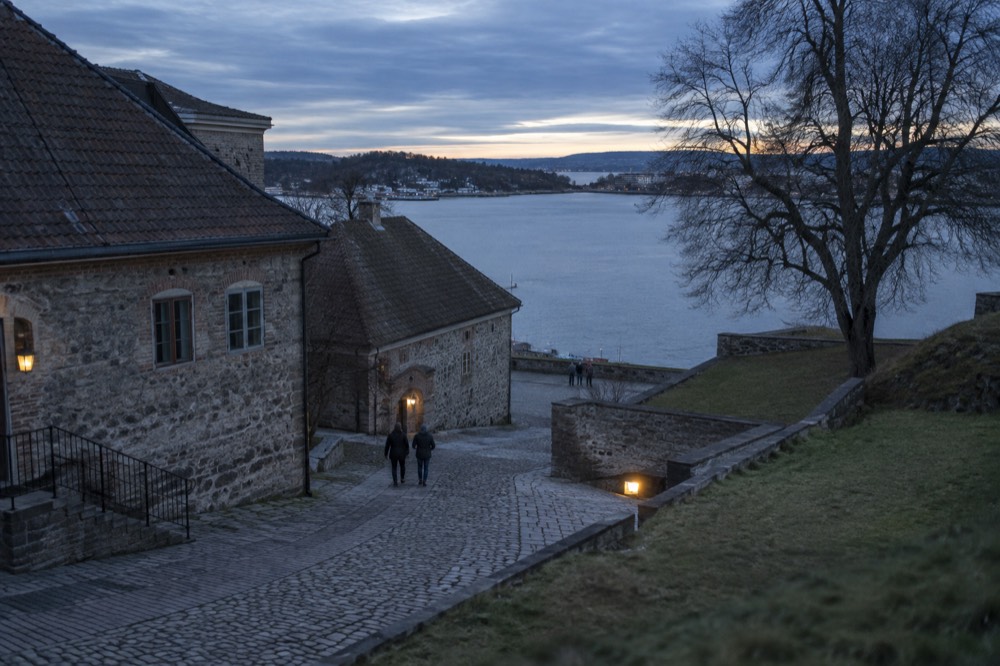
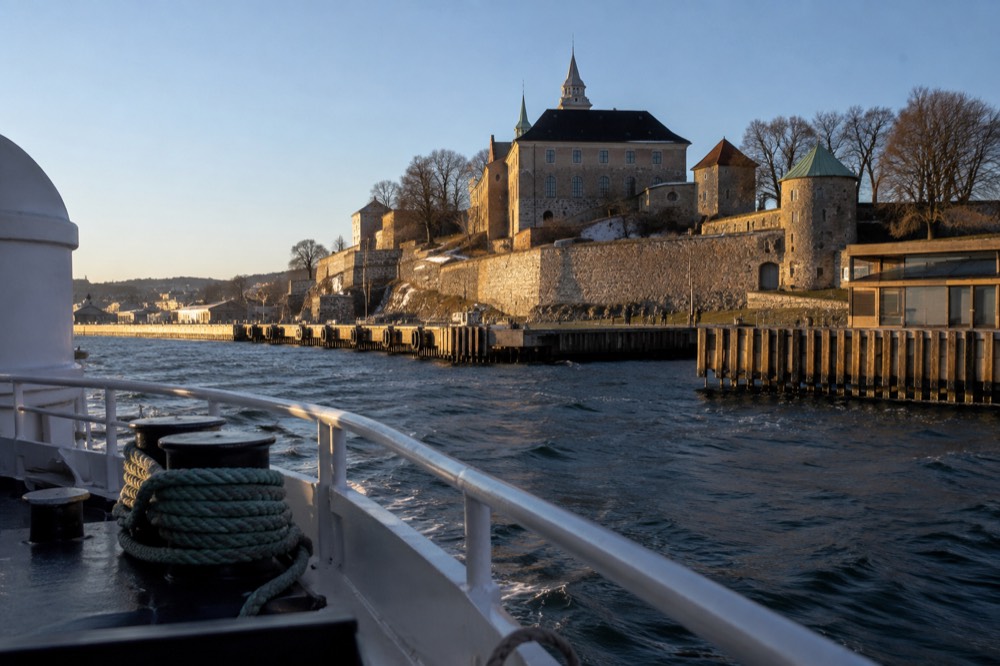
The setting is the quiet argument for going. The fortress looks down on the harbor mouth from a raised shelf of rock, with the Oslofjord stretching out behind, the islands visible on clear days, and Oslo City Hall diagonally across the water. Every fjord cruise in the city sails directly past these walls, so you will photograph them anyway. Seeing them from the top first, then from the water, is the better order.
How Do You Get to Akershus Fortress?
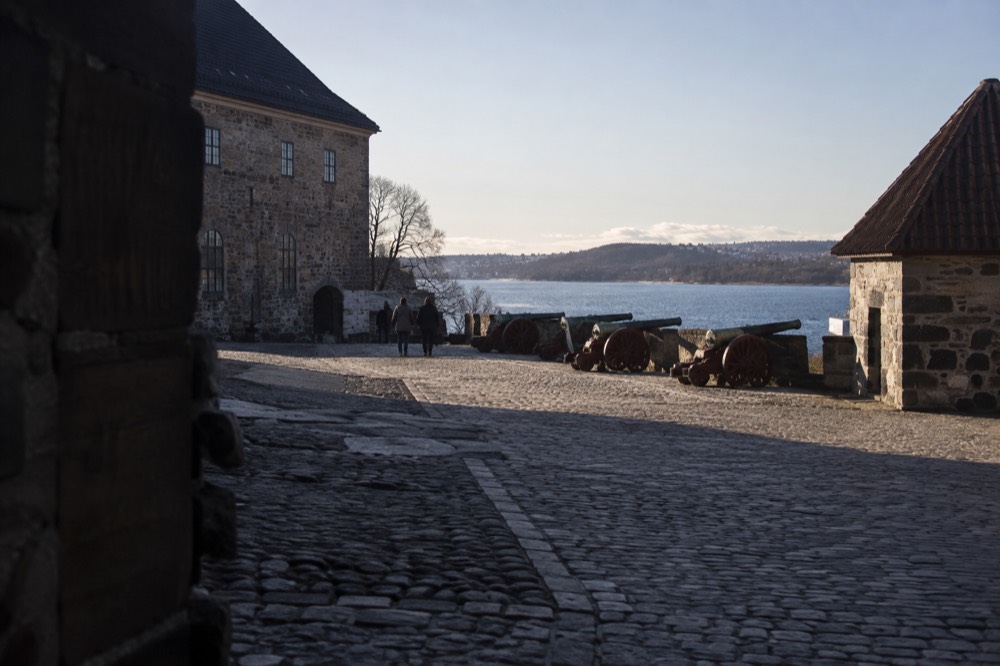
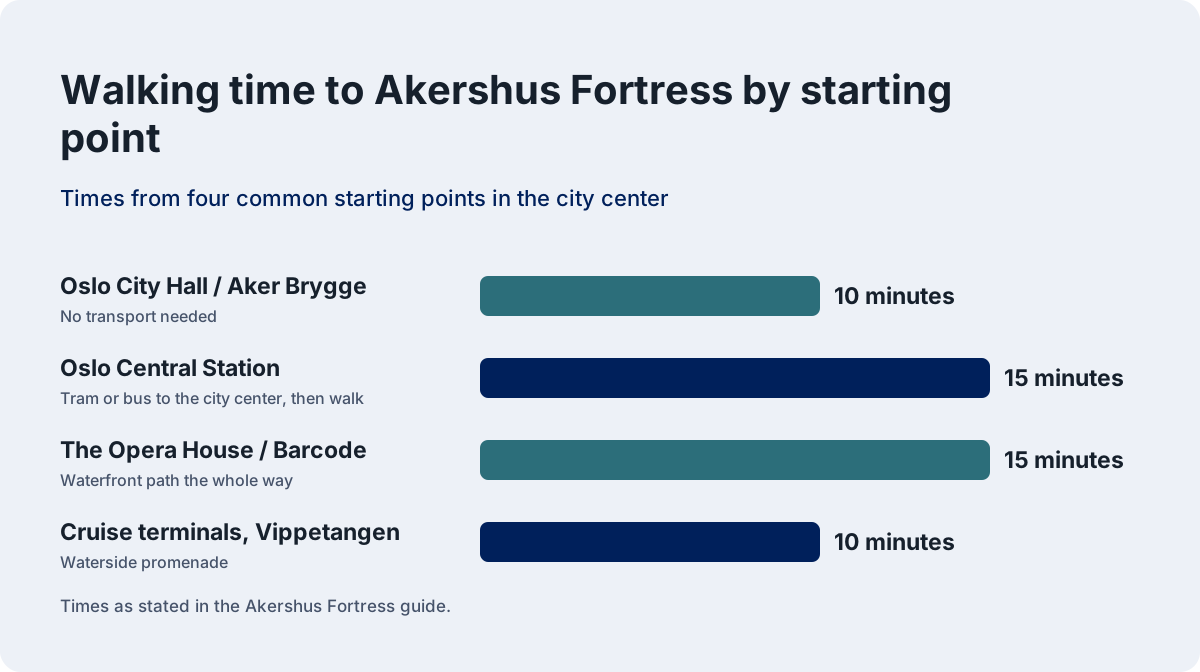
The fortress is reached on foot in roughly 10 minutes from Oslo City Hall and about 15 minutes from the central station area, which makes it one of the few major Oslo sights that needs no transport ticket at all. From the cruise terminals at Vippetangen it is a similar short walk along the waterfront. If you are starting further out, trams and buses serving the city center, plus the Aker Brygge area, drop you within a few minutes of the main gate, and the Ruter app plans the exact combination.
The walk itself is half the pleasure. From the City Hall side you cross the water at Aker Brygge, pass the piers where the Oslofjord cruises depart, and climb the marked path up to the gate. From the east, the path runs along the water from the Opera House and Sørenga, giving you the container port on one side and the fortress rock rising on the other. Both approaches are gentle climbs, no more than a few minutes of uphill on a paved or gravel path.
| Starting point | Approximate walking time | Transport alternative |
|---|---|---|
| Oslo City Hall / Aker Brygge | 10 minutes | None needed |
| Oslo Central Station | 15 minutes | Tram or bus to the city center, then walk |
| The Opera House / Barcode | 15 minutes | None needed, waterfront path the whole way |
| Cruise terminals, Vippetangen | 10 minutes | None needed, waterside promenade |
Because the fortress is a walk-in site, pairing it with a walking tour is easy. A budget central walking tour covers the fortress headland together with the rest of central Oslo, and the free highlights walk is another option if you would rather tip at the end.
If you are building the day around boats instead of shoes, the harbor you are looking at from the ramparts is the departure point for the silent electric fjord cruise and the traditional wooden sailing ship, so a fortress climb followed by a fjord sail is a natural pairing from the same pier area.
Is Akershus Fortress Free to Visit?
The fortress grounds, ramparts and views are free to walk with no ticket and no booking, while the castle interior and the museums inside the fortress each charge their own admission, so a visit can cost nothing or a modest amount depending on how deep you go. There is no gate fee for the open areas, and no time slot to reserve for the grounds. Paid interiors set their own hours and prices, which vary, so check the official fortress and museum pages before you plan a paid entry, and treat published figures as the deciding source rather than this or any guide page.
The distinction matters for budget planning. A party that walks the ramparts, reads the memorials and enjoys the view spends nothing beyond shoe leather. A party that adds the castle rooms and the Norwegian Resistance Museum is buying two separate entries, and families should note that several Oslo museums admit children free, a pattern that repeats across the city. The free things to do in Oslo roundup places the fortress grounds alongside Vigeland Park and the Opera House roof as the genuinely free classics.
The Oslo Pass changes the arithmetic. The pass includes entry at over 30 museums and attractions on VisitOSLO's own list, plus public transport across Ruter zones 1, 2, 3, 4V and 4N. Current adult prices are 580 NOK for 24 hours, 845 NOK for 48 hours and 995 NOK for 72 hours, with child passes from 290 NOK. Whether the pass pays off at the fortress depends on what you add around it, and the is the Oslo Pass worth it page does the full break-even working.
One caution: the pass does not turn the castle itself into a universal entry. Cover depends on what is on VisitOSLO's included list, and that list is the authority. Read it against your own plan before buying, not after.
What Museums Are Inside the Fortress?
The fortress complex contains several separate museums, most prominently the Norwegian Resistance Museum, which documents the German occupation of Norway and the domestic resistance to it, and each museum charges independently, so the practical question is which one matches your interests rather than which one is included with the gate. The Resistance Museum draws most visitors, because it tells the story of the occupation, the sabotage networks and the everyday choices Norwegians faced, inside a building that was itself part of that history.
For visitors whose interest is polar and maritime rather than wartime, the bigger museum draw in Oslo sits across the water on Bygdøy. The Kon-Tiki Museum holds Thor Heyerdahl's raft and related vessels, and a Kon-Tiki Museum ticket is the anchor of a Bygdøy museum day.
The Fram Museum next door, the polar ship museum, is the strongest pairing with Kon-Tiki, and the two sit together at the Bygdøynes pier. Between the fortress museums and the Bygdøy museums, most visitors pick one cluster per half day rather than racing between banks of the harbor.
| Museum cluster | Where | Focus | Notes for planning |
|---|---|---|---|
| Norwegian Resistance Museum | Inside Akershus Fortress | The occupation years | Pairs naturally with a fortress walk |
| Castle interior, Akershus | Inside the fortress | Royal and military rooms | Separate entry from the museums, check hours |
| Kon-Tiki and Fram museums | Bygdøy peninsula | Raft and polar exploration | Reached by seasonal ferry from Rådhusbrygge 3 or year-round bus 30 |
| MUNCH | Bjørvika, east side | Edvard Munch's art | Adult 280 NOK, 200 NOK after 18:00 |
The two ferry systems matter if you chain the fortress with Bygdøy in one day. The Bygdøy museum ferry departs Rådhusbrygge 3, accepts the Oslo Pass, but does not accept ordinary Ruter tickets, and runs seasonally from 14 March to 4 October 2026. The island ferries to Hovedøya and Gressholmen are a different system entirely, they are Ruter lines from Aker Brygge riding on an ordinary ticket. Confusing the two piers is the single most common transport mistake on this stretch of waterfront.
How Much Time Should You Spend at the Fortress?
Two hours is enough for the grounds, the rampart walk and the main viewpoints with photographs, while three to four hours is the realistic budget if you add the castle interior or the Resistance Museum, and a half day if you add both plus the memorials at a reading pace. The site is compact, but the paths wind, the surfaces are cobbles and gravel, and the view stops accumulate, so first estimates reliably run short.
The efficient shape of a visit is a loop. Enter from the Aker Brygge side, climb to the upper ramparts for the harbor view, walk the wall toward the fjord-facing batteries, drop into the courtyard and museum zone, then exit down the eastern path toward the water and the Opera House skyline. Done that way, you finish pointed at your next stop instead of backtracking. Our Oslo walking route stitches this loop into a full day of the city center.
Time of day is worth a decision. Morning light comes off the water onto the west-facing walls, and the grounds are quietest before the tour groups arrive mid-morning. Late afternoon in summer is the photographers' window, because the sun drops toward the fjord and lights the harbor side, and summer daylight in Oslo runs long: at the summer solstice the sun rises at 03:53 and sets at 22:43, so a 20:00 fortress visit is still fully lit. In late December, by contrast, daylight lasts only 5 hours 53 minutes, from 09:18 to 15:11, and a fortress visit competes directly with lunch. The Oslo daylight hours page tabulates the full year.
| Visit type | Time to budget | What it includes |
|---|---|---|
| Quick photo stop | 45 minutes to 1 hour | Gate, main courtyard, one viewpoint |
| Standard visit | 2 hours | Full rampart loop, memorials, viewpoints |
| Museum visit | 3 to 4 hours | Standard loop plus Resistance Museum or castle |
| Half day | 4 to 5 hours | Everything, plus a coffee stop and the waterfront path |
What Is the WWII Story at Akershus?
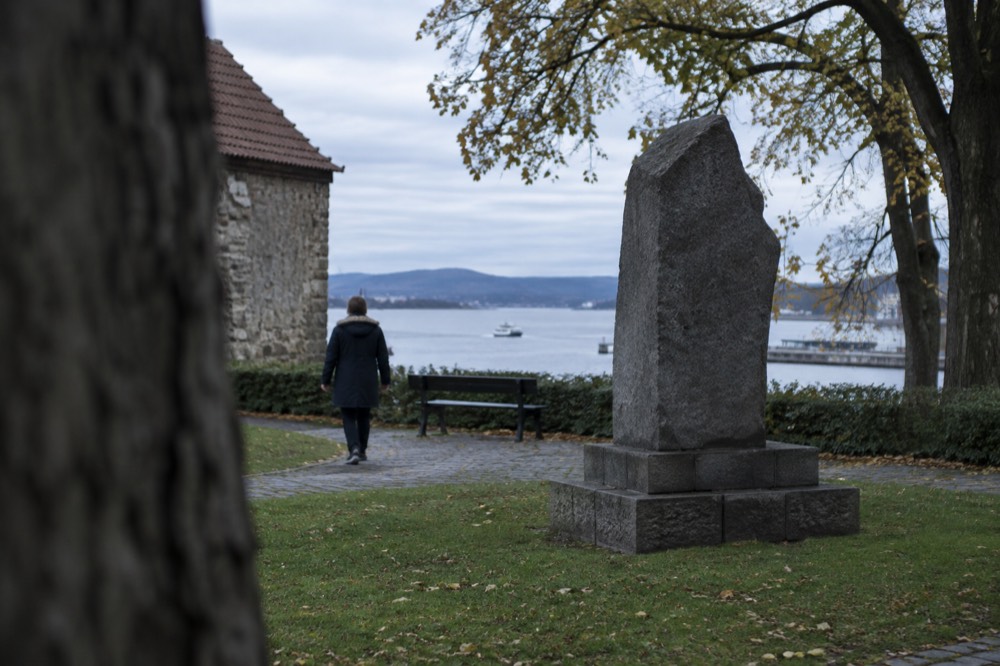
The fortress is Oslo's principal WWII site: the Norwegian Resistance Museum inside the complex documents the years of German occupation and the domestic resistance to it, and the surrounding grounds carry memorials connected to that period, including the commemoration of Norwegian resistance members executed here. For many Norwegian families this is not a tourist attraction but a place of memory, and the tone of the site reflects that, quiet zones, formal memorials, and a museum that privileges documents and artifacts over spectacle.
The museum's approach is chronological and dense, walking you from the invasion through the occupation, the resistance networks, the sabotage operations and the liberation. Visitors with limited time sometimes ask whether a guided alternative exists, and the answer is that themed history walks in the city cover the occupation years in depth, with one dedicated walk rated a perfect 5.0 over 81 reviews on its live listing. Our Oslo history page gives the longer arc, and Oslo's Resistance Museum page profiles the museum itself.
The WWII layer also explains the fortress's emotional weight in the city. The headland was used by the occupation authorities, and after the war it became the site where collaborationist leadership faced judgment. Norwegian memory of those years is direct and undramatized, and the museum reflects that national style: no reconstruction thrills, just the record. Visitors expecting a blockbuster will be disappointed, visitors wanting to understand what Norwegians mean when they talk about the war will not.
Is Akershus Fortress Good for Families and Kids?
Yes, with adjustments: the grounds, cannons, walls and stair passages are genuinely fun for children and completely free, while the Resistance Museum is text-heavy and better suited to older kids and teenagers, and the cobblestones demand decent shoes and a stroller plan. There is no playground, but the open lawns, the harbor drama and the sense of a castle to explore do the work a playground would.
The practical notes are the usual Oslo ones. The paths are a mix of cobbles, gravel and worn stone, so strollers work on the main routes but not on every rampart section, and toddlers need watching near unfenced drops on the seaward edges. Toilets and a café exist inside the complex in season, but hours contract in the off-season, so plan accordingly. If the weather turns, the fortress is exposed, and the rainy day in Oslo alternatives, led by the Paradox Museum and the Bygdøy museums, are a short hop away.
Can You Pair the Fortress with a Fjord Cruise on the Same Day?
Yes, and it is one of the best one-two combinations in the city: the fortress ramparts look down on the same piers the fjord boats leave from, so a morning fortress walk and an afternoon or evening cruise need no transport at all between them, just a downhill stroll to Aker Brygge. The fortress walls are one of the landmarks every fjord cruise passes, so seeing them from above before seeing them from the water gives the sail a before-and-after payoff.
The choice of boat is the real decision, and it is a genuine choice rather than a ranking. The silent electric boat is the default first fjord trip for most visitors, an audio-guide cruise that runs about 90 minutes. The wooden sailing ship is a completely different experience at 2 hours, older, saltier and more hands-on. The island hopping tour by ferry and foot is the Oslo-specific version, and the shrimp buffet evening cruise is the Norwegian institution, 3 hours with food.
Whichever boat you pick, the timing works. Cruise departures cluster through the day from the Aker Brygge side, and the fortress exit path drops you at the piers in minutes. In summer, the long evening light means a late cruise still sails in daylight, and in the dark months the evening sail becomes a city-lights trip instead, which has its own following.
What Else Is Near Akershus Fortress?
Within a 15 minute walk of the fortress gates you reach Aker Brygge's restaurants, the Tjuvholmen art and beach quarter, Oslo City Hall, the Opera House via the waterfront path, and the departure piers for both the Bygdøy ferry and the fjord cruises, which makes the headland the single best-located sight in the city for chaining stops. Very little in Oslo packs as much into one radius.
The natural chain is fortress, then Aker Brygge for food, then the water. The best restaurants in Oslo page covers where to eat on this stretch, and Tjuvholmen's Astrup Fearnley museum, 180 NOK adult with under-20s free, sits ten minutes further along. In the other direction, the path east passes the Barcode towers and reaches the Opera House, whose roof is free to walk, in about 15 minutes.
For orientation, the Oslo map and orientation guide shows how the fortress headland anchors the whole inner harbor, and Oslo with kids adapts the same chain for families. If you are working from a cruise ship, the Oslo cruise port day plan starts at Vippetangen and uses this exact walk.
Practical Tips for Visiting Akershus Fortress
Go early or late for light and quiet, wear real shoes for the cobbles, budget two hours minimum, treat paid interiors as optional add-ons checked against official hours, and plan your exit toward Aker Brygge so the fortress hands you to your next stop rather than stranding you. The site rewards a small amount of planning and punishes none of it, since the worst case is a free walk with a fjord view.
A few specifics worth carrying. The grounds are open to walking without a ticket, but parts of the complex remain military and signed as closed, respect the signs. Photography from the ramparts is unrestricted in the public areas and the harbor view is the shot most visitors want. The fortress sits on a rock shelf, so wind off the fjord is a constant, and in winter that wind is the difference between a pleasant loop and a short one: Oslo's January normal mean is −2.3 °C, and the exposed headland feels it.
| Practical point | What to know |
|---|---|
| Entry to grounds | Free, no ticket, open walking access to public areas |
| Paid interiors | Castle and museums price separately, check official pages for current figures |
| Surface | Cobblestones and gravel, wear closed shoes, strollers only on main routes |
| Best light | Morning on the west walls, late afternoon in summer on the harbor side |
| Nearest food | Aker Brygge and Tjuvholmen, 10 minutes downhill |
| Pairing | Fjord cruises and Bygdøy ferry depart from the adjacent piers |
If you would rather have the story than read the signs, the free highlights walk covers the fortress in the company of a guide and tips only at the end, and the site you are reading this on, Oslo Travel Guide, keeps the full set of Oslo guided tours in one place for comparison.
Common Questions About Akershus Fortress
Is Akershus Fortress free?
The grounds, ramparts and viewpoints are free to walk with no ticket. The castle interior and the museums inside the fortress, including the Norwegian Resistance Museum, charge their own admission, and current prices are published on the official sites.
How long does a visit to Akershus Fortress take?
Two hours covers the grounds and viewpoints at a relaxed pace. Add an hour for the Resistance Museum, or up to half a day if you visit both the castle interior and the museums and stop for coffee.
How do I get to Akershus Fortress?
It is a roughly 10 minute walk from Oslo City Hall and Aker Brygge, about 15 minutes from the central station area, and a similar short walk from the cruise terminals at Vippetangen. No transport ticket is needed from the city center.
Is Akershus Fortress worth visiting?
Yes, for the combination of free rampart walks, harbor views and the WWII history at the Norwegian Resistance Museum. Visitors who only want modern art or interactive museums may prefer MUNCH or the Paradox Museum, but the fortress is one of Oslo's defining sights.
Does the Oslo Pass cover Akershus Fortress?
The pass includes entry at over 30 museums and attractions on VisitOSLO's included list, so check the current list against the fortress interiors you plan to visit. The free grounds never need the pass, and the pass also covers public transport across Ruter zones 1 through 4N.
Can you combine Akershus Fortress with a fjord cruise?
Yes, easily. The fjord cruise piers sit at Aker Brygge directly below the fortress, so a morning fortress walk and an afternoon or evening cruise chain together with no transport in between. Every fjord cruise sails past the fortress walls, so you see them twice from two angles.