Karl Johans Gate: Oslo's Main Street Explained for Visitors
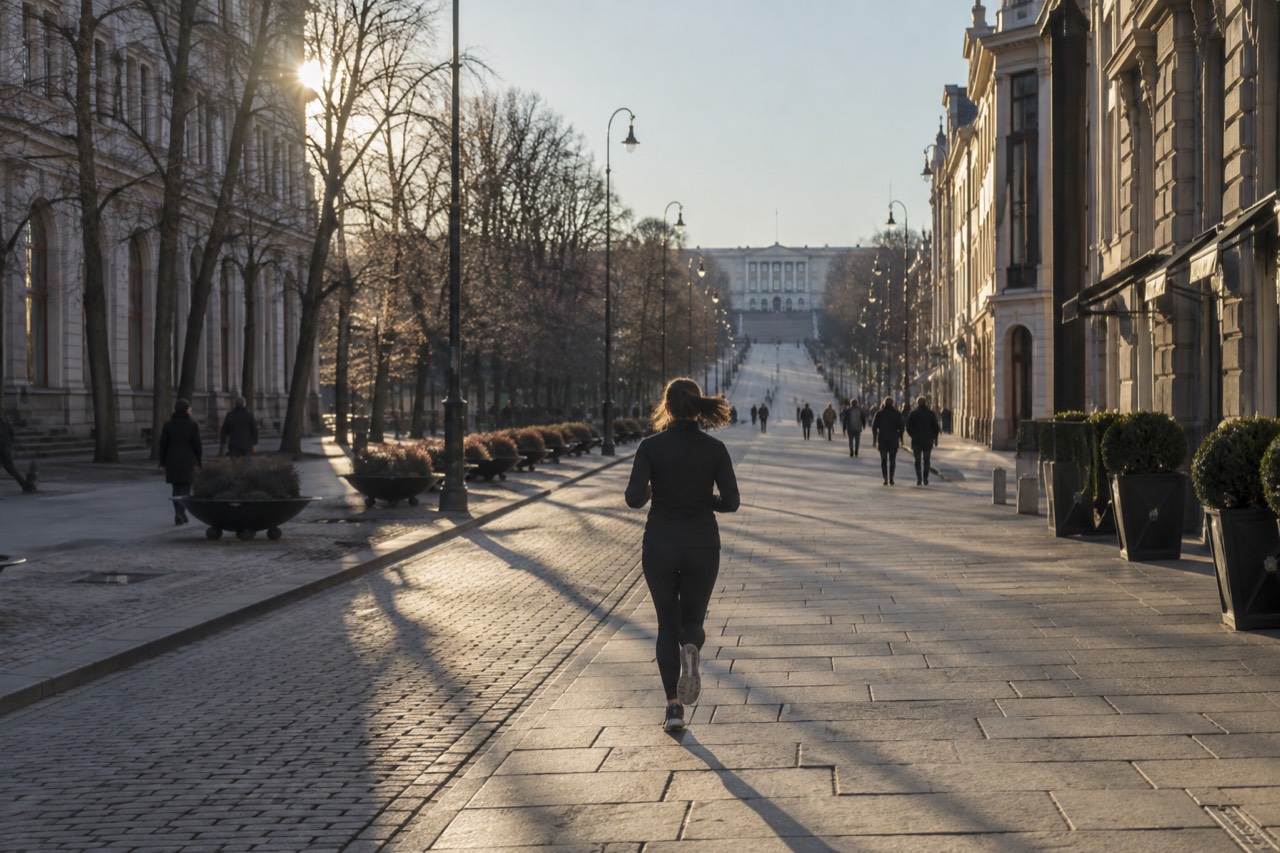
Karl Johans gate is the spine of Oslo, a straight line from the central station to the Royal Palace that takes in the cathedral, the parliament and the National Theatre on the way.
Short answer
Karl Johans gate is Oslo's main street, running roughly 1 km from Oslo Central Station uphill to the Royal Palace. It is free to walk, mostly pedestrianised in the middle section, and it passes Oslo Cathedral, the Storting (parliament), Eidsvoll Square and the National Theatre. Most visitors walk it in 20 to 30 minutes without stops, but the street, its side lanes and its squares easily fill half a day.
Karl Johans gate is the one street in Oslo you will walk whether you planned to or not. It runs in a straight line from the front door of Oslo Central Station up the gentle slope to the Royal Palace, and almost every visit to the city crosses it at some point. The name trips up English speakers constantly: "gate" is simply the Norwegian word for street, and it is written lowercase, so the street is Karl Johans gate, never Karl Johans Gate and never Karl Johan's Street. It is named for King Carl Johan, the French-born marshal who became king of Norway and Sweden, and his statue on horseback watches over the palace end of the street.
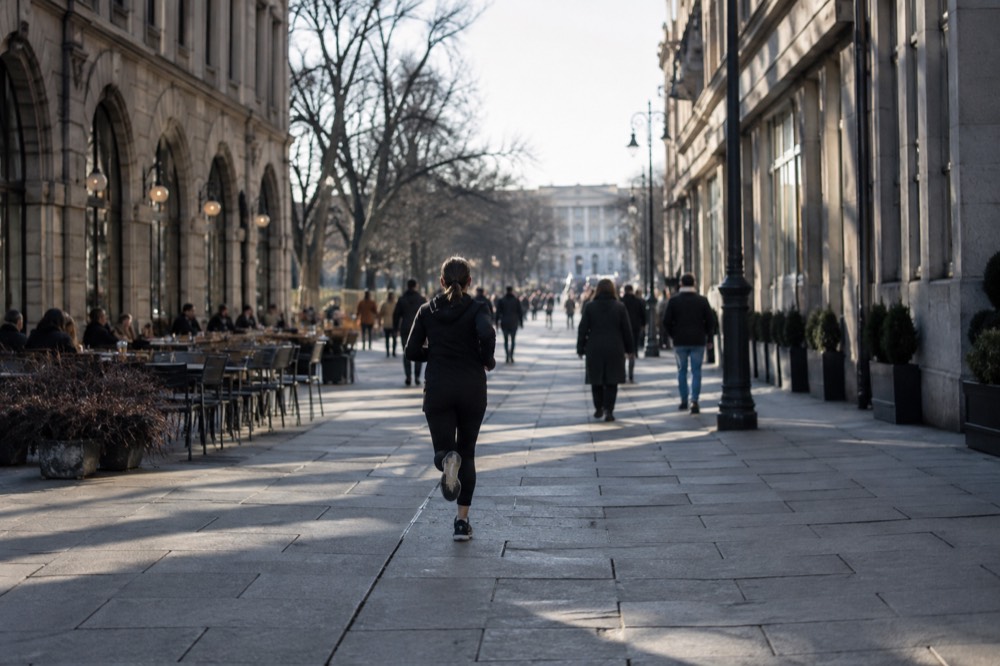
What surprises most first-time visitors is how much of the street is car-free. The middle stretch, from the Storting down through Eidsvoll Square to the National Theatre, is a pedestrian zone, and in summer it belongs to street musicians, café tables and a slow-moving river of people. The two ends are different in character: the eastern half near the station is where the cheaper shops, the burger chains and the late-night kebab places cluster, while the western half toward the palace is calmer, tree-lined and framed by the university buildings and the theatre. This guide walks the street from east to west, the direction most visitors arrive, and explains what is worth stopping for.
What Is Karl Johans Gate and Why Does It Matter?
Karl Johans gate is Oslo's ceremonial and commercial main street, a single roughly one-kilometre axis connecting Oslo Central Station to the Royal Palace, and it carries the National 17 May parade, the royal processions and the everyday foot traffic of the capital in the same corridor. It is not a single uniform street but a chain of distinct sections: a station quarter, a pedestrian shopping heart, a parliamentary square and a palace avenue. Because the street links so many of the sights a visitor already plans to see, it works as a free orientation walk that costs nothing and needs no ticket, no booking and no guide.
The street matters to Norwegians far beyond shopping. On 17 May, Constitution Day, thousands of children march up Karl Johans gate past the Royal Palace in the biggest civic procession of the year, and the whole route is lined with people in national dress. On national occasions the royal family appears on the palace balcony, and crowds fill the street below. The rest of the year it is simply where Oslo happens in public: protests, performers, Christmas markets in December, and the slow evening stroll that Norwegians take when the light lasts past ten.
For a visitor, the street's real value is as a spine. It touches the Royal Palace, the National Theatre, the Oslo Opera House at its eastern end and the waterfront at Aker Brygge at its western end. You can use it as the backbone of a first day and hang everything else off it, which is exactly what our one day in Oslo itinerary does. This is the approach Oslo Travel Guide recommends for every first visit: learn the main street first, and the rest of the city arranges itself around it.
How Do You Walk Karl Johans Gate from East to West?
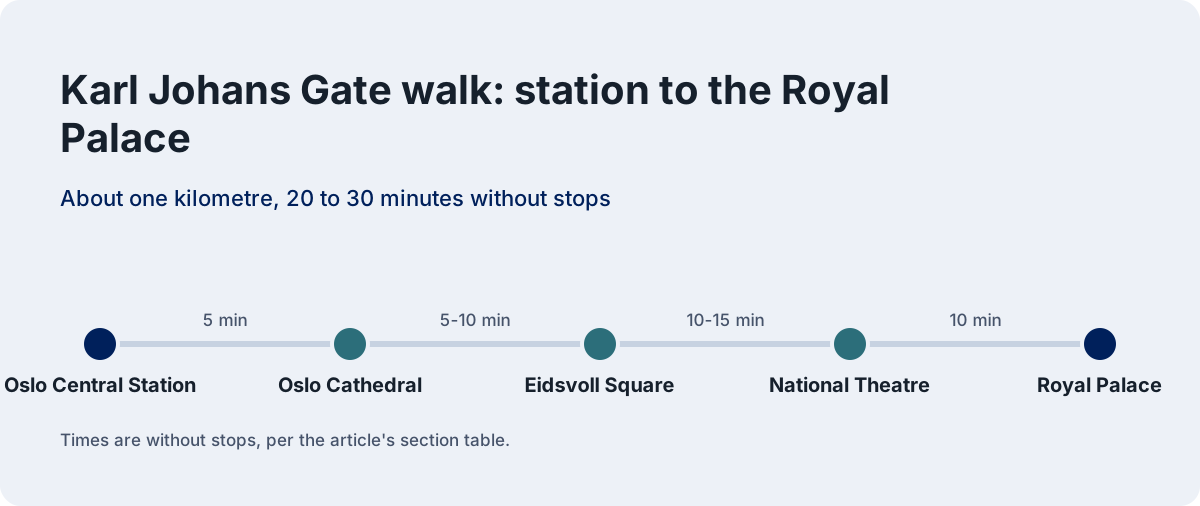
Start at Oslo Central Station, walk west past Oslo Cathedral and the Storting, continue through the pedestrianised shopping stretch to Eidsvoll Square and the National Theatre, then finish with the climb up the palace slope to the Royal Palace and its park: the full walk is about one kilometre and takes 20 to 30 minutes without stops, or half a day with them. The street rises gently the whole way, so the east-to-west direction means you finish at the highest and grandest point rather than puffing uphill at the start. Everything on the route is free to see from the outside.
The walk breaks naturally into four sections, and the table below is the honest version of what each one delivers.
| Section | From | To | Character | Time without stops |
|---|---|---|---|---|
| Station quarter | Oslo Central Station | Oslo Cathedral | Cheap eats, buses, arrival bustle | 5 min |
| Cathedral and Storting | Oslo Cathedral | Eidsvoll Square | Civic buildings, watch the parliament | 5-10 min |
| Pedestrian heart | Eidsvoll Square | National Theatre | Street performers, shops, cafés | 10-15 min |
| Palace slope | National Theatre | Royal Palace | Tree-lined avenue, palace and park | 10 min |
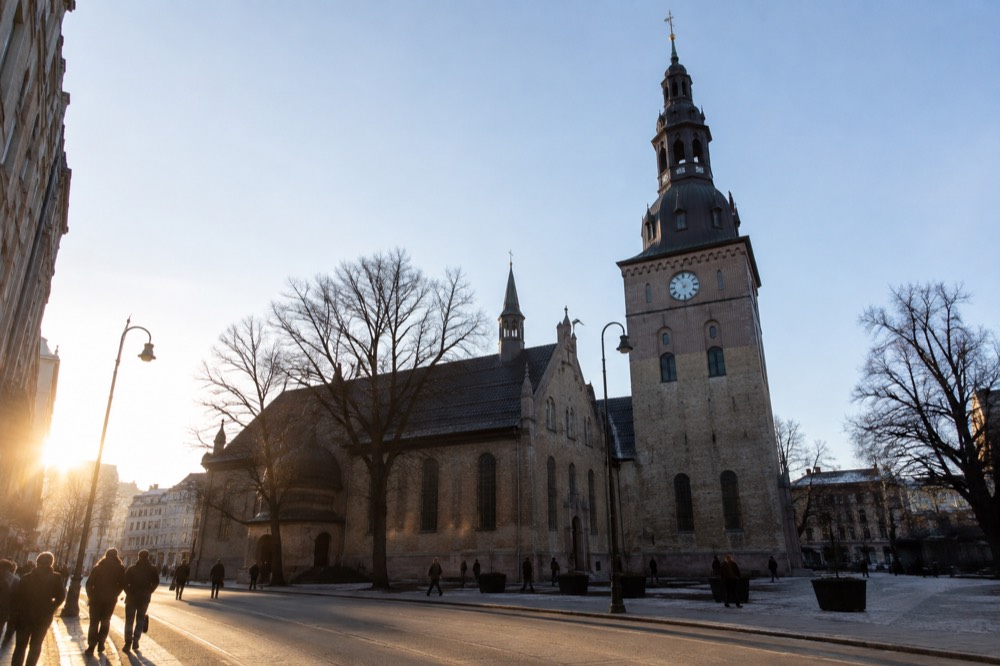
The eastern end starts at Oslo Central Station, and within a couple of minutes you reach Oslo Cathedral, the city's main church and the one the royal family uses for big occasions. It is a modest, serious building rather than a soaring medieval one, and its interior rewards a quiet ten minutes if it is open. From the cathedral the street bends slightly and opens onto the Storting, Norway's parliament, an unmistakable horseshoe-shaped building in yellow-brick. The debating chamber faces the street, and the public galleries are open when the parliament sits, which is a genuinely under-used free activity in a city where so much else costs money.
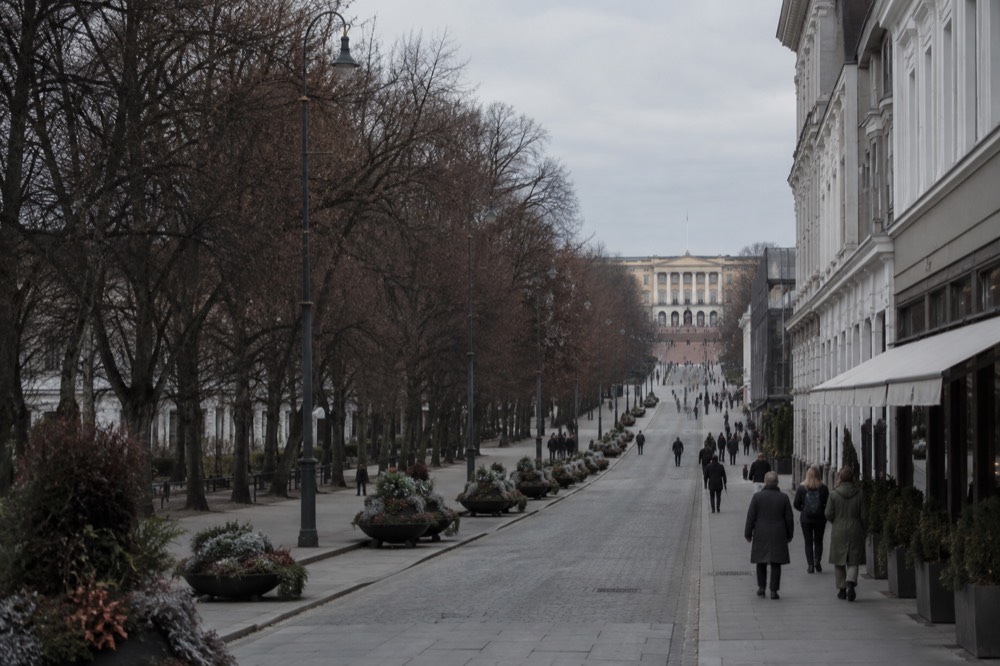
The middle stretch is the part everyone photographs. Between Eidsvoll Square and the National Theatre the street is fully pedestrianised, and this is where the street performers set up, where the ice cream queues form in summer and where the Christmas market's stalls and carousel take over in December. The shops here are a mix of the Scandinavian chains you find in any Nordic capital and a few long-standing Norwegian institutions; if shopping is the mission, our Oslo shopping guide covers where the good stuff actually is, because the chains on the main drag are not it. From the theatre end, the view straight up the slope to the palace, framed by trees, is the classic Karl Johans gate photograph, and late afternoon light hits it best.
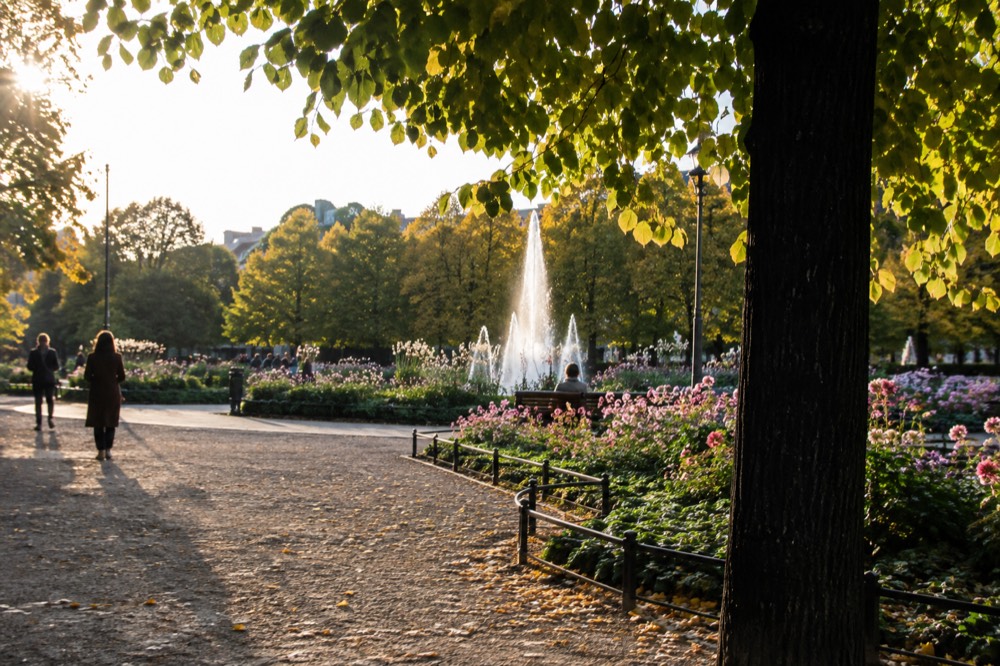
The final section climbs the palace slope. The Royal Palace sits at the top with the statue of King Carl Johan in front, and the daily changing of the guard, which happens in the afternoon, draws a small crowd when the weather is good. The palace building itself is only open to visitors on guided tours in summer, and the Royal Palace guide on this site covers how those tours work. The Palace Park behind the building is free, open all day and all year, and it is where Oslo locals cut through on their way to work, so it feels lived-in rather than roped-off.
What Can You See Along and Just Off Karl Johans Gate?
Directly on the street you pass Oslo Cathedral, the Storting, Eidsvoll Square, the National Theatre and the Royal Palace, and within five minutes of it you reach the Oslo Opera House, the Aker Brygge waterfront, the Akershus Fortress grounds and the National Museum, which makes the street the densest sightseeing corridor in the city. Nothing on the street itself charges admission to look at it, and the two big-ticket neighbours, the Opera House roof and the fortress grounds, are also free to enter. The paid attractions, meaning the museums, are all short detours rather than destinations you have to travel to.
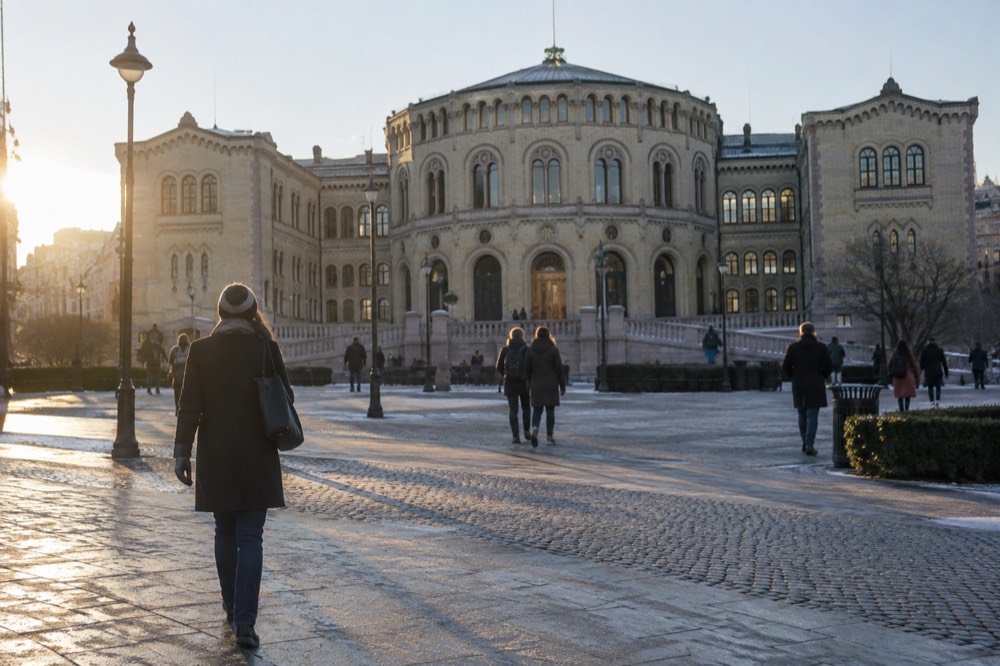
The table below lists what sits on or beside the street, what each one is, and what it costs, and the honest answer for most of them is nothing at all.
| Sight | Where on the route | What it is | Cost to see |
|---|---|---|---|
| Oslo Cathedral | Eastern end | The city's main church, royal ceremonies | Free to enter when open |
| The Storting | East of centre | Norway's parliament | Free public galleries when sitting |
| Eidsvoll Square | Middle | Open square in front of parliament | Free |
| National Theatre | Western end | Norway's main stage for drama | Free to see; tickets for shows |
| Royal Palace | Western end | The king's official residence | Park free; tours in summer |
| Palace Park | Behind the palace | Public park, always open | Free |
| Oslo Opera House | 5 min east of station | Opera house with public roof | Free to walk the roof |
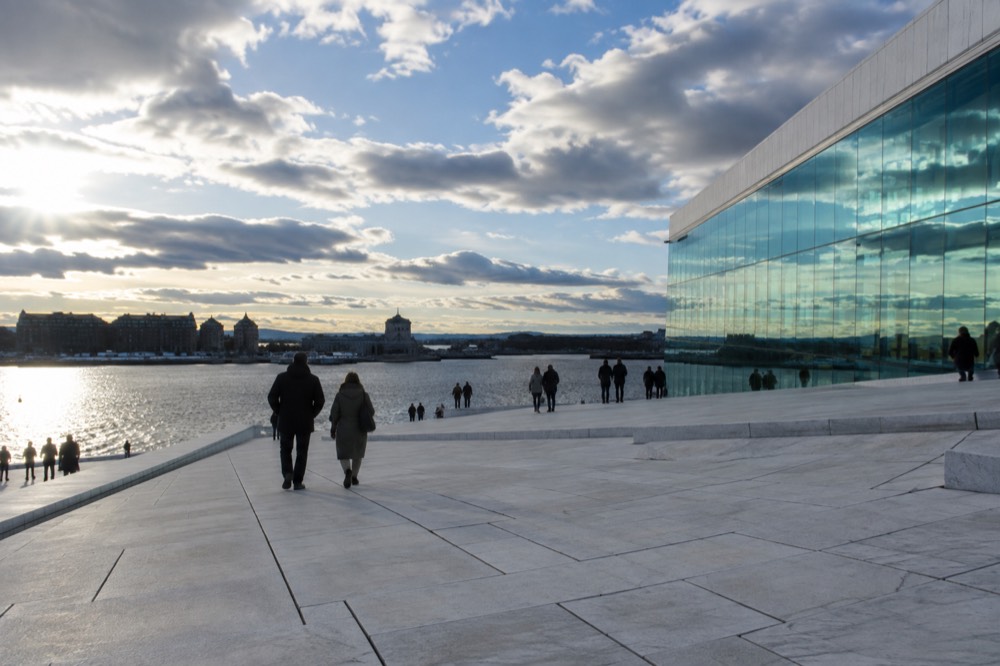
The Opera House deserves the detour even though it sits just off the street's eastern end. The building's sloping marble roof is a public space, you simply walk up it, and the view back over the fjord and the Barcode district is one of the best free vantage points in the city. The Opera House guide on this site covers the interior and the practicalities. At the other end of the street, the Palace Park connects downhill toward Majorstuen and the Vigeland sculpture park beyond it, which is also free and open around the clock, so a visitor with energy can walk one continuous free line from the station to the sculptures.
For the museum-minded, Karl Johans gate is a workable base. The National Museum, which holds The Scream, is a 10-minute walk south of the theatre end, and our National Museum guide explains the ticket situation. If you are heading out to the museum peninsula at Bygdøy for the day, the Kon-Tiki Museum ticket is the anchor of that trip, and it is worth having before you go.
If you would rather have someone else hold the narrative together, the guided walk of central Oslo covers the cathedral, the parliament, the theatre and the palace with a local guide and runs about two hours, which pairs neatly with a free-form afternoon on the street afterwards.
Where Should You Eat and Drink Near Karl Johans Gate?
The blocks either side of Karl Johans gate hold the densest concentration of eating in central Oslo, from bakery counters and hot dog stands at the cheap end through casual burger and pizza places to some of the city's best-known restaurants, and the price gradient is steep: the same coffee can cost half as much two streets north as it does on the main drag. Norway is the sixth most expensive country in Europe on Statistics Norway's price-level comparison, with food 33 percent above the European average, so the difference between a smart and a lazy choice here is real money, not rounding. The street's own cafés are convenient and priced accordingly.
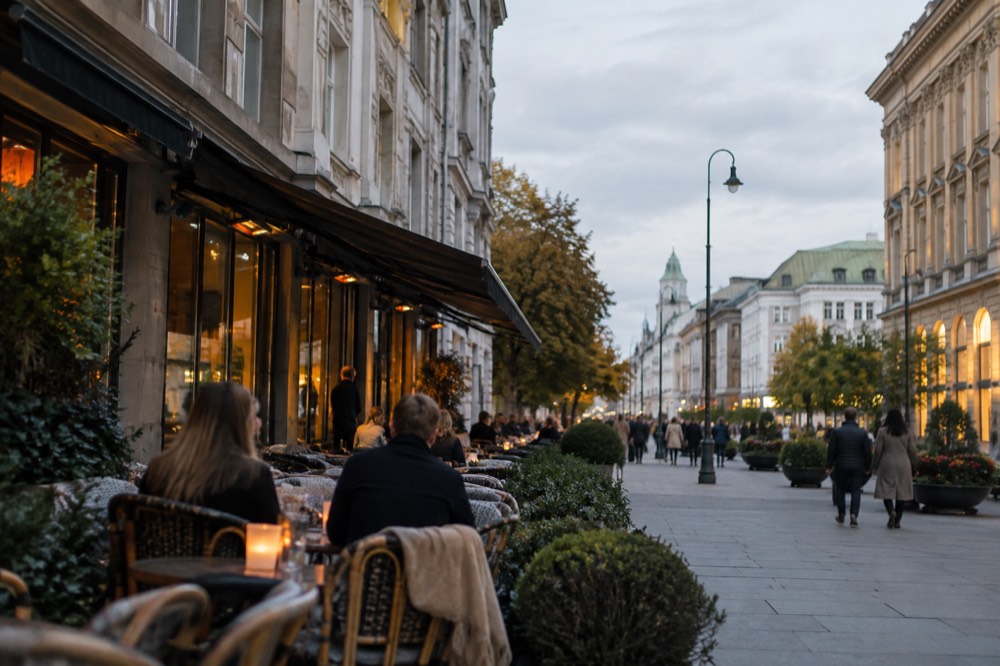
A few practical Norwegian rules shape eating near the street. Alcohol above supermarket strength is sold only through Vinmonopolet, the state monopoly, which closes early on Saturdays and is shut all day Sunday, so a bottle of wine with dinner means either a restaurant with a license or planning ahead. Tipping is not expected, service is included, and rounding up is a gesture rather than an obligation, a norm covered fully in our tipping in Oslo guide. For the actual addresses, the best-restaurants and where-to-eat guides on this site do the work, and the Oslo cheap eats page is the one to read if the main-street prices start to sting.
The honest budget structure looks like this, and the pattern holds everywhere in the centre.
| Eating style | Where near the street | Rough cost level | Notes |
|---|---|---|---|
| Bakery and coffee | Side streets north of the cathedral | Low | The local breakfast default |
| Hot dog and quick stands | Station end of the street | Low | A Norwegian institution, pølse |
| Burger and pizza chains | Eastern half of the street | Moderate | Same chains as anywhere in Norway |
| Casual dinner restaurants | Lanes off the pedestrian stretch | High | Main courses priced accordingly |
| Waterfront restaurants | Aker Brygge, 5-10 min west | Highest | You pay for the fjord view |
The evening scene clusters at the western end. The streets around the National Theatre and down toward Aker Brygge hold a good share of the city's bars, and summer light keeps the outdoor tables full late into the evening, since in late June the sun sets at 22:43 and it never gets properly dark. The best-bars and Oslo-at-night guides on this site pick the actual addresses, and the nightlife page covers what stays open past midnight, which in this city is a shorter list than visitors expect.
Is Karl Johans Gate Free to Visit?
Yes, walking Karl Johans gate costs nothing, the pedestrian stretch is a public street with no gates, hours or tickets, and every major sight visible from it, meaning the cathedral, the parliament exterior, the theatre, the palace exterior and the Palace Park, is free to look at or enter without paying. The only costs on the route are the ones you choose: food, shopping, theatre tickets, the summer palace interior tour, or a museum you detour into. This is what makes the street the default answer to the question of what to do in Oslo for free, and it is the reason budget itineraries build the whole first day around it.
The free list is genuinely long, and it is worth being precise about it, because Oslo's reputation for expense is real but narrower than people fear. Statistics Norway's price-level survey puts household prices 28.6 percent above the EU average, and alcohol and tobacco more than double the European average, but museums, transport and the outdoors are where Oslo is not unusually expensive, and the street itself is outdoors.
| On or near the route | Free? | Notes |
|---|---|---|
| Walking the full street | Yes | Public street, always open |
| Oslo Cathedral interior | Yes, when open | Closed between services at times |
| Parliament galleries | Yes, when sitting | Check the sitting calendar |
| Changing of the guard | Yes | Afternoon, palace forecourt |
| Palace Park | Yes | Open all day, all year |
| Opera House roof | Yes | Public space, walk right up |
| Royal Palace interior | No | Guided tours in summer only |
| Theatre performances | No | Tickets vary by production |
The one thing worth flagging is the guard ceremony at the palace, because it is free theatre that many visitors miss by arriving at the wrong hour. The changing of the guard happens daily in the afternoon, and in summer the full ceremony with the band is longer and louder than the quiet winter version. Crowds are modest by European capital standards, so arriving ten minutes early is usually enough to get a front spot at the railings.
When Is the Best Time of Day and Year to Walk It?
Mid-morning to mid-afternoon is the liveliest window, the pedestrian stretch is at its best from May through September when the outdoor tables are out and the light lasts past 21:00, and the street changes character completely in December when the Christmas market takes over the middle section. Weekends bring bigger crowds and more street performers, while weekday early mornings are quiet enough that you can photograph the palace avenue almost empty. Rain matters less here than in most cities, because the café and shop cover along the middle stretch means you are never more than a few steps indoors.
The seasonal argument is real. Summer gives you the long evenings, with the sun setting at 22:43 in late June and the sky staying in twilight rather than true darkness, so an evening stroll up to the palace is a genuine activity rather than a dash between streetlights. Winter compresses everything: in late December the sun rises at 09:18 and sets at 15:11, so the street's lights and the Christmas market carry the atmosphere instead, and the cold, which averages around minus 2 degrees Celsius in January, is manageable with proper layers. The best time to visit Oslo guide has the full breakdown.
Two dates on the calendar stand above the rest. On 17 May the street is the route of the children's Constitution Day parade, and it is the one day of the year when the street belongs entirely to that, so you either plan around it or you plan for it, and the 17 May in Oslo guide explains how. In December the Christmas market runs through the advent weeks, and the Oslo Christmas market page covers stalls, opening pattern and what it costs, because the market itself is free to enter but nothing inside it is.
How Does Karl Johans Gate Fit Into a Day in Oslo?
Treat the street as the spine of day one: walk it east to west in the morning, spend the early afternoon at one paid anchor such as the National Museum or a Bygdøy museum, and finish with the Opera House roof or a fjord cruise in the long evening light, which is a shape that works in every season. The street sits at the center of Oslo's transport web, the station at one end and the theatre at the other both sit on metro, tram and rail lines, and the airport trains arrive at the station end, so the walk is also the natural decompression from a flight. Most first-time visitors walk some version of this line without ever deciding to.
The pairing that works best depends on the season. In summer, the fjord is the natural second half of the day, and the silent electric boat cruise is the most-reviewed way to do it, leaving from the piers a short walk from the theatre end of the street.
In winter, when the daylight window is under six hours in late December, the street's lights, the Christmas market and the museums carry the day instead, and the torchlit evening options and the sauna culture take over after dark. The Oslo in winter guide lays out the full cold-season plan.
For visitors with only a few hours, the street is also the layover answer. The walk from the station to the palace and back, with the cathedral, the parliament square and the palace park folded in, takes about 90 minutes at a comfortable pace, and the Oslo layover guide builds exactly that itinerary around it, including where to leave a bag. Cruise passengers docking for the day use the same line, and the Oslo cruise port day page on this site adds the waterfront pieces.
If you prefer a guide to the self-guided version, the budget walking tour of central Oslo is the cheapest credible option, it covers this street and the squares around it, and it runs about two hours with a local guide.
The street also anchors the longer itineraries. Our two days in Oslo plan uses it as day one's spine and pushes the museums and islands to day two, and the Oslo walking route guide extends the line east into Grünerløkka and west toward the palace park and the waterfront for a full-day version. However you cut it, the street is the one piece of Oslo you will not have to go out of your way for, and that is its quiet advantage.
Common Questions About Karl Johans Gate
How long is Karl Johans gate?
The street runs roughly one kilometre from Oslo Central Station to the Royal Palace. Walking it end to end without stops takes 20 to 30 minutes, and most visitors spend half a day once the cathedral, the squares, the palace park and a coffee stop are folded in.
Is Karl Johans gate pedestrianised?
The middle stretch, from the Storting and Eidsvoll Square through to the National Theatre, is fully pedestrianised. The two ends carry traffic, with crossings at the station and at the palace, so watch for trams and buses at either extremity.
What is at the end of Karl Johans gate?
The Royal Palace sits at the western, uphill end, with the statue of King Carl Johan in front of it and the free Palace Park behind it. The eastern end is Oslo Central Station, with the Opera House a few minutes beyond it.
Does it cost anything to walk Karl Johans gate?
No. The street is a public way with no tickets, gates or opening hours, and the cathedral, the parliament galleries when sitting, the guard ceremony, the Palace Park and the Opera House roof are all free. Only the interior palace tours, theatre tickets and museums cost money.
When is the changing of the guard at the Royal Palace?
The changing of the guard takes place daily in the afternoon at the palace at the top of the street. In summer the ceremony is longer and includes the band, and arriving ten minutes early is usually enough for a spot at the railings.
Is Karl Johans gate worth visiting in winter?
Yes, and it changes character rather than shutting down. The Christmas market takes over the pedestrian stretch through the advent weeks, the street lights carry the atmosphere in the short December days, and the palace avenue photographed in snow is one of the classic Oslo images.