Vigeland Park: Oslo's Sculpture Park, Explained Section by Section
Vigeland Park is the most visited sight in Oslo, it costs nothing to enter, and it stays open around the clock. Here is how to read it, reach it and time it.
Short answer
Vigeland Park is Oslo's public sculpture park in Frogner, with more than 200 works by Gustav Vigeland arranged along a single axis from the main gate to the Monolith. Entry is free, it is open 24 hours a day all year, and the separate Vigeland Museum next to it charges 120 NOK.
What Is Vigeland Park, and Why Is It on Every Oslo Itinerary?
Vigeland Park is the sculpture installation inside Frogner Park in western central Oslo, built around more than 200 works by the Norwegian sculptor Gustav Vigeland and laid out along one unbroken axis from the main gate to the Monolith column at the top of the hill. It is free, it never closes, and it is the single most visited sight in the city, which is a combination almost nowhere else in Oslo offers.
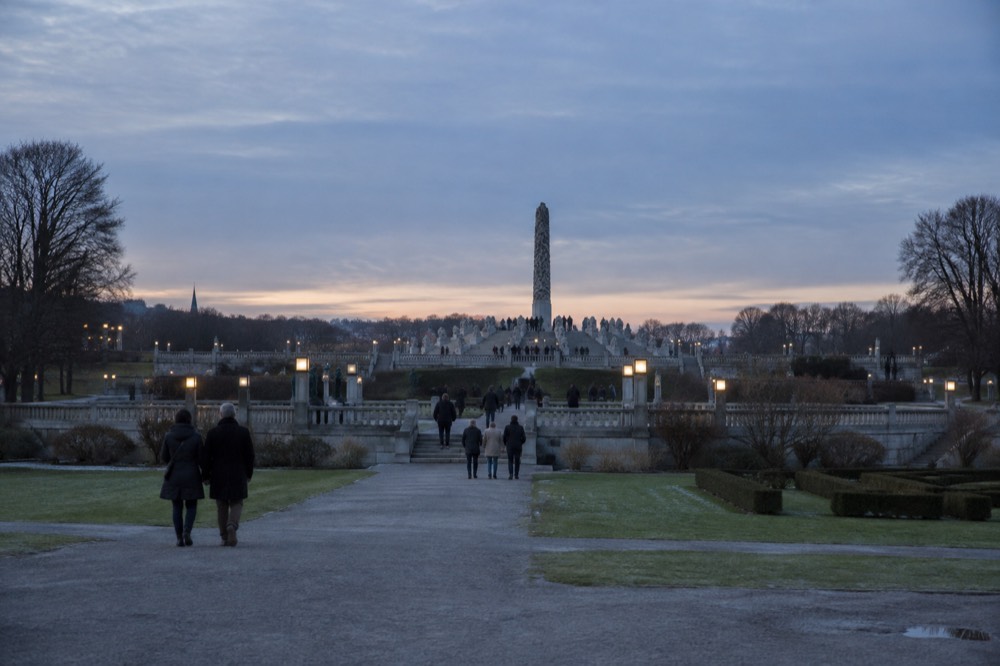
Most capitals have one public space that ends up defining them in photographs. For Oslo, that space is not a palace or a square but this park: bodies in bronze and granite, arranged along a formal axis, with the Monolith as the focal point at the far end. Search any list of things to do in the city and the park appears near the top, usually alongside the Oslo Opera House and Akershus Fortress.
The park goes by two names, and both are correct. Norwegians say both Frogner Park, which is the name of the larger public park the sculptures sit inside, and Vigelandsparken, which names the sculpture installation itself. You will hear both from locals and see both on signs, and nothing is lost by using them interchangeably, as long as you keep the free park separate from the paid museum in your planning.
What surprises first-time visitors is the scale of ambition. This is not a park decorated with sculptures. It is a single integrated artwork, planned as one composition, where the gates, the bridge, the fountains, the staircases and the column all carry the same set of ideas about human life from birth to death. Vigeland designed the whole layout, not just the figures.
That is also why the park rewards a little preparation. Walked cold, it is a pleasant green space with some striking nudes. Walked with even a rough map of its logic, it becomes readable, and the reading is the whole point of going.
Is Vigeland Park Free, and When Is It Open?
Entry to the sculpture park is genuinely free, with no ticket, no gate and no closing time: it is a public park, open 24 hours a day, every day of the year. The only paid element on the site is the Vigeland Museum next to the axis, at 120 NOK for an adult, which is a separate visit and entirely optional.
This needs saying plainly because Oslo has a reputation for cost, and the reputation is partly fair. Statistics Norway's 2025 European price comparison puts Norwegian household prices 28.6 percent above the EU average, with food 33 percent above and alcohol and tobacco more than double. But the city's biggest sights skew the other way, and the park is the best example: the most visited attraction in Oslo charges nothing at all.
| What | Price | Notes |
|---|---|---|
| Sculpture park entry | Free | Public park, no ticket |
| Opening hours | 24 hours, all year | No gates to close |
| Vigeland Museum, adult | 120 NOK | Separate building by the axis |
| Guided art walk of the park | Optional add-on | About 90 minutes, bookable |
| Getting there by transit | Ordinary Ruter ticket | Check the Ruter app for fares |
The distinction between the park and the museum trips people up in both directions. The park is the outdoor sculpture installation, and it is free. The museum is the building that was Vigeland's studio and home, standing beside the park, and it holds his earlier works, models and plaster originals. It charges admission, and it keeps its own opening hours, so check its site before you plan an indoor hour around it.
Because the park never closes, there is no such thing as arriving too early or too late. Winter mornings with snow on the granite, summer evenings at 22:00 with the light still on the Monolith, both are legal and both are worth doing. The practical limits are daylight and comfort, not opening hours.
If you are building a budget day around this, the maths is friendly. A morning in the park, a walk through the Frogner neighborhood, and a ferry or a museum later still leaves you spending very little, and our Oslo on a budget guide and the free things to do in Oslo list both lean on the park heavily for exactly this reason.
What Will You Actually See? The Layout from the Main Gate to the Monolith
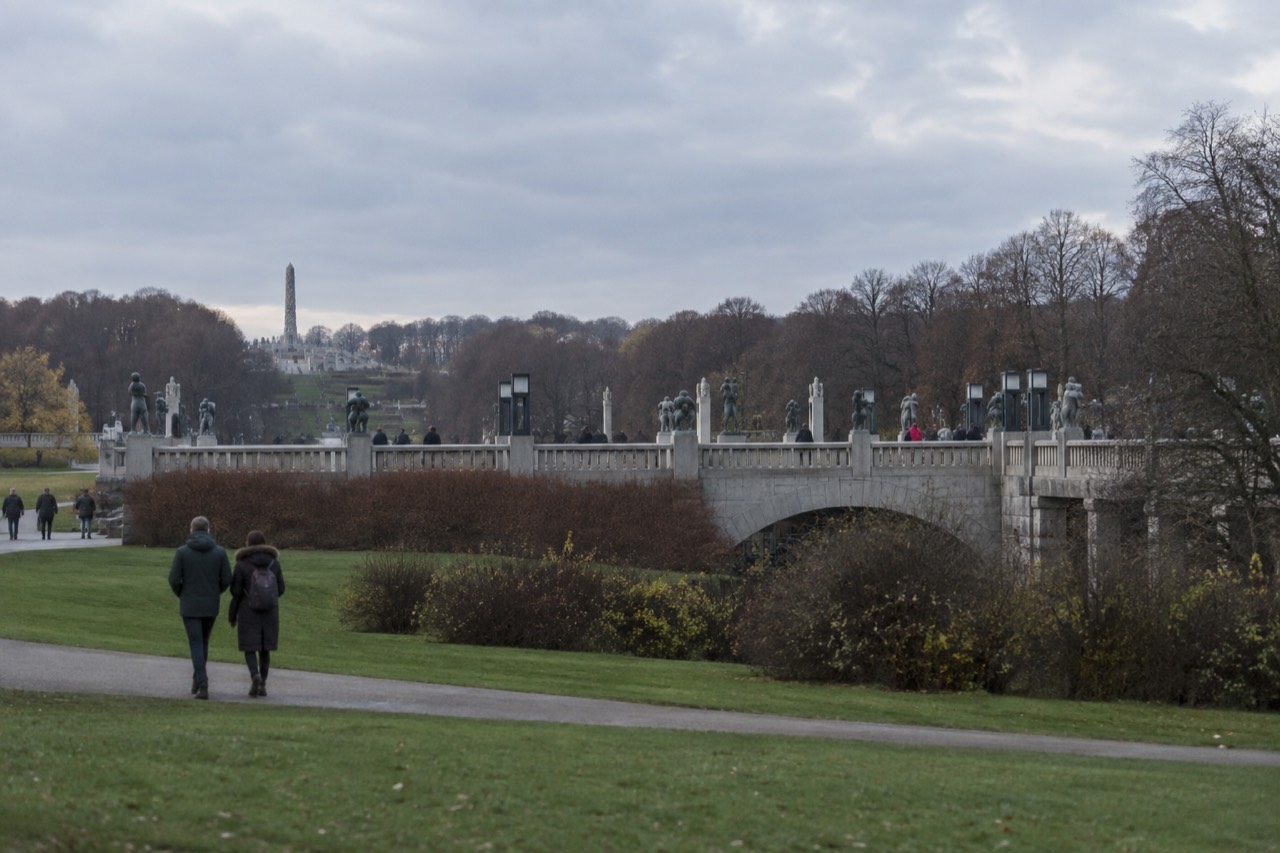
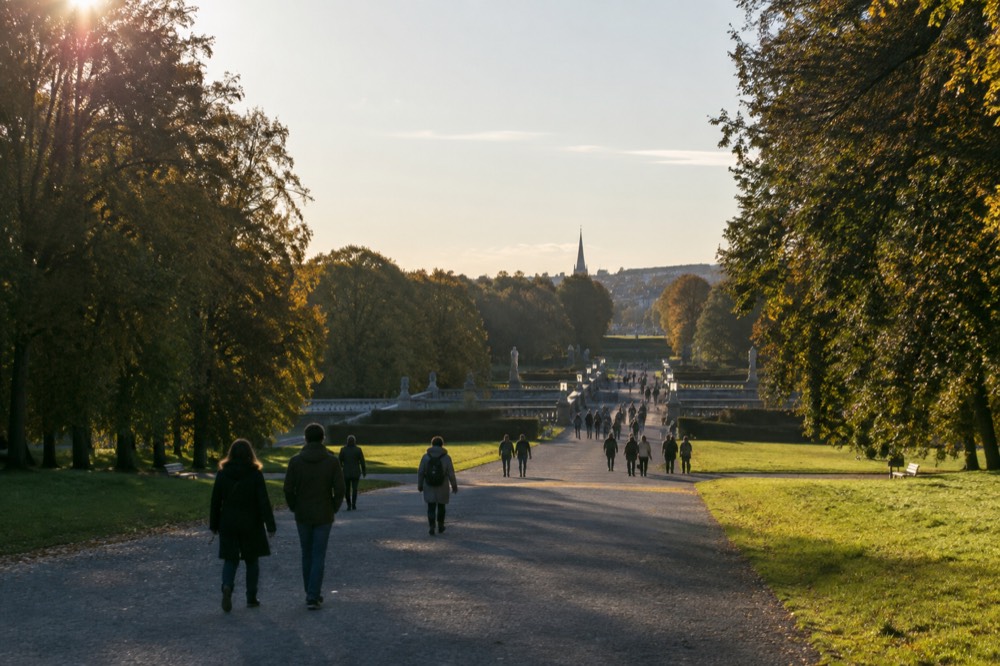
The park runs along one straight axis about a kilometer end to end: you enter at the main gate on Kirkeveien, cross the bridge lined with 58 bronze figures, pass the fountain and its surrounding basin reliefs, climb the staircase flanked by wrought-iron gates, and finish at the Monolith plateau, where a single granite column carved from top to bottom with human figures stands at the highest point of the whole composition.
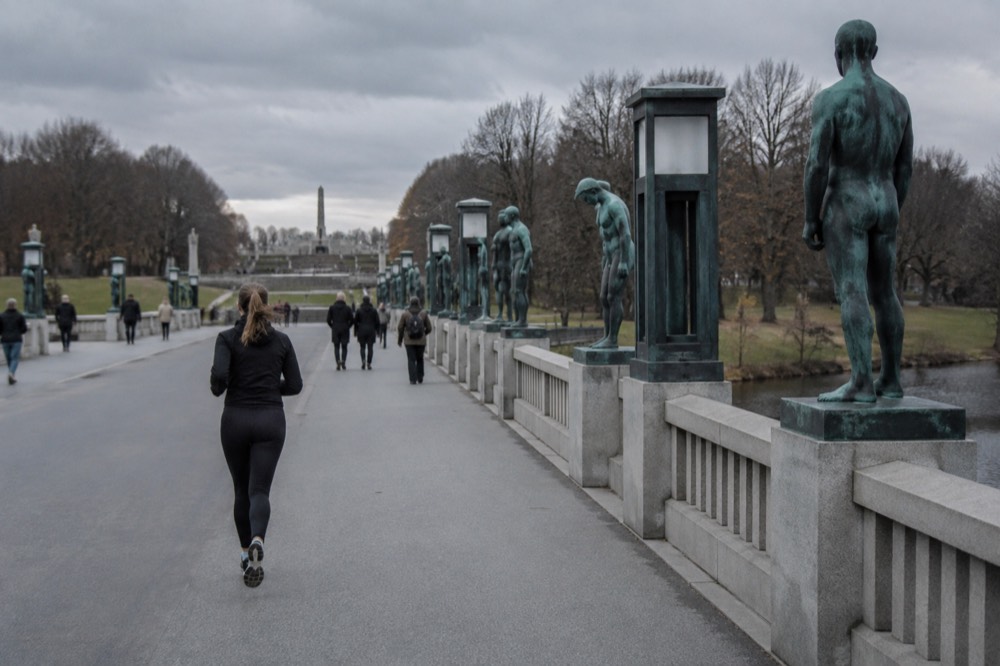
The bridge is where most people stop longest. The 58 figures along it are individual studies of ages and relationships: children, old couples, a man kicking a ball, and the small furious boy known as Sinnataggen, the Angry Boy, which is the single most photographed sculpture in the park and the one whose hand has been worn smooth by visitors. It is also the only figure in the park with a protective guard around it, which tells you how popular it is.
The fountain comes next, a large basin carried by six giants and surrounded by reliefs, with the tree of life motif running through it. The original plan placed this fountain elsewhere in the city, and the version in the park was the result of the long agreement between Vigeland and Oslo that gave him the site in exchange for his entire body of work.
The Monolith is the climax. Carved from a single block of granite, it shows figures climbing and intertwining around one another toward the top, and it sits on a stepped plateau ringed with carved granite groups. The plateau is where the composition ends and where the view back down the whole axis is best, so it doubles as the natural turnaround point.
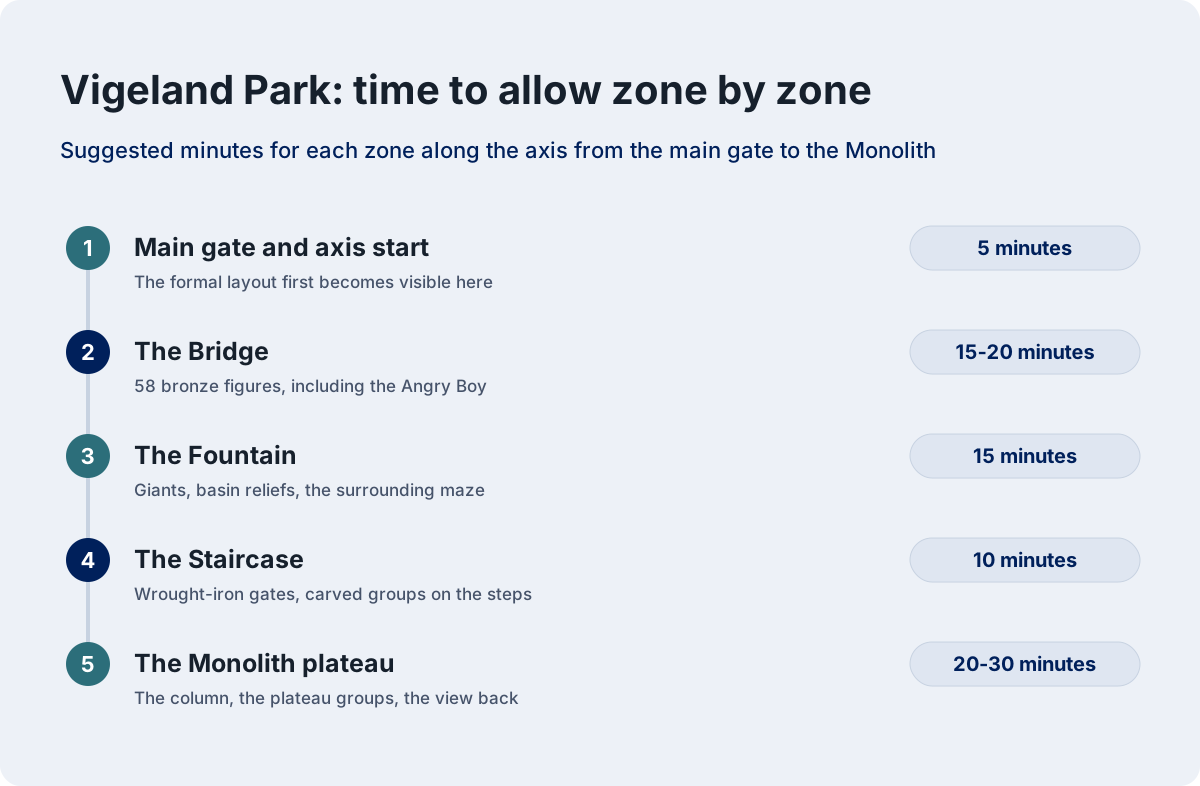
| Zone | What to look for | Time to allow |
|---|---|---|
| Main gate and axis start | The formal layout first becomes visible here | 5 minutes |
| The Bridge | 58 bronze figures, including the Angry Boy | 15-20 minutes |
| The Fountain | Giants, basin reliefs, the surrounding maze | 15 minutes |
| The Staircase | Wrought-iron gates, carved groups on the steps | 10 minutes |
| The Monolith plateau | The column, the plateau groups, the view back | 20-30 minutes |
One reading helps everything: the whole park is about the human life cycle. Children and lovers near the bridge, adulthood and struggle through the fountain reliefs, and the Monolith as the summation, figures carrying and being carried upward. Once you see that thread, the figures stop being decoration and start being an argument.
If you would rather have someone walk you through that argument in person, the guided art walk exists for exactly this reason, and it is the only bookable product built around the park.
The trio above covers the three ways people actually buy the park: as a dedicated art walk, as part of a half-day bus tour that pairs it with Holmenkollen, or as one stop on a fjord-and-city first day. All three are legitimate, and the choice is mostly about how much Oslo you are trying to fit into how little time.
Who Was Gustav Vigeland, and Why Did Oslo Give Him a Park?
Gustav Vigeland was a Norwegian sculptor who struck a deal with the city of Oslo that gave him the Frogner site and a studio building in exchange for donating all his works, models and future output to the city, which is why the park exists as a single unified project rather than a collection assembled over time. The studio became the museum that stands beside the park today.
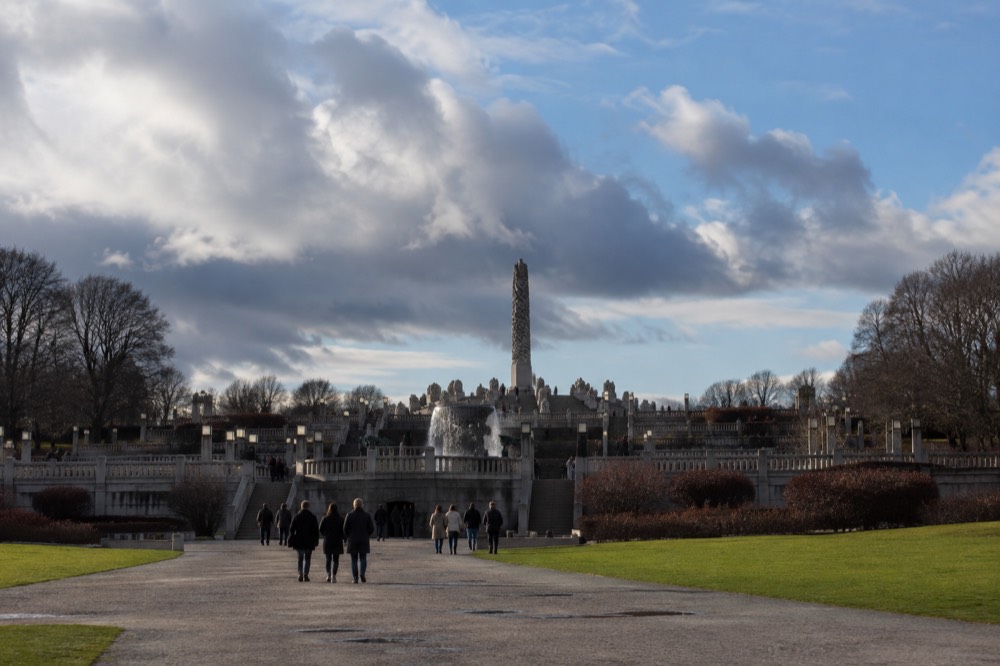
That arrangement explains the park's strangest and best feature, its coherence. Almost every public sculpture collection in the world is an accumulation: statues donated by different eras, styles clashing, meanings blurred. Frogner is the opposite. One artist, one plan, one axis, executed over decades. When you stand at the main gate and look up the whole length of the composition to the Monolith, you are looking at a single idea carried through in stone and bronze.
Vigeland's subject never really changed. His figures are nude, ageless in style and universal in theme, and he deliberately avoided portraits of specific people. The bodies are meant to be everyone: the screaming child, the embracing couple, the old man bent over his own hands. Critics have argued for a century about whether the work is profound or repetitive, and the honest answer is that it lands differently for everyone who walks it.
The studio where he worked is now the Vigeland Museum, and it is the place to see what the park cannot show you: the plaster originals, the maquettes, the process. The park gives you the finished granite and bronze, and the museum gives you the workshop behind it, for 120 NOK. If the park leaves you curious rather than impressed, the museum is the cure. If it leaves you impressed, the museum deepens it.
Worth knowing before you go: the sculptor's name is Vigeland, and the park is Vigelandsparken. His first name was Gustav, but Norwegians and the museum both refer to him by surname, so "the Vigeland Museum" and "Vigeland Park" are the forms you will see on signage and in print.
The museum and the walk are the two paid layers on top of a free park, and both are optional. What they add is context, and context is what turns a pleasant stroll into the thing you tell people about when you get home.
How Do You Get to Vigeland Park?
The park sits in the Frogner district, west of the city center, and the main gate on Kirkeveien is the conventional starting point; public transit serves the surrounding neighborhood on an ordinary Ruter ticket, the journey planner in the Ruter app gives the exact routes and fares, and the walk from central Oslo takes roughly half an hour through the Frogner streets.
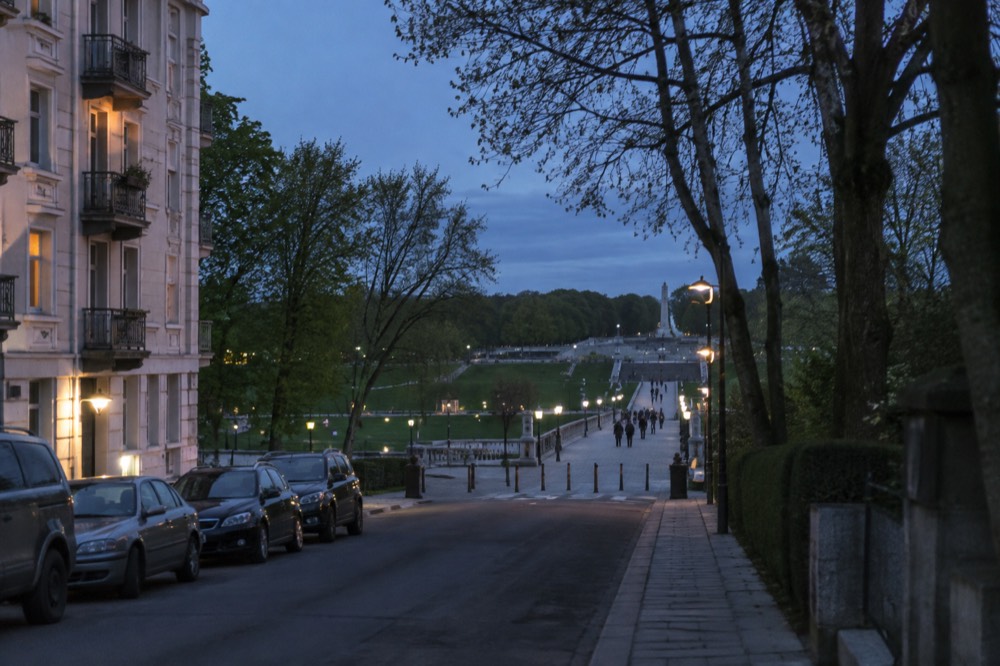
The transit answer is deliberately general here because Ruter's fare structure is zone-based and its price pages are not reliably machine-readable, so the honest advice is to let the app do the arithmetic. What is stable is the geography: Frogner lies between Majorstuen to the north and the Aker Brygge waterfront to the south, and the park is the biggest green space in the district. Several tram and bus lines stop within a few minutes' walk of the gates.
Walking is the underrated option. The route from the center runs through the Frogner neighborhood, one of the city's most pleasant residential areas, with embassies, mature trees and quiet blocks of late nineteenth-century apartment buildings. If you are staying anywhere near the center, walking to the park is not a compromise, it is a bonus.
For orientation, the park's long axis runs roughly from the main gate on Kirkeveien up the hill to the Monolith, and the whole district tilts gently upward as you go. Coming from Majorstuen puts you near the top of the park, so you can walk the axis downhill instead, which some people prefer in winter. Either direction works, and the composition reads fine both ways.
If you are pairing the park with other sights, the geography is generous. The Oslo Metro reaches Majorstuen quickly from the center, the waterfront museums are a downhill walk away, and the half-day bus tour that covers the park also continues to Holmenkollen, which is the practical way to see both the sculptures and the ski jump without a car.
When Is the Best Time of Day and Year to Visit?
The best time to visit depends on what you want: early morning gives you the sculptures almost alone, late evening in summer gives you the famous low-angle light on the granite, and the seasons change the park completely, from snow on the bronze in winter to full green and crowds in July. There is no bad month, only different parks.
The daylight swing in Oslo is extreme and it is the single biggest factor in planning any outdoor sight here. At midwinter the sun is up for under six hours, rising after 09:00 and setting before 16:00, while at midsummer it rises before 04:00, sets after 22:00 and never gets properly dark in between. That is a swing from 5 hours 53 minutes to 18 hours 50 minutes of daylight, more than a factor of three, and it means the same park is a different experience depending on when in the year you land.
| Month | Normal mean temp | Normal precip | What the park is like |
|---|---|---|---|
| January | -2.3 C | 58 mm | Snow on the granite, few visitors, short days |
| April | 6.2 C | 48 mm | Blossom, brown paths drying out |
| July | 17.7 C | 87 mm | Full green, biggest crowds, long evenings |
| August | 16.5 C | 103 mm | The wettest month; go early in the day |
| October | 6.6 C | 93 mm | Autumn color, thinning crowds |
| December | -1.4 C | 54 mm | Dark by 15:30, atmospheric under lights |
Two facts from that table run against intuition and are worth internalizing. August, not November, is Oslo's wettest month on the 1991 to 2020 normals, at 103 mm, so a summer visit carries more rain risk than most visitors expect. And July's normal mean of 17.7 C is mild rather than hot, so summer visits are comfortable; it is the winter, not the summer, that is the extreme season here.
Time of day matters almost as much. The park is busiest from late morning through mid-afternoon, especially when tour buses stop here between Holmenkollen and the center. Before 09:00 it is close to empty, joggers and dog walkers aside, and in June that still gives you hours of full daylight. After 21:00 in midsummer, the low sun puts long shadows across the bridge figures, which photographers rate as the best light the park gets.
Winter deserves a special word. Snow changes the reading entirely: the granite groups on the Monolith plateau hold snow in their folds, the bronze figures wear white caps, and the crowds vanish. The trade is the short day and the cold, with January normals at -2.3 C, but the park is one of the few sights in the city that is arguably better in January than in July.
Is the Guided Art Walk Worth It, or Should You Wander Alone?
Wandering alone is free and genuinely rewarding because the park's layout carries its own message, but a guided art walk adds the layer the stone cannot: the story of the deal Vigeland struck with the city, the meaning of the recurring motifs, and the details you would walk past without knowing they were choices. At around 90 minutes it is one of the shorter guided products in Oslo.
The park is the rare major sight where going unguided costs you nothing in access. There is no ticket to buy, no line to skip, no audio guide counter. The sculpture axis is public space, and you can spend three hours in it for the price of the transit that got you there. For confident wanderers, that is the whole argument, and it is a good one.
What a walk adds is interpretation, and in this park interpretation pays off more than in most, because so much of the work is deliberate and non-obvious. The figures are not random nudes; the arrangement follows the life cycle, the same motifs recur across zones, and the whole composition was planned as a single statement. A guide who can point at the choices, rather than just the figures, changes what you look at.
The bookable option is the Vigeland Park guided art walking tour, which is the only product built specifically around the park. It runs about an hour and a half, it is led as an art walk rather than a general city tour, and it is the natural pick if the sculptures are the reason you came to Frogner rather than an item on a list.
The middle path is the combination tour. The half-day bus tour that pairs the park with the Holmenkollen ski jump is the practical answer for visitors who want both sights and have no car, because the two are awkward to string together on public transit in a single morning. It costs more than the walk alone and covers less of the sculpture park in depth, but it buys you the ski jump and the drive through the western neighborhoods.
And if the park is simply one item on a first-day list, the sightseeing bus products that include a stop here do that job. The honest framing: the art walk is for people whose main interest is the art, the combo is for people whose main interest is coverage, and going alone is for everyone else. All three are defensible, and the free entry means the downside of choosing wrong is small.
What Else Is There Around Frogner Park?
Frogner Park sits inside a district that repays an extra hour: the Frogner neighborhood itself is one of the city's most attractive residential areas, the Vigeland Museum stands beside the axis, and the walk downhill leads toward the waterfront at Aker Brygge, so the park works best as the anchor of a half-day rather than a destination you visit and leave.
The neighborhood around the park is the quietest good walk in central Oslo. Frogner's streets are lined with the stone apartment blocks of the late nineteenth century, the embassies cluster here, and the area reads as the city's most established address. There is no single landmark to head for, which is the point: the district is the sight, and it sits between the park and the water.
The museum is the obvious indoor pairing. At 120 NOK for an adult, it holds the plaster originals and the process behind the park, and it is close enough that you can decide on the spur of the moment, weather depending, since it is a short walk from the Monolith plateau back to the museum entrance. If you are visiting on a wet day, the museum plus a brisk loop of the empty park is a genuinely good rain plan.
Downhill from the park, the city opens toward the fjord. The Aker Brygge waterfront, the Tjuvholmen district beyond it and the Astrup Fearnley museum at the end of the pier make a natural continuation, and the walk from Frogner to the water takes you through the best of the western center. Our Frogner neighborhood guide covers the whole district street by street.
| Pairing | What it is | Adult entry |
|---|---|---|
| Vigeland Museum | Sculptor's studio, plaster originals, models | 120 NOK |
| Astrup Fearnley Museet | Modern art, Tjuvholmen waterfront | 180 NOK |
| Oslo City Museum | Frogner's own history museum | Check the museum's site |
| Aker Brygge waterfront | Restaurants, piers, island ferries | Free to walk |
| Opera House roof | The other free walk-on sight in Oslo | Free |
For families, the park itself has a second identity that the art discussion tends to hide: Frogner Park is simply a big, good public park. There is open space to run in, the pond area attracts children year-round, and on warm weekends the lawns fill with picnics. Our Oslo with kids guide treats it as a reliable half-day anchor for exactly that reason, free, uncrowded in the mornings and finished whenever the children are.
How Do You Fit Vigeland Park Into a First Day in Oslo?
Give the park 60 to 90 minutes as a minimum, pair it with either the Frogner walk downhill or the Holmenkollen bus tour, and place it either early in the morning before the crowds or late in the evening for the light; the park pairs naturally with the waterfront and the museums, and it works as the outdoor bookend to a museum-heavy day.
The most common mistake is under-budgeting the walk through the park itself. The axis is long, the figures reward stopping, and the Monolith plateau deserves time at the top. A rushed 20-minute dash from gate to column and back is possible, but it turns the park into a checkbox, and the whole value of the place is that it is free enough to linger in.
A sample half-day that works in any season:
| Time | Activity |
|---|---|
| 09:00 | Arrive at the main gate before the tour groups |
| 09:05-10:00 | Walk the full axis, bridge to Monolith plateau |
| 10:00-10:45 | Vigeland Museum, or a second slow loop of the bridge |
| 11:00-12:00 | Walk downhill through Frogner toward the water |
| 12:00 onward | Aker Brygge for lunch, or the Bygdøy museums |
That morning costs you one transit ticket and one optional museum entry, which is about as cheap as a half-day in Oslo gets. Our one day in Oslo itinerary uses the park as exactly this kind of anchor, and the longer itineraries in the 2 days in Oslo and 3 days in Oslo plans give it a full morning with the museum attached.
If your day is built around the fjord instead, the park still fits. A morning cruise on the silent electric boat, which is the city's single best-reviewed activity, takes 90 minutes and leaves the afternoon open for Frogner, and the two together make a genuinely Oslo-shaped day: water in the morning, stone in the afternoon. The Oslofjord cruise guide covers the boat options in full, and the wider planning picture is on Oslo Travel Guide.
The evening version of the same plan is worth naming. In June, the light after 21:00 turns the bridge figures into silhouettes and the lawns into the city's biggest living room, and the park costs nothing to revisit. Plenty of visitors do the museum-and-axis circuit in the morning and come back after dinner just to sit on the Monolith steps, which is probably the correct use of a free, always-open park in the light season.
Practical Planning: Costs, Hours and What to Bring
Budget nothing for entry, 120 NOK if you add the museum, an ordinary Ruter ticket to get there, and comfortable shoes for the long axis; the park is open around the clock, there are cafés and toilets in the wider Frogner Park in the warm season, and the only real planning variables are daylight and weather.
The cost picture for a Frogner visit is one of the friendliest in the city, and it is worth setting against Oslo's expensive reputation. The park is free, the museum is 120 NOK, transit is an ordinary ticket, and everything beyond that, the guided walk, the combo tour, is optional. Set against the museum cluster on Bygdøy, where the big tickets run 180 to 200 NOK each, a Frogner half-day is close to a free half-day.
What to bring is mostly weather logic. The axis is exposed, so in winter you want real layers, with January normals at -2.3 C and wind on the plateau. In summer, the lawns invite sitting, so a picnic from a supermarket is the standard local move, and it dodges the restaurant prices that make eating out in Oslo famously steep.
Accessibility is good. The main paths are wide and surfaced, the axis climbs gently but steadily toward the Monolith, and there are gentler approach routes around the sides of the park. Visitors with limited mobility can reach the bridge and see the Monolith from below without taking the full staircase.
Photography needs no permission and costs nothing. The rules of thumb: the Angry Boy is the most photographed figure and is rarely unaccompanied, the Monolith reads best from a distance at the plateau's edge rather than from its base, and the bridge figures work best in the low light at either end of the day. Early morning in any season gives you the emptiest frames.
A last practical note on the two names, because it affects navigation. If you ask for "Frogner Park" you get the whole public park including the sculpture installation. If you ask for "Vigeland Park" you get the same place. But if you set your navigation for the Vigeland Museum you will be pointed at the building beside the axis rather than the main gate, which is a fine starting point too, just not the one the itinerary above assumes.
Common Questions About Vigeland Park
Is Vigeland Park free to visit?
Yes. The sculpture park is a public park with no ticket and no closing time, open 24 hours a day all year. The only paid element is the Vigeland Museum beside it, at 120 NOK for an adult.
How long should you spend at Vigeland Park?
Plan on 60 to 90 minutes for the full axis from the main gate to the Monolith plateau and back at a walking pace, longer if you stop at the figures, which is rather the point. Add 45 minutes for the museum if you are going in.
What is the Monolith made of?
It is carved from a single block of granite, with human figures intertwined from base to top, standing at the highest point of the park's axis on a stepped plateau ringed with further carved groups.
When is the best time to visit Vigeland Park?
Early morning for empty paths, or after 21:00 in summer for low light on the sculptures. July is the busiest month; January is the quietest and arguably the most atmospheric, with snow on the granite and very few visitors.
Is Vigeland Park the same as Frogner Park?
Effectively yes. Frogner Park is the larger public park and Vigelandsparken names the sculpture installation inside it, and both names are used by Norwegians for the same place. Keep the free park separate from the paid Vigeland Museum when planning.
Can you visit Vigeland Park in winter?
Yes, and it is one of the better winter sights in the city, because it never closes and snow transforms the sculptures. The trade-offs are short daylight, with the sun setting before 16:00 in December, and cold, with January normals around -2.3 C.