Oslo with a Baby: A Practical Family-Friendly Guide
Oslo is one of Europe's easier capital cities with a baby: nearly every museum lets young children in free, the metro and ferries take strollers without fuss, and the waterfront, parks and islands are all pushchair terrain. This guide covers the transport, the sights that actually work with an infant, the costs in real kroner, and the weather reality at 59.91 degrees north.
Short answer
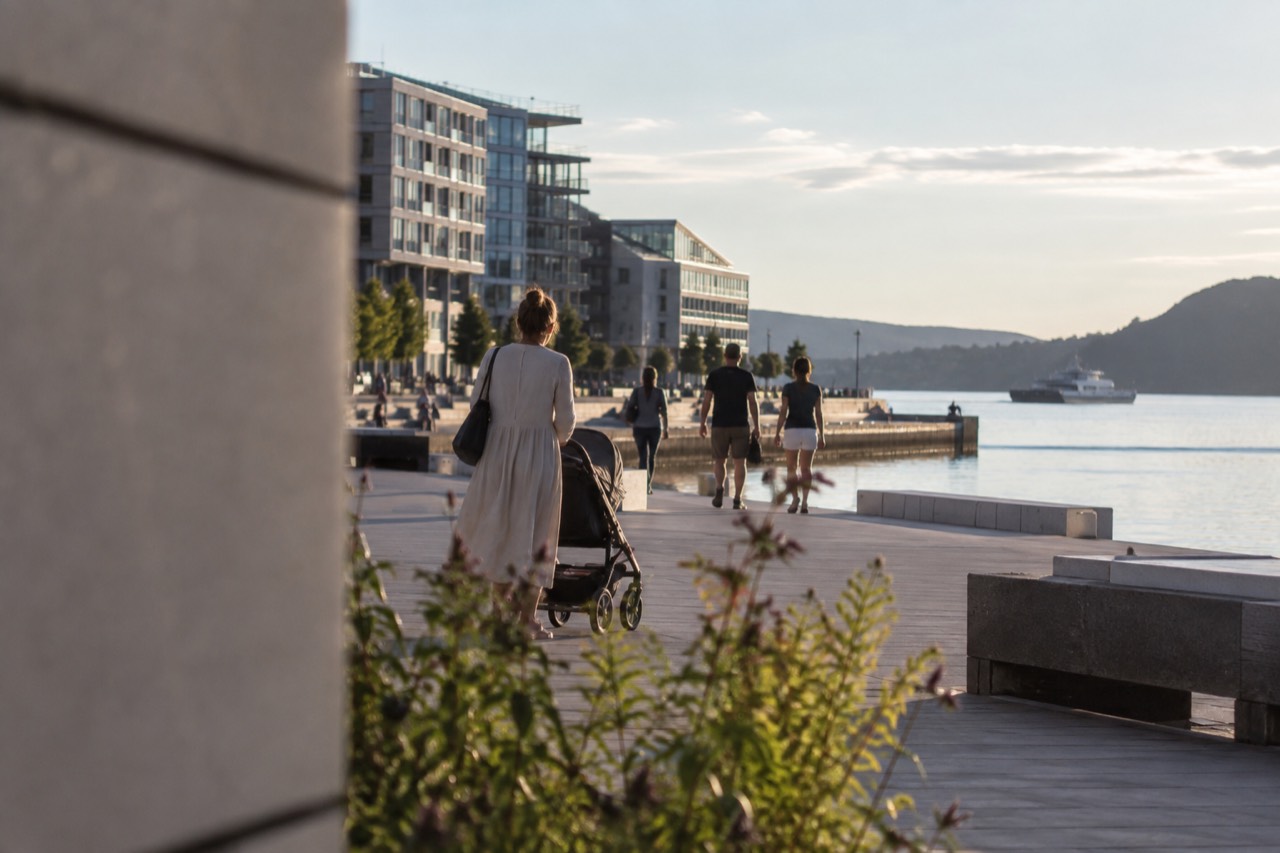
Yes, Oslo is genuinely family friendly. Children under 6 ride Ruter transport free, most major museums admit young children without charge (Norsk Folkemuseum, MUNCH and the Nobel Peace Center all do), the Opera House roof and Vigeland Park cost nothing, and the island ferries take an ordinary zone 1 ticket. The trade-offs are steep winter daylight limits and restaurant prices well above the European average.
Strollers on the tram, a baby asleep in a pram outside a café, toddlers on the Opera House roof: Oslo runs on norms that make travelling with an infant easier than in most European capitals, and almost none of it is advertised to visitors. Norwegian families lean hard on the outdoors, the state subsidises the things that matter, and the city's biggest sights are either free for children or free outright. This guide from Oslo Travel Guide walks through the parts that actually decide whether a baby trip works: getting around, what to see, where the money goes, and what the weather will do to your plans.
Is Oslo a Good City to Visit with a Baby?
Yes, and for reasons that are structural rather than lucky. Children under 6 travel free on all Ruter transport, most major museums admit young children at no charge, the two most visited outdoor sights in the city, Vigeland Park and the Opera House roof, cost nothing at all, and the waterfront and island ferries are stroller-friendly. The two real difficulties are winter daylight, under six hours in late December, and restaurant prices that run far above the European average.
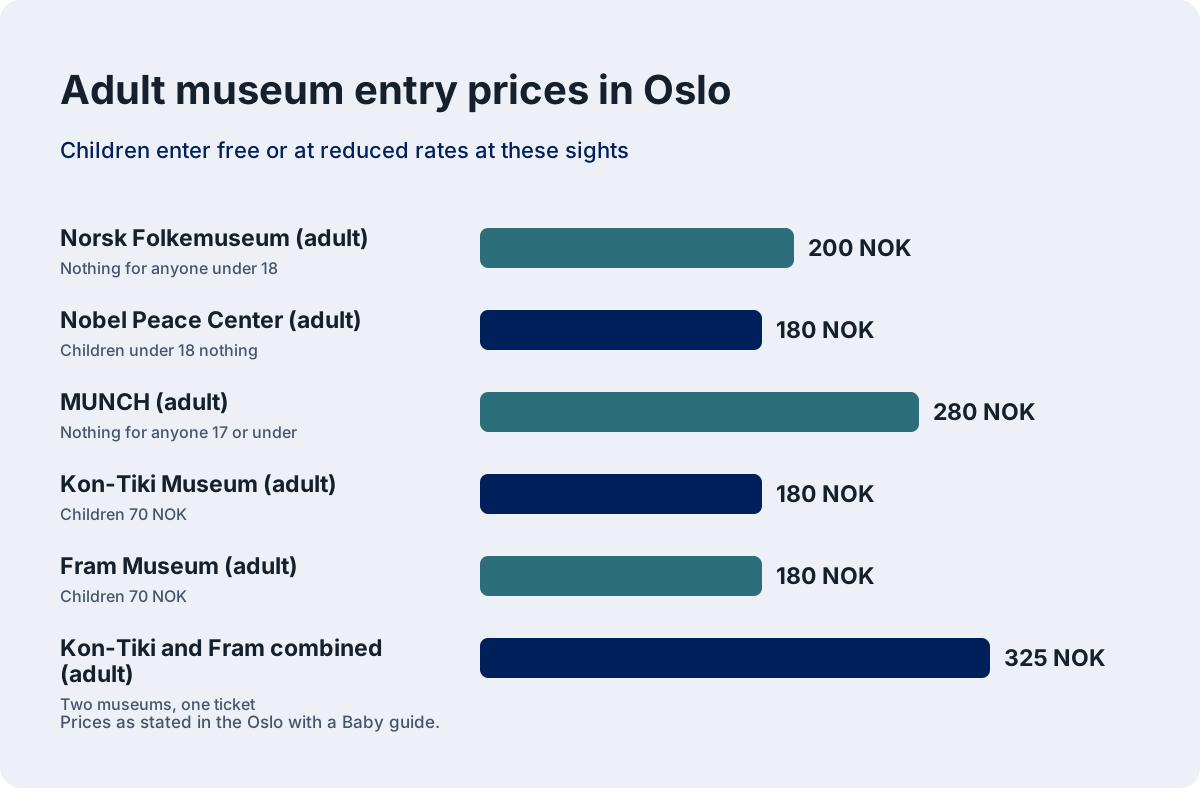
The free-entry pattern is the single biggest money saver and it is consistent across the city. Norsk Folkemuseum charges 200 NOK for an adult and nothing for anyone under 18. The Nobel Peace Center charges adults 180 NOK and children under 18 nothing. Astrup Fearnley lets anyone under 20 in free. MUNCH charges 280 NOK for adults and nothing for anyone 17 or under. On Bygdøy, Kon-Tiki and Fram charge children 70 NOK each, which is the most you will pay for a child at any major museum in the city.
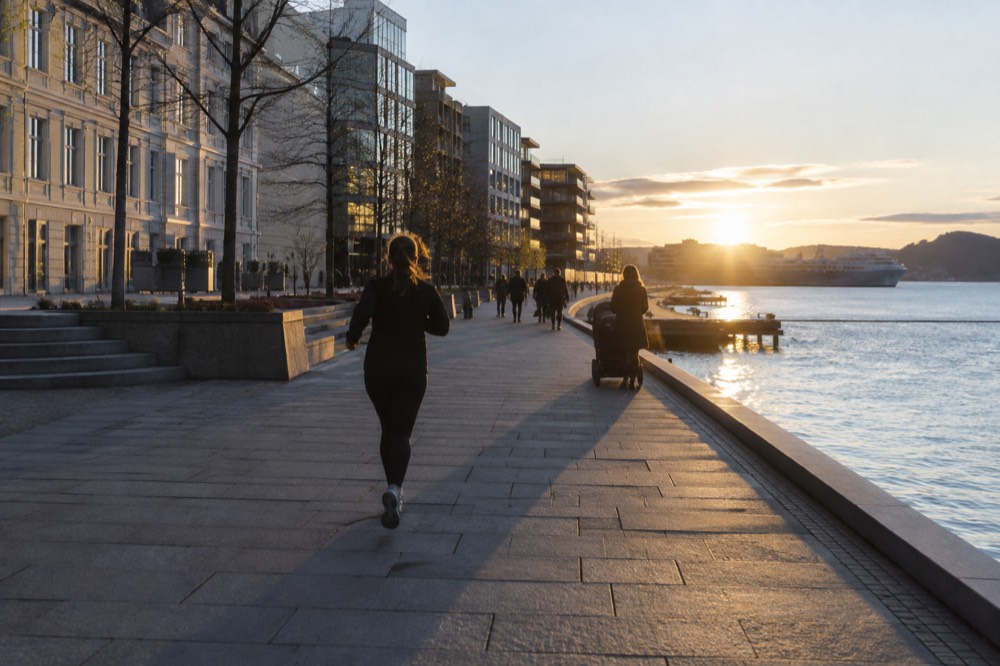
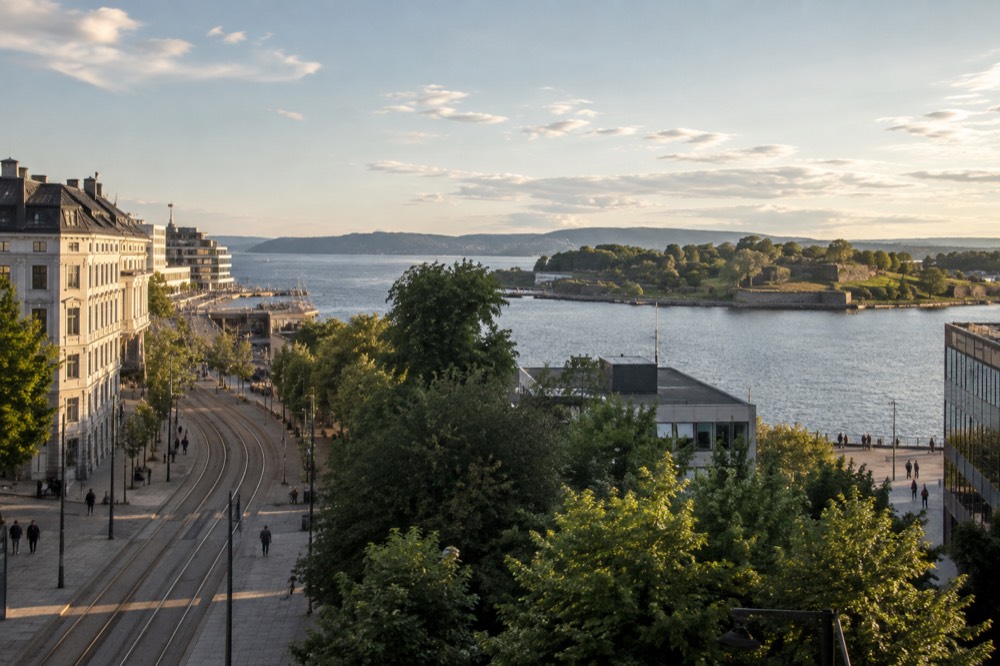
The street-level design helps too. Curb cuts are near universal in the center, the waterfront promenade from Aker Brygge to Tjuvholmen is flat and wide, and the Oslofjord islands are reached by ordinary public ferries with level boarding. A stroller in Oslo is a tool, not an obstacle.
For a broader look at the same question with older children in mind, our Oslo with kids guide covers the age ranges above babyhood, and free things to do in Oslo lists the sights that cost nothing at any age.
How Do You Get Around Oslo with a Stroller?
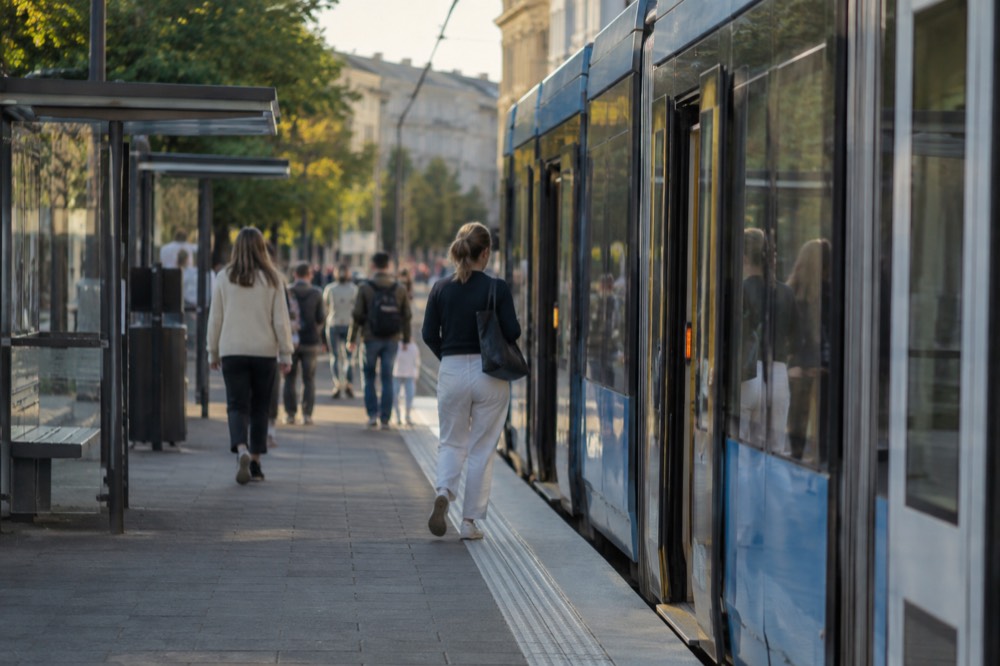
Ruter's buses, trams, metro and ferries all take strollers, and a child under 6 rides free with a fare-paying adult, so the only ticket you buy is your own. Central Oslo is zone 1, the entire metro network sits inside it, and a single zone 1 ticket is valid for 60 minutes from activation. Buy in the Ruter app, not on board, because on-board purchases cost more. The airport is zone 4N, not a separate system.
The mechanics are simple once you know them. Every tram and most buses have a marked stroller or wheelchair area with a push-button door request at the right height. The T-bane has level boarding at central stations and lifts at nearly all of them; where a lift is out, Ruter's app flags it before you travel. Ferries to the Oslofjord islands, lines B1, B1X and B2 from Aker Brygge, are ordinary Ruter services, so the same zone 1 ticket that carried you across town carries you out onto the water.
One ferry is different, and mixing them up is the classic Oslo mistake. The Bygdøy museum ferry leaves from Rådhusbrygge 3, runs only from mid-March to early October, costs around 70 NOK one-way, and does not accept Ruter tickets at all; the Oslo Pass does cover it. The island ferries leave from Aker Brygge and do accept Ruter tickets. Two piers, two rule sets, ten minutes' walk apart. Out of ferry season, bus 30 runs to the Bygdøy museums year-round on an ordinary ticket.
If a day of hopping on and off sounds like more than a baby's patience allows, the hop-on hop-off option in Oslo is the one product built around short attention spans, and our Ruter tickets explained guide covers the fare details this page only summarizes.
Which Museums and Sights Actually Work with a Baby?
The Bygdøy museums work best: Kon-Tiki and Fram are compact, loud-tolerant and stroller-navigable, with children's tickets at 70 NOK. In the center, the National Museum, MUNCH and the Nobel Peace Center all admit young children free, and the Opera House roof and Vigeland Park are free to everyone, always. The one thing you cannot do is see the Viking ships: the Museum of the Viking Age is closed until 2027.
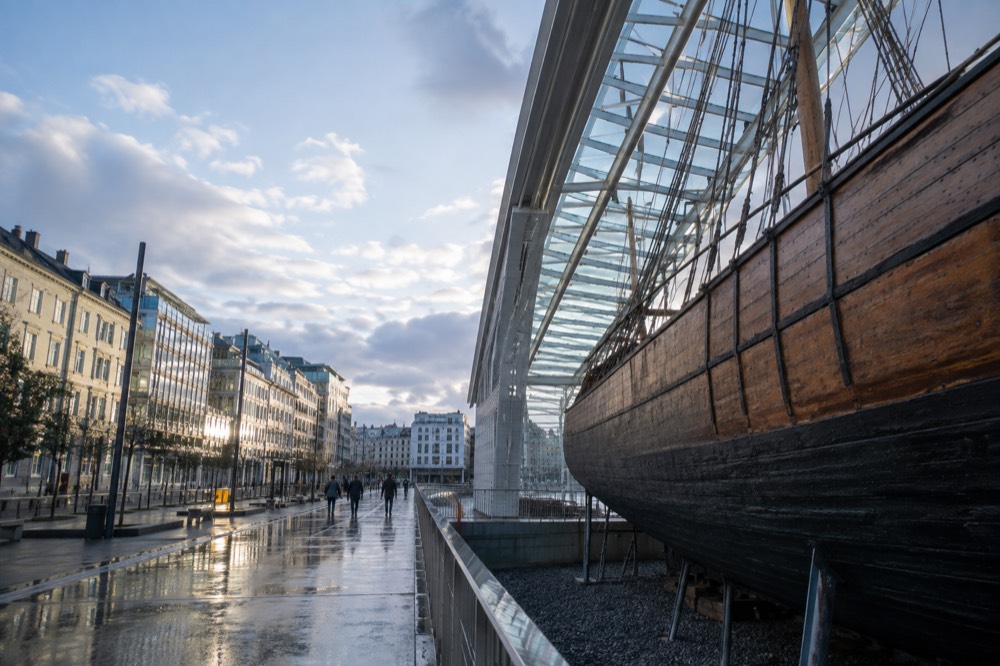
Bygdøy is the classic family half-day. The Fram Museum is a full polar ship you walk through, which absorbs a baby-carrier parent completely, and the Kon-Tiki Museum next door is small enough that a feed-and-roam circuit takes under an hour. Adult entry at each is 180 NOK, children 70 NOK, and the two museums sell a combined ticket at 325 NOK for adults. The peninsula itself is flat, grassy and made for pram naps between buildings.
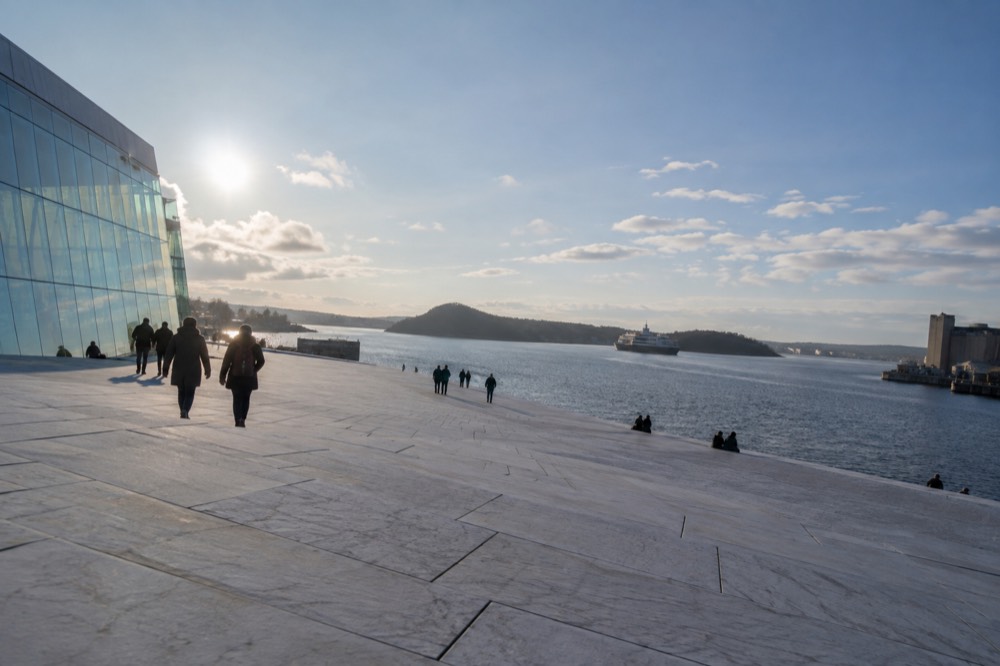
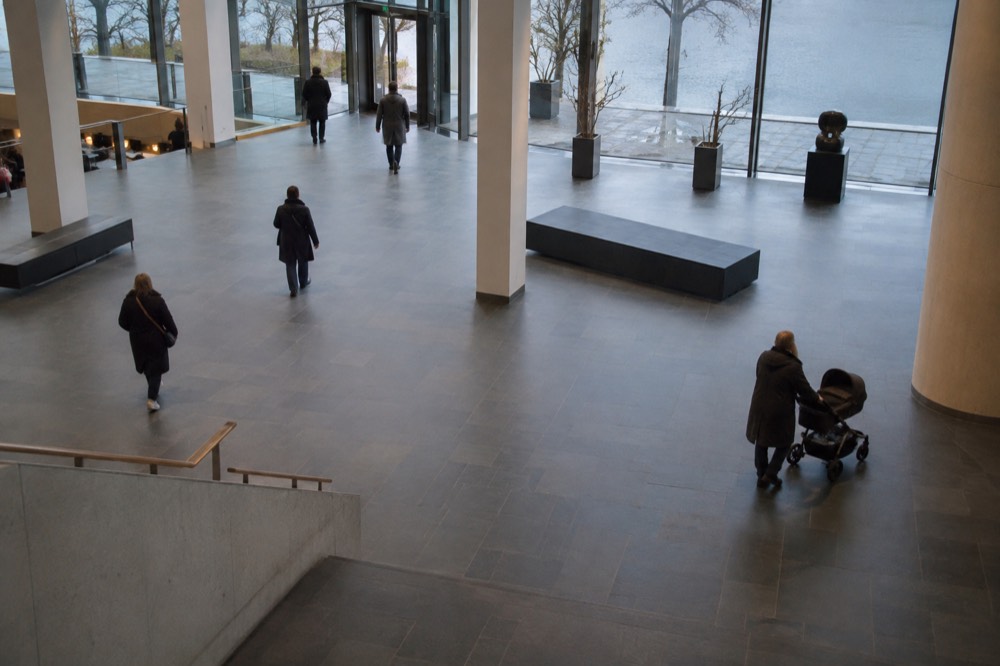
In the center, the National Museum holds The Scream and enough floor space that a stroller is not a problem, and MUNCH's building at Bjørvika has lifts, space and a café with a view. The Opera House roof is the free win: a sloping marble terrace you simply walk up, harbor on three sides, no ticket, no gate. Vigeland Park is the other one: over 200 sculptures, open 24 hours a day, all year, no charge.
The Viking question needs a straight answer because 4,400 searches a month still point at a closed building. The former Viking Ship Museum shut in 2021 and the museum's own wording is that it will reopen as the Museum of the Viking Age in 2027, with no month committed to. Viking-age objects are viewable at the Historical Museum in the center in the meantime, and our Museum of the Viking Age page tracks the reopening.
For a deeper dive into the two Bygdøy anchors, see the Kon-Tiki Museum guide and the Fram Museum guide, and if rain closes in, the rainy day in Oslo guide has indoor options that suit small children.
Where Do You Take a Baby for Outdoor Time in Oslo?
Frogner Park, the Opera House roof and the Oslofjord islands are the three that cost nothing and take a stroller. Beyond them, the city owns a climbing park with a day ticket that works from around school age up, and a guided island-hopping tour covers ferry-and-foot logistics that are fiddly with a pram. Sognsvann, a lake at the end of metro line 5, is a flat forest loop with a gravel path.
Frogner Park, which most visitors still call Vigeland Park, is the easy default: enormous, flat, always open, and the sculptures are at exactly the height a toddler points at. The Vigeland Park guide covers the layout. The islands are the Oslo-specific move: line B1 runs year-round from Aker Brygge to Hovedøya, where a ruined Cistercian abbey sits in meadow ten minutes from the center, and the same zone 1 ticket covers the crossing.
The climbing park is the one bookable outdoor product in this set that families genuinely use as a day out. A day ticket covers the courses, which are graded by age and height, and it is the kind of outing that works when a baby is in a carrier and an older sibling needs to be tired out.
If your children are past the carrier stage, the island-hopping tour is the smarter version of the ferry day: someone else handles the timetables, the route between piers is planned, and the 195-minute format fits inside nap-free daylight even in spring.
What Does a Family Day in Oslo Actually Cost?
Less than the city's reputation suggests, because the expensive parts of Norway are alcohol and restaurants, not museums and transport. A museum-heavy day for two adults and a baby runs roughly 400 to 600 NOK in entry fees plus your own transport ticket. The Oslo Pass at 580 NOK for 24 hours can beat that, since it covers over 30 museums plus all Ruter zones including the airport train, but only if you genuinely intend to museum-hop.
The price structure is worth understanding before you spend anything. Statistics Norway's 2025 European comparison puts overall household prices 28.6% above the EU average and food 33% above, but alcohol and tobacco at more than double the average. Museums, by contrast, cluster at 180 to 280 NOK adult entry with children free or at 70 NOK, and public transport is cheap per journey. The money goes to dinner and drinks, not to sights.
| Item | Adult | Baby / young child | Notes |
|---|---|---|---|
| Kon-Tiki Museum | 180 NOK | 70 NOK (6-17) | Under 6 free |
| Fram Museum | 180 NOK | 70 NOK | Oct-Apr 10-17, May-Sep 09:30-18 |
| Norsk Folkemuseum | 200 NOK | Free (0-17) | Closed 17 May, 24-25 Dec |
| MUNCH | 280 NOK | Free (0-17) | 200 NOK after 18:00 |
| Nobel Peace Center | 180 NOK | Free (0-17) | |
| Astrup Fearnley | 180 NOK | Free (under 20) | |
| Vigeland Park | Free | Free | Open 24 hours, all year |
| Opera House roof | Free | Free | No ticket needed |
The Oslo Pass maths is a real decision, not a shrug. A 24-hour adult pass is 580 NOK, a 48-hour 845 NOK, a 72-hour 995 NOK, with children 6 to 17 at roughly half. Three Bygdøy museums at full price is already 560 NOK before any transport, and the pass includes the Bygdøy ferry, the island ferries, and Vy trains to and from Gardermoen, though not Flytoget. Our is the Oslo Pass worth it guide runs the full break-even sums.
How Does the Weather Affect a Baby Trip?
More than in almost any other European capital, because Oslo's daylight swings from 5 hours 53 minutes on 21 December to 18 hours 50 minutes on 21 June, and August, not November, is the wettest month at 103 mm on the 1991 to 2020 normals. July averages a mild 17.7 °C (64 °F). There is no midnight sun at this latitude, but in late June it never gets properly dark.
Practically, this means the season shapes the whole trip. From May to August you have long light evenings, fjord swimming water of roughly 15 to 20 °C on warm days, and every outdoor option open, including the seasonal Bygdøy ferry and the B2 ferry to Langøyene. From November to February you are planning around a sun that rises after 9:00 and sets before 16:00, which pushes a baby day indoors: museums, the aquarium-adjacent indoor options, and short daylight-window strolls.
| Date | Daylight | Sunrise | Sunset | What it means with a baby |
|---|---|---|---|---|
| 15 Jan | 6 h 45 m | 09:04 | 15:49 | Plan one outdoor block midday |
| 15 Mar | 11 h 45 m | 06:34 | 18:19 | Full days, cold air |
| 15 May | 17 h 08 m | 04:40 | 21:48 | Bedtime battles, bring blackout gear |
| 21 Jun | 18 h 50 m | 03:53 | 22:43 | Twilight all night, never fully dark |
| 15 Aug | 15 h 38 m | 05:31 | 21:09 | Warm water, wettest month arriving |
| 21 Dec | 5 h 53 m | 09:18 | 15:11 | Museum days, pram lights |
Pack for the swing, not the average. A summer trip needs a sun shade for the stroller and an extra layer for fjord evenings that stay light but cool to around 12 °C after sunset. A winter trip needs a proper footmuff, because January's normal mean is −2.3 °C and the observed low in the 2025/26 winter hit −17.2 °C. Our month-by-month Oslo weather guide and the Oslo in winter guide go deeper.
Where Should a Family Stay in Oslo?
Somewhere on the walkable waterfront grid between Oslo S and Aker Brygge keeps you flat-side-up for the stroller, inside walking distance of the Opera House, the promenade and the island ferry pier, and on direct metro lines for everything else. Grünerløkka suits a slightly older, hipper family mood, and Majorstuen puts you beside Frogner Park for morning pram circuits.
The center, the Barcode area and Aker Brygge are the pragmatic picks with a baby: new buildings mean lifts everywhere, the waterfront is flat, and the harbor ferries are a ten-minute stroll. Grünerløkka, the trendy district east of the river, has the food halls and cafés of Mathallen and a park-and-café density that works well once a child is out of the carrier. Frogner and Majorstuen, west of the center, trade waterfront for immediate access to the sculpture park and calm streets.
Two new openings have added family-relevant capacity: Clarion Hotel The Hub, an 810-room property and the largest in its portfolio's Oslo set, opened in 2026 right by Oslo S, and Hobo Hotel Oslo opened in October 2025. Neither is a family hotel as such, but both are new-build, which in practice means functioning lifts, wide corridors and cots on request. The where to stay in Oslo guide compares the districts properly.
What About Food, Milk Rooms and Eating Out with a Baby?
Norwegian restaurants are matter-of-fact about children, high chairs are standard, and service is included in prices so tipping stays a rounding-up gesture rather than an obligation. The expensive part is the food itself: restaurant meals sit well above the European average, and alcohol is more than double it. Supermarkets sell beer only up to 4.7% ABV, and wine and spirits are sold only at Vinmonopolet, which closes on Sundays.
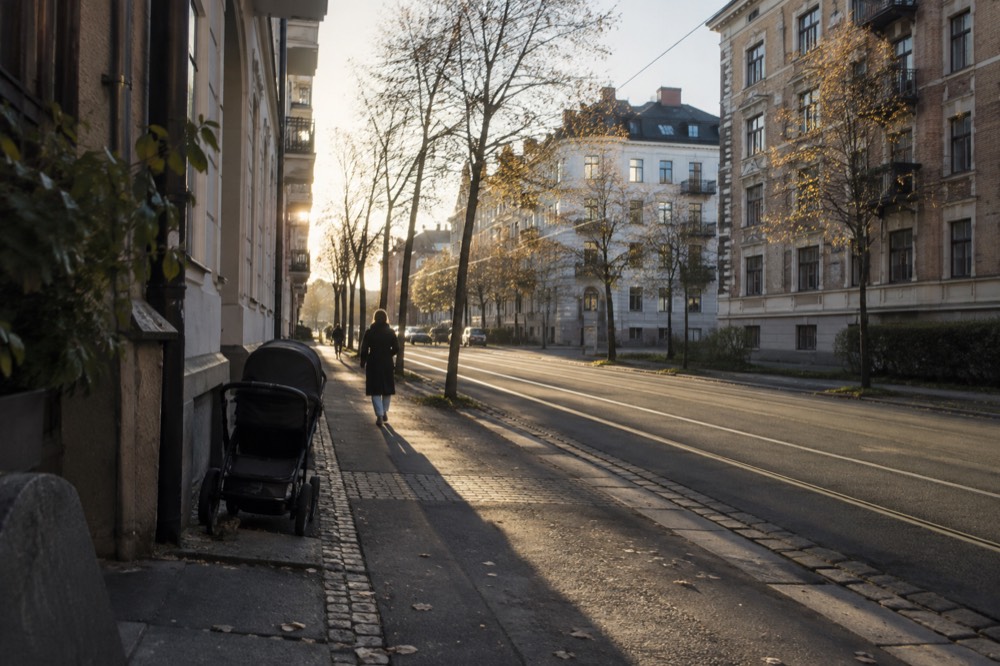
The practical rhythm most families fall into is a big hot lunch out, since lunch menus run cheaper than dinner, and supermarket food back at the room for the evening. Mathallen, the food hall in Grünerløkka, is the easiest family eating building in the city: many counters, no single bill, high chairs, and space to park a stroller without blocking a doorway. Café culture is strong, and a pram outside or beside a table is a normal sight, not a negotiation.
Vinmonopolet's rules matter if your evening plan depends on a bottle of wine: it is closed every Sunday and on public holidays, Saturdays close early, and weekday hours vary by store, so check the store finder rather than assuming. Tipping is voluntary: rounding up or around 5 to 10 percent for good service is the norm, and card terminals may prompt, but nobody expects it. The tipping in Oslo guide and the best restaurants in Oslo guide cover the detail.
| Eating situation with a baby | Where it works best | Rough cost reality |
|---|---|---|
| Hot sit-down lunch | Mathallen food hall counters | Cheaper than dinner menus |
| Café stop between sights | Waterfront cafés at Aker Brygge | Coffee and a bun, cake prices moderate |
| Supermarket self-catering | Any Rema, Coop or Kiwi | Food 33% above EU average |
| Wine or spirits | Vinmonopolet only | Closed Sundays, early close Saturdays |
| Baby formula and food | Supermarkets and pharmacies | Widely stocked, standard brands |

What Practical Norwegian Rules Should Parents Know?
Norway is in the Schengen Area but not in the European Union: it is in the EEA via EFTA, uses the krone rather than the euro, and sits outside EU VAT, so non-resident visitors can claim a VAT refund on qualifying purchases. Children under 6 travel free on public transport. Tap water in Oslo is excellent and free everywhere. Norway's new visitor levy framework does not apply in Oslo, which has decided not to charge it.
The currency point catches people every time. Prices are in NOK, cards are accepted essentially everywhere, and nobody will take euros at a museum desk. Keep some krone sense in your head: a museum adult ticket is 180 to 280 NOK, a 24-hour Oslo Pass is 580 NOK, and the airport's Flytoget express is 268 NOK one-way, while the Vy train doing the same run in roughly the same time costs about half that and is covered by the Oslo Pass. Our Flytoget vs Vy comparison explains the airport decision in full.
For the journey itself, the getting around Oslo guide covers the transit system, and the Oslo airport to city centre guide covers arrival with luggage and a stroller. Tap water needs no filter and no buying: it is among the things Oslo does best, as our Oslo tap water page sets out.
Which Bookable Tours Are Worth It with a Baby or Toddler?
Realistically, three: the Kon-Tiki Museum ticket, because Bygdøy's best pairing is a fixed, short, indoor visit; the island-hopping tour, if your children are walking age and you want the ferry logistics handled; and the climbing park day ticket, which is the one product built as a full family day out. Everything else in Oslo's tour set is either adult-paced, weather-dependent or better done independently with a stroller.
The Kon-Tiki ticket is the safest booking on this list: a one-hour museum, an indoor product, a 70 NOK child ticket, and a museum that anchors any Bygdøy half-day. Book it for the day you plan the peninsula, pair it with Fram next door, and take bus 30 or the seasonal ferry out.
Beyond those three, the honest answer is that a baby does better on self-directed days than on timed tours. The fjord sightseeing boats are lovely but a 90-minute commentary loop is a long ask for an infant, and the food walks are adult evenings. Our things to do in Oslo master list is the better place to build the rest of the itinerary, and the Oslo guided tours overview compares what is worth booking at any age.
Common Questions About Oslo with a Baby
Is Oslo a family-friendly city?
Yes. Children under 6 ride public transport free, most major museums admit young children at no charge, the top outdoor sights cost nothing, and the streets, trams and ferries are built around strollers. The costs that hurt are restaurants and alcohol, not family activities.
Do babies travel free on Oslo public transport?
Children under 6 travel free with a fare-paying adult on all Ruter services: buses, trams, the metro and the island ferries. Only the Bygdøy museum ferry is outside Ruter and charges separately, though the Oslo Pass covers it.
Which Oslo museums are free for babies and toddlers?
Norsk Folkemuseum, the Nobel Peace Center, Astrup Fearnley and MUNCH all admit young children free, with the age thresholds ranging from 17 to 20 depending on the venue. Kon-Tiki and Fram charge children 70 NOK, the highest child ticket among the major museums.
Can you take a stroller on the Oslofjord ferries?
Yes. The island ferries, lines B1, B1X and B2 from Aker Brygge, are ordinary Ruter services with level boarding, and a zone 1 ticket covers the crossing. The separate Bygdøy ferry from Rådhusbrygge 3 runs mid-March to early October and does not take Ruter tickets.
Is the Oslo Pass worth it with a baby?
Often, yes. A 24-hour adult pass at 580 NOK costs about the same as three Bygdøy museums at full price, and it adds all Ruter zones, the Bygdøy ferry and the island ferries. Since a baby enters most venues free, the pass only has to pay for the adults, which it does quickly on a museum-heavy day.
What is the worst time of year to visit Oslo with a baby?
Late December through January, when daylight shrinks to under six hours and the normal mean temperature sits around −2.3 °C. It is doable with a proper footmuff and museum days, but if outdoor time with an infant is the goal, aim for May through September.