Tipping in Oslo: A Practical Guide for Visitors
Norwegian prices already include service, so nobody in Oslo is waiting for a tip. Knowing when to round up anyway is the whole skill, and it takes ten minutes to learn.
Short answer
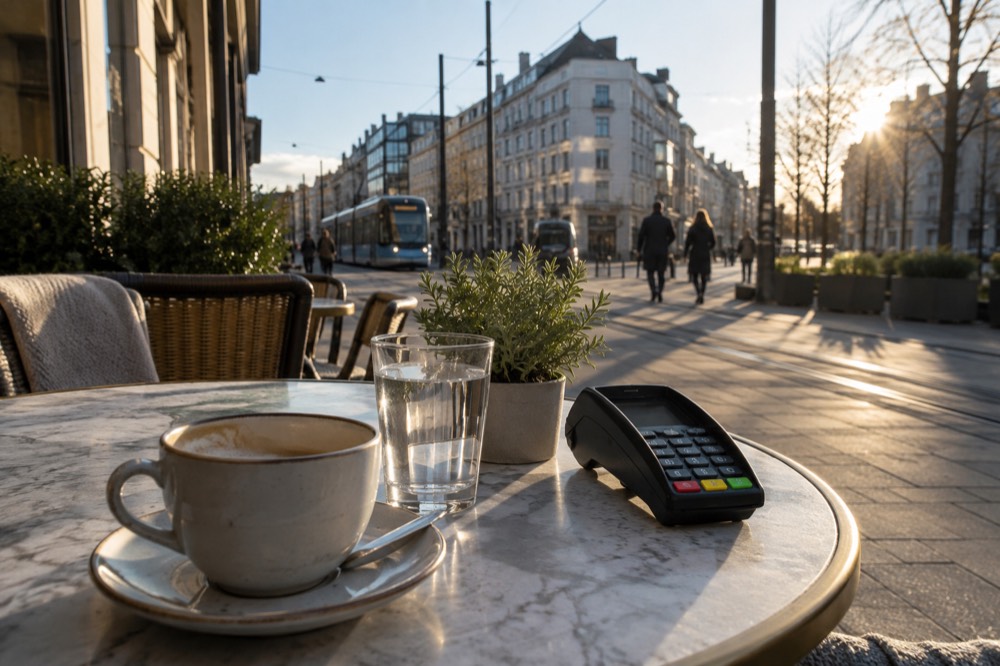
Tipping in Oslo is not expected and never mandatory. Service is included in Norwegian prices by law and custom, so a tip is a genuine thank you, not an obligation. Rounding up a restaurant bill or leaving 5 to 10 percent for good service is common but voluntary, and card terminals may prompt even where no tip is the local norm.
Tipping in Oslo: A Practical Guide for Visitors
Norway does not run on tips. Service is baked into the price on the menu, the meter and the hotel bill, and the person serving you is paid a proper wage that does not depend on your generosity. That single fact resets every instinct an American visitor brings to a Norwegian table, and it is the reason a ten-minute read on tipping in Oslo saves you both money and awkwardness.
The short version: you tip when you want to, not when you have to. Norwegians round up a restaurant bill, leave a small something for genuinely good service, or wave away the change in a taxi, and they do all of it without ceremony. What they do not do is calculate percentages in their heads, and nobody will chase you down the street if you leave nothing.
This guide covers the situations you will actually meet: restaurant bills and card terminals, taxis, hotels, guided tours and the free walking tours that survive on tips alone. It also explains the pricing system behind the custom, because once you understand why Norwegian prices look high, the tipping logic stops feeling foreign. For the wider money picture, pair this with our guide to what Oslo costs.
Do You Tip in Oslo?
No, tipping in Oslo is not expected, not required and not part of anyone's wages. Norwegian prices legally include service, staff are paid full wages regardless of what you leave, and locals themselves often tip nothing at all. Where a tip does appear it is small, voluntary and usually just rounding up the bill. If you leave exactly what the bill says, you have done nothing wrong by local standards.
That answer surprises visitors from tipping cultures, and the surprise is mutual. A Norwegian visiting New York is often startled by a 20 percent expectation on top of the menu price; an American in Oslo is startled that the number on the bill is the number you pay. Neither custom is rude, they are just built on different wage systems.
There is one important nuance. "Not expected" is not the same as "never done." Surveys and everyday practice in Norway describe a real habit of rounding up or leaving roughly 5 to 10 percent for good service in restaurants and bars, and small gratuities in taxis. It is a thank you, not a duty. If your server was excellent, leaving something is a normal, appreciated gesture. If service was ordinary, paying the bill as printed is completely normal too.
How Much Do You Tip in Oslo Restaurants?
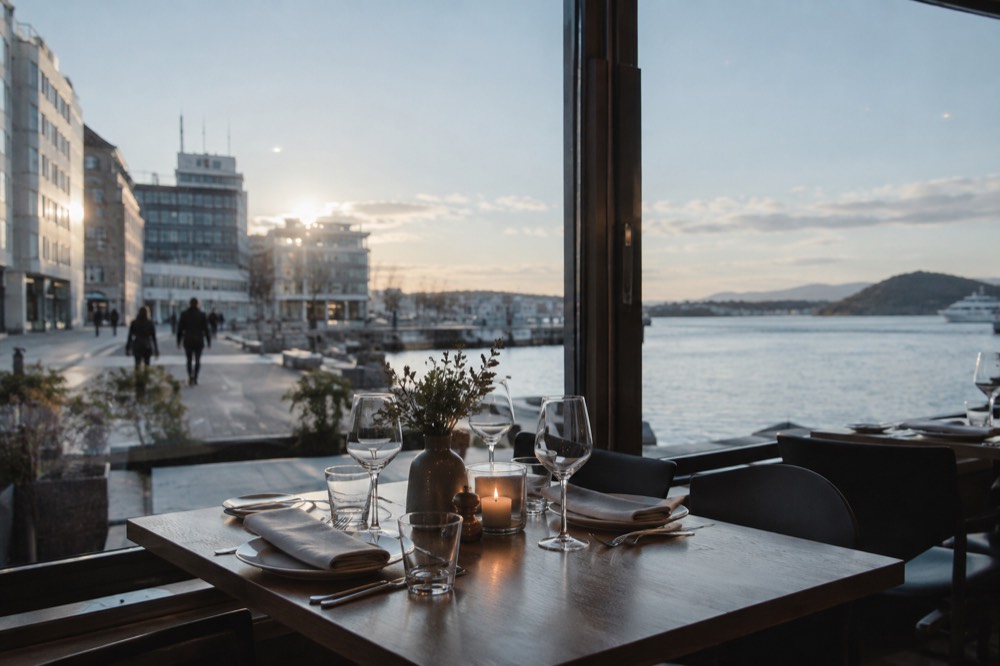
For good service in an Oslo restaurant, rounding up the bill or leaving about 5 to 10 percent is the common local gesture, and it is entirely voluntary. For ordinary service, paying the exact amount on the bill is normal and unremarkable. There is no floor, no server relying on your tip, and no cultural penalty for leaving nothing.
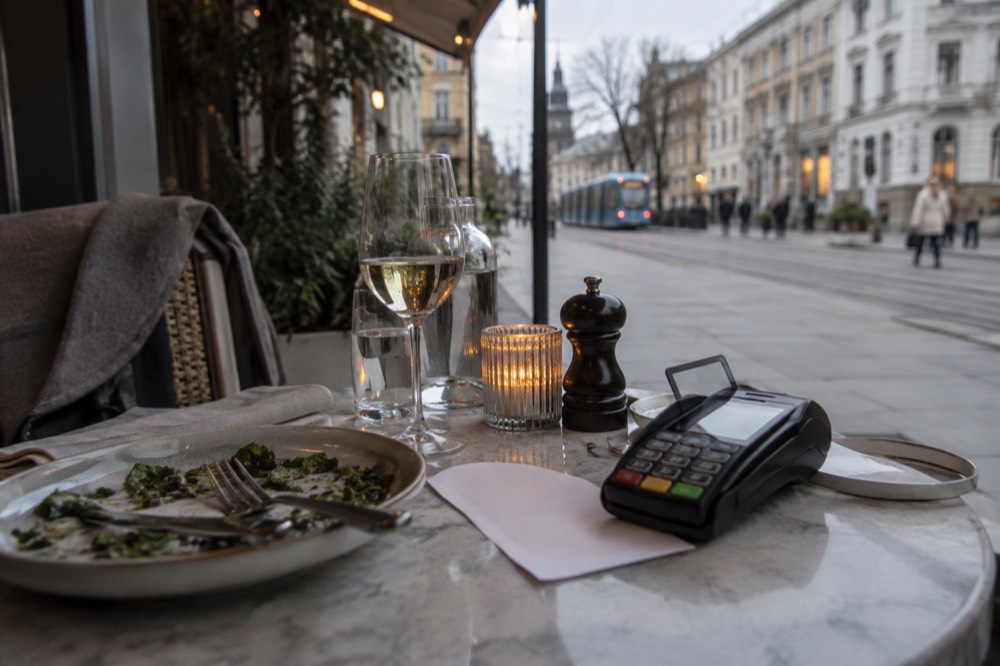
The mechanics matter more than the percentage. When the card terminal arrives at the table, it may show a tip prompt with suggested amounts and a skip option. Tapping skip is a perfectly ordinary thing to do, and Norwegians do it constantly. If you do want to leave something, the terminal will add it to the card payment, so you are not hunting for cash.
Cash itself is close to irrelevant in Norway. Card acceptance is near universal, and many Norwegians go weeks without touching a banknote. Do not assume you need to withdraw kroner to have small bills for tips, because the system is not built around that. If you want a deeper look at the cashless landscape, see our guide to currency and cards in Oslo.
A worked example keeps it honest. On a 680 NOK dinner, a local leaving a gesture might round to 700 NOK, or up to roughly 750 NOK if the service genuinely stood out. On a 1,200 NOK dinner for two, rounding to 1,300 NOK is the same gesture at scale. Nobody at the next table is watching, and nobody recalculates your percentage.
| Situation | Local practice | Amount | Expected? |
|---|---|---|---|
| Restaurant, good service | Round up or leave a small gesture | ~5-10% or to a round number | No |
| Restaurant, ordinary service | Pay the bill as printed | 0 NOK | No |
| Café or bakery counter | Nothing, ever | 0 NOK | No |
| Bar, table service | Round up occasionally | Small coins or rounding | No |
| Bar, counter ordering | Nothing | 0 NOK | No |
| Food tour or guided dinner | Nothing to the guide company | Included in tour price | No |
One habit worth importing: Norwegians rarely leave coins on the table when paying by card, because there are no coins to leave. The tip, when it happens, lives inside the card payment. If you are used to leaving bills tucked under a plate, expect the terminal prompt to be the entire mechanism.

If a long dinner is part of your plan, the practical question is usually which restaurant deserves the evening, not how to tip in it. The trio below covers the bookable experiences where the price you see is the price you pay.
Do You Tip Taxi Drivers in Oslo?
Tipping Oslo taxi drivers is optional and usually means rounding the fare up to a convenient number, or letting the driver keep small change. There is no percentage norm and no expectation. Taxis are metered and expensive in Oslo, the fare on the meter is the fare you pay, and rounding up a few tens of kroner is a courtesy rather than a rule.
Taxis in Oslo are among the priciest in Europe, which changes the psychology of the tip. When the meter already reads 250 NOK for a short hop, adding a percentage on top feels absurd to locals, and it is. The common gesture is to say "keep the change" on a 265 NOK fare, or to round 190 up to 200. That is the entire custom.
Rideshare and app-based services work the same way. If the app offers a tip option after the ride, using it is optional and uncommon locally. Drivers do not see a tip as part of their income the way they might in a tipping economy, because Norwegian wage law covers them fully.
A practical note that saves more than any tip discussion: most visitors to Oslo never need a taxi at all. The metro, tram, bus and ferry network covers the city and the islands on one ticket system, and the airport train comparison alone can save you over a hundred kroner before you have left the station. Our guide to getting around Oslo lays out the tickets.
Why Are Norwegian Prices So High If Service Is Included?
Norwegian restaurant and bar prices are high because wages, taxes and the cost of goods are high, not because service charges are hidden in the bill. Norway is the sixth most expensive country in Europe, household price levels sit 28.6 percent above the EU average, and alcohol and tobacco cost more than double the European average. The number on the menu already contains the server's wage.
This is the part of the tipping question that most guides skip, and it is the part that actually explains the custom. In a country where a restaurant's labor costs are paid through the menu price, the tip has no structural role. The server's rent does not depend on your generosity. That is why the Norwegian habit is a small gesture rather than a percentage obligation, and why the card terminal prompt feels so optional to locals.
The alcohol numbers deserve their own sentence, because they explain the bar culture. Statistics Norway's 2025 price-level survey puts alcohol and tobacco at more than double the European average, and wine and spirits are only sold through the state monopoly Vinmonopolet, which closes on Sundays and early on Saturdays. A beer in an Oslo bar is a considered purchase. Nobody is adding a percentage tip to it as a matter of course, and our guide to beer prices in Oslo covers what you are actually paying for.
| Cost category | Norway vs EU average | What it means at the table |
|---|---|---|
| Overall household prices | +28.6% | Menu prices look high before any tip |
| Food and non-alcoholic drinks | +33% | Ingredients cost the restaurant more |
| Alcohol and tobacco | More than double | Bar drinks are the biggest budget line |
| Museums and attractions | Moderate | Ticket prices like 180 NOK at Fram are not outliers |
| Public transport | Moderate | The pass and ticket system stay affordable |
The comparison table is also the answer to a fair objection. Visitors sometimes feel that high prices plus any tip makes Oslo punishing, but the honest picture is uneven, not uniformly expensive. Museums, transport and the outdoors are reasonably priced by European standards, and several of the city's best sights cost nothing at all. The money genuinely goes to alcohol and restaurants, and our free things to do in Oslo guide balances the ledger.
Do You Tip Hotel Staff and Tour Guides in Oslo?
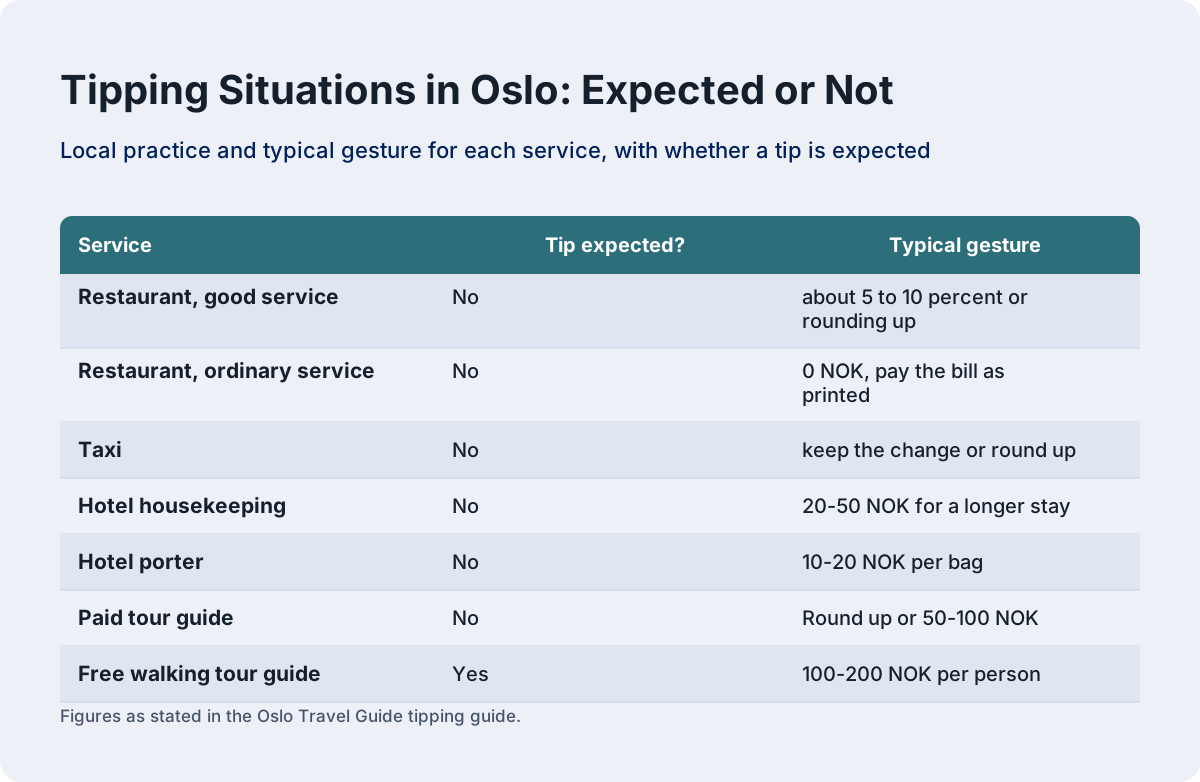
Hotel staff in Oslo are not tipped as a rule: no expectation for housekeeping, porters or reception. Tour guides on paid tours are not tipped either, since the tour price covers their wage, though rounding up or a small cash gesture for exceptional guiding is a kind nod. The one real exception in Oslo is the free walking tour, which runs on tips because the tour itself costs nothing.
The free walking tours deserve the clearest explanation, because they are the one place where a tip is structurally expected. The walk is free to join, the guide earns from what participants give at the end, and the operators say so openly. If you take a free tour and enjoy it, tipping in the range of 100 to 200 NOK per person is the honest gesture for a two-hour walk. Skipping the tip on a free tour is the one tipping behavior in Oslo that locals would genuinely side-eye. Other pages covering the same trip are gathered on Oslo Travel Guide. Other pages covering the same trip are gathered on Oslo Travel Guide.
Paid tours are different. Whether it is a fjord cruise, a food walk or a museum entry with a guide, the price you paid is the compensation. Guides on paid products are wage-earners, and a tip is a bonus, not an income component. If a guide was exceptional, a small amount handed over at the end is a gracious move, and nothing more is needed.
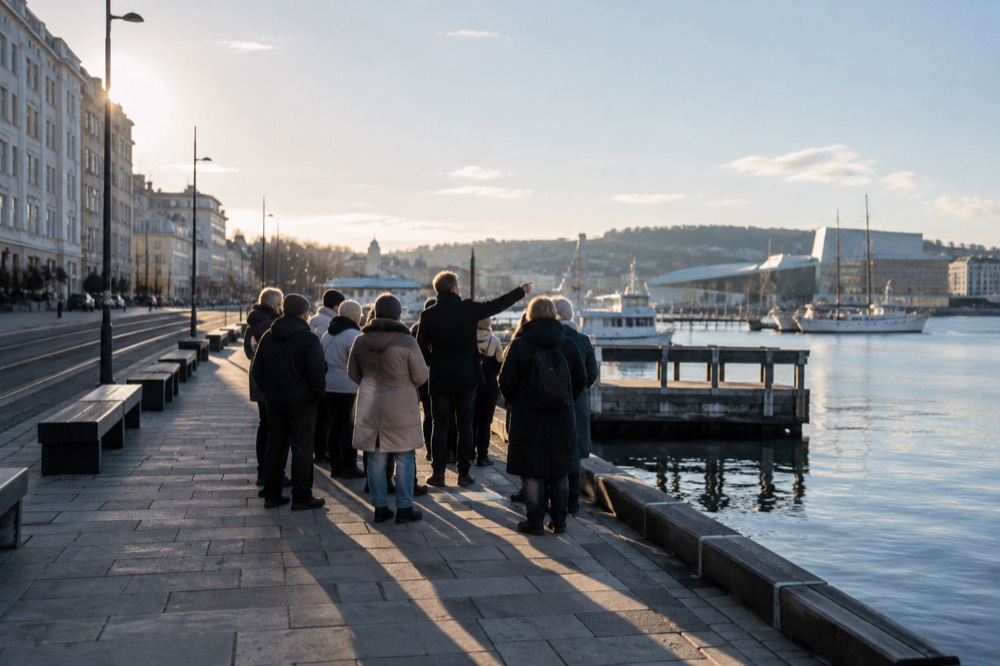
The evening shrimp-buffet cruise is a good example of a paid product where nothing extra is expected. The ticket covers the boat, the buffet and the crew, and the price is the price. The same logic applies to the museum peninsula at Bygdøy, where entry tickets like the Kon-Tiki Museum and the Fram Museum are flat admission with no service layer at all.
| Service | Tip expected? | Typical gesture if you choose to |
|---|---|---|
| Hotel housekeeping | No | 20-50 NOK left in the room for a longer stay |
| Hotel porter | No | 10-20 NOK per bag, rarely used |
| Paid tour guide | No | Round up or 50-100 NOK for exceptional guiding |
| Free walking tour guide | Yes | 100-200 NOK per person for a two-hour walk |
| Museum staff | No | Nothing |
| Spa or hairdresser | No | Rounding up occasionally |
How Does Tipping in Oslo Compare with the United States?
American visitors should mentally delete the percentage habit in Oslo: there is no 15 to 20 percent standard, no server working for tips, and no social penalty for paying the printed bill. The Norwegian system pays service staff a full wage through the menu price, so a tip is a bonus rather than a wage substitute. The practical rule is the reverse of the US: tip nothing by default, something for excellence.
The two systems produce opposite anxieties. In the US, undertipping is a genuine harm because it cuts someone's income. In Norway, overtipping can feel slightly odd, though nobody will refuse it, and visitors from tipping cultures are not judged for being generous. If you leave 15 percent on an Oslo table the server will happily take it, but you have given away money the pricing system never asked for.
The card terminal is where the cultures collide most visibly. Norwegian terminals increasingly show a tip prompt, partly a software import from tipping markets, and locals routinely tap skip. American fingers trained to always select an amount should know that skipping is the local default, not a micro-aggression. Choose deliberately rather than reflexively.
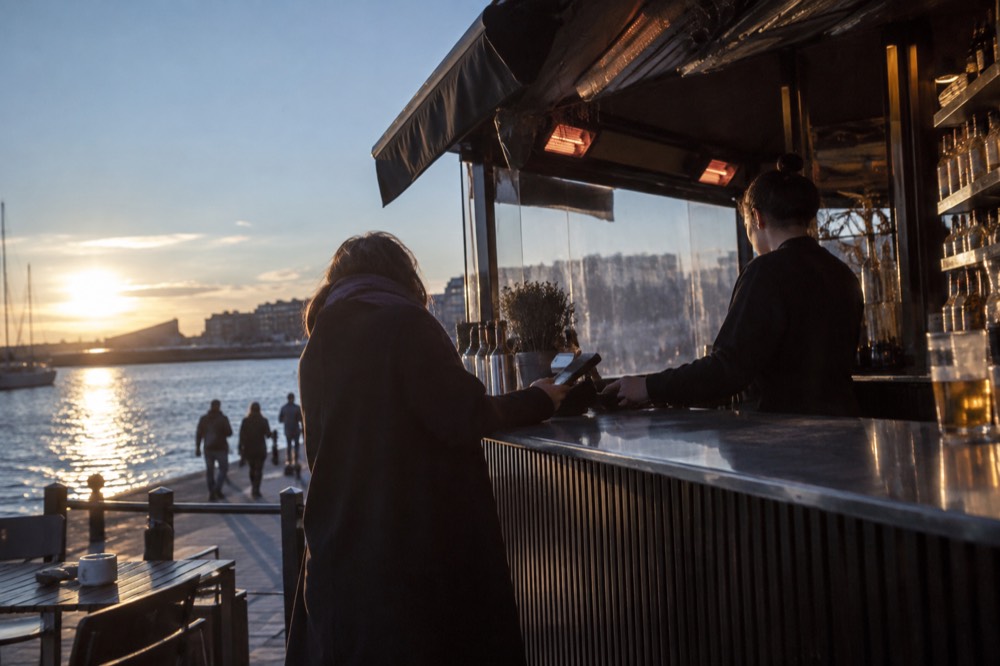
For travelers bridging both money cultures on one trip, the planning math is simpler than it looks. Budget the printed prices, add nothing for tips except the free-walking-tour case, and treat any rounding up as a rounding error. Our Oslo trip cost breakdown does the daily arithmetic with real figures, and the cheap eats guide shows where the food money goes furthest.
Do You Tip in Oslo Bars and Cafés?
No, bars and cafés in Oslo are not tipping venues in any expected sense. Counter service, which is how most Oslo cafés and many bars work, carries no tip custom at all, and even at table service in a bar, the local habit is at most rounding up or leaving small change. Nobody tips a barista, and the card terminal prompt at a café counter is best treated as decoration.
The café culture is a point of local pride, and it runs entirely without tips. Oslo's coffee scene is strong enough that we give it its own guide, and in none of those rooms is a tip part of the transaction. You order at the counter, pay by card, take a numbered stand to your table, and that is the complete social script.
Bars split by service model. Where you order and pay at the counter, there is no tip moment at all. Where table service brings drinks to you, rounding up the bill or leaving the coin change is the occasional local gesture, in the same spirit as the restaurant custom but smaller, because the underlying bill is already steep. With alcohol at more than double the European average, the price itself has done the heavy lifting.
One curiosity worth knowing: Norway's alcohol rules shape the whole evening economy. Supermarkets sell beer only up to 4.7 percent ABV, wine and spirits belong to Vinmonopolet with its early Saturday close and Sunday shutdown, and bar prices reflect the tax load. A guided beer walk is one of the few products that turns those rules into an experience, walking you through where and how the city actually drinks.
What About Service Charges on the Bill?
Oslo restaurant bills do not carry a separate service charge line the way some European cities do: the menu price is the full price, tax and service included, and no automatic gratuity is added for groups in the American style. If a bill shows a service line at all it is rare and will be explicit. The number you are quoted is the number you owe, before any voluntary rounding.
This is worth stating plainly because visitors from London or Paris arrive trained to hunt for a 12.5 percent service line before deciding whether to add anything. In Oslo there is usually nothing to find. VAT is inside the menu price, service is inside the menu price, and the total at the bottom is arithmetic, not negotiation.
Group dining works the same way. Large parties are not auto-gratuitied, and a restaurant that adds a charge for a big group will say so on the menu or when you book. Splitting a bill is normal and card terminals handle it without ceremony, so the American anxiety of "who tips on the group check" simply does not arise.
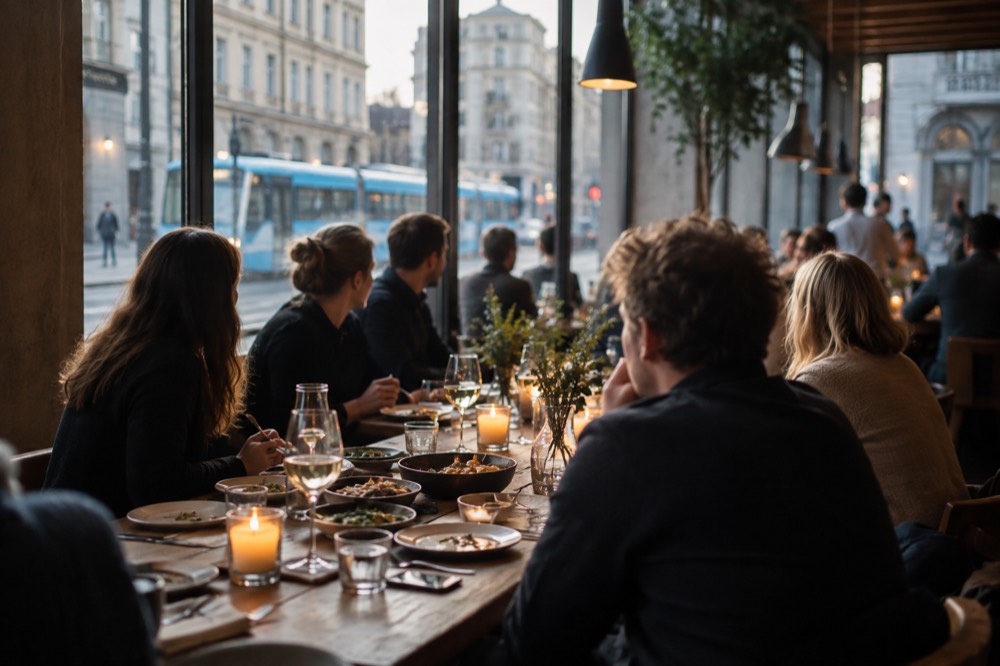
The one bill to read carefully is the restaurant bill that includes a cover or bread charge, which some Oslo restaurants do levy as a small per-person amount. That is a menu policy, not a tip, and it is not discretionary. If it is on the bill, it is part of the price. For where to spend those bills well, our best restaurants in Oslo guide is the companion piece to this one.
How Much Should You Budget for Tipping on an Oslo Trip?
For realistic planning, budget zero for tips in Oslo and treat anything you do leave as a rounding error on top. The only structural exception is the free walking tour, where 100 to 200 NOK per person is the honest contribution. On a three-day trip with one free tour and a few rounded-up dinners, a typical total tip spend is 300 to 500 NOK, and a traveler who leaves nothing at all has broken no local rule.
Putting that in context of the wider budget: an adult 24-hour Oslo Pass runs 580 NOK and covers over 30 museums plus the zones 1 to 4N transport network, museum entries like the Fram at 180 NOK are flat, and the big spending pressure in Oslo comes from restaurants and alcohol rather than tips or tickets. The tip line is the smallest and most optional line in the entire budget.
| Budget line | Typical amount | Tip on top? |
|---|---|---|
| Dinner for two, mid-range | Rounded bill, plus 0-10% gesture if you choose | Optional |
| Free walking tour | 100-200 NOK per person | This IS the payment |
| Fjord cruise ticket | From around $46 | No |
| Museum entry (Fram, Kon-Tiki) | 180 NOK each | No |
| Taxi across town | Metered fare, rounded up | Optional rounding |
| 24h Oslo Pass | 580 NOK | No |
The pass deserves one honest note because it interacts with the budget question. Three Bygdøy museums at full price total 560 NOK against a 580 NOK 24-hour pass that also carries you there and back, which is the kind of arithmetic our is the Oslo Pass worth it guide works through in full. Tips do not enter that calculation at any point, which is the theme of this whole page.
Before you lock the itinerary, one booking decision tends to matter more than any tip you will or will not leave: the fjord. The silent electric cruise is the city's best-reviewed activity and it departs from the central piers.
Common Questions About Tipping in Oslo
Do you tip in Oslo?
Tipping in Oslo is voluntary and not expected. Service is included in Norwegian prices, staff earn full wages, and locals commonly tip nothing at all. Rounding up or leaving 5 to 10 percent for good service is a normal but optional gesture.
How much do you tip in Oslo restaurants?
For good service, round the bill up or leave about 5 to 10 percent. For ordinary service, paying the printed bill is completely normal. Card terminals may show a tip prompt, and skipping it is the local default.
Do you tip taxi drivers in Oslo?
Optionally, by rounding the fare up to a convenient number or letting the driver keep small change. There is no percentage norm and the metered fare is the full price.
Do you tip on free walking tours in Oslo?
Yes, this is the one real exception. Free walking tours run on tips because the walk itself costs nothing, so 100 to 200 NOK per person is the honest contribution for a two-hour tour.
Do Oslo restaurant bills include a service charge?
No separate service charge is normally added. The menu price includes tax and service, no automatic gratuity applies to groups, and the total on the bill is what you owe before any voluntary rounding.
Is tipping expected in Oslo hotels?
No. Housekeeping, porters and reception are not tipped as a rule in Oslo. Leaving a small amount for a longer stay is a kind gesture, not a norm.