Things to Do in Oslo When It Rains
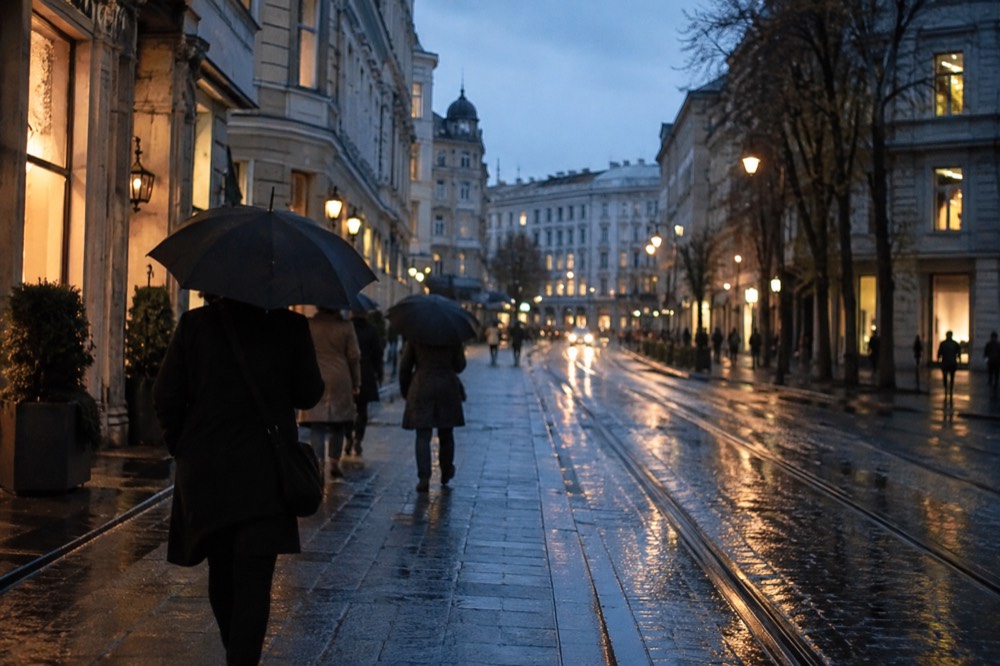
Rain is not a footnote in Oslo, it is a planning variable. August alone averages 103 mm on the official normals, and October brings 93 mm more. The good news: the city is built for it.
Short answer
Oslo handles rain well. Stack the Bygdøy museums or MUNCH, ride the hop-on hop-off bus between covered sights, take a covered fjord cruise, and finish in a cafe or food hall. Adult museum entries run 180 to 280 NOK, the 24-hour Oslo Pass is 580 NOK, and the Opera House roof is free even in drizzle.
Rain in Oslo is not an accident of weather, it is a statistical certainty you should plan around. MET Norway's 1991 to 2020 normals for the Blindern station put August at 103 mm of precipitation, the wettest month of the year, with October close behind at 93 mm and November at 85 mm. Nobody who visits between June and November gets through entirely dry. The city knows this, and it is one of the best-equipped capitals in Europe for a wet afternoon: compact, tunnel-connected in the center, dense with world-class museums within a short ride of each other, and served by a hop-on hop-off bus that drops you at the museum doors. This itinerary is built for the day the forecast turns.
What Can You Actually Do in Oslo When It Rains?
A rainy day in Oslo is best spent stacking two or three museums on one peninsula or one neighborhood, moving between them by bus or covered boat, and reserving the late afternoon for a food hall, a cafe, or an evening museum slot. MUNCH stays open until 21:00 four nights a week, so the day does not end at five. Adult museum entries run 180 to 280 NOK, and a 24-hour Oslo Pass at 580 NOK covers more than 30 of them plus the transport between.
The mistake visitors make is treating rain as a reason to abandon structure. It is the opposite: a wet day rewards a tighter plan, because improvising in Oslo rain means standing at a tram stop reading a phone with water running down your sleeve. Pick a cluster, book the one or two things that genuinely need booking, and let the day run on rails.
The clusters that work in rain are Bygdøy, where the Kon-Tiki Museum, the Fram Museum and the Norwegian Maritime Museum sit within a few minutes' walk of each other at the Bygdøynes pier; the Bjørvika waterfront, where MUNCH, the Opera House and the Deichman library line up along a mostly covered promenade; and the center, where the National Museum, the Oslo Cathedral and the Karl Johans gate shopping stretch connect under awnings and arcades. Each cluster is a half-day of dry entertainment on its own.
One thing worth knowing before you plan: Norway's weather is genuinely maritime, and a rainy morning frequently gives way to a dry evening. The MET normals describe averages, not the day in front of you. Check yr.no, the forecast service run by MET Norway itself, the night before and again at breakfast, and be willing to swap the order of this itinerary around whatever window appears.
Which Museums Fill a Rainy Day Best?
The strongest rainy-day museum stack in Oslo is Bygdøy: the Kon-Tiki Museum and the Fram Museum are 180 NOK each for adults, sit beside each other at the same pier, and a combination ticket for both plus the Maritime Museum is 485 NOK. In the center, MUNCH is 280 NOK and open until 21:00 from Wednesday to Saturday, which makes it the natural end to a wet day.
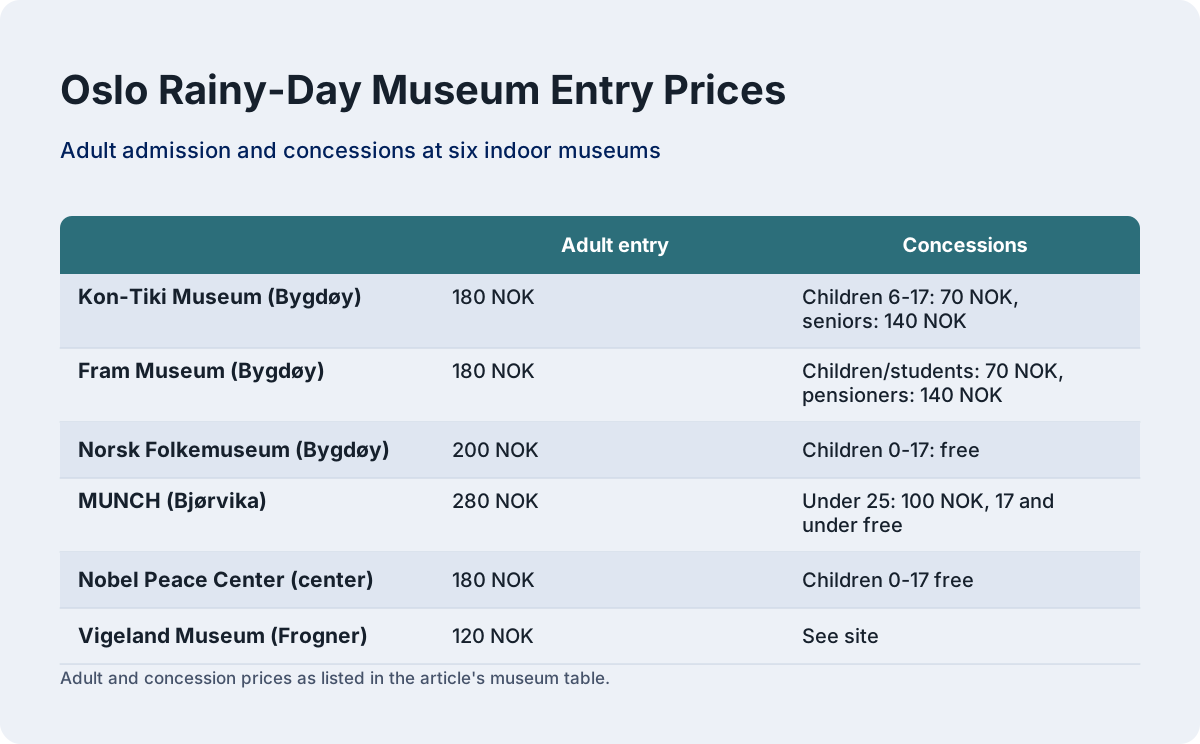
Bygdøy is the classic answer, and the numbers back it up. The Kon-Tiki Museum holds the balsa raft Thor Heyerdahl sailed across the Pacific in 1947, and the Fram Museum holds the actual ship that carried Fridtjof Nansen and later Roald Amundsen into the polar ice. Both are the kind of immersive, full-sized-object museums that make two hours vanish. The Fram Museum in particular is built around walking onto and around the ship itself, which is exactly what you want when it is dripping outside. The museums' own published combination tickets make the stack cheaper: Kon-Tiki plus Fram is 325 NOK for an adult, and all three Bygdøy museums together are 485 NOK.
| Museum | Adult entry | Concessions | Rainy-day strength |
|---|---|---|---|
| Kon-Tiki Museum (Bygdøy) | 180 NOK | Children 6-17: 70 NOK, seniors: 140 NOK | The raft itself, plus the Easter Island exhibit |
| Fram Museum (Bygdøy) | 180 NOK | Children/students: 70 NOK, pensioners: 140 NOK | Walk aboard the polar ship, indoors |
| Norsk Folkemuseum (Bygdøy) | 200 NOK | Children 0-17: free | Large indoor galleries plus the Gol stave church |
| MUNCH (Bjørvika) | 280 NOK | Under 25: 100 NOK, 17 and under free | Open until 21:00 Wed-Sat |
| Nobel Peace Center (center) | 180 NOK | Children 0-17 free | Compact, central, good for two hours |
| Vigeland Museum (Frogner) | 120 NOK | See site | The sculptor's own studio and plaster originals |
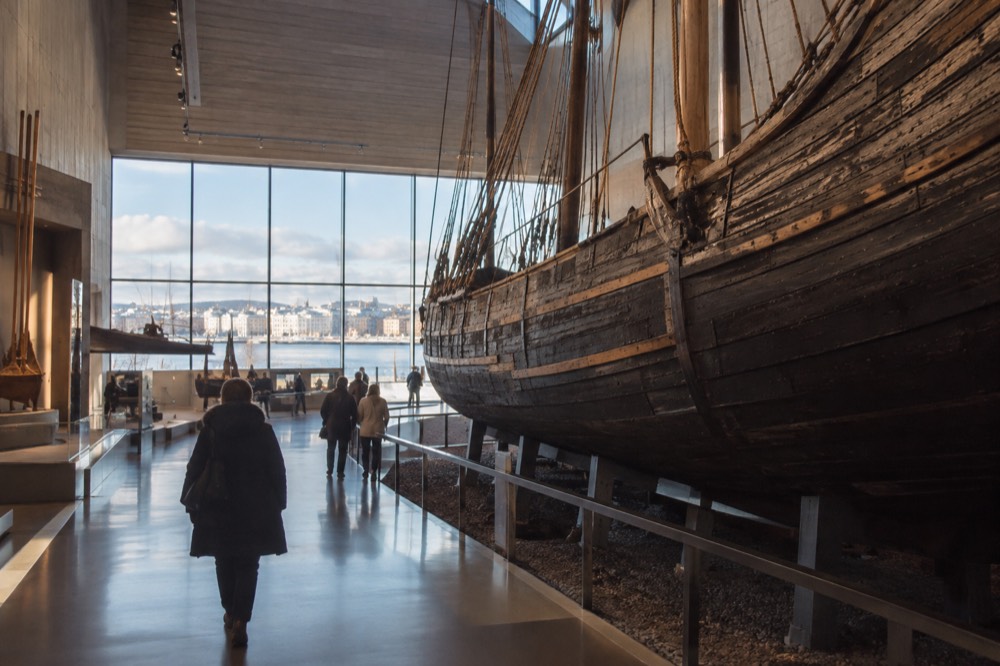
The one museum you should plan around rather than simply visit is the Museum of the Viking Age, because it is closed. The former Viking Ship Museum on Bygdøy shut in 2021 for a complete rebuild, and the museum's own site says it will reopen as the Museum of the Viking Age in 2027. Until then, the honest substitute in the city is Viking Planet, a VR-based Viking experience near the Royal Palace, which is bookable and genuinely fills the Viking-shaped hole in a rainy afternoon. Our page on why the Oslo Viking museum is closed covers the details.
For a family with restless children, the Paradox Museum near the Royal Palace is the strongest wet-weather ticket in the city center: an interactive illusion museum built almost entirely indoors, and consistently one of the best-selling non-Bygdøy tickets in Oslo. It pairs naturally with the National Museum a few blocks away, which holds one version of The Scream among its galleries. Our guide to the National Museum covers what else is on its walls.
If your rainy day falls on a Wednesday through Saturday, structure it backwards: museums or Bygdøy in the morning, something covered in the middle of the afternoon, and MUNCH from 18:00, when the museum's own evening pricing drops the adult ticket from 280 to 200 NOK. Three floors of Edvard Munch, a view over the Oslofjord from the top-floor windows even in rain, and a dry walk back along the opera promenade. Our full MUNCH museum guide has the practical detail.
How Do You Get Around Oslo in the Rain Without Getting Soaked?
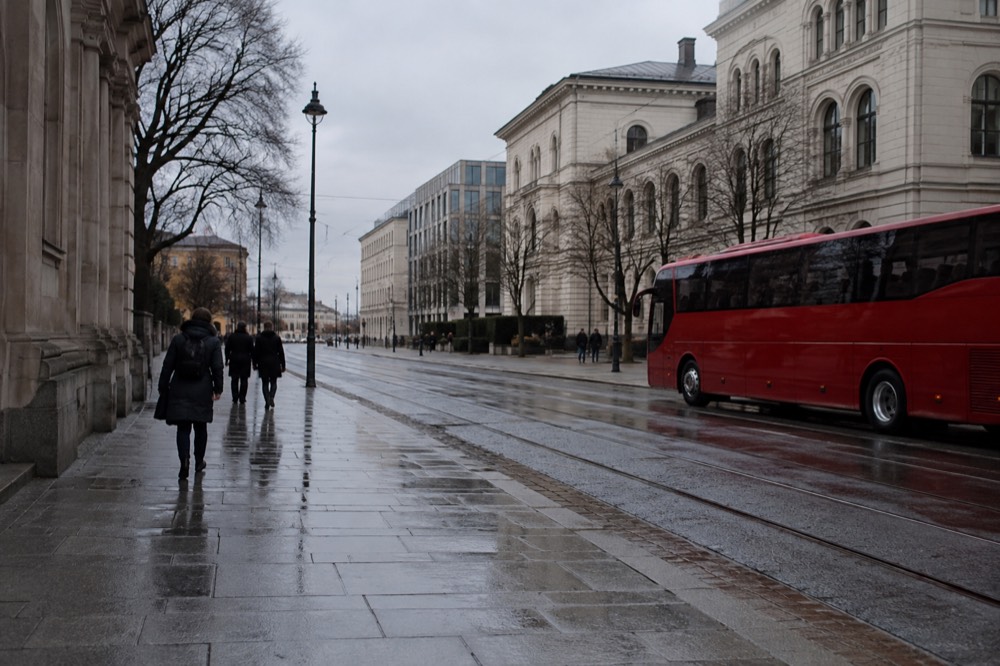
The hop-on hop-off sightseeing bus is the single best rainy-day transport in Oslo because it stops at the museum doors on Bygdøy and the National Theatre in the center, and you board through one door into a covered cabin. The alternative is Ruter's ordinary bus 30, which serves Bygdøy year-round on a standard ticket, or the T-bane metro, which is fully underground in the center and connects the National Theatre to Majorstuen in minutes.
The geometry of the problem is simple. Oslo's main indoor attractions sit in three clusters, and the clusters are 2 to 5 km apart, which is a 25 to 50 minute wet walk or a short covered ride. The T-bane network is entirely inside Ruter zone 1, and the central stations, Nationaltheatret, Stortinget and Majorstuen, are underground, so a metro hop between the center and the Frogner museums never exposes you to the weather at all. Our Oslo metro guide covers the lines.
| Option | What it costs | Where it shines in rain | Where it falls short |
|---|---|---|---|
| Hop-on hop-off bus | From price on the operator's live listing | Museum-door stops, covered cabin, commentary | Fixed route, no metro coverage |
| Ruter bus 30 | Ordinary Ruter ticket | Year-round to Bygdøy museums | No commentary, ordinary stops |
| T-bane metro | Ordinary Ruter ticket | Fully underground in the center | Does not reach Bygdøy |
| Bygdøy ferry | About 70 NOK one-way, included with Oslo Pass | A covered boat ride to the museum pier | Seasonal, mid-March to early October only |
| Walking | Free | The center is compact | This is the thing you are avoiding |
The Gray Line hop-on hop-off bus earns its place on a wet day for one specific reason: Bygdøy. The peninsula's museums are a 15-minute bus ride from the National Theatre, and in rain that 15 minutes is the difference between arriving dry and arriving miserable. The bus stops at the museum cluster, you spend the morning indoors, and you board again through the same door. It rates well above the competing sightseeing bus product in the city, and the commentary gives the ride between stops a purpose it would not otherwise have. If the rain is forecast to break by afternoon, a 48-hour ticket lets you do the indoor morning and the outdoor sights the next day.
One transport fact worth more than the rest of this section combined: the Oslo Pass, at 580 NOK for 24 hours, covers the Bygdøy ferry, the island ferries, all Ruter transport in zones 1 through 4N, and entry to more than 30 museums. Three Bygdøy museums at full price alone total 560 NOK, so the pass very nearly pays for itself on museum entries and then carries you between them for nothing. Our page on whether the Oslo Pass is worth it runs the full break-even math.
Can You Still Enjoy the Oslofjord in the Rain?
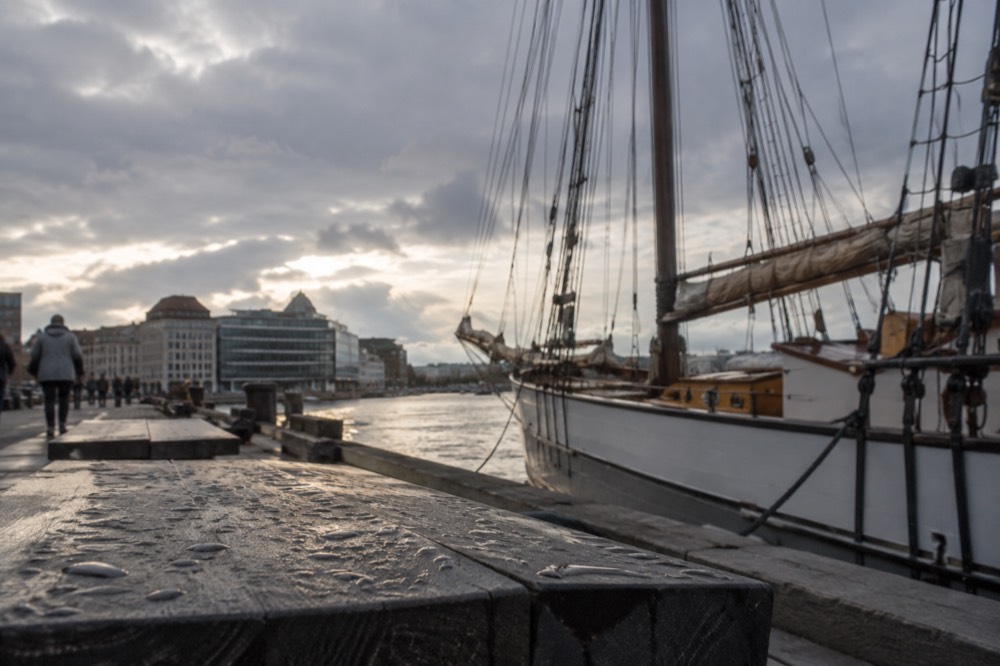
Yes, and rain can improve it. The silent electric fjord cruise runs in a covered cabin with an audio guide, the traditional wooden sailing ship has a heated indoor saloon, and a wet Oslofjord means low cloud sitting on the forested shoreline, water with no glare, and often a near-empty boat. The fjord does not close for weather short of a storm warning.
Norwegians do not treat rain as a reason to leave the water, and the fjord boats do not either. The 90-minute silent electric cruise is the single best-reviewed activity in Oslo, and its cabin is enclosed: you watch the islands and the shoreline pass from behind glass while the audio guide explains what you are seeing. The two-hour wooden sailing ship is the more atmospheric choice in bad weather, because a traditional boat with rain on the deck and the saloon stove going is closer to how Norwegians have actually used this fjord for a century. Our Oslofjord cruise guide compares all the options.
The honest caveat is visibility. In heavy rain with low cloud, the view from the water compresses: you lose the hills behind the islands and keep the near shoreline, which is still genuinely beautiful, green, rocky and close. In drizzle or after rain, when the cloud is lifting, the fjord is at its most photogenic, with mist sitting in the treeline. Check the forecast and pick your window accordingly.
The island ferries are a different question. They are ordinary Ruter boats, covered but open to the deck at the ends, and they are a means of transport rather than an experience in themselves. Riding one across to Hovedøya in rain is fine; spending an afternoon on the island in rain is not, since the island's attractions, the ruined Cistercian abbey and the swimming spots, are all outdoors. Save the islands for a dry day and read our Oslo islands guide for that one instead.
What Free Things Can You Do in Oslo When It Rains?
The best free indoor options in Oslo are the Deichman library at Bjørvika, a striking five-floor public building anyone can walk into, the Opera House roof, which is free and walkable in anything short of a downpour, and the Oslo Cathedral, which is free to enter. The 24-hour Oslo Pass at 580 NOK is the cheaper route once you want museums, but the free floor in Oslo is higher than most capitals.
Start with the Deichman. Oslo's main public library opened in 2020 next to the Opera House, and it is one of the most impressive public interiors in Scandinavia: an atrium running up through five floors, reading rooms, a cinema, and a rooftop terrace you can skip when it is wet. It is directly connected to the opera quarter, so a rainy loop of library, opera roof and MUNCH involves almost no uncovered ground. The wider set of guides lives on Oslo Travel Guide. The wider set of guides lives on Oslo Travel Guide.
The Opera House roof deserves its own sentence even in a rain article, because the building is designed to be walked on and it costs nothing. Marble and granite slopes rise straight out of the water to the roofline, and in drizzle the surfaces darken and the fjord flattens to silver. In genuinely heavy rain, skip it: the slopes are polished stone and they get slippery. Our Oslo Opera House guide covers the building in full.
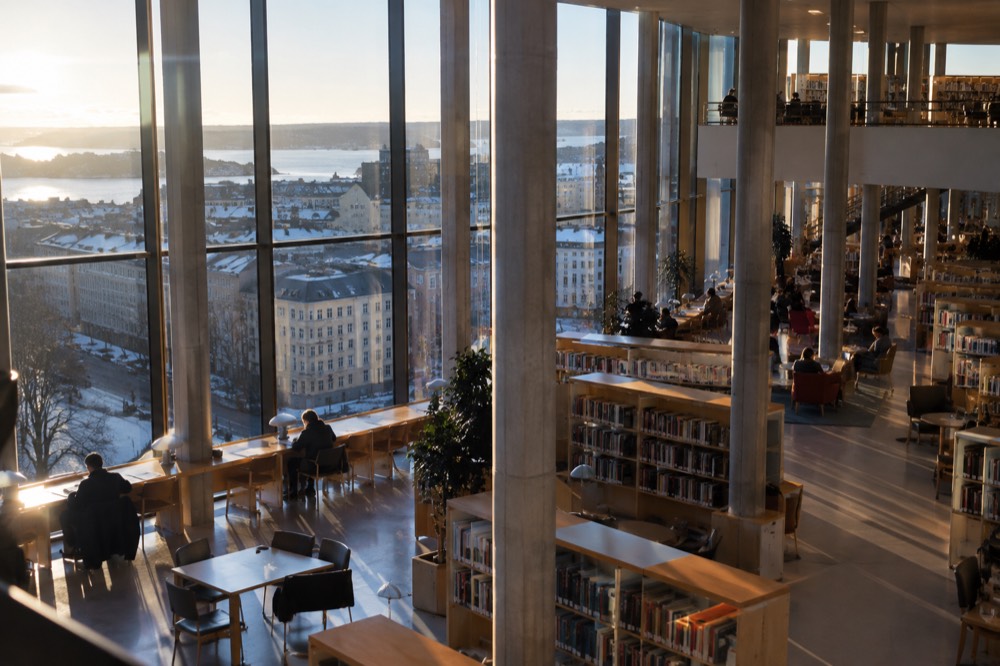
Beyond those, the free list in Oslo holds up well on a wet day. Vigeland Park is free and open 24 hours, and in light rain the granite monolith and its 200-odd sculptures take on a wet sheen that dry-day visitors never see, though the walk between them is uncovered, so this is a drizzle option, not a downpour one. The free walking tours run in almost all weather, cover the center, and spend much of their two hours under the arcades and awnings of Karl Johans gate. Our free things to do in Oslo page lists the rest.
| Free rainy-day option | Where | Why it works wet |
|---|---|---|
| Deichman library | Bjørvika | Entirely indoors, striking architecture |
| Opera House roof | Bjørvika | Free, minutes from cover, slippery in heavy rain |
| Oslo Cathedral | Stortorvet | Free entry, central, quick |
| Vigeland sculptures | Frogner | Free 24/7, best in drizzle only |
| Free walking tour | City center | Tip-based, partially covered route |
| Shopping arcades | Karl Johans gate | Covered stretches between stores |
Where Do You Eat and Drink on a Wet Oslo Afternoon?
The two best rainy-day food stops in Oslo are Mathallen, the indoor food hall in the Vulkan district with more than 30 counters under one roof, and the ground floor of any of the city's coffee roasters, where a flat white and a cardamom bun will hold you for an hour. Budget 150 to 300 NOK for a casual lunch and more for dinner, and remember that alcohol is where Oslo's prices bite hardest.
Mathallen is the purpose-built answer to rain. A converted industrial building in Vulkan houses cheese counters, seafood, tacos, coffee, and seating under a single roof, so a group that cannot agree on lunch can each buy their own and share a table. It is a short walk or one tram stop from Grünerløkka's covered cafe strip, which makes a natural wet loop. Our Mathallen food hall guide covers the counters worth queuing for.

For the drink question, be realistic about Norway's alcohol economics before you order. Statistics Norway's 2025 European price comparison puts alcohol and tobacco at more than double the European average, which is the single biggest reason a rainy Oslo evening feels expensive. Wine and spirits come only from Vinmonopolet, the state monopoly, which closes early on Saturdays and all day Sunday, while supermarkets sell beer up to 4.7 percent only. Our price of beer in Oslo page runs the numbers.
| Stop | Neighborhood | What it is | Wet-day fit |
|---|---|---|---|
| Mathallen | Vulkan | Indoor food hall, 30+ counters | Excellent, fully covered |
| Grünerlokka cafes | Grünerløkka | Roasters and bakeries | Excellent, dense and walkable |
| Karl Johans gate arcades | Center | Shopping and cafes | Good, partially covered |
| Aker Brygge restaurants | Aker Brygge | Waterfront dining | Good, indoor seating, covered walkways |
If you would rather have the food decision made for you, the city-center Norwegian food walk runs three hours and moves between indoor stops, and the Grünerløkka neighborhood food walk covers the district's food culture with the same shelter. Both are better in rain than a self-guided version, because a guide keeps the group moving between roofs.
What Should You Pack for Rain in Oslo?
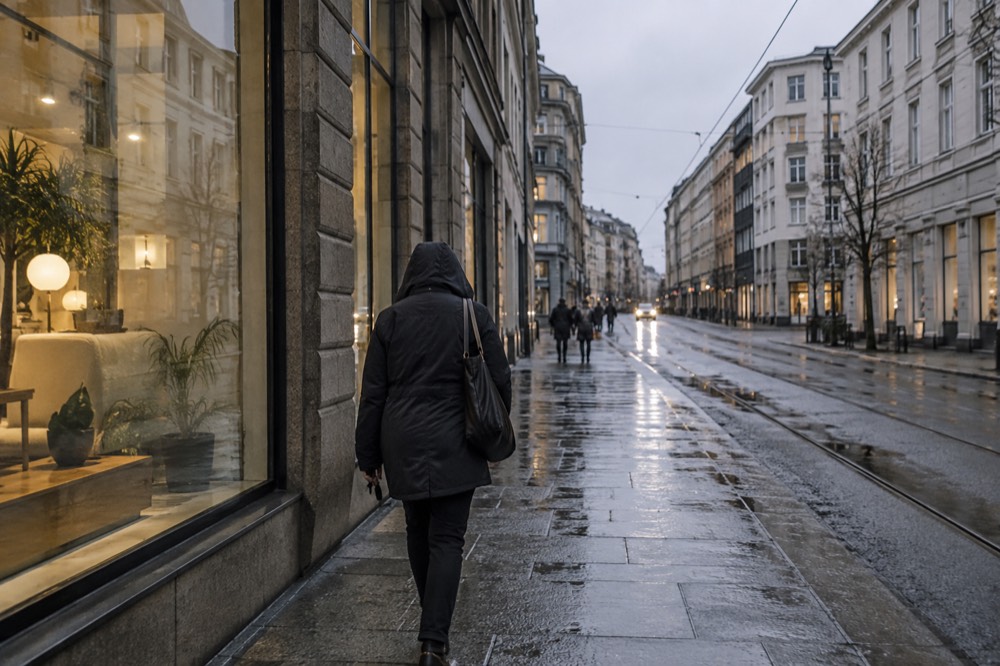
Pack a proper rain jacket rather than an umbrella, waterproof shoes, and a thin layer for museums, which run warm. Oslo rain is frequently horizontal in wind off the Oslofjord, and umbrellas fail in it. Temperatures on the normals run from a July mean of 17.7 degrees Celsius to an October mean of 6.6, so the rain you actually meet is rarely cold rain, but it is persistent.
The jacket-over-umbrella advice is not a cliche here, it is physics. Oslo's center funnels wind between the waterfront and the higher ground inland, and the gusts shred cheap umbrellas within a day. A hooded shell does the same job indefinitely and packs into a daypack when the rain lifts, which, as noted above, it often does by evening.
Is Oslo Worth Visiting in the Rain at All?
Yes, and for a simple reason: the things most visitors come for are either indoors or improved by weather. The museums are world-class and cheap by Norwegian standards, the fjord boats are covered, the food halls are indoors, and the city's compact center means the wet walking between any two stops is minutes, not half an hour. A rainy day costs a visitor less in Oslo than in almost any other Scandinavian capital.
The cost argument is the one worth finishing on, because it is the site's core question and rain sharpens it. Museums in Oslo are not where the money goes: entries run 120 to 280 NOK, transport is cheap by zone, and the free list is unusually strong. Where Oslo is genuinely expensive is alcohol and restaurants, on SSB's 2025 figures more than double the European average for the former. A rainy day that steers you toward museums, libraries and covered boats is, by accident, steering you toward the cheap half of the city. Our is Oslo expensive page has the full breakdown.
And the day after the rain is often the best day of the trip. The Oslofjord after a front has passed, with the cloud still sitting in the shoreline forest, is the version of the city that ends up in photographs. Plan the wet day with the tools above, then spend the clear one on the islands or the viewpoints, and you will have used the weather rather than fought it.
Common Questions About Things to Do in Oslo When It Rains
What is there to do in Oslo when it rains?
Stack the Bygdøy museums, visit MUNCH in the evening when it is open until 21:00, ride the hop-on hop-off bus between covered sights, take a covered fjord cruise, or spend the afternoon in the Deichman library or Mathallen food hall. Museum entries run 120 to 280 NOK for adults.
Does it rain a lot in Oslo?
Oslo averages between 41 and 103 mm of precipitation per month depending on season, with August the wettest at 103 mm and October second at 93 mm on the official 1991-2020 normals. Rain is frequent but rarely continuous all day.
Is the Oslofjord cruise worth it in the rain?
Yes. The boats have covered cabins and heated saloons, and a wet fjord with low cloud on the shoreline is genuinely atmospheric. You lose the distant hills in heavy rain but keep the near shoreline.
What is the best museum in Oslo for a rainy day?
For most visitors the Fram Museum or Kon-Tiki Museum on Bygdøy, both 180 NOK, with a 325 NOK combination ticket for both. For art, MUNCH at 280 NOK, which stays open until 21:00 Wednesday to Saturday.
Is the hop-on hop-off bus in Oslo good in bad weather?
It is one of its best uses. The bus stops at the Bygdøy museum doors and the covered cabin replaces the wet 15-minute transfer from the center. The competing sightseeing bus product rates noticeably lower.
What can you do in Oslo for free when it rains?
The Deichman library, the Opera House roof in drizzle, Oslo Cathedral, and the free walking tours, which are tip-based and run in nearly all weather. Vigeland Park is free and open 24 hours but is only pleasant in light rain.