Oslo Sightseeing by Hop-On Hop-Off Bus: What It Covers and When It Wins
Oslo sightseeing splits into two questions: what you want to see, and whether a bus is the right vehicle for it. This guide covers the hop-on hop-off route stop by stop, prices in NOK for everything around it, and the honest cases where a fjord cruise or a walking tour serves you better.
Short answer
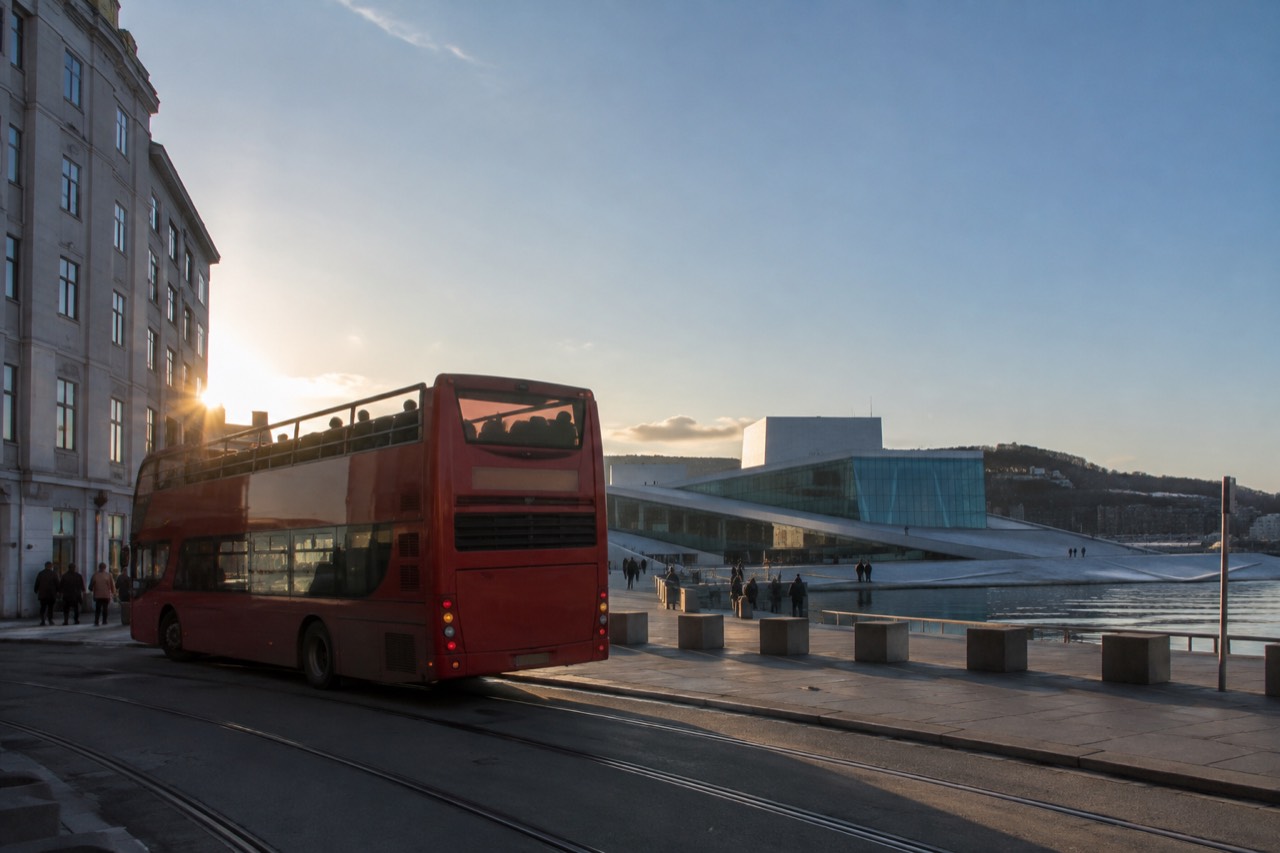
The hop-on hop-off bus covers Oslo's headline sights in a loop from the cruise port and city center: the Opera House, Akershus Fortress, Vigeland Park, the museums on Bygdøy, and Holmenkollen. A 24 or 48-hour ticket from $37.68 fits cruise passengers, tight schedules, and anyone who wants the geography explained. If you have three or more days, walking and the fjord beat it.
Oslo is a low-rise capital spread along the water, and its headline sights are scattered across a wider arc than most visitors expect: the Opera House at Bjørvika, the fortress at the harbor, the sculpture park in Frogner, the museum peninsula at Bygdøy, and the ski jump up at Holmenkollen. That spread is exactly the problem a sightseeing bus solves. This guide walks through what the hop-on hop-off route actually covers, what it costs alongside the NOK prices of everything around it, and the situations where a different product, a fjord cruise, a guided walk, or simply the metro, serves you better. Along the way it links out to the site's deeper pages on each stop, so you can build the rest of the day around whichever ones you jump off for.
Is a Hop-on Hop-off Bus in Oslo Worth It?
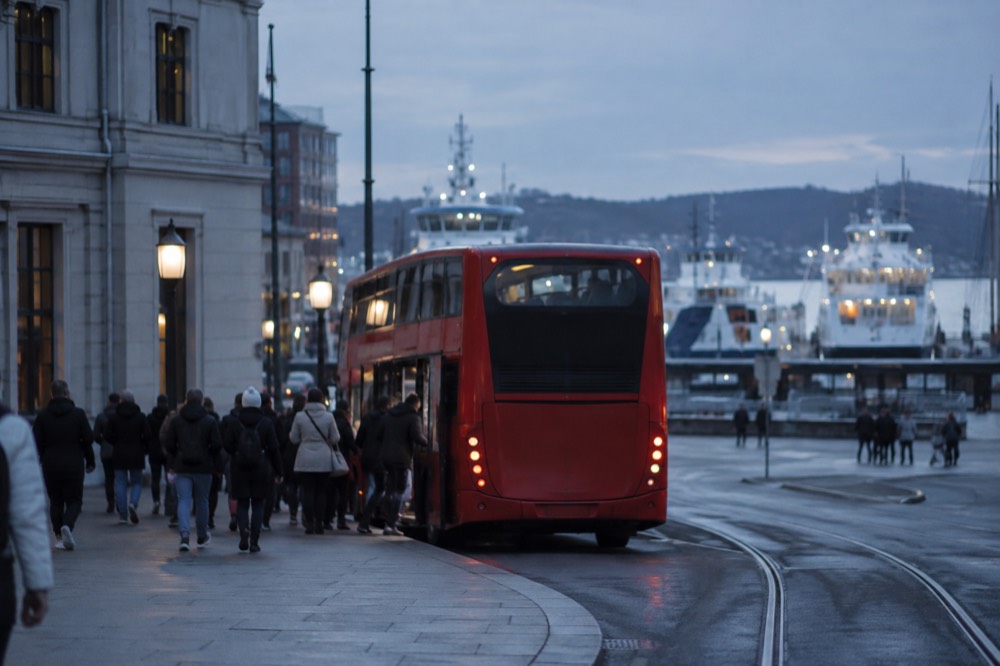
For a one-day visit, a cruise-port stop, or a first afternoon getting oriented, yes: the bus is the fastest way to connect the Opera House, Akershus, Vigeland Park, Bygdøy, and Holmenkollen without studying a transit map, and a 24 or 48-hour ticket costs less than a single Oslo Pass at 580 NOK. For a stay of three days or more it usually is not, because Oslo's center is compact and the metro reaches the outliers faster. The honest framing is that the bus is an orientation tool with a commentary track, not transport in the practical sense. Nobody commutes on it. It earns its price on day one of a short trip and then quietly stops being useful, which is why the 24-hour option outsells the 48 for most visitors.
The route matters more than the vehicle. Oslo's geography rewards a loop: you start at the water, climb west through the street grid to Frogner, drop back down to the museum peninsula, and, on the fuller itinerary, ride the metro corridor up toward Holmenkollen. Seen from ground level on foot, those four zones feel like separate trips. Seen from the top deck in one circuit, the city clicks into place, and the commentary fills in the history you would otherwise walk past. That is the product.
What the bus is not, is a substitute for the fjord. The water is the one part of Oslo a wheel-based route cannot touch, and it happens to hold the city's single best-reviewed activity, the silent electric boat cruise. Most visitors who enjoy the bus end up pairing it with a cruise the same day or the next, which is why this guide compares the two directly further down rather than pretending the choice is either-or. If you are weighing the bus against the city's other sightseeing formats, the full rundown lives on the Oslo guided tours overview.
What Does the Oslo Sightseeing Bus Route Actually Cover?
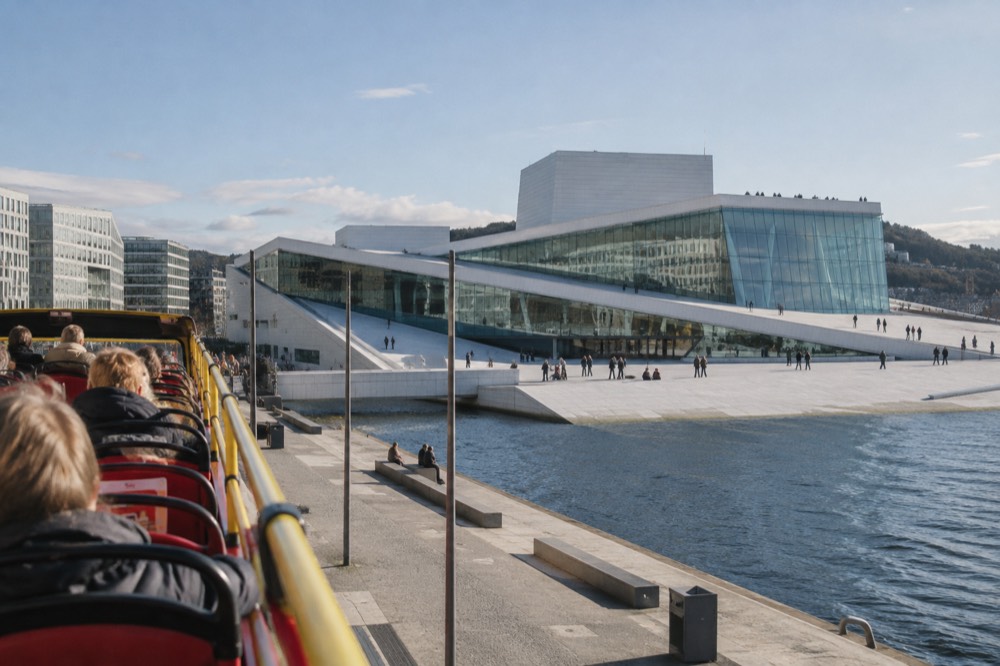
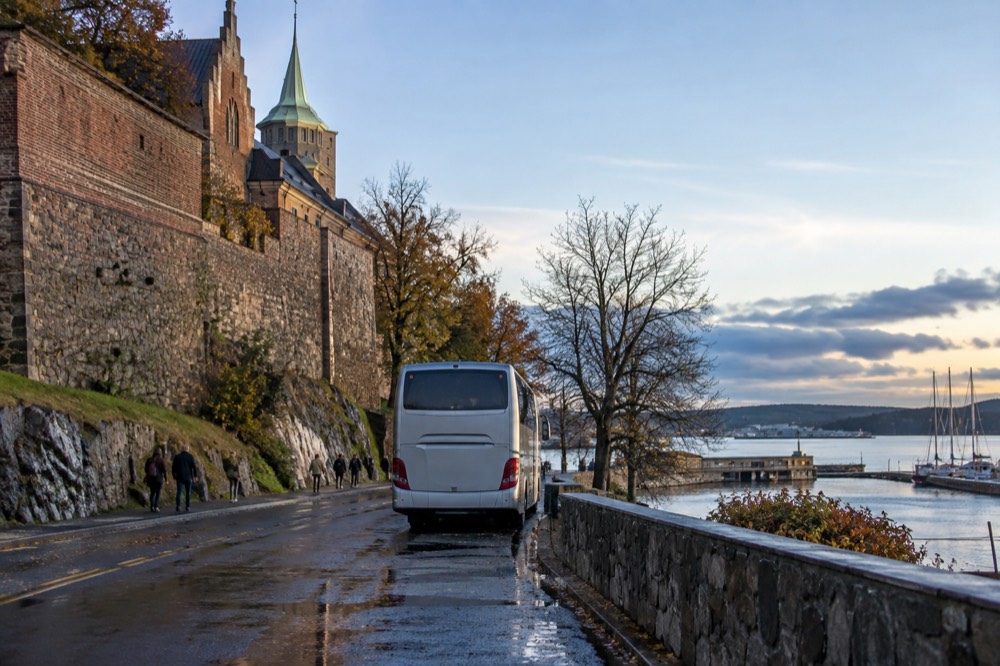
The standard loop connects roughly a dozen stops across the city center, the harbor, Frogner, and Bygdøy, with the main sights at each: the Opera House and MUNCH on the waterfront, Akershus Fortress and the City Hall piers, the Royal Palace and Karl Johans gate in the center, Vigeland Park in Frogner, and the Kon-Tiki, Fram, and cultural-history museums on the Bygdøy peninsula. Some departures extend up the metro corridor toward Holmenkollen. Stops are spaced so that the full circuit without hopping off takes a couple of hours, which makes the bus a sightseeing tour in itself even for passengers who never leave the seat. The operator's live listing carries the current stop map and seasonal timetable, and both change more often than the printed guides suggest, so treat the table below as the shape of the route rather than a schedule to plan to the minute.
The stops divide naturally into three kinds, and knowing which kind you are standing at decides whether hopping off is worth the wait. Cluster stops put two or three sights within a short walk of each other, so one hop buys a full morning. Solo stops serve a single sight and are worth it only if that sight is your priority. Pass-through stops exist for the commentary and the view, and the correct move there is to stay seated.
| Stop area | What is there | Hop-off value | Suggested time |
|---|---|---|---|
| Opera House / Bjørvika | Operahuset roof walk, MUNCH, the Barcode skyline | High, the roof is free and takes 20 minutes | 45-90 min |
| Akershus / City Hall piers | Fortress grounds, Resistance Museum, Rådhusbrygge 3 ferry pier | High, two sights plus the boat connection | 1-2 hours |
| Karl Johans gate / Royal Palace | The main street, palace exterior, Nationaltheatret station | Medium, best as a stay-seated commentary stretch | 30-60 min |
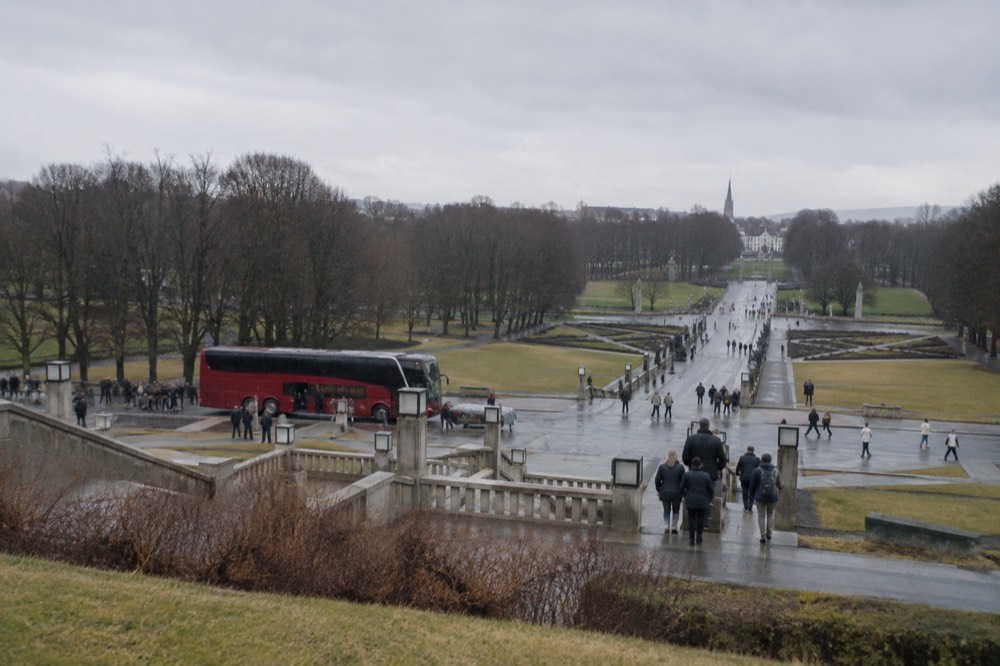
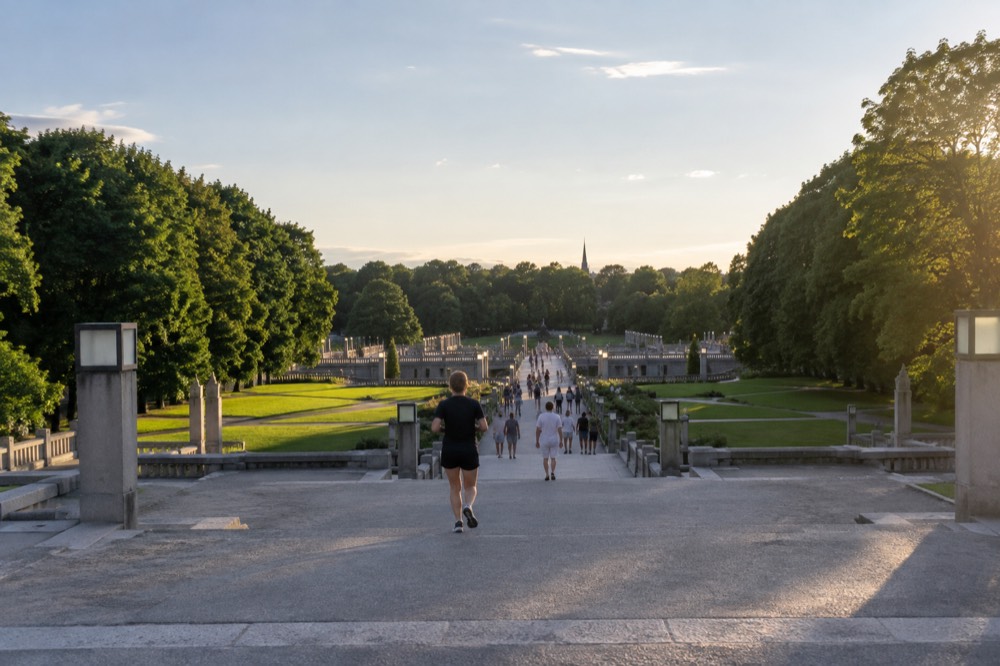
| Vigeland Park | Frognerparken's 200-plus sculptures, free entry, open 24 hours | Very high, the park is the city's most visited sight | 60-90 min |
| Bygdøy museums | Kon-Tiki, Fram, Norsk Folkemuseum, Maritime Museum | Very high, a half-day on its own | 3-5 hours |
| Holmenkollen (extended route) | Ski jump tower, Ski Museum, Nordmarka trailheads | High if the weather is clear | 1-2 hours |
Two practical notes on the table. First, Vigeland Park is genuinely free, open around the clock all year, and needs no ticket of any kind, which makes it the best hop-off on the route in pure value terms; the details are on the site's Vigeland Park guide. Second, Bygdøy is a peninsula with a seasonal ferry connection, and the bus is the year-round way to reach it, which matters more than it sounds: the boat from Rådhusbrygge 3 only runs from mid-March to early October, costs about 70 NOK one-way, and does not accept ordinary Ruter tickets, though the Oslo Pass covers it. The full picture, including the year-round bus 30 alternative, is in the Bygdøy guide.
If you are building the day around the bus, the three products below are the ones this site's roster actually recommends for the format: the bus itself as the pick, and the two fjord boats as the natural pairing, because almost every visitor who buys a bus ticket ends up wanting the water view as well.
The pairing logic is simple. The bus gives you the land geography and the commentary; the fjord gives you the one angle the bus cannot. The silent electric boat runs 90 minutes with an audio guide, and the wooden sailing ship runs two hours under canvas, a completely different experience despite the similar from-price. Between the bus and either boat, a one-day visitor has covered the two halves of what Oslo is: a city built around a harbor, and a harbor that built the city.
How Much Does Oslo Sightseeing Cost, Bus and Everything Around It?
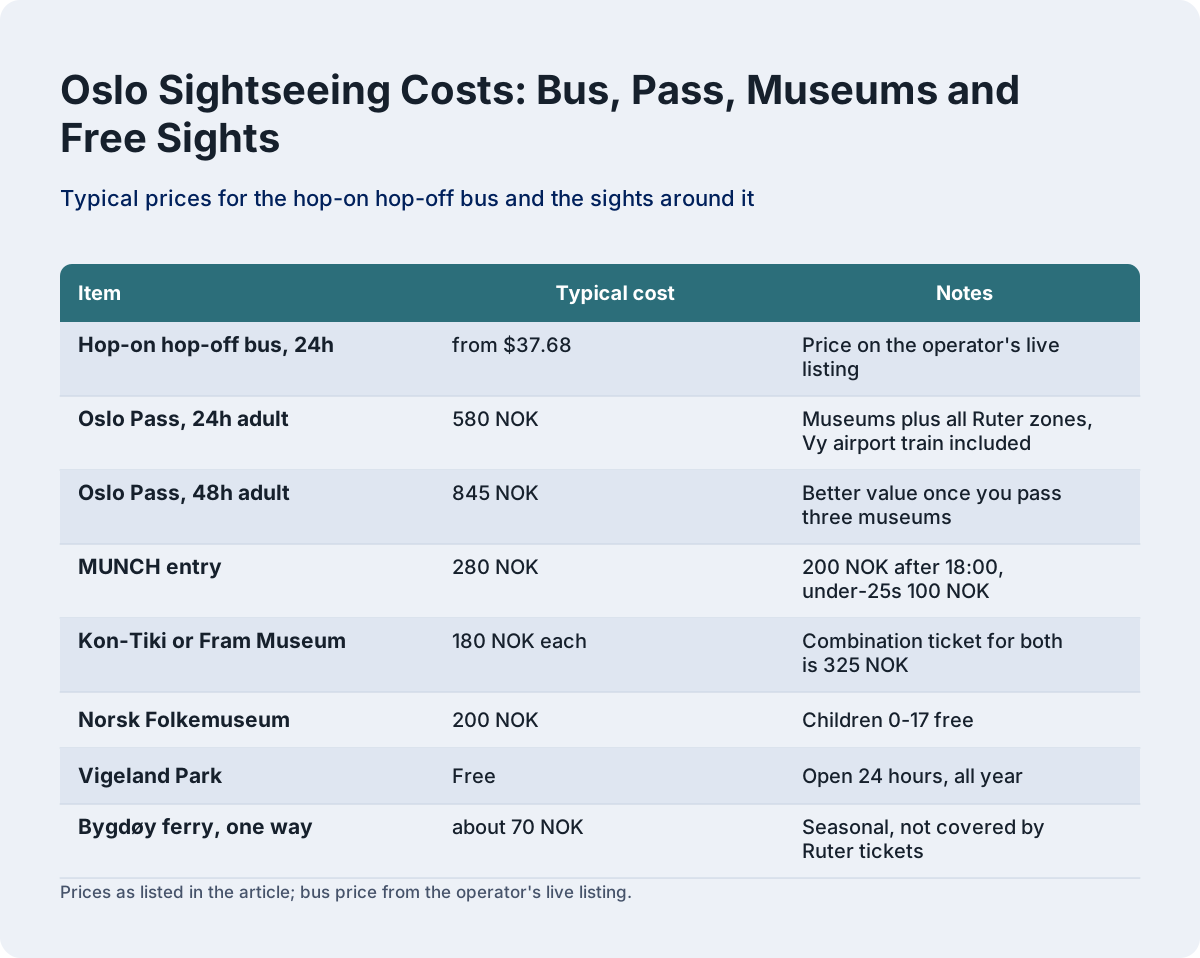
The bus ticket itself starts from $37.68 for the 24-hour option, with a 48-hour ticket above it, both on the operator's live listing. Around it, budget in NOK: the Oslo Pass runs 580 NOK for 24 hours and 845 NOK for 48, the major museums charge 180 to 280 NOK each at the door, Vigeland Park and the Opera House roof cost nothing, and a shrimp-buffet evening cruise is the priciest single add-on in the normal stack. A realistic one-day sightseeing budget for one adult, bus plus two paid museums plus coffee and lunch, is dominated by the museum entries, and dinner is where Oslo's prices bite: Statistics Norway's 2025 price-level survey puts Norwegian household prices 28.6 percent above the EU average, with food 33 percent above and alcohol more than double. The sightseeing itself, museums, transport, and the outdoors, is the affordable part of an Oslo trip. The eating and drinking is not.
The comparison that matters most is bus versus Oslo Pass, because they overlap on the museum peninsula. The pass buys entry to more than 30 museums plus all Ruter transport in zones 1 through 4N, including the Vy airport train, but no commentary and no open top. The bus buys the loop and the commentary but no museum entry. A visitor doing Bygdøy properly, three museums at 180 to 200 NOK each plus the ferry, gets more from the pass. A visitor doing a one-day sweep of free outdoor sights, the Opera roof, Vigeland, the fortress grounds, gets more from the bus. The full breakdown, including the senior and child pass tiers, is on the Oslo Pass guide, and the deeper question of when it pays for itself is answered on is the Oslo Pass worth it.
| Sightseeing item | Typical cost | Notes |
|---|---|---|
| Hop-on hop-off bus, 24h | from $37.68 | Price on the operator's live listing |
| Oslo Pass, 24h adult | 580 NOK | Museums plus all Ruter zones, Vy airport train included |
| Oslo Pass, 48h adult | 845 NOK | Better value once you pass three museums |
| MUNCH entry | 280 NOK | 200 NOK after 18:00, under-25s 100 NOK |
| Kon-Tiki or Fram Museum | 180 NOK each | Combination ticket for both is 325 NOK |
| Norsk Folkemuseum | 200 NOK | Children 0-17 free |
| Vigeland Park | Free | Open 24 hours, all year |
| Opera House roof | Free | No ticket, walk up the slope |
| Bygdøy ferry, one way | about 70 NOK | Seasonal, not covered by Ruter tickets |
The pattern in the table is the one to internalize: Oslo's outdoor sights are free and its indoor sights are moderately priced by European capital standards, roughly 180 to 280 NOK, which is why the city rewards a mix of walking and selective museum entry rather than an everything-ticket. The bus sits in the middle of that mix as a convenience purchase. It is cheaper than the pass, dearer than the metro, and the only one of the three that talks to you.
Before you commit, the box below is the honest decision helper for the most common version of this question, the short stay with a bus-shaped itinerary already half-formed.
One cost note that surprises American visitors: Norway is in Schengen but not in the EU, it is in the EEA through EFTA, and it uses the krone, not the euro. Cards are accepted almost everywhere including the bus-adjacent kiosks, so there is no need to carry cash, but the prices you see quoted in NOK are the prices you actually pay. The site's currency and cash guide covers the practicalities, including the VAT refund that non-resident visitors can claim on qualifying purchases because Norway sits outside EU VAT.
Bus, Fjord Cruise, or Walking Tour: Which Oslo Sightseeing Format Fits?
Match the format to your constraint, not to a ranking: the bus wins on geography and mobility, the 90-minute electric fjord cruise wins on reviews and value for the water half of the city, and the guided walks win on depth, with the budget central walk from $15.66 and the free tip-based walks covering the same core streets for the price of a tip. None of the three dominates. The bus is the only one that reaches Bygdøy and Holmenkollen in a single ticketed loop. The cruise is the only one that shows you the Oslofjord's islands and the harbor from the water. The walks are the only ones where you can ask a question, and the themed evening walks, myths and legends, or the occupation-history walk, cover ground the loop only names in passing.
The review counts tell a story worth knowing before you book. The bus is a solid, mid-rated product, functional and reliable, while the electric boat and the wooden ship sit at the top of the city's entire activity roster on both volume and score. That does not make the bus a bad buy; it makes it a different buy. People rate a boat on the water and a bus on traffic. If your heart is set on the postcard Oslo, the fjord at sunset with shrimp on board, start there and use the bus as the day-two utility. The full range of options, including the free walks and the small-group capped tours, is laid out on Oslo free walking tours and the guided-tours overview linked above.
| Format | Best for | Duration | From-price | Standout trait |
|---|---|---|---|---|
| Hop-on hop-off bus | Orientation, cruise port, mobility needs | 24 or 48 hours | from $37.68 | Only loop reaching Bygdøy and Holmenkollen |
| Silent electric fjord cruise | The water half of the city | 1h 30m | from $46.29 | Oslo's best-reviewed activity on either platform |
| Wooden sailing ship cruise | A slower, atmospheric fjord trip | 2h | from $46.19 | Under canvas, a different experience from the electric boats |
| Free highlights walking tour | Budget travelers, first morning | about 2 hours | free, tip-based | The largest free walk in the city |
| Budget central walking tour | Depth without the price | 2h | from $15.66 | Cheapest credible guided walk in Oslo |
| 3-hour highlights bike tour | Warm-season coverage, active travelers | 3h | from $47.37 | Highest-reviewed bike tour in the city |
A word on the walking option, because it is the one the table undersells. Oslo's center is genuinely walkable, the Opera House to the Royal Palace is a 25-minute stroll up Karl Johans gate, and everything in between is commentary you can get from a two-hour guided walk for the cost of a tip. The site's Oslo walking route page maps the whole thing on foot for visitors who would rather spend the bus fare on coffee. Where walking stops working is the outliers: Frogner, Bygdøy, and Holmenkollen are each a metro or bus ride from the center, and that is precisely the gap the sightseeing bus fills.
Which Stops Are Worth Getting Off the Bus For?
Three hop-offs justify the whole ticket: Vigeland Park for the free 24-hour sculpture park, Bygdøy for the museum cluster, and the Opera House for the free roof walk, with Akershus Fortress as a strong fourth if the history matters to you. The rest of the loop is best experienced from the seat. Karl Johans gate is a street you will walk anyway from any central hotel, the Royal Palace exterior is a five-minute photo stop, and the harbor stretch between the City Hall piers and Aker Brygge is a pleasant walk that doubles as your ferry connection point. The math is simple: two or three well-chosen hop-offs fill a full day, and a day with five hop-offs is a day spent waiting for buses.
Each of the big three has a depth page on this site, because each one is a half-day in its own right. The Vigeland Park guide covers the sculptures and the free-access rules. The Bygdøy guide covers the museum peninsula, the ferry season, and the year-round bus 30. The Oslo Opera House guide covers the roof walk and what the building is actually for. And if the extended route tempts you up the hill, the Holmenkollen ski jump guide explains why there is no standalone jump ticket and what the combination products include.
| Hop-off | Free or paid | Minimum time | Best paired with |
|---|---|---|---|
| Vigeland Park | Free | 60 min | Frogner neighborhood walk |
| Opera House roof | Free | 20 min | MUNCH, or the Barcode viewpoint |
| Akershus grounds | Free grounds, paid museums | 45 min | Resistance Museum inside the fortress |
| Bygdøy museums | 180-200 NOK each | 3 hours | Kon-Tiki plus Fram combination ticket |
| Holmenkollen | 195 NOK for museum and tower | 90 min | Metro Line 1 back down to Frognerseteren |
The seasonal note belongs here rather than anywhere else, because it changes the hop-off calculus: the Bygdøy ferry runs only from mid-March to early October, so in the off-season the bus, or public bus 30, is the only way onto the peninsula, and the island ferries from Aker brygge drop to their reduced winter timetable. The Oslo ferries guide has the pier-by-pier detail, including the fact that the two ferry systems leave from different piers and take different tickets, a distinction that catches out visitors every single week.
When Is the Bus the Right Call, and When Is It the Wrong One?
The bus is the right call for cruise passengers on a port day, visitors with a single day and a list of scattered sights, families with small children or anyone with mobility constraints, and travelers who want commentary in their own language on a fixed loop. It is the wrong call for stays of three days or more, for visitors whose priority is the fjord, and in deep winter, when the open top is a liability and the loop slows to a crawl in snow. That is the whole decision, and it is worth being blunt about the winter case because Oslo's winter is real: the city's January normal mean is minus 2.3 degrees Celsius, and on the winter solstice the sun is up for under six hours, rising at 09:18 and setting at 15:11. An open deck in that light is a cold, brief pleasure, and the money usually works harder on a torchlit forest walk or an evening history walk, both of which exist precisely for the dark season.
The mobility case deserves emphasis, because it is the one nobody plans for until they need it. Oslo's center is walkable but its outliers involve hills, and the metro to Holmenkollen is a steep climb from the station to the jump tower. The bus drops closer and flatter. For visitors who cannot manage that, or who are traveling with a stroller and a toddler's pace, the loop is not a lazy option but the enabling one, and the chauffeured private car tour on the roster is the premium version of the same logic. The site's accessibility guide covers the city's step-free infrastructure in detail.
For the standard short-stay case, the ticket itself is below, alongside the two formats this guide keeps recommending as companions. Check the dates, confirm the season's timetable, and let the rest of the itinerary fall into place around whichever loop day you pick. More of these guides are collected on Oslo Travel Guide. More of these guides are collected on Oslo Travel Guide.
What Are the Best Alternatives If You Skip the Bus?
The strongest alternatives are the free and budget walking tours for the center, the fjord cruises for the water, the bike tour for warm-season coverage, and plain public transport, a Ruter ticket or the Oslo Pass, for everything else, since the metro, trams, and buses reach every stop on the sightseeing loop for less. Public transport is the alternative that needs stating plainly because it is the one the bus industry never mentions: Oslo's T-bane and tram network is frequent, the whole metro sits inside zone 1, and the same vehicles that locals use pass within a short walk of every sight on the loop. What you give up is the commentary, the guaranteed seat, and the freedom from planning. What you gain is flexibility, frequency, and money for a museum or a coffee. The getting around Oslo guide and the Ruter tickets guide cover the system in full.
The guided formats fill the commentary gap better than any audio loop. The budget central walk is the cheapest credible option in the city and covers the core in two hours with a live guide. The free walks, the big highlights tour and its smaller rivals, run on tips and cover the same ground with more personality and less certainty of a seat. And for visitors who want the loop's coverage at a faster clip, the three-hour bike tour is the highest-reviewed bike product in the city and the best warm-season swap, trading the open deck for a saddle and the traffic lane for the waterfront paths.
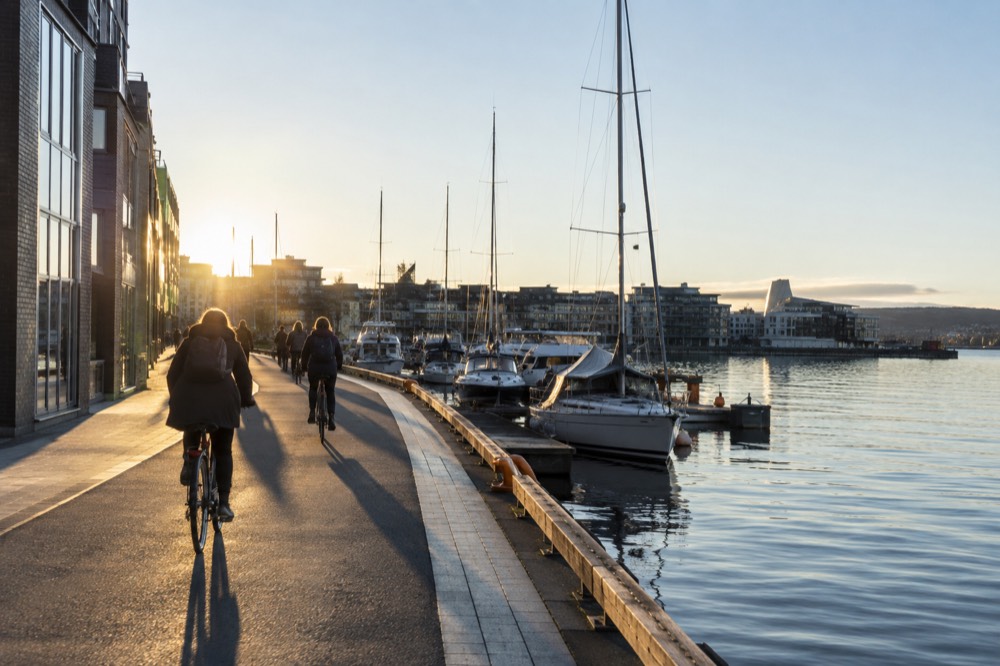
The budget walk is the natural first alternative to trial, and it is below for the dates-check. If it fits, do the walk on the morning of day one and reserve the bus, or the pass, for the outliers on day two.
The bike tour suits a different traveler, the one with a full sunny day and legs to spend. It covers the Opera House, the fortress, Aker Brygge, and the western parks in three hours, which is roughly the bus loop's core at three times the speed, and it does so along the water rather than through it. The trade is weather: in a city whose wettest month on the 1991 to 2020 normals is August at 103 mm, the open-deck bus and the bicycle share the same enemy, and the rainy-day answer is neither, it is the museum stack on Bygdøy or the Paradox Museum, which is the strongest indoor family ticket on the roster. The rainy day in Oslo guide has the full wet-weather plan.
Practical Tips for Riding the Sightseeing Bus in Oslo
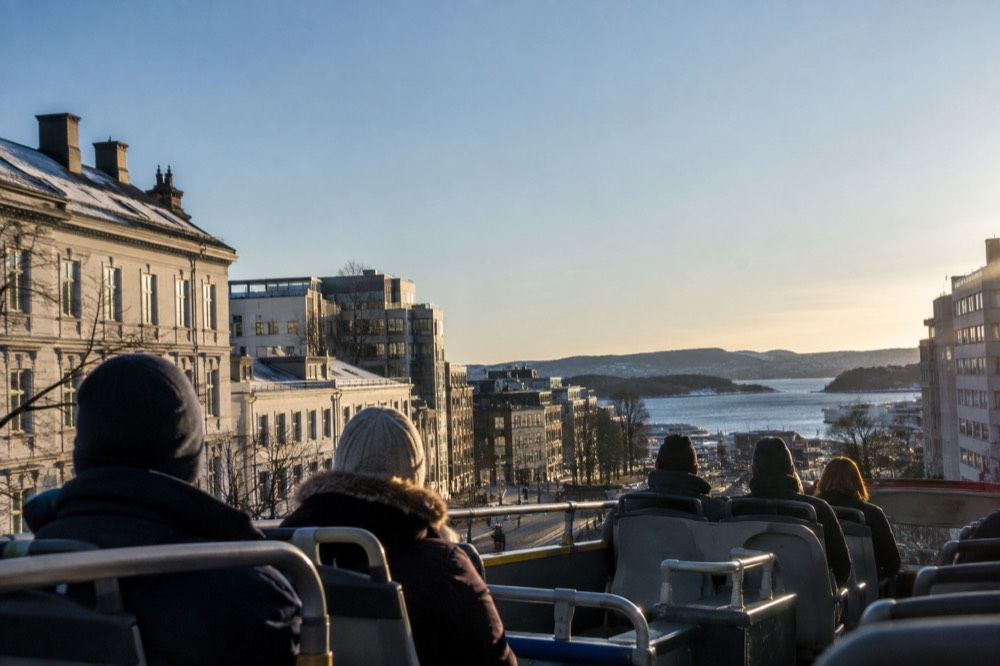
Sit on the right side heading west for the harbor and sculpture views, buy the 24-hour ticket unless day two is genuinely bus-shaped, start the loop early to beat the cruise-passenger surge at the port stops, and keep your ticket accessible for re-boarding, because drivers check on re-entry rather than at the seat. The small tactical details are what separate a good loop day from a mediocre one, and they cost nothing. The early start matters more in Oslo than in most capitals because the port funnels a large, synchronized crowd onto the first departures, and the queue at the Opera House stop in mid-morning can eat half an hour of a short day. An 09:00 start rides ahead of it.
Layer for the deck even in summer. Oslo's July normal mean is 17.7 degrees Celsius, mild rather than hot, and the harbor stretch funnels a wind that makes the top row feel ten degrees cooler than the street. In spring and autumn a hat and gloves are not overkill on an open deck at 15 km/h. And plan your last loop with the sunset in mind: in late June the sun sets at 22:43, which means an evening circuit is a real product in its own right, while in late December it sets at 15:11 and the loop after lunch is a lights-only affair. The site's daylight hours guide has the full table, and the weather by month guide tells you what to pack on top of it.
| Situation | Do this instead of the default |
|---|---|
| Cruise port day, 8 hours | Bus loop morning, one hop-off at Vigeland or Bygdøy, fjord cruise if time allows |
| Three days in the city | Skip the bus, walk the center, use Ruter or the Oslo Pass for the outliers |
| Traveling with small children | Bus for the loop, Paradox Museum or the climbing park for the burn-off |
| Deep winter visit | Skip the open deck, book the evening myths walk or the torchlit forest walk |
| Bad-weather day | Museum stack on Bygdøy, the rainy day plan |
| Priority is the fjord | Fjord cruise first, bus only as a second-day orientation |
One last planning note that ties the whole page together: this site, oslotravelguide.com, exists to answer exactly these format-versus-budget questions with real NOK figures rather than vibes, and every price on this page comes from the operators' and venues' own published material. If the bus day has turned into a full Oslo day in your head, the master list is things to do in Oslo, and the one-day and weekend itineraries on this site already assume the trade-offs laid out here.
Before the questions, the three formats this guide has kept side by side throughout, one last time, for the booking step.
Common Questions About Oslo Sightseeing by Bus
Is the hop-on hop-off bus in Oslo worth it?
For a one-day visit, a cruise-port stop, or a first-day orientation, yes: it is the only single ticket that connects the Opera House, Akershus, Vigeland Park, Bygdøy, and Holmenkollen with commentary. For stays of three days or more it usually is not, because the center is walkable and public transport reaches every outlier for less.
How long does the Oslo sightseeing bus loop take?
The full circuit without hopping off takes roughly two hours, depending on traffic and season. Most visitors use it as a hop-off framework rather than a continuous tour, and two or three well-chosen stops fill a whole day.
Does the bus go to Bygdøy and the museums?
Yes, the loop serves the Bygdøy museum peninsula, which is also reachable year-round on public bus 30 and seasonally by the ferry from Rådhusbrygge 3. The ferry runs mid-March to early October, costs about 70 NOK one-way, and does not accept ordinary Ruter tickets, though the Oslo Pass covers it.
Is the bus or the Oslo Pass better for one day?
It depends on your museum count. A day with three or more paid museums favors the pass at 580 NOK for 24 hours, since it includes entry to more than 30 museums plus all Ruter transport. A day built around free outdoor sights, the Opera roof, Vigeland, the fortress grounds, favors the bus with its commentary.
Does the sightseeing bus run in winter?
The bus runs year-round, but the open top is a genuine liability in an Oslo winter, when the January normal mean is minus 2.3 Celsius and daylight lasts under six hours in December. Most winter visitors are better served by an evening history walk or a torchlit forest experience.
Can I use the bus to get to Holmenkollen?
On departures that include the extended route, yes, and the bus drops closer to the jump tower than the metro does. Otherwise, T-bane Line 1 serves Holmenkollen station from the center, and the Ski Museum and tower entry is 195 NOK at the door.