Oslo vs Copenhagen: Which Nordic Capital Should You Visit?
Two Nordic capitals, four hours apart by plane, and completely different trips. Oslo is fjord, forest and daylight swings; Copenhagen is cycling flatland, restaurant density and cozy old streets. Here is how they actually compare when you are the one paying for it.
Short answer
Choose Oslo for fjord and forest access, dramatic seasons and museums packed onto one peninsula. Choose Copenhagen for walkable charm, food culture and milder winter weather. Oslo is the sixth most expensive country in Europe on SSB's 2025 survey, with alcohol more than double the EU average, so budget accordingly. Copenhagen is compact and cycle-first; Oslo rewards a transit pass and a boat.
Oslo vs Copenhagen: Which One Should You Actually Visit?
The honest short answer is that Oslo and Copenhagen are not really competing for the same trip, because they reward two different travelers. Copenhagen gives you a dense, flat, bicycle-first city of old streets, world-famous restaurants and cozy bars within walking distance of each other. Oslo gives you a capital where a metro ride ends at a forest trailhead, a ferry ride ends on a swimming island, and the daylight swings from under six hours in December to nearly nineteen in June. If your dream Nordic trip is about atmosphere and food, lean Copenhagen. If it is about nature inside a city, lean Oslo.
Both are small capitals by European standards, both are safe, both run on excellent English and punctual public transport, and both will cost you more than Paris or Berlin. The differences that actually decide the trip are seasonal: Copenhagen's winter is grey and windy but mild, while Oslo's is genuinely cold, dark and snowy, and that is either the whole point or a dealbreaker depending on who you are.
This comparison comes from the Oslo side of the desk, so the Oslo figures here are verified against primary sources: museum sites, the city tourist board, Ruter's own ticket pages and MET Norway's normals. Where a Copenhagen figure would be needed, this guide says so plainly rather than inventing one, because a made-up price is worse than none.
How Do the Two Cities Compare on Size and Getting Around?
Neither city requires a car, and both punish you for bringing one, but they solve car-free life in different ways. Oslo's center is walkable in the way most capitals are, but its real geography is linear: the city stretches north into the forest along metro lines and south into the Oslofjord, so you will ride transit more than you expect. Copenhagen is flatter, denser and built around bicycles to a degree Oslo never attempted, and most visitors there never touch a bus. In Oslo, by contrast, the metro is genuinely useful: the entire T-bane network sits inside fare zone 1, and Line 1 ends at Frognerseteren, a trailhead for Nordmarka.
The transit systems differ in one way that matters for budgeting. Oslo's fares are zone-based, run by Ruter, and the airport sits in zone 4N, so an airport ticket costs more than a city one. A single zone 1 ticket is valid for 60 minutes from activation, with 30 minutes added per extra zone. Copenhagen's equivalent is a flat-zone card system, and the honest comparison is that both cities make a day pass or period pass the obvious buy after two or three rides.

For Oslo specifically, the planning numbers that are verified and worth carrying:
| Oslo transport fact | Figure | Source basis |
|---|---|---|
| Flytoget airport express, adult single | 268 NOK | Operator ticket page |
| Vy regional train, airport to Oslo S | About 23 minutes | Vy's own airport page |
| 30-day pass, zone 1 | 655 NOK (cut from 805 on 3 May 2026) | Ruter news page |
| Oslo Pass 24h / 48h / 72h, adult | 580 / 845 / 995 NOK | VisitOSLO prices page |
| Island ferries (B1, B1X, B2) | Ordinary Ruter ticket, no surcharge | Ruter ferry page |
| Bygdøy museum ferry | Ruter tickets NOT valid; Oslo Pass is | Operator site |
That last row is the one that catches visitors out every summer: the Bygdøy ferry and the Oslofjord island ferries are different operators, different ticket rules and different piers. The museum ferry leaves Rådhusbrygge 3 and runs seasonally; the island ferries are ordinary Ruter lines from Aker brygge. If you want the full breakdown, the site's Oslo ferries guide covers both systems, and getting around Oslo handles the rest.
Which City Hits Your Wallet Harder?
Oslo sits inside the sixth most expensive country in Europe, and the gap with Denmark is real but narrower than people assume, because the two cities hurt your budget in different places. Statistics Norway's 2025 purchasing-power survey puts Norwegian household prices 28.6% above the EU average, food and non-alcoholic drink 33% above, and alcohol and tobacco more than double the European average. Denmark is also expensive, and on restaurants and hotels it is marginally dearer than Norway in the same SSB comparison. The practical difference is not the averages, it is where each city's money goes.
In Oslo, the expensive line items are alcohol and restaurants, full stop. Museums are not unusually dear by big-city standards, public transport is reasonable, and the signature experiences that make Oslo worth visiting, the fjord, the forest, the sculpture park, the Opera House roof, are free or nearly so. Vigeland Park is free, open 24 hours a day, all year, with no ticket. The Opera House roof is public space you simply walk onto.
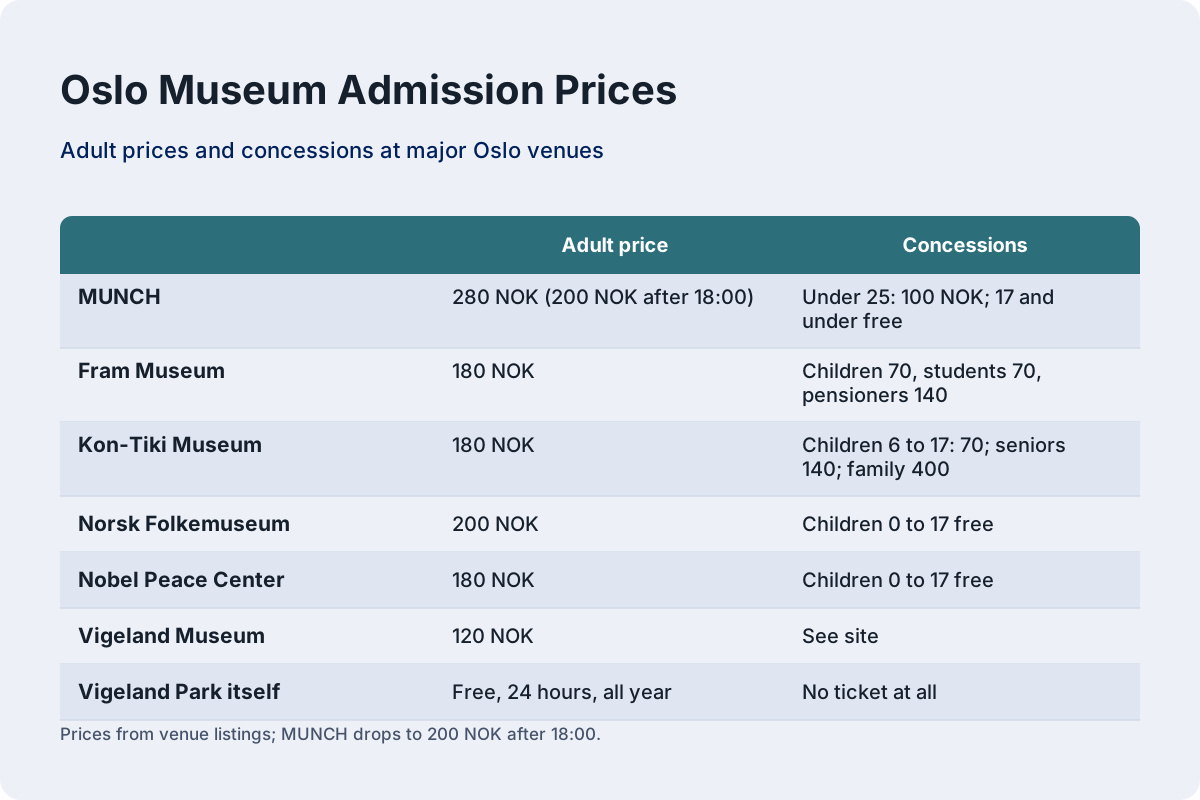
In Copenhagen, the expensive line items spread more evenly: the food scene is the attraction, and eating well there is a budget decision in a way Oslo's museum-first itinerary never is. If your plan is Michelin-adjacent dining, Copenhagen will cost more than Oslo. If your plan is two museums and a picnic, Oslo's entry prices are the ones you can check in advance, so here they are:
| Oslo venue | Adult price | Concessions |
|---|---|---|
| MUNCH | 280 NOK (200 NOK after 18:00) | Under 25: 100 NOK; 17 and under free |
| Fram Museum | 180 NOK | Children 70, students 70, pensioners 140 |
| Kon-Tiki Museum | 180 NOK | Children 6 to 17: 70; seniors 140; family 400 |
| Norsk Folkemuseum | 200 NOK | Children 0 to 17 free |
| Nobel Peace Center | 180 NOK | Children 0 to 17 free |
| Vigeland Museum | 120 NOK | See site |
| Vigeland Park itself | Free, 24 hours, all year | No ticket at all |
Three Bygdøy museums at full price comes to 560 NOK, against a 580 NOK 24-hour Oslo Pass that also covers your transport there and back, which is the arithmetic behind the site's is the Oslo Pass worth it breakdown. The deeper cost picture, including what a beer actually runs you and why, lives in is Oslo expensive.
Which City Has the Better Museums?
Copenhagen has more museums and deeper collections; Oslo has a more concentrated, more distinctive museum landscape with a single coherent story behind it. The Danish capital simply has more of everything, including several institutions of international weight, and a longer museum tradition in a city that was a capital of a European power when Oslo was a provincial timber town. What Oslo has instead is density with a theme: the Bygdøy peninsula packs Kon-Tiki, Fram, the Norwegian Maritime Museum and Norsk Folkemuseum into one walkable cluster, all about exploration, seafaring and how a small nation came to terms with a very long coastline.
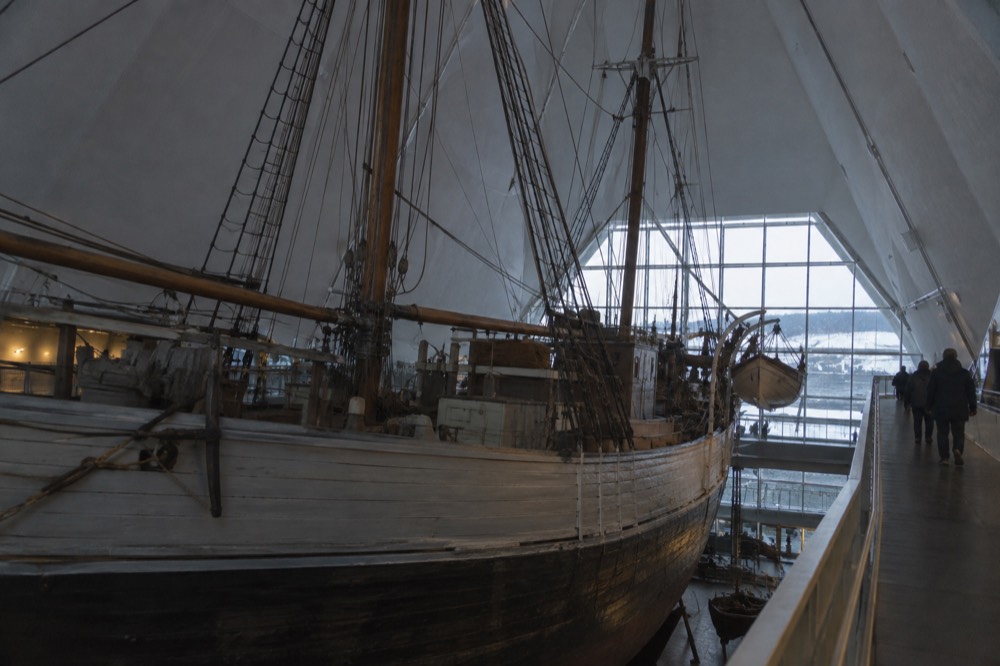
The Fram Museum is the polar ship Fram itself, hull and all, and Kon-Tiki holds Thor Heyerdahl's balsa raft. These are not galleries with objects in cases; they are the objects. Copenhagen has nothing quite like standing inside a ship that went further north and further south than any other. The trade-off is that Oslo's national art institutions are younger and smaller than Copenhagen's, though the National Museum holds The Scream, which is the single most famous painting between the two cities.
One Oslo fact every visitor needs before booking: the Museum of the Viking Age, the former Viking Ship Museum on Bygdøy, is closed and has been since 2021. The museum's own wording is that it will reopen as the Museum of the Viking Age in 2027, with no month attached. Any listing still selling entry to it should be treated with suspicion. The honest substitute is Viking Planet, an interactive Viking experience in the city center, and the Historical Museum in central Oslo displays Viking-age objects in the meantime. The site's Museum of the Viking Age page tracks the reopening.
For museum planning in Oslo, the practical structure is:
| Cluster | Venues | Best pairing |
|---|---|---|
| Bygdøy peninsula | Kon-Tiki, Fram, Maritime Museum, Norsk Folkemuseum | One long day, ferry out and bus 30 back |
| Bjørvika waterfront | MUNCH, Opera House roof, Nasjonalmuseet nearby | Art morning, rooftop at sunset |
| City center | Historical Museum, Nobel Peace Center, Viking Planet | Rainy-day string, all walkable |
| Frogner | Vigeland Park, Vigeland Museum, City Museum | Free park plus one paid museum |
A full day-by-day structure for all of this is in Oslo museums, and the classic one-museum-day route is laid out in the Oslo museum day guide.
The Kon-Tiki ticket is the best-reviewed museum ticket in Oslo on either major booking platform, and it anchors the Bygdøy day:
Which City Wins on Food and Drink?
Copenhagen wins on food, and it is not close, but Oslo is more interesting than its reputation and cheaper than its worst-case billing. The Danish capital is one of the world's acknowledged food destinations, with a density of ambitious restaurants, bakeries and natural-wine bars that Oslo does not match and does not try to. If eating is the purpose of the trip, choose Copenhagen and plan around it. Oslo's food scene is smaller, more honest and increasingly good in its own right, centered on the harbor-side Mathallen food hall, the Grünerløkka neighborhood and a new wave of Norwegian-focused kitchens.
What Oslo does offer is food with a story attached: brown cheese, fresh shrimp eaten on the quay, the shrimp-buffet evening cruise that is a genuine Norwegian institution rather than a tourist dinner boat, and a food-culture walk through Grünerløkka that doubles as a neighborhood tour. The trade is real, though. Norway's alcohol prices, more than double the European average per SSB, shape Oslo evenings in a way Danish prices do not, and the state monopoly Vinmonopolet is the only place to buy wine and spirits, closed Sundays and public holidays with early Saturday closing.
That last fact matters more for Copenhagen visitors than you would think, because the comparison people actually make is not "which city has better restaurants" but "which city lets me have a drink with dinner without wincing." In Oslo, supermarket beer stops at 4.7% ABV and stops at a fixed evening hour; everything stronger waits for the monopoly. In Copenhagen, wine is on every supermarket shelf. This is a genuine difference in the texture of an evening, not just a price line.

For eating well in Oslo without the wince, the site's coverage is deep: best restaurants in Oslo, Oslo street food and cheap eats. The neighborhood food walk below is the one bookable product that covers the Grünerløkka food scene properly, and it pairs naturally with the Grünerløkka area guide:
How Do the Outdoors and the Water Compare?
This is where Oslo separates itself, and it is the single strongest argument for choosing it over Copenhagen or almost any other European capital. Copenhagen is a coastal city with a harbor, harbor baths and beach trains, and in summer its waterfront life is genuinely lovely. But Oslo has a fjord with islands you can camp on, a river running through the middle of the city, and a metro line that drops you at the edge of Nordmarka, a forest you can hike, ski and snowshoe in. No other European capital puts wilderness that close to its center, and Copenhagen has no equivalent.
The Oslo specifics are verified and worth planning around. The island ferries B1, B1X and B2 are ordinary Ruter lines from Aker brygge: your normal ticket covers them, no surcharge. Hovedøya holds a ruined Cistercian abbey; Langøyene is the swimming and camping island. The Bygdøy museum ferry is the separate seasonal service from Rådhusbrygge 3, included with the Oslo Pass but not with Ruter tickets. Getting between the two piers by mistake is the classic first-day error, and the Oslo islands guide untangles it.
The fjord itself is the thing, and the best way to understand it is from the water. The silent electric boat, an hour and a half with an audio guide, is the single best-reviewed activity in Oslo on either major platform, and the traditional wooden sailing ship is a completely different experience of the same fjord at the same kind of price. The full decision between the seven fjord products this site covers, from the silent boat to the shrimp dinner cruise, is laid out in the Oslofjord cruise guide, and the broader list of options is in things to do in Oslo.
The contrast in one table:
| Outdoor factor | Oslo | Copenhagen |
|---|---|---|
| Waterfront character | Fjord, islands, working harbor | Harbor baths, canals, quay life |
| Swimming | Island beaches, seawater pools, 15 to 20 °C in July and August | Harbor baths in the center |
| Forest access | Nordmarka at the end of metro Line 1 | Beech forests by regional train |
| Overnight on the water's edge | Island camping on Langøyene | Not a thing |
| Winter version | Snowshoeing, cross-country trails, torchlit forest walks | Harbor baths, brisk walks |
Which City Is Better in Winter, and in Summer?
Copenhagen is the safer winter choice; Oslo is the more dramatic one, and summer belongs to Oslo by a distance, because the season changes Oslo more than any attraction does. MET Norway's 1991 to 2020 normals put Oslo's January mean at minus 2.3 °C against Copenhagen's milder maritime winter, and Oslo's December day length bottoms out at 5 hours 53 minutes, with sunrise at 09:18 and sunset at 15:11 on 21 December. Copenhagen, well south of Oslo, never gets that dark. If short days frighten you, that is a real, physical reason to pick Denmark between November and February.
But the same cold and dark are the point for a lot of travelers. Oslo in winter means groomed cross-country trails in Nordmarka, snowshoeing tours from the city, a torchlit forest walk with a campfire, and the learn-to-ski half-day that makes Oslo the only European capital where a beginner's ski lesson is a morning activity. Copenhagen in winter means museums, cafes and hygge, which is lovely and considerably less memorable. The site's Oslo in winter guide covers the cold-season case in full.

Summer inverts the comparison. On 21 June Oslo gets 18 hours 50 minutes of daylight, with the sun setting at 22:43 and rising at 03:53, and the gap between is deep twilight rather than true night. There is no midnight sun in Oslo, it is too far south at 59.91 N, but it never gets properly dark in late June either. Copenhagen's summer evenings are long and pleasant; Oslo's are a phenomenon. August is Oslo's wettest month on the normals at 103 mm, so pack for it.
| Date | Oslo sunrise | Oslo sunset | Day length |
|---|---|---|---|
| 15 Jan | 09:04 | 15:49 | 6 h 45 m |
| 15 Mar | 06:34 | 18:19 | 11 h 45 m |
| 21 Jun | 03:53 | 22:43 | 18 h 50 m |
| 15 Sep | 06:44 | 19:38 | 12 h 54 m |
| 21 Dec | 09:18 | 15:11 | 5 h 53 m |
Which Is Easier to Reach, and Easier Once You Have Landed?
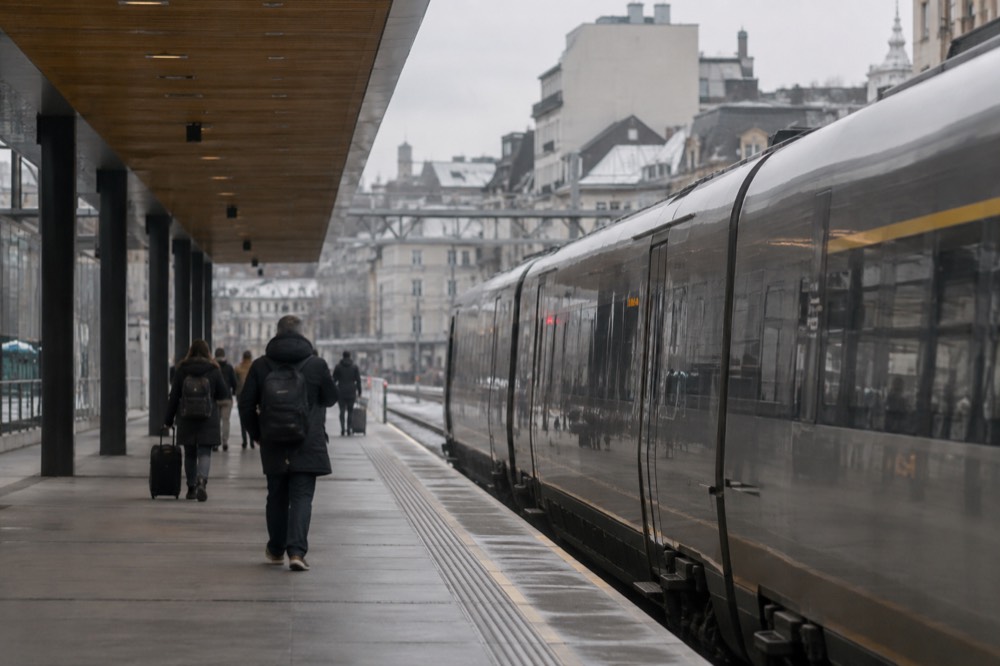
Both are well-connected capitals, but the airport-to-city story is where Oslo surprises people, in both directions, and it is worth knowing before you book flights. Copenhagen's airport sits close to the center with a short metro ride into town, and it is one of Europe's most painless arrivals. Oslo's Gardermoen is 50 km out, which sounds worse than it is: Flytoget covers the distance in about 20 minutes, every 10 minutes, at 268 NOK adult, while the Vy regional train takes about 23 minutes for roughly half the price, because it is an ordinary Ruter-zone train that a multi-zone ticket or an Oslo Pass covers outright.
That Vy detail is the highest-value money fact in this comparison and most guides get it wrong: the Oslo Pass covers the airport train, but only Vy's, not Flytoget. The difference is 268 NOK each way, real money on a family trip. The full breakdown, including the coach option and the private transfer, is in Oslo airport to city centre and the head-to-head in Flytoget vs Vy.
One more arrival fact that trips up Copenhagen comparisons: Norway is in the Schengen Area but not in the European Union. It is an EFTA state in the EEA, outside the EU customs union and outside EU VAT, so duty-free allowances apply arriving from EU countries and non-resident visitors can claim a VAT refund on qualifying purchases. The currency is the Norwegian krone, not the euro, and euros are not generally accepted. Denmark, also outside the euro, is an EU member. This changes what you do at the airport on the way home, and almost nobody mentions it.
So Which Should You Choose: Oslo or Copenhagen?
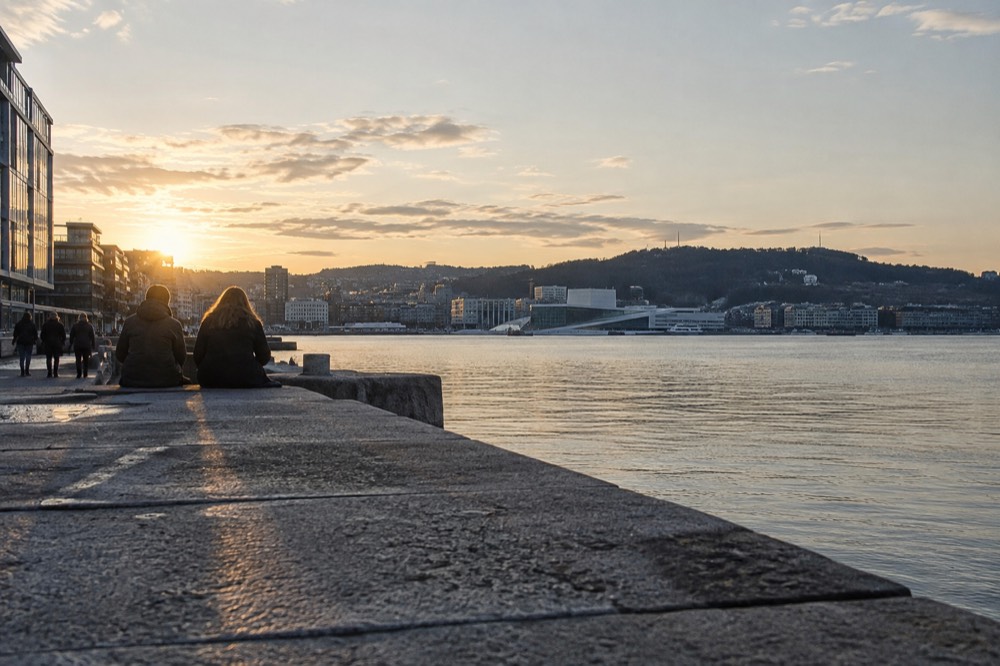
Choose Copenhagen if you want a food-first, bicycle-flat, walkable city break in a place that feels like a bigger town than it is, and choose Oslo if you want the more unusual trip. Oslo is the capital where the itinerary includes a boat, a forest, an island or a ski trail, where the museums have a single coherent story, and where the season you visit changes the trip more than the city does. Copenhagen is the easier, more polished short break. Oslo is the one where the setting, a fjord ending at a parliament building, does work no restaurant row can compete with.
A useful tiebreaker: how long are you staying? Copenhagen rewards two to three days and starts repeating after that. Oslo rewards three to five, because the fjord, Bygdøy, Nordmarka and the neighborhoods each want a half-day, and the site's how many days in Oslo breakdown shows why. If you can only travel in November or February, Copenhagen's milder, brighter winter is the rational pick unless snow and dark are what you came for.
And if the answer is both: they connect directly, by plane in about an hour, and they make a genuinely good pair, Copenhagen first for the food, then Oslo for the fjord and the light. As the Oslo Travel Guide desk puts it, the two cities are not rivals so much as two halves of the same Nordic trip, and the fjord boat below is the fastest way to understand the half this site covers.
Common Questions About Oslo vs Copenhagen
Is Oslo or Copenhagen more expensive?
Both are expensive, but the money goes to different places. Norway is the sixth most expensive country in Europe on SSB's 2025 survey, with alcohol and tobacco more than double the EU average, while Denmark is marginally dearer than Norway on restaurants and hotels. In practice, Oslo stings on drinks and dining, Copenhagen stings if you chase its food scene, and Oslo's museums, transport and outdoors are the cheaper side of the city.
Which city is better for a short city break?
Copenhagen, usually. It is flatter, denser and built around walking and cycling, so two to three days covers it comfortably. Oslo needs a bit longer because its highlights, Bygdøy, the islands, Nordmarka, are spread along transit lines rather than stacked in one center.
Is Oslo colder than Copenhagen?
Yes, noticeably in winter. Oslo's January normal mean is minus 2.3 °C with under six hours of daylight in late December, while Copenhagen's maritime climate is milder and its days are longer. Oslo's cold comes with snow, ski trails and a forest at the end of the metro line; Copenhagen's winter is greyer and wetter.
Which has better museums, Oslo or Copenhagen?
Copenhagen has more museums and deeper art collections. Oslo's strength is concentration and theme: the Bygdøy peninsula's exploration museums, including the Fram polar ship and Kon-Tiki raft, plus the National Museum holding The Scream. Note that the Museum of the Viking Age is closed until a stated reopening in 2027.
Can you see the northern lights from either city?
Realistically, no. Oslo sits at 59.91 N, well south of the auroral zone, and sightings need a strong geomagnetic storm, clear sky and a dark spot, a combination that comes round a handful of times a year. Copenhagen is even further south. Tromsø, not either capital, is the northern lights trip.
Is Norway in the EU, and does that matter for this comparison?
Norway is in the Schengen Area but not the EU; it is an EFTA state in the EEA, outside the EU customs union and EU VAT, and it uses the krone. Denmark is an EU member outside the euro. Practically, that means duty-free allowances and VAT refunds work differently on your way home from Oslo than from Copenhagen.