Oslo Cheap Eats: Where to Eat Well Without Emptying Your Wallet
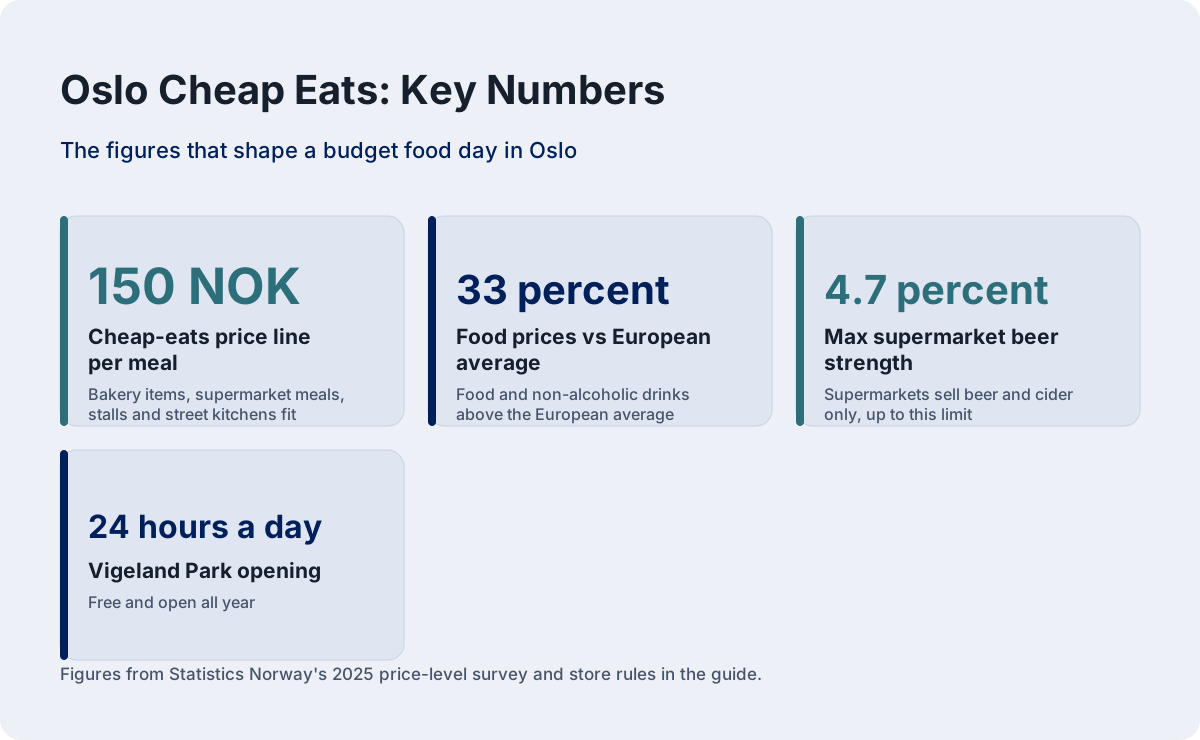
Norway is the sixth most expensive country in Europe, and food is a third dearer than the European average. That is the honest starting point for eating cheaply in Oslo, and it is also why the cheap-eats game here is a real game with real rules, not a matter of luck.
Short answer
Cheap eating in Oslo works when you shift where the money goes, not whether you spend it. Supermarkets, bakery counters, food halls and street kitchens feed you for a fraction of a sit-down restaurant, tap water is free and excellent, and alcohol is the single line that doubles a food budget. Statistics Norway puts food at 33 percent above the European average and alcohol at more than double.
Norway is the sixth most expensive country in Europe on Statistics Norway's 2025 price-level survey, and the food number is the one that stings: food and non-alcoholic drinks sit 33 percent above the European average. That is the honest starting line for any conversation about Oslo cheap eats. The good news is that the average hides enormous variation, and the variation is where a budget traveler lives. A restaurant dinner in Oslo genuinely hurts. A bakery roll, a supermarket picnic by the Oslofjord and a food-hall bowl do not, and the gap between those two ways of eating is bigger in Oslo than in almost any other European capital.
This guide is the practical version of that gap. It covers what cheap eating actually looks like here, which neighborhoods carry the budget food, how the supermarket and alcohol rules reshape a food budget, and how to string it all into a day. If you want the full budget picture beyond food, our Oslo on a budget guide covers accommodation and transport too.
What Does Cheap Eating in Oslo Actually Look Like?
Cheap eating in Oslo means buying food where Norwegians buy it, not where visitors are steered. The working pattern is a bakery or supermarket breakfast, a food hall or street kitchen for lunch, and either a supermarket picnic or one proper restaurant meal a day. Tap water is free everywhere, alcohol is the budget killer, and the biggest single saving is skipping drinks with dinner rather than skipping dinner itself.
The structure of Norwegian food retail explains most of it. Grocery chains like Rema, Kiwi, Coop and Meny dominate, and their prices are high by European standards but nothing like restaurant prices. The same survey that puts food 33 percent above the average puts restaurants and hotels in a different league again, and alcohol and tobacco at more than double the European average. So the arithmetic of an Oslo food day is unusual: the cheap version is not dramatically cheaper-looking than the expensive version, it is just bought in different shops.
There is also a seasonal rhythm worth knowing. Norwegians picnic hard in summer, and the infrastructure supports it: every waterfront, park and island in the Oslofjord is a legitimate place to eat a packed lunch. In winter the same move shifts indoors to food halls and the hot counters of supermarkets, which sell ready meals that are cheaper than any restaurant in the same block. Neither version feels like a compromise, which is the point. Eating cheaply in Oslo is normal here, not a backpacker's endurance test.
The other half of the picture is what you drink. A beer with dinner can cost as much as the main course, and wine more. Our price of beer in Oslo guide breaks that line item down in detail; the short version for this page is that the cheapest drink in Norway is tap water, and it is genuinely excellent.
Where Can You Eat for Under 150 NOK in Oslo?
Under 150 NOK, your reliable options are bakery items and coffee-counter food, supermarket ready meals and sandwich deals, food hall stalls at the lower end of their ranges, and street kitchens, whose prices vary so you should treat any figure as a range and check the board on the day. What does not fit under 150 NOK is a sit-down restaurant main, which is a different budget entirely, and any meal that comes with alcohol.
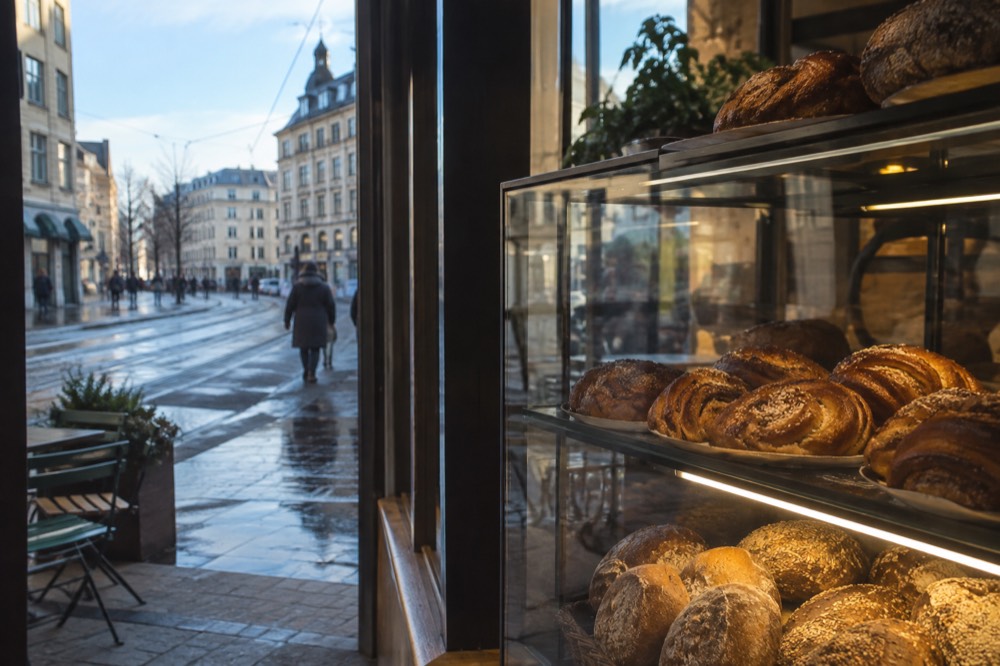
The bakery counter is the quiet champion of Oslo cheap eats. Norwegian bakeries sell bread, rolls, cinnamon buns and simple hot items at prices that feel almost reasonable by local standards, and they are everywhere, from the central station to residential side streets. A bakery breakfast with coffee is the single most common cheap meal in the city, and it is a real meal, not a snack.
Supermarkets come next, and they deserve more respect than visitors give them. The larger stores have proper hot counters, salad bars and ready meals, and the standard move for lunch on the go is a store-made sandwich or wrap plus something from the fruit section. The trick is timing: hot food is marked down toward closing time, and the markdowns are real. A supermarket dinner eaten on a bench at Aker Brygge, watching the boats, is a completely legitimate Oslo evening.
Food halls and street kitchens sit at the top of the cheap range. The stalls at a hall like Mathallen serve restaurant-quality food at counter prices, and the per-dish cost at the lower end of a food hall's range overlaps with the upper end of the supermarket range. The trade is simple: you pay for someone else's cooking and a seat, and you skip table service, which is where Norwegian restaurant prices do their damage.
| Cheap-eats option | Typical role | What you get | Watch out for |
|---|---|---|---|
| Bakery counter | Breakfast, quick lunch | Bread, buns, simple hot items, coffee | Popular items sell out by early afternoon |
| Supermarket hot counter | Lunch, dinner | Ready meals, markdowns near closing | Selection shrinks late evening |
| Food hall stall | Lunch, dinner | Restaurant-quality food, counter service | Peak hours mean queueing for seats |
| Street kitchen | Lunch, dinner | Fast, often international, eat standing | Prices vary by vendor, check the board |
| Picnic | Any meal | Anything from a supermarket, eaten anywhere scenic | Weather in the dark months |
If you would rather have someone else map the cheap-and-good food of a single neighborhood, a guided walk does that job well.
The trio above spans the budget spectrum: a neighborhood food walk that doubles as a cheap-eats scouting trip, a classic Norwegian evening boat meal that is worth one splurge, and a beer-and-culture walk that solves the alcohol problem by making the drinking itself the activity.
Which Neighborhoods Have the Best Budget Food?
Grünerløkka is the city's budget food capital, with the densest strip of cheap eats, coffee bars and food halls in Oslo. The area around Oslo S and Karl Johans gate is thin on cheap options and thick on tourist pricing, Tøyen and Grønland carry some of the most affordable everyday food in the city, and Majorstuen and Frogner are where a budget goes to quietly die.
Grünerløkka, the old workers' district east of the river, is where the math works. The neighborhood packs bakeries, falafel counters, pizza places, burger joints and the Mathallen food hall into a walkable grid, and its food culture is the reason it is on every list of things worth seeing in Grünerløkka. Prices here track the neighborhood's student and creative population rather than the hotel district's visitors. The riverfront along the Akerselva gives you somewhere free and genuinely beautiful to eat whatever you just bought.
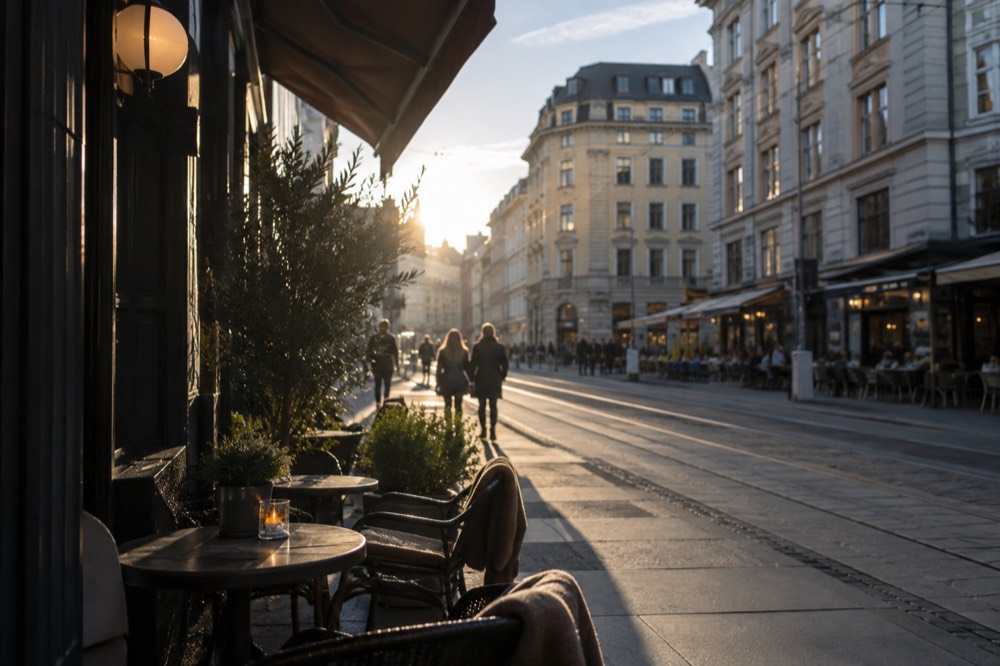
Grønland and Tøyen, east of the center, are the other honest answer. The shops and eateries here serve the neighborhood rather than the visitor economy, and the food reflects it: South Asian, Middle Eastern and African kitchens at prices that make the city center look like a different country. This is also where you find the cheapest groceries, in the independent shops rather than the big chains.
The center itself is the trap. Around Karl Johans gate and the hotel belt, the average meal price climbs steeply and the quality does not follow it. The move is not to avoid the center, it is to eat before you get there or walk ten minutes east or west of it. Aker Brygge's restaurant strip is lovely and priced accordingly; the same money goes twice as far a fifteen-minute walk inland.
| Neighborhood | Budget food scene | Best for | One caution |
|---|---|---|---|
| Grünerløkka | Densest in the city | Bakeries, food hall, coffee, riverbank picnics | Weekend crowds |
| Grønland and Tøyen | Cheapest everyday food | Independent shops and kitchens | Fewer English menus |
| Oslo S and center | Thin, tourist-priced | Bakery chains, station food | Avoid sit-down defaults |
| Aker Brygge and Tjuvholmen | Waterfront pricing | One splurge with a view | Not a budget strip |
| Frogner and Majorstuen | Café pricing | People-watching over one coffee | Costs add up fast |
If a food walk through the budget-food capital appeals, this is the one that covers exactly that ground.
The walk runs about two and a half hours through Grünerløkka's food culture, which makes it a genuine shortcut: you leave knowing which counters are worth returning to for the rest of your trip, and the guide's local knowledge does the filtering that would otherwise cost you three or four mediocre meals to figure out on your own.
Is Street Food the Answer in Oslo?
Street food is a real and growing part of Oslo's cheap-eats scene, concentrated around food halls, market events and a handful of permanent street kitchens, but it is not the all-day-everywhere scene you find in Asian or southern European capitals. Expect a small number of very good vendors rather than a city of carts, and expect prices that beat restaurants without ever being pocket change.
The honest framing matters because visitors arrive expecting one thing and find another. Oslo's street food lives mostly in semi-permanent homes: stalls inside and around food halls, containers and kiosks in areas like Vulkan, and seasonal markets. The quality is high, because the bar for food in this city is high and the vendors who survive it are good at what they do. What there isn't is a cheap-eats district where fifty carts compete the price down, because the cost base of running a food business in Norway makes that impossible.
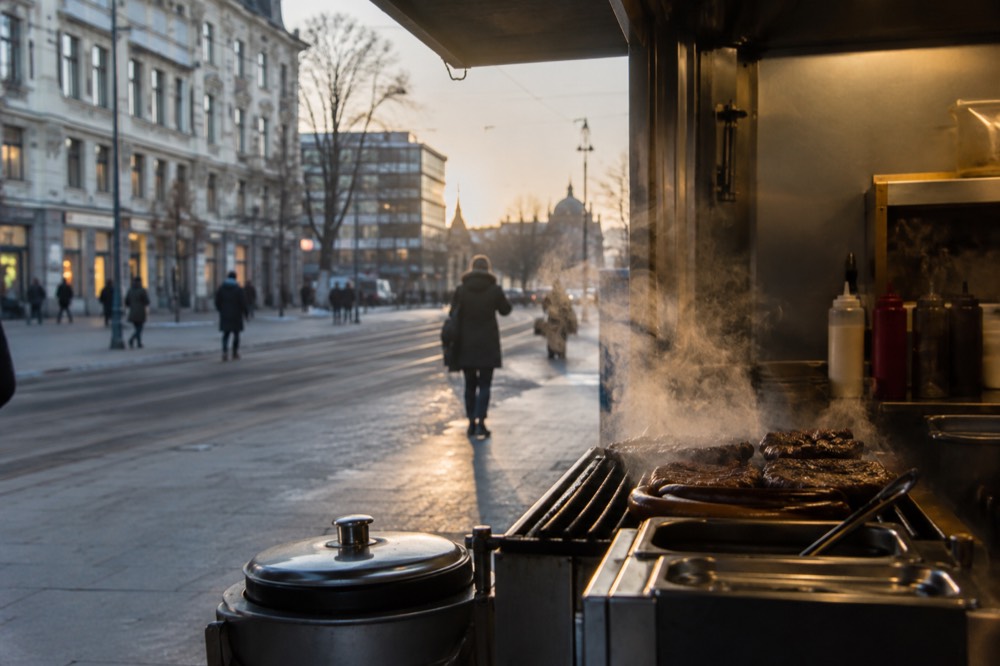
The practical advice is to treat street food as your lunch and dinner engine rather than a novelty. A wrap, a bowl or a burger from a good stall does the job a restaurant would do at two or three times the price, eaten on a bench with a fjord view that costs nothing. Our Oslo street food guide maps the scene in detail, including where the permanent clusters are and what to order at each.
One structural note: tipping is not expected at counters, and card terminals may still prompt you. Service is included in Norwegian prices by law and custom, and nobody will chase you for declining the prompt. That saves a little on every counter meal, which adds up over a week.
How Do Supermarket and Alcohol Rules Shape a Food Budget?
Supermarkets sell beer and cider only, up to 4.7 percent alcohol, and stop selling it at a fixed evening cut-off, while all wine and spirits are sold only through the state monopoly Vinmonopolet, which closes early on Saturdays and is shut all day Sunday. This is the single biggest structural fact in Norwegian food budgeting: the cheap-eats strategy that works everywhere else works differently here because of when and where you can buy a drink.
Vinmonopolet, the state monopoly, is the only place in Norway to buy wine and spirits. Its hours are short by international standards, it closes early on Saturdays, and it is closed every Sunday and on public holidays, including 1 May and 17 May. Hours vary by store, so the practical rule is to check the store finder before planning a Saturday or Sunday around a bottle of wine. Supermarkets carry beer and cider only, and only up to 4.7 percent ABV, with a legally set evening cut-off on sales. More of these guides are collected on Oslo Travel Guide. More of these guides are collected on Oslo Travel Guide.
The budget consequence is straightforward. If your evening plan is a picnic with a beer, the supermarket covers you until the cut-off. If it is wine, you plan around Vinmonopolet's hours or you pay restaurant markups, which on alcohol are the steepest in the entire food budget. Statistics Norway's survey puts alcohol and tobacco at more than double the European average, and that number is why so many visitors buy at the duty-free on arrival, which is a legitimate strategy since Norway is outside the EU customs union and outside EU VAT.
| What you want | Where it is sold | Timing rules | Budget effect |
|---|---|---|---|
| Beer and cider to 4.7% | Supermarkets | Evening cut-off, none on Sunday | Cheapest alcohol route |
| Wine and spirits | Vinmonopolet only | Closed Sundays and holidays, early Saturday close | Plan ahead or skip |
| Anything stronger with dinner | Restaurants and bars | No restrictions | The line that doubles a bill |
| Tap water | Everywhere, free | None | The best deal in Norway |
The other half of the shop is food, and here the supermarket is your friend rather than your constraint. Store brands are the cheapest route to a full picnic, and the bakery section of a large supermarket is often as good as a standalone bakery for basic items. The trick that separates an expensive Oslo trip from a cheap one is doing your shopping where you are staying rather than buying food item by item at convenience prices in the center.
What About Coffee and Breakfast?
Coffee in Oslo is excellent, coffee culture is serious, and a bakery-plus-coffee breakfast is the cheapest meal that still feels like a treat. The budget version is a plain filter coffee rather than a specialty drink, the splurge version is the city's celebrated third-wave espresso, and the free version, tap water, is drinkable everywhere in Norway straight from the tap.
Oslo's coffee reputation is real, and it matters to a budget guide because coffee is the cheapest pleasure in an expensive city. The specialty scene here is among the best in Europe, which our Oslo coffee guide covers in depth, and the price gap between a filter coffee and a crafted drink is meaningful over a week. Ten filter coffees versus ten flat whites is a real chunk of a day's food budget.
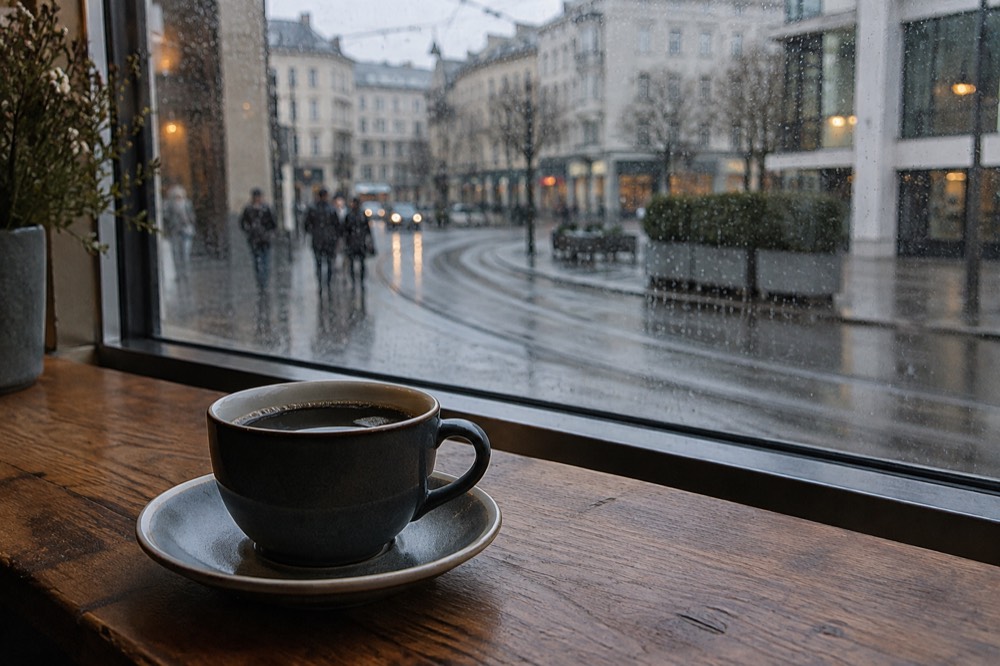
Breakfast is where most visitors overspend without noticing. Hotel breakfasts in Oslo are expensive and usually good, but a bakery breakfast costs a fraction and is often better. The Norwegian breakfast of bread, cheese, something brown and strong coffee is not a compromise, it is what the country actually eats, and buying it at a bakery counter instead of a hotel buffet saves real money every single morning.
The tap water point deserves its own sentence because it is genuinely a budget tool: Norwegian tap water is clean, cold and free, and asking for a glass of tap water with a meal is normal, not cheap. In a country where a soft drink can cost what a coffee costs elsewhere, water is the quiet subsidy on every restaurant table in the country.
| Meal | Budget version | Mid version | What to skip |
|---|---|---|---|
| Breakfast | Bakery roll and filter coffee | Bakery sit-down with eggs | Hotel buffet if not included |
| Lunch | Supermarket sandwich | Food hall bowl | Center-café lunches |
| Dinner | Supermarket hot counter | Street kitchen or stall | Drinks with dinner |
| Snacks | Supermarket fruit and nuts | Bakery item | Convenience-store prices |
Can You Drink Cheaply in Oslo at All?
Drinking cheaply in Oslo means drinking less, drinking supermarket beer before the cut-off, or making the drinking itself the plan rather than an add-on to dinner. Restaurant and bar alcohol runs at more than double the European average, so the cheapest drink on any Oslo menu is the one you do not order, and the second cheapest is a beer bought at a supermarket and drunk somewhere with a view.
The arithmetic is unforgiving and worth stating plainly. Statistics Norway's European comparison puts alcohol and tobacco at more than double the EU average, and unlike food, where the premium is a third, there is no clever shopping that makes bar drinking cheap here. What you can do is restructure the evening. A supermarket beer on a bench at Sørenga or on one of the Oslofjord islands costs the supermarket price plus nothing, and the view is free, which is a better deal than most bar terraces in Europe can offer.
For visitors who want the bar experience without the bar bill, the honest move is a guided drinking walk, where the price of the tour includes the structure, the stops and the education, and Norway's complicated alcohol rules get explained by someone who knows them. This site's best bars in Oslo guide covers the scene for the nights you do want to go out.
Are Food Halls Worth It for Budget Eaters?
Food halls are the best value-for-quality trade in Oslo eating: you get restaurant-grade food at counter prices, because you are paying for the cooking and not the table service, which is the most expensive part of a Norwegian restaurant bill. For a budget traveler they are not the cheapest option, but they are the cheapest option that feels like eating out.
Mathallen Oslo, the food hall in the Vulkan complex on the Grünerløkka riverfront, is the flagship, and our Mathallen guide covers its stalls in detail. The model is simple and it repeats across the city: a cluster of independent vendors sharing a roof, each doing one thing well, with shared seating and no service charge. You order at a counter, take a number, and eat as well as you would at a mid-priced restaurant for noticeably less.
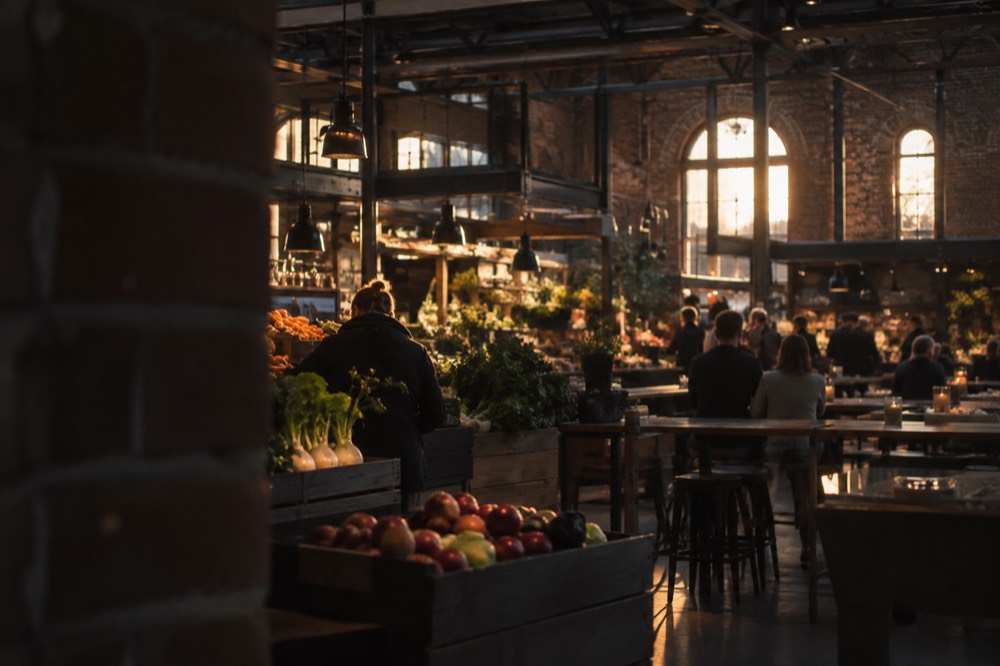
The budget strategy inside a food hall is to share. Portions at good stalls are often generous, two people ordering three dishes between them eat better than two people ordering two, and the shared-table culture makes this completely normal. Go at off-peak hours if you want a seat, because the halls fill with office crowds at lunch and stay busy on weekend evenings.
The other thing food halls do for a budget traveler is reconnaissance. Every stall is a small Norwegian food business on display, and an hour of watching what locals order, and at what prices, teaches you more about eating in this city than a week of guessing. If you want that experience with a guide attached, a walking food tour does the same job with commentary.
What Free Things Stretch a Food Budget?
The free half of an Oslo food day is unusually strong: tap water everywhere, picnic spots that would be paid attractions anywhere else, the riverfront and fjord islands as dining rooms, and Vigeland Park, which is free and open 24 hours a day all year. None of these involve eating less, they involve eating the same food in places that cost nothing, which in Oslo is the difference between a strained budget and a comfortable one.
The picnic infrastructure is the headline. Oslo's waterfront, from Sørenga to Aker Brygge, is public, and the Oslofjord islands are a short ferry ride away on an ordinary public transport ticket. Hovedøya, with its ruined Cistercian abbey, and Langøyene, the swimming and camping island, are both places where a supermarket lunch becomes an event. Our Oslo islands guide covers the ferry lines and the islands in full.
The free list goes beyond eating spots. Vigeland Park, the sculpture park at Frogner, is free and open around the clock, all year, no ticket, which makes it both a sight and a free evening's entertainment. The Opera House roof is a public walkway with a view, and the city's parks and riverfront paths cost nothing. If you build your day around free sights and spend only on food, the food budget stretches to include one genuinely good meal a day instead of three mediocre ones. The free things to do in Oslo guide lists the rest.
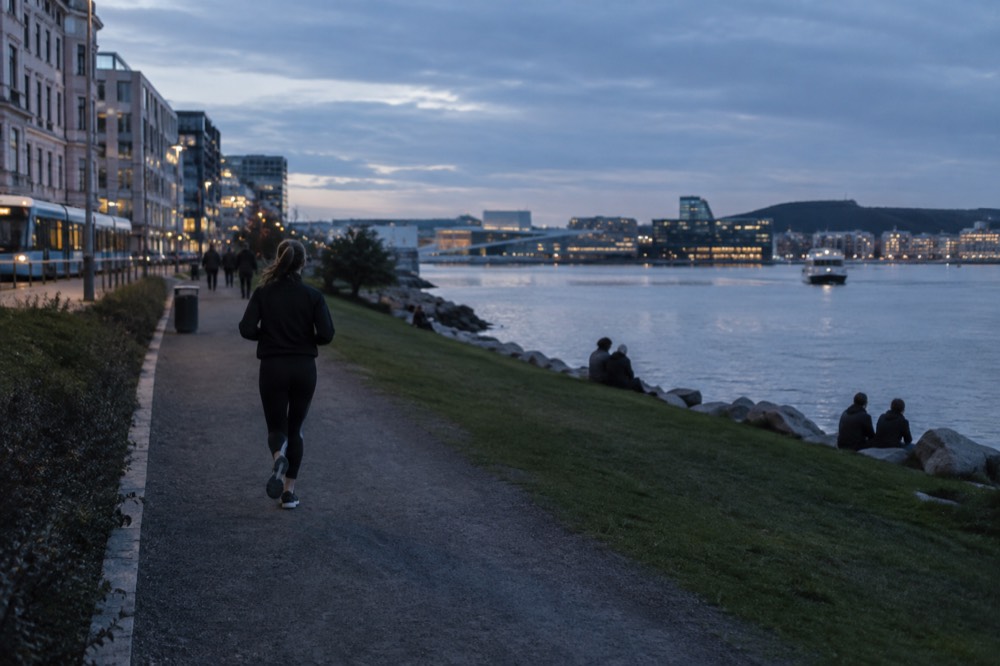
The mental shift that ties it together: in most expensive cities you economize by lowering quality. In Oslo you economize by changing venue, and the venues, parks, piers, islands, rooftops, are the best in the country. That is the rare case where the cheap option is also the one you would photograph.
How Do You String It Into a Cheap-Eats Day?
A realistic cheap-eats day in Oslo runs a bakery breakfast, a supermarket or food-hall lunch, one street-kitchen or stall dinner, tap water all day, and a supermarket beer before the cut-off if you want one, with the fjord as your dining room. That day costs a fraction of the restaurant version, loses almost nothing in quality, and leaves room in the budget for the one or two meals a trip that deserve full price.
The shape of the day matters more than any individual choice. Eat breakfast where you are staying or at the nearest bakery, carry a water bottle and refill it, do your shopping at a large supermarket rather than a convenience store, and put your main meal wherever the value is best that day, a food hall stall, a street kitchen, or a supermarket hot counter if the weather has turned. Save the restaurant money for one evening, and spend the rest on experiences, which in Oslo are often free or close to it.
| Time | Budget move | Why it works |
|---|---|---|
| Morning | Bakery breakfast near your base | Cheapest hot meal of the day |
| Midday | Supermarket lunch or food hall bowl | Counter prices, restaurant quality |
| Afternoon | Free sights, water bottle, park picnic | The fjord is the dining room |
| Evening | Street kitchen or stall dinner, no drinks | Alcohol doubles the bill |
| Late | Supermarket beer before cut-off, if drinking | The one cheap drink window |
For travelers who want the food scene decoded once, up front, and then explored alone for the rest of the trip, a single guided food walk at the start pays for itself in avoided bad meals. A street-food focused walk is the version that maps the cheap end of the scene.
Common Questions About Cheap Eats in Oslo
Is Oslo expensive for food?
Yes, by European standards. Statistics Norway's 2025 survey puts food and non-alcoholic drinks at 33 percent above the European average, and Norway overall is the sixth most expensive country in Europe. But the average hides a wide spread: supermarket and bakery food is far cheaper than restaurant food, and alcohol, at more than double the European average, is what really inflates bills.
Where is the cheapest place to eat in Oslo?
Supermarkets and independent shops in Grønland and Tøyen are the cheapest places to buy food in the city, and bakery counters are the cheapest ready-to-eat meals. Grünerløkka has the densest concentration of good cheap eateries, including the Mathallen food hall.
Can you buy alcohol in supermarkets in Oslo?
Only beer and cider, and only up to 4.7 percent ABV, with a legally set evening cut-off on sales. All wine and spirits are sold only through Vinmonopolet, the state monopoly, which closes early on Saturdays and is closed all day Sunday and on public holidays.
Is tap water free in Oslo restaurants?
Yes, and it is drinkable everywhere in Norway. Asking for tap water with a meal is normal, not cheap, and in a country where drinks are the most expensive line on the menu it is the single easiest saving in Norwegian dining.
What is a typical cheap breakfast in Oslo?
Bread or a roll with cheese, something sweet like a cinnamon bun, and strong coffee, bought at a bakery counter. It is what Norwegians themselves eat, it costs a fraction of a hotel breakfast, and the filter-coffee version is cheaper than any specialty drink.
Do you need to tip in Oslo?
No. Service is included in Norwegian prices, and tipping is not expected. Rounding up or leaving around 5 to 10 percent for good service is common but voluntary, and card terminals may prompt for a tip that nobody will chase you for declining.