Oslo Snow: What to Expect, When It Falls, and What to Do in It
Oslo sits at 59.91 degrees north, far enough south that snow is a winter season rather than a permanent one, and far enough north that the season is long, reliable and genuinely cold. Here is what the official climate record says, and what the snow actually lets you do.
Short answer
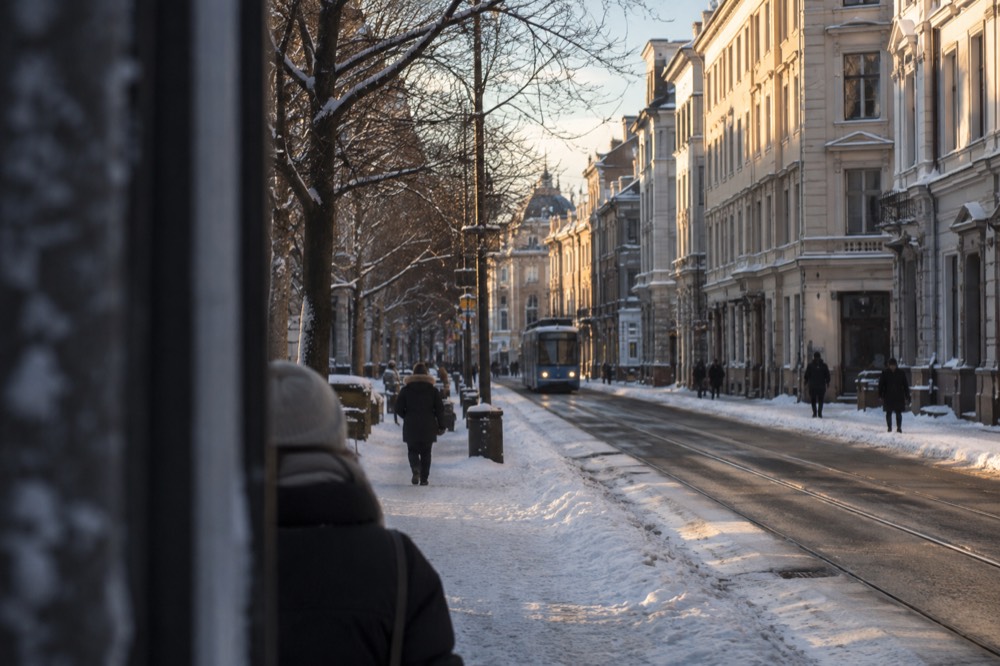
Yes, Oslo gets snow every winter, but it is a seasonal city, not an Arctic one. MET Norway's 1991 to 2020 normals show winter mean temperatures of about minus 2 °C in January and February, with snow typically on the ground from December through March. The ski trails in Nordmarka open most winters from late December, and the metro reaches them in about 25 minutes.
Snow changes Oslo more than it changes most European capitals. The same city that is all waterfront terraces and island swimming in July becomes a ski town in January, with groomed cross-country trails beginning a metro ride from the center and a lit toboggan run sliding down from Holmenkollen. The transformation is real, predictable and measurable, which is exactly why it is worth planning around rather than hoping for.
This guide covers what the official record actually says about snow in Oslo: when it arrives, how long it stays, how cold the city gets, and what the snow lets you do once it is on the ground. Everything here comes from MET Norway's published normals, the operators' own material and the city's transport authorities. Where a number is not verified, this page says so plainly rather than guessing, because a snow holiday planned on a made-up figure is a ruined holiday.
Does It Actually Snow a Lot in Oslo?
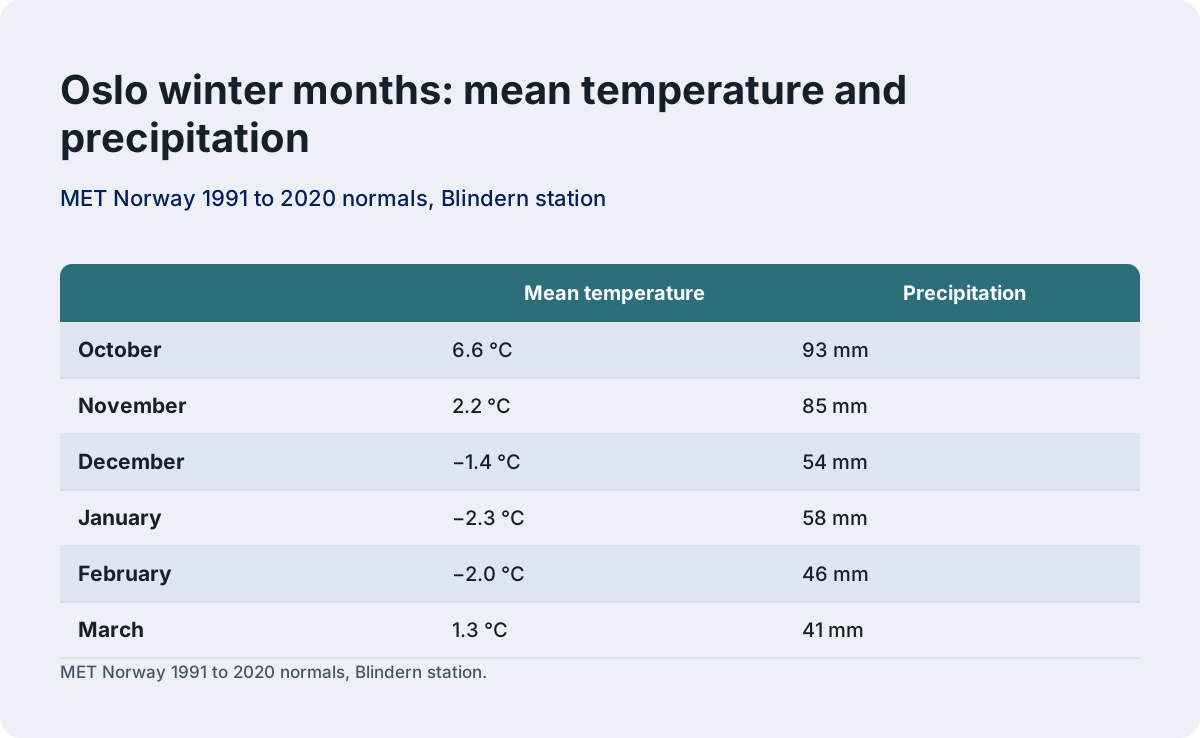
Yes, Oslo is a genuinely snowy city by European standards, though it is not an Arctic one. Every winter brings snow to the city center, and the surrounding forest holds it far longer than the streets do. MET Norway's 1991 to 2020 normals for the Blindern station record winter precipitation of 58 mm in January, 46 mm in February and 54 mm in December, all falling at mean temperatures below freezing.
The honest caveat is that Oslo's snow is a season, not a state. The city sits at 59.91 degrees north, well south of the Arctic Circle, so there is no permanent snow cover in the streets and no month when the city center is guaranteed white. What Oslo has instead is a reliable winter: cold enough to hold snow on the ground for weeks at a stretch, and with a forested hinterland, Nordmarka, that sits higher and colder than the center and keeps its snow well into spring.
The January normal is minus 2.3 °C, February's is minus 2.0 °C and December's is minus 1.4 °C, all cold enough that most winter precipitation arrives as snow. That is the mechanism behind the city's snow cover, and it is why the season is dependable even though no single week is.
One distinction matters when you read climate data about this. MET Norway's normals table records precipitation, not snow depth, and no verified snow-depth or snow-days figure for Oslo was captured in the research behind this page. So a table that says 58 mm of precipitation in January is not the same as a table that says "X days of snow cover." Any guide that prints a precise snow-depth number for Oslo without naming its source is guessing, and plenty of them do.
For planning purposes, treat it this way: from late December through February, snow somewhere on your Oslo itinerary is likely; snow lying in the streets of the center for your entire stay is possible but not certain; and snow on the Nordmarka trails is close to a given, because the forest holds winter longer than the harbor does. If snow is the point of your trip, plan around the forest and the hills, not the sidewalks.
When Does the Snow Season Start and End in Oslo?
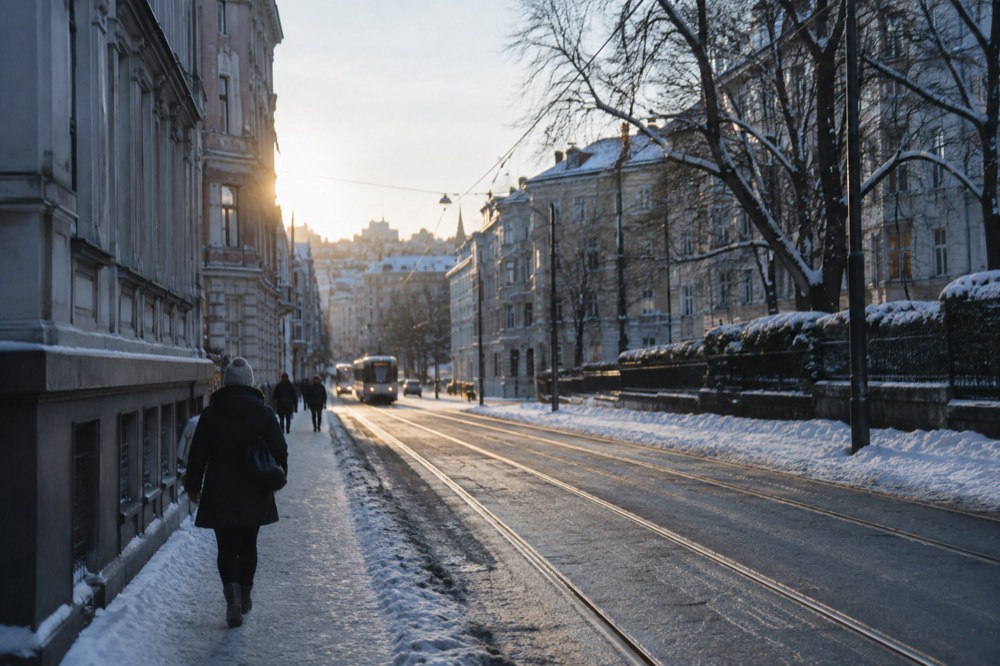
Snow typically reaches the Oslo valley in November and can fall in the city as late as April, but the dependable season, the one you plan a trip around, runs from December through March. The normals show the mean temperature crossing below freezing in December at minus 1.4 °C and staying there through January and February, then climbing to 1.3 °C in March, when the center thaws while the forest above it still skis.
November is the swing month. The mean temperature of 2.2 °C sits right at the rain-snow line, so early snowfalls in November often melt in the center within days. December's mean of minus 1.4 °C is what makes snow stick, and by late December the Nordmarka trail network is typically groomed and open, conditions permitting. Skiforeningen, the association that maintains the trails, publishes live trail and snow-depth reports on its own site, and that is the source to check in the days before you travel rather than any guide's promise.
| Month | Normal mean temperature | Normal precipitation | What it means for snow |
|---|---|---|---|
| October | 6.6 °C | 93 mm | Rain, occasionally first wet snow on the hills |
| November | 2.2 °C | 85 mm | First snow possible, rarely lasting in the center |
| December | −1.4 °C | 54 mm | Snow begins to lie; Nordmarka trails usually open late month |
| January | −2.3 °C | 58 mm | Deepest winter, most reliable snow cover |
| February | −2.0 °C | 46 mm | Coldest-feeling month, snow holds in the center |
| March | 1.3 °C | 41 mm | Center thaws, forest keeps skiing into April |
The end of the season is where Oslo surprises people. March in the city center is a thawing month, but the Oslo Vinterpark ski area at Tryvann and the Nordmarka forest above it sit high enough that the skiing commonly continues well past the point the harbor ice has gone. If you want snow but not deep midwinter cold, early March is a genuinely good compromise: more daylight than January, spring sun on the trails, and the city center walkable in a light jacket while the hills above still hold winter.
Two related pages go deeper on this rhythm. The month-by-month breakdown in Oslo weather by month covers what each month actually feels like, and best time to visit Oslo weighs the snow season against the summer one for different kinds of traveler.
How Cold Does Oslo Get, Really?
Oslo's winter cold is moderate and steady rather than extreme: the normal mean temperatures are minus 2.3 °C in January and minus 2.0 °C in February, which is several degrees milder than continental interiors at the same latitude. The observed extremes in the 13 months to August 2026 at Blindern ran from a low of minus 17.2 °C on 11 January 2026 to a summer high of 32.9 °C on 15 July 2026, so the city does swing hard across the year.
What that means in practice is that Oslo winter cold is a dry, manageable cold. Days at minus 5 to minus 10 °C are normal in January; days below minus 15 °C happen but are not the pattern. The 2025-26 winter observed at Blindern came in colder than the normals, with January 2026 at minus 4.9 °C and February at minus 5.0 °C against normals of minus 2.3 and minus 2.0, a reminder that a "normal" is a 30-year average, not a forecast.
For a visitor, the cold is more of a wardrobe problem than a danger problem. The air is usually dry, the city is compact and walkable, and the metro, trams and buses are heated. The place the cold genuinely bites is up in Nordmarka after dark or standing still at the top of Holmenkollen, where the wind off the exposed ridge does the work the temperature alone would not. Dress for the hills, not the streets, and the streets take care of themselves.
| Measure | Figure | Source |
|---|---|---|
| Normal mean, January | −2.3 °C | MET Norway 1991-2020 normals, Blindern |
| Normal mean, February | −2.0 °C | MET Norway 1991-2020 normals, Blindern |
| Observed low, 13 months to Aug 2026 | −17.2 °C (11 Jan 2026) | Blindern station observations |
| Observed high, same period | 32.9 °C (15 Jul 2026) | Blindern station observations |
| Days with precipitation in that period | 131 | Blindern station observations |
The other winter reality is light, and it is the one that catches visitors off guard more than the cold does. On 21 December the sun rises at 09:18 and sets at 15:11, six hours and fifty-three minutes of daylight, with sunrise and sunset times from MET Norway's own sunrise data for Oslo's coordinates. By 15 February that has stretched to nine hours and fourteen minutes, and by 21 June to eighteen hours and fifty minutes. The full swing, from five hours fifty-three minutes to eighteen hours fifty, is more than a factor of three, and the Oslo daylight hours page tabulates it month by month.
There is no midnight sun in Oslo; that needs latitude north of about 66.5 degrees, and Oslo is at 59.91 degrees north. In late June the hours between sunset and sunrise are deep twilight rather than true night, which is a different and gentler thing.
Where Do You Find Snow Inside the City Itself?
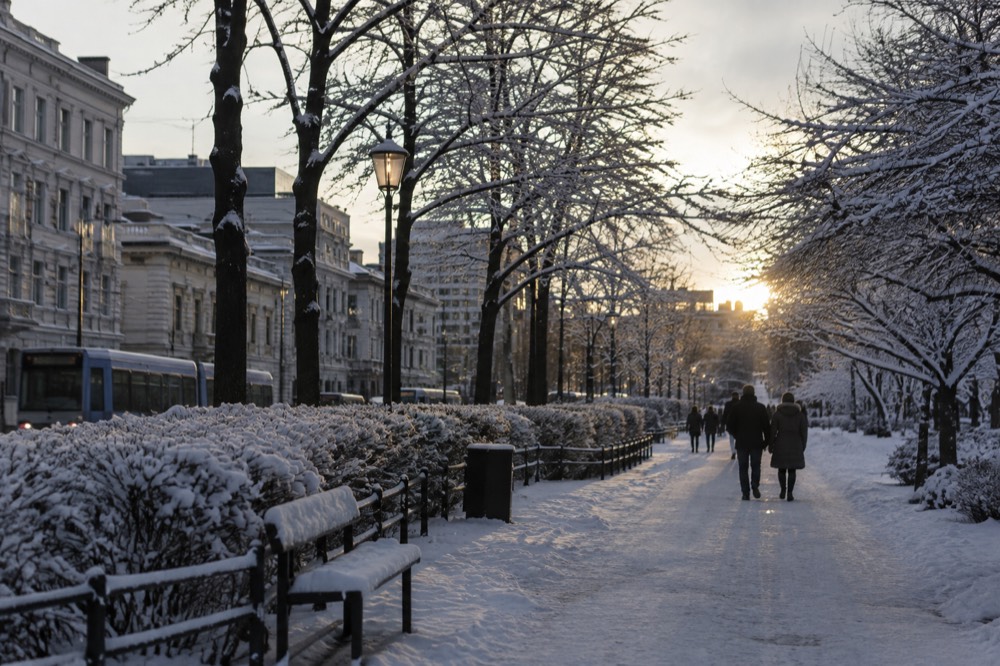
The reliable in-city snow sits uphill from the center: Holmenkollen and the Oslo Vinterpark ski area at Tryvann, both on metro Line 1 about 15 to 20 minutes from Nationaltheatret, and the wider Nordmarka forest beyond them. The center itself gets and holds snow through cold spells, but the hills are colder, whiter and open for activities, while the harbor streets thaw first.
Metro Line 1 terminates at Frognerseteren, at the edge of Nordmarka, and it runs year-round, so the forest and its trail network are a transit ride rather than a car trip. That single fact is what makes Oslo unusual among capitals: groomed cross-country skiing, snowshoeing and forest walking inside the city's fare zones. Skiforeningen grooms and maintains the Nordmarka trails and publishes live snow and condition reports, so you can check the actual state of the trails on the morning you plan to ski.
The Korketrekkeren toboggan run, sliding down from just below the Holmenkollen jump, is a public run rather than a booked attraction: use is generally free or low-cost, and you confirm conditions and any current arrangements on site or with the operator before you go. Oslo Vinterpark at Tryvann is the alpine option, with lift passes priced per season on the operator's own site, so check current pricing there rather than trusting a guide's printed figure. The Oslo winter park page covers the ski area in detail, and skiing near Oslo extends the list beyond the city limits.
Down in the center, snow changes the city's character more than its logistics. Akershus Fortress, the Opera House roof and the Karl Johans gate stretch all look their winter best under snow, and all of them remain open and walkable. The Oslo in winter guide works through the whole cold-season city, museums included, for the days when the snow turns to rain or the cold turns you indoors.
One honest note on the harbor: the Oslofjord itself does not reliably freeze in the way visitors sometimes imagine, and the fjord cruises that run in summer mostly do not run in deep winter. If a winter fjord trip is on your list, check what is actually operating before you build a day around it. The Oslofjord cruise page explains the seasonality.
Can You Ski or Snowshoe Without Leaving Oslo?
Yes, and this is Oslo's genuine winter advantage: cross-country trails in Nordmarka, a learn-to-ski experience and guided snowshoeing all operate inside or on the edge of the city, reachable by metro. You do not need a car, a resort transfer or a mountain hotel; you need a Ruter ticket and clothing that matches the forecast.
The learn-to-ski half-day is the standout for beginners. Oslo is the only European capital where learning to ski is a half-day activity rather than a weekend trip, and the product is run as a guided experience with gear and instruction rather than a lift-and-hire arrangement you assemble yourself. For first-timers it removes the two hardest parts of a first ski day, equipment and technique, in one booking. More of these guides are collected on Oslo Travel Guide.
Guided snowshoeing in Nordmarka covers the same forest for people who want the winter landscape without the skiing learning curve. Snowshoes need almost no instruction, the pace is a walk rather than a workout, and the guides handle both route-finding and the judgment call on conditions, which matters in a forest where a wrong turn in fading light costs real time. It runs about three and a half hours.
For travelers who want the winter forest without any sport at all, the torchlit evening walk with a campfire is the calmer option. It runs inside the city limits, about three and a half hours, and it is built around the experience of the dark forest and the fire rather than distance covered. In the October-to-March window, when Oslo has more dark hours than daylight ones, an evening product that embraces the dark is more use than one that fights it.
What Should You Pack for an Oslo Snow Trip?
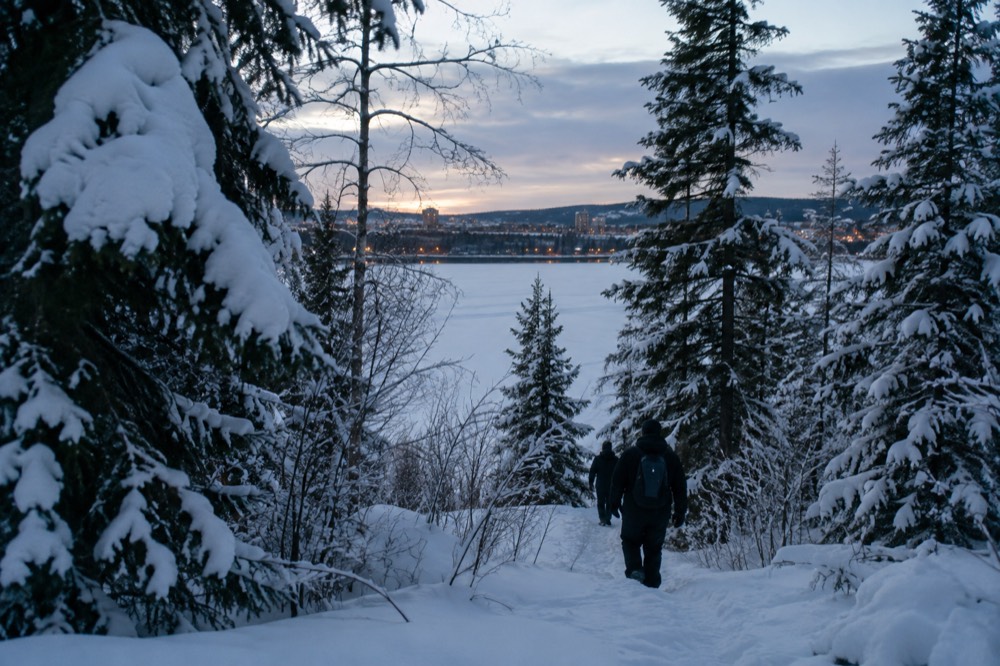
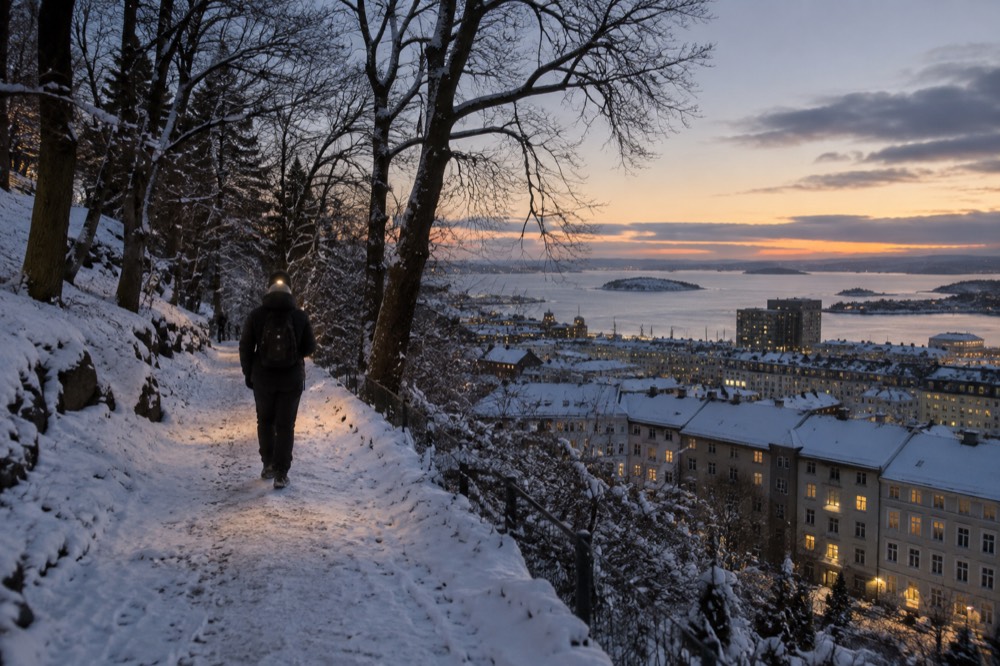
Pack for dry cold in the minus 5 to minus 15 °C range with wind exposure uphill: proper winter boots with grip, layered clothing rather than a single heavy coat, and specific accessories, hat, gloves and something reflective if you will be out in the long dark. Oslo's streets are cleared fast, so city footwear matters less than forest footwear, and the metro is warm enough that overdressing is its own problem.
The layering point deserves its emphasis. Oslo winter days swing between heated interiors, the dry cold outside and the warm metro in between, and a single heavy coat that works at minus 10 in the forest makes you overheat the moment you are underground or in a museum. A base layer, a mid layer and a shell you can open or remove handles all three environments better than any one garment.
Footwear is the item visitors most often get wrong. The city center is efficient at clearing snow and salting pavement, so ordinary boots survive downtown, but Nordmarka, Holmenkollen and any snowy park are a different surface. Grip matters more than insulation once you leave the cleared streets, and ice underfoot is more common than deep snow in the center during thaw-and-refreeze cycles in March.
| Item | Why it matters in Oslo | Where you actually need it |
|---|---|---|
| Winter boots with real grip | Refrozen pavement and packed trail snow | Everywhere outside the cleared center |
| Base and mid layers | Metro and museums are heated; forest is not | Daily, add or remove |
| Windproof shell | Holmenkollen ridge and open Nordmarka clearings | Hills and forest |
| Hat and gloves | Dry cold takes the extremities first | Daily, December through February |
| Reflective item or small torch | Daylight ends by 15:11 in late December | Afternoons and evenings |
| Swimwear | Winter sauna culture sits right beside the snow | If a sauna evening is planned |
The reflective item is a genuinely local point. With darkness from mid-afternoon through mid-morning in deep winter, pedestrians on unlit paths are hard to see, and Norwegians take visibility seriously. A small reflective band weighs nothing and solves it. The sauna row in the table is not a joke: winter sauna on the waterfront is one of Oslo's real cold-season pleasures, and the Oslo sauna page covers it, though those sessions are sold directly by the operators rather than through any booking platform.
What If the Snow Does Not Show Up?
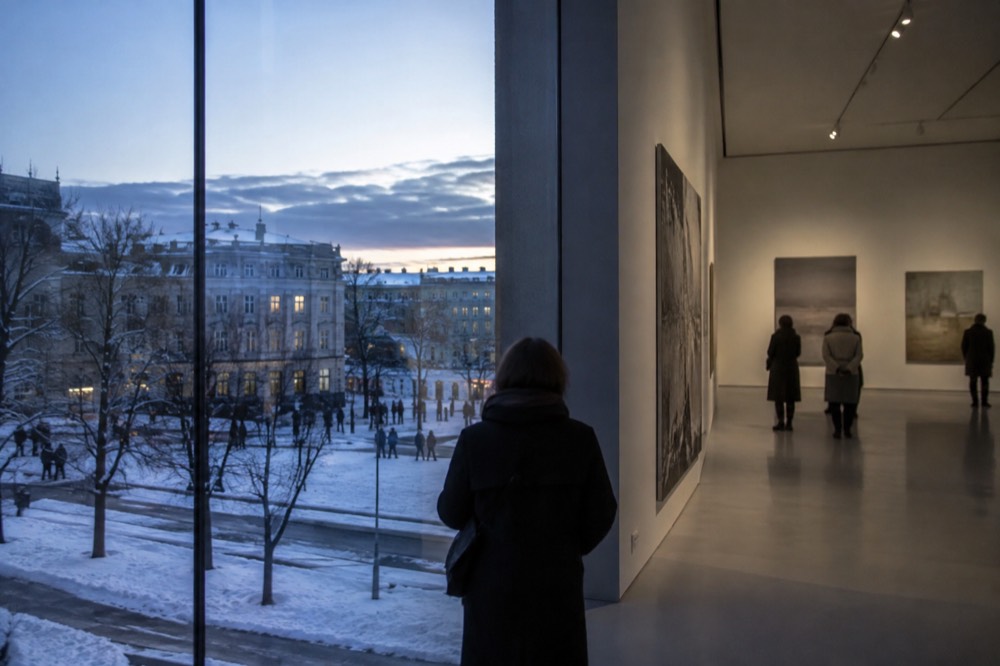
Plan a winter Oslo trip around what the city guarantees, the cold, the dark, the museums and the indoor life, and treat snow as the likely bonus rather than the foundation. The Bygdøy museums, the National Museum, MUNCH and the Paradox Museum are all winter-proof, and the city's indoor quality is high enough that a snowless week is still a full week.
The Bygdøy peninsula is the obvious snow-proof day. Kon-Tiki and Fram sit together at the Bygdøynes end, both open all year, and the Kon-Tiki Museum and Fram Museum pages detail them. Reach them on bus 30 year-round, or on the seasonal museum ferry from Rådhusbrygge 3 between 14 March and 4 October, which is included with an Oslo Pass but does not accept ordinary Ruter tickets. Note the two systems: the island ferries from Aker brygge are ordinary Ruter services, the Bygdøy ferry is not, and the Oslo ferries guide keeps the two straight.
The rainy-day playbook is well developed on this site. The rainy day in Oslo guide was written for exactly the week the weather does not cooperate, and the Oslo museums overview ranks the indoor options. One closure to know about in advance: the Museum of the Viking Age on Bygdøy is closed for rebuilding, with the museum's own wording being that it will reopen as the Museum of the Viking Age in 2027, and no month confirmed. The Museum of the Viking Age page explains what to see instead, including Viking-age objects at the Historical Museum in the center.
Is a Snowy Oslo Trip Worth It?
For most travelers who enjoy winter, yes: snowy Oslo costs less than the same trip in July, has far fewer visitors at the major sights, and offers skiing, snowshoeing and forest experiences no other European capital can put inside its own transit zones. The trade is daylight, under six hours at the winter solstice, and a real risk of gray weeks when the snow stays uphill.
The value case is concrete. Norway is an expensive country, sixth in Europe on Statistics Norway's 2025 price-level survey, but the winter season softens the two biggest costs, flights and hotels, and the best of the winter activities are either free, the trails, the toboggan run and Vigeland Park, which is free and open 24 hours all year, or priced like a normal guided tour rather than a resort product. The Oslo on a budget and is Oslo expensive pages do the full cost breakdown.
The crowd case is just as real. January and February Oslo is a city at working pace: museum lines short, restaurant tables available, the Opera House roof nearly empty at sunset, which arrives in mid-afternoon and turns the harbor gold before most people have left work. If you can square your body clock with a 09:00 sunrise, the quiet is the reward.
The honest counterweight, again, is light and weather. A week in Oslo in January can be brilliant blue and minus ten, or it can be gray, wet in the center and snowy only above the treeline. Book the things that work either way, keep the snow-dependent days flexible, and check the live trail and snow reports from Skiforeningen and the forecast from yr.no, MET Norway's own service, in the final days before you fly.
Common Questions About Oslo Snow
Does Oslo get snow every year?
Yes. Every winter brings snowfall to Oslo, and the surrounding forest at Nordmarka holds reliable snow cover from late December into spring. The city center itself is less predictable: snow falls there every year too, but thaws and refreezes through the season, so lying snow downtown is common in January and February rather than guaranteed all winter.
What is the snowiest month in Oslo?
By precipitation, December, January and February are the snowy months, with normals of 54, 58 and 46 mm respectively, all falling at mean temperatures below freezing. January is the coldest at a normal of minus 2.3 °C and is typically the month with the most reliable lying snow in the center. No verified snow-depth figure by month exists for Oslo, so treat precipitation plus temperature as the honest proxy.
Can you ski in Oslo itself?
Yes. Nordmarka's groomed cross-country trail network begins at Frognerseteren, the terminus of metro Line 1, roughly 15 to 20 minutes from the center, and Oslo Vinterpark at Tryvann offers alpine skiing with lift passes priced per season on the operator's site. A learn-to-ski half-day experience also runs in the city, which no other European capital offers in the same way.
Does the Oslofjord freeze in winter?
Not reliably in the inner harbor in a typical recent winter, and the summer fjord cruises mostly pause in the deep season. Do not build a winter day around a fjord boat trip without checking what is actually running. The island ferries, lines B1 and seasonal B2 from Aker brygge, are year-round or near-year-round Ruter services, but they are transport rather than sightseeing cruises.
Is Oslo too dark in winter to enjoy?
It is short on daylight, not empty of it. Around 21 December the sun is up from 09:18 to 15:11, under six hours, and by mid-February that has grown past nine. The city is built for it, with lit ski tracks, lit walking paths and a strong indoor life, and the dark itself powers the evening experiences, torchlit walks and campfires, that define an Oslo winter.
What should I do in Oslo if it does not snow?
Do the winter-proof list: the Bygdøy museums, Kon-Tiki and Fram together, the National Museum, MUNCH and the Paradox Museum, plus Akershus Fortress and the Opera House roof, which are open in any weather. Snow usually still sits uphill at Holmenkollen and Nordmarka even when the center is bare, so check the live trail reports before writing off the forest.
For everything the snow season cannot cover, the master list at things to do in Oslo carries the whole year, and the planning desk at Oslo Travel Guide keeps the seasonal pages, transport guides and cost breakdowns current across the site.