Oslo Winter Park at Tryvann: Skiing, Snow and How to Visit
Oslo Winter Park sits inside the city's metro zone, which makes it one of the few capital cities in Europe where a ski hill is a local train ride away.
Short answer
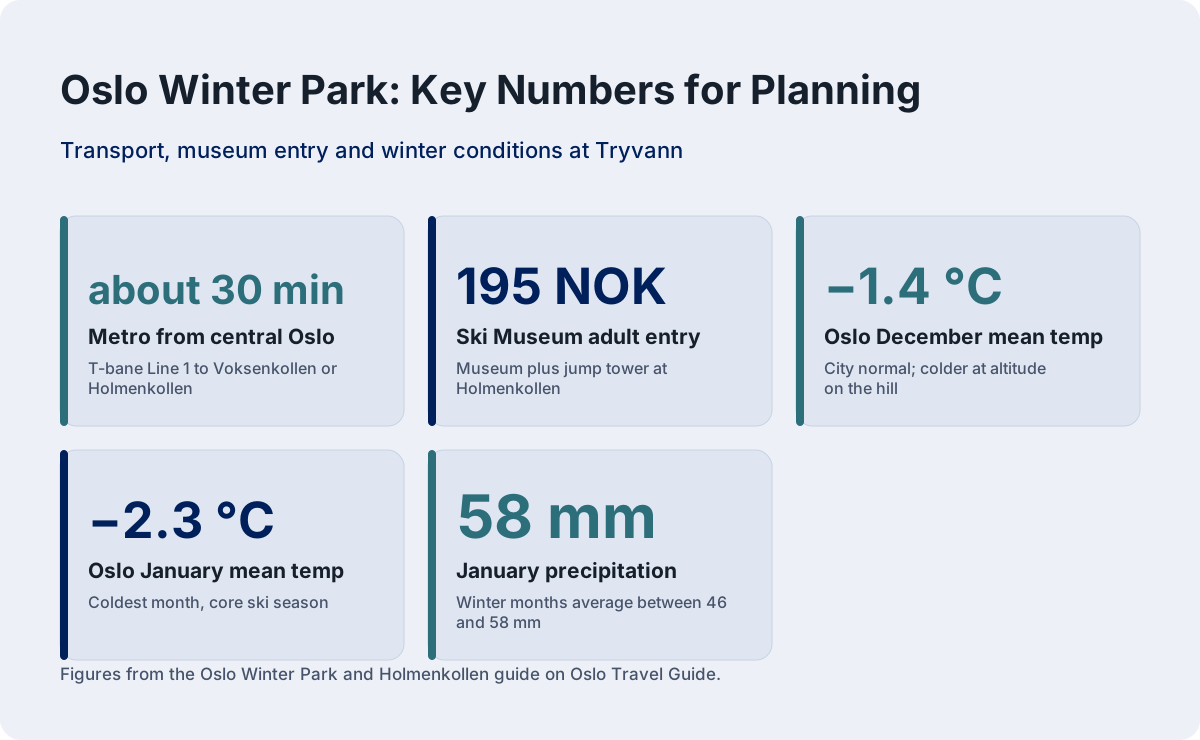
Oslo Winter Park is the city's ski area on the Tryvann hill above Holmenkollen, reached by T-bane Line 1 in roughly 30 minutes from central Oslo, all inside Ruter zone 1. It offers Alpine and cross-country skiing, a terrain park and a learn-to-ski product bookable in advance. Lift passes are priced per season on the operator's site, and the ski museum at Holmenkollen is a 195 NOK combination option.
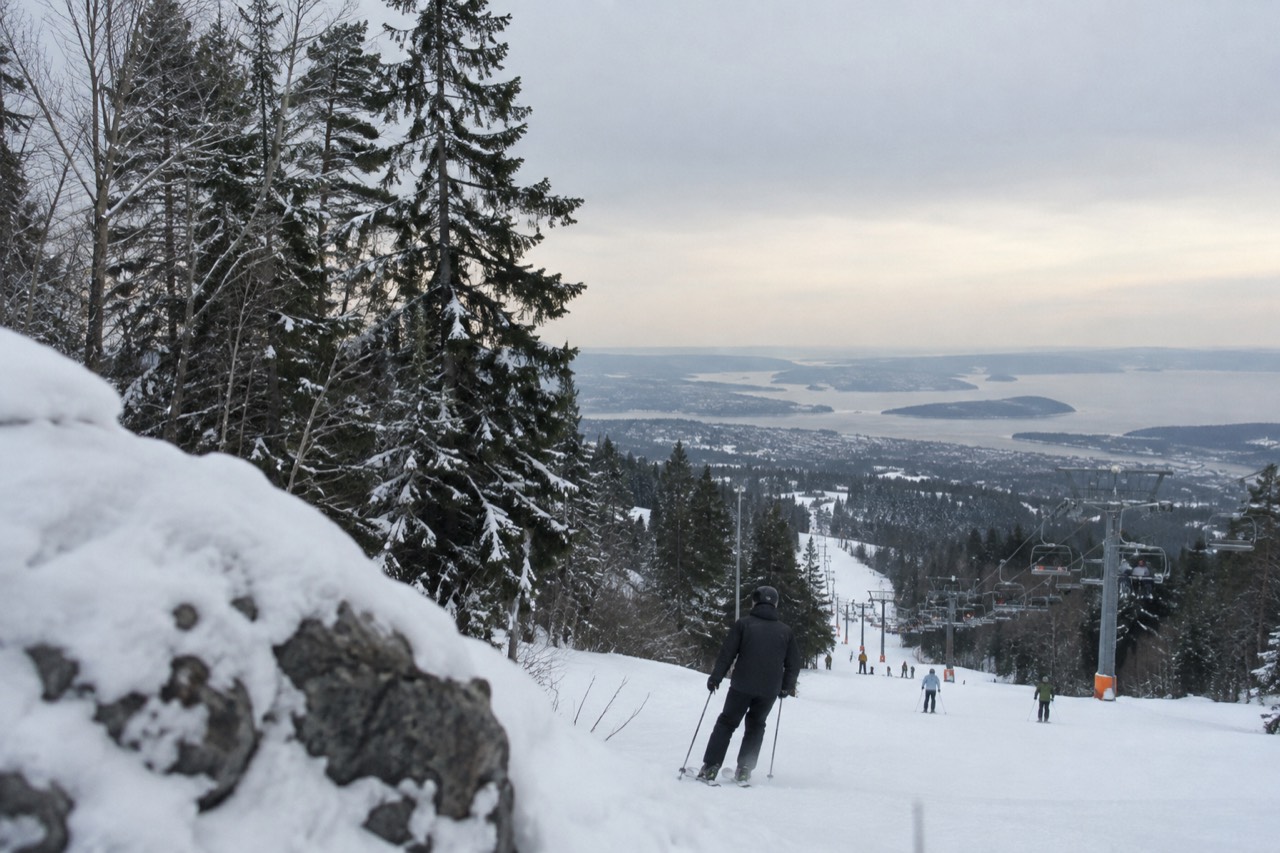
Skiing and Oslo sit closer together than in almost any other capital. Oslo Winter Park, the ski area on the Tryvann hill, sits above the Holmenkollen stop on T-bane Line 1, and the whole journey is inside a single Ruter zone. The hill sits inside Nordmarka, the forest that wraps the city's northern edge, and the operator grooms the cross-country trails with Skiforeningen, the association that maintains the wider network.
That position is the interesting part. A visitor can ski in the morning and be back at the National Museum by early afternoon, all on ordinary public transport tickets. Very few cities in the world let you do that. It also means this page is as much about planning as about skiing, so the costs, the daylight and the transport get the same attention as the slopes do.
What Is Oslo Winter Park and Where Exactly Is It?
Oslo Winter Park is Oslo's main developed ski area, built on the Tryvann hill at the top of the Holmenkollen ridge roughly 15 to 20 minutes by metro from the Nationaltheatret station in the city center. It sits inside the Nordmarka forest, and it is operated as a commercial resort with lifts, slopes, a terrain park and machine-made snow backup on the lower runs.
The full name on the operator's own materials is Oslo Vinterpark, and the Tryvann name comes from the two small lakes at the top of the hill, Tryvann and Store Tryvann, which double as summer swimming spots and winter ice. Norwegians use the names interchangeably: if someone tells you they are going to Tryvann, this is what they mean.
The resort is small by Alpine standards, and it is not trying to be Chamonix. What it is, is genuinely urban. The city's famous ski jump, the Holmenkollbakken, sits on the same ridge a couple of metro stops further down, and the Ski Museum there documents Norwegian skiing history going back a very long way indeed. The whole ridge, jump, museum and ski area together, is one coherent winter outing, and the Holmenkollen ski jump page covers that half of it in detail.
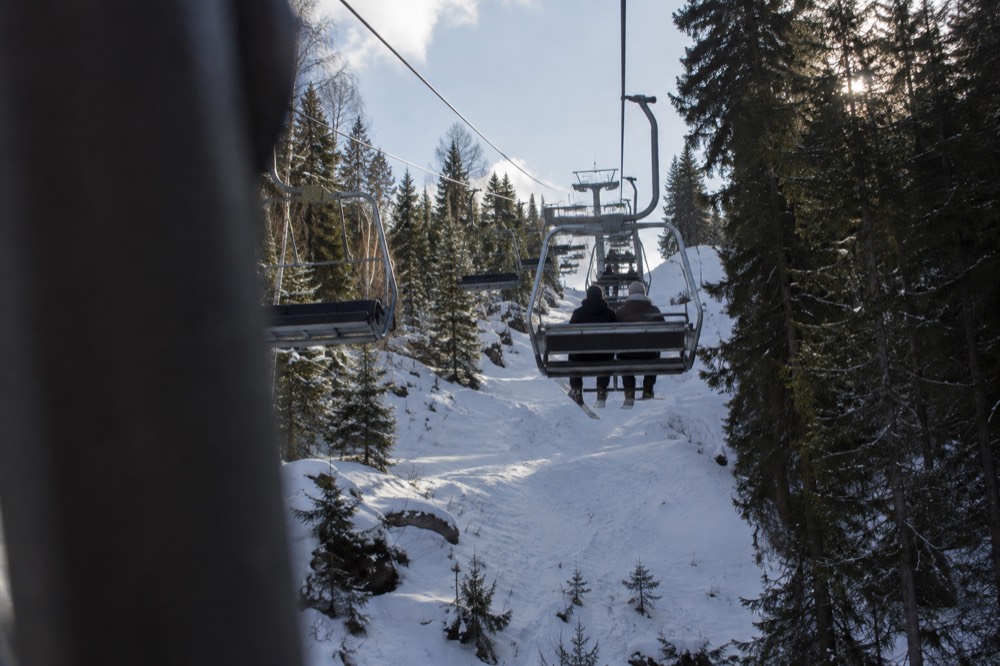
Because the area sits inside the forest belt, the setting feels anything but urban once you are off the lift. The slopes open onto groomed trails running north into Nordmarka, and the operator and Skiforeningen between them maintain the network, with live trail and snow reports published on Skiforeningen's site during the season.
How Do You Get to Oslo Winter Park?
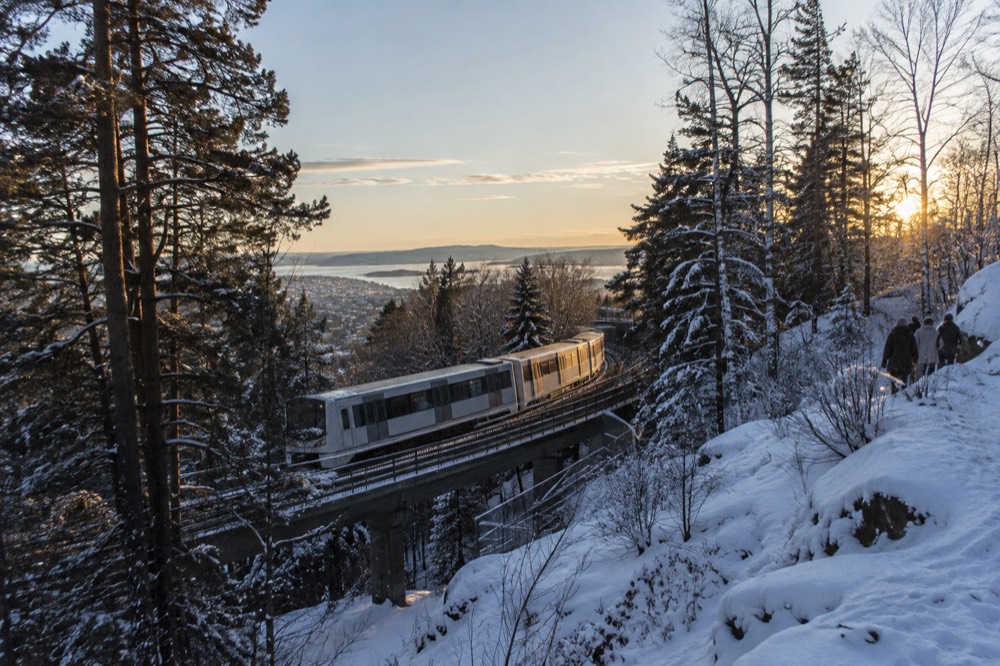
Take T-bane Line 1, the Holmenkollen line, toward Frognerseteren and get off at either Holmenkollen or Voksenkollen, both a short walk from the slopes; the run from central Oslo takes roughly 30 minutes and the entire metro network, including this line, is inside Ruter zone 1. A standard Ruter ticket or an Oslo Pass covers the trip, and the same ticket covers the return.
Line 1 is the oldest line on the network and one of the prettiest, climbing through villas and then forest. Voksenkollen station is the closest to the main base area at Tryvann, while Holmenkollen station serves the ski jump and museum end of the ridge. The walk from Voksenkollen to the lifts is uphill but short.
Do not plan to drive unless you have a specific reason. Parking at the top is limited, fills early on good snow weekends, and the whole point of the place is that the metro works. One caution for winter planning: Ruter has ongoing works affecting some west-side lines into 2026, so check the Ruter app for service changes on the day.
The practical transport picture, from verified fare rules:
| Option | Route | Ticket | Notes |
|---|---|---|---|
| T-bane Line 1 | Central Oslo to Voksenkollen or Holmenkollen, about 30 min | Ordinary Ruter zone 1 ticket or Oslo Pass | Entire metro network is inside zone 1 |
| Cross-country access | Same line, to Frognerseteren terminus | Same zone 1 ticket | Trailhead for the wider Nordmarka network |
| By car | Via Holmenkollveien | Parking fee per operator | Limited spaces, fills on snow weekends |
| Combined outing | Add the ski jump and museum at Holmenkollen station | Museum entry 195 NOK, Ski Museum plus jump tower | Family ticket options on the operator's site |
One thing worth deciding early: whether this hill is your main winter activity or a half-day add-on. If you are planning a broader winter trip, the Oslo in winter guide slots the ski area into a full itinerary, and skiing near Oslo compares Tryvann with the larger mountain resorts a train ride further out.
If a guided winter experience sounds better than finding your way around the slopes alone, a few bookable options stand out:
What Does a Day at Oslo Winter Park Cost?
Lift passes and equipment rental are priced per season by the operator and are not fixed, published year-round figures, so the honest answer is to check the current price on the operator's own site before you go; what is stable is the transport side, where an ordinary Ruter zone 1 ticket covers the metro both ways, and the Ski Museum at Holmenkollen is 195 NOK for adults if you fold that into the same outing.
This is where the cost structure of an Oslo trip shows its shape. Norway is the sixth most expensive country in Europe on Statistics Norway's 2025 price-level survey, with household prices 28.6 percent above the EU average, and alcohol and tobacco more than double the average. But the things that make this particular day work, the metro ticket, the forest and the cross-country trails, sit on the inexpensive end. Downhill lift passes are the commercial exception.
Budget roughly, and treat these as planning ranges rather than promises:
| Cost item | Planning range | Notes |
|---|---|---|
| Metro return, zone 1 | Ordinary Ruter fare, current price in the Ruter app | Oslo Pass covers it |
| Lift pass | Seasonal pricing, confirm on the operator's site | Day and half-day options |
| Equipment rental | Seasonal pricing, confirm on site | Book ahead on weekends |
| Ski Museum plus jump tower, Holmenkollen | 195 NOK adult | Hours Jan-Apr 10:00–16:00, May-Sep 10:00–17:00 |
| Food on the mountain | Mountain-station prices, above city average | Bringing your own is normal here |
For the money side of the whole city, not just this hill, is Oslo expensive breaks down where the costs genuinely concentrate, and the short version applies here: skip nothing for transport, but expect restaurant and bar prices to be the part that stings.
A common question: is the Oslo Pass worth it for this trip? The pass covers the metro and, per VisitOSLO's own inclusion list, free entry at over 30 museums and attractions including the museums on the Holmenkollen ridge route, but it does not cover lift passes, because those are a commercial ski product rather than an attraction. If you are skiing only, a plain ticket is fine. If you are skiing in the morning and museum-hopping in the afternoon, the pass arithmetic changes.
Can You Ski Here, and How Good Do You Need to Be?
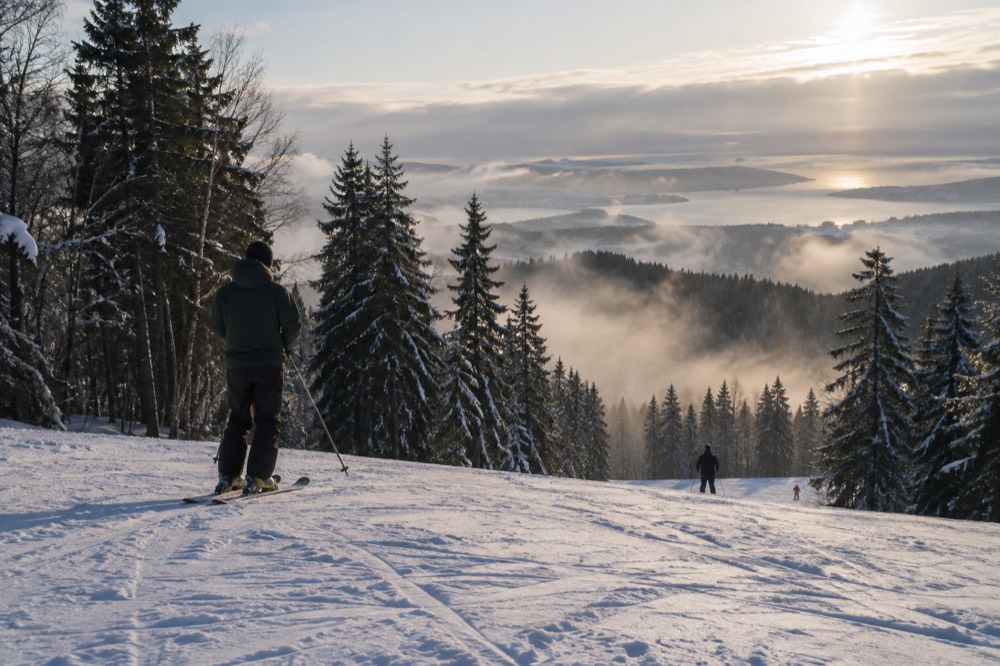
Yes, and the hill is genuinely built for mixed abilities: Oslo Winter Park runs a dozen-plus slopes from beginner greens to black runs, a large terrain park that has hosted freestyle competitions, and a dedicated children's area, plus machine-made snow on lower slopes to extend the season. Confident intermediates will be comfortable; experts will find it a local hill rather than a destination, and beginners are extremely well served.
That last point deserves emphasis. This is a city hill where the learn-to-ski infrastructure is normal, everyday machinery, not a resort novelty. Norwegian children learn to ski as a school activity, and the culture around the beginner areas reflects that. Weekends are busy with families and after-work crowds ski under lights on weekday evenings, one of the practical advantages of the evening sessions is that they absorb the post-office rush.
For adult beginners, there is also a bookable route that removes the equipment-and-lessons guesswork entirely. The Learn-to-Ski half-day experience covers gear, instruction and transport logistics in one product, runs about three and a half hours, and holds a perfect 5.0 rating across its review base.
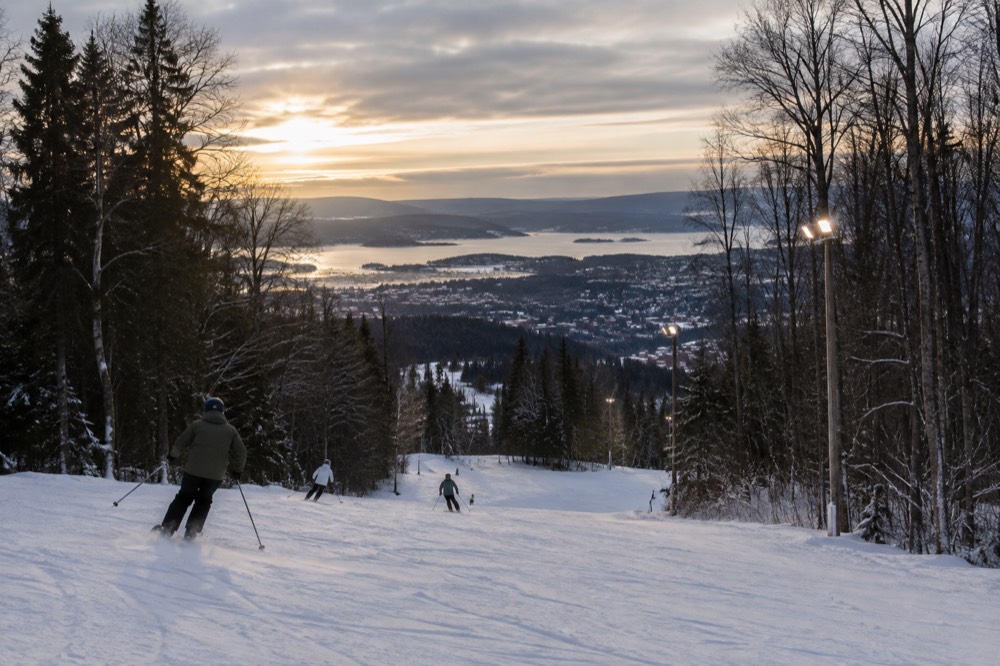
Cross-country is the other half of the mountain, and for many locals the more important half. The groomed trails run out from the top of the ridge into Nordmarka, maintained through the Skiforeningen network, and a classic Norwegian winter day here is a couple of hours on the tracks followed by a waffle. The trails themselves are free to use; you pay for your rental equipment and your metro ticket, and nothing else.
Is There Enough Snow, and When Is the Season?
The season typically runs from late November or early December into April, helped by snowmaking on the lower slopes, and the winter climate at the hill is cold enough to hold snow: Oslo's December temperature normal is −1.4 °C (about 29 °F) and January's is −2.3 °C, with January 2026 recording a low of −17.2 °C in the city, colder still at altitude. Live snow depth and trail conditions are published by Skiforeningen during the season.
The honest caveat is that Oslo is not an inland-snow-guarantee city. The MET Norway 1991–2020 normals show the wettest month is August at 103 mm, and the winter months average between 46 and 58 mm of precipitation, some of which can arrive as rain in the city while falling as snow higher up. That altitude gap is exactly why the ski area exists where it does. The wider set of guides lives on Oslo Travel Guide. The wider set of guides lives on Oslo Travel Guide.
| Month | Oslo normal mean temp | Normal precipitation | What it means at Tryvann |
|---|---|---|---|
| December | −1.4 °C | 54 mm | Season opens, machine snow on lower runs |
| January | −2.3 °C | 58 mm | Core season, coldest and most reliable |
| February | −2.0 °C | 46 mm | Full trail network usually groomed |
| March | 1.3 °C | 41 mm | Best all-round month, longer days |
| April | 6.2 °C | 48 mm | Late season, spring snow on upper slopes |
March is the quiet planning tip. Daylight stretches to nearly 13 hours by mid-March, temperatures stay winter-cold at altitude, and the after-work crowds thin as the city starts thinking about spring. If your dates are flexible and you want the best ratio of snow to comfort, aim there.
How Much Daylight Will You Actually Have?
On the winter solstice, 21 December, Oslo gets 5 hours 53 minutes of daylight, with sunrise at 09:18 and sunset at 15:11, and the swing to midsummer is more than a factor of three, to 18 hours 50 minutes on 21 June, per MET Norway's sunrise data for the city's coordinates. In practice, ski on the floodlit evening slopes in deep winter or plan your visit from March onward for full days.
This is the single most under-planned part of a first Oslo winter trip, and it hits a ski day harder than a museum day, because skiing is weather-and-light dependent. Arriving at the hill at 11:00 in late December means missing most of the natural-light window.
| Date | Sunrise | Sunset | Day length |
|---|---|---|---|
| 15 December | 09:04 approx | 15:29 approx | Just under 6 h |
| 21 December | 09:18 | 15:11 | 5 h 53 m |
| 15 January | 09:04 | 15:49 | 6 h 45 m |
| 15 February | 07:54 | 17:08 | 9 h 14 m |
| 15 March | 06:34 | 18:19 | 11 h 45 m |
| 15 April | 06:00 | 20:34 | 14 h 34 m |
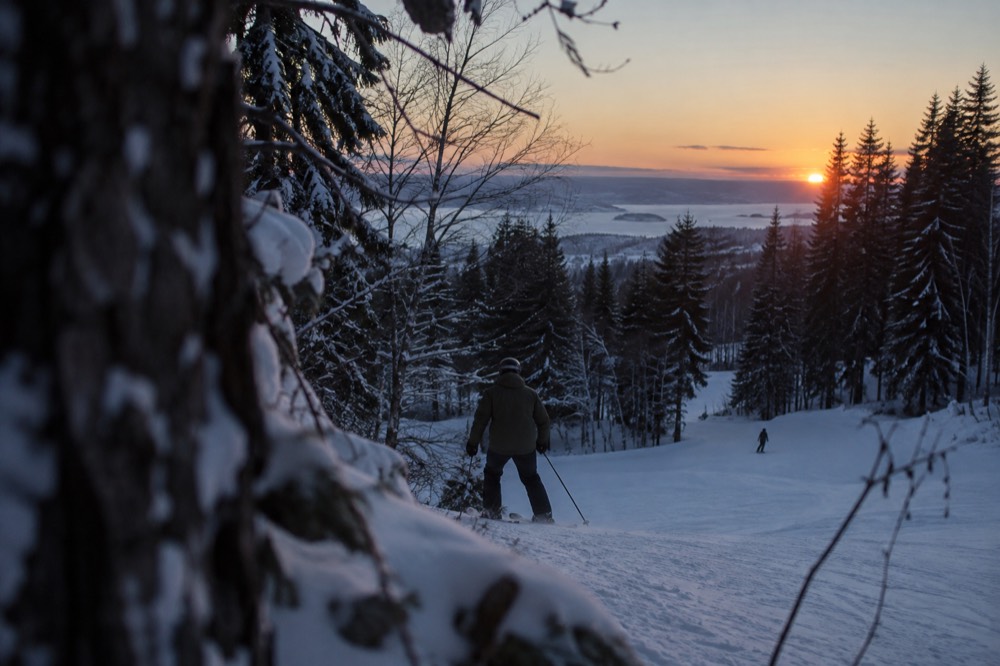
The evening floodlighting exists precisely because of this table. Locals ski after work in the dark all through January and February, and the lifts run into the evening on weekdays. For a visitor, a December ski morning pairs naturally with an indoor afternoon, and the Oslo in December guide builds that exact rhythm.
What Else Is Up There Besides Skiing?
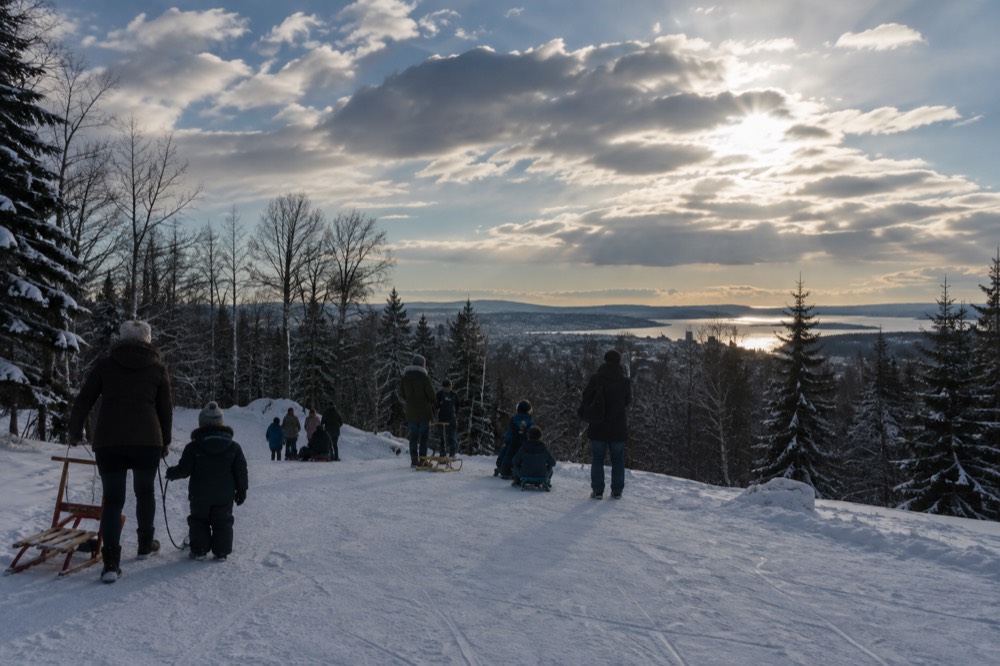
A lot, and much of it is free: the Korketrekkeren toboggan run drops from the Frognerseteren area back down toward the mid-station on a sledding route that is a public amenity rather than a ticketed attraction, the cross-country trail network runs for kilometers into Nordmarka on ordinary shoes or skis, and the Ski Museum and jump tower at Holmenkollen sit two metro stops downhill. The classic pattern is skiing or sledding up top, then the museum on the way back down.
Korketrekkeren is the memory-maker for families. You take Line 1 to Frognerseteren, rent a sled near the top, and glide down roughly two kilometers of groomed, banked run. The run is free or low-cost public use; check conditions on site, because it needs a proper base of snow to be safe. Metro Line 1 stops mid-route, so you can ride down to the bottom and take the train back up for another go.
The torchlit forest walk is the gentler alternative for evenings or non-skiing days. It runs about three and a half hours through the winter forest by torchlight and ends at a campfire, and it is the product that most directly delivers the Norwegian winter feeling to visitors who have never stood in a dark Nordic forest before.
For visitors combining a winter trip with the city's biggest cultural draw, Fram Polar Ship Museum and Kon-Tiki sit together on the Bygdøy peninsula and make the strongest full indoor day in the city when the weather closes the hill.
Is Oslo Winter Park Good with Kids?
Yes, and it is one of the more child-friendly winter setups in Europe: the children's area has its own lifts and gentle slopes, the learn-to-ski culture is native rather than bolted on, the toboggan run is a public highlight, and the metro ride itself is part of the fun, with the whole family riding inside one Ruter zone. Children under six travel free on Ruter, and the ski operator runs family pricing on passes and rental.
The thing to plan around is timing, again. Small children and a 15:11 sunset do not mix well in December; you want to be at the hill for the morning. Rental shops get busy from mid-morning on weekends, so arriving early buys you both the light and shorter queues.
| Family factor | What to expect |
|---|---|
| Children's area | Dedicated beginner lifts and slopes |
| Lessons | Group and private options, book ahead in season |
| Toboggan | Korketrekkeren run from Frognerseteren, free or low cost, bring or rent a sled |
| Transport | Line 1, zone 1 ticket, children under 6 free on Ruter |
| Indoor backup | Ski Museum and jump tower at Holmenkollen, 195 NOK adult |
The wider Oslo with kids guide covers the rest of the city's family offering, including the island ferries and the excellent free museums. And for families weighing whether Oslo works at all in the cold months, the honest answer is that the winter version of the city is the version Norwegian families themselves use most intensely.
What If the Weather Turns Bad?
On the days the hill closes or the fog sits on the ridge, the city bails you out: the metro runs you back down in 20 minutes, and Oslo's museum district absorbs a bad weather day better than most capitals, with Kon-Tiki, Fram and the National Museum all within a short radius and the Kon-Tiki entry ticket bookable in advance. Rough weather at altitude is normal, so build a plan B, not a cancellation.
Oslo's winter weather is variable by constitution. The city recorded 131 days with precipitation in the 13 months to August 2026, and a whiteout morning at Tryvann can be a clear blue afternoon, or the reverse. The operator posts lift status live, and Skiforeningen posts trail conditions, so check both on the morning before committing.
The strongest single indoor fallback is the Kon-Tiki Museum, which holds one of the best-reviewed museum tickets in the city.
A rainy-day structure, if you want one: morning at Kon-Tiki Museum, lunch, afternoon at National Museum Oslo for The Scream, all connected by transport you already hold tickets for. The rainy day in Oslo guide has the full version, and for the season when the dark closes in early, the evening myths and legends walk is a well-reviewed way to use the hours after the museums shut.
The last practical note, and the one worth repeating because it is where visitors lose money: the Oslo Pass covers the Vy local train to and from Oslo Airport Gardermoen, but not the Flytoget airport express. If you arrive, ski, and leave within 72 hours, the pass arithmetic, 580 NOK for 24 hours, 845 for 48, 995 for 72 against museum entries and transport, can cover most of a trip like this. The homepage of oslotravelguide.com walks through that calculation in full on the Oslo Pass pages.
A winter day at Tryvann, chosen well, is the most Oslo thing a visitor can book, a ski hill at the end of a metro line in a country that invented the sport as everyday transport. Pick your month for the daylight, take Line 1, and let the city handle the rest. If a guided format sounds safer than going alone, these three cover the ski experience, the forest evening and the best indoor fallback:
Common Questions About Oslo Winter Park
How do I get to Oslo Winter Park from central Oslo?
Take T-bane Line 1 toward Frognerseteren and get off at Voksenkollen for the ski area or Holmenkollen for the ski jump and museum. The ride takes about 30 minutes from the center and the entire metro network is inside Ruter zone 1, so an ordinary ticket or an Oslo Pass covers it.
Is Oslo Winter Park suitable for beginners?
Yes. The hill has dedicated beginner slopes and children's areas, a native learn-to-ski culture, and a bookable half-day Learn-to-Ski experience that includes equipment and instruction, with a perfect 5.0 rating across its review base.
When does Oslo Winter Park open for the season?
The season typically runs from late November or early December into April, with snowmaking on the lower slopes extending the reliable window. January through March is the core season, and March offers the best combination of full snow cover and longer daylight.
How much does Oslo Winter Park cost?
Lift passes and rental are priced per season by the operator, so check the current figure on the operator's own site. Transport is an ordinary Ruter zone 1 ticket, and the Ski Museum at Holmenkollen is 195 NOK for adults if you add it to the outing.
Can you sled at Oslo Winter Park without skiing?
Yes. The Korketrekkeren toboggan run starts near Frognerseteren and drops roughly two kilometers down the hill as a public amenity, free or low-cost, with sleds available to rent near the top. It needs a solid snow base, so check conditions on the day.
Is there enough daylight to ski in December?
Barely: Oslo gets 5 hours 53 minutes of daylight on 21 December, sunrise 09:18, sunset 15:11. Locals ski the floodlit evening slopes instead. For full daylight skiing, plan from mid-February onward, when days exceed nine hours.