Oslo Sauna Guide: Floating Baths, Winter Dips and How the Scene Works
Oslo took the Finnish sauna, floated it on the fjord, and pointed it at a winter skyline. Here is how the scene actually works, where the baths sit and how to plan a session you will not regret.
Short answer
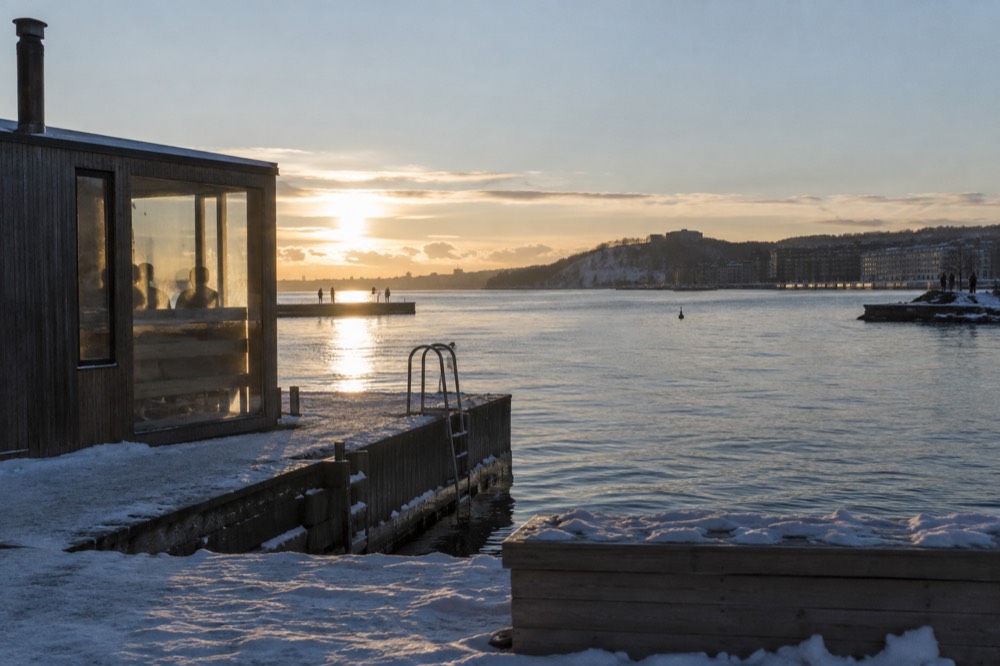
Oslo's sauna scene centers on floating baths at Sørenga, Tjuvholmen and the harbor edge, plus forest saunas near Nordmarka. Sessions are booked direct with each operator, winter dips in the Oslofjord run around 15 to 20 degrees Celsius in summer and far colder in winter, and no tour platform sells these sessions, so you book at the operator's own site.
Oslo does winter unusually well. The city sits at 59.91 degrees north, the sun is up for under six hours in late December, and the local answer to that is not to hide indoors but to get hot and cold on purpose. The sauna scene here has grown from a handful of harbor cabins into something genuinely local: floating baths you swim off directly into the Oslofjord, forest saunas at the edge of Nordmarka, and a culture that treats a winter dip as normal rather than extreme.
One thing to know before anything else: these saunas are sold direct by their operators. They do not appear on the booking platforms this site covers, so this page is editorial. There is no booking button for a sauna here, and any site offering you one is selling something the operators themselves do not list. Book at each operator's own site, and check the current session price there, because sauna pricing moves with the seasons and we do not publish a figure we have not verified.
What Exactly Is the Oslo Sauna Scene?
The Oslo sauna scene is a network of floating bathhouses and wood-fired cabins built on or beside the Oslofjord, where bathers alternate heat sessions with direct swims in the fjord, year-round and most intensely from October to March. It is a local wellness culture rather than a tourist attraction: most sessions are booked direct with the operator, many baths are members-only or mixed public, and the winter version, hot cabin, cold fjord, repeat, is the one the city is known for.
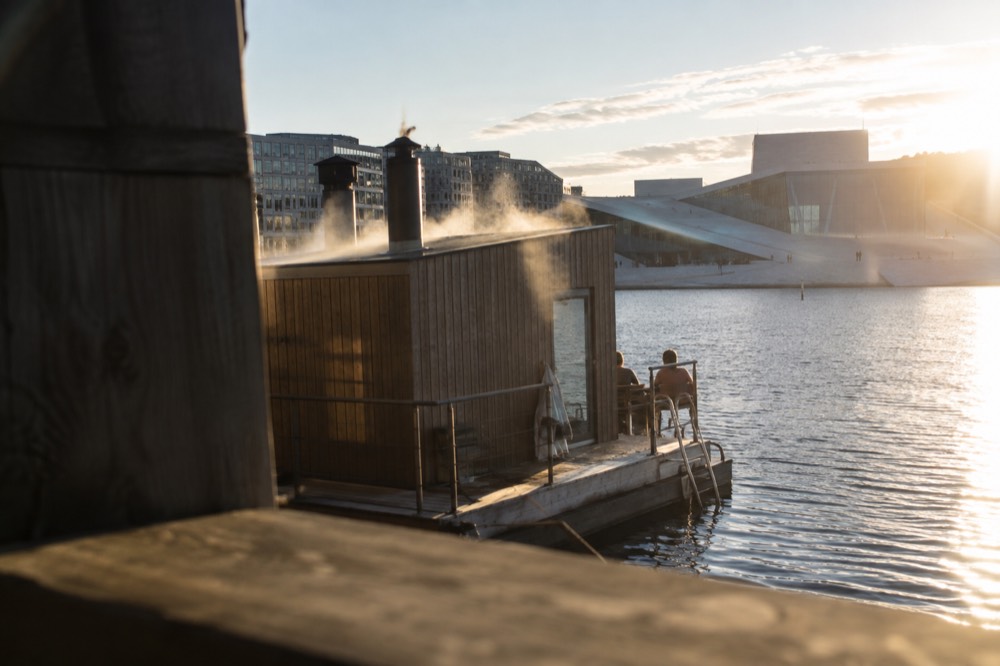
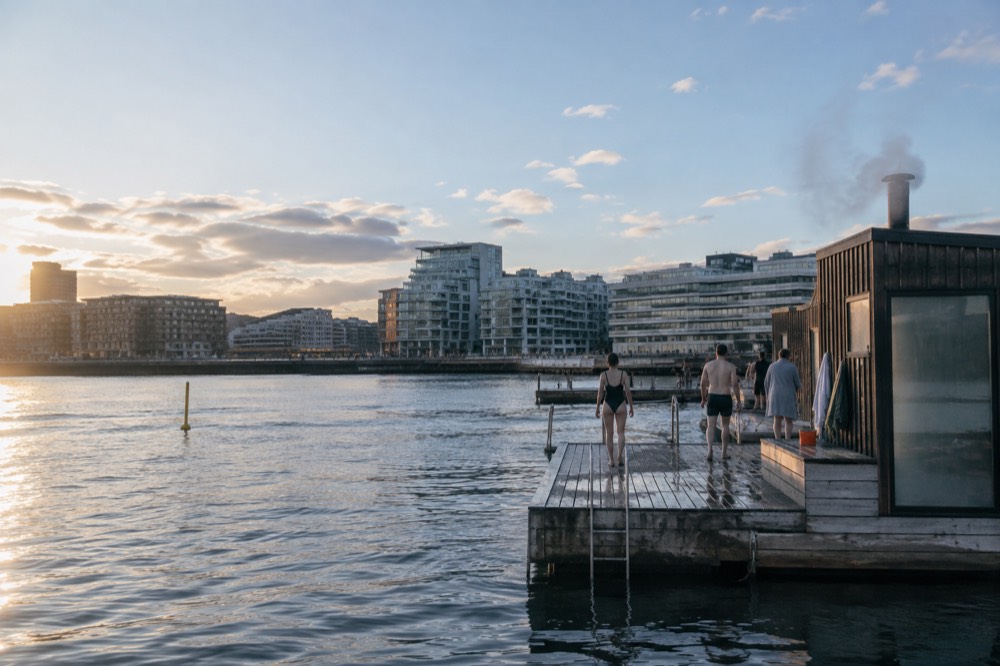
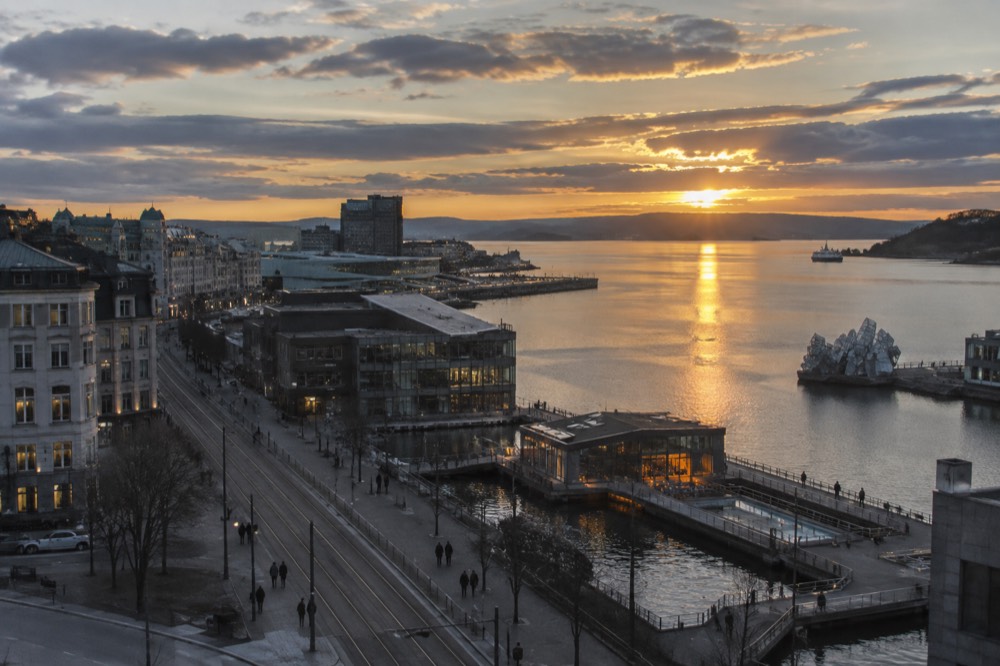
The scene clusters in a few places. Sørenga, the seawater pool district at the end of the Bjørvika waterfront, is the flagship: a purpose-built sauna and bathing complex sitting in the fjord itself. Tjuvholmen and Aker Brygge carry the harbor-edge baths with the Opera House skyline in view. Further out, forest saunas near Sognsvann and the Nordmarka edge pair heat with lake water instead of salt.
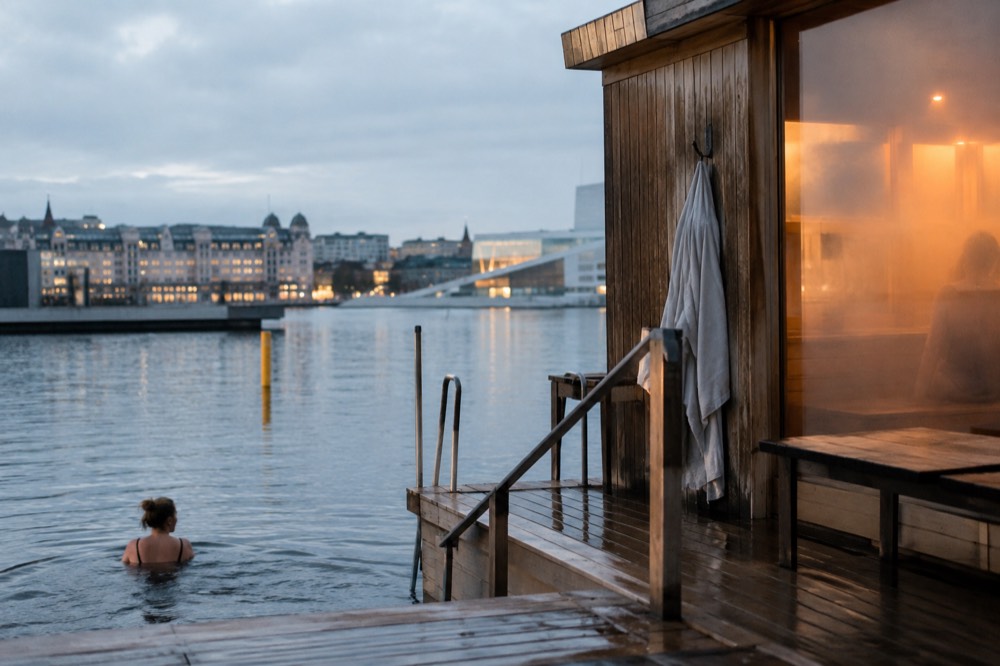
What makes it distinct from a spa visit is the water. You do not shuffle down a chlorine corridor; you open a door and jump into a fjord that sits somewhere between 15 and 20 degrees Celsius at the height of summer and a few degrees above freezing in deep winter. The contrast is the product. Locals will tell you the cold side is the part that matters.
Where Are Oslo's Main Saunas and Floating Baths?
The main concentrations are Sørenga at the Bjørvika waterfront, the harbor piers around Tjuvholmen and Aker Brygge, the island and beach baths reachable by ferry, and the forest saunas at the Nordmarka edge near Sognsvann. Each suits a different kind of visit: Sørenga for the full bathing complex, the harbor for skyline sessions between sightseeing, the islands for a half-day trip, and the forest for quiet and lake water. All are on public transport.
The practical geography matters more than the marketing. Sørenga sits at the far end of the Sørenga seawater promenade, walkable from the Opera House in about 20 minutes or a short tram ride from Oslo S. The harbor baths cluster around Tjuvholmen's beach and the Aker Brygge piers, both minutes from the city center and both genuinely swimmable, they are on VisitOSLO's own list of official bathing spots alongside Huk, Paradisbukta and Langøyene.
The island option is the one visitors miss. The Ruter island ferries from Aker Brygge run to Hovedøya, Gressholmen and Langøyene on an ordinary zone 1 ticket, and the islands carry their own swimming culture in summer. Our guide to the Oslo islands covers the ferry lines and what each island is actually like.
Here is how the areas compare for planning:
| Area | Setting | Water | Best for | Getting there |
|---|---|---|---|---|
| Sørenga | Purpose-built seawater pool and sauna complex | Oslofjord, salt | The full bathing day, first-timers | Tram or 20-minute walk from Opera House |
| Tjuvholmen / Aker Brygge | Harbor-edge floating baths | Oslofjord, salt | A session between sights, skyline views | Walk from city center |
| Hovedøya and the islands | Beach bathing, seasonal | Oslofjord, salt | Pairing a swim with a ferry trip | Ruter ferry from Aker Brygge |
| Sognsvann / Nordmarka edge | Forest cabins, wood-fired | Lake, fresh | Quiet, nature, autumn colors | Metro Line 5 to Sognsvann |
If you are deciding between a harbor session and a forest one, the honest split is this: the harbor is about the skyline and the social energy, the forest is about silence and birch smoke. Both are Oslo at its most Norwegian.
Which Sauna Should You Pick for a First Visit?
For a first visit, pick a harbor or Sørenga bath with public drop-in sessions rather than a membership cabin, because the public baths sell single sessions, run English-friendly routines and sit closest to where you are already staying. Choose Sørenga if you want the full complex with pools and jumping platforms, and the harbor baths if you want a short, intense session slotted between the Opera House and dinner. Forest saunas are a superb second visit, not a first.
The reason is purely practical. The public floating baths run bookable time slots through their own websites, with towels, changing rooms and a routine the staff will explain. Membership saunas, of which Oslo has several, expect you to know the etiquette already, and some are resident-only. Drop-in is the visitor's friend.
Etiquette is simple and strict: swimwear is required at the public baths (this is not a Finnish-style nude sauna culture), you rinse before entering, you sit on your towel, and you keep the door closed. The cold-water plunge is done briskly, not theatrically. Sessions usually run in blocks of an hour or two; check the operator's site for the current slot structure before you commit to a day around it.
One planning note that saves disappointment: the most popular winter slots, weekend evenings with aurora-dark skies and lit cabins, fill up first. Book those days ahead. Midweek mornings are the quiet alternative, and the fjord is exactly as cold.
Can You Really Swim in the Oslofjord in Winter?
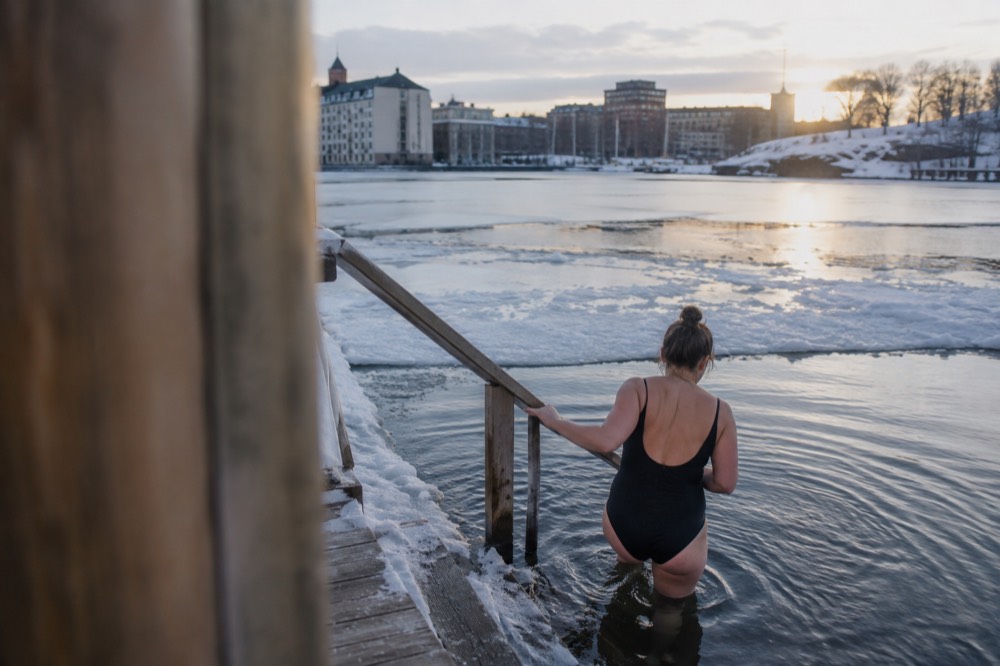
Yes, and it is the entire point of a winter sauna in Oslo. The Oslofjord drops to a few degrees above freezing in January and February, and bathers alternate hot cabin sessions with short dips in that water, typically a minute or less per dip. It is safe for healthy adults in the structured setting of a floating bath, where ladders, railings and staff are designed for exactly this, and the contrast is what the whole scene is built around.
The water temperature story is worth understanding before you stand on the edge. In July and August the fjord typically sits at 15 to 20 degrees Celsius, which is cool but genuinely pleasant. By late autumn it has fallen sharply, and through the Oslo winter it hovers just above freezing. MET Norway's official 1991 to 2020 normals put Oslo's January mean air temperature at minus 2.3 degrees Celsius (about 8 degrees Fahrenheit), and the water tracks close to that once the cold sets in.
The trick nobody needs to tell you twice: the sauna is the easy half. The dip is a shock for about ten seconds, then a strange calm, then a rush that lasts the rest of the evening. Locals treat it as the city's native antidepressant. Do it once and you will understand why the floating baths multiplied.
How Cold and Dark Is Oslo When You Would Be Doing This?
Oslo's winter is the reason the sauna scene exists: on 21 December the sun rises at 09:18 and sets at 15:11, just 5 hours 53 minutes of daylight, against 18 hours 50 minutes on 21 June. Air temperatures average minus 2.3 degrees Celsius in January and 17.7 in July, and August, not November, is the wettest month at 103 mm on the official normals. A sauna plan should be built around that light budget, not around it.
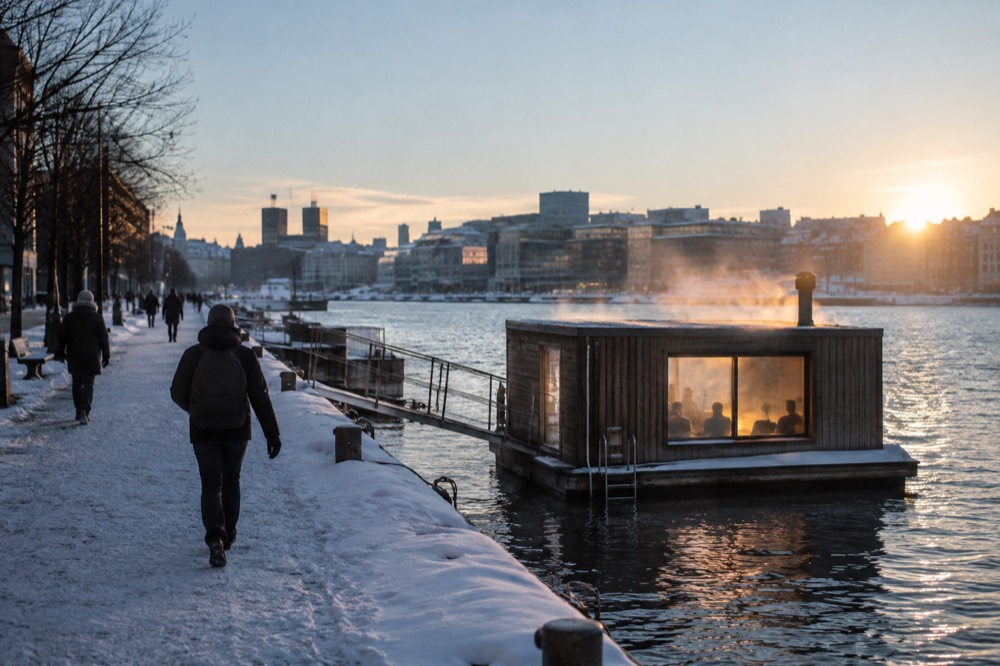
The daylight swing at this latitude is the single most under-planned fact about an Oslo trip. The same city that gives you twilight at midnight in June gives you a 15:11 sunset in December. That is not a reason to avoid winter, it is the reason the sauna-and-dip culture is at its best then: the baths are warm, the water is bracing, and the darkness over the fjord is the setting rather than the problem.
Here is the year in numbers, from MET Norway's normals for the Blindern station and its sunrise data:
| Month | Mean air temp | Typical daylight feel | Fjord water |
|---|---|---|---|
| Jan | −2.3 °C | 6 h 45 m of light mid-month | A few degrees above freezing |
| Mar | 1.3 °C | 11 h 45 m mid-month | Very cold, first thaw |
| Jun | 15.3 °C | 18 h 50 m at solstice, no true darkness | Warming toward summer |
| Jul | 17.7 °C | Long evenings, sunset 22:43 at peak | Typically 15–20 °C |
| Aug | 16.5 °C | Wettest month, 103 mm normal | Peak warmth, late-season swims |
| Oct | 6.6 °C | 10 h 13 m mid-month | Cold, shoulder season |
| Dec | −1.4 °C | 5 h 53 m at solstice | Near freezing, sauna prime time |
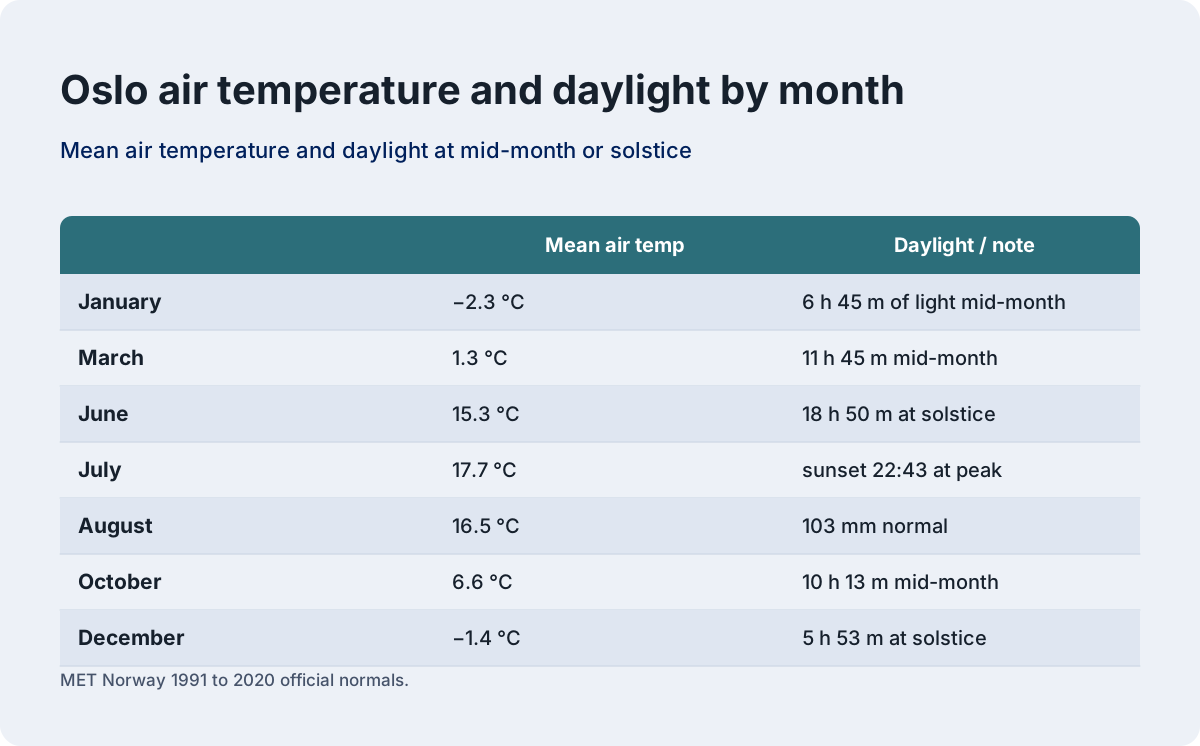
There is no midnight sun in Oslo; that belongs above the Arctic Circle. What late June gives you instead is a deep twilight that never reaches proper darkness, which makes an evening harbor session a completely different experience from the December version. Pick your month, and you are picking your sauna.
What Should You Bring to a Sauna in Oslo?
Bring swimwear, two towels (one to sit on, one to dry with), flip-flops or similar for the wet decks, and a warm layer for afterwards, because the afterglow is where you will get cold if you do. Most public baths rent towels, but relying on that in winter is a gamble. Skip your phone for the dip itself, bring a water bottle, and use the lockers provided rather than dragging valuables onto the deck.
The two-towel rule is the one that marks a first-timer. Norwegian sauna etiquette expects you to sit on your own towel, both for hygiene and because the benches are shared. A quick-dry towel for the deck and a dry one for after is the standard kit, and in winter the walk from cabin to changing room is short but genuinely cold on wet skin.
Footwear matters more than you would think. Floating baths have wet, sometimes icy timber decks and metal grilles, and bare feet in January are a fast way to end the evening early. Wool socks for the lounge, sandals for the deck, and something with grip if there has been snow.
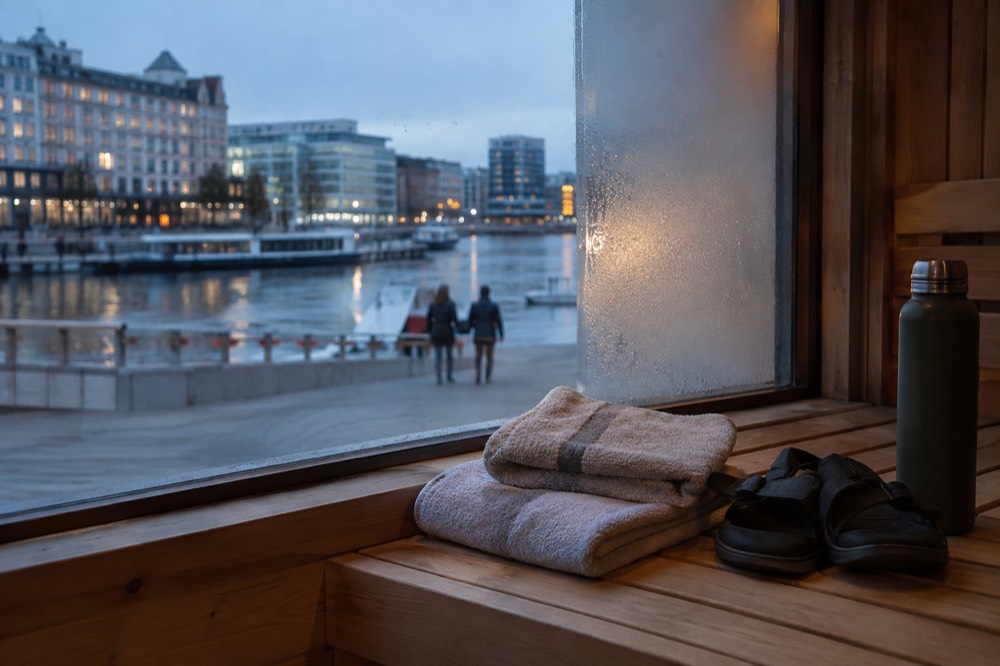
A simple session kit, and what each item is actually for:
| Item | Why it matters |
|---|---|
| Swimwear | Required at the public baths; this is not a nude-sauna culture |
| Two towels | One to sit on inside, one to dry off with after |
| Sandals or slides | Wet and sometimes icy decks between cabin and water |
| Warm layer | The post-session afterglow cools fast in winter air |
| Water bottle | You sweat more than you expect across multiple rounds |
| Small dry bag | Keeps phone and keys out of splash range on the deck |
If you are pairing the sauna with a swim at Sørenga or a walk along the waterfront, our Oslo winter packing guide goes deeper on layers, and the free things to do in Oslo page covers the parts of the same waterfront that cost nothing.
Is the Oslo Sauna Scene Expensive?
Honest answer: a sauna session sits in the middle of Oslo's price range, cheaper than a restaurant dinner and more expensive than a museum ticket, and the swimming itself is free. Norway is the sixth most expensive country in Europe on Statistics Norway's 2025 survey, with household prices 28.6 percent above the EU average, but the sauna scene is one of the corners of the city where the money buys something locals genuinely pay for too.
For scale, verified full-price adult entries around the city run 180 NOK at the Fram Museum, 200 NOK at Norsk Folkemuseum and 280 NOK at MUNCH. A sauna session is a similar order of spending, and like museum entries it is bought direct rather than through any tour platform. Session prices vary by operator, slot length and season, so check the operator's own booking page for the current figure rather than trusting a number printed in a guide, including this one.
The free layer is real and worth saying loudly. The Oslofjord is public water. Sørenga's seawater pool, the Tjuvholmen beach, Huk and Paradisbukta are all free, open, public bathing spots on VisitOSLO's own list. You can swim in the same water the floating baths charge for, from the same harbor, at no cost. What you pay for at a bath is the heat, the cabin, the safety structure and the ritual.
Where the money genuinely goes in Oslo is alcohol and restaurants: Statistics Norway's comparison puts food 33 percent above the European average and alcohol and tobacco at more than double. The sauna is the indulgence that does not carry that markup. Our is Oslo expensive breakdown covers the full picture, and the Oslo on a budget guide builds a cheap day around exactly this kind of free-water, paid-heat structure.
When Is the Best Time of Year for a Sauna in Oslo?
October through March is the true sauna season, because the cold water is the point and the contrast is at its sharpest. December and January add the darkest skies and the most atmospheric sessions, with the sun setting before 15:30. Summer sessions still work, the fjord reaches 15 to 20 degrees and the cabins run, but the scene is a warm-weather pleasure then rather than the winter ritual it is famous for.
Deep winter has one planning catch: the light budget. In late December you have under six hours of daylight, so an evening session happens in full dark, which is either the whole appeal or a disorienting surprise depending on what you expected. Late autumn, October and November, splits the difference: cold water, reasonable light, and the baths fully running.
Spring is the connoisseur's slot. March air averages 1.3 degrees Celsius, the snow is still on the decks, and the light comes back fast, over 11 hours by mid-month. It is the month where you get winter water and a walk home in daylight.
Season by season, what you are actually signing up for:
| Season | Water | Light | The session |
|---|---|---|---|
| Dec-Feb | Near freezing | Under 6–8 h of daylight | The full ritual: dark skies, hot cabin, sharp dips |
| Mar-Apr | Very cold | Returning fast, 11–14 h | Winter water with daylight on the walk home |
| May-Sep | Warming to 15–20 °C | Long, bright evenings | Social swims, gentler contrast |
| Oct-Nov | Cooling hard | 10 h down to 8 h | Shoulder season, quiet decks, first cold snaps |
Whenever you go, book the popular slots ahead, and if you want the winter version, plan around the best time to visit Oslo rather than assuming July logic applies in January.
What Else Pairs Well with a Sauna Day?
The strongest pairings are the ones that use the same water and the same cold: a fjord cruise before a session, a walk on the Opera House roof at sunset, an island ferry trip with a swim stop, or a winter forest walk with a campfire. The sauna sits naturally at the end of a cold-weather day rather than the start, and the harbor baths are close enough to the city's main sights that you can slot a session between them without replanning anything.
The fjord pairing is the obvious one. The same water you dip into is the city's best sight, and the silent electric boat cruise covers it with an audio guide and a quiet hull, a genuinely calm hour and a half that ends within walking distance of the harbor baths. It is the single best-reviewed activity in Oslo on either major platform, and it makes a natural pre-sauna warm-up in the literal sense.
The island pairing goes further afield. The ferry-and-foot island hopping tour turns the Oslofjord into a half-day of walking, ruins and beaches, ending back at Aker Brygge with the harbor baths a few minutes away. On a summer day that sequence, islands, swim, sauna, dinner, is close to a perfect Oslo itinerary.
And for deep winter, the torchlit forest walk with a campfire is the inland counterpart: three and a half hours of lit trails and fire in Nordmarka, the same slow-heat, cold-air logic as the sauna but in the forest instead of on the fjord. Our Oslo hiking guide and the Nordmarka overview cover the trails themselves.
Common Questions About Oslo Saunas
Can you book an Oslo sauna in advance?
Yes, and in winter you should. The public floating baths sell timed sessions through their own websites, and weekend evening slots in the dark season fill first. Book direct with the operator; no tour platform carries these sessions.
Do you wear swimwear in Oslo saunas?
Yes. The public baths require swimwear; this is not a Finnish-style nude sauna culture. Bring a towel to sit on, rinse before entering, and keep the cabin door closed behind you.
Is winter swimming in the Oslofjord safe?
In the structured setting of a floating bath, yes, for healthy adults. The baths are built for exactly this, with ladders, railings and staff. Keep dips short, a minute or less in near-freezing water, and warm up in the cabin between rounds.
How cold is the Oslofjord in winter?
The fjord sits a few degrees above freezing in January and February. In summer it typically reaches 15 to 20 degrees Celsius. The contrast between the hot cabin and the cold water is the entire point of the ritual.
Is swimming in Oslo free?
Yes, in the fjord itself. Sørenga's seawater pool, Tjuvholmen, Huk and Paradisbukta are free public bathing spots. What you pay for at a floating bath is the sauna, the structure and the warm-up between dips.
When is sauna season in Oslo?
October to March is the true season, when the water is cold enough for the ritual to bite. Sessions run year-round, but the dark, cold months are what the scene is built around.
The sauna is the warmest thing Oslo does with its coldest months, and it is one of the few experiences here that locals and visitors pay the same price for the same pleasure. Plan the light, respect the cold water, book the cabin direct, and let the rest of the day arrange itself around it. More planning help lives on Oslo Travel Guide, including the one day in Oslo itinerary if the sauna is slotting into a bigger plan.