Oslo Facts: The Numbers, History and Quirks That Shape the City
Oslo is a capital where the facts surprise people: 5 hours 53 minutes of daylight in December, a Viking museum that has been shut since 2021, and a price level that is high in some corners and ordinary in others. Here are the numbers, checked against primary sources.
Short answer
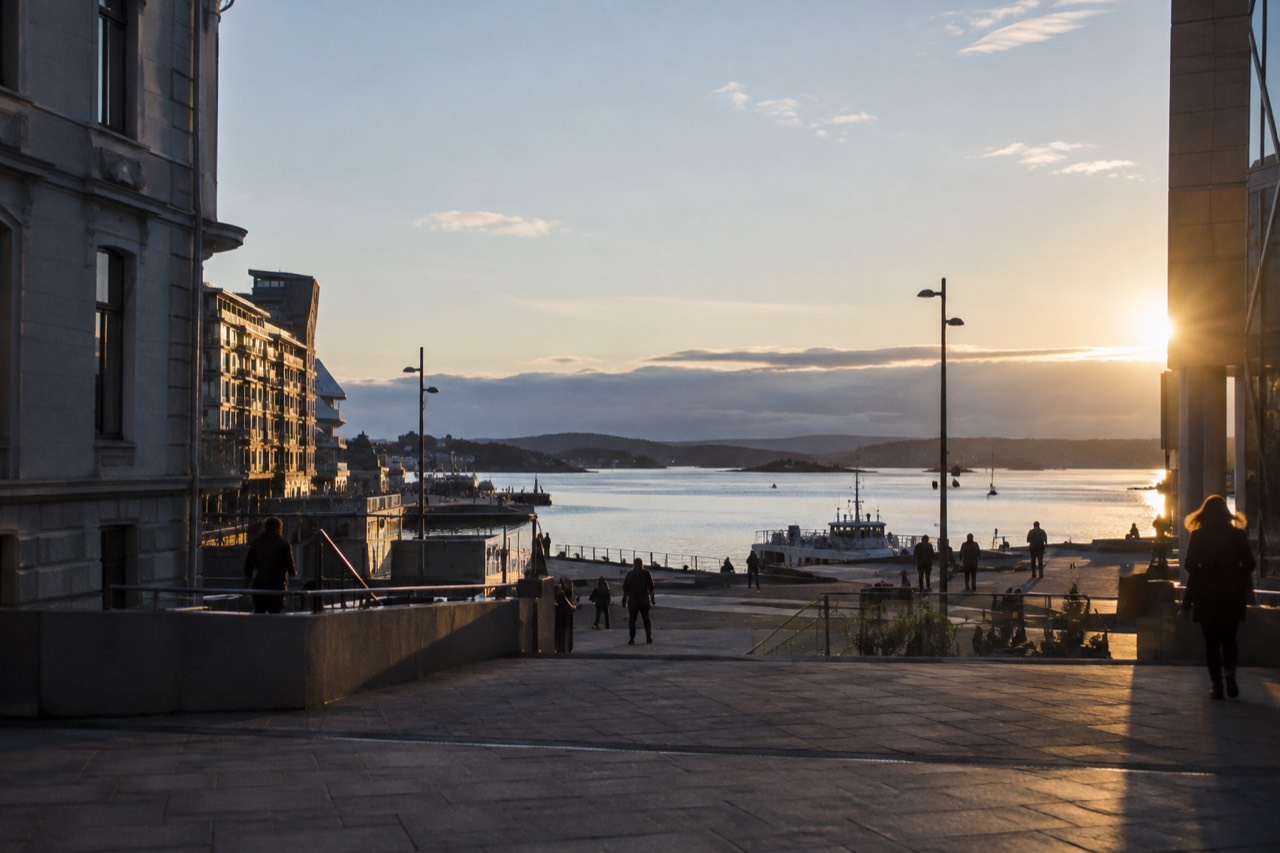
Oslo is Norway's capital and largest city, sitting at 59.91 degrees north on the Oslofjord. Its daylight swings from 5 h 53 m in December to 18 h 50 m in June, August is its wettest month, and the city ranks among Europe's most expensive for alcohol while its museums, transport and outdoors stay comparatively affordable.
The most useful Oslo facts are rarely the ones on the postcards. The city's official tourism material sells fjord light and Munch, but the numbers that actually change a trip are things like a daylight swing that triples between December and June, a state alcohol monopoly that closes on Sundays, and a museum closure that thousands of visitors still walk into expecting to find open. This page collects the verified figures, the historical turning points and the quirks that shape how the city works, all checked against primary sources rather than recycled from other guides.
Oslo rewards travelers who understand its scale. It is a capital spread across a large area, threaded with water and forest, and organized around a fjord that functions as a working transit route, a swimming destination and a sightseeing corridor all at once. Once you know the underlying numbers, decisions like whether to buy an Oslo Pass, how many days to stay, and which month to visit become much easier to make.
What Are the Basic Facts About Oslo?
Oslo is the capital and largest city of Norway, the seat of government and the country's economic center, located at the head of the Oslofjord at 59.91 degrees north. The municipality holds a population comfortably larger than any other Norwegian city, with a wider metropolitan region well beyond that, making it one of the largest cities in the Nordic region by area even though its population is modest for a capital.
Norway itself sits in an unusual position in Europe, and every visitor touches it at some point. Norway is in the Schengen Area but is not a member of the European Union: it is an EFTA state and a party to the EEA Agreement, participating in Schengen through a separate association agreement. Practically, that means no routine passport checks crossing from another Schengen country, duty-free allowances applying even when arriving from EU countries, and VAT refunds being available to non-resident visitors on qualifying purchases. The currency is the Norwegian krone (NOK), not the euro, and euros are not generally accepted in shops.
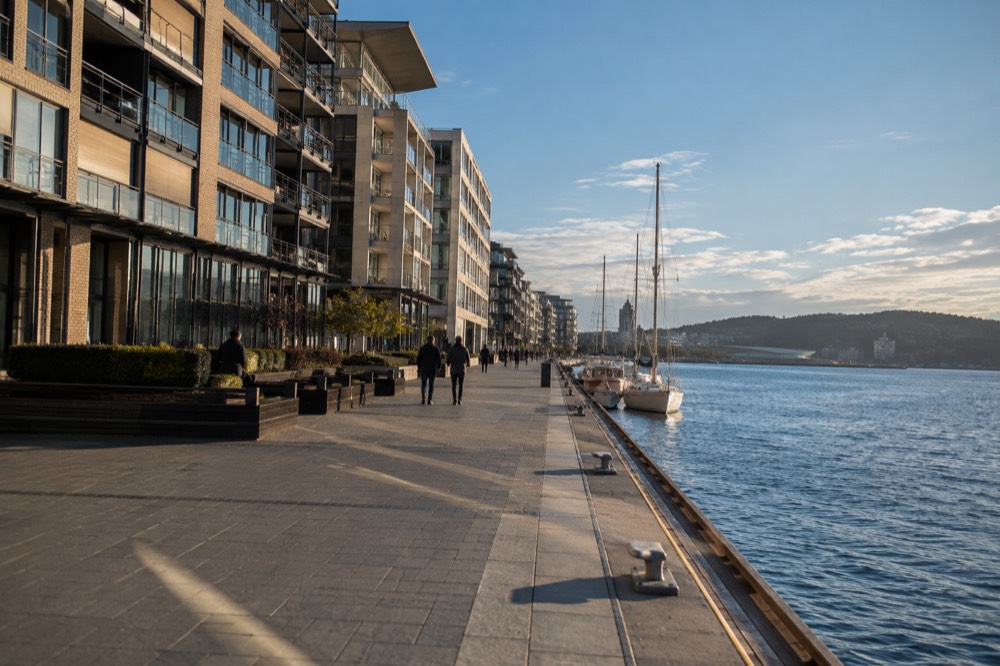
The city's geography explains a great deal of its character. Oslo wraps around the northernmost arm of the Oslofjord, with forested hills rising directly behind the built-up areas; the marked trail network of Nordmarka begins practically at the last metro stop. The city center is compact and walkable, while the municipality as a whole covers a huge land area for its population, which is why the metro, tram and ferry network matters more here than in most European capitals of similar size. Our page on getting around Oslo covers that system in detail.
A few structural facts worth knowing before anything else:
| Fact | Figure |
|---|---|
| Status | Capital of Norway, seat of the Storting (parliament) |
| Latitude | 59.91 N |
| Currency | Norwegian krone (NOK) |
| EU membership | None; EEA/EFTA member, Schengen participant |
| Language | Norwegian; English near-universal in service roles |
| Coldest normal month | January, mean −2.3 °C |
| Warmest normal month | July, mean 17.7 °C |
How Extreme Is Oslo's Daylight Through the Year?
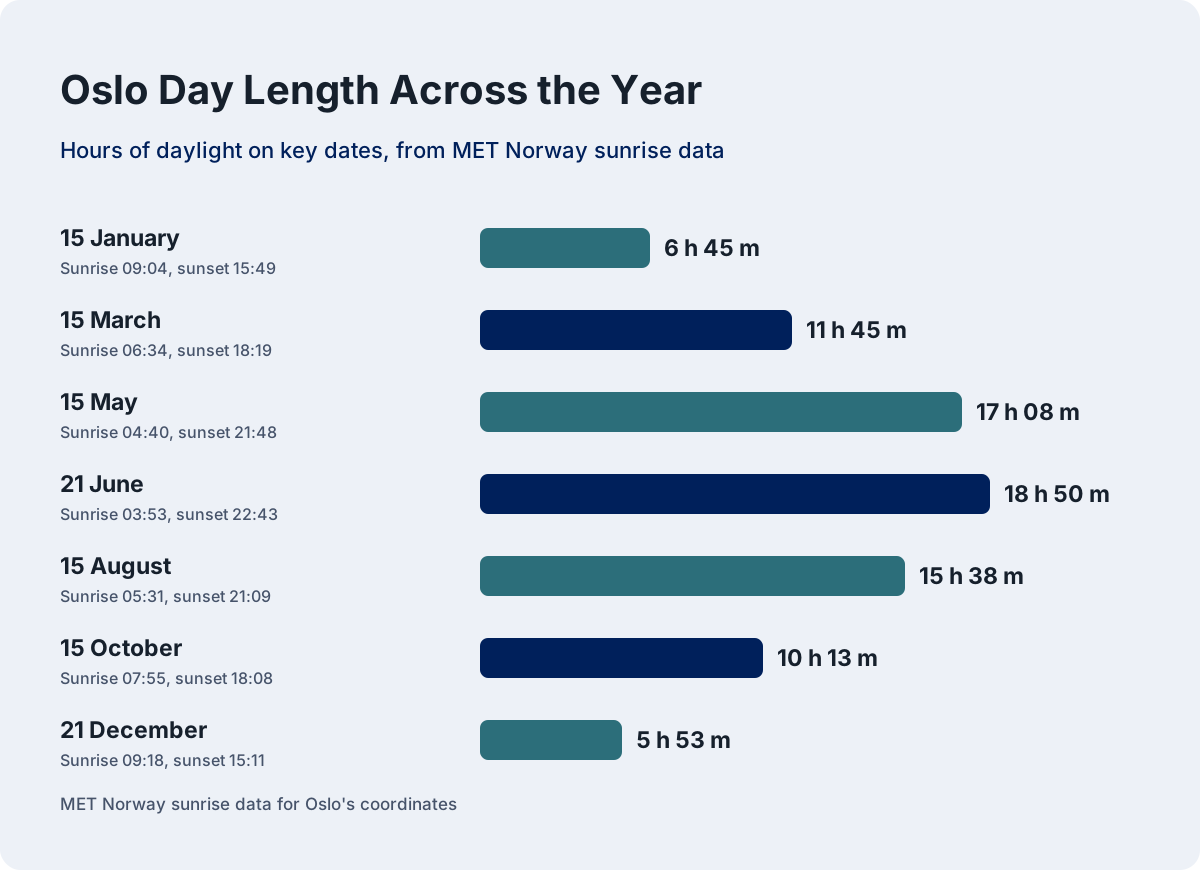
Oslo's day length swings from 5 hours 53 minutes on 21 December to 18 hours 50 minutes on 21 June, a factor of more than three, and in late June the sky never reaches true darkness. The sun rises at 03:53 and sets at 22:43 at midsummer, while at midwinter it rises at 09:18 and sets at 15:11, before most people have finished work.
These figures come from MET Norway's sunrise data for the city's coordinates, and they are the single most under-explained planning fact about Oslo. In practical terms, a June visit gives you evenings that stretch usefully past 22:00, ideal for late fjord trips and long walks, while a December visit compresses all sightseeing into a narrow window between mid-morning and mid-afternoon. Museums, not evening strolls, are the December activity.
There is no midnight sun in Oslo. That phenomenon requires latitude north of the Arctic Circle at roughly 66.5 N, and Oslo sits nearly seven degrees south of it. What late June offers instead is deep twilight through the small hours rather than true night, which is why curtains matter in summer hotel rooms. Our Oslo daylight hours page carries the full month-by-month table if you are choosing travel dates around light.
| Date | Sunrise | Sunset | Day length |
|---|---|---|---|
| 15 January | 09:04 | 15:49 | 6 h 45 m |
| 15 March | 06:34 | 18:19 | 11 h 45 m |
| 15 May | 04:40 | 21:48 | 17 h 08 m |
| 21 June | 03:53 | 22:43 | 18 h 50 m |
| 15 August | 05:31 | 21:09 | 15 h 38 m |
| 15 October | 07:55 | 18:08 | 10 h 13 m |
| 21 December | 09:18 | 15:11 | 5 h 53 m |
One related fact that trips people up: the aurora is genuinely rare at this latitude. The auroral oval only reaches Oslo during strong geomagnetic storms, a handful of times a year at best, and there are no northern lights tours from Oslo because there is no product to sell. Tromsø, far above the Arctic Circle, is the honest destination for that, and our northern lights in Oslo page explains the reality plainly.
What Is Oslo's Weather Actually Like?
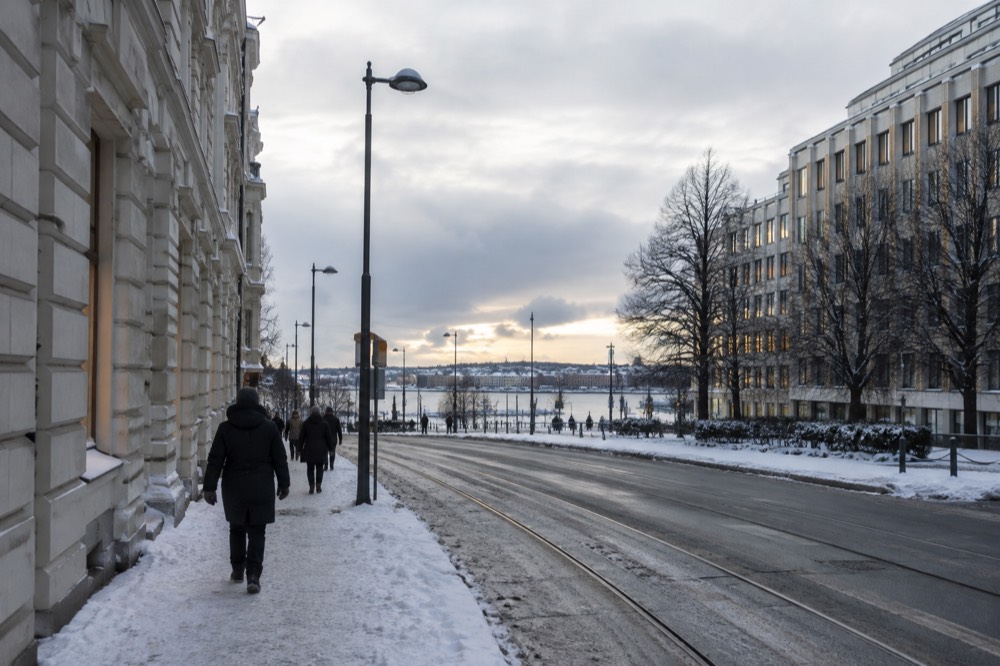
Oslo's normal July mean temperature is 17.7 °C, mild rather than hot, and its January mean is −2.3 °C, cold but not Arctic; the surprise is that August, not November, is the city's wettest month on the 1991 to 2020 normals, at 103 mm of precipitation against November's 85 mm.
MET Norway's standard normals for the Blindern station in Oslo give the full picture: a genuinely four-season climate with warm summers, cold winters and no monsoon-style wet season, but with precipitation spread fairly evenly and peaking in late summer. Recent observed data confirms the range is real, with a high of 32.9 °C recorded in July 2026 and a low of −17.2 °C in January 2026.
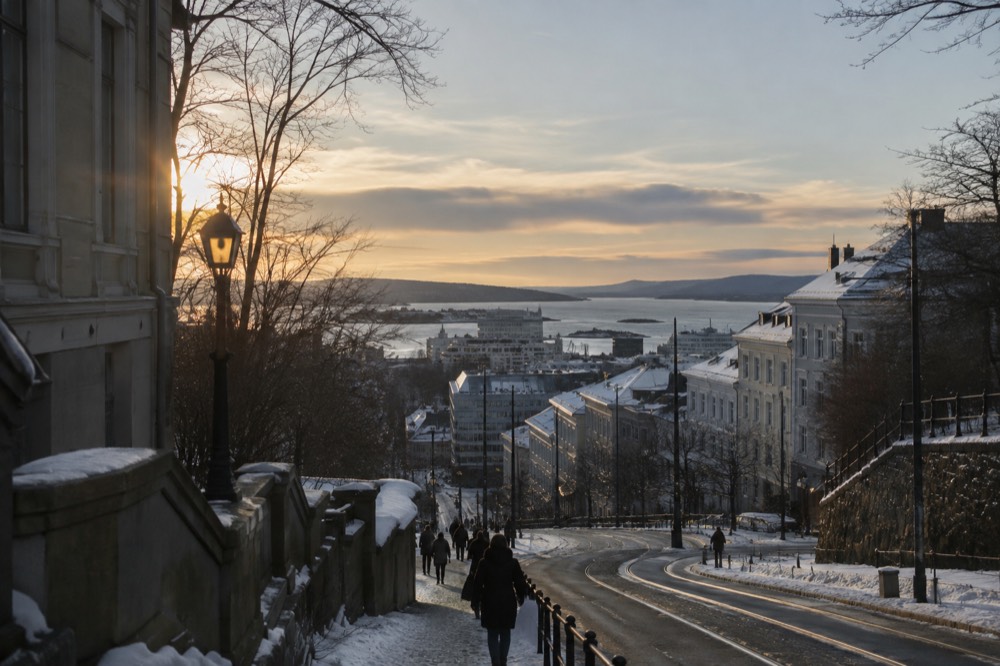
What this means for packing is straightforward. Summer visitors need layers for evenings that cool quickly off the water, and a rain layer for August in particular. Winter visitors need real insulation, proper shoes for ice, and a plan built around indoor attractions for the afternoons, since daylight runs out shortly after 15:00 in the deepest weeks. The Oslo weather by month guide carries the full monthly breakdown.
| Month | Normal mean temp | Normal precip |
|---|---|---|
| January | −2.3 °C | 58 mm |
| March | 1.3 °C | 41 mm |
| May | 11.4 °C | 60 mm |
| July | 17.7 °C | 87 mm |
| August | 16.5 °C | 103 mm |
| October | 6.6 °C | 93 mm |
| December | −1.4 °C | 54 mm |
How Expensive Is Oslo, in Real Numbers?
Norway is the sixth most expensive country in Europe on Statistics Norway's 2025 price-level survey, with household prices 28.6% above the EU average, food 33% above, and alcohol and tobacco more than double the European average; museums, public transport and the outdoors are where Oslo is not unusually expensive at all.
That last clause matters as much as the headline. A beer in a bar stings because alcohol is genuinely more than double the EU average, and Vinmonopolet, the state monopoly, is the only place to buy wine and spirits, closed every Sunday and public holiday with early Saturday closing. But the MUNCH museum costs 280 NOK, the Fram and Kon-Tiki museums each cost 180 NOK, a 30-day zone 1 transit pass costs 655 NOK after the May 2026 cut, and Vigeland Park, the Opera House roof and the entire swimming and hiking network cost nothing. The honest framing is not "Oslo is expensive" but "Oslo is expensive in the corners Norway taxes heavily, and ordinary everywhere else."
The cost axis has a second layer worth knowing: alcohol sales rules. Supermarkets sell beer and cider only up to 4.7% ABV, with a legally mandated evening cut-off, and everything stronger belongs to Vinmonopolet. Visitors who want a drink with dinner without restaurant markups buy at the airport duty-free on arrival, which is exactly why the arrivals shop is busy. Our is Oslo expensive and Oslo trip cost pages break the budget down line by line.
What Is the Story of Oslo's Name and History?
Oslo is a medieval city that became Norway's capital in the early 14th century under King Håkon V, was destroyed by fire and rebuilt as Christiania under the Danish crown, and only regained the name Oslo in the 20th century, after the union with Sweden ended, making it one of very few European capitals to be renamed in the modern era.
The renaming is the fact visitors find hardest to believe. For three centuries the city was Christiania, then Kristiania under Norwegian spelling reform, and the switch back to the old medieval name was a deliberate act of national identity in the young independent Norwegian state. The medieval city's ruins still sit at the end of the Oslofjord's inner harbor, preserved as a park beside Akershus Fortress, which itself dates to the late 13th century and guards the harbor entrance to this day. Other pages covering the same trip are gathered on Oslo Travel Guide. Other pages covering the same trip are gathered on Oslo Travel Guide.
The city's modern growth is a postwar story. Oslo absorbed the surrounding municipality of Aker, roughly doubling its area, which is why the city today includes deep forest and lakes within its official boundaries, a rarity among capitals. The 1952 Winter Olympics were held here, leaving Holmenkollen as the lasting venue, and the waterfront transformation of Bjørvika and Tjuvholmen in recent decades moved the city's face back toward the water with the Opera House and MUNCH as its anchors. Our Oslo history page carries the full timeline.
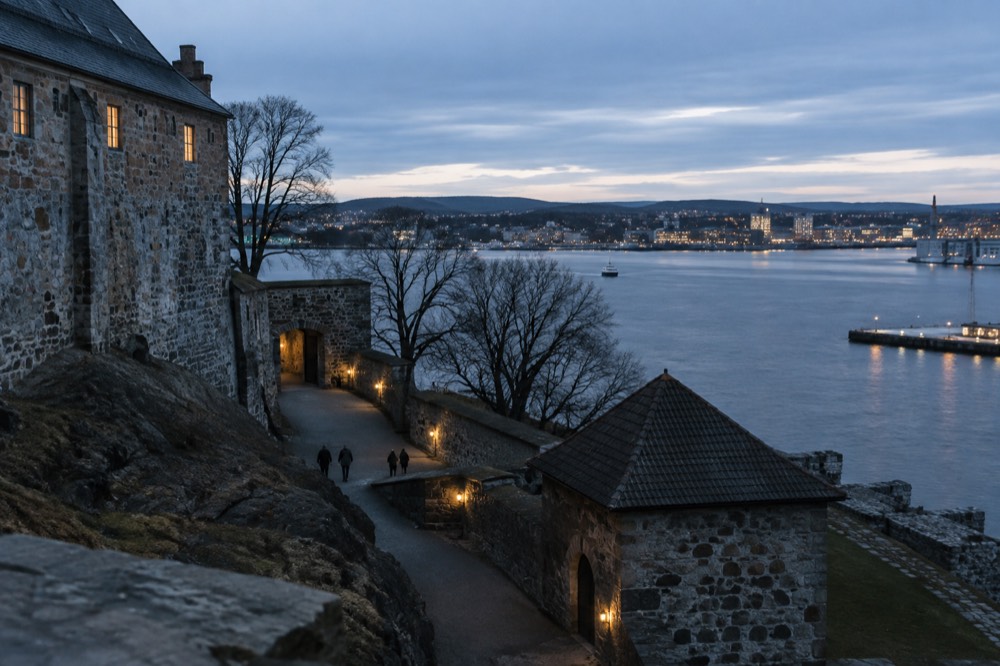
That waterfront is also where the city's history is most visible in a single glance: the medieval fortress at one end, the 17th-century grid of the rebuilt city center behind it, and the contemporary architecture of the Opera House and MUNCH at the other. Walking the harbor edge from Akershus to Bjørvika covers several centuries of the story in about half an hour.
Which Oslo "Facts" Do Most Guides Get Wrong?
The most common errors are that the Oslo Pass covers all airport trains (it covers Vy's, not Flytoget's), that the Viking museum is open (it has been closed since 2021), that November is the wettest month (August is), and that the Bygdøy ferry and the island ferries are one system (they are two different operators with two different ticket rules and two different piers).
Each of these is verified against a primary source, and each one costs a real traveler real money or time. The Flytoget error is the most expensive: the airport express costs 268 NOK one way, while the Vy train, covered by the Oslo Pass and about 3 minutes slower, is the option most guides fail to explain. The Viking museum error sends thousands of visitors a year to a closed building; the official wording is that it "will reopen as the Museum of the Viking Age in 2027," with no month confirmed, and Viking Planet is the honest substitute in the meantime.
The two-ferry confusion is the most geographically annoying. The Bygdøy museum ferry departs Rådhusbrygge 3, runs seasonally from mid-March to early October, does not accept Ruter tickets, and is included with the Oslo Pass. The island ferries to Hovedøya, Gressholmen and Langøyene depart Aker Brygge, run as ordinary Ruter lines, and ride on a normal transit ticket. Swapping the piers, or assuming one ticket covers both, is how a museum day goes wrong. Our Oslo ferries page separates the systems properly.
| Common claim | Reality |
|---|---|
| The Oslo Pass covers the airport train | Only the Vy train; Flytoget costs 268 NOK separately |
| The Viking Ship Museum is open | Closed since 2021; reopens as the Museum of the Viking Age in 2027 |
| November is Oslo's wettest month | August is, at 103 mm on the 1991-2020 normals |
| Bygdøy and island ferries are one system | Different operators, piers and ticket rules |
| Norway uses the euro | The krone (NOK); euros not generally accepted |
| Oslo has midnight sun in summer | No; 59.91 N is far south of the Arctic Circle |
How Does the Oslofjord Shape the City?
The Oslofjord is the reason Oslo exists where it does, and it functions as the city's transit corridor, swimming area, sightseeing route and island network at once, with ordinary public transport ferries reaching a dozen islands on a standard ticket in summer.
The fjord's northern arm cuts into the city from the south, and nearly everything a visitor does touches it: the Opera House sits on its edge at Bjørvika, the museum peninsula of Bygdøy shelters its western shore, and the swimming beaches of Huk and Paradisbukta face it from the west while Sørenga's seawater pool sits on its eastern flank. Water temperatures in July and August typically run 15 to 20 °C, cool but genuinely swimmable, which surprises visitors expecting Arctic water.
The islands are the fjord's best-kept everyday secret. Hovedøya, a short ferry hop from Aker Brygge, holds the ruins of a Cistercian abbey; Langøyene is the swimming and camping island; Gressholmen and the smaller islets around it feel like a different region despite being inside the city limits. All of it rides on the ordinary Ruter ticket network. Our Oslo islands page covers the full island-by-island picture.
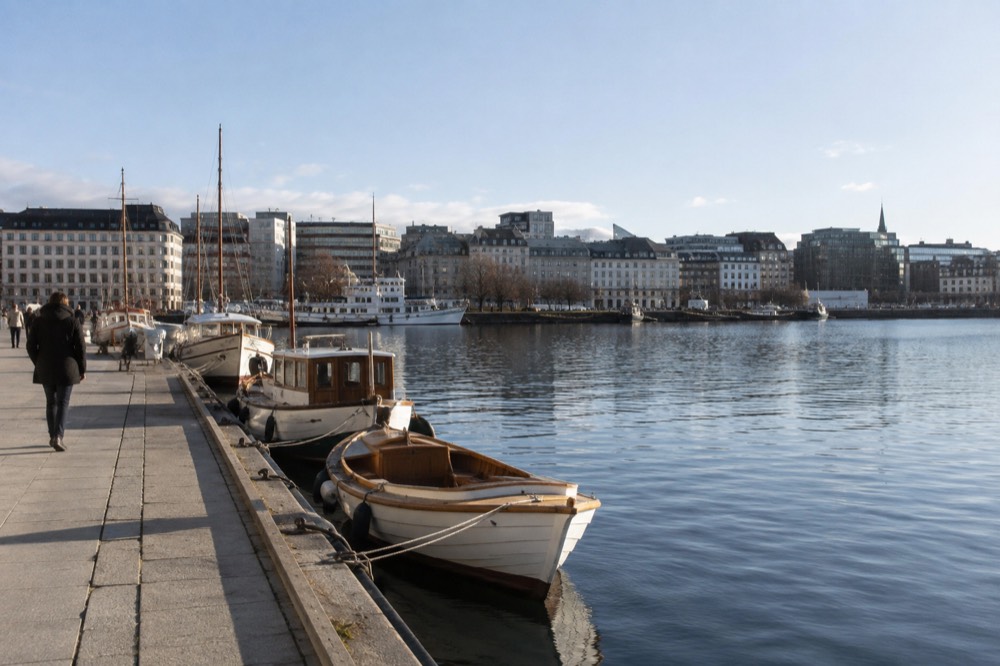
The fjord is also where the city's best-reviewed activity happens. The silent electric fjord cruise, a 90-minute loop with audio commentary, is Oslo's single best-reviewed activity on any booking platform, and the traditional wooden sailing ship version offers a completely different experience of the same water. The choice between them, and the island-hopping and dinner-cruise alternatives, is laid out on our Oslofjord cruise page.
What Should First-time Visitors Know That Locals Assume?
First-time visitors should know that tap water is excellent and free everywhere, that English is near-universal in shops and museums, that card payment is standard and cash is close to dead, and that tipping is voluntary because service is already included in prices.
Each of those is a small friction remover. Oslo's tap water comes from the city's lakes and upland sources and is some of the cleanest municipal water in Europe; asking for tap water in a restaurant is normal and free. The English point matters for depth: museum labels, transit announcements and menu explanations all assume an international audience, so language is essentially never a barrier. Our English in Oslo page goes deeper for anyone anxious about it.
The payment and tipping points interact with the cost picture. Card terminals are everywhere, contactless is standard, and many cafés no longer accept cash at all, so there is no reason to withdraw krone for a short visit. Tipping is genuinely optional: service is included in prices by law and custom, and rounding up or leaving 5 to 10 percent for good service is a gesture, not an obligation. Terminals may prompt with a tip option; declining it is unremarkable. The tipping in Oslo page covers the etiquette in full.
How Many Days Do You Need for Oslo?
Most visitors find three days the right amount for Oslo: enough for the Bygdøy museums, the city center sights, one fjord trip and one neighborhood like Grünerløkka, without stretching the city thin; two days covers the essentials, and five is only worth it if you add day trips or slow travel.
The honest answer depends on what draws you. A museum-heavy visit with the National Museum, MUNCH, the Fram and Kon-Tiki, plus Vigeland Park and Akershus, fills three days comfortably. A visitor who wants forest hikes, island swimming or a Norway-in-a-Nutshell fjord day trip can easily fill five. The mistake to avoid is the opposite one: treating Oslo as a one-night stop between flights, because the city's payoff, its waterfront, islands and museums, needs at least a full second day to appear.
Our how many days in Oslo page breaks down the decision by travel style, and the one day in Oslo and 3 days in Oslo itineraries give hour-by-hour plans for the two most common lengths.
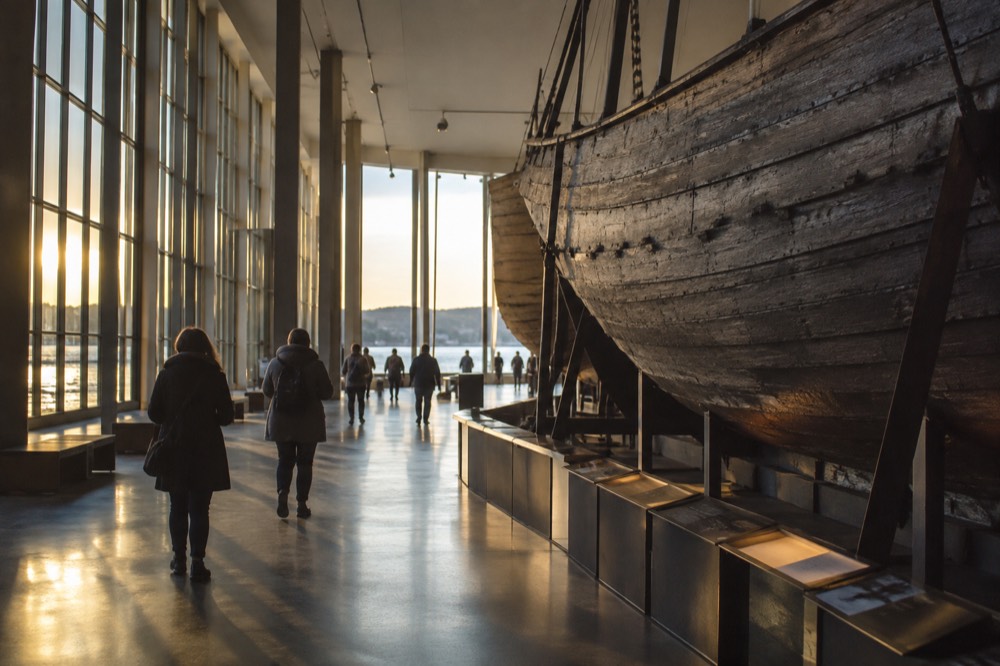
The Kon-Tiki Museum on Bygdøy is one of the museums that rewards that second day: it holds Thor Heyerdahl's balsa-wood raft and the papyrus boat Ra II, and it pairs naturally with the Fram Museum next door for a full polar-and-expedition afternoon.
Common Questions About Oslo Facts
What is the population of Oslo?
Oslo is Norway's largest city by a wide margin, holding well over half a million residents in the municipality with a wider metropolitan region beyond that, but it remains a modest capital by European standards.
What language do they speak in Oslo?
Norwegian is the official language, but English is near-universal in shops, museums, restaurants and transport, so language is essentially never a barrier for visitors.
Does Norway use the euro?
No. Norway uses the Norwegian krone (NOK), and euros are not generally accepted. Norway is in the Schengen Area and the EEA but not the EU.
Is Oslo the coldest capital in Europe?
No. Oslo's January mean is −2.3 °C, cold but milder than several eastern and northern capitals; the maritime influence of the North Sea keeps Oslo's winters moderate for its latitude.
Why is the Viking museum in Oslo closed?
The former Viking Ship Museum closed in 2021 for a complete rebuild and will reopen as the Museum of the Viking Age in 2027. Until then, Viking-age objects are on display at the Historical Museum in central Oslo, and Viking Planet offers a VR-based alternative.
What is the wettest month in Oslo?
August, with 103 mm of normal precipitation on the 1991 to 2020 normals, not November as many guides claim. November is damp but totals 85 mm.