Do They Speak English in Oslo? What to Expect as a Visitor
Short answer: yes, almost everywhere. But the details matter, so this guide covers where English is strong, where it is thinner, and how tours, museums and transport handle visitors who do not speak Norwegian.
Short answer
Yes, English is spoken very widely in Oslo. It is a mandatory school subject in Norway, used across the service sector, museums, restaurants and public transport, and almost all guided tours run in English. A visitor can spend a week in Oslo without needing a word of Norwegian, though a few phrases are appreciated.
Do They Speak English in Oslo?
Yes, they do, and to a degree that surprises many first-time visitors. English is taught as a compulsory subject in Norwegian schools from an early age, and Norwegians use it daily through television, film and work. In Oslo specifically, the capital is also the country's most international city, with service staff, museum attendants, metro drivers and guides routinely switching to English the moment they detect a foreign accent. You can plan a full week in Oslo on English alone.
That is the honest headline, and it is backed by how the city is actually built for visitors. Oslo's tourism infrastructure, from the Oslo Visitor Centre to museum audio guides, defaults to English as the second language. Menus in the city center carry English translations. The Ruter journey planner and the Vy booking site both run full English interfaces. Tour listings on the operator's live listing pages state their language up front, and the overwhelming majority of tours in Oslo offer English on every departure.
None of this means Norwegian is absent. You will hear it on the street, read it on signs, and see it on the front of every shop in Karl Johans gate. The city is proudly Norwegian-speaking. But the switch to English is fast, unforced and universal in the visitor economy, which puts Oslo among the easiest non-English-speaking cities in Europe for an English-only traveler.
A note on what to do while you are here: this site exists to help you plan that week, and the question of language connects directly to which tours and tickets you book. Tours, after all, are where language matters most, because a guide who speaks your language well turns a boat ride into a fjord lesson. The rest of this guide covers exactly that, plus the places where English runs thinner than you might expect.
How Good Is English in Oslo, Really?
English in Oslo is not just functional, it is fluent and idiomatic. Most Norwegians under 60 learned English at school and consume English-language media without subtitles, so the typical level is conversational to native-like. You will struggle to find a waiter, hotel receptionist, museum attendant or shop clerk in Oslo who cannot serve you completely in English. A common local joke is that it is hard to practice Norwegian because people reply in English the second you hesitate.
The depth of this goes deeper than most guidebooks credit. English is a mandatory subject in Norwegian primary and secondary education, and university-level courses in Norway are increasingly taught in English, which means the student districts around Tøyen and Majorstuen are saturated with effortless bilinguals. Norwegian and English also share Germanic roots, so written Norwegian is partially decipherable to an English speaker, and vice versa: "aptekk" is a pharmacy, "utgang" is an exit, and "stengt" means closed.
The practical consequence for a visitor is that language anxiety in Oslo is largely wasted energy. You do not need to rehearse phrases before approaching a counter. You do not need translation apps for restaurants or ticket machines. The situations where a word of Norwegian genuinely helps are social ones, a friendly greeting to a fellow hiker on a Nordmarka trail, a "takk" when someone holds a door, rather than transactional ones.
The flip side is worth naming: because English is so available, visitors sometimes treat Norwegians as English speakers first, which can read as presumptuous. The norm locals appreciate is a simple "unnskyld" or "hei" to open an exchange, after which everything can flow in English. It is politeness rather than necessity, and it is the one piece of language advice that actually changes how interactions feel.
Where language stops being abstract is guided experiences, because commentary is the product. The strongest tours in Oslo all run in English, and choosing among them is one of the genuinely useful decisions on this page.
Where English Is Weaker in Oslo
English is weakest in Oslo precisely where the city is most local and least touristic: residential neighborhoods far from the center, some older-generation service interactions, and specialist contexts like medical or legal settings. Even there, "weaker" means slower and less idiomatic rather than absent. Machine-translated signage at construction sites and some municipal offices can be awkward, and Ruter's on-board announcements are in Norwegian first. But a visitor following the standard sights will essentially never hit a wall.
The construction around Oslo is a good live example. The city is mid-way through several major infrastructure projects, including the consultation phase for the Nye Oslo S central-station redevelopment, and the hoardings around such works are typically Norwegian-first. Directional detour signs can take a beat to parse. Similarly, if you rent an apartment in a residential part of Grorud or Holmlia, the nearest grocery staff will speak English, but the pharmacy conversation may run slower than it would in Sentrum.
Another honest caveat: dialect. Norway's dialect diversity is enormous, and while Oslo's own dialect is the standard you will hear, regional visitors and some service staff from western or northern Norway speak varieties that even other Norwegians find thick. This never blocks English communication, but it means the Norwegian you overhear may sound nothing like the phrasebook.
For the practical visitor, the honest framing is that language is a non-issue in the visitor economy and a mild friction in local life. If your trip includes a doctor's visit or a legal matter, bring patience. If it includes museums, boats, restaurants and bars, bring nothing at all.
One place language genuinely matters is dinner and drinks. If your evening plans include food and drink with commentary, the food walks listed above handle English commentary throughout, and the Grünerløkka neighborhood guide covers the district those walks work through.
Do Museums and Attractions in Oslo Have English?
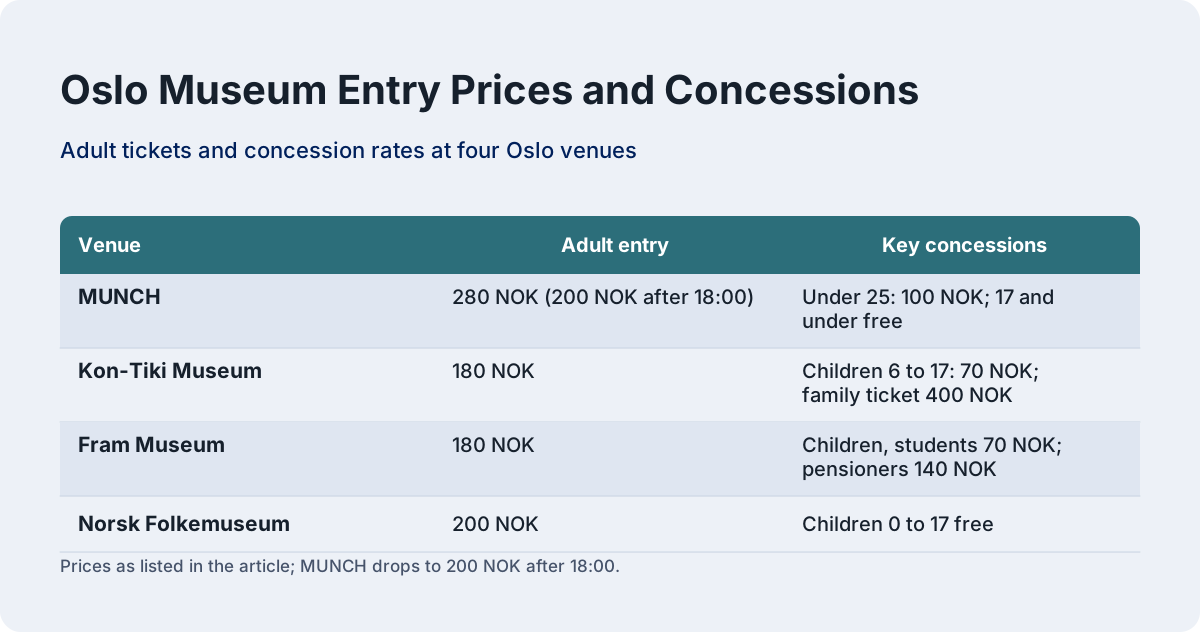
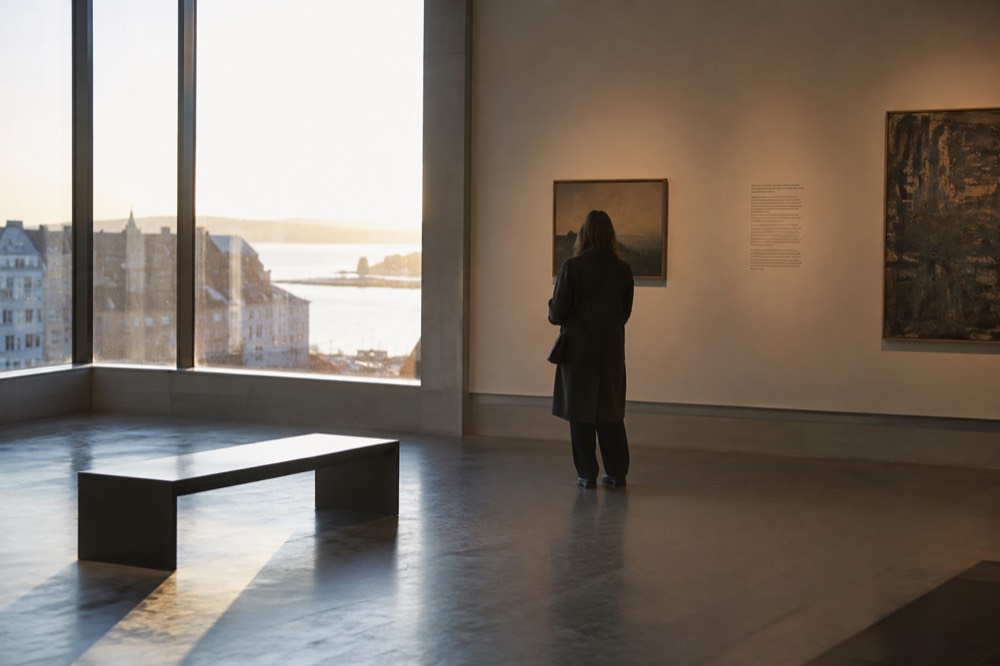
Yes, essentially all of them, and at a high standard. Every major Oslo museum, including MUNCH, the Fram Museum, the Kon-Tiki Museum, Norsk Folkemuseum and the National Museum, provides English labels, English signage or English audio guides as standard. Temporary exhibition text is normally bilingual or English-first. Guided tours in English run on fixed schedules at the biggest venues, and booking pages state the language clearly before you commit.
Museum entry prices are published in NOK by the venues themselves, and the ticket tiers below are worth knowing before you go. These are walk-up adult prices from each museum's own site, and the Oslo Pass covers the major ones.
| Venue | Adult entry | Key concessions | English provision |
|---|---|---|---|
| MUNCH | 280 NOK (200 NOK after 18:00) | Under 25: 100 NOK; 17 and under free | English labels and guides throughout |
| Kon-Tiki Museum | 180 NOK | Children 6 to 17: 70 NOK; family ticket 400 NOK | English exhibits and film |
| Fram Museum | 180 NOK | Children, students 70 NOK; pensioners 140 NOK | Full English signage |
| Norsk Folkemuseum | 200 NOK | Children 0 to 17 free | English signage across the open-air site |
The combination tickets on Bygdøy are worth attention for exactly this reason: the Kon-Tiki and Fram museums sit a short walk apart and share a combo ticket at 325 NOK for adults, and both are fully navigable in English. You can read the full breakdown of the peninsula, its piers and its buses in the Bygdøy guide.
For the biggest ticket in the city, MUNCH, its own site states plainly that it is open every day of the year except 1 May, with evening pricing after 18:00, and English is the default second language on every floor. Details on the building and its collection are in the MUNCH museum guide.
Is English Enough for Getting Around Oslo?
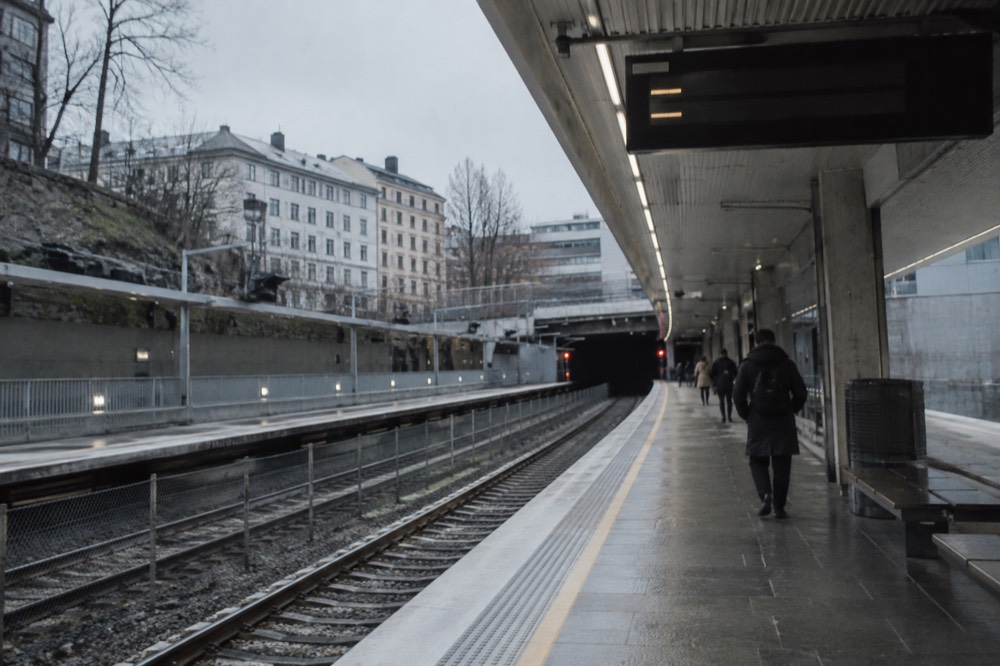
Yes, comfortably. The Ruter app and journey planner, the Vy train booking site and the Flytoget site all have full English interfaces, metro and tram announcements increasingly carry English on the main lines, and ticket machines offer an English menu from the first tap. Bus 30 to Bygdøy, the T-bane line 1 to Holmenkollen and Frognerseteren, and the island ferries from Aker brygge are all manageable with an English interface and printed destination names.
The Norwegian you will actually meet on transport is short and repetitive, and a week of riding will teach it to you by osmosis. The handful of words below cover nearly every sign you will encounter. The full index of guides sits on Oslo Travel Guide. The full index of guides sits on Oslo Travel Guide.
| Norwegian | English | Where you will see it |
|---|---|---|
| Utgang / Inngang | Exit / entrance | Stations, museums |
| Stengt | Closed | Shops, attractions |
| Avgang / Ankomst | Departure / arrival | Platforms, ferry piers |
| Riktig plattform | Correct platform | T-bane and tram signage |
| Åpen | Open | Shop doors, kiosks |
| Billett | Ticket | Machines and barriers |
Two practical notes. First, zone rules are the part of Oslo transport where visitors stumble, and language has nothing to do with it: the airport sits in zone 4N, the Bygdøy ferry is a separate ticket system entirely, and the island ferries are ordinary Ruter services. Those rules are laid out clearly in the Ruter tickets guide and the getting around Oslo guide.
Second, on-board purchases cost more than app purchases on Ruter services, so the English-language app is not just the easier route, it is the cheaper one. The conductor conversation, if there is one at all, will switch to English without friction.
Should You Learn Any Norwegian Before Your Trip?
You should not learn Norwegian for practical reasons, because English covers everything, but a dozen words genuinely improve the texture of the trip. Norwegians do not expect visitors to speak their language, and nobody will be offended by English alone. That said, greetings, thanks and a polite excuse-me open interactions warmly, and locals respond visibly to the effort. Think of it as courtesy currency rather than communication currency.
The words below are the ones with real daily use. They appear on doors, menus, receipts and signs, and saying the first two out loud changes the tone of nearly every exchange.
| Norwegian | Sounds like | Meaning |
|---|---|---|
| Hei | "hay" | Hi, the universal greeting |
| Takk | "tahk" | Thanks, the most useful word in the country |
| Unnskyld | "OON-shil" | Excuse me / sorry |
| Vær så snill | "vair soh sneel" | Please |
| Ja / Nei | "yah / nay" | Yes / no |
| Hyggelig | "HOOG-leh" | Nice, as in nice to meet you |
One thing to skip entirely: any anxiety about responding to Norwegian greetings "correctly." Hei works for hello and goodbye, at any hour, with anyone. It is the single most load-bearing word in the language for a visitor.
A cultural note worth carrying: Norway is in the Schengen Area but not in the European Union, uses the krone rather than the euro, and tipping is voluntary with service included in prices. None of this is language, but it sits in the same bucket of things visitors half-know and occasionally get confidently wrong, and the tipping in Oslo guide covers the rest of that bucket.
Which Oslo Tours Run in English?
Nearly all bookable tours in Oslo run in English on every scheduled departure, and the listing states the language before you book. Walking tours, fjord cruises, bike tours, food walks and museum tickets all operate with English as the default or a stated option. The main decision is not language but format: whether you want a live guide, recorded commentary, or a self-guided ticket, and each of the three serves a different traveler.
The recorded-commentary format deserves a special mention because it is the best-reviewed sightseeing product in the city. The silent electric fjord cruise runs a multilingual audio guide through headphones, which means the commentary pace is yours, the volume is yours, and the language list is long. It is also the single best-reviewed activity in Oslo across the major booking platforms, and it is the related tour for this page.
If a live guide is what you are after, the walking-tour scene splits cleanly into free and paid. The biggest free walk in the city, tip-based and running about two hours, covers the central highlights with a local guide and runs at a 4.68 rating across more than two thousand reviews, a scale no other free walk in Oslo approaches. Read about the whole landscape in the Oslo free walking tours guide.
For museum tickets, language is handled by the museum rather than the operator, and the best-reviewed museum ticket in the city is the Kon-Tiki entry, which includes the museum's film and full English exhibition text. The Kon-Tiki Museum sits on Bygdøynes beside the Fram Museum, and the two pair naturally into one English-friendly half-day.
If your priority is simply meeting the city at street level with a local who can answer questions in fluent English, the big free walk is the default starting point for most visitors, and it costs nothing up front.
Do You Need Norwegian for Day Trips from Oslo?
No, and this holds for essentially every standard day trip. The Bergen railway, the Flåm railway, the Norway-in-a-Nutshell route, the ferries to Denmark and the regional trains to Sweden and Gothenburg all sell, announce and staff in English. Station signage across the Vy network is bilingual, and the route descriptions for the classic fjord trips are published in English by the operators themselves. English coverage outside Oslo is marginally thinner in rural shops, but on the transport spine it is complete.
The classic fjord day trip from Oslo is a case study in how language-transparent Norwegian travel has become. The private full-day Sognefjord round trip with the Flåm railway runs at 15 hours 30 minutes end to end and is guided in English throughout, and the Flåm railway guide and the Norway-in-a-Nutshell guide break the route down step by step.
Closer to the city, the smaller trips are equally manageable. Drøbak, Fredrikstad and the Hadeland Glassverk route all work fine on English, and each has its own page in the day trips from Oslo guide. The one context where a phrasebook earns its space is a rural lunch stop far off the main line, and even there the counter staff will manage.
English in Oslo: The Practical Summary
Plan your entire Oslo trip in English with confidence. Every museum, tour, transport system, restaurant and hotel in the visitor economy supports it natively, the switch to English is instant and gracious, and the only Norwegian you need is a greeting and a thank-you. Language should rank near the bottom of your Oslo worries, well below weather, daylight hours and the cost of a beer, and it should never influence your choice of tours, since every bookable product here runs in English anyway.
This site exists to handle exactly this kind of planning question, and language is one of the few Oslo variables you can consider settled before you land. Put your research energy into the decisions that actually carry consequences: how many days to give the city, whether the Oslo Pass pays off against your museum list, and which fjord format suits you.
If you are booking now, the three formats below cover the spread of what English-language Oslo experiences look like, from audio-guided fjord commentary to a museum ticket to a neighborhood food walk.
Common Questions About English in Oslo
Do they speak English in Oslo?
Yes, very widely. English is a compulsory school subject in Norway and is used daily in media and work, and Oslo as the capital is the country's most international city. Nearly everyone in the service sector, museums, transport and tourism speaks it fluently, and most guided tours run in English on every departure.
Can I visit Oslo without speaking any Norwegian?
Completely. Tickets, signage, apps, menus and museum labels all work in English, and staff switch to English without hesitation. A word or two of greeting is appreciated socially but is never required for any practical task.
Do Oslo tours run in English?
Yes. Walking tours, fjord cruises, bike tours, food walks and museum tickets all operate in English as standard, and the language is stated on each listing before you book. The most-reviewed fjord cruise in the city uses a multilingual audio guide rather than a live guide.
Is English spoken outside Oslo on day trips?
Yes, on all the standard routes. Trains, the Bergen and Flåm railway, ferries and the classic fjord trips sell and announce in English. Rural shops off the main lines are marginally less consistent, but the transport network is fully bilingual in practice.
Should I learn Norwegian phrases before visiting Oslo?
A handful, for warmth rather than necessity. "Hei" for hello, "takk" for thanks and "unnskyld" for excuse-me cover nearly every social moment. Norwegians do not expect visitors to speak Norwegian and will answer in fluent English.
Is Norwegian similar to English?
Both are Germanic languages, so there is shared vocabulary and structure. Written Norwegian is partially decipherable to an English speaker, with words like "utgang" for exit and "stengt" for closed appearing constantly on signs. Spoken Norwegian is a different matter, with wide dialect variation across the country.