How Many Days in Oslo Is the Right Trip Length
The honest answer is that two days sees the essentials and three days is the sweet spot for most first visits, but the number moves with the season, your museum appetite and whether you want the fjord islands or just a cruise past them.
Short answer
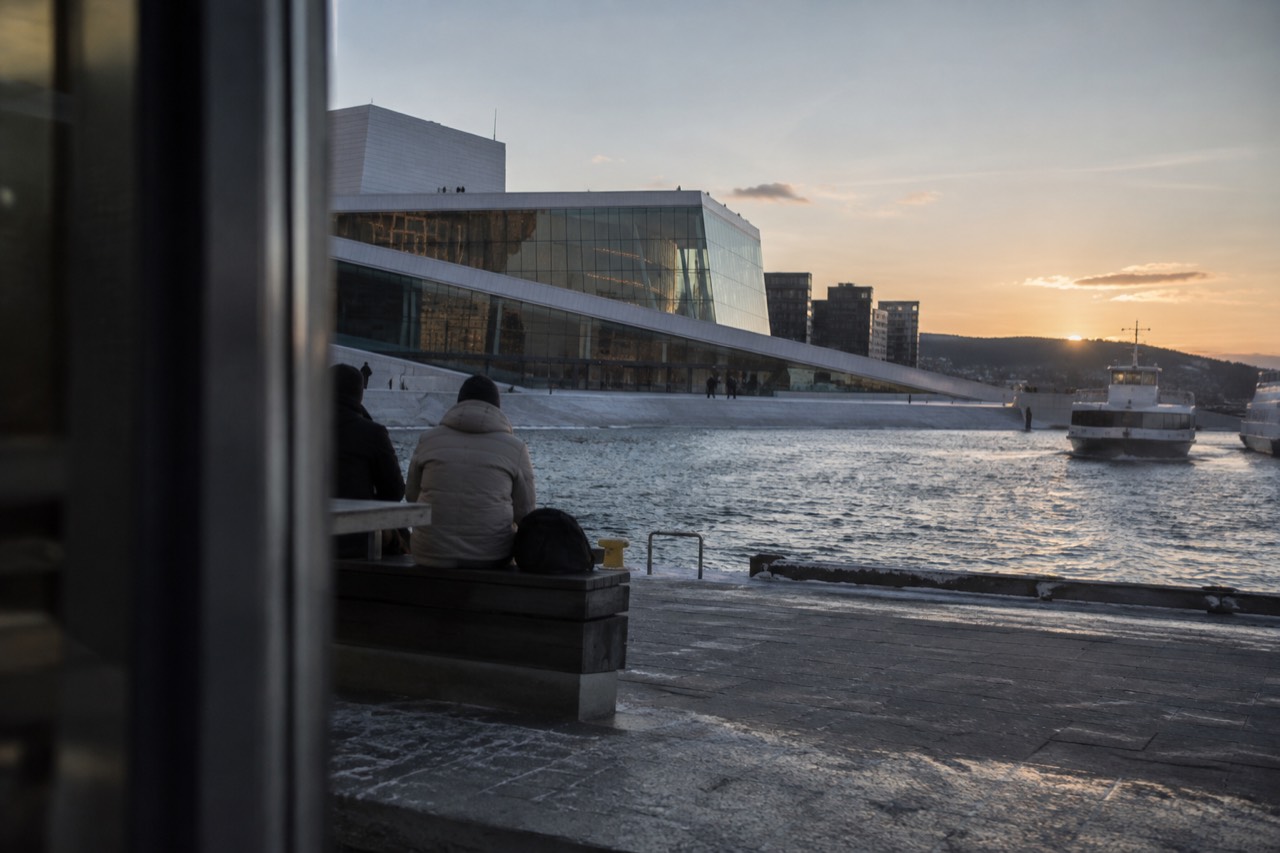
Two days covers Oslo's essentials: the Opera House, Vigeland Park, a fjord cruise and a Bygdøy museum cluster. Three days is the sweet spot for most visitors, adding the islands, Grünerløkka and a second museum day. Four to five days only pays off with day trips. In winter, shorten sightseeing days to match six hours of daylight.
Oslo rewards a trip length decision made before you book anything, because the city's geometry is unusual: the compact center is walkable in half a day, but the things people actually come for, the museums on Bygdøy, Vigeland Park, Holmenkollen and the fjord islands, all sit on spokes 15 to 30 minutes out. Most under-planning mistakes in Oslo are not about missing sights, they are about underestimating the spokes.
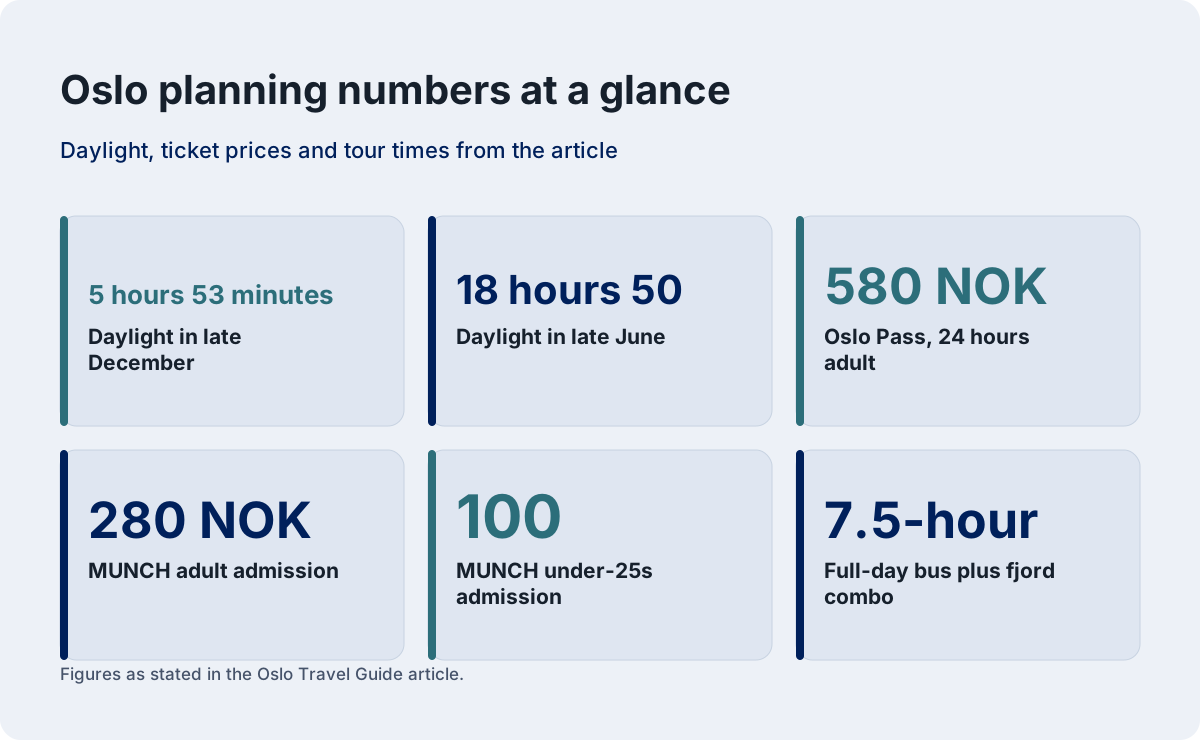
This page walks through what each day count genuinely buys, from a rushed one-day port stop to a five-day stay with day trips, and it factors in the two things that move the answer more than any itinerary: the season, and the daylight swing from 5 hours 53 minutes in late December to 18 hours 50 in late June. Daylight in Oslo is not a footnote, it is a planning variable on the same level as your budget.
The short version: two days is a real trip, three is the sweet spot, and four or more only pays off if you leave the city on at least one of them.
How Many Days Do You Actually Need in Oslo?
Three days is the right answer for most first-time visitors: one day for the walkable center and the Opera House, one for the Bygdøy museum peninsula and a fjord cruise, and one for Vigeland Park plus Grünerløkka or the fjord islands. Two days sees the essentials at a brisker pace, and one day works only with ruthless triage. Four or five days pays off only when you spend a day or two outside the city on trips like the Flåm railway or Drøbak.
The reason three beats two for most people is not sight count, it is cluster distance. The Bygdøy museums alone, Kon-Tiki, Fram, the Norwegian Maritime Museum and the Norsk Folkemuseum, sit a ferry or bus ride away from the center, and doing them justice with the combination ticket that pairs them takes the better part of a day. Squeeze that into a shared day with a fjord cruise and you end up sprinting two piers.
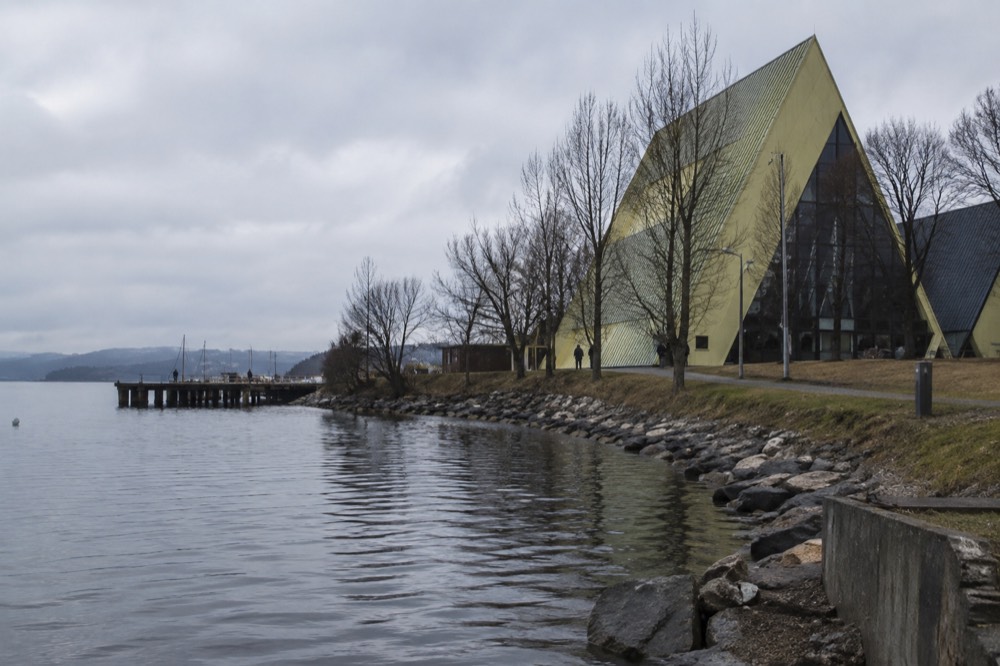
Season changes the arithmetic more than people expect. In midwinter the sun rises at 09:18 and sets at 15:11, so a "day" of sightseeing is really five or six usable hours and the evening belongs to indoor life. In late June the sun sets at 22:43 and it never gets properly dark, so a single day can absorb what would normally be two. The same three-day plan that feels generous in January feels unhurried in July. If you want the full breakdown of hours by month, our Oslo daylight hours guide carries the month-by-month table.
If your trip is part of a bigger Norwegian itinerary, the rule of thumb from our weekend in Oslo plan is that Oslo is a city you can complete, unlike London or Paris. That is precisely why the three-day answer holds: by day three you are not leaving things undone, you are deepening the visit.
What Two Days in Oslo Actually Covers
Two days covers every headline sight in Oslo: day one takes the Opera House roof, Karl Johans gate, Akershus Fortress and a fjord cruise, day two takes the Bygdøy museum peninsula plus Vigeland Park. What it does not cover is the fjord islands, Grünerløkka at leisure, Holmenkollen, MUNCH and the National Museum all at once, and anything outside the city. It is a complete trip, but a curated one.
Two days is the honest minimum for a "we saw Oslo" trip, and the shape that works is geographic pairing. Day one stays in the center and the waterfront: the Opera House roof is free to walk on and takes twenty minutes, Karl Johans gate runs from the central station to the Royal Palace, and Akershus Fortress wraps the afternoon. The fjord cruise slots into the early evening, when the light is best and the boats are emptier.
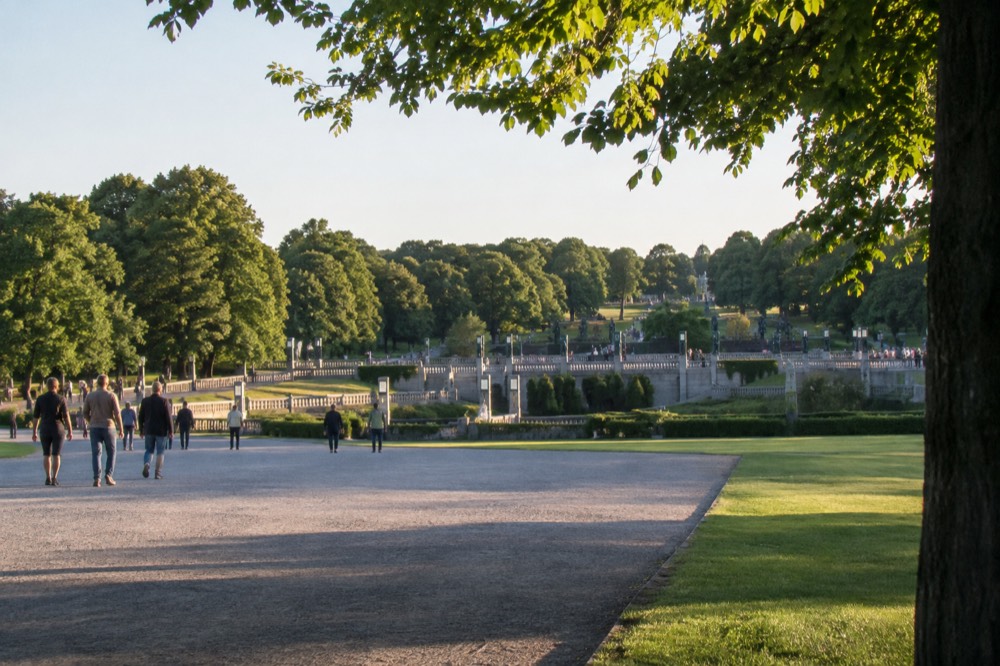
Day two goes to Bygdøy and Frogner. The seasonal ferry from Rådhusbrygge 3 lands you at Dronningen for the folk museum or Bygdøynes for Kon-Tiki and Fram, and bus 30 does the same job year-round on an ordinary Ruter ticket. Coming back, Vigeland Park is free, open around the clock, and pairs naturally with the return trip since Frogner sits on the way.
The pair of days can be tightened further with a sightseeing bus that links the far-flung stops, which is exactly the two-day traveler's problem the product solves. The full two-day itinerary lays out the hour-by-hour version of this plan if you want it pre-built.
Two days also has a budget shape. The Oslo Pass at 24 hours, 580 NOK adult, covers over 30 museums plus Ruter transport in zones 1 through 4N, including the Vy trains to and from the airport, and the pass math works hardest on a dense Bygdøy museum day: Kon-Tiki, Fram and the Maritime Museum together at full price is more than the pass, before counting the rides. Our is the Oslo Pass worth it guide runs the break-even numbers against several day counts.
What Three Days Adds Over Two
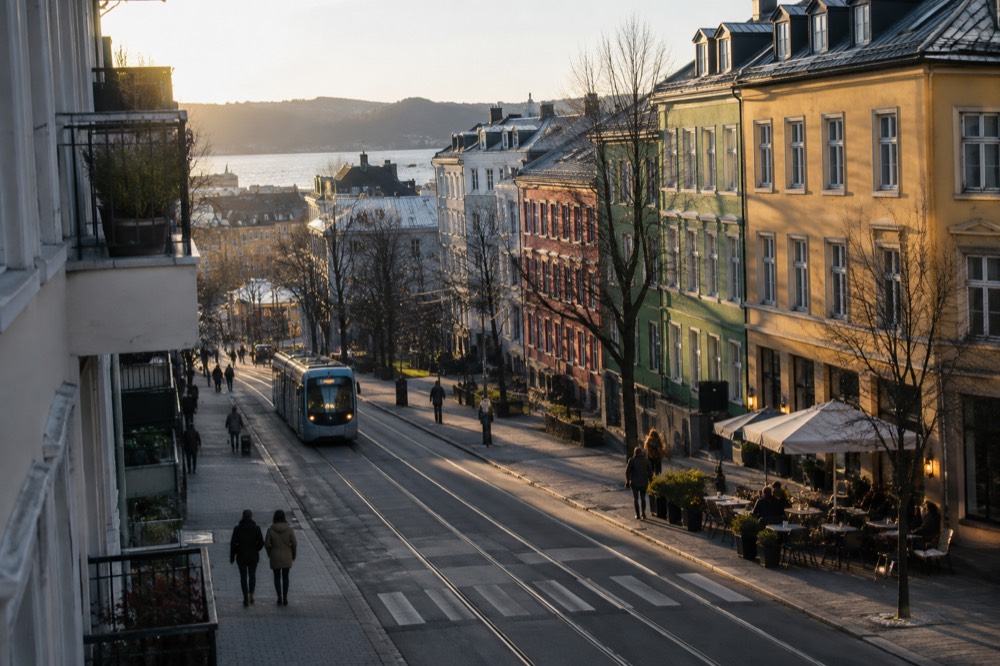
Three days adds the layer that makes Oslo feel like a city rather than a checklist: the fjord islands by public ferry, Grünerløkka's cafés and street art, MUNCH or the National Museum without rushing, and Holmenkollen on the metro's line 1. It converts a sightseeing sprint into a trip with slack in it, which matters in a city where the second-tier experiences, the islands and the neighborhoods, are genuinely the distinctive ones.
Day three is where Oslo becomes un-generic. The island ferries are ordinary Ruter boats from Aker Brygge: Hovedøya has a ruined Cistercian abbey ten minutes from the pier, and Langøyene is the swimming and lazy-afternoon island. Nothing else in the set of things this site covers is as Oslo-specific as hopping those on a regular transit ticket. Our Oslo islands guide covers the lines, the season and which island suits which mood.
The cultural slack lands here too. MUNCH, at 280 NOK adult and 100 for under-25s, holds enough that a rushed 40 minutes wastes it, and the National Museum holds The Scream, which most visitors do want to stand in front of without a departure clock ticking. Add Grünerløkka for the evening, where the neighborhood's food and bar scene has become the part of the city returning visitors talk about most.
If you would rather buy a third day's structure than build it, the full-day bus plus fjord combo is the product built for exactly this shape: a 7.5-hour sweep of the city's landmarks with the cruise folded in. If your third day is more ambitious than that, the three-day Oslo itinerary is the detailed version.
One caution for the third day: the Museum of the Viking Age remains closed until its reopening in 2027, so it does not belong on any day count in the current planning window. Viking Planet, the VR-based attraction near the center, is the bookable substitute, and some Viking-age objects are viewable at the Historical Museum downtown. Our Museum of the Viking Age page tracks the closure and the reopening status.
Is Four or Five Days in Oslo Too Many?
Four or five days in Oslo is not too many, but only if one or two of them leave the city: the Flåm railway and Sognefjord day trip, Drøbak, Fredrikstad or the ski forests of Nordmarka justify the extra nights. Kept entirely inside the city, day four and five thin out quickly, because Oslo's in-town sight list genuinely finishes around day three for most visitors.
The economics of the extra days also matter. Norway is the sixth most expensive country in Europe on the 2025 price-level comparison, with alcohol and tobacco more than double the European average, so each extra Oslo night costs real money that a night somewhere smaller does not. If the fourth day's plan is "wander and have a nice dinner," the same budget buys a full day trip to the fjords instead.
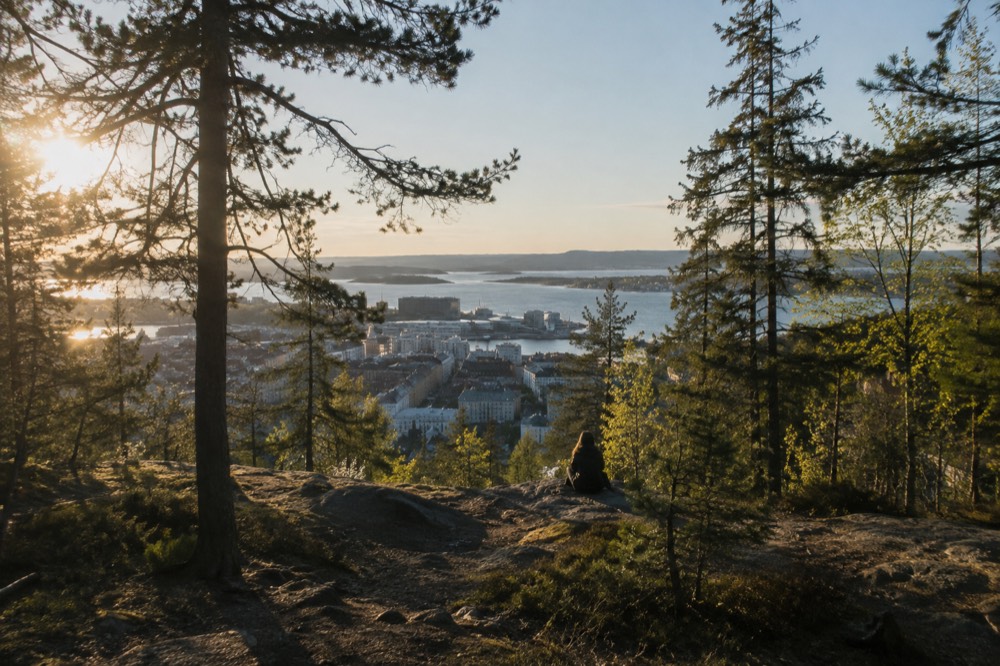
The day-trip menu is strong enough to carry the extra days on its own. The day trips from Oslo guide ranks them, and the standout is the Norway-in-a-Nutshell route with the Flåm railway, a long same-day round trip from the capital. In winter, the fourth and fifth days can go to skiing near Oslo, which is a genuinely rare capital-city amenity: cross-country trails in Nordmarka start at a metro stop.
Here is how the day counts compare at a glance:
| Trip length | What it covers comfortably | What it skips | Best for |
|---|---|---|---|
| 1 day | Opera House, Karl Johans gate, one museum or a short cruise | Bygdøy cluster, islands, Vigeland at leisure | Port stops and layovers |
| 2 days | Center, Bygdøy museums, fjord cruise, Vigeland Park | Islands, Grünerløkka, MUNCH and Holmenkollen | Weekend visitors |
| 3 days | All of the above plus islands or Grünerløkka, one art museum, Holmenkollen | Day trips | Most first visits |
| 4 days | Three-day plan plus one day trip | Second day trip | Slower travelers, fjord-route seekers |
| 5 days | Three-day plan plus two day trips or a ski day | Nothing in town | Norway-focused itineraries |
Can You See Oslo in One Day?
One day in Oslo can cover the Opera House, Karl Johans gate, the harbor, Akershus Fortress and either a 90-minute fjord cruise or one Bygdøy museum pair, but not both. The workable version of a one-day trip is a tight center loop with a single spoke out, and it works best from roughly April to October, when the evening light extends the day past the museum closing hours.
The single-day mistake is trying to keep every option. A cruise and the Bygdøy museums both consume half a day by the time you count the ferry ride out. Pick one. If the weather is good, the cruise wins, because the fjord is the thing that is unambiguously Oslo. If it is raining, the museum cluster wins, and Kon-Tiki plus Fram with the combination ticket is the strongest pairing.
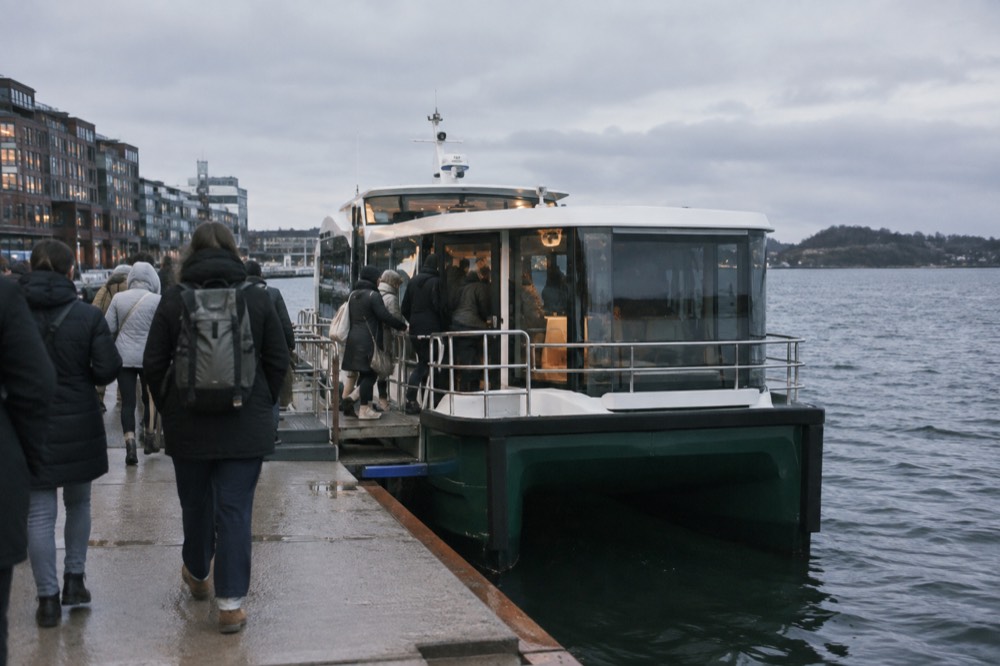
Cruise-passenger and short-layover travelers face this question most, and for both, the one-day Oslo itinerary and the cruise port day guide are built for exactly that clock. The electric silent boat is the 90-minute version of the fjord that fits a one-day plan, and the details are on the operator's live listing.
What Else Changes the Day-count Answer?
Season, daylight and your tolerance for boats and buses move the Oslo day count more than sight count does. Winter shortens each usable sightseeing day to about six hours, summer extends it toward twenty, a museum-heavy style adds roughly a day, and a fjord-focused style subtracts one, so the same traveler can honestly need two days in July and four in January.
The seasonal swing is extreme enough to plan around rather than absorb. August, the wettest month on the 1991 to 2020 normals at 103 mm, can wash out an afternoon, while July's 17.7 °C normal mean makes the islands and swimming beaches a genuine daytime activity rather than a footnote. Here is what each season does to your day count:
| Season | Daylight effect | Best use of the days | Day-count adjustment |
|---|---|---|---|
| Dec to Feb | 5 h 53 m to 9 h 14 m of light | Museums, evening walks, indoor culture | Add a day for the same coverage |
| Mar to May | 11 h 45 m to 17 h 08 m | Full three-day plan, islands open from spring | Standard |
| Jun to Aug | 18 h 50 m of light, never fully dark | Islands, beaches, long fjord evenings | Subtract half a day |
| Sep to Nov | 15 h 38 m shrinking to 10 h 13 m | Museums, forests in color, fewer crowds | Standard to plus half |
Style matters as much as season. A museum-first visitor who wants MUNCH, the National Museum, Kon-Tiki, Fram, the folk museum and the Resistance Museum has a two-museum-per-day reality and needs four city days. A fjord-and-forest visitor needs fewer because the outdoor layer does not queue. The Oslo museums guide has the full admission and hours rundown for building the museum-heavy version.
How Should You Spend the Days You Pick?
Structure each Oslo day as one walkable center block plus one spoke: pair the Opera House and harbor with the fjord cruise, the museums with Bygdøy, the art museums with Grünerløkka for the evening, and Holmenkollen with a forest or ski element. Never schedule two far-flung spokes on the same day, because the transit between them eats the midday hours that are best spent inside the attractions themselves.
The spoke rule is the single biggest itinerary improvement for this city. Vigeland Park to Bygdøy, for instance, is a reverse crossing of the whole peninsula-plus-park geography and costs close to an hour each way with waits. The clusters exist for a reason: honor them.
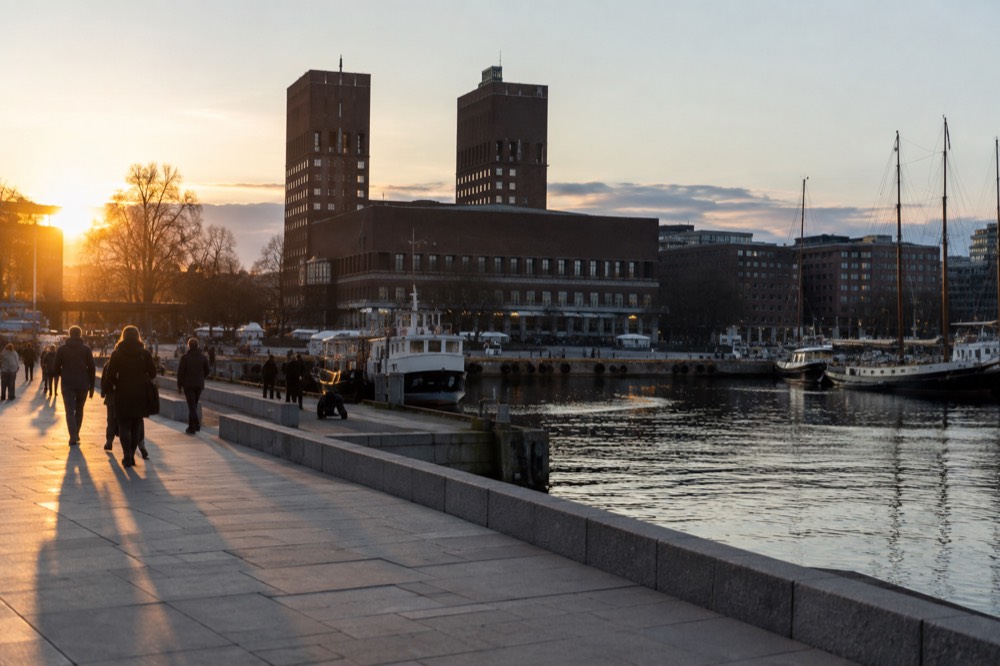
For travelers who prefer a booked spine to a self-built one, the decision is really between the hop-on hop-off bus, which sets the spokes free, and the full-day guided combo, which buys the whole city in one purchase. The bus suits the independent two-day visitor; the combo suits the one-day or cruise-arrival visitor who wants the city explained rather than navigated.
| Spoke cluster | Time from center | What belongs to it | Pairs badly with |
|---|---|---|---|
| Bygdøy peninsula | 15 min ferry or bus | Kon-Tiki, Fram, Maritime Museum, folk museum | Vigeland Park |
| Frogner and Vigeland | 10 min tram | Vigeland Park, Vigeland Museum, Frogner streets | The islands |
| Oslofjord islands | 10 to 30 min ferry | Hovedøya, Langøyene, Gressholmen | Bygdøy museums |
| Holmenkollen and Nordmarka | 20 min metro | Ski jump tower, ski museum, forest trails | Grünerløkka evening |
| Grünerløkka and Tøyen | 10 to 15 min tram or bus | MUNCH, street art, cafés, Mathallen | Anything far south |

The island-hopping tour, which runs ferry-and-foot for a little over three hours, is the strongest structured version of the islands spoke, and it slots into the third day of a three-day plan more naturally than almost any other product. Details and current availability are on the operator's live listing.
Whatever the count you land on, the complete things-to-do inventory for Oslo is the list to prune from, and Oslo Travel Guide keeps the transport, cost and closure facts behind every recommendation on file so the day counts here stay honest.
Common Questions About Days in Oslo
How many days in Oslo is enough?
Three days is enough for a full first visit: the center, the Bygdøy museums, Vigeland Park, a fjord cruise and either the islands or Grünerløkka. Two days is enough to see the essentials if you move briskly and accept skipping the islands and one art museum.
Is 2 days in Oslo enough?
Yes. Two days covers the Opera House, Karl Johans gate, Akershus Fortress, the Bygdøy museum cluster, a fjord cruise and Vigeland Park. What you give up is the fjord islands, Grünerløkka at leisure, MUNCH and Holmenkollen.
Is 4 days in Oslo too much?
Not if one of the four is a day trip. Kept entirely inside the city, the fourth day thins out, because Oslo's in-town sight list finishes around day three for most visitors. The Flåm railway, Drøbak or a Nordmarka ski day justify the extra night.
Can you do Oslo in one day?
A single day covers the center loop, the Opera House roof, the harbor and either a 90-minute fjord cruise or one Bygdøy museum pair, but not both. It works best between April and October, when evening light extends the day past museum hours.
Does winter change how many days I need in Oslo?
Yes, substantially. Midwinter delivers under six hours of daylight, so each sightseeing day holds roughly half of what a summer day does, and the same coverage that fits three summer days honestly needs four winter ones, with evenings given over to museums, food and indoor culture.
Is Oslo or Bergen better for a short trip?
Oslo needs more days, not fewer, despite being the capital, because its sights sit on spokes around a small center. Bergen is more compact. If your Norway budget allows only two city days and you must choose, the comparison in our Oslo versus Bergen guide runs the trade-off in full.