Oslo Accessibility: A Practical Guide for Visitors with Limited Mobility
Oslo is a compact, modern capital built on water and hills, and that mix shapes what an accessible visit looks like: a flat, well-connected centre, some genuinely steep edges, and a transport system that mostly works.
Short answer
Oslo's city centre is flat, compact and largely step-free, with a metro, tram and bus network that reaches nearly every major sight. The main obstacles are the hills around Holmenkollen and some seasonal boats. A 24-hour Oslo Pass costs 580 NOK and covers over 30 museums plus transport in zones 1, 2, 3, 4V and 4N.
Oslo rebuilt large parts of its waterfront in the last two decades, and the result is one of the more manageable capitals in Europe for visitors who cannot or do not want to walk long distances, climb stairs, or navigate cobbled medieval lanes. The centre is flat, the public transport system is dense, and the newest museums were designed to modern accessibility standards.
That is the honest headline, but the honest caveats matter too. This is a city of 59.91 degrees north, built between a fjord and a forest plateau, and the geography does not flatten itself for anyone. Holmenkollen sits high above the city, the Bygdøy museum peninsula depends on a seasonal boat or a bus, and winter ice changes every pavement calculation. This guide, from the editorial desk at oslotravelguide.com, walks through what actually works: transport, museums, tours, where to base yourself, and a realistic itinerary that does not assume a marathon walker.
Is Oslo a Good City for Visitors with Limited Mobility?
Yes, within its central core. Oslo's downtown stretches roughly from the Central Station to the City Hall piers in one flat, continuous pedestrian-friendly band, the metro and tram network covers nearly every major sight, and the newest attractions, including the Opera House and MUNCH, were built to current accessibility standards. The limits are geographic: hills to the north, a museum peninsula reached by boat or bus, and winter ice from December through February.
The geography explains most of it. Central Oslo sits at sea level along the inner Oslofjord, so the streets around Karl Johans gate, Aker Brygge, the Barcode district and Bjørvika are level and generously paved. The problems start where the land rises. Frogner and Majorstuen climb gently uphill west of the centre, and Holmenkollen and Nordmarka climb steeply, which is why the metro exists and why this guide sends you up by train rather than on foot.
Winter is the second factor, and it is a real one. MET Norway's 1991 to 2020 normals put January's mean temperature at −2.3 °C (about 28 °F) and December's at −1.4 °C, with snow a normal feature of the season rather than an exception. Pavements are gritted and cleared on main routes, but side streets and park paths can stay icy for weeks. If your trip falls between December and February, build extra time into every walk and treat shoes with real grip as equipment, not fashion.
The third factor is age. Oslo burned repeatedly through its history, so genuinely medieval street fabric is rare and concentrated in small pockets. Most of what a visitor wants to see sits in nineteenth- and twenty-first-century buildings, and the twenty-first-century share is large: the Opera House, MUNCH, the National Museum and the whole Sørenga and Tjuvholmen waterfront are recent, level, ramp-friendly construction.
How Accessible Is Public Transport in Oslo?
Very, with two exceptions worth planning around. The metro, trams and buses are run by Ruter and form one integrated system with step-free boarding on all modern vehicles, and a single ticket covers metro, tram, bus and the public island ferries alike. The exceptions are the Bygdøy museum ferry, a separate private operator that does not accept Ruter tickets and runs only from mid-March to early October, and the airport, where the cheap Vy train and the Flytoget express are different products at different prices.
Start with the system that works. Ruter runs the whole urban network, central Oslo is zone 1, and the entire metro network sits inside that single zone, which means one ticket covers every T-bane ride in the city. Ticket validity is generous too: a single ticket for one zone is valid for 60 minutes from activation, and validity increases by 30 minutes for each additional zone. Buy in the Ruter app, because on-board purchase on buses and boats is explicitly more expensive.
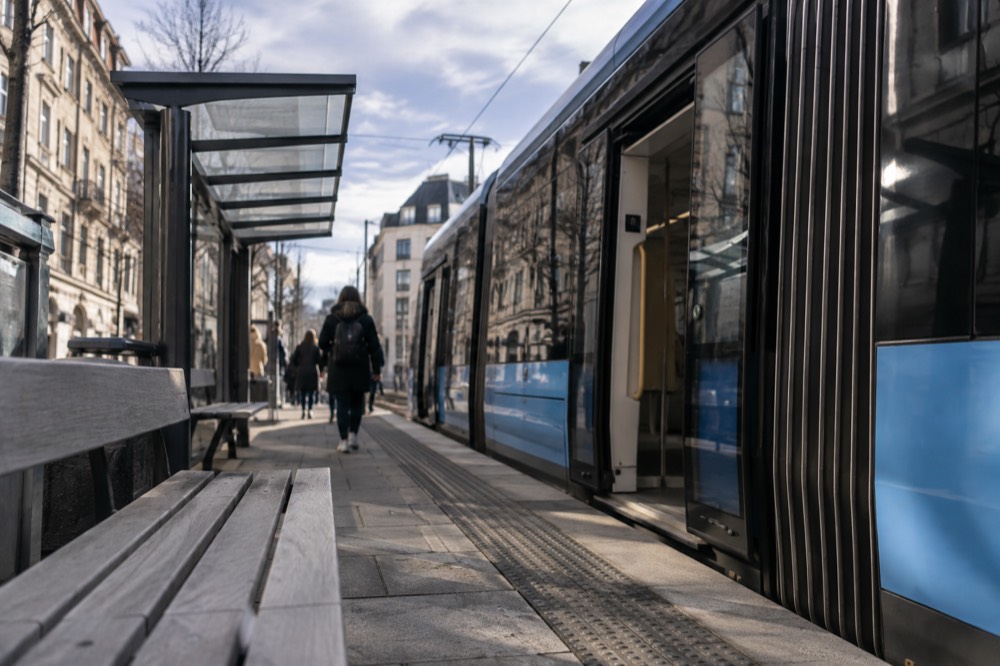
The vehicles themselves are modern. The metro fleet and the newest trams and buses were designed for level boarding, with low floors, wide doors and dedicated space inside, and drivers position the vehicle against raised platforms at metro stations. Stations on the metro's common lines have lifts or ramps as standard; the oldest stations on the Holmenkollen line are the ones where it is worth checking the Ruter journey planner for step-free routes before you commit.
| Transport | What it is | Ticket | Key fact for planning |
|---|---|---|---|
| Metro (T-bane) | 5 lines, all inside zone 1 | Ruter ticket | Entire network in one zone; Frognerseteren terminus for Holmenkollen and Nordmarka |
| Tram | Street-level network through the centre | Ruter ticket | Modern low-floor trams on main lines; check specific line for older vehicles |
| Bus | City and peninsula routes, including bus 30 to Bygdøy | Ruter ticket | Bus 30 runs to the museums year-round when the ferry does not |
| Island ferries B1, B1X, B2 | Public boats to Hovedøya, Gressholmen, Langøyene | Ordinary Ruter ticket | Depart from Aker brygge; summer timetable 4 July to 30 August 2026 |
| Bygdøy ferry | Private museum boat from Rådhusbrygge 3 | Own ticket, about 70 NOK one-way | Seasonal 14 March to 4 October 2026; Ruter tickets NOT valid; Oslo Pass accepted |
| Vy airport train | R10, R11, R12 regional trains to Gardermoen | Ruter multi-zone ticket or Oslo Pass | About 23 minutes to Oslo S |
| Flytoget | Separate airport express | Own ticket, 268 NOK adult | About 20 minutes; not covered by any Ruter ticket or the Oslo Pass |
The two-pier confusion is worth a paragraph of its own, because guides routinely merge them. The Bygdøy museum ferry leaves from Rådhusbrygge 3, Platform F, and is run by a private operator: Ruter tickets are not valid on it, the Oslo Pass is. The public island ferries, lines B1, B1X and B2, leave from Aker brygge, a few hundred metres away, and are ordinary Ruter services that ride on a normal ticket. Two different piers, two different ticket rules, and mixing them up costs a wasted trip to the wrong quay.
The airport question has a money angle most guides get wrong. The Oslo Pass covers the train to and from Gardermoen, but only Vy's trains, not Flytoget and not the Flybussen coach. Flytoget costs 268 NOK adult one-way for a roughly 20-minute ride; Vy's regional trains cover the same distance in about 23 minutes at roughly half the point-to-point price, and a Ruter ticket covering zone 1 through zone 4N is valid on them. The airport itself is Ruter zone 4N. Three minutes slower for a large saving is the single best value decision in Oslo transport.
For the details of fares and apps, our Ruter tickets explained guide covers the ticket types, and the getting around Oslo overview puts every mode in context.
Which Oslo Museums Work Best for an Accessible Visit?
The flagship museums are the strongest option in the city, because most of them are modern buildings with lifts, level entry and accessible facilities, and the densest cluster, Kon-Tiki, Fram and the Maritime Museum, sits together on Bygdøynes pier. MUNCH and the National Museum are new-build and central. The one to plan around is the Museum of the Viking Age, which is closed until 2027, and the hills, not the museums, are where accessibility gets harder.
Start with the buildings that were designed this century. The National Museum, which holds The Scream, opened on the waterfront at Bjørvika and was built to current Norwegian accessibility standards, with level entry from the promenade. MUNCH, in the same district, charges 280 NOK adult, 200 NOK after 18:00, and 100 NOK for under-25s, with 17 and under free. The Opera House next door is free to walk on, and its sloping marble roof is itself an accessible route: a gentle engineered ramp rather than stairs, which is rare among the world's opera houses.
On Bygdøy, the practical question is getting there, not getting in. Bus 30 runs year-round from the centre and stops at the museums, taking about 15 minutes from Nationaltheatret. In season, from 14 March to 4 October 2026, the ferry from Rådhusbrygge 3 runs every 20 minutes, 10 minutes to the first stop at Dronningen, with the Oslo Pass accepted. The two piers, Dronningen for the cultural history museum and Bygdøynes for Kon-Tiki and Fram, are connected by peninsula paths of roughly 15 to 25 minutes on foot, so if walking between them is not realistic, use bus 30 to hop the peninsula instead.
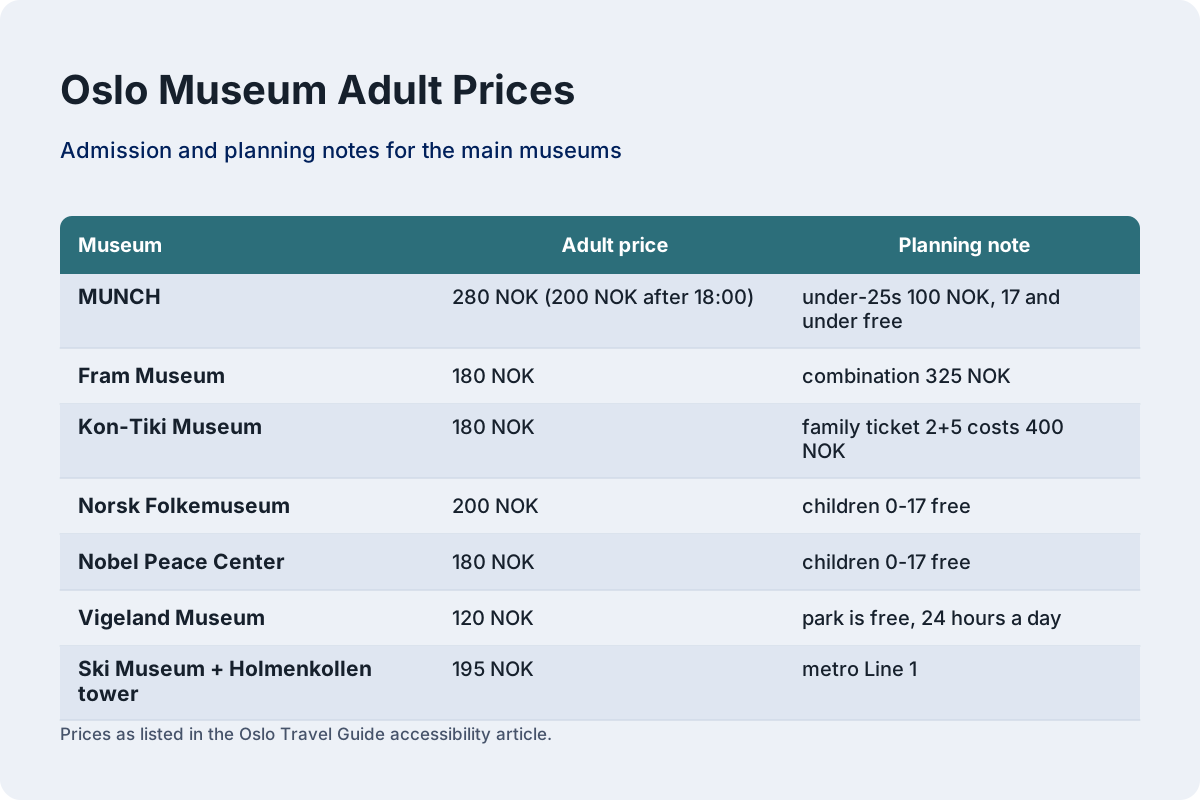
| Museum | Adult price | Notes that matter for planning |
|---|---|---|
| MUNCH | 280 NOK (200 NOK after 18:00) | New building at Bjørvika; under-25s 100 NOK, 17 and under free |
| Fram Museum | 180 NOK | Bygdøynes pier; Kon-Tiki + Fram combination 325 NOK |
| Kon-Tiki Museum | 180 NOK | Bygdøynes pier; family ticket 2+5 costs 400 NOK |
| Norsk Folkemuseum | 200 NOK | Dronningen pier; children 0-17 free |
| Nobel Peace Center | 180 NOK | Central, by the City Hall; children 0-17 free |
| Vigeland Museum | 120 NOK | The museum is paid; the sculpture park itself is free, 24 hours a day |
| Ski Museum + Holmenkollen tower | 195 NOK | Reached by metro Line 1; the tower involves height and exposure |
The Vigeland pairing deserves its own sentence, because it is one of the genuinely good accessibility answers in Europe. The sculpture park, Frognerparken, is free, open 24 hours a day, all year, with no ticket, and its main avenues are wide, level gravel and paved routes between the monolith plateau and the gates. The separate Vigeland Museum, at 120 NOK, is the paid institution. Keep the two apart in your planning, and see our Vigeland Park guide for the layout.
One closure to plan around: the former Viking Ship Museum on Bygdøy is closed and will reopen as the Museum of the Viking Age in 2027, in the museum's own wording, with no month confirmed. Viking-age objects are viewable at the Historical Museum in central Oslo in the meantime, and Viking Planet in the centre is the bookable Viking experience that actually exists today. Our Museum of the Viking Age page tracks the reopening.
Does the Oslo Pass Make Sense for an Accessible Trip?
Often yes, and more so than for the average visitor, because the pass bundles two things an accessible itinerary leans on heavily: unlimited public transport in zones 1, 2, 3, 4V and 4N, including the Vy airport trains, and free entry at over 30 museums and attractions, including the Bygdøy ferry. A 24-hour adult pass costs 580 NOK, against 560 NOK for three Bygdøy museums alone at full price.
The arithmetic is straightforward because the underlying prices are published. Kon-Tiki at 180 NOK, Fram at 180 NOK and the Folkemuseum at 200 NOK total 560 NOK, and a 24-hour pass at 580 NOK adds every tram, metro and bus ride in between, plus the Bygdøy ferry that would otherwise cost about 70 NOK each way. For a slower-paced visitor using transport between every stop rather than walking, the pass pays for itself faster than it does for a walker.
| Pass | Adult | Senior (67+) | Child (6-17) |
|---|---|---|---|
| 24 hours | 580 NOK | 465 NOK | 290 NOK |
| 48 hours | 845 NOK | 675 NOK | 420 NOK |
| 72 hours | 995 NOK | 795 NOK | 495 NOK |
Two fine points from VisitOSLO's own terms. Each museum can be visited once per 24-hour period, and the pass covers public transport in zones 1, 2, 3, 4V and 4N, which includes the Vy trains to and from Oslo Airport Gardermoen but not Flytoget or Flybussen. A 20 percent student discount exists only on passes bought in person at the Oslo Visitor Centre, with the right ID. For the full breakdown, see our is the Oslo Pass worth it analysis.
What Accessible Tour Options Exist in Oslo?
Three formats stand out for visitors who want a guide without a group's pace: a private walking tour that sets its own route and speed, a small-group walk capped at ten people, and a chauffeured private car tour that removes walking from the equation entirely. Beyond those, the fjord cruises are boat-based sightseeing, which suits many visitors better than any walking format, and the free walking tours run about two hours on city-centre pavement.
The private walk is the most flexible. The best-reviewed private option in the city runs two to six hours with a local guide, and the format's whole value is that the route, the pace and the rest stops are yours to set: a slower loop of the centre with café breaks is as legitimate as a marathon. Because it is private, the guide can start from your hotel, skip anything with steps, and spend longer where you want. Check availability if that format fits, and see our private and guided tours overview for the full picture.
The car option is the accessibility answer that most visitors never consider, and in Oslo it is a strong one. A chauffeured private tour in a Volvo XC-90 with all-inclusive museum guiding exists precisely for visitors who will not or cannot walk a city: it reaches Holmenkollen, Bygdøy and Vigeland in one day without a single transfer, and it doubles as the bad-weather plan, which in a city where August averages 103 mm of rain is not a trivial bonus. The rest of the planning pages sit on Oslo Travel Guide. The rest of the planning pages sit on Oslo Travel Guide.
Between private and car sits the small-group walk, capped at ten people and rated highly by its guests. A cap of ten means the guide can wait, the group stays together, and the pace is set by conversation rather than by the fastest walker. It runs three hours through the centre, which is long enough for the highlights and short enough to leave energy for the afternoon.
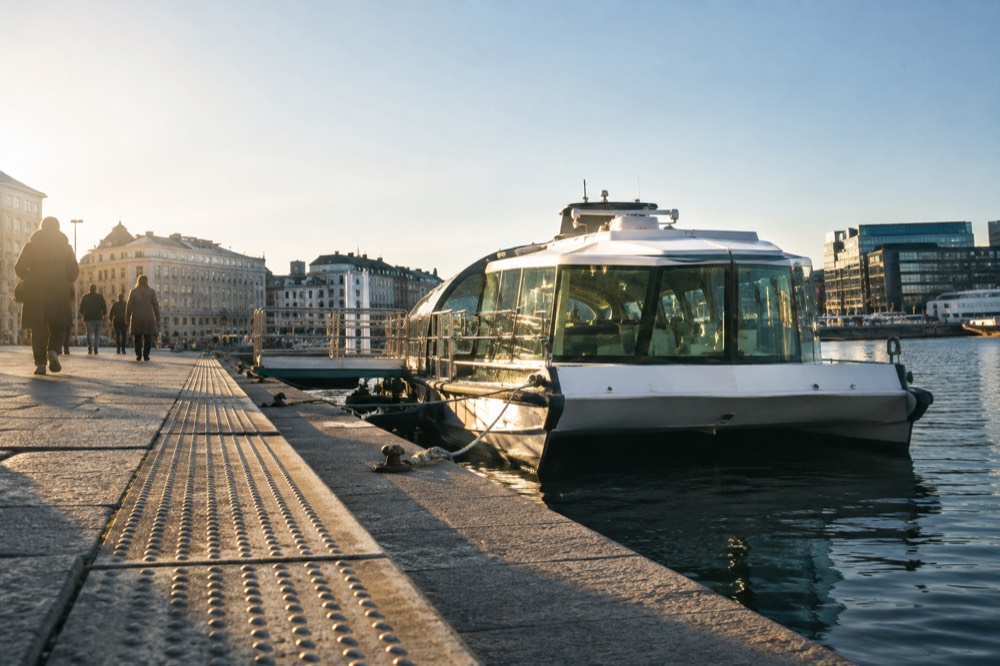
The boat formats deserve a mention here rather than later, because a cruise is sitting-down sightseeing. The silent electric fjord cruise runs 90 minutes with audio commentary; the traditional wooden sailing ship runs two hours; the premium guided silent boat runs two hours with a live guide. All three depart from the central piers, and the full details, including the island-hopping options, are in our Oslofjord cruise guide.
What About the Oslofjord Islands and Waterfront?
The waterfront itself is the most accessible part of Oslo, a continuous flat promenade from the Opera House through Sørenga, and the public island ferries are ordinary Ruter services from Aker brygge. The islands are the part to check carefully: Hovedøya's ferry ride is short, but the paths on the islands are unpaved nature terrain, so treat the boats as the experience and the islands as optional.
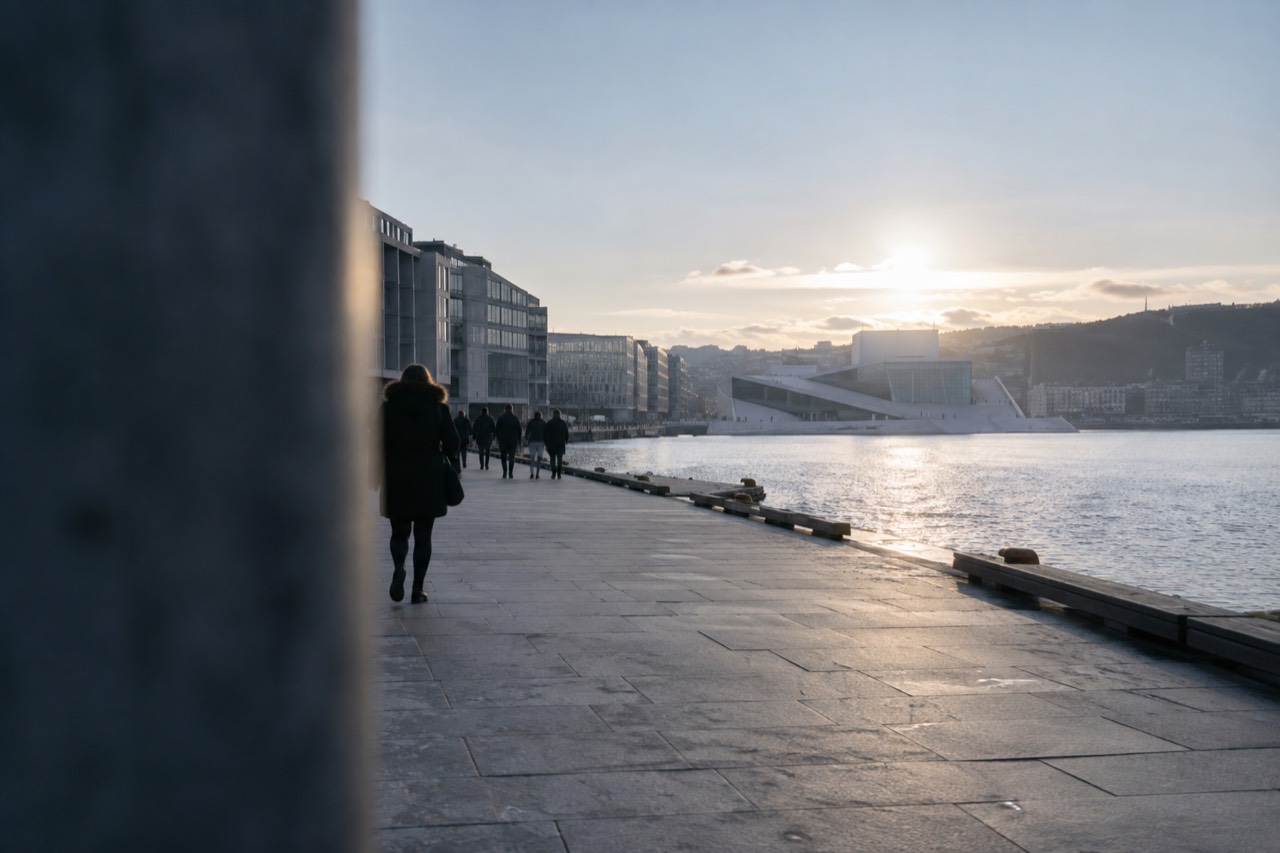
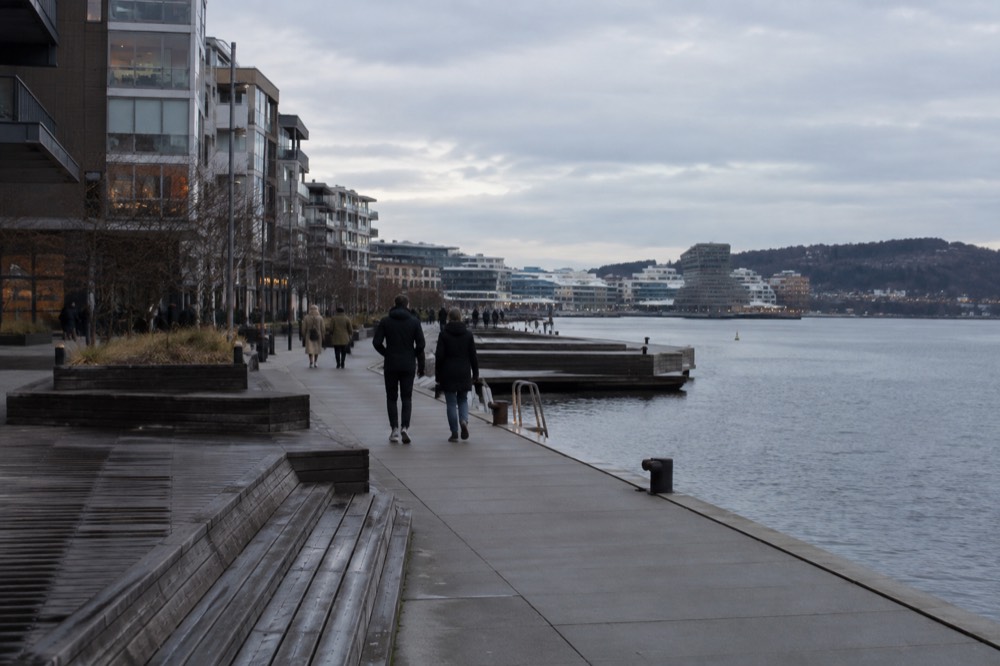
Start with what works without qualification. The harbour promenade is level, wide and continuous, running from the Opera House at Bjørvika, past the City Hall and Aker Brygge, down to Tjuvholmen and Sørenga's seawater pool. This is a walk that can be done in short stages with benches and cafés throughout, and it passes more of the city's modern architecture than any bus tour.
The island ferries, lines B1, B1X and B2, leave from Aker brygge on an ordinary Ruter ticket with no surcharge, and with an Oslo Pass you can get on and off any of them. Hovedøya, the closest island, holds the ruined Cistercian abbey and is a short crossing. But be clear-eyed about the terrain: these are nature islands with grass and gravel paths, not landscaped promenades, and the summer-only B2 service to Langøyene, the swimming and camping island, runs mainly July through August. Our Oslo islands guide covers each one.
Swimming is a real summer option if the idea appeals. July and August water temperatures in the Oslofjord typically run 15 to 20 °C, cool rather than warm, and the official spots, including Sørenga's seawater pool and Tjuvholmen, are free public access. Sørenga's pool, built into the harbour wall with wide decks, is the most accessible of them.
Where Should You Stay for an Accessible Base?
Central Oslo, meaning the stretch from the Central Station and Bjørvika through to the City Hall and Aker Brygge, is the right base, because it is flat, it sits on the tram and metro spine, and every major sight is a short ride rather than a hike. Staying uphill in Frogner or Majorstuen saves money but adds gradients to every journey, and the airport-side hotels add a transfer to everything.
The logic is geometric. Oslo's sights fan out from the centre: the Opera House and MUNCH east, Aker Brygge and the ferries west, Bygdøy south across the water, Karl Johans gate and the Royal Palace up the middle. A hotel anywhere on that central spine puts you within one tram or metro ride of nearly all of it, on flat ground in between. Our where to stay in Oslo guide breaks the districts down in detail.
Two practical notes on the hotel stock. First, the supply of modern, centrally located rooms grew recently: the Clarion Hotel The Hub, with 810 rooms, opened in 2026 as the largest in its chain's Norwegian portfolio, and Hobo Hotel Oslo opened in October 2025, both of which means newer buildings built to current standards. Second, Norway is expensive on the SSB price-level survey, sixth in Europe, with hotel and restaurant costs above the EU average, so central does not mean cheap. Our is Oslo expensive guide has the real numbers.
What Does an Accessible Two-Day Itinerary Look Like?
Day one stays central and flat: the Opera House roof, the National Museum or MUNCH, the harbour promenade to Aker Brygge, and an evening fjord cruise that does the sightseeing while you sit. Day two goes west and south: Vigeland Park's level avenues by tram, then Bygdøy's museum cluster by bus 30 or the seasonal ferry, with the whole day covered by a 48-hour pass at 845 NOK.
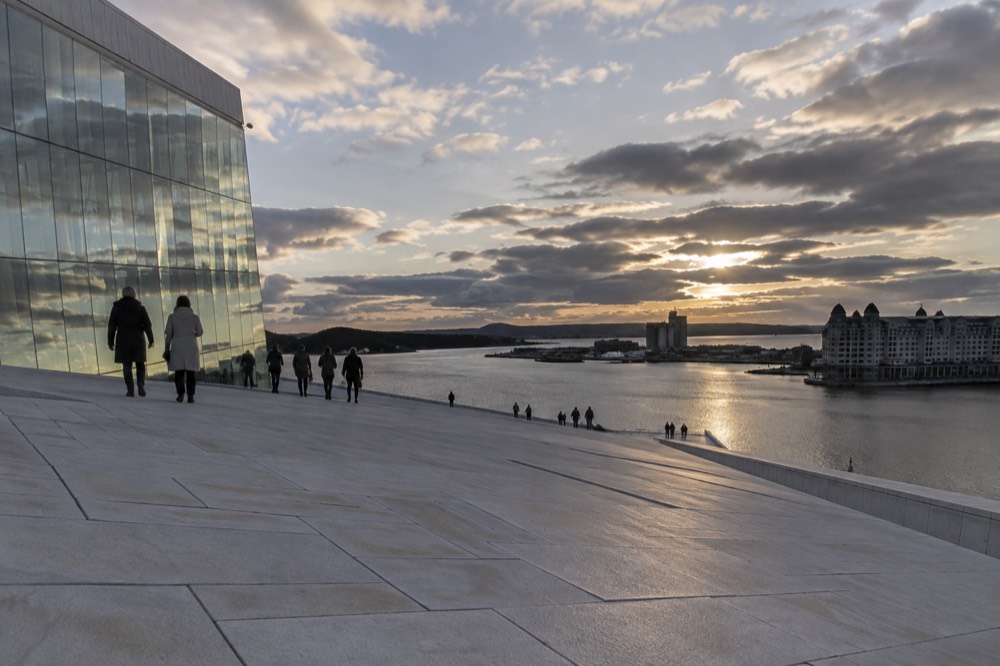
Day one, the flat centre. Start at the Opera House, where the marble roof is itself a gentle ramp with fjord views and no ticket required. Walk or roll the promenade to the National Museum for The Scream, or cross to MUNCH if expressionism is the priority; both are new buildings at Bjørvika. Afternoon is the westward waterfront to Aker Brygge and Tjuvholmen, with the Astrup Fearnley museum at 180 NOK, under-20s free, as the cultural anchor. Evening is the shrimp-buffet fjord cruise, a Norwegian institution that turns dinner into sightseeing.
Day two, the two-halves day. Morning goes to Frognerparken by tram: the Vigeland sculpture park is free, open around the clock, and its main axis is a broad, level processional route. Afternoon goes to Bygdøy, using bus 30 year-round or the ferry in season, for Kon-Tiki and Fram, which sit together on Bygdøynes and combine at 325 NOK, or free on the pass. If a third day exists, the metro's Line 1 to Frognerseteren puts Holmenkollen and the view over the city within reach without a single step of climbing, and the one day in Oslo itinerary scales up from there.
| Block | What | Why it works | Cost |
|---|---|---|---|
| Opera House roof | Walk the marble slope | Free, engineered ramp, no ticket | 0 NOK |
| Harbour promenade | Opera House to Tjuvholmen | Flat, continuous, benches throughout | 0 NOK |
| Vigeland Park | Sculpture park main axis | Free, open 24 hours, level avenues | 0 NOK |
| Bygdøy museums | Kon-Tiki, Fram, Folkemuseum | Bus 30 year-round; combination tickets exist | 180-200 NOK each, or pass |
| Fjord cruise | Silent electric or wooden ship | Sitting-down sightseeing from central piers | Bookable tours |
| Metro Line 1 | To Frognerseteren and Holmenkollen | The hills, by train, no climbing | Ruter ticket |
What Should You Know About Winter, Money and Practicalities?
Winter, from December through February, is the season to plan around most carefully, with January means of −2.3 °C and under seven hours of daylight, while summer gives 18 hours and 50 minutes at the solstice. Norway is in Schengen but not the EU, uses the krone rather than the euro, and costs run high on food and alcohol but not on museums, transport or the outdoors, much of which is free.
The daylight swing is the most under-planned fact about this latitude. On 21 December the sun rises at 09:18 and sets at 15:11, under six hours of light. On 21 June it rises at 03:53 and sets at 22:43, and the gap is twilight rather than true night. There is no midnight sun in Oslo; that belongs above the Arctic Circle. For a slower-paced trip, winter's short days compress itineraries and summer's long ones stretch them, and our Oslo daylight hours guide has the full table.
Money is simple but different. Norway is in the Schengen Area but not the European Union; it is an EFTA state in the EEA, so border formalities are light but duty-free allowances and VAT refunds work differently than within the EU. The currency is the Norwegian krone, and euros are not generally accepted. Card payment is near-universal. Costs split sharply: Statistics Norway's 2025 comparison puts household prices 28.6 percent above the EU average and alcohol and tobacco at more than double, but the things an accessible itinerary leans on, museums, public transport and the outdoors, are where Oslo is genuinely reasonable, and the Oslo trip cost guide itemises it all.
Tipping is not expected; service is included in prices, and rounding up is a voluntary courtesy. Tap water is excellent and free everywhere. English is close to universal in the tourism economy, as our English in Oslo guide explains. And if a December trip is on the table despite the cold, the Oslo in December guide covers the Christmas market and the dark-season trade-offs honestly.

Common Questions About Oslo Accessibility
Is Oslo good for wheelchair users?
Oslo's central core is one of the better European capitals for wheelchair users: flat and continuous from the Central Station to the piers, served by a dense metro, tram and bus network with low-floor vehicles, and home to new-build museums like the Opera House, MUNCH and the National Museum that meet current standards. The challenges are the hills around Holmenkollen, unpaved paths on the fjord islands, and winter ice from December to February.
Is the Oslo Pass worth it for an accessible trip?
Often more so than for the average visitor. A 24-hour adult pass costs 580 NOK, against 560 NOK for three Bygdøy museums alone at full price, and it also covers all Ruter transport in zones 1, 2, 3, 4V and 4N, the Vy airport trains, and the Bygdøy ferry. A visitor using transport between every stop rather than walking breaks even faster.
Can you get to Bygdøy museums without walking far?
Yes. Ruter bus 30 runs year-round from central Oslo and stops at the museums, about 15 minutes from Nationaltheatret. In season, from 14 March to 4 October 2026, the ferry from Rådhusbrygge 3 runs every 20 minutes and accepts the Oslo Pass, though not Ruter tickets. The two museum clusters on the peninsula are 15 to 25 minutes apart on foot, so use bus 30 to hop between them if walking is not realistic.
Is the Oslo Opera House accessible?
Yes, and it is free. The marble roof is a wide, gently sloping engineered ramp rather than a staircase, open to the public with no ticket, and the building sits directly on the flat Bjørvika waterfront promenade. It is one of the most accessible landmark experiences in the city.
What is the best time of year for an accessible Oslo visit?
May through September. Daylight runs long, from over 17 hours in mid-May to 18 hours 50 minutes at the solstice, pavements are ice-free, the Bygdøy ferry is running, and the island ferries are on their summer timetables. Winter is workable but demands more planning: January averages −2.3 °C and the sun sets before 15:30.
Are there accessible tours in Oslo?
Yes. A private walking tour with a local guide runs two to six hours and sets its own route, pace and rest stops; a chauffeured private car tour with all-inclusive museum guiding removes walking entirely; and a small-group walk capped at ten keeps a gentle group pace. The fjord cruises, from a 90-minute silent electric boat to a two-hour wooden sailing ship, are sitting-down sightseeing from the central piers.