Oslo Tap Water: Is It Safe to Drink Straight from the Tap?
Oslo's tap water comes from protected forest lakes and reservoirs north of the city, and it is not only safe to drink but consistently rated among the cleanest municipal water in Europe. Here is where it actually comes from, what it tastes like, and why buying bottled water in Oslo is close to pointless.
Short answer
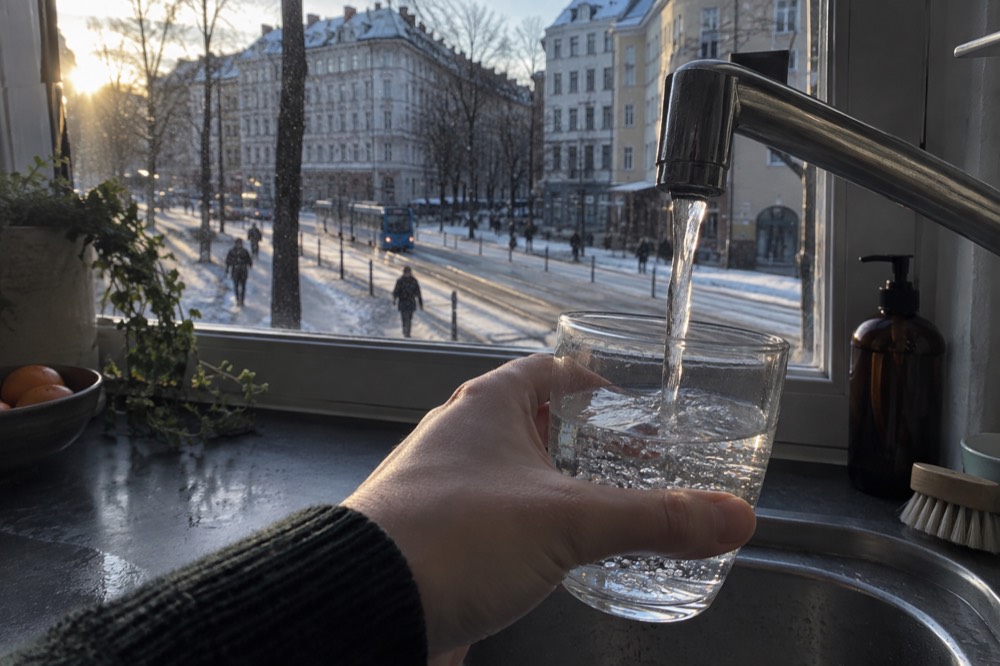
Yes, Oslo tap water is completely safe to drink. It comes from protected lakes and reservoirs in the forests north of the city, mainly Maridalsvannet and the Oslomarka catchments, is treated to a strict Norwegian standard, and tastes clean and soft. Locals drink it straight from the tap everywhere, and refilling a bottle saves both money and plastic.
Oslo Tap Water: Is It Safe to Drink Straight from the Tap?
Yes, Oslo tap water is safe to drink, straight from any tap, without filtering or boiling. The city draws its water from protected forest lakes and reservoirs in the hills north of the centre, treats it to the Norwegian drinking water standard, and pipes it into homes, hotels and public fountains across the municipality. It is soft, clean-tasting water, and Norwegians consider buying bottled water in a country like theirs mildly absurd. If you are visiting, the honest advice is simple: bring a refillable bottle and fill it from the tap.
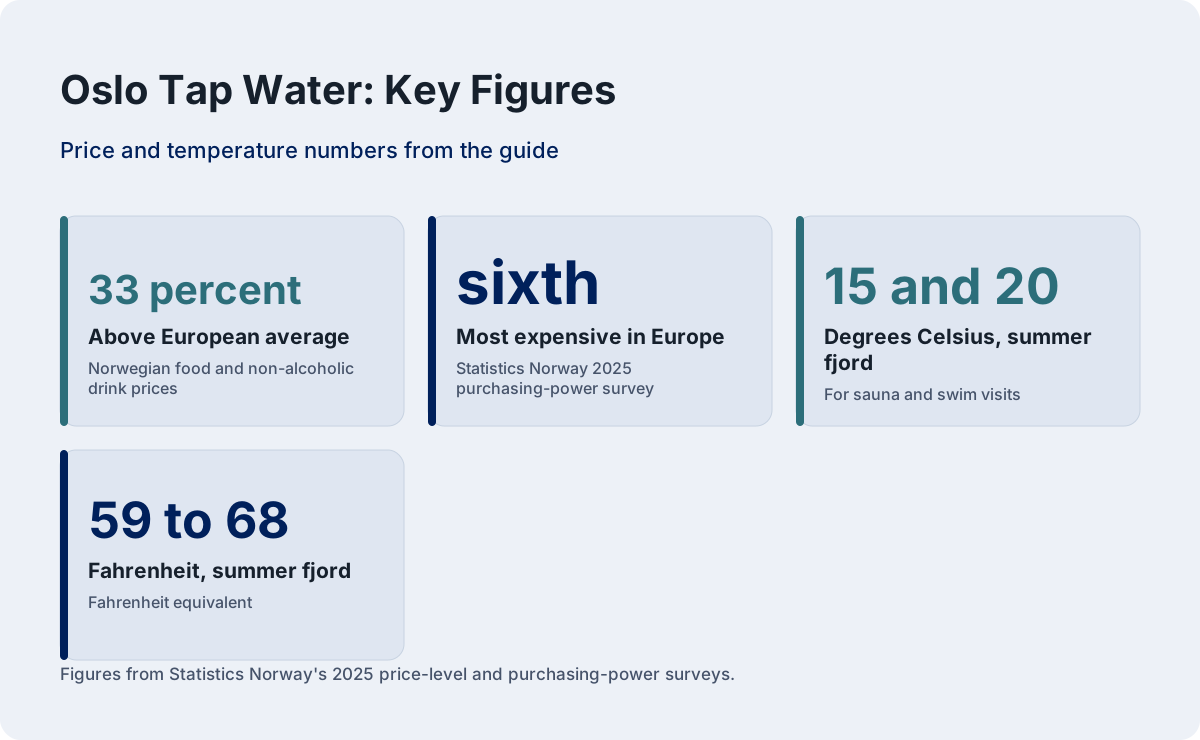
That single habit will save you real money in one of Europe's most expensive cities. Statistics Norway's 2025 price-level survey puts Norwegian food and non-alcoholic drink prices 33 percent above the European average, and small bottled waters in Oslo kiosks sit firmly inside that markup. The tap, by contrast, costs effectively nothing, including in your hotel room.
This guide covers where the water comes from, how it is treated, what it tastes like, the rare situations where a caution applies, and how to find free drinking water around the city as you sightsee. It also explains the plumbing conventions, or rather the absence of them, that catch out visitors from countries where bathroom taps carry warning labels.
Where Does Oslo's Tap Water Come From?
Oslo's drinking water comes mainly from Maridalsvannet, the large lake just north of the city, plus a network of forest reservoirs in Oslomarka, the protected woods that wrap around the capital on three sides. The catchments sit inside a restricted zone where farming, industry and building are heavily limited, which is the whole reason the raw water arrives so clean in the first place. From the sources it flows to municipal treatment plants, then into a distribution network that serves the entire city, from the waterfront at Aker Brygge to the hillside homes above Holmenkollen. Very few European capitals can say their water spends its entire pre-treatment life in a forest nobody is allowed to build on.
Norway as a whole is unusually rich in freshwater, and Oslo is one of its best-served cities. The lakes and streams of Nordmarka, the vast forest area reachable by metro from the centre, feed the system. The same forests hikers and skiers use on weekends double as the city's water protection zone, and signs around the lakes make the restriction explicit. You can read more about the area in our guide to Nordmarka, Oslo's forest backyard.
What this means practically for a visitor is that the water arriving at your hotel tap has spent its entire life in a protected, low-population catchment rather than a river downstream of other cities. That is a structural advantage few European capitals share, and it is why the treatment process can be comparatively gentle.
| Source | Location | Role in supply |
|---|---|---|
| Maridalsvannet | North Oslo, end of the Akerselva valley | Main surface-water source for the city |
| Oslomarka forest lakes and reservoirs | Protected forest belt around Oslo | Additional sources and storage |
| Groundwater wells | Scattered, small share | Minor supplement to the network |
Is It Safe? The Short Answer for Visitors
Yes, it is safe for everyone, including children, and no boiling, filtering or special precautions are needed anywhere in Oslo. Norwegian drinking water is regulated under the national Drinking Water Regulations, which implement the EU-derived parametric values Norway follows through its EEA membership, and Oslo Water and Sewerage Works, the municipal utility, monitors the supply continuously at the treatment stage and in the network. Non-compliance events are rare and publicly reported when they happen. If you normally drink tap water at home in Western Europe or North America, you have nothing to think about here.
A point worth knowing: Norway is in the Schengen Area but not in the European Union, an EEA state that adopts most single-market rules, including water-quality standards, without being an EU member. So the water meets essentially the same parameters you would expect anywhere in Western Europe, under a national regulator with the same reference limits.
The one honest caveat is a general one that applies to any old building anywhere: in rarely used taps, such as a seldom-visited holiday-flat bathroom, letting the water run for a short while before drinking is sensible plumbing advice rather than a water-quality concern. In hotels, restaurants and public fountains, drink freely.
What Does Oslo Tap Water Taste Like?
Oslo tap water is soft, low in minerals, and neutral-tasting, with none of the chlorine bite that visitors from some countries expect from municipal water. Because the raw water is surface water from granitic, nutrient-poor catchments, its natural hardness is low, and the treatment process is designed around disinfection and pH adjustment rather than heavy chemical processing. Most people cannot distinguish it from premium still water in a blind pour, and many visitors say it tastes better than the water at home. If you dislike the taste of tap water where you live, Oslo is very likely the place that changes your mind.
Softness is the defining characteristic. If you come from a hard-water region, you may notice tea and coffee taste slightly different, lather forms easily with soap, and kettles do not fur up. None of this affects safety; it is simply a pleasant property of the local supply, and it is one reason the city's coffee roasters are so fond of their feed water.
Norwegians are quietly proud of this. The tap-versus-bottle question is a standing joke in Norway, and asking a waiter for still water will usually get you tap water unless you specify otherwise. Restaurants are legally entitled to serve tap water, and it is normal to ask for it with a meal.
| Property | Oslo tap water | What it means for you |
|---|---|---|
| Hardness | Soft, low mineral content | Neutral taste, easy on kettles and appliances |
| Chlorine | Minimal to none in taste | No chemical flavour when you refill a bottle |
| Source type | Protected surface water | Naturally clean before treatment |
| Fluoride | Not added in Oslo | Taste and safety unaffected |
Why Buying Bottled Water in Oslo Is a Waste of Money
Bottled water in Oslo costs real money for something the city gives away free, and the price gap is dramatic in a country where food and drink already run 33 percent above the European average. Statistics Norway's 2025 purchasing-power survey ranks Norway the sixth most expensive country in Europe, with alcohol and tobacco more than double the European average, and non-alcoholic drinks following the same general price level. A small bottle from a convenience-store fridge is priced accordingly, while the tap in your hotel bathroom delivers the same or better water for nothing at all. Over a four-day trip, the difference easily adds up to a museum ticket.
There is also the environmental argument, which Norwegians take seriously. Plastic-bottle litter in forests and fjord shorelines is a national sore point, and the deposit-return system on plastic bottles exists precisely because the country would rather you refilled. Carrying a refillable bottle is the local norm, not a tourist affectation.
If you are planning a budget-conscious trip, this is one of the easiest savings available. Our Oslo on a budget guide collects the others, from free museum days to the genuinely free sights, and our free things to do in Oslo list shows how much of the city costs nothing at all.
Can You Drink from Public Fountains and Bathroom Taps?
Yes, public drinking fountains in Oslo parks and squares serve the same municipal water as kitchen taps, and bathroom taps in hotels and restaurants do too. Norway does not have a two-tier plumbing convention where bathroom water is non-potable, the way some countries label it. If a tap is connected to the municipal supply, the water is drinkable, whether it sits above a kitchen sink, a hotel bath or a public restroom basin. This surprises visitors from countries where the bathroom tap carries a do-not-drink sign, but in Oslo the sign would be pointless.
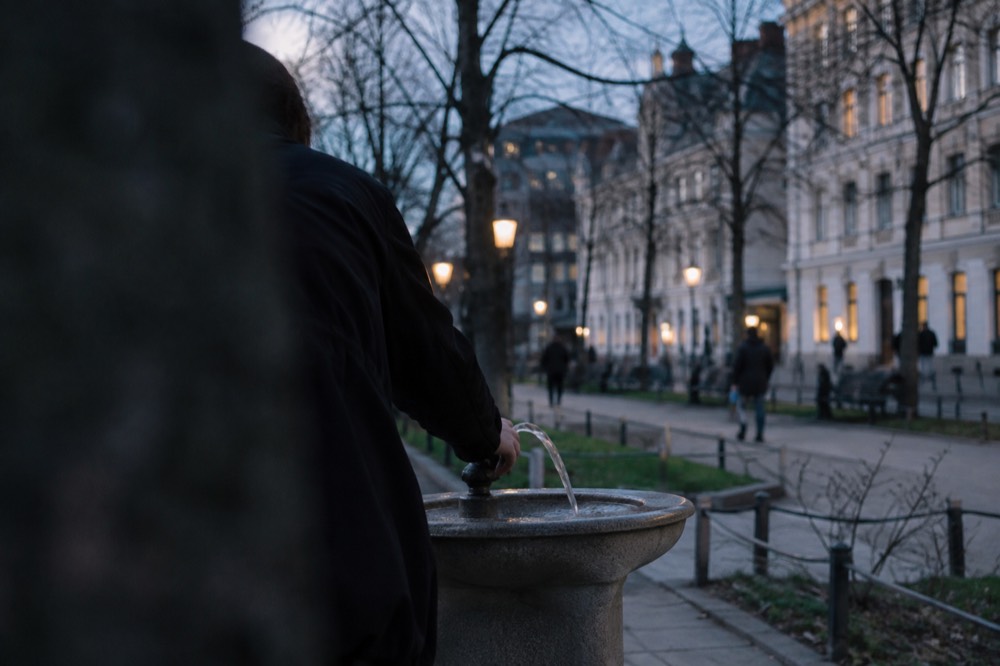
Public fountains run in the warmer months in parks such as Frognerparken and along the waterfront. Some are ornamental, and the rule of thumb is simple: if a fountain has a small upward spout clearly designed for drinking, it is a drinking fountain; if it is a decorative basin with coins in it, admire it and move on. In winter most drinking fountains are shut off to protect the pipes, which is worth knowing before a December trip. More of these guides are collected on Oslo Travel Guide. More of these guides are collected on Oslo Travel Guide.
Cafés will also refill a bottle if you ask, usually without charge. Museums have water stations in their foyers, and the major attractions like the Oslo Opera House area and Aker Brygge waterfront put you within a short walk of somewhere to refill year-round.
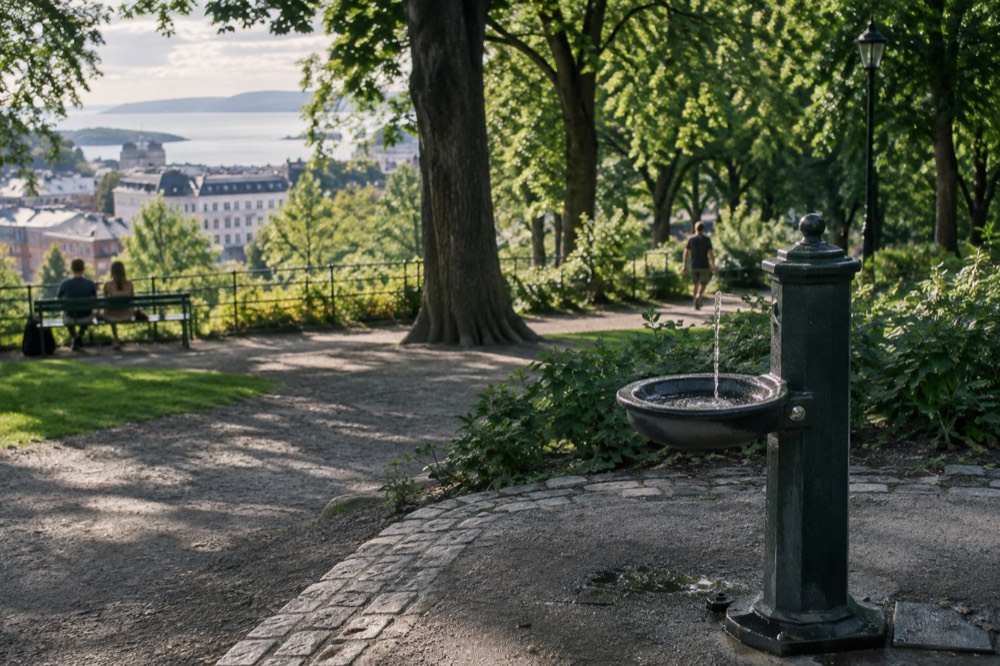
The same rule extends to airport taps, shopping-centre restrooms and the sinks in museum cloakrooms. Once you internalize that every municipal tap in the country is a drinking tap, planning your day around hydration stops being a task at all.
Water on Oslo Hikes and in Nordmarka
On the trails around Oslo you will find streams and lakes that look pristine, and the municipal tap water in the city is safe, but untreated surface water in the forest should not be drunk without boiling or filtering. The distinction matters, and it is the one place where the city's excellent water reputation can mislead a hiker. Oslo's tap water is treated and monitored; a stream in Nordmarka, however clean it looks, is wildlife and watershed runoff, and the standard hiking advice in Norway is to treat backcountry water before drinking it. Giardia and other contaminants do not care how clear the water appears.
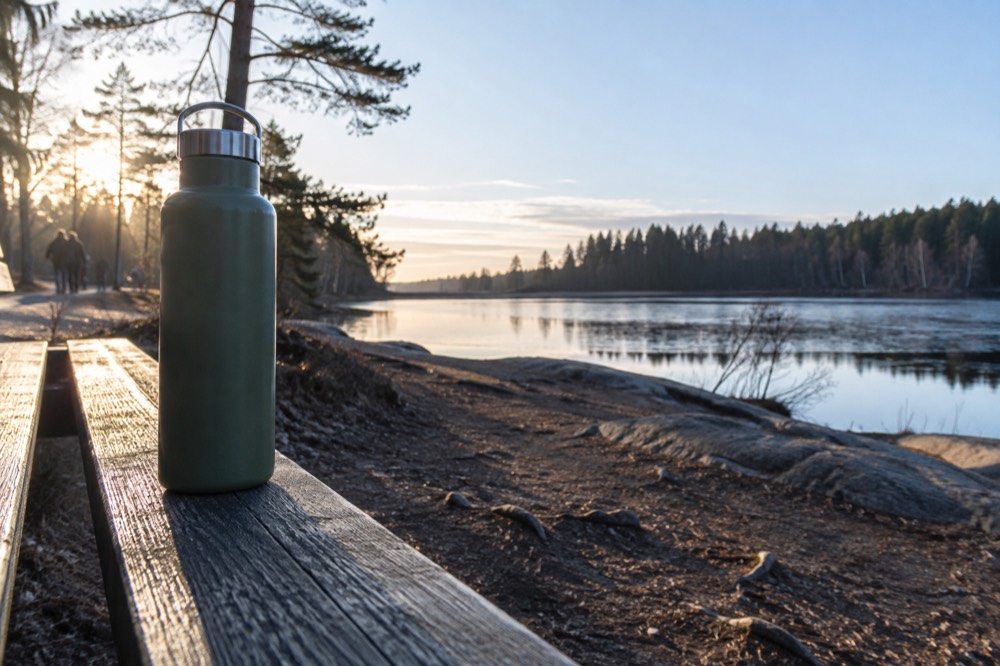
For day hikes to popular spots like Sognsvann or Frognerseteren, the practical answer is to carry a filled bottle from the city. The trailheads are metro stations, so you are never far from a tap before you start. Our hiking near Oslo guide covers the main routes, and the Sognsvann lake guide details the most accessible of them.
In winter the same applies, and snow should never be eaten as a hydration strategy. If you are heading out on a guided winter experience, operators plan water stops into the day. The torchlit forest walk with campfire, for instance, includes a campfire stop where hot drinks are part of the experience.
| Situation | Safe to drink? | Notes |
|---|---|---|
| Hotel and restaurant taps | Yes | Same municipal supply everywhere |
| Public drinking fountains | Yes, in season | Most are switched off in winter |
| Streams and lakes in Nordmarka | Not without treatment | Boil or filter backcountry water |
| Bottled water in shops | Yes | Safe, but expensive and unnecessary |
| Hotel bathroom tap | Yes | No non-potable plumbing convention in Norway |
The forest rule is worth repeating to any hiking companions who assume Norway's cleanliness extends to its streams. The country's tap water is world-class precisely because it is treated; the wilderness water is a separate question.
Water, Ice and Drinks in Oslo Restaurants
Restaurants in Oslo use municipal water for ice, coffee and the tap water they bring to your table, so ordering water with a meal is completely safe, and the ice in your glass is made from the same treated supply. Ice in Norway is not a separate mystery product; it is frozen tap water from the same pipes. Asking for a glass of tap water, in Norwegian "et glass vann fra kranen" if you want to try, is normal and unremarkable, and most places will bring it without charge or with a token fee. Nobody will look at you oddly for asking.
Coffee culture in Oslo deserves its own mention, because the water is part of why the city's coffee is so good. Soft water suits light roasts, and Oslo roasters have built a global reputation on the combination. Our Oslo coffee guide goes deeper, and the best restaurants in Oslo guide covers where to eat.
The contrast with alcohol prices is where visitors feel Norway's cost structure. A beer out costs what a full meal costs in much of Europe, which is a direct consequence of alcohol and tobacco running at more than double the European average on SSB's price index. Water from the tap is the one drink in the city that behaves like it is free, because effectively it is.
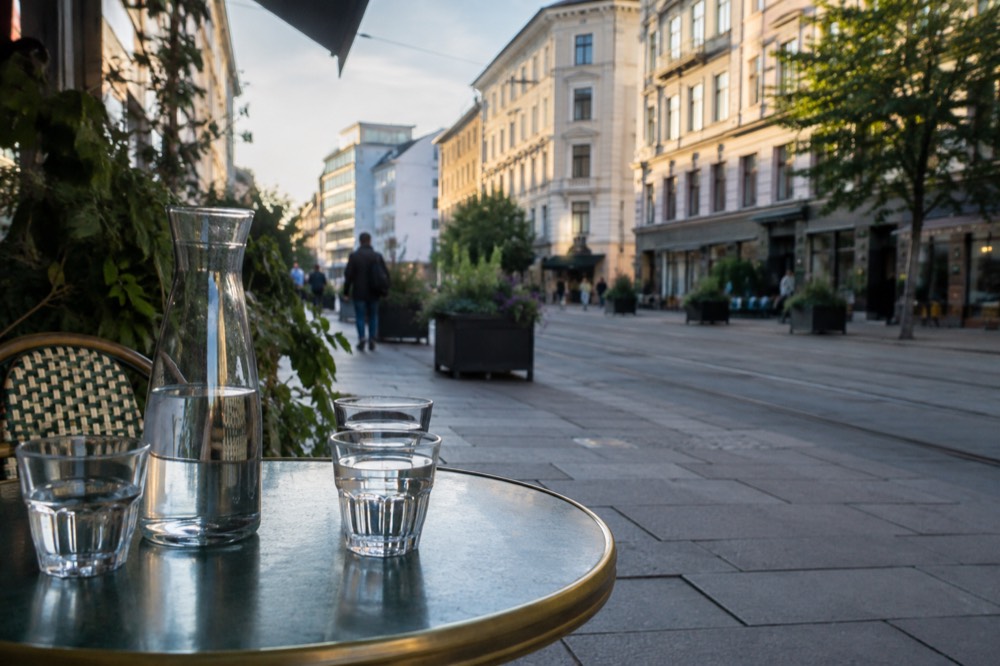
Tap Water, Saunas and Cold Plunges
If you are trying Oslo's sauna culture on the waterfront, the drinking water situation is the same: tap water everywhere is safe, and saunas have taps or bottled water available for guests. The sauna operators along Sørenga and the fjord front are direct-sale businesses rather than platform-bookable tours, so you book with them directly rather than through a listing. What you drink there is ordinary Oslo water, and the operators are used to guests refilling bottles between sessions. Nothing about the sauna context changes the underlying supply.
Hydration matters more than visitors expect in a hot sauna, particularly in winter when the cold makes you feel less thirsty than you are. The standard advice is to drink before and after a session, and tap water does the job. Our Oslo sauna guide covers the waterfront sauna scene in full, including what a session costs and how the cold plunge works.
The sauna-and-fjord combination is one of the city's genuinely distinctive experiences, and it pairs naturally with a swim in the fjord, where summer water temperatures typically sit between 15 and 20 degrees Celsius (59 to 68 Fahrenheit). The Oslo beaches guide lists the official swimming spots.
Practical Tips: Staying Hydrated as a Tourist
Carry a refillable bottle, fill it at your hotel before you leave each morning, and top up at museums, cafés and public fountains through the day. That is the entire strategy, and it works in every season. It costs nothing, and in a city where a kiosk snack can shock a first-time visitor, it is the easiest saving you will make. Every hotel room tap, every museum foyer and most café counters are refill points, and none of them will charge you for the privilege. If you take one habit away from this guide, make it this one.
A few specifics help. In winter, the air indoors is dry from heating and the cold outside suppresses thirst, so drink deliberately rather than waiting to feel it. On long sightseeing days, the major museums are the most reliable refill points because their foyers stay staffed and open through opening hours. And if you are out in the evening, bars will serve tap water alongside drinks on request, though given what a beer costs in Norway, our price of beer in Oslo guide is worth reading before you order anything.
For families, the same advice applies with kids, and the Oslo with kids guide notes which attractions have the best facilities. The site's overall planning resource, oslotravelguide.com, collects the cost questions in one place, including whether the Oslo Pass is worth it for your itinerary.
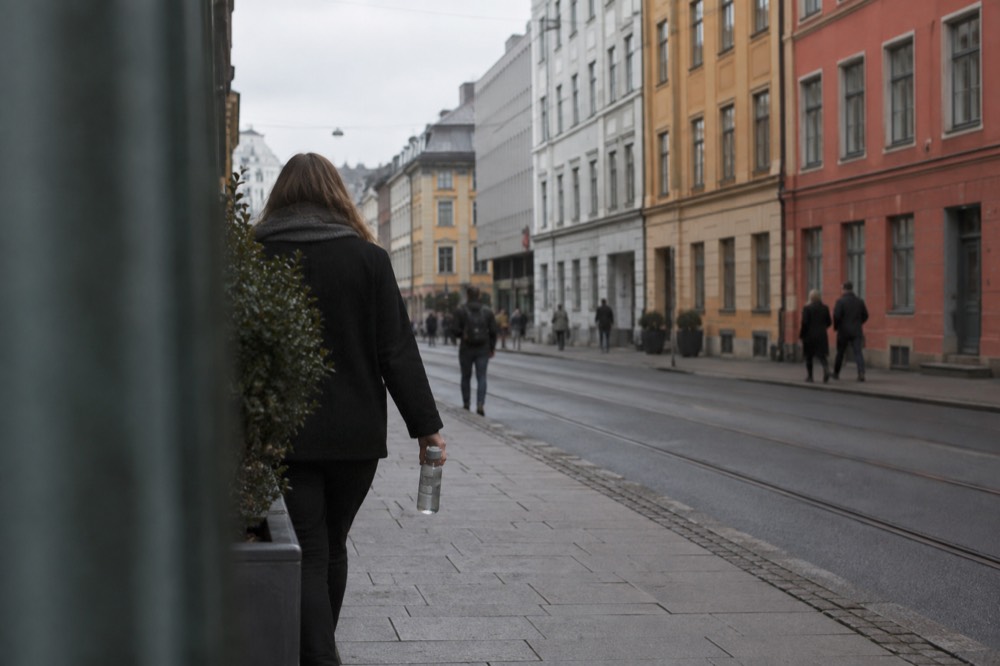
| Situation | What to do |
|---|---|
| Leaving the hotel in the morning | Fill your bottle from the room tap |
| Out sightseeing in summer | Use park drinking fountains and museum foyers |
| Winter visit | Fountains are off; refill indoors, drink deliberately |
| On a hike | Carry from the city; treat backcountry water |
| At a restaurant | Ask for tap water with your meal |
Common Questions About Oslo Tap Water
Is Oslo tap water safe to drink?
Yes, completely. It comes from protected forest catchments, is treated to the Norwegian drinking water standard, and is monitored continuously by the municipal utility. No boiling or filtering is needed anywhere in the city.
Can you drink tap water in Oslo hotels?
Yes, including from the bathroom tap. Norway has no convention of non-potable bathroom plumbing, and hotel water is the same municipal supply as everywhere else in the city.
Does Oslo tap water contain chlorine?
The water is disinfected as part of treatment, but the levels are low enough that most people notice no chlorine taste. It tastes soft and neutral compared with tap water in many other countries.
Is Oslo tap water free in restaurants?
Tap water is generally served on request, often without charge or for a small fee. It is normal to ask for it, and restaurants are used to the request from locals and visitors alike.
Can you drink from streams and lakes around Oslo?
Untreated surface water in Nordmarka and the surrounding forests should be boiled or filtered before drinking, however clean it looks. The city's treated tap water is a different thing entirely and is safe.
Should I buy bottled water in Oslo?
There is no practical reason to. Bottled water costs real money in one of Europe's most expensive countries, while the tap water is soft, clean and effectively free. Bring a refillable bottle instead.