Flights to Oslo and Every Other Way Into the City
Oslo is one of the easiest capitals in Scandinavia to reach, but the part most guides get wrong is the last 50 km. Here is how the flights, trains, ferries and border rules actually work.

Short answer
Oslo is served by Oslo Airport Gardermoen, about 50 km north of the city, with direct flights across Europe and seasonal long-haul routes. The airport train runs every 10 minutes and takes about 20 minutes. Norway is in Schengen but not in the EU, and the currency is the Norwegian krone, not the euro.
Flights to Oslo and Every Other Way Into the City
Oslo sits at the northern end of the Oslofjord, and almost every route into the city funnels through one of two chokepoints: Oslo Airport Gardermoen for arrivals by air, and Oslo Central Station for arrivals by rail. The city is genuinely easy to reach, with direct flights from across Europe and a fast, frequent airport train. What trips visitors up is not the distance, it is the details. Norway is in Schengen but not in the EU, the currency is the krone, and the airport transfer has a 134 NOK trap built into it that most guides never mention.
This guide walks through every practical way in: which airport your flight actually lands at, what the transfer options cost, whether the Oslo Pass covers the airport train, and what the train, bus and ferry alternatives look like if you are arriving overland. Every price here comes from the operator's own published fares, and where a figure is not confirmed it says so rather than guessing. The whole site, this page included, is the work of Oslo Travel Guide, an editorial desk that checks every figure against the operator's own pages before it prints it.
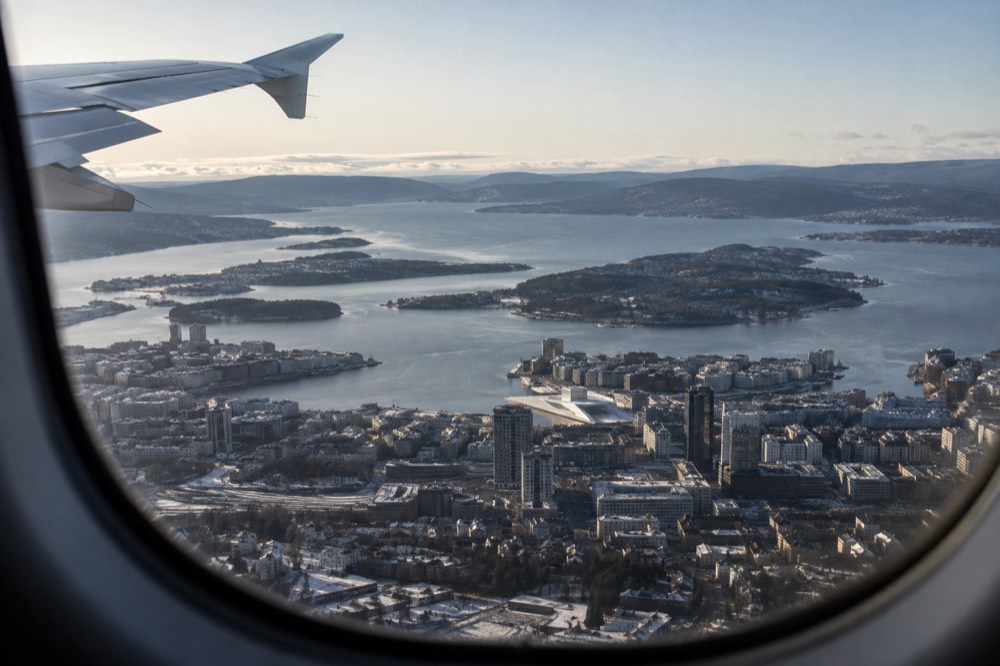
What Are the Main Ways to Get to Oslo?
Most visitors fly into Oslo Airport Gardermoen, 50 km north of the city, and reach the center by train in about 20 minutes. Overland alternatives include long-distance trains from Gothenburg and Stockholm, long-distance buses from Sweden, overnight ferries from Copenhagen and Kiel, and driving across the Swedish border. Each option trades price against time, and the ferry routes are the only ones that arrive directly at the waterfront.
Air is the dominant route by a wide margin. Gardermoen is Norway's main hub, and it handles the overwhelming majority of international arrivals into the Oslo region. The airport is well connected, modern and compact, and the transfer into town is short enough that a two-hour connection window is comfortable for most travelers.
Overland arrivals are a real option for anyone already in Scandinavia or northern Europe. The train from Stockholm takes roughly half a day, the train from Gothenburg around four hours, and the overnight ferries from Denmark and Germany turn the journey itself into part of the trip. Drivers cross the Swedish border at several points, and the roads are quiet outside the cities.
The table below sums up the main entry routes and what each one is good for.
| Route | Typical use | Arrival point | Best for |
|---|---|---|---|
| Flight to Oslo Airport Gardermoen | Most international visitors | Gardermoen, 50 km north | Speed and frequency |
| Flight to Torp Sandefjord | Some low-cost carriers | Torp, about 110 km south | Cheaper fares, longer transfer |
| Train from Stockholm or Gothenburg | Scandinavian rail travelers | Oslo Central Station | Scenery, no flying |
| Long-distance bus from Sweden | Budget overland travel | Oslo Bussterminal | Lowest price |
| Overnight ferry from Copenhagen or Kiel | Ferry travelers and cruise-style arrivals | Vippetangen quay, waterfront | Arriving rested, car included |
| Car across the Swedish border | Road-trippers | Various crossings | Flexibility |
If you are weighing a short visit, our one day in Oslo itinerary assumes an early arrival and packs the essentials into a single day, while the weekend in Oslo guide is built around a Friday-to-Sunday rhythm.
Which Airlines Fly to Oslo, and Which Airport Will You Actually Land At?
Almost all flights to Oslo land at Oslo Airport Gardermoen, the main hub 50 km north of the city, which handles the direct routes from across Europe and the seasonal long-haul services. A smaller number of low-cost carriers use Torp Sandefjord, about 110 km south of the city, which can save on the fare but adds well over an hour to the transfer. Always check which airport code your ticket shows before booking.
Gardermoen is the airport the city's transport system is built around. It is a single-terminal design, compact enough that walking between gates is quick, and the railway station sits directly underneath the arrivals hall. That matters more than any airline detail, because the transfer is where the time and the money go.
The airline mix covers the full European spectrum, from the big network carriers with connections through their hubs to the low-cost operators flying point-to-point. Direct long-haul services exist but are fewer than at the larger European hubs, so many visitors from outside Europe connect once, usually through a major continental airport. If your itinerary gives you a choice of connection cities, a shorter final leg into Gardermoen beats a cheaper routing with a long layover.
Torp is the airport to be careful with. It markets itself as serving Oslo, and technically it does, but it sits near Sandefjord, roughly two hours from the capital by combined bus and train. A fare that looks like a bargain can stop being one once the transfer cost and time are added. Our page on Oslo Torp and Sandefjord airport breaks down that transfer in full.
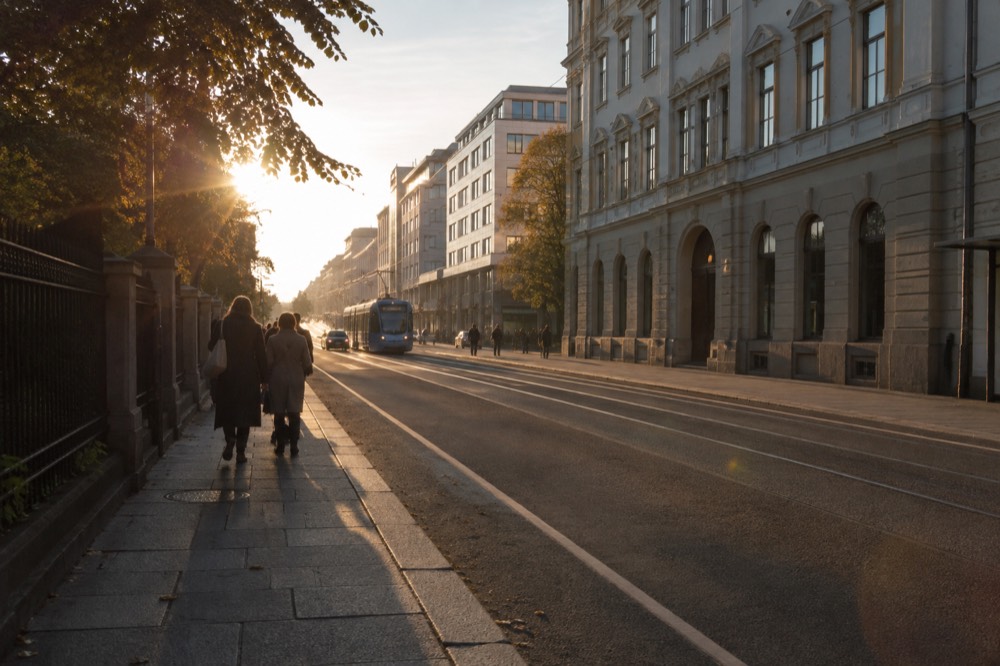
Once you have landed and cleared the arrivals hall, the trip into the city begins, and that is where most of the practical decisions sit. The trio below covers the three most useful first-day bookings: the fjord cruise that departs from the pier beside City Hall, the Kon-Tiki Museum ticket for the museum peninsula, and a food walk through Grünerløkka for your first evening.
If your flight lands in the morning and the hotel room is not ready, the standard move is to drop bags at the station or a luggage point and head straight for the waterfront. The station sits at the east end of Karl Johans gate, with the Opera House a short walk south and the tram and metro network directly underneath, so there is no transfer to plan once you step off the airport train.
How Do You Get from Oslo Airport to the City Center?
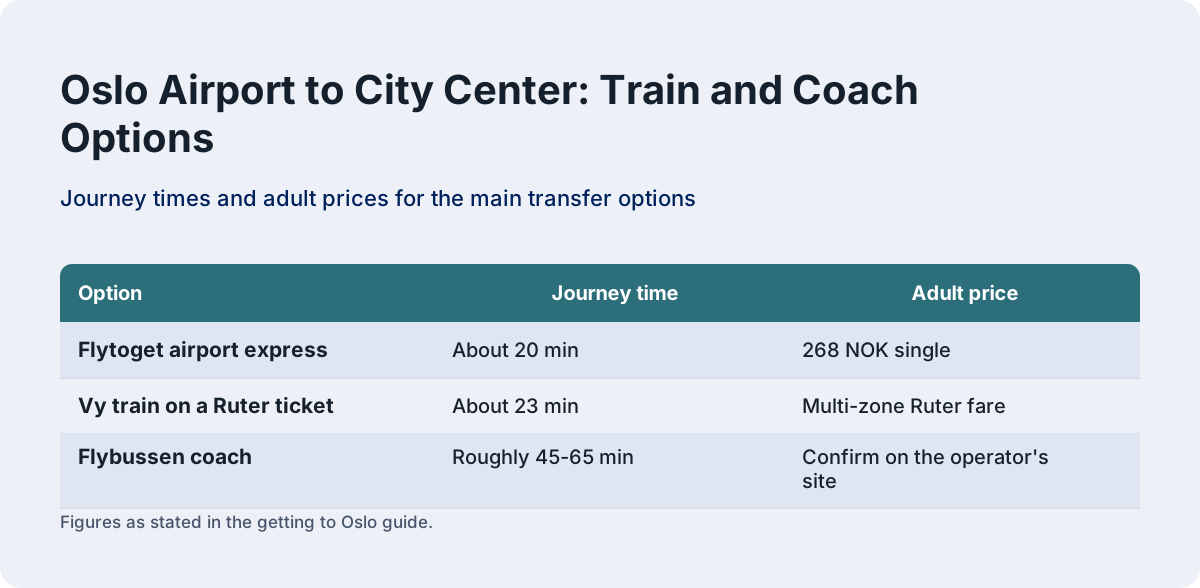
The fastest way is the Flytoget airport express, which runs every 10 minutes and takes about 20 minutes to Oslo S for 268 NOK adult single. The cheapest sensible way is a Vy regional train on exactly the same tracks, about 23 minutes, where a Ruter ticket covering zone 1 through zone 4N is valid and the Oslo Pass covers the ride outright. The gap between the two is the single most valuable money fact on this site.
The two train services ride the same railway into the same station, three minutes apart in journey time, at very different prices. Flytoget is the premium airport express: dedicated trains, departures every 10 minutes, about 20 minutes to Oslo S, and an adult single of 268 NOK with discounted singles at 134 NOK for seniors, students, youths and children. Tickets stay valid for 90 days from purchase, so you can buy ahead without locking yourself to a specific train.
The Vy trains are the mechanism most guides miss entirely. These are ordinary regional and local services, and they are also ordinary Ruter-zone trains. The airport sits in Ruter zone 4N, the city center in zone 1, and a Ruter ticket covering those zones is valid on the Vy trains with no separate airport supplement. The Oslo Pass, which includes public transport in zones 1, 2, 3, 4V and 4N, covers them outright, including, in VisitOSLO's own wording, "transport to and from Oslo Airport Gardermoen with public trains operated by VY." It does not cover Flytoget, and it does not cover the Flybussen coach.
| Option | Journey time | Adult price | Notes |
|---|---|---|---|
| Flytoget airport express | About 20 min | 268 NOK single | Every 10 min; discounted singles 134 NOK |
| Vy train on a Ruter ticket | About 23 min | Multi-zone Ruter fare | Zone 1 to 4N; Oslo Pass valid |
| Flybussen coach | Roughly 45-65 min | Confirm on the operator's site | Traffic-dependent |
| Taxi | Varies | Regulated per operator | Metered, confirm the fare before boarding |
Two warnings. First, the airport is in Ruter zone 4N, not zone 2Ø as some automated sources claim, so let the Ruter app's journey planner count the zones rather than doing it by hand. Second, buying Vy's own point-to-point fare at the machine is the expensive way to take the cheap train. The full breakdown, including where exactly to board and how the two services compare minute by minute, is in our Flytoget vs Vy comparison, and the wider airport to city center guide covers every option including taxis.
The airport transfer is also the moment the Oslo Pass starts earning or not. A 24-hour adult pass costs 580 NOK and includes the Vy airport trains plus every museum entry, so if you land early and plan a museum-heavy first day, the pass can pay for itself before dinner. The full price table and the break-even math are in the is the Oslo Pass worth it guide.
Can You Reach Oslo by Train from Other Cities?
Yes, and the rail routes are among the best ways to arrive. The Stockholm to Oslo train covers the distance in roughly half a day, the Gothenburg service takes around four hours, and domestic trains connect Oslo to Bergen, Trondheim and the mountain corridor. All long-distance trains arrive at Oslo Central Station, which puts you in the middle of the city the moment you step off.
Arriving by train in Oslo is genuinely pleasant. The station sits at the east end of Karl Johans gate, the main street, with the Opera House a short walk south and the tram and metro network directly underneath. There is no transfer to plan, no airport leg, no 50 km to cover. For anyone already in Scandinavia, that alone can justify the rail routing.
The Stockholm route crosses some of the quietest forest country in Sweden and is comfortable if not dramatic. The Gothenburg route hugs the Swedish west coast hinterland. The domestic Bergen line is the famous one, a mountain crossing regularly named among the world's great train journeys, and it deserves its own planning page in our Oslo to Bergen train guide.

Book long-distance trains early. Norwegian and Swedish intercity services use yield-managed pricing, and the walk-up fare on the Stockholm route can be several times the advance price. The national booking systems handle seat reservations automatically on the routes that require them, and tickets are delivered to a phone, which is also how you board.
| Route | Direction | Roughly | Notes |
|---|---|---|---|
| Oslo to Bergen | Domestic west | A full day, mountain crossing | One of Europe's great rail journeys |
| Oslo to Stockholm | International east | About half a day | Crosses the Swedish border twice |
| Oslo to Gothenburg | International south | Around four hours | Connects to Danish services |
| Oslo to Trondheim | Domestic north | Most of a day | Dovre mountain line |
One note on disruption: the area around Oslo Central Station is subject to long-term redevelopment planning, and occasional engineering works affect regional lines in the wider network. Check the operator's own journey planner on the day you travel rather than relying on a timetable printed in a guide, ours included.
Do Ferries and Cruise Ships Connect Oslo to Other Countries?
Yes. Overnight car ferries run between Oslo and both Copenhagen and Kiel in Germany, arriving at the Vippetangen quays a short walk or bus ride from the center. Cruise ships call at several piers scattered along the fjord-side of the city, and which pier yours uses determines how long the walk into town is.
The overnight ferries are the underrated arrival. You board in the evening, have dinner and a cabin, and wake up looking at the Oslofjord as the ship threads its way north through the island chain. The crossing itself is a slow-motion fjord tour, and it delivers you to the heart of the city with no transfer to plan. Cars travel too, which makes the ferries popular with road-trippers who want to skip the long drive through Sweden.
Cruise arrivals are handled at multiple piers, and the distance into the center varies with the berth. Some ships tie up within walking distance of Akershus Fortress and the Opera House, others use quays further along the fjord served by shuttle buses or the public transport network. If your cruise stops in Oslo for a single day, our Oslo cruise port day guide is built exactly for that situation, with a walkable route that assumes you have hours, not days.
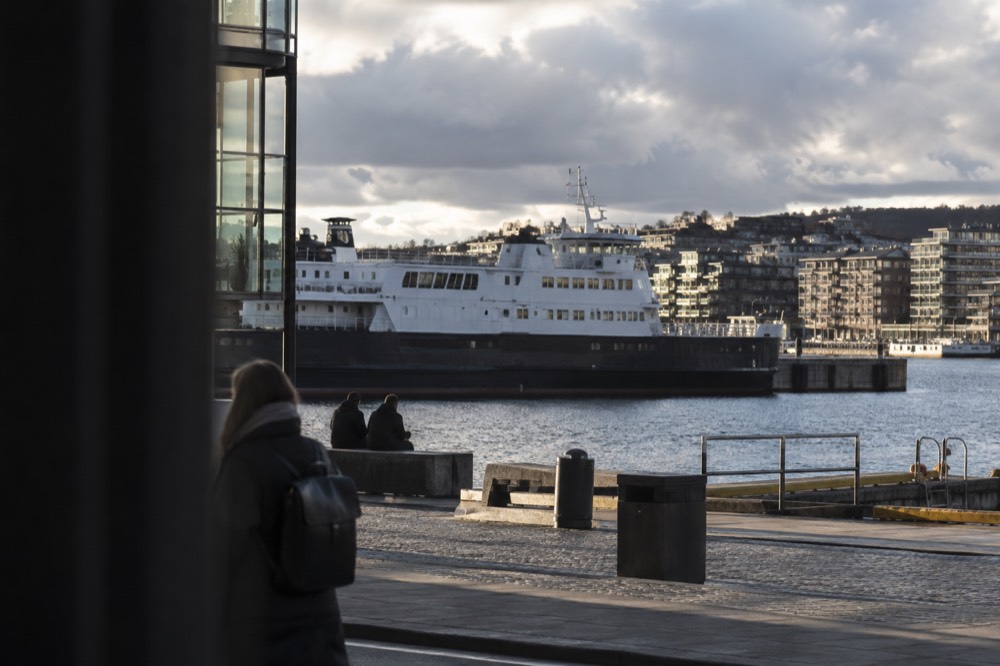
Once you are on the water in Oslo, the fjord stops being scenery and becomes infrastructure. The public island ferries are ordinary Ruter services that a normal ticket covers, and the sightseeing boats leave from the piers at City Hall. The Oslofjord cruise guide compares every way to get out on the water.
When Is the Best Time to Book Flights to Oslo?
The cheapest months to fly are typically the shoulder seasons, and the most expensive are the summer peak and the Christmas period. What matters more than the fare is daylight: Oslo swings from 5 hours 53 minutes of day in late December to 18 hours 50 minutes in late June, and that swing should drive your date choice more than any price calendar.
The fare cycle follows the latitude. Summer brings the long evenings, the island beaches and the biggest crowds, and the fares reflect it. Winter is cheaper and quieter, and while the days are short, the city is built for it, with cross-country ski trails lit inside the city limits and a museum culture that fills dark afternoons well. The shoulder months of May and September split the difference: long days, thin crowds and fares that sit below the July peak.
The daylight numbers are worth internalizing before you book anything. On 21 June the sun rises at 03:53 and sets at 22:43, and the gap between is twilight rather than true night, so it never gets properly dark. On 21 December the sun rises at 09:18 and sets at 15:11, under six hours of daylight. There is no midnight sun in Oslo; that requires latitude north of the Arctic Circle, and Oslo sits at 59.91 N. The full month-by-month table is in our Oslo daylight hours guide.
Weather follows the same logic. July's normal mean temperature at the Blindern station is 17.7 °C, and August is the wettest month on the 1991 to 2020 normals at 103 mm, a detail that surprises visitors who expect November to hold that title. The best time to visit Oslo page weighs crowd levels against the full weather picture.
| Period | Daylight on the 15th | Normal mean temp | Character |
|---|---|---|---|
| January | 6 h 45 m | -2.3 °C | Short days, cheap fares |
| March | 11 h 45 m | 1.3 °C | Winter fading, snow possible |
| May | 17 h 08 m | 11.4 °C | Long days, thin crowds |
| July | 18 h 02 m | 17.7 °C | Peak light, peak prices |
| September | 12 h 54 m | 12.2 °C | Warm water, fewer visitors |
| November | 8 h 00 m | 2.2 °C | Dark by four, museums shine |
If a winter trip is on the table, do not let the darkness talk you out of it. The Oslo in winter guide covers the lit ski trails, the saunas and the dark-season rhythm, and December adds the Christmas market to the mix.
What Border Rules Apply When You Enter Norway?
Norway is in the Schengen Area but is not a member of the European Union. It is an EFTA state and a party to the EEA Agreement, and it participates in Schengen through a separate association agreement. That means no routine passport check if you arrive from another Schengen country, the 90/180 day rule applies, and because Norway sits outside the EU customs union and EU VAT, duty-free allowances apply even arriving from EU countries.
This is the sentence to hold onto, because it changes what you can bring and what you can claim back. Arriving from within Schengen, you walk through without a border stop in most cases. Arriving from outside Schengen, the standard checks apply. The 90/180 day rule works as it does across the whole area: your days in any Schengen state count together, so a week in Copenhagen before your flight to Oslo eats into the same allowance.
The customs position is the part visitors miss. Because Norway is outside the EU customs union and outside EU VAT, the duty-free shop in Copenhagen airport is a legitimate purchase point for your Oslo flight, and non-resident visitors can claim a VAT refund on qualifying purchases made in Norway. That is a real saving in a country where the price level runs well above the European average.
The currency is the Norwegian krone, NOK, not the euro, and euros are not generally accepted. Norway ranks as the sixth most expensive country in Europe on Statistics Norway's 2025 price-level comparison, with household prices 28.6 percent above the EU average and alcohol and tobacco more than double the European average. That last figure explains the queue at the arrivals duty-free shop, and it is a real one.

One more arrival-day note that saves genuine confusion: the alcohol rules. Wine and spirits are sold only through Vinmonopolet, the state monopoly, which closes on Sundays and public holidays and early on Saturdays. Supermarkets sell beer only, up to the legal strength limit, and stop at a fixed evening cut-off. If your first evening in Oslo is a Sunday, plan accordingly, or shop at the airport arrivals shop while it is open.
Should You Rent a Car at the Airport or Rely on Public Transport?
For a stay inside Oslo, leave the car at the airport. The city's metro, tram, bus and ferry network covers everything a visitor needs, parking is expensive, and the walkable center makes a car a liability. A rental only earns its cost for itineraries heading into the fjords, the mountains or the Swedish countryside beyond the rail lines.
Oslo is a compact capital with an unusually complete public transport system. The metro reaches deep into the northern forest at Frognerseteren and Sognsvann, the trams knit the neighborhoods together, and the ferries treat the fjord islands as commuter territory. A visitor with a Ruter ticket or an Oslo Pass has no practical need for a car inside the city, and the parking prices make that doubly true.
The car becomes worth it beyond the city. The drive north toward the mountain valleys, the coastal routes south toward Drøbak and Fredrikstad, and the Swedish border country to the east are all better with wheels, and several of our day trips from Oslo are awkward or impossible by public transport. Our car hire in Oslo guide covers where to collect, what the tolls cost and how the winter tire rules work.

If you skip the car, and most visitors should, the rest of your time in the city runs on the Ruter system. The getting around Oslo guide explains the zones, the app and the ticket types, and the Ruter tickets guide covers every fare product in detail.
What Should You Do in Your First Hours in Oslo?
Drop your bags, get out of the station area, and head for the water. The Opera House roof is a free, five-minute walk from Oslo S and gives you the fjord, the skyline and the island chain in one glance. From there, the pier at City Hall, Aker Brygge and the museum peninsula all sit within a short walk or ride, and a first afternoon on the fjord is the standard move for a reason.
The arrival-day logic is simple. Most long-haul flights land in the morning, hotel rooms open in the afternoon, and the gap between the two is best spent outdoors in daylight rather than in a lobby. The walk from Oslo S down to the Opera House takes minutes, the roof is public space with no ticket, and from its slope you can see the whole layout of the city: the Barcode district, the fjord, the islands and Akershus Fortress to the west.
From there the choices split by energy level. The tired version is a slow walk along the waterfront to Aker Brygge and a seat with a view. The energetic version is a boat. The silent electric fjord cruise is the single best-reviewed activity in the city, it departs from the pier beside City Hall, and its 90 minutes are a gentle, seated way to stay awake through the afternoon while actually seeing something.
If the weather turns, and in Oslo it can, the museum peninsula at Bygdøy is the other first-day answer. The Kon-Tiki and Fram museums sit side by side at the Bygdøynes pier, and the Bygdøy guide covers the seasonal ferry from Rådhusbrygge 3 and the year-round bus 30 alternative. A cheaper first-day structure, and a good one for orienting a longer stay, is the free things to do in Oslo list, which leans on the parks, the waterfront and the free-entry sights.

For a first evening, the food walk through Grünerløkka pairs the arrival day with the city's most characteristic neighborhood, and the budget walking tour of central Oslo is the cheapest credible way to get your bearings with a guide.
Common Questions About Getting to Oslo
Which airport do flights to Oslo use?
Almost all flights use Oslo Airport Gardermoen, the main hub 50 km north of the city. Some low-cost carriers use Torp Sandefjord, about 110 km south, which adds well over an hour to the transfer. Always check the airport code on your ticket before booking.
How much is the train from Oslo Airport to the city center?
Flytoget, the airport express, costs 268 NOK for an adult single and takes about 20 minutes, running every 10 minutes. Vy regional trains cover the same distance in about 23 minutes and ride on an ordinary Ruter ticket covering zone 1 through zone 4N, which the Oslo Pass also covers.
Does the Oslo Pass cover the airport train?
It covers the Vy trains to and from Oslo Airport Gardermoen, but not Flytoget and not the Flybussen coach. VisitOSLO's own wording is that the pass includes public transport in zones 1, 2, 3, 4V and 4N, "including transport to and from Oslo Airport Gardermoen with public trains operated by VY."
Is Norway in the EU?
No. Norway is in the Schengen Area but is not a member of the European Union. It is an EFTA state and a party to the EEA Agreement. That means no routine passport check from other Schengen countries, the 90/180 day rule applies, and duty-free allowances apply even arriving from EU countries because Norway sits outside the EU customs union and EU VAT.
Can you get to Oslo by ferry?
Yes. Overnight car ferries connect Oslo with Copenhagen in Denmark and Kiel in Germany, arriving at the Vippetangen quays near the center. Cruise ships also call at piers along the fjord-side of the city.
Do you need a car in Oslo?
No, not for a stay inside the city. The metro, tram, bus and ferry network covers everything a visitor needs, and parking is expensive. A rental earns its cost only for itineraries heading into the fjords, the mountains or the Swedish countryside beyond the rail lines.
Before you lock the rest of the trip in, the same three bookings cover most first visits: the fjord cruise from the City Hall pier, the Kon-Tiki ticket for the museum peninsula, and the Grünerløkka food walk for your first evening. All three sit within a short walk or ride of where the airport train deposits you.