Oslo Cruise Port Day: What to See, How to Get There, and What to Skip
Most Oslo cruise calls give you somewhere between six and ten hours. That is enough for a fjord cruise, two museums, and a walk across the Opera House roof, if you plan the transport before you step ashore.
Short answer
Cruise ships dock at one of several Oslofjord piers within 1-3 km of the center, and most sights are reachable on foot or by tram. A 24-hour Oslo Pass costs 580 NOK and covers over 30 museums plus Ruter transport. The biggest risks are pier confusion and underestimating walking distances, not the sights themselves.
Oslo Cruise Port Day: What to See, How to Get There, and What to Skip
Most Oslo cruise calls give you somewhere between six and ten hours ashore. That is enough for a fjord cruise, two museums, and a walk across the Opera House roof, if you plan the transport before you step off the gangway. It is not enough for a careless plan, because Oslo rewards precision: the piers are not interchangeable, the museum peninsula has its own seasonal boat, and the city's biggest sight, Vigeland Park, sits 3 km from the harbor and needs deliberate routing.
This page is the port-day playbook. It covers where your ship actually docks, what genuinely fits in the hours you have, which shore-excursion products earn their price, and the mistakes that cost cruise passengers the most time. Every price below comes from a verified source, and every transport claim is checked against the operator's own published rules.
Where Do Cruise Ships Dock in Oslo, and How Far Is the Center?
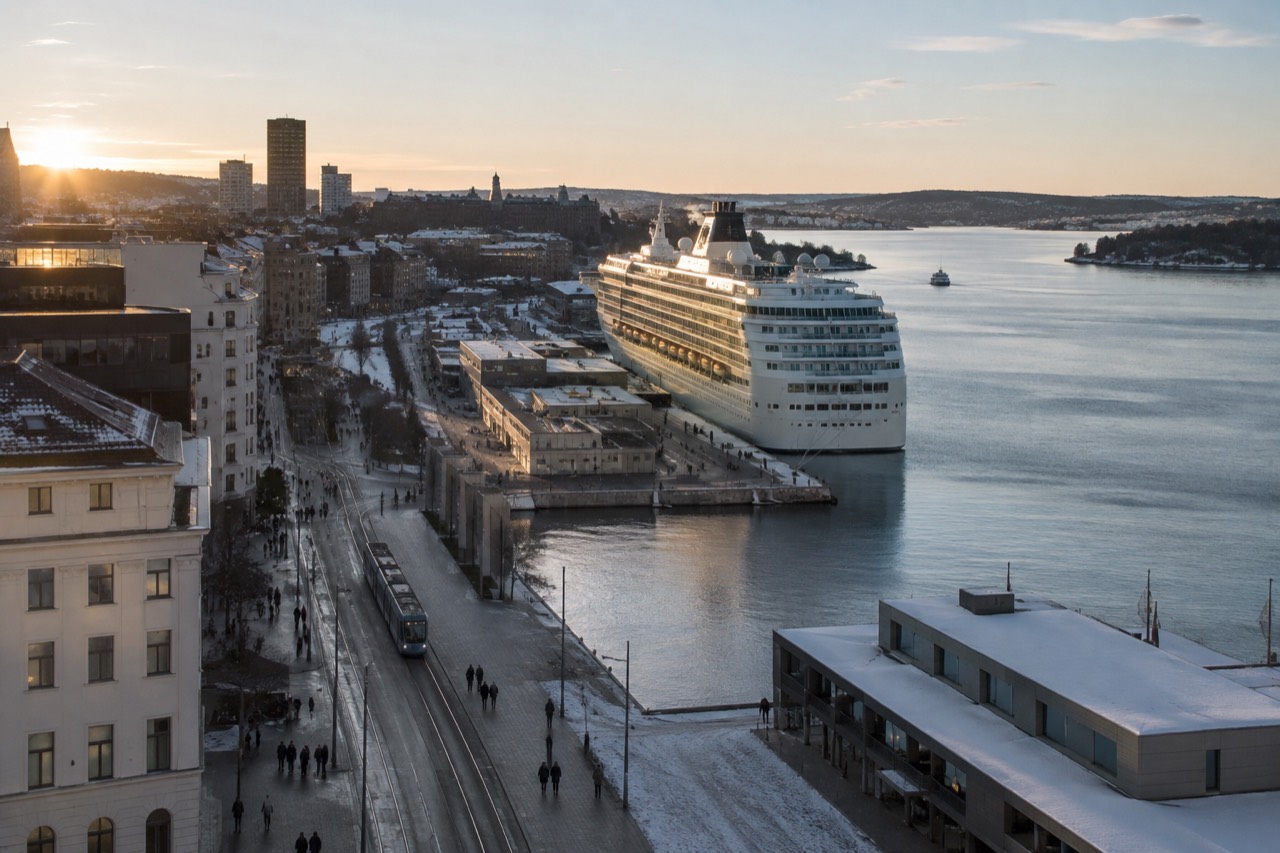
Oslo's cruise berths sit along the Oslofjord waterfront south of the city center, at Filstad, Søndre Akershuskai, Vippetangen or Odderøya, and the farthest of them is about 3 km from Karl Johans gate, the main street. The nearest berths put you at the edge of the center in a five-minute walk, and the farthest put you at Akershus Fortress in about fifteen minutes on foot, so none of them require a shuttle to reach the city, though some lines run one anyway. Taxi stands exist at every berth.
The practical consequence is simple: Oslo is one of the most walkable cruise ports in Northern Europe. If your ship is at Søndre Akershuskai, you step off essentially at the fortress, with the Opera House a short stroll along the water and the main shopping street behind it. If you are at Vippetangen, add ten minutes of walking along a waterfront promenade that is pleasant in any weather.
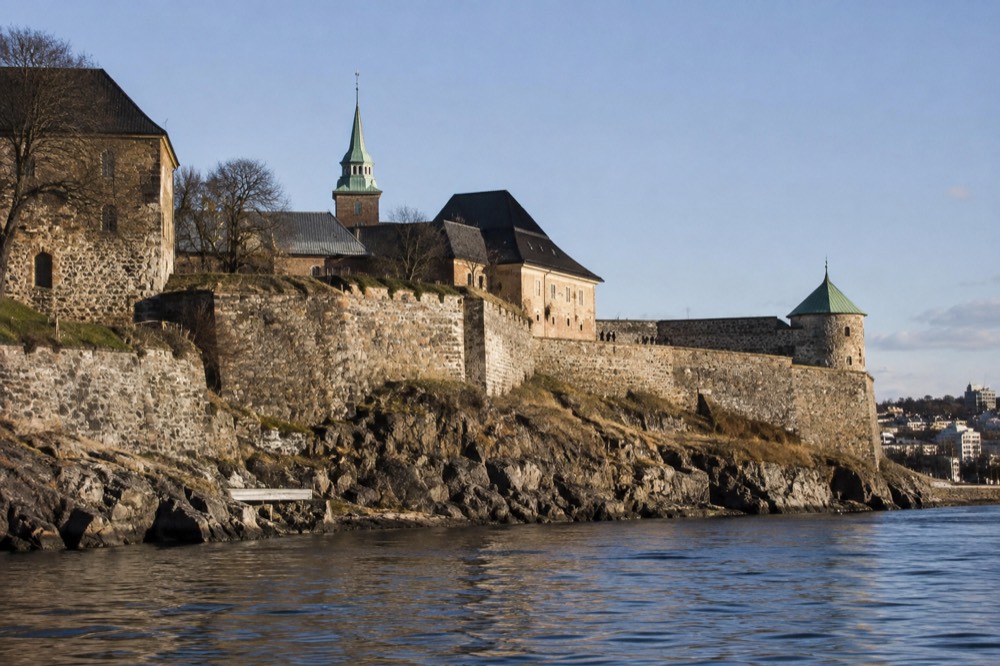
Akershus Fortress itself is free to walk around, open to the public, and sits directly beside the closest berths. The Akershus Fortress guide covers the grounds, the Resistance Museum inside them, and how much time each deserves. On a short call, the fortress exterior is a genuine free sight you can absorb in twenty minutes without ever buying a ticket.
Distances from the main berths:
| From | To | Distance | On foot |
|---|---|---|---|
| Søndre Akershuskai | Akershus Fortress | 200 m | 3 min |
| Søndre Akershuskai | Opera House | under 1 km | 8 min |
| Søndre Akershuskai | Karl Johans gate | 1 km | 12 min |
| Vippetangen | Oslo City Hall / Aker Brygge | about 2 km | 18 min |
| Filstad | Aker Brygge waterfront | 1 km | 12 min |
| Any central berth | Vigeland Park | 3-4 km | Tram or metro advised |
That last row is the one that bites. Vigeland Park is the city's most visited sight and it is genuinely free, but it is not a walk from the ship. Tram 12 from the center or the metro to Majorstuen handles it; the Vigeland Park guide has the exact stops. If Vigeland matters to you, the half-day bus tour that includes it, covered below, is often the more efficient route.
Is a Shore Excursion Worth It, or Can You Do Oslo on Your Own?
Oslo is one of the easiest ports in Europe to do independently, because the center is compact and walkable, but two categories of excursion genuinely earn their price: the full-day bus-plus-fjord combo for passengers who want zero timing risk, and the half-day Holmenkollen-and-Vigeland tour for the sights that are awkward to reach without a car. Everything else in central Oslo, the Opera House, the harbor, Karl Johans gate, Akershus, is free to walk to and needs no booking at all.
The honest math is about hours. If your call is eight hours or more and you enjoy walking, an independent day built around an Oslo Pass beats most ship excursions on both price and flexibility. If your call is six hours, or your ship sails at 17:00 and you cannot afford a single missed connection, a pre-booked tour that guarantees return timing starts to look like insurance rather than luxury.
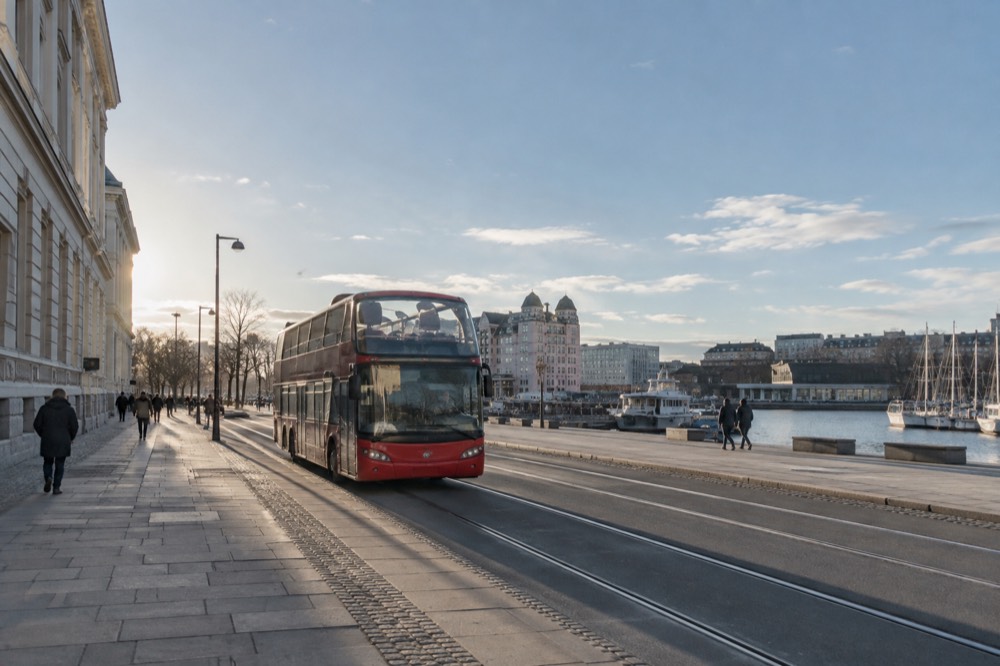
The full-day bus and fjord combination is the standard packaged answer for first-timers. It runs about 7 hours 30 minutes, pairs a city bus tour with a fjord cruise, and is built precisely for the passenger who wants the whole Oslo sampler in one booked block. Because it is a single product with a single start point, it removes the risk of a self-planned day unraveling at the second museum.
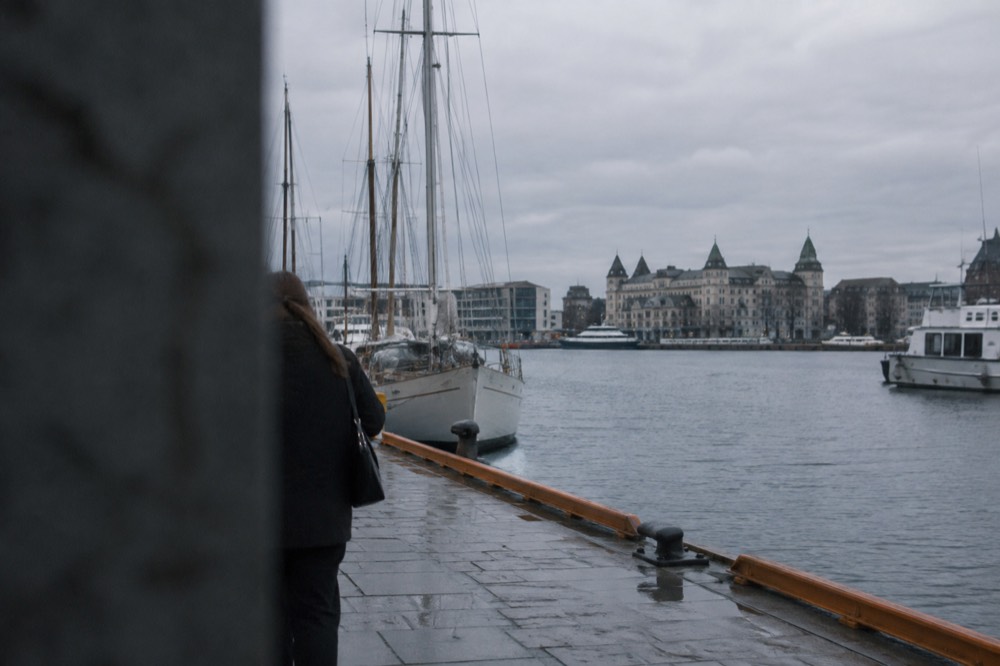
For the independent-minded, the same logic applies in pieces. A two-hour wooden sailing-ship cruise on the Oslofjord delivers the water half of the excursion, and the harbor piers where those boats leave from are a short walk from every cruise berth. The Oslofjord cruise guide compares all the boat options, from the silent electric boats to the dinner cruise, and explains which pier each leaves from.
The half-day Holmenkollen and Vigeland bus tour solves the other half of the problem. Holmenkollen sits at the top of the metro line with a 3-hour round trip if you do it yourself, and the Holmenkollen ski jump guide explains why there is no standalone ticket to buy: the jump tower only sells inside combination products. A bus tour that hits both Holmenkollen and Vigeland in three hours is, for a port day, simply faster than public transport.
What Does the Oslo Pass Cover on a Cruise Port Day?
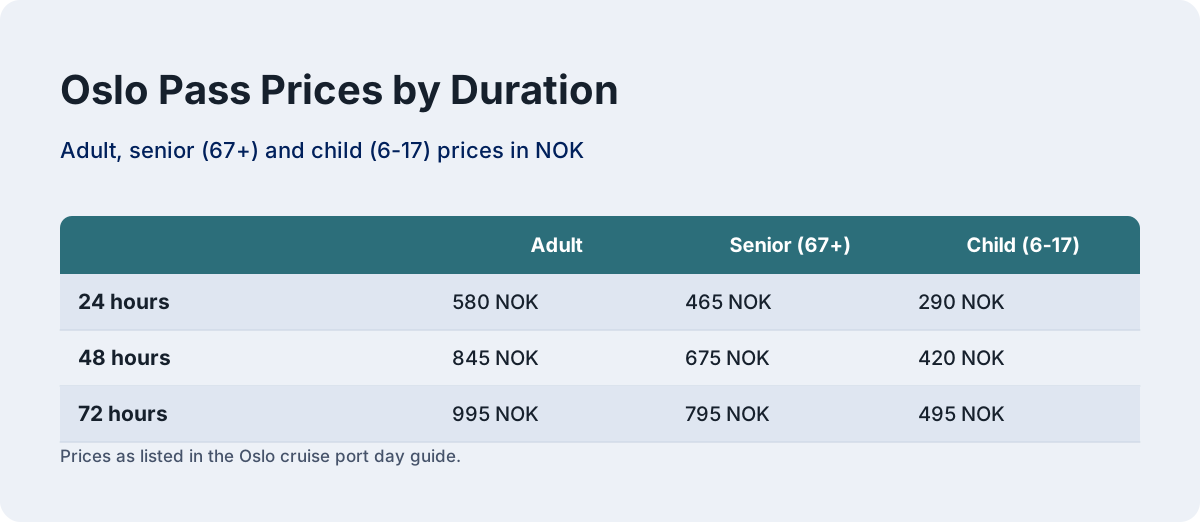
A 24-hour adult Oslo Pass costs 580 NOK and covers entry to over 30 museums plus all Ruter public transport in zones 1, 2, 3, 4V and 4N, including the island ferries and the seasonal Bygdøy museum ferry. For a cruise passenger doing two or more paid museums in a day, it usually pays for itself: the Fram Museum and Kon-Tiki Museum alone are 180 NOK each at the door, and three Bygdøy museums at full price total 560 NOK before any transport.
The pass prices, from the city tourist board's own price page:
| Pass | Adult | Senior (67+) | Child (6-17) |
|---|---|---|---|
| 24 hours | 580 NOK | 465 NOK | 290 NOK |
| 48 hours | 845 NOK | 675 NOK | 420 NOK |
| 72 hours | 995 NOK | 795 NOK | 495 NOK |
Two port-day specifics matter. First, the pass covers the Bygdøy ferry, the seasonal museum boat from Rådhusbrygge 3, which ordinary Ruter tickets do not. Second, it does not cover Flytoget, the airport express train, though that is irrelevant unless your itinerary involves the airport. The full inclusion list and the break-even math are laid out in the Oslo Pass guide, and the question of whether it beats single tickets on a short call is answered in is the Oslo Pass worth it.
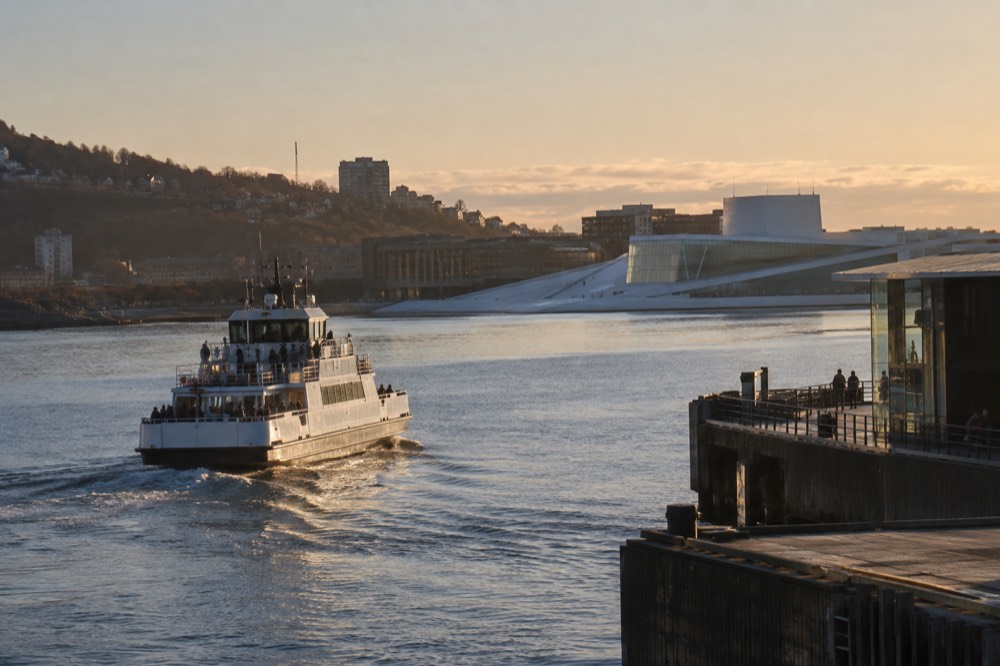
Can You Fit Bygdøy's Museums Into a Cruise Day?
Yes, if your call is eight hours or longer and you commit the whole afternoon to it: the Bygdøy peninsula holds the Kon-Tiki Museum, the Fram Museum and the Norwegian Museum of Cultural History within walking distance of each other, and a focused visit to two of them takes about three hours. On a six-hour call, pick one museum and skip the peninsula's third, because the crossing plus walking between piers eats more time than visitors expect.
Getting there is the part guides routinely get wrong, because two different boat systems leave from two different piers. The Bygdøy museum ferry, which the Oslo Pass covers and ordinary Ruter tickets do not, departs Rådhusbrygge 3 and runs seasonally, in 2026 from 14 March to 4 October, every 20 minutes, with Dronningen serving the Folk Museum and Bygdøynes serving Kon-Tiki and Fram. The island ferries B1 and B2 are a completely separate Ruter service from Aker Brygge. The Bygdøy guide and the Oslo ferries guide keep the two systems straight.
Out of ferry season, and year-round as backup, Ruter bus 30 serves all the Bygdøy museums on an ordinary ticket.
| Museum | Adult entry | Oslo Pass | Nearest pier |
|---|---|---|---|
| Kon-Tiki Museum | 180 NOK | Covered | Bygdøynes |
| Fram Museum | 180 NOK | Covered | Bygdøynes |
| Norwegian Maritime Museum | see site | Covered | Bygdøynes |
| Norsk Folkemuseum | 200 NOK | Covered | Dronningen |
| Museum of the Viking Age | Closed, reopens 2027 | - | - |
That last row is the one to plan around. The former Viking Ship Museum is closed for rebuilding and will reopen as the Museum of the Viking Age in 2027; the museum's own site gives no month. Viking-age objects are viewable at the Historical Museum in central Oslo in the meantime, and Viking Planet, the VR-based Viking experience in the city center, is the bookable substitute. Any excursion listing still selling Viking Ship Museum entry should be treated with suspicion.
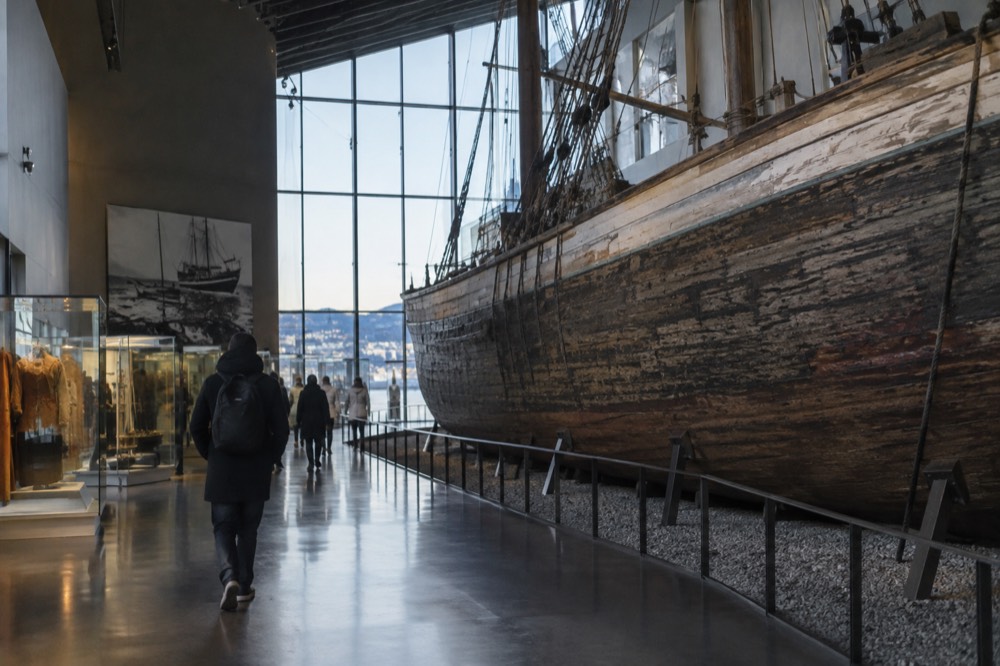
The Kon-Tiki and Fram museums pair naturally: they sit beside each other at Bygdøynes, both take about an hour, and a combination ticket for the two costs 325 NOK at the door against 180 NOK each. The Kon-Tiki guide and the Fram Museum guide cover what is inside each and which order works best.
Which Oslofjord Boat Should a Cruise Passenger Take?
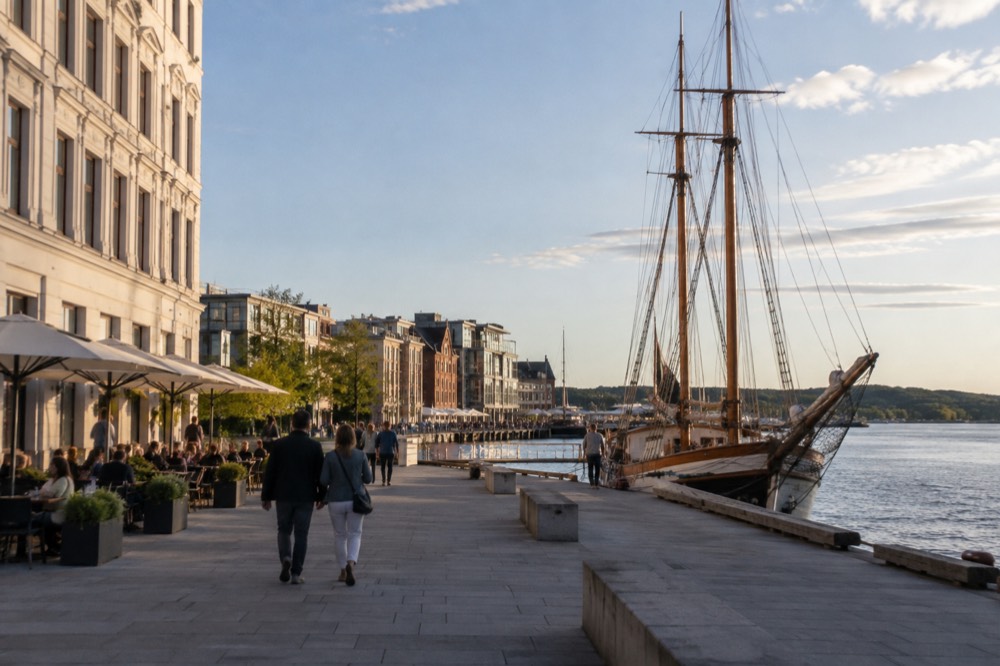
A cruise passenger is already on the water, so the best fjord choice is a short, structured sailing rather than another long cruise: the two-hour traditional wooden sailing ship trip is the strongest fit for a port day, because it departs from the city-center piers, runs on a fixed schedule, and delivers the inner Oslofjord's islands and shoreline in a compact block. The silent electric boat with audio commentary is the shorter, cheaper alternative at 90 minutes if your hours are tight.
Both leave from the harbor within walking distance of every cruise berth, which matters: you are not spending port time commuting to your boat trip. The wooden ship is a genuinely different experience from the electric boats, under sail where conditions allow, and it is the version of the fjord trip that feels like a Norwegian day out rather than a sightseeing circuit. The traditional sailing cruise runs twice the length of the electric option and covers more of the island-dotted inner fjord.
If your ship's own excursion desk is selling a fjord cruise, compare it against the independent options before booking: the operator's live listing prices are usually lower than the shipboard markup, and the boats leave from piers you can walk to. The one exception is an evening call, where the shrimp-buffet dinner cruise, a three-hour Norwegian institution, is worth considering if your sailing time allows it.
What Does a Realistic Hour-by-hour Port Day Look Like?
A comfortable eight-hour Oslo port day fits the Opera House roof, Akershus, a two-hour fjord sailing, and one Bygdøy museum, with time for lunch at Aker Brygge in between; a six-hour day should cut Bygdøy entirely and keep the walk, the fortress and the boat. The single most common port-day failure is planning four anchor sights for a six-hour call and reaching none of them properly.
A sample plan for an 08:00 to 17:00 call:
| Time | Activity | Notes |
|---|---|---|
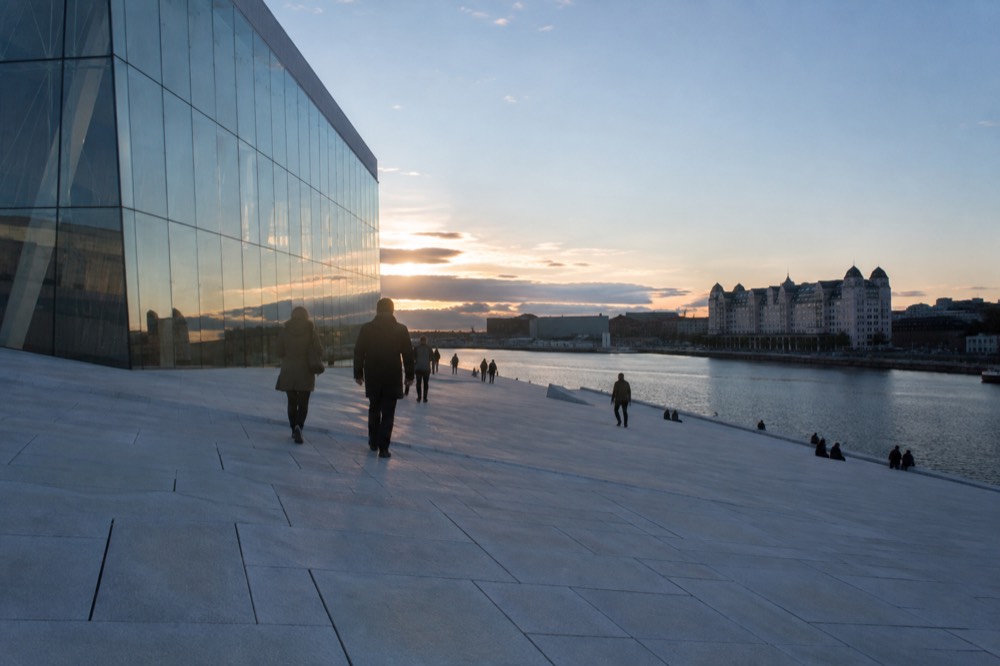
| 08:00-09:00 | Disembark, walk the Opera House roof | Free, opens with the building's public access |
| 09:00-10:00 | Akershus Fortress grounds | Free, 3 min from nearest berths |
| 10:00-12:00 | Wooden sailing-ship fjord cruise | Departs city-center piers |
| 12:00-13:00 | Lunch at Aker Brygge or Mathallen | Waterfront restaurants, see where to eat |
| 13:00-14:00 | Bygdøy ferry to Bygdøynes | Oslo Pass or ~70 NOK one way |
| 14:00-15:15 | Kon-Tiki or Fram Museum | 180 NOK each, 1 hour each |
| 15:15-16:00 | Ferry or bus 30 back, walk to ship | Bus 30 is the year-round backup |
| 16:00-17:00 | Buffer | Never plan against zero buffer |
The buffer row is not decoration. Cruise lines publish an "all aboard" time that is earlier than sailing, and the walk from Aker Brygge to the farthest berths takes twenty minutes. Passengers who plan to the minute are the ones sprinting the waterfront at 16:50.
What Are the Mistakes That Ruin an Oslo Port Day?
The five that recur are confusing the two ferry systems, planning Bygdøy on a short call, walking to Vigeland instead of taking the tram, booking a Viking Ship Museum product that no longer exists, and leaving zero buffer for all-aboard time. Each one is avoidable with a single decision made before you disembark.
The pier confusion deserves its own sentence because it is the most expensive. The Bygdøy museum ferry leaves Rådhusbrygge 3 and takes neither Ruter tickets nor, outside the pass, anything but its own fare. The island ferries B1, B1X and B2 leave Aker Brygge and take ordinary Ruter tickets. A passenger who boards the wrong system with the wrong ticket loses an hour, and in a six-hour call an hour is a museum.
The second is underestimating Vigeland's distance. The park is free, always open, and magnificent, but it is 3 km from the harbor. Tram 12 or the metro gets you there in 20 minutes from the center; walking takes 45 and eats the return too. If the sculptures are a priority, the Holmenkollen and Vigeland half-day tour bundles both far-flung sights with transport included, which on a port day is the arithmetic that matters.
The third is seasonal: the Bygdøy ferry does not run year-round, and a September call is fine but a late-October one is not, since the 2026 season ends 4 October. Bus 30 is the answer out of season. The fourth is the Viking museum, closed until 2027, still sold by some listings that should know better. The fifth is money: Norway is the sixth most expensive country in Europe and alcohol is more than double the EU average, so a port-day budget should assume restaurant and bar prices at the top of the European range, while museums, transport and the outdoors stay moderate. The is Oslo expensive guide has the full breakdown.
For everything else, this site exists precisely to answer these questions in one place: berths, piers, museums, boats and the honest cost of each, all on Oslo Travel Guide. A port day in Oslo is a generous gift from your itinerary. The city is small, the harbor is the center, and almost everything worth seeing is closer to your ship than it is to the average hotel.
Common Questions About an Oslo Cruise Port Day
How far is the Oslo cruise port from the city center?
The cruise berths sit along the waterfront 200 m to 3 km from the center. The nearest, Søndre Akershuskai, is a five-minute walk from Akershus Fortress and about twelve minutes from Karl Johans gate. The farthest berths add roughly ten minutes of pleasant waterfront walking. No shuttle is needed.
Can you walk from the cruise port to the Opera House?
Yes. From the nearest berths the Opera House is a short walk along the water, roughly ten minutes. The roof is free to walk on and open to the public whenever the surrounding plaza is, which makes it the most reliable first stop of any port day.
Is the Oslo Pass worth it for one day in port?
Usually yes, if you plan two or more paid museums. A 24-hour adult pass is 580 NOK, covers over 30 museums, includes all Ruter transport in the city zones, and covers the Bygdøy ferry, which ordinary tickets do not. Two Bygdøy museums cost 180 NOK each at the door, three cost 560 NOK, before any transport.
What is the best shore excursion in Oslo?
For a first visit on a short call, the full-day bus and fjord combination covers the city highlights and the Oslofjord in one booked block of about 7 hours 30 minutes. For independent travelers, a two-hour wooden sailing-ship cruise plus a self-guided walk usually delivers more for less.
Can you see the Viking ships in Oslo on a port day?
No. The former Viking Ship Museum on Bygdøy is closed for rebuilding and will reopen as the Museum of the Viking Age in 2027. Viking-age objects are on display at the Historical Museum in central Oslo, and Viking Planet, a VR-based Viking experience, is the bookable substitute.
How many hours do you need in Oslo from a cruise ship?
Six hours covers the Opera House, Akershus, a short fjord cruise and lunch. Eight hours adds a Bygdøy museum or Vigeland Park. Ten hours allows both, at a relaxed pace. Anything under six should stay in the immediate center and on the water.