Oslo to Bergen Train: Planning the Ride Across the Mountains
The Oslo to Bergen railway crosses the mountain plateau that separates eastern and western Norway, and it is the country's most famous overland journey. Here is how to plan it, what to combine it with, and where the money actually goes.
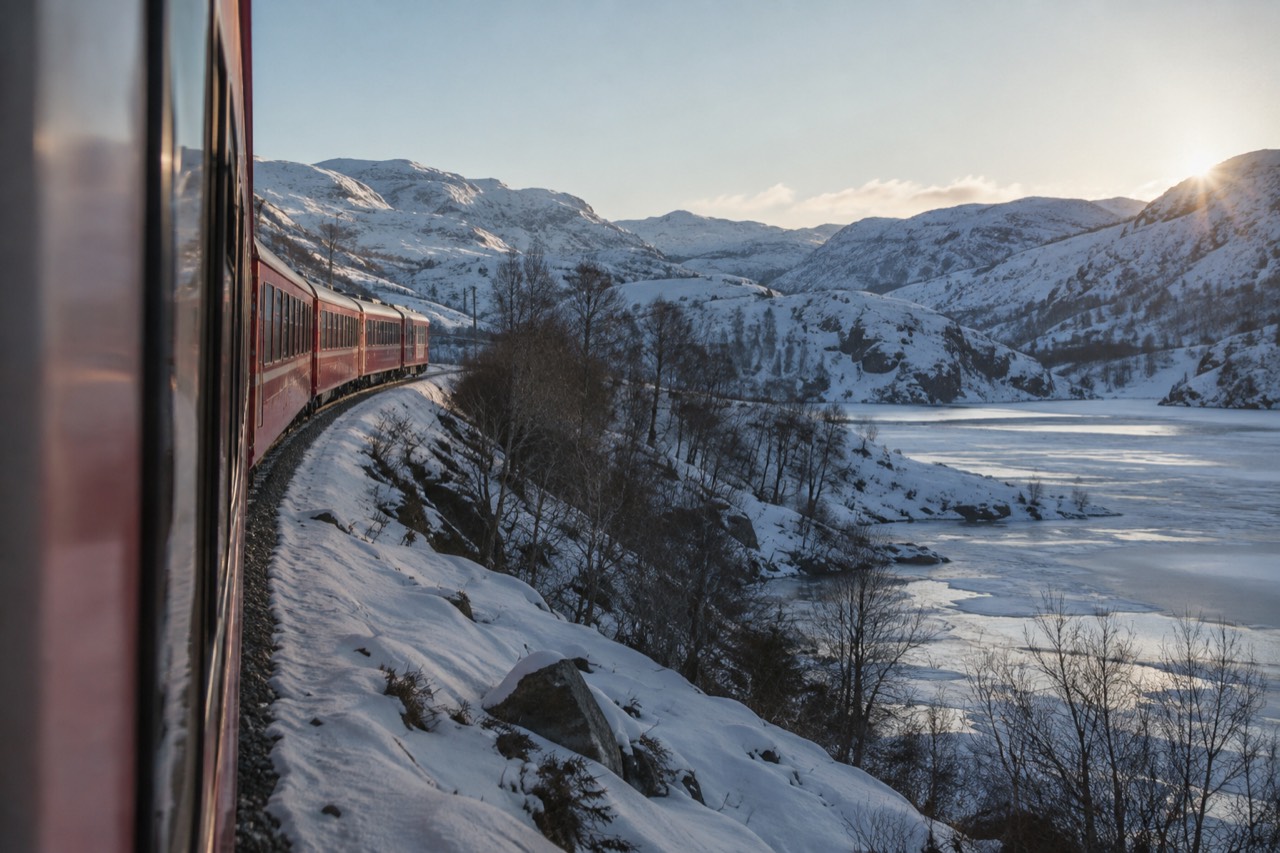
Short answer
The Oslo to Bergen train is a full-day mountain crossing between Norway's two largest cities, run by Vy on the Bergen Line. Most travelers pair it with the Flåm Railway branch at Myrdal. Book seats ahead in summer, and treat it as the spine of a western-Norway trip rather than a commute.
The Bergen Line is the railway that stitched western Norway to the rest of the country, and more than a century after it opened it remains the single most requested rail journey visitors ask about in Oslo. It climbs out of the eastern lowlands, crosses the Hardangervidda plateau, and drops into the fjord country around Bergen, all in one sitting. This page covers the decisions around it: whether it fits your itinerary, how it connects to the Flåm Railway and the Sognefjord, what time of year to ride it, and how it interacts with Oslo's own transport costs.
One thing this page is not: a fjord-cruise guide. The boat side of a western-Norway trip is covered in depth by our portfolio sibling Oslofjord Cruises, which ranks for its own long tail on cruise months, cabin choices and fjord geography. Here we stay on the decision that starts at Oslo Central Station.
Is the Oslo to Bergen Train Worth It?
Yes, if the journey itself is part of the point. The Bergen Line crosses the largest mountain plateau in northern Europe and passes Finse, the highest station on the Norwegian network, where there is no road at all: the only way in or out is the train. If you would otherwise fly the same 300-odd km in under an hour, the train only makes sense when you want the mountains, not just the arrival. Travelers with two days or fewer in Norway usually do better staying in Oslo.
The honest framing is that this is a scenic ride first and transport second. The eastern half, from Oslo up through Drammen and Hönefoss, is ordinary commuter country, and the famous scenery is concentrated on the plateau stretch between Geilo and Myrdal, then the descent toward Voss and Bergen. People who board expecting wall-to-wall drama for the entire run come away slightly recalibrated; people who know the payoff sits in the middle third love it.
It also depends on your direction of travel. Plenty of visitors fly into Oslo, ride west, and fly home from Bergen, which turns the train into the connective tissue of the whole trip rather than a day out. Doing it as a round trip in one day is possible but punishing, and it means seeing the plateau twice in the same light.
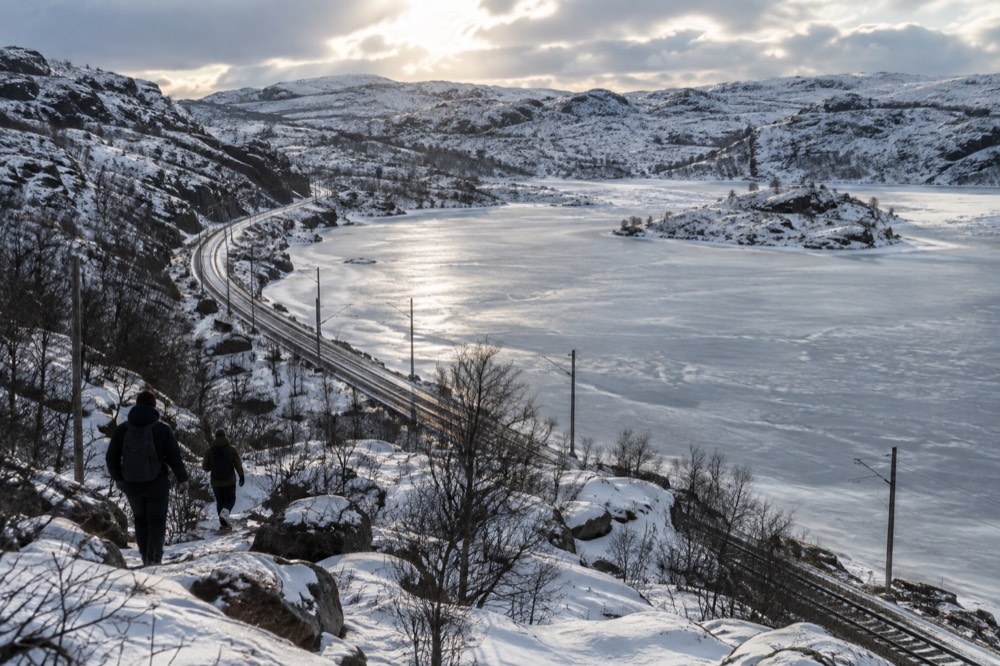
If your real question is whether Norway's scenery is worth a full day on rails, the answer is yes, and the classic way to sample it is the Norway in a Nutshell routing, which uses a slice of this same line. There is also a deeper comparison in our guide to Oslo versus Bergen if you are choosing between the two cities rather than linking them.
How the Route Works and Where the Scenery Sits
The line runs from Oslo Central Station to Bergen, and the stretch most people are picturing is the plateau crossing between Geilo and Myrdal, roughly the middle third of the ride. At Myrdal, a branch line drops down to Flåm on the Aurlandsfjord, which is where most visitors break the journey. The station at Finse sits above the tree line with no road access at all, so plan to be awake and at the window for the Geilo-to-Myrdal stretch.
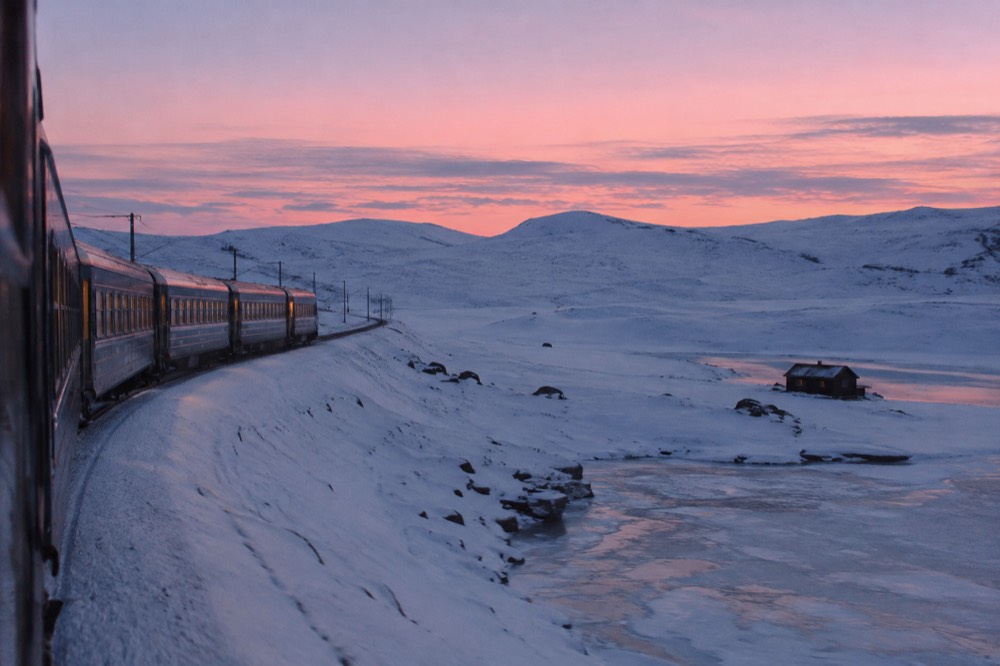
Practically, that means the morning departure out of Oslo is a relaxed affair and the middle hours are the show. In winter the plateau is a white desert with tiny snow sheds and drift fences along the rails; in summer it is a brown-and-green expanse with hiking trails radiating from Finse. The descent on the western side is steep and switchbacked, and the vegetation changes fast as you drop toward sea level.
The Myrdal junction is the decision point. You can stay on the main train to Bergen, or step off and ride the Flåm Railway down to the fjord village of Flåm, which is one of the steepest standard-gauge railways in the world. Our Flåm Railway guide covers that branch in detail, including the boat connection onward through the Aurlandsfjord and Nærøyfjord.
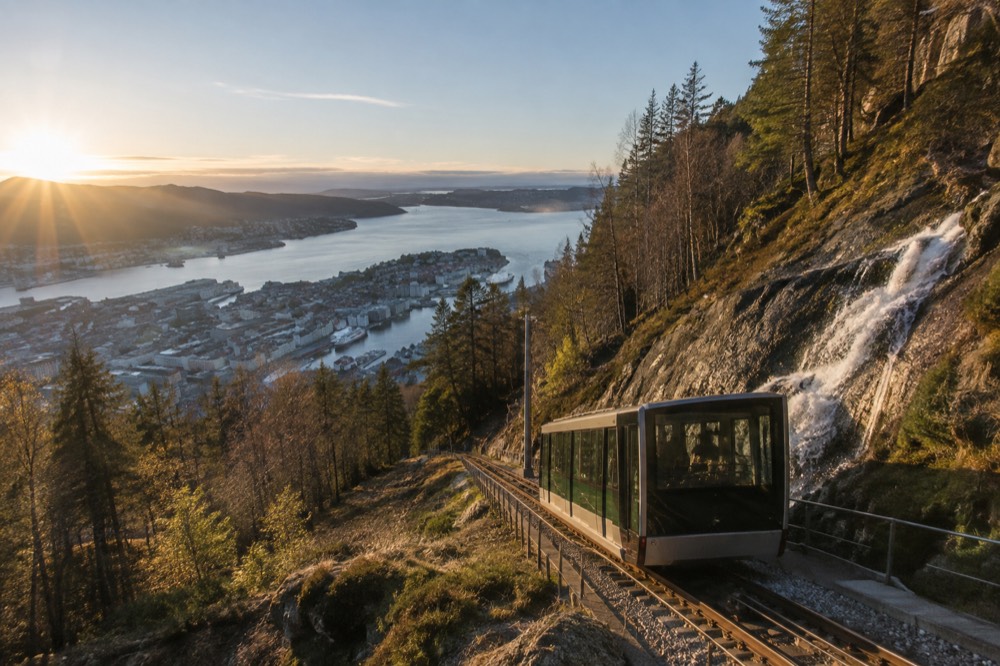
If you would rather not assemble trains, boats and timings yourself, the bookable alternative is a private full-day round trip that bundles the Sognefjord and the Flåm Railway into one itinerary from Oslo:
The trio above spans the three shapes this kind of day can take: the full fjord-and-rail expedition, a half-day island-hopping nature walk that stays inside Oslo's own fjord, and a plain private airport transfer for travelers whose real question is logistics. Most readers comparing the Oslo to Bergen train against bookable alternatives land on the first of those.
What It Costs and How to Book
Book directly with Vy, the national operator, which sells the Bergen Line with optional seat reservations, and treat any reseller markup as a cost of convenience rather than necessity. Prices move with demand like airline fares, so the honest answer for a specific date is the fare you see on Vy's own site when you search, not a fixed number. The seat reservation on the scenic stretch is the one add-on consistently worth paying for, because the plateau fills up in summer.
The pricing model matters more than any single fare. Norwegian long-distance trains use yield pricing, which means the summer high season and the last days before departure are both expensive, and booking weeks ahead is genuinely cheaper, not marginally so. If your dates are fixed, buy early; if they are loose, midweek departures are the soft spot.
For context on what you are buying into, here is how the pieces of Oslo-area rail travel compare, using the airport run every visitor ends up taking:
| Option | Adult fare | Notes |
|---|---|---|
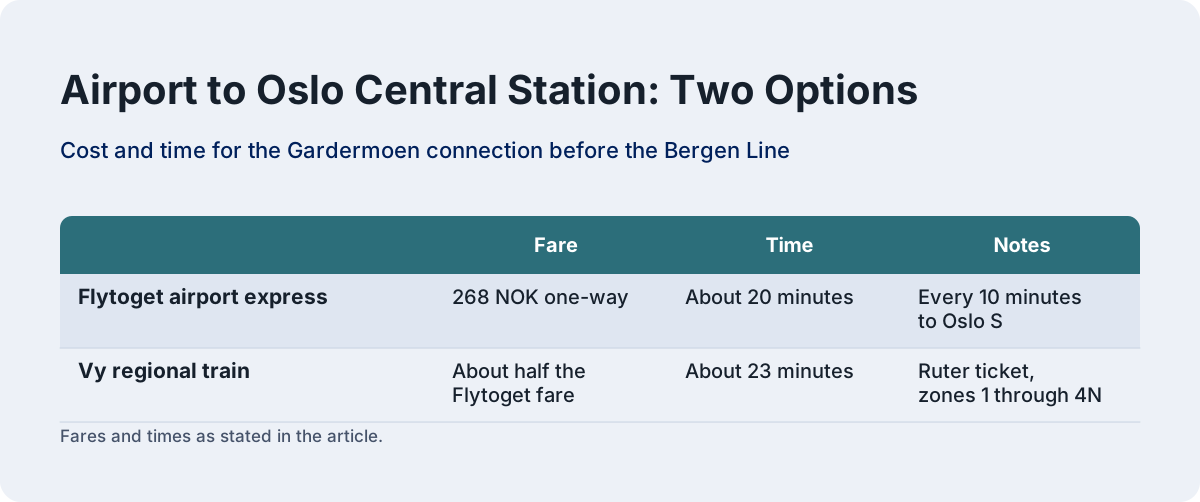
| Flytoget airport express | 268 NOK one-way | About 20 minutes to Oslo S, every 10 minutes |
| Vy regional train to the airport | About half the Flytoget fare | About 23 minutes, rides on a Ruter zone ticket covering zone 1 through 4N |
| Bergen Line long-distance | Demand-based, book on Vy | Full-day mountain crossing, seat reservation recommended |
The airport row is not a digression: if you arrive at Gardermoen and head straight for the Bergen train, the choice between Flytoget and Vy's ordinary train is the first money decision of your trip, and the same operator runs both the airport train and the mountain line. Our Flytoget versus Vy comparison breaks the airport decision down fully.
One Oslo-side note that saves real money: the Oslo Pass covers Vy trains to and from Oslo Airport Gardermoen, but not Flytoget and not the airport coach. That inclusion is one of the pass's quietly best features, though it does not extend to the Bergen Line itself.
Combining the Train with the Fjord
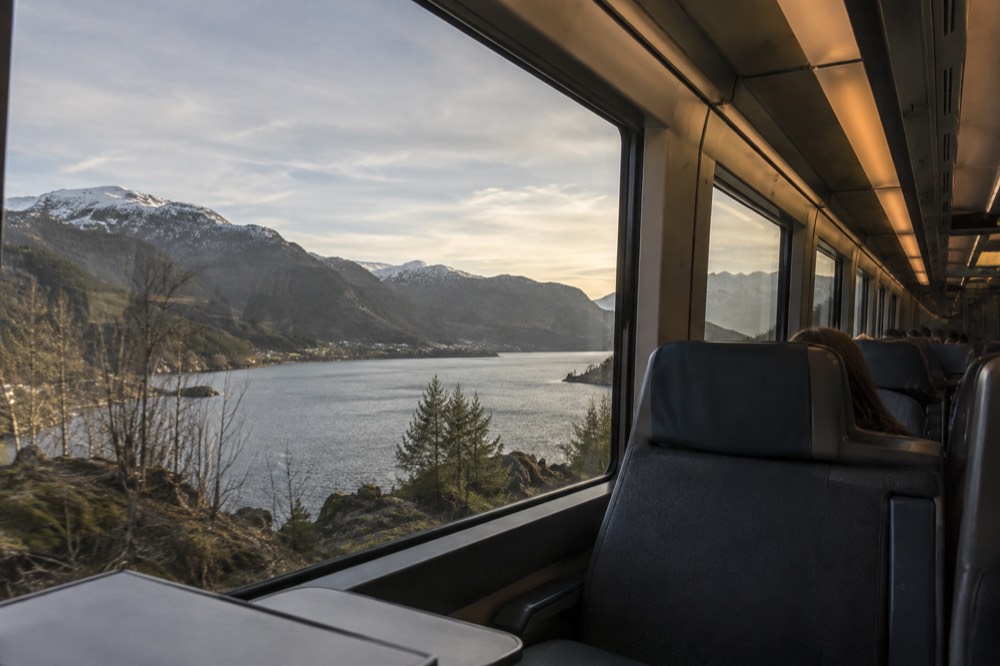
The classic combination is the Oslo to Myrdal ride, the Flåm Railway down to sea level, a boat through the Nærøyfjord, and a bus or train onward to Bergen, usually spread over one or two days. Doing it as a strict day trip back to Oslo is a very long day. A private round-trip version exists as a bookable product, and for many visitors the question is whether assembling it independently is worth the savings.
The independent version is entirely doable: Vy sells the rail legs, the Flåm Railway sells its own tickets, and the fjord boat operators sell point-to-point and round-trip crossings. What you take on is the coordination risk. If the main train runs late into Myrdal, the Flåm connection is yours to rebook, and in peak season the boats fill.
The bookable version, a private full-day Sognefjord round trip from Oslo including the Flåm Railway, removes that risk and the planning load. It is the highest-priced item in our Oslo roster, which is honest information: this is the premium way to do the classic day, with a driver and a guide rather than a stack of tickets. For travelers on a shorter visit who want the fjord guaranteed inside one booked day, it is the strongest same-day answer.
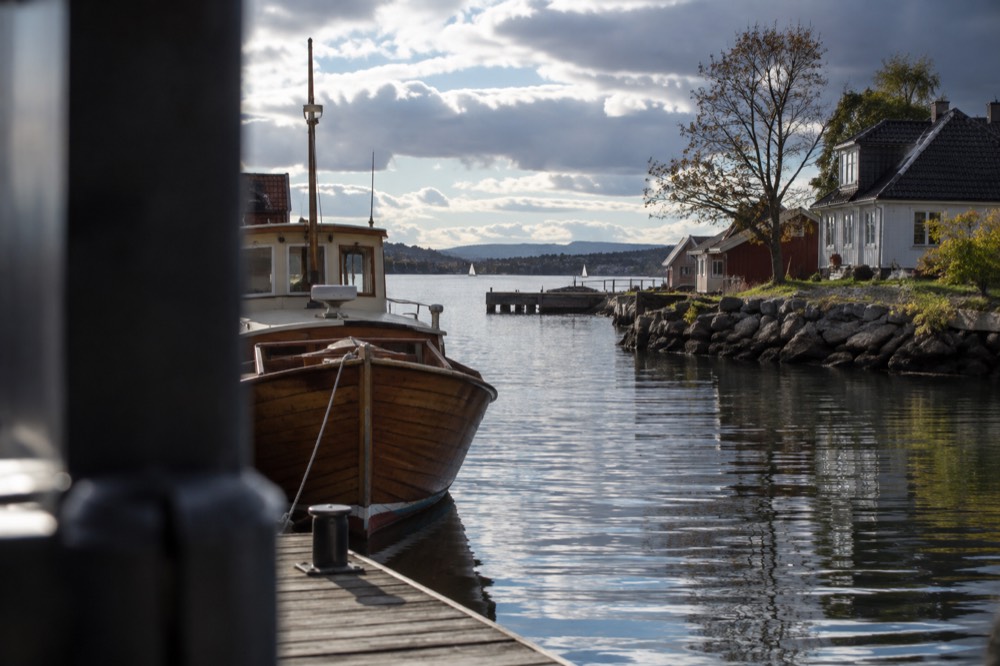
If the fjord day is decided, the remaining question is what the rest of your Oslo time looks like, and our day trips from Oslo guide maps the full menu, including the car-free options.
When to Ride: Weather and Daylight on the Line
July and August give the greenest plateau, the longest daylight and the easiest connections, at the cost of peak crowds and peak fares. February and March give snow to the horizon and the most dramatic photography, but the plateau is genuinely cold and the western descent can be grey. The shoulder months of May, June and September are the connoisseur's choice: quiet trains, decent light and prices below the summer ceiling.
The plateau sits above the tree line, so its weather is a category apart from either city. Oslo's own normals tell you what you are leaving behind, and Bergen's maritime climate is what you are heading toward; the middle of the ride is neither. Here are Oslo's monthly normals from MET Norway's 1991 to 2020 series for the Blindern station:
| Month | Normal mean temp | Normal precipitation |
|---|---|---|
| January | −2.3 °C | 58 mm |
| March | 1.3 °C | 41 mm |
| May | 11.4 °C | 60 mm |
| July | 17.7 °C | 87 mm |
| August | 16.5 °C | 103 mm |
| September | 12.2 °C | 82 mm |
| October | 6.6 °C | 93 mm |
| December | −1.4 °C | 54 mm |
Two inversions worth knowing. August, not November, is Oslo's wettest month on the normals at 103 mm, and July's normal of 17.7 °C is mild rather than hot: it is the winter, not the summer, that is extreme in eastern Norway. On the plateau, subtract roughly ten degrees from anything in that table and add wind.
Daylight is the other planning variable, and at Norway's latitude it swings harder than the temperature. MET Norway's sunrise data for Oslo shows the shape of it:
| Date | Sunrise | Sunset | Day length |
|---|---|---|---|
| 21 December | 09:18 | 15:11 | 5 h 53 m |
| 15 March | 06:34 | 18:19 | 11 h 45 m |
| 21 June | 03:53 | 22:43 | 18 h 50 m |
| 15 September | 06:44 | 19:38 | 12 h 54 m |
For the train specifically, a midwinter ride means a plateau crossing in the dark if you take an early departure, while a June ride gives you light until nearly 23:00 at both ends. There is no midnight sun at Oslo's latitude of 59.91 N, despite what some itineraries imply: the sun does set in June, it just leaves a long twilight instead of proper night. Our Oslo daylight hours guide has the full table.
One Day in Oslo Before or After the Ride
If the Bergen train is the anchor of your trip, plan the Oslo day around it rather than around a checklist: the fjord islands by public ferry, the free Vigeland sculpture park, and the Bygdøy museum peninsula are the three things that fit naturally around a rail itinerary, and two of the three cost almost nothing. The Opera House roof is free to walk on, and the waterfront from the Opera to Aker Brygge is a single stroll.
The island ferries are the Oslo-specific trick. Lines B1 and B2 run from Aker Brygge on an ordinary Ruter zone 1 ticket, and they serve Hovedøya with its ruined Cistercian abbey, plus Gressholmen, Bleikøya and the swimming island Langøyene. This is the closest thing to a miniature fjord trip that stays inside the city, and it pairs naturally with a rail itinerary because it needs no booking at all.
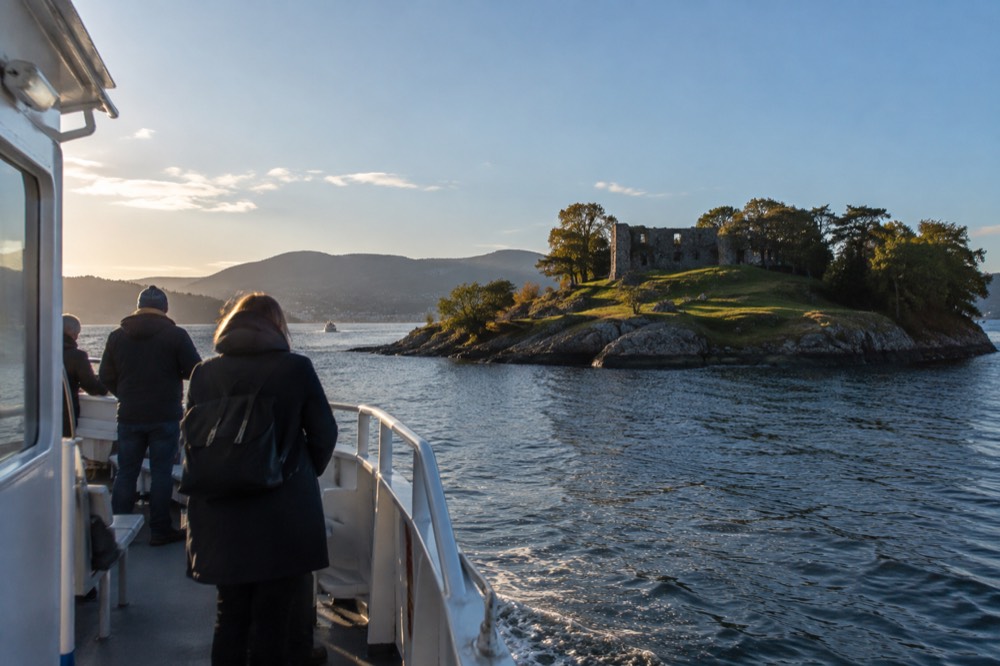
There is also a guided version that does the island chain with a nature-walk framing, ferry-and-foot, which suits travelers who want the islands explained rather than merely visited:
For the museum half-day, Bygdøy holds the Kon-Tiki and Fram museums side by side, and the Oslo Pass covers both plus the ferry out in season. One closure to plan around: the Museum of the Viking Age on Bygdøy is shut for rebuilding and will reopen in 2027, with Viking-age objects meanwhile at the Historical Museum in the center. Our Viking museum page tracks the details.
Getting to the Station, and the Airport Question
Oslo Central Station is the eastern terminus of the Bergen Line, and every form of city transport converges on it, so the only genuinely time-sensitive connection is from Gardermoen airport. The Flytoget express takes about 20 minutes and costs 268 NOK, while Vy's ordinary train takes about 23 minutes, rides on a Ruter ticket covering zones 1 through 4N, and costs roughly half as much. Allow at least an hour of buffer for a same-day arrival-to-departure connection.
The airport is in Ruter zone 4N, and the mechanism most guides miss is that the Vy airport trains are ordinary Ruter-zone trains: a multi-zone Ruter ticket is valid on them, and the Oslo Pass covers them outright. Buying Vy's own point-to-point fare at the machine is the expensive way to take the cheap train. Our Oslo airport to city centre guide walks the whole decision.
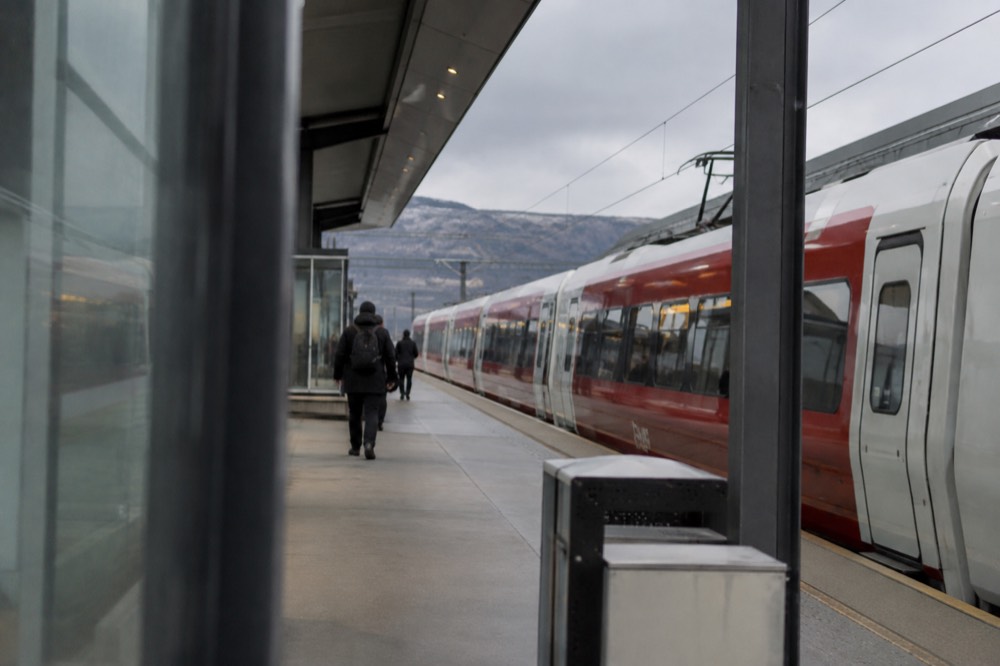
If you are traveling with luggage that does not love escalators, or arriving on a flight that lands close to your train's departure, a private airport transfer is the stress-free option, and it is bookable as a product:
For orientation once you are in the city, our Oslo map and orientation guide explains how the station, the waterfront and the grid of neighborhoods fit together, which is useful knowledge before you commit to a hotel on either side of the center.
Where This Fits in a Bigger Norway Trip
Treat the Bergen train as a spine, not an excursion. The strongest one-week shapes are Oslo for two or three days, the train west with a Flåm and Sognefjord stop, then Bergen for two days, flying out of either city. The weakest shape is a same-day round trip, which burns the plateau twice and sees Bergen only in passing. If you have three days total, stay in Oslo and take a fjord day trip instead.
For the Oslo end of that spine, the practical planning pages are how many days in Oslo and the one day in Oslo itinerary, which tell you what you can realistically fit before a morning departure west. For the rail-adjacent alternatives if the Bergen line does not fit your dates, our Oslo to Flåm guide covers the fjord-focused version of the same idea.
Money-wise, know where Norway is actually expensive before you budget the trip. Statistics Norway's 2025 price-level survey puts the country sixth in Europe overall, with prices facing households 28.6 percent above the EU average, food and non-alcoholic drink 33 percent above, and alcohol and tobacco more than double the European average. Transport and museums are the cheap side of the ledger; restaurants and anything alcoholic are the expensive side. Our is Oslo expensive guide carries the full breakdown, and it applies to Bergen with the volume turned up.
If you are weighing the whole question of whether the fjord day is better bought as a package, the selection below is the honest shortlist from Oslo's verified tour roster:
Whichever way you assemble it, this site, Oslo Travel Guide, keeps the Oslo-side planning pages, and the rail and fjord logistics above are the pieces that most often get booked wrong.
Common Questions About the Oslo to Bergen Train
Is the Oslo to Bergen train worth it?
Yes, if the journey is part of the point. The line crosses the Hardangervidda plateau and Finse, the highest station on the Norwegian network, which has no road access at all. If you only care about arriving, flying is faster and often cheaper; if you want the mountains, there is no substitute.
How long does the Oslo to Bergen train take?
The full crossing between Oslo Central Station and Bergen takes most of a day, which is why most itineraries either break the journey at Myrdal for the Flåm Railway or overnight in Bergen rather than attempting a same-day round trip.
Can you do the Oslo to Bergen train as a day trip?
A same-day round trip is technically possible but punishing: you cross the plateau twice in the same light and see Bergen only in passing. The stronger day-trip shape from Oslo is the Sognefjord and Flåm Railway combination, which is sold as a bookable private full-day round trip.
What is the most scenic part of the Bergen Line?
The plateau stretch between Geilo and Myrdal, including Finse above the tree line, followed by the steep western descent toward Voss. The Myrdal junction is where the Flåm Railway branch drops to the fjord, which is where most travelers break the journey.
Does the Oslo Pass cover the Bergen train?
No. The Oslo Pass covers Ruter public transport in zones 1, 2, 3, 4V and 4N, including Vy trains to and from Oslo Airport Gardermoen, but the Bergen Line is a Vy long-distance service and is not included. Book it directly with Vy.
When is the best time of year to ride it?
July and August for green scenery and full connections, February and March for deep snow and drama, and May, June or September for quiet trains and fares below the summer ceiling. August is Oslo's wettest month on the 1991 to 2020 normals at 103 mm, so pack for it.