Oslo Bike Share: How the City Bikes Work and When to Rent Instead
Oslo is flat, compact and cut through by car-free paths, which makes it one of the easiest capital cities in Europe to see on two wheels. Here is how the city's bike-share system works in practice, what a day of riding costs, where the stations cluster, and when a guided tour beats a self-guided rental.
Short answer
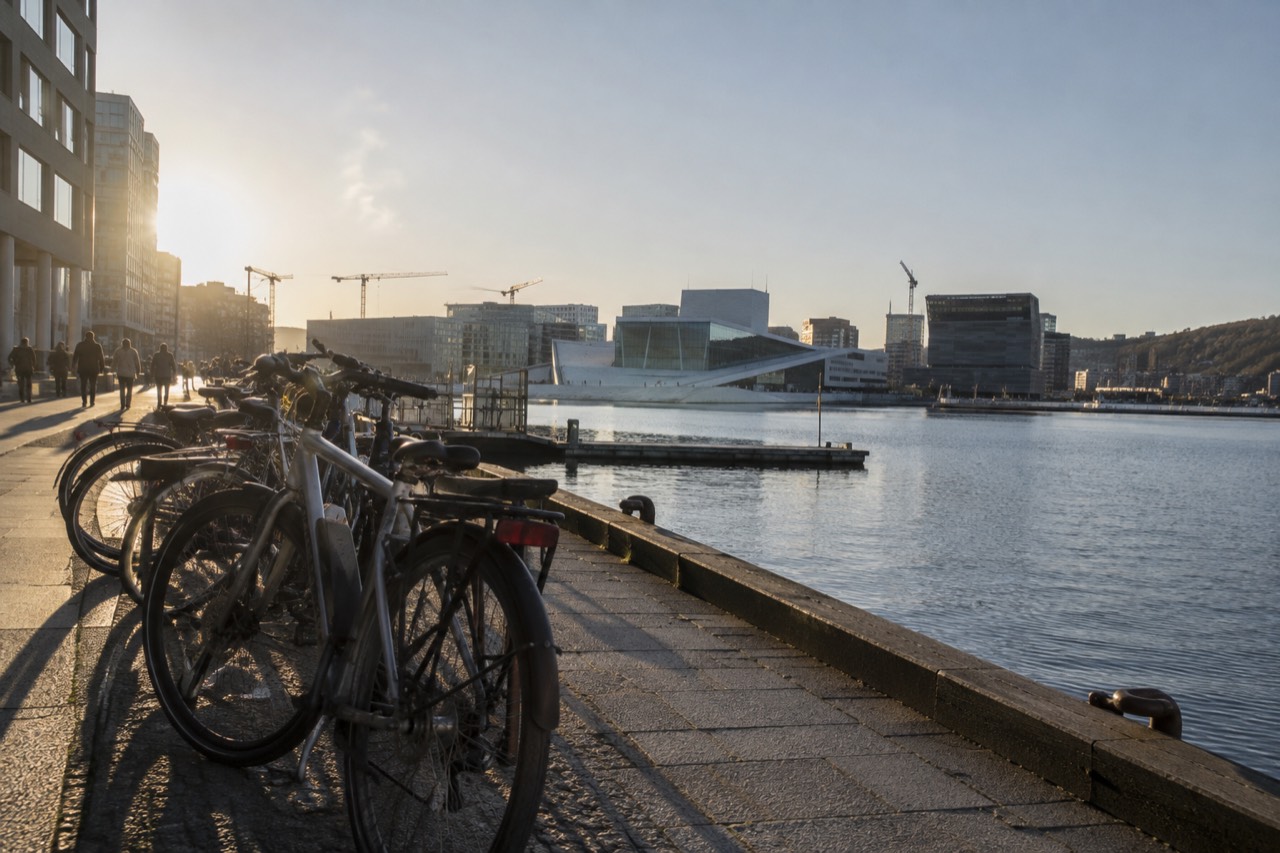
Oslo runs a docked bike-share system with stations concentrated in the center and along the waterfront. You unlock a bike through the operator's app, ride between stations, and the first stretch of every ride is included in your pass. Outside the riding season, or if you want a helmet, a route and a guide, a booked bike tour or an ordinary rental shop is the better answer.
Oslo is one of the few European capitals where cycling is genuinely the fastest way across the center for much of the year. The city sits on a flat shelf between the Oslofjord and the hills of Nordmarka, the council has spent two decades building car-free paths along the waterfront, and the distances between the sights a first-time visitor cares about are short. Karl Johans gate to the Opera House is a few minutes of easy pedaling. Aker Brygge to Grünerløkka is about the same.
That geography is why the city's bike-share system exists and why it works. This page covers how the share bikes actually function, where the stations sit, what a pass costs and when the system runs, and then the honest question most visitors arrive with: is a shared bike the right choice, or does a guided ride or a private rental serve you better? The answer depends on the season, your route and how much of Oslo you are trying to see.
How Does Oslo's Bike-Share System Work?
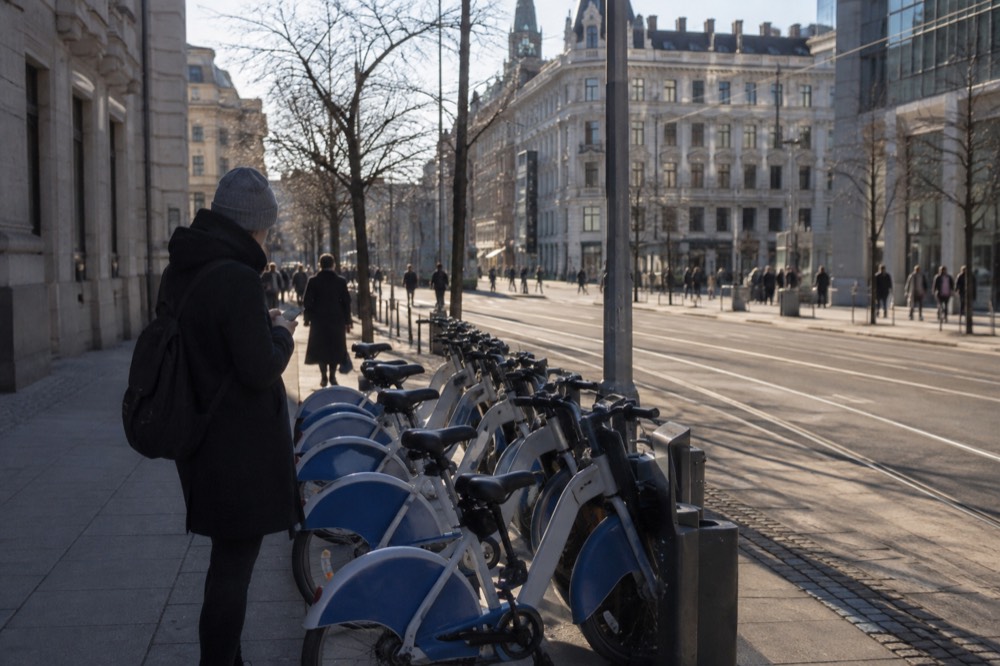
Oslo's bike share is a docked system: bikes live at fixed stations scattered through the central neighborhoods, you unlock one with a phone, and you return it to any station in the network. The first portion of each ride is bundled into your pass, so short hops between sights are effectively unlimited once you have paid for the day or the season. It is built for point-to-point trips rather than day-long touring, and that distinction shapes every recommendation on this page.
The mechanics are simple. You register in the operator's app, buy a pass, and scan or type the code at a dock to release a bike. Ride to your destination, find any station with a free dock, and click the bike back in. Because the first stretch of each ride is included, the system rewards the same behavior locals use: take a bike, go twenty minutes, drop it, walk around, take another. It is not designed for locking a bike to a railing outside a museum for two hours, and most passes do not allow it.
Two practical limits matter for visitors. First, the stations cluster in the center and the inner neighborhoods, so a ride out toward Bygdøy or Holmenkollen can end with no dock to return to. Second, the fleet shrinks or disappears entirely in the winter months, when snow and ice make mass cycling inadvisable. If your trip falls between roughly November and March, plan around the metro and trams instead, or read up on what Oslo in winter actually feels like before committing to wheels.
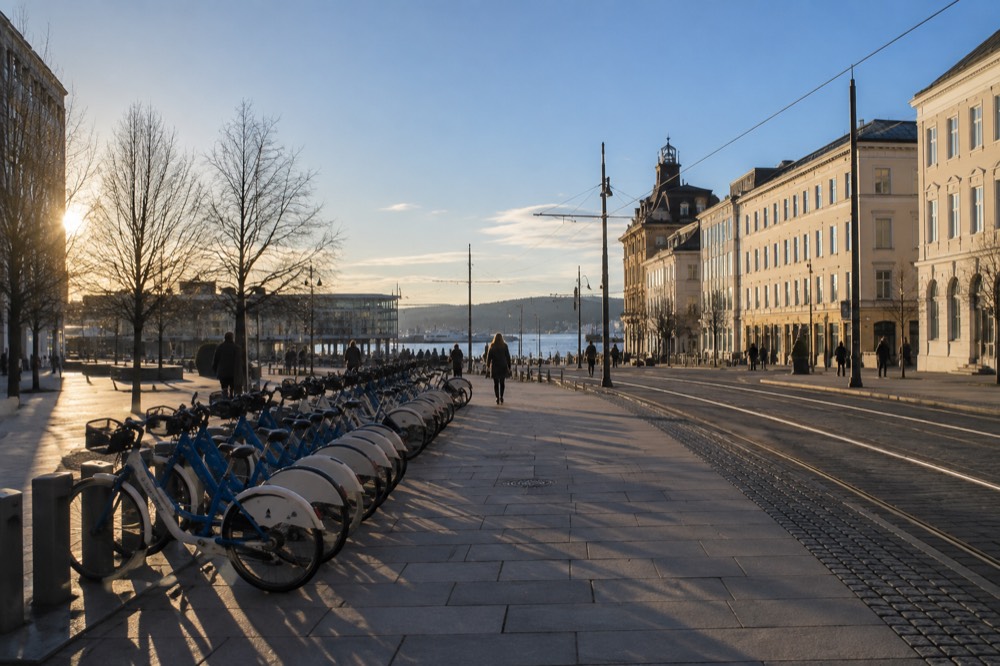
For orientation, the geography that makes cycling pleasant is the same geography that makes Oslo walkable. The center is a compact grid between the palace grounds and the water, and the two big cycling corridors run along the harbor front and up the Akerselva river through Grünerløkka. The main sights are clustered in a way that suits a bike-and-walk rhythm better than a bike-all-day one.
Where Do the Bike-Share Stations Sit Relative to the Sights?
The station network is densest in Oslo sentrum, Grünerløkka, Tøyen and along the Aker Brygge waterfront, which happens to be where most visitors spend their day. You are rarely more than a few minutes' walk from a dock anywhere between the Royal Palace and the Opera House. Coverage thins fast west of Majorstuen and vanishes on the Bygdøy peninsula, so plan those trips by ferry or bus instead.
The pattern follows where people actually live and move. The waterfront path from Tjuvholmen past the City Hall and on to the Opera House is the single most-ridden corridor in the city, flat, separated from traffic, and lined with the harbor on one side. The river path up the Akerselva from Grønland to Nydalen is the second, running through old industrial yards and parkland. Both are covered in our overview of Oslo's neighborhoods, which is worth a read if you are deciding where to base yourself for riding.
| Area | Station coverage | What you reach by bike | Better without a bike |
|---|---|---|---|
| Oslo sentrum | Dense, every few blocks | Opera House, Karl Johans gate, Akershus waterfront | City Hall interior tours |
| Aker Brygge / Tjuvholmen | Good, along the promenade | Harbor path, Astrup Fearnley museums | Boat departures |
| Grünerløkka | Good, especially along the river | Mathallen, cafés, street art | Nothing, this is bike country |
| Tøyen / Grønland | Fair | Botanical Garden, MUNCH | Museum interiors |
| Frogner / Majorstuen | Thinner | Vigeland Park approach | Vigeland Park itself, best on foot |
| Bygdøy | Effectively none | Not practical | Ferry or bus 30 |
| Holmenkollen | None, and hilly | Not practical | T-bane Line 1 |
The table's last two rows are the ones that catch visitors out. Bygdøy's museums are a bike-free zone for practical purposes, and the peninsula is served by the seasonal ferry from Rådhusbrygge 3 and by bus 30 year-round. Holmenkollen involves a climb that defeats casual riders anyway. Our Bygdøy guide covers the museum peninsula properly, and the Holmenkollen ski jump page explains the transport up.
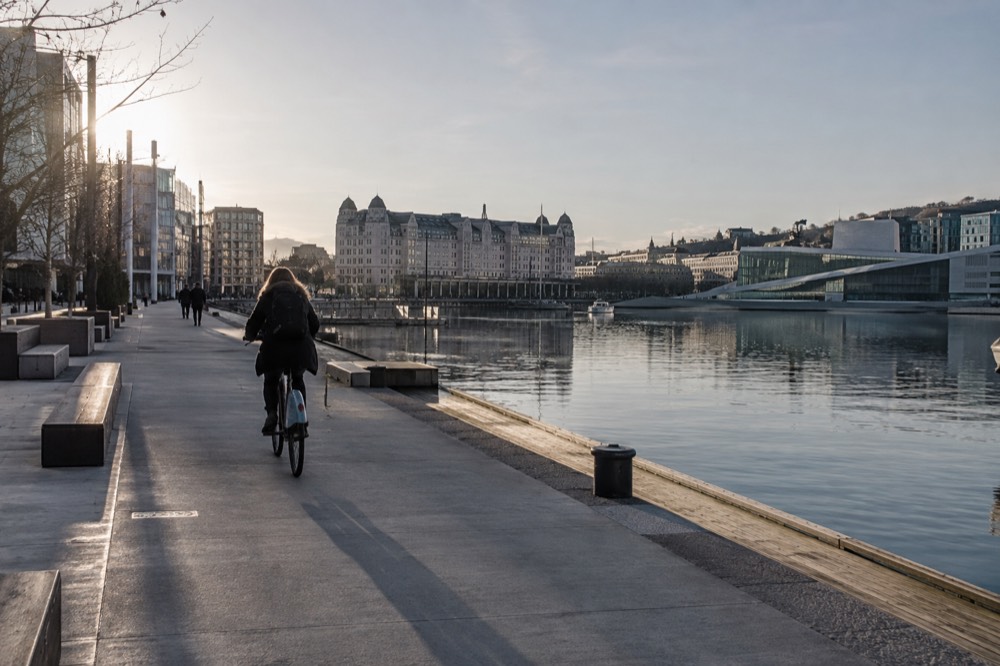
If you are riding for sightseeing rather than transport, the honest question is whether you want to plan the route yourself or follow someone who knows it. A guided ride does the navigation, the history and the pacing in one package, and it is the format that suits first-time visitors best.
The three options above frame the choice neatly. The guided highlights ride is the two-wheeled answer, the silent electric fjord cruise is the city's best-reviewed activity of any kind, and the wooden sailing ship covers the same water with a completely different feel. Many visitors do one day on a bike and one on the water, and the fjord options in particular are worth reading about in depth on our Oslofjord cruise page.
What Does a Bike-Share Pass Cost and How Do You Pay?
You pay once for a pass, through the operator's app, and every ride up to the included duration is then free at the point of use, with overtime charged if you keep a bike longer than the pass allows. The exact pass prices change between seasons and are shown in the app before you commit, so we do not publish them here. A short-visitor pass is priced to compete with a couple of single transit fares, not with a rental shop's day rate.
The payment model is the thing to understand, not the number. A day or three-day pass is priced for people making several short trips, and it beats a rental shop the moment you would otherwise pay for a full day to ride for forty minutes. It loses to a rental shop the moment you want the bike continuously for hours, want to lock it somewhere with no dock, or want a helmet included, which the share fleet does not provide.
For context on what transport does cost in this city, the confirmed figures are public-transit ones: Ruter's 30-day zone 1 pass fell from 805 to 655 NOK in May 2026, and the Oslo Pass runs 580 NOK for 24 hours. Cycling competes with the cheap end of that scale, which is part of its appeal. Our Ruter tickets guide covers the transit side in full, and the Oslo on a budget guide places bikes in the wider cost picture.
| Cost comparison | What you get | Best for |
|---|---|---|
| Bike-share short pass | Unlimited short hops between docks | Point-to-point sightseeing in the center |
| Rental shop day rate | A bike kept all day, lock and often helmet | Long rides, river round trips, out-of-center routes |
| Guided bike tour | Bike, helmet, guide and route included | First visit, limited time, no navigation wanted |
| Ruter day ticket | Trams, buses, metro and the island ferries | Bad weather, hills, Bygdøy and Holmenkollen |
| Walking | Free, and the center is compact | Short distances, museum days |
One cost note that surprises Americans: Norway is not in the EU, it is in Schengen through the EEA, and it uses the krone rather than the euro, so the app will charge a card in NOK and your bank does the conversion. Tipping is not expected anywhere in the country, including for guides, though rounding up is never unwelcome.
When Is the Best Season for Cycling in Oslo?
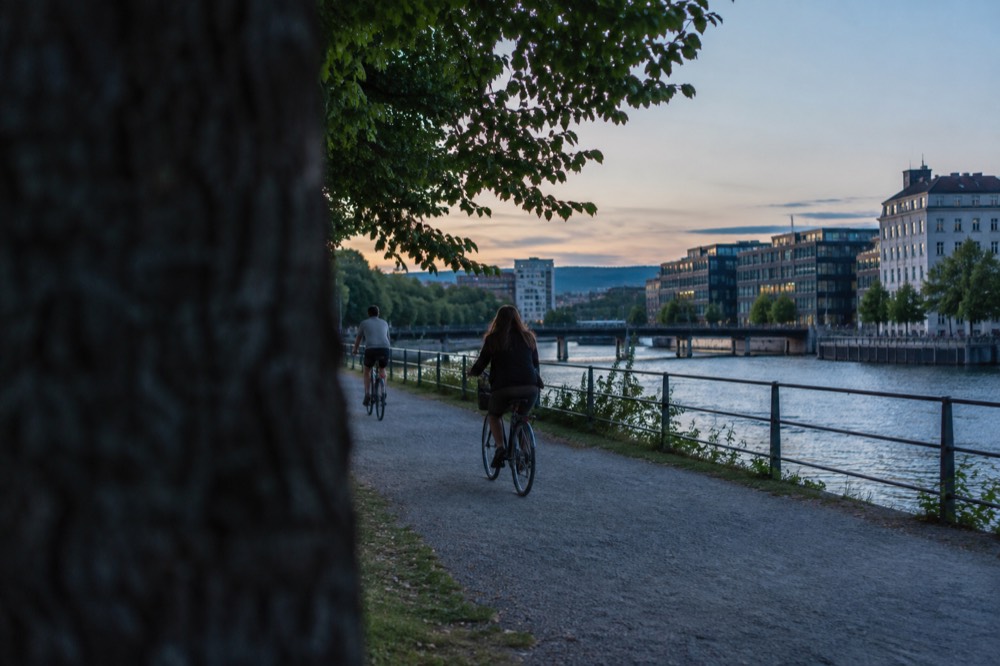
May through September is the riding window, with July the warmest month at a normal mean of 17.7 degrees Celsius and long evenings that stay light past 22:00. The share-bike fleet is reduced or withdrawn over winter, when normal mean temperatures sit below freezing and the paths fill with snow. Shoulder months trade cooler air for thinner crowds, and August, the wettest month on the 1991 to 2020 normals at 103 mm, is the one summer month where a rain plan matters.
The daylight is the part visitors underestimate. On 21 June the sun rises at 03:53 and sets at 22:43, and the gap between is twilight rather than true darkness, which effectively doubles your usable evening for riding. By 21 December the day is 5 hours 53 minutes long and cycling is off the table regardless of fleet availability. Our daylight hours guide has the full table, and the month-by-month weather page covers what each part of the year actually feels like.
Temperature expectations should be set by the normals, not by images of Scandinavian summers. July's 17.7 degree mean means pleasant afternoons and cool evenings, and June sits at 15.3. Bring a layer for anything after dinner. In the other direction, summer water temperatures in the fjord typically run 15 to 20 degrees, so a post-ride swim at Tjuvholmen or Sørenga is a real plan rather than an optimistic one, and our Oslo beaches guide lists the official spots.
| Month | Normal mean temp | Ride quality |
|---|---|---|
| May | 11.4 °C | Excellent, long days, spring light |
| June | 15.3 °C | Excellent, light until late |
| July | 17.7 °C | Peak season, warmest water |
| August | 16.5 °C | Good, but the wettest month |
| September | 12.2 °C | Very good, thinner crowds |
| October | 6.6 °C | Chilly, fleet winding down |
| November to March | 2.2 °C to −2.3 °C | Not a cycling season |
Winter visitors are not short-changed, they are just served differently. The honest winter answers are the torchlit forest walk with a campfire, snowshoeing in Nordmarka, and the museums, and the winter guide lays them out.
Is a Shared Bike Right for You, or Should You Book a Tour?
A shared bike suits a confident cyclist who knows their route and wants cheap, flexible hops between the center's sights. A guided tour suits everyone else: first-timers, families, anyone short on time, and anyone who does not want to read a map while trams pass. The guided option also solves the two problems the share system cannot, the missing helmet and the missing route, and in a city where the signage is in Norwegian, having someone lead is worth more than the price difference.
The self-guided case is real, to be clear. The center is flat, the paths are separated from traffic, and the two big corridors, the harbor front and the Akerselva, are essentially impossible to get lost on. If your day is Opera House, Aker Brygge, up the river to Grünerløkka and back, a share pass and a paper map do the job. Our one day in Oslo itinerary works exactly that geography and can be ridden as written.
The guided case is stronger than most visitors expect. The highest-reviewed bike tour in the city runs three hours, holds a 4.8 rating, and covers the highlights with a local leading, which is enough distance to reach Vigeland Park and still finish by the water. For a first visit of two or three days, one guided ride plus one self-guided afternoon is a genuinely good structure. More of these guides are collected on Oslo Travel Guide. More of these guides are collected on Oslo Travel Guide.
The tour above is the one to anchor that plan around. It is the strongest-reviewed cycling product in the city, the three-hour length matches the size of the center rather than overstaying it, and the guide handles the parts of Oslo that are hard to absorb cold, like which side of the river matters and why.
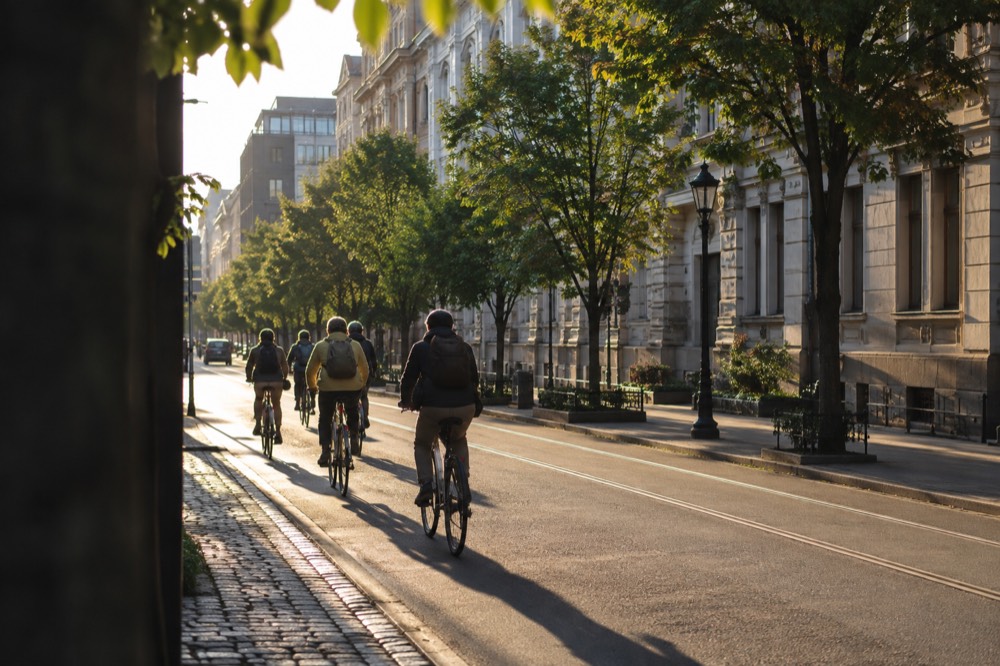
Families have a third consideration. Share bikes are adult-sized and the docks do not carry children's equipment, so a family with under-tall riders needs either a rental shop with kids' bikes or a different mode entirely. The Oslo with kids guide covers the family-tested alternatives, and the hop-on-hop-off bus is the obvious bad-weather and short-legs fallback.
What Are the Best Bike Routes in Central Oslo?
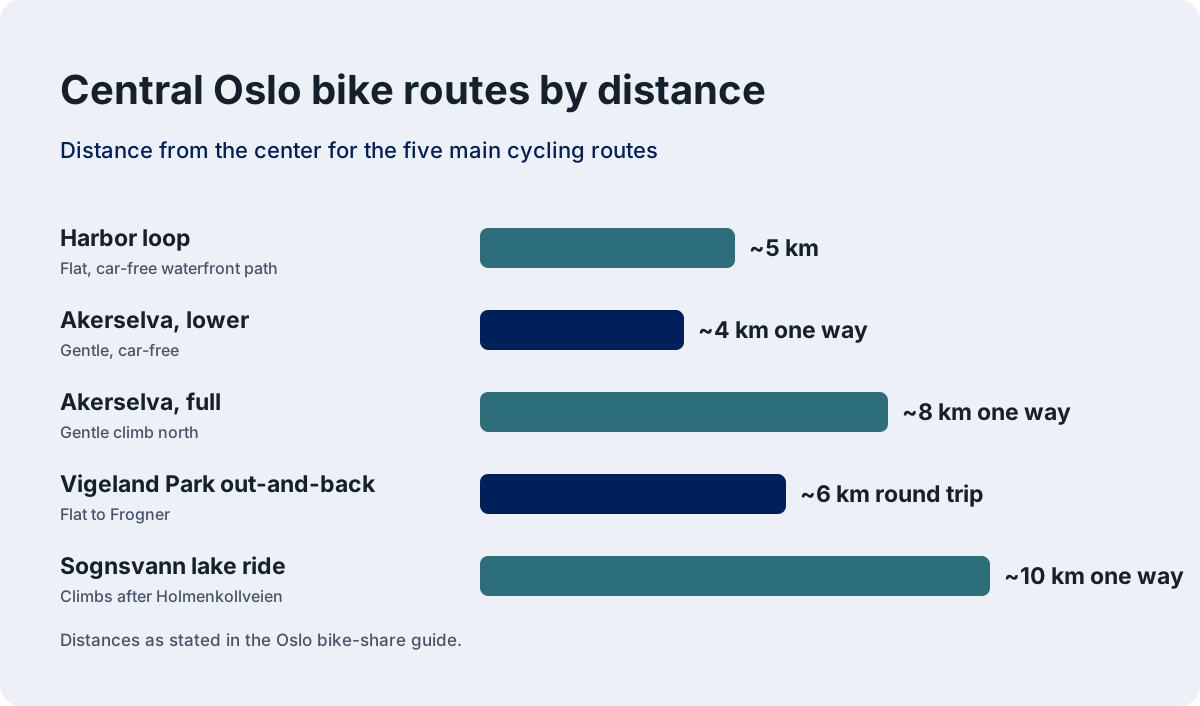
Two routes cover almost everything a visitor wants: the harbor loop from Tjuvholmen to the Opera House and back, about 5 km of flat waterfront path, and the Akerselva river route from Grønland up to Nydalen and back, about 8 km each way with the upper half noticeably quieter. Both are car-free for nearly their entire length, both pass food and coffee, and both can be shortened at will.
The harbor loop is the easy win. Start at Tjuvholmen's beach and museums, ride past Aker Brygge's restaurants, along the City Hall frontage where the Nobel Peace Center sits, and around to the Opera House, whose sloping marble roof is free to walk and worth the dismount. The whole thing is flat, separated from traffic and signed. Add the barcode district behind the Opera House if the legs are willing.
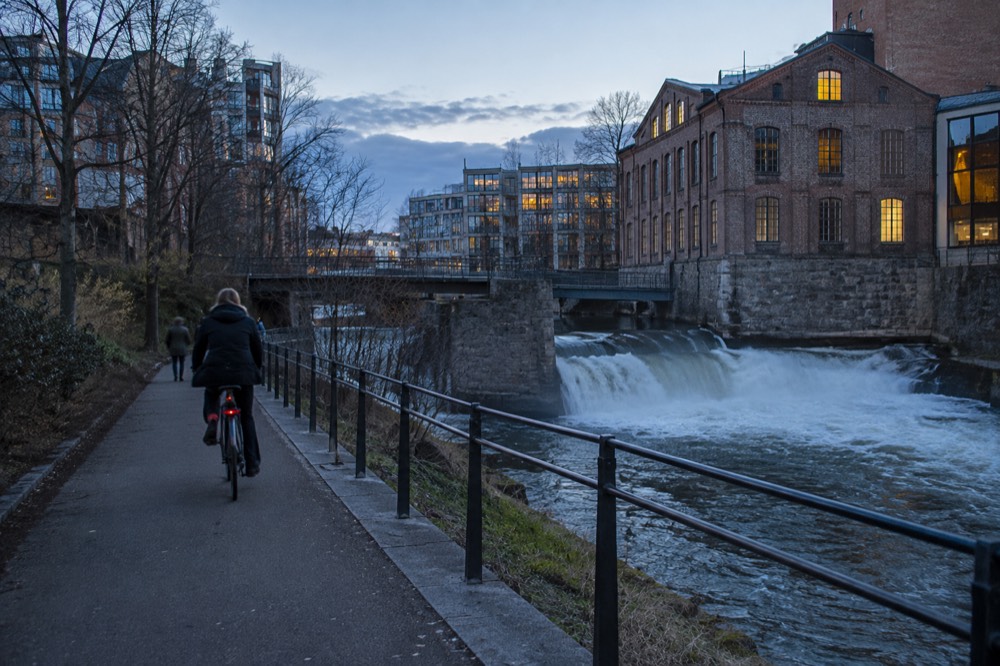
The river route is the one locals would tell you about. The Akerselva drops from Maridalsvannet to the fjord through the middle of the city, and the path along it strings together waterfalls, old mill buildings, graffiti walls and parkland. The Grünerløkka stretch, from Nybrua up to Sofienberg, is the social heart, with Mathallen food hall a short detour. The upper stretch past Sagene and up toward Brekkedalen feels like a different city. Our Grünerløkka guide covers the neighborhood in detail.
| Route | Distance | Terrain | Highlights |
|---|---|---|---|
| Harbor loop | ~5 km | Flat, car-free | Tjuvholmen, Aker Brygge, Opera House |
| Akerselva, lower | ~4 km one way | Gentle, car-free | Waterfalls, Grünerløkka, Mathallen |
| Akerselva, full | ~8 km one way | Gentle climb north | Sagene, industrial heritage, quiet stretches |
| Vigeland Park out-and-back | ~6 km round trip | Flat to Frogner | The sculpture park, free and always open |
| Sognsvann lake ride | ~10 km one way from center | Climbs after Holmenkollveien | Forest lake, swimming in summer |
The last two rows stretch the definition of central, and the Sognsvann ride in particular is a commitment, but it is the ride that shows you why Osloans think of their city as a forest with a downtown attached. The lake at the end is a popular swimming spot in summer, and the Sognsvann page covers the transit fallback for the way home. Vigeland Park deserves its own mention: entry is free, it is open around the clock year-round, and more than 200 sculptures make it one of the city's most-visited sights at zero cost, as our free things to do guide points out.
What Are the Rules for Cyclists in Oslo?
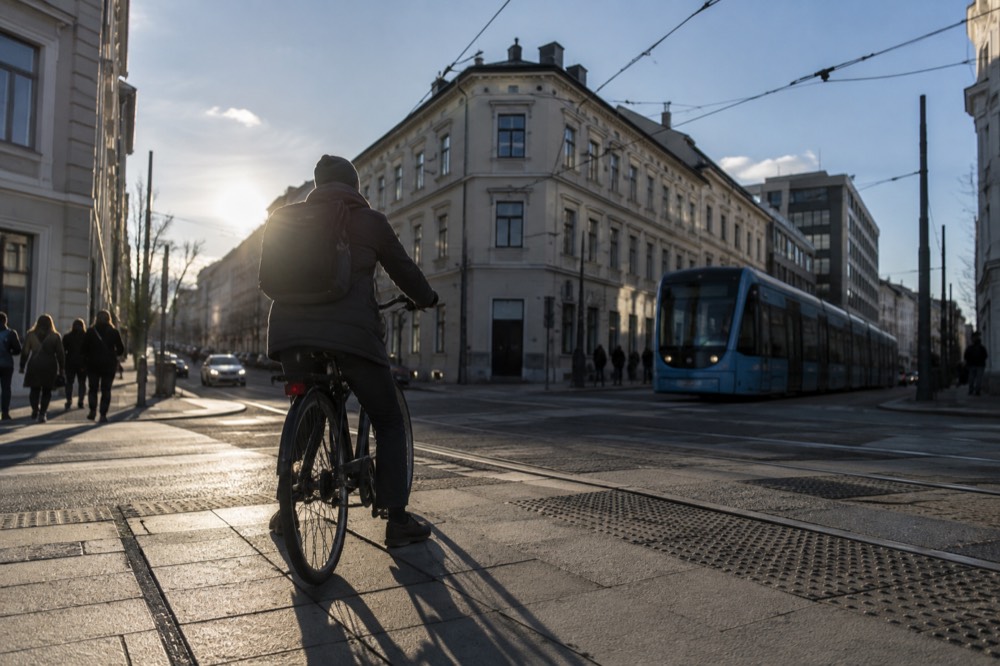
Ride on the right, use the cycle paths where they exist, and keep off sidewalks. Helmets are not legally required for adults but are strongly advised and are included on guided tours. Lights are required after dark, which in winter means effectively always. Norway drives on the right, trams have priority considerations of their own, and the tram tracks themselves are the single biggest hazard to an inexperienced cyclist in the center.
The tram-track point deserves its emphasis. Oslo's center is laced with tram rails, and a narrow wheel dropped into a wet rail at an angle goes down instantly. Cross rails squarely, at close to a right angle, and never ride parallel and close to a rail. This is the one piece of local knowledge that prevents most visitor cycling incidents.
The rest is straightforward. Hand-signal turns, respect pedestrians on shared paths, and expect them to have priority on the sections signed as such. The harbor promenade is shared use and busy in summer, so treat it as a slow zone. Alcohol rules are strict in Norway and apply to cycling, and the country's alcohol prices, more than double the European average on SSB's price-level survey, mean most visitors are not drinking casually at lunch anyway.
If any of this gives you pause, that is another argument for the guided format, where the guide's local knowledge absorbs the tram rails, the signage and the etiquette while you ride. If weather turns, the rainy day guide has the indoor plan, and the hop-on-hop-off bus covers the same headline sights from under a roof.
The bus above is that wet-weather fallback: it is the only credible hop-on hop-off product in the city, it rates well above the competing product, and it connects the same waterfront and museum stops the bike routes serve.
Bike Share, Rental Shop or Guided Tour: The Honest Verdict
For a summer visit of two days or more, the best structure is usually one guided ride on day one and share-bike hops for the rest, with a rental shop only if you want a full-day river or lake ride. In winter, none of the two-wheeled options apply and the question dissolves into trams, metro and museums. The share system is at its best as a supplement, not as the whole plan.
The reasoning is about fit rather than quality. A guided tour front-loads orientation, history and route-finding into three hours, and it does so with the city's best-reviewed cycling product. The share bikes then serve the spontaneous hops that follow: back to a café you passed, down to the harbor for a swim, over to Grünerløkka for dinner. A rental shop only earns its day rate when the plan is a single long ride, and the Sognsvann or full-river routes are the ones that justify it.
The water deserves the last word. Oslo is a fjord city, and no amount of pleasant cycling substitutes for being on the water. The silent electric fjord cruise is the single best-reviewed activity in the city on either platform, a 90-minute loop with audio commentary, and the wooden sailing-ship version covers the same fjord with sails, shrimps optional, and a completely different atmosphere. Our Oslofjord cruise guide compares them properly.
The premium silent-boat cruise above is the guided, two-hour version of that water day: a step up from the audio-guide format, with a live guide and a 4.7 rating across more than two thousand reviews. Pair a morning on the water with an afternoon on wheels and you have the shape of a very good Oslo day.
Common Questions About Oslo Bike Share
How does Oslo bike share work?
It is a docked system: bikes live at fixed stations, you unlock one through the operator's app, and you return it to any station in the network. The first portion of each ride is included in your pass, so the system is built for repeated short hops rather than keeping a bike all day.
Is Oslo good for cycling?
Yes, exceptionally. The center is flat, the harbor front and the Akerselva river both have long car-free paths, and the distances between the main sights are short. The weak points are the Bygdøy and Holmenkollen trips, which are better by ferry, bus or metro.
Do I need a helmet to ride a bike in Oslo?
Helmets are not legally required for adults in Norway, but they are strongly advised and are not provided with share bikes. Guided tours include one, which is one of the practical reasons to choose the guided format over self-guided riding.
When does the Oslo bike-share season run?
The fleet operates through the warmer months, roughly May to September or October, and is reduced or withdrawn over winter when snow and ice make mass cycling impractical. Check the operator's app for the current season dates before planning around it.
Can I cycle to the museums on Bygdøy?
Not practically. Station coverage ends before the peninsula, the ride involves hills and traffic, and the museums are served by the seasonal ferry from Rådhusbrygge 3 and by bus 30 year-round. A bike-share pass is the wrong tool for Bygdøy.
Is a bike tour better than exploring on my own?
For a first visit, usually yes. A guided ride handles the route, the history and the local knowledge, including how to handle tram tracks, and the city's best-reviewed bike tour covers the highlights in three hours. Self-guided riding suits confident cyclists who already know their route.