Taxis, Uber and Getting Around Oslo by Car
Oslo taxis are safe, licensed and expensive, and they are usually the slowest way to cross the city center. Here is when a cab is genuinely the right call, what rideshare actually covers, and how to avoid the airport overpay.

Short answer
Oslo taxis are all licensed and metered, with fares set per operator rather than by the city, so prices vary between cars at the same rank. Uber and local rideshare apps operate legally. For most visitors the taxi is a late-night or luggage tool, because the metro, trams, ferries and the Vy airport train cover almost everything for a fraction of the cost.
Oslo is a city where the taxi is rarely the smart answer, and knowing that in advance saves visitors real money. The capital's public transport is dense, the center is compact, and the one long trip most visitors actually take, the run from Gardermoen airport, has a train that beats a car for speed at a fraction of the price. That said, there are moments when a cab is exactly right: a 2 a.m. return from a bar, a heavy suitcase and a tight connection, or a group splitting a fare to a trailhead the metro does not reach. This guide explains how the taxi system works, how Uber and the local rideshare apps fit into it, what is regulated and what is not, and where the alternatives win. Every fare and transport figure below comes from a verified primary source, and where no verified figure exists, this page says so instead of guessing.
How Do Taxis Work in Oslo?
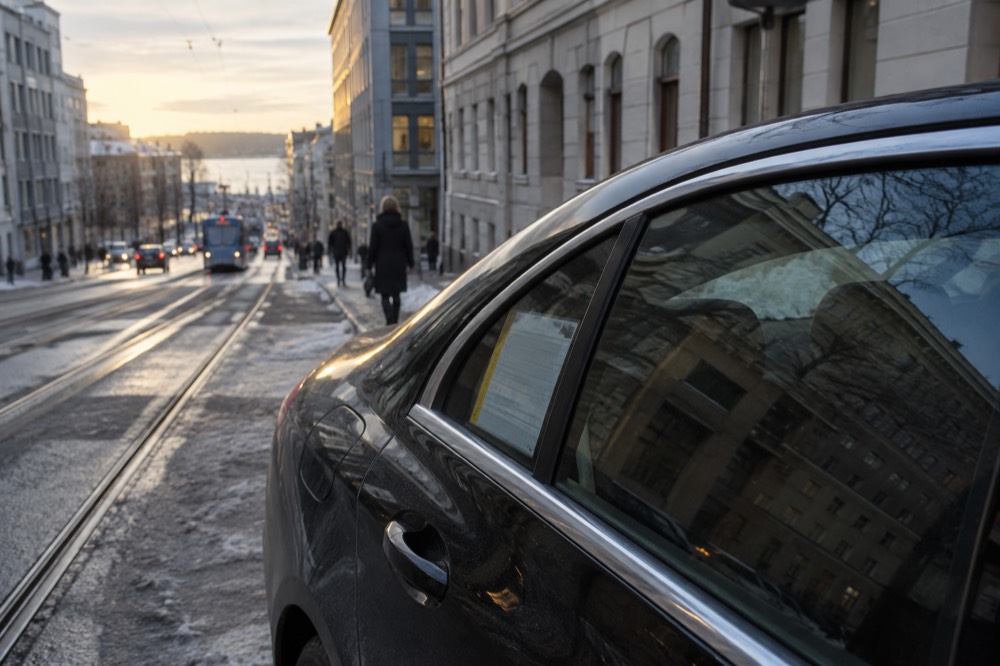
Every taxi in Oslo is licensed by the authorities, but fares are not fixed by the city: each operator sets its own tariff, which means two cars at the same rank can charge different amounts for the same trip. All cabs use meters, prices are displayed on the vehicle, and drivers must show the applicable tariff if you ask before the ride starts. Card payment is standard, and cash is accepted though rarely used. This per-operator pricing is the single most important thing to understand, because it turns choosing a taxi into choosing a company. The fares are regulated in structure, a base charge plus distance and time components, but not in level. The practical consequence: the cheapest-looking cab at the rank outside Oslo S is not necessarily the cheapest ride. Checking the sticker on the rear side window, which lists the operator's tariff, takes five seconds and is a habit worth forming. Reputable operators dominate the ranks, and the system is broadly trustworthy, but the variance between companies is real and the visitor who ignores it pays more.
The licensing regime matters for safety too. Oslo taxi drivers hold professional licenses, vehicles are inspected, and complaints go through a formal channel, which this page covers further down. Unlike some cities, unlicensed cabs are not a visible problem here. The trade-off for that reliability is price: driving is expensive in Norway across the board, and a taxi ride is priced accordingly. Statistics Norway's 2025 price-level survey places Norway sixth in Europe for overall price level, with household prices 28.6 percent above the EU average, and transport costs follow the same pattern. A visitor coming from Berlin or Lisbon will notice the difference immediately.
Do You Even Need a Taxi in Oslo?
Most visitors do not need a taxi at all on a typical Oslo trip. The city center is walkable, the metro, trams and buses run on one integrated ticket in zone 1, the island ferries ride on the same ticket, and the airport is served by two competing trains that are both faster than a car in normal traffic. A cab earns its fare in specific situations: late nights, heavy luggage, limited mobility, or destinations outside the transit net. The honest framing is that Oslo's taxi is a complement to public transport, not a competitor to it. A day of sightseeing can be done entirely on foot and by tram, and the money saved on two or three unnecessary cab rides buys a museum entry or a fjord cruise instead.
Consider the geography. The stretch from the Royal Palace to the Opera House is roughly 2 km, Karl Johans gate runs straight down the middle of it, and the waterfront at Aker Brygge sits a few minutes' walk from the central station. Neighborhoods visitors actually go to, Grünerløkka, Frogner, Tøyen, are each one or two metro or tram stops out. Even the museum peninsula of Bygdøy, which feels remote, is a 15-minute bus 30 ride from Nationaltheatret on an ordinary Ruter ticket, year-round, with a seasonal ferry as the summer alternative. For a deeper look at the whole system, see our Oslo public transport explained guide, and for the ticketing rules, Ruter tickets and zones.
There is one exception worth flagging early: groups. Four people splitting a cab at midnight are comparing a single fare against four transit fares, and the arithmetic can tip toward the car. The same applies to a family with sleeping children leaving a late dinner. That is the honest case for the taxi in Oslo, and it is a narrow one.
Is Uber Available in Oslo, and How Does Rideshare Compare?
Yes, Uber operates legally in Oslo, alongside local app-based services such as Bolt, and rideshare cars are subject to the same professional licensing regime as conventional taxis. App fares are fixed at booking, which removes the rank-side tariff variance, and in practice the apps are the way most price-conscious visitors arrange a car. Conventional taxis have responded with their own apps with comparable upfront pricing. The rideshare question in Oslo is not availability, it is value. The apps work reliably, drivers are licensed, and the upfront price protects you from the per-operator tariff lottery described above. What they do not do is make a car cheap. Norway's cost structure applies to rideshare the same way it applies to everything else, so an app ride is convenient rather than economical.

A few practical notes from the verified transport record. App-based booking gives you a receipt, a tracked route and a complaint channel, all of which matter if something goes wrong. Pickup points in the center are usually a short walk away, because the pedestrian zones around Karl Johans gate and the waterfront restrict where cars can stop. During large events, central streets can close entirely, and the app will show a pickup spot outside the perimeter. Surge pricing exists in the apps at peak times, Friday and Saturday nights especially, so the fare you see at 22:00 and the fare at 01:30 can differ sharply.
For travelers weighing the hop-on hop-off bus against app rides for a first day of sightseeing, the bus covers the spread-out landmarks, Holmenkollen, Vigeland Park, the museums, in one ticket, which a sequence of cab rides cannot match on price.
That comparison is really the theme of this whole page: the car competes badly against anything structured. A bus tour, a boat tour, even a walking tour delivers more sightseeing per krone than a metered ride ever will, because the meter runs whether you are looking at anything or not.
Taxi from Oslo Airport: Is It Worth It?
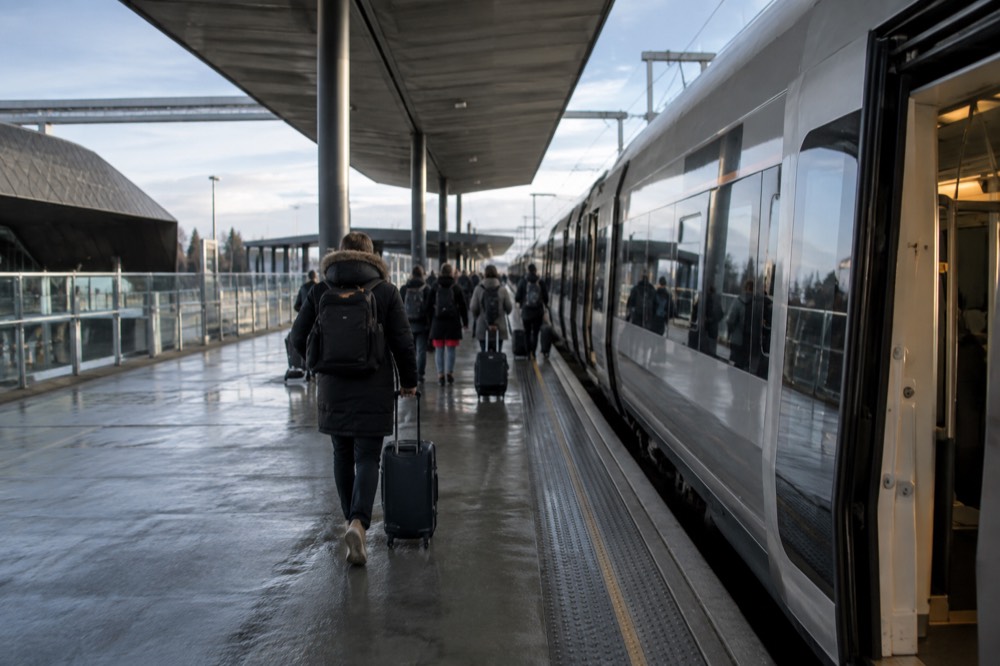
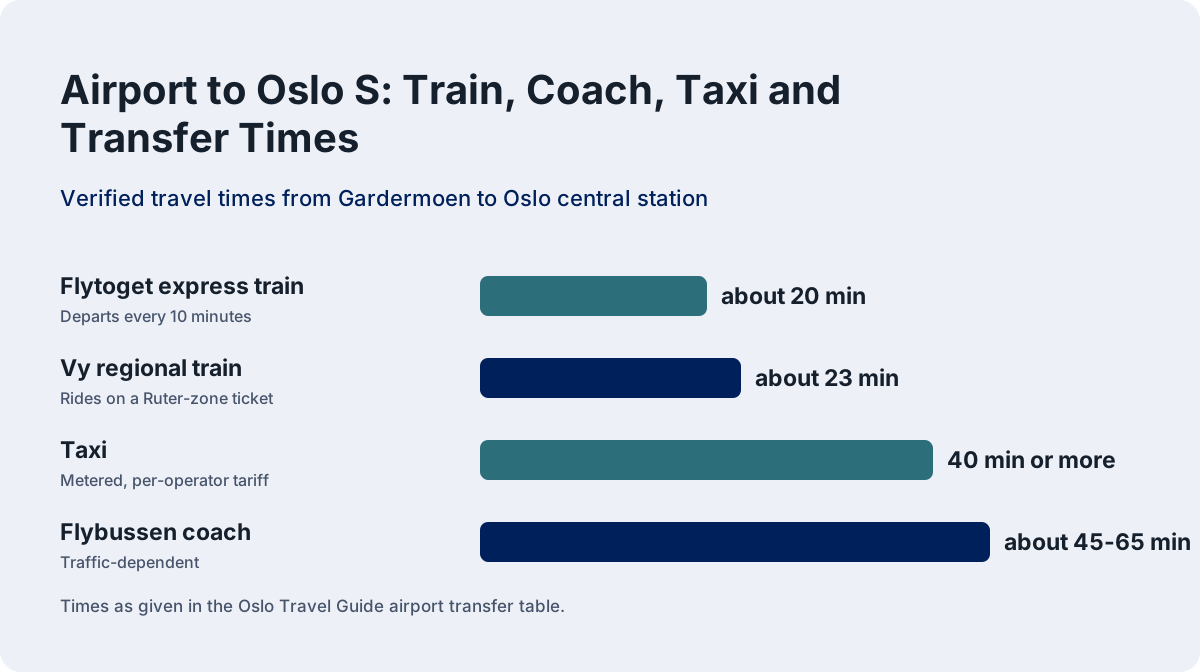
Almost never, on both speed and price. The airport is 50 km from the center, the Flytoget express train covers the distance in about 20 minutes at 268 NOK adult single, and Vy's regional trains do it in about 23 minutes for roughly half that fare on a Ruter ticket. A taxi or private car faces the same 50 km of road with no lane to itself, so it is slower than the train in normal conditions and drastically slower in rush hour. The train also wins on frequency: Flytoget departs every 10 minutes, and the Vy trains run frequently through the day. The full breakdown, including the Oslo Pass quirk that covers Vy to the airport but not Flytoget, lives in our Oslo Airport to the city center guide and the head-to-head in Flytoget vs Vy.
| Option | Time to Oslo S | Verified fare | Notes |
|---|---|---|---|
| Flytoget express train | about 20 min | 268 NOK adult single | Departs every 10 minutes |
| Vy regional train | about 23 min | about half the express fare | Rides on a Ruter-zone ticket; airport is zone 4N |
| Flybussen coach | about 45-65 min | confirm on the operator's site | Traffic-dependent |
| Taxi | 40 min or more in traffic | no verified fixed fare exists | Metered, per-operator tariff |
| Private transfer | 40 min or more in traffic | bookable product, price | Fixed price agreed at booking |
The taxi row in that table is deliberately empty of numbers, and that is the honest position: Oslo airport taxi fares are set per operator, no verified flat rate is published, and any guide quoting a precise figure for this trip is guessing. What can be said with certainty is the structural fact above, that the train is faster than any road option. The private transfer is the one car product worth considering, for a group, for an awkward arrival time, or for travelers who want a fixed price and a driver waiting, and it is bookable in advance.
One more airport fact that saves money: if you hold an Oslo Pass, it covers the Vy trains to and from Gardermoen but not Flytoget and not the coach. The pass costs 580 NOK for 24 hours adult, 845 NOK for 48 hours, 995 NOK for 72 hours, and includes transport in zones 1, 2, 3, 4V and 4N plus entry at over 30 museums. A pass holder arriving on Vy has effectively already paid for the airport transfer.
How Do You Hail, Book and Pay for an Oslo Taxi?
There are four working methods: book through an app for a fixed upfront price, walk to a staffed rank in the center, hail a lit taxi on the street, or have a hotel or restaurant call one. Payment is by card almost universally, cash is accepted, and tipping is not expected, though rounding up for good service is a common Norwegian habit rather than an obligation. The rank is the classic method and the one with the most variance, because the tariff belongs to whichever company's car you take. The apps, Uber, Bolt and the taxi companies' own, remove that variance and are the recommended default for anyone who wants a predictable fare.
| Booking method | How it works | Price certainty | Best for |
|---|---|---|---|
| Rideshare or taxi app | Book and pay in the app, fixed fare quoted upfront | High | Most visitors, most trips |
| Taxi rank | Queue at marked stands, take the next car | Low, tariff varies by operator | Quick center pickups, no phone |
| Street hailing | Flag a car with its roof light lit | Low, same tariff variance | Rare in practice in Oslo |
| Hotel or restaurant call | Staff summon a car from a partner firm | Medium | Late nights, luggage, accessibility |
A note on the roof light, because it confuses visitors from countries with different conventions: in Norway, a lit sign generally means the cab is available, and drivers indicate stops clearly. Ranks are marked with signage and sit at the obvious nodes, Oslo S, Nationaltheatret, major hotels, the ferry piers. If you take a rank car and want to compare, the tariff sticker on the vehicle shows the operator's rates before you commit. Drivers are not offended by a passenger who walks past one cab to the next, and the meter must start at the posted base fare. Other pages covering the same trip are gathered on Oslo Travel Guide. Other pages covering the same trip are gathered on Oslo Travel Guide.
Payment deserves one warning: card is standard and contactless works, but a phone with no battery cannot pay at a rank that has stopped taking cash, which is increasingly common. Keep a physical card accessible. Receipts come automatically from the apps and on request from rank drivers, and they matter if you plan to claim anything back or file a complaint.

What Does a Taxi in Oslo Actually Cost?
No honest per-kilometer figure for an Oslo taxi ride can be published from verified sources, because fares are set per operator and no unified tariff table exists. What is verified is the surrounding cost context: Norway is Europe's sixth most expensive country, household prices run 28.6 percent above the EU average, and running a car in Norway is correspondingly dear. Any specific taxi price you read online without a named operator is an invention. This is a deliberate gap in this guide, and it is the same standard the rest of this site applies to beer prices and restaurant mains: a number with no source is worse than no number. The structure of a fare is public and simple, a base charge plus distance and time, with per-operator rates posted on the vehicle. The comparison that actually helps a planner is not cab versus cab but cab versus the alternatives, and that comparison is stark.
| Trip | Best alternative | Verified cost of the alternative |
|---|---|---|
| Airport to center | Vy train | about half the 268 NOK express fare, on a Ruter ticket |
| Center to Bygdøy museums | Bus 30 | ordinary zone 1 Ruter ticket |
| Center to the islands | Ferry B1 from Aker Brygge | ordinary Ruter ticket, no surcharge |
| A month of commuting | Ruter 30-day pass, zone 1 | 655 NOK, cut from 805 NOK on 3 May 2026 |
| Vigeland Park | Bus or tram, or walk from Majorstuen | entry to the park is free, 24 hours a day |
That 30-day figure is worth a pause, because it shows what ground transport costs when it is not a car: 655 NOK for a full month of unlimited travel across the metro, trams, buses and the island ferries in zone 1. A visitor making even three or four taxi-length trips a day for a week would spend multiples of that. The island ferries deserve their own mention, since they ride on the ordinary ticket from the Aker Brygge side, while the separate Bygdøy museum ferry from Rådhusbrygge 3 is a different operator, seasonal from 14 March to 4 October, included with the Oslo Pass but not with Ruter tickets. Two piers, two systems, and mixing them up is the most common boat mistake in the city.
Are Oslo Taxis Safe, and What About Complaints?
Yes, Oslo taxis are safe by any European standard: drivers hold professional licenses, vehicles are inspected, unlicensed cabs are not a visible presence, and the city's general safety level is high. The realistic risks are financial rather than physical, chiefly the per-operator tariff variance at ranks, and the formal complaint channel through the operator, and then the licensing authority, resolves disputes. Oslo as a whole is a safe city, and the taxi sector reflects that. The scams familiar from other capitals, rigged meters, long-routing drivers, unlicensed touts at the airport, are not part of the landscape here. The airport arrival hall is signposted to the trains and the official rank, and the train is the recommended route anyway.
If a dispute does arise, the sequence is simple. Note the car's number and the operator, keep the receipt, and complain to the operator first, since they are obliged to respond. Escalation goes to the licensing authority, and for app rides the in-app support channel handles refunds and complaints with a full GPS record of the trip. The GPS record is a genuine advantage of the apps: the route is logged, so a disputed detour is provable rather than a matter of your word against the driver's.
Two practical safety notes for late nights. First, the metro and trams run late on weekends and all night on certain lines around major holidays, so the 2 a.m. cab is sometimes not the only option; check the Ruter journey planner before assuming. Second, the nightlife districts, especially around Grünerløkka and the city center, have ranks with staff at peak closing hours, and a staffed rank is a calmer place to end an evening than a random street hail. For more on the city's overall situation, see Is Oslo safe?.

When Is a Car Actually the Right Choice?
Four scenarios justify a car in Oslo: late-night returns when transit has thinned out, heavy luggage with awkward timing, limited mobility, and small groups where a split fare beats four individual tickets. Outside those cases, the metro, trams, ferries, buses and trains cover essentially everything a visitor wants to see, and they do it faster through the center than a car can. The group case deserves a quick example. Three or four travelers heading to a trailhead or a dinner reservation outside the center can share one fare that, divided, lands close to the combined transit cost, with door-to-door convenience. That is the honest arithmetic, and it is the only arithmetic under which the car wins.
The mobility point is not a footnote. Oslo's transit system is good, but stations involve stairs, ferries involve gangways, and a traveler with a wheelchair, a heavy suitcase or small children may reasonably choose the door-to-door option for part of a trip. The city's accessibility infrastructure is covered in detail in our Oslo accessibility guide, including which modes handle what.
Beyond those scenarios, the pattern to notice is that Oslo's best experiences are mostly ones a taxi cannot deliver anyway. The fjord is a boat proposition, the islands are a ferry proposition, Nordmarka is a metro-and-boots proposition. The single best-reviewed activity in the city, by a wide margin, is not a vehicle tour at all but the silent electric fjord cruise, which departs from the center and covers in 90 minutes what no road can touch. If a day of your itinerary is currently shaped around car trips, it is worth reshaping it around the water instead.
The same logic applies to the museum peninsula and the city's big sights: the combo products, bus tours with a fjord leg, half-day landmark tours, exist precisely because they solve the spread-out-geography problem more cheaply than a sequence of taxis. A visitor who books one well-chosen structured tour and uses Ruter for everything else will spend less than one who treats the cab as the default, and see more.

Planning Summary: The Taxi Decision in One Table
The whole taxi question collapses into a handful of recurring scenarios, and the table below is the compressed version of this guide. It assumes a typical visitor staying in or near the center, using the integrated Ruter system for ordinary trips and reaching for a car only when the scenario genuinely calls for one. The verified figures are carried through from the sections above, and the rest is planning judgment, clearly separated from fact. Read it as a decision aid rather than a set of rules: your own luggage, group size and arrival hour will bend the answers, but the defaults hold for the large majority of trips.
| Scenario | Recommended choice | Why |
|---|---|---|
| Airport arrival | Vy train | About 23 minutes, roughly half the express fare, covered by the Oslo Pass |
| Airport arrival, group or odd hour | Pre-booked private transfer | Fixed price agreed before travel |
| Sightseeing day in the center | Walk, tram, metro | Zone 1 ticket covers all of it |
| Museums on Bygdøy | Bus 30, or the seasonal ferry | Ordinary ticket; ferry included with the Oslo Pass |
| Late night after transit ends | App-based ride | Fixed upfront fare, tracked route |
| Fjord and islands | Ferry and boat tours | The road cannot follow the water |
One closing thought on money. The pattern across this whole site's cost research is consistent: Norway is expensive where labor and alcohol are involved, and cheap or free where the outdoors and public infrastructure are involved. The taxi sits squarely in the first category, and the fjord, the parks, the islands and the museums sit mostly in the second. Budget accordingly: save the car for the moments it is genuinely worth it, and spend the difference on the things a car cannot reach.
Common Questions About Taxis and Rideshare in Oslo
Is Uber available in Oslo?
Yes, Uber operates legally in Oslo, alongside local rideshare apps such as Bolt. Drivers hold professional licenses under the same regime as conventional taxis, and fares are fixed at booking through the app. The apps are the recommended way to arrange a car, because the upfront price avoids the per-operator tariff variance at ranks.
How much does a taxi cost in Oslo?
There is no single verified figure, because each operator sets its own tariff, and no unified price table is published. Fares consist of a base charge plus distance and time components, with rates posted on the vehicle. Norway is Europe's sixth most expensive country on the 2025 price-level survey, so rides are priced accordingly. Book through an app for a fixed upfront fare.
Should I take a taxi from Oslo Airport?
Almost never. The Flytoget express train covers the 50 km in about 20 minutes at 268 NOK adult single, and Vy regional trains take about 23 minutes for roughly half that fare on a Ruter ticket. A car faces the same 50 km of road with no dedicated lane, so it is slower in normal conditions and much slower in rush hour.
Do Oslo taxis take credit cards?
Yes, card payment is standard, including contactless, and cash is accepted though rarely used. Keep a physical card accessible rather than relying only on a phone, since a dead battery cannot pay at a rank. Receipts are issued automatically by the apps and on request from rank drivers.
Do you tip taxi drivers in Oslo?
Tipping is not expected. Service is included in Norwegian prices, and rounding up or leaving a small gratuity for good service is a voluntary courtesy rather than an obligation. Card terminals may offer a tip prompt, which you can decline without awkwardness.
Is a taxi the best way to get around Oslo?
No. The center is walkable, the metro, trams and buses run on one integrated zone 1 ticket, the island ferries ride on the same ticket, and the 30-day zone 1 pass costs 655 NOK. A car earns its fare for late nights, heavy luggage, limited mobility or a split group fare, and little else.