Oslo Metro: A Practical Guide to Riding the T-Bane
The Oslo metro, the T-bane, is the fastest way across the city and the only way to reach Holmenkollen, Frognerseteren and the trailheads of Nordmarka without a car. Here is how the zones, tickets and lines actually work.
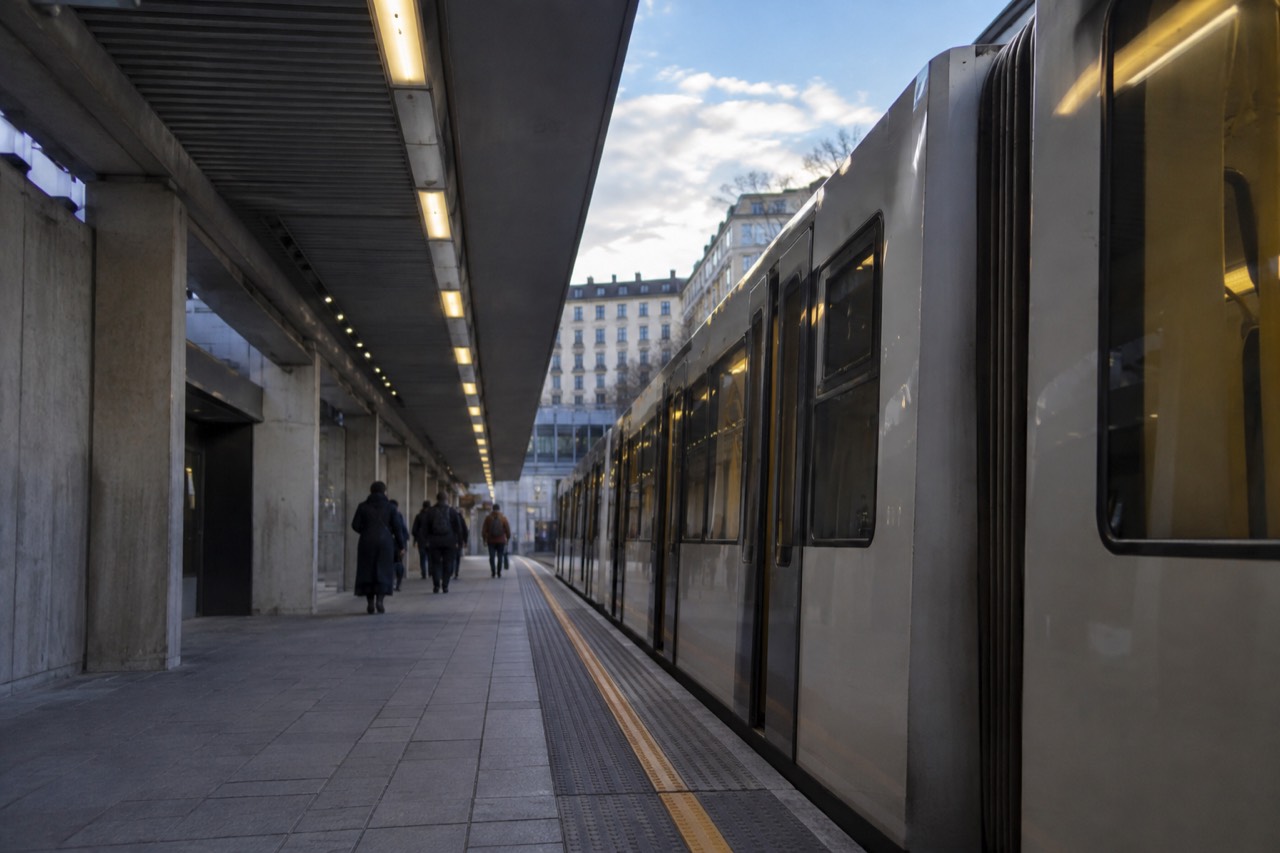
Short answer
The Oslo metro (T-bane) is run by Ruter and covers the whole network inside zone 1, so a single zone 1 ticket rides every line including the branch to Frognerseteren. Buy in the Ruter app, tap on, and keep the ticket for 60 minutes. A 30-day zone 1 pass costs 655 NOK after the May 2026 cut.
Oslo's metro, the T-bane, is the skeleton the whole city hangs on. It is one of the few systems in the world where a single ticket takes you from a downtown subway platform to a forest trailhead 400 meters above the fjord, and that fact alone shapes most visitors' plans. The network is run by Ruter, the regional transport authority, and it shares tickets with the buses, trams and ferries, so understanding the metro is really understanding half of getting around Oslo at once.
The system is compact by capital-city standards, but it punches above its weight for visitors. Line 1 climbs from the center to Frognerseteren, the gateway to Nordmarka and the restaurant at the top of the Holmenkollen hill. Other lines thread through the eastern neighborhoods, out to Sognsvann's swimming lake, and under the streets of the center in a common tunnel. Everything on the metro sits inside Ruter zone 1, which is the single most useful fact about it.
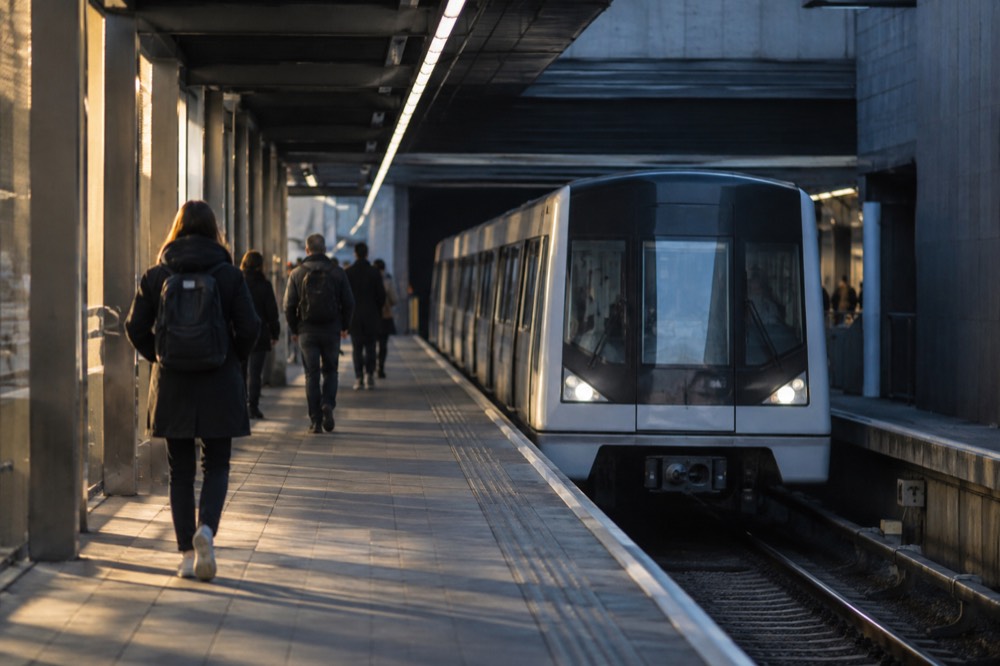
How Does the Oslo Metro Work?
The Oslo metro is a rapid transit network of lines sharing a common tunnel under the city center, run by Ruter with driverless-compatible modern trains, and the entire network sits inside a single fare zone, zone 1. That means one ticket, whatever the metro journey, however far across the city you ride, including the mountain branch to Frognerseteren. You buy a ticket before boarding, validate it, and ride; there are no fare gates at most stations.
The T-bane's structure is what makes it easy for visitors: lines converge into one central tunnel with stations at Majorstuen, Nationaltheatret and Oslo S, then fan out into the suburbs. If your hotel is central, nearly every journey starts at one of those three interchange stations, and the center is walkable between them in minutes.
There are no ticket barriers to scan at, so the system runs on spot checks. Inspectors board with handheld readers, and riding without a valid ticket carries a fine. The ticket you buy in the app or on a travel card is proof enough; keep it active for the whole journey.
Frequency is generous where it matters. In the central tunnel, trains from different lines stack up behind each other, so you rarely wait long between services even when any single line runs every 15 minutes. Late evenings and weekends thin out, so check the journey planner in the Ruter app for the last departure toward your stop, especially toward Frognerseteren, where the branch runs less often than the main lines.
What Does an Oslo Metro Ticket Cost?
A single zone 1 ticket covers any metro journey in Oslo, and the confirmed fare anchor is the 30-day pass: 655 NOK for zone 1 after Ruter cut it from 805 NOK on 3 May 2026. Single, 24-hour and 7-day fares exist but Ruter publishes them through its app and PDF price list, and prices were adjusted in January 2026, so read the live figure there before you buy. On-board purchase costs more than app purchase on buses and boats.
That zone 1 coverage is the headline. The metro does not leave it, so there is no risk of an accidental extra-zone charge on any T-bane ride, including the long climb to Frognerseteren, which feels like a mountain railway but is priced as a downtown hop.
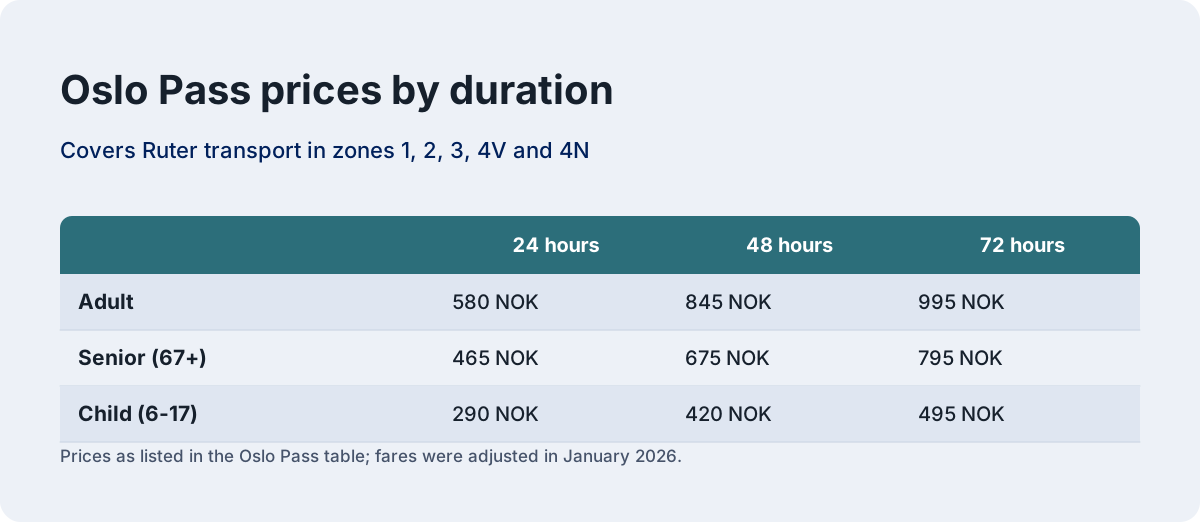
For visitors staying more than a day, the comparison that matters is the Oslo Pass, which bundles transport with museum entry. VisitOSLO publishes the current prices:
| Oslo Pass | 24 hours | 48 hours | 72 hours |
|---|---|---|---|
| Adult | 580 NOK | 845 NOK | 995 NOK |
| Senior (67+) | 465 NOK | 675 NOK | 795 NOK |
| Child (6–17) | 290 NOK | 420 NOK | 495 NOK |
The pass covers Ruter public transport in zones 1, 2, 3, 4V and 4N, which is every metro line plus the trams, buses and the island ferries, and it also includes the airport trains operated by Vy, though not Flytoget. Whether the pass beats single tickets depends on how many museums you stack on top of the transport; the maths is on our Oslo Pass worth-it breakdown.
If you are planning a fuller transport comparison, including trams and the ferries out to the islands, our guide to getting around Oslo puts the metro in context with every other mode.
Which Metro Lines and Stations Matter Most for Visitors?
Line 1 is the visitor's line: it runs from the center up to Frognerseteren, stopping at Holmenkollen for the ski jump and museum, roughly 15 to 20 minutes from Nationaltheatret. Otherwise, visitors mostly use the central tunnel stations, Majorstuen, Nationaltheatret and Oslo S, plus the interchange at Jernbanetorget by the central station. The rest of the network serves neighborhoods and suburbs you will only meet if your hotel sits along them.
Line 1 deserves its reputation. It leaves the central tunnel at Majorstuen and climbs through villas and forest, and the Holmenkollen stop is the practical route to the ski jump. Frognerseteren, the end of the line, is the jumping-off point for Nordmarka's hiking and ski trails and the trailhead restaurant above the fjord. This is the branch that makes the Oslo metro unusual among European capitals.
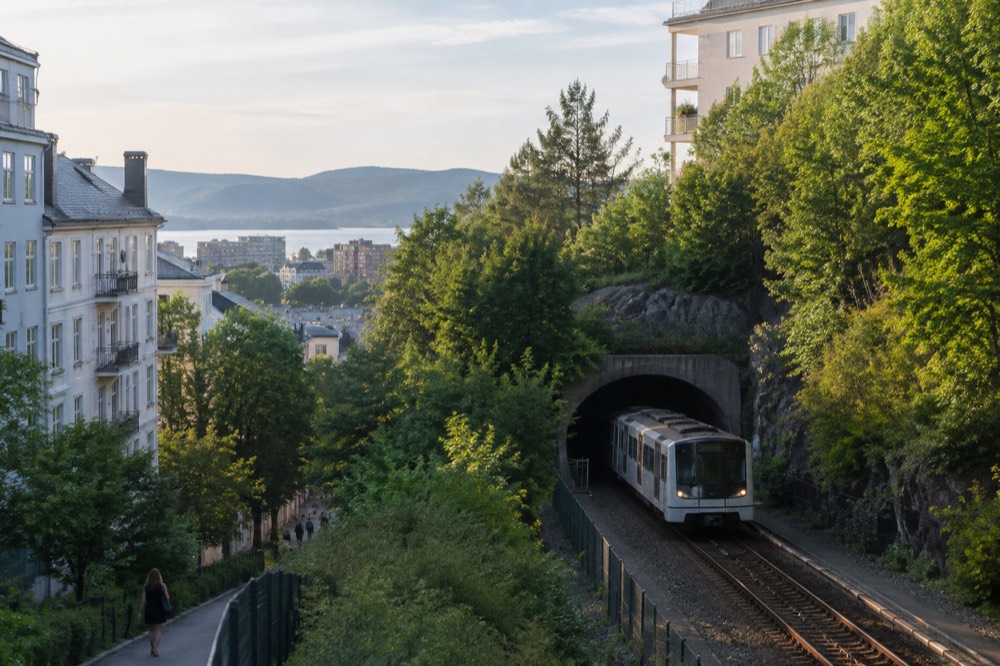
The other lines matter less for sightseeing and more for where you sleep. Lines through the east serve neighborhoods like Tøyen and Grünerløkka's fringes; western lines reach Sognsvann, whose lake is a summer swimming spot and a winter ski-trail start. If your accommodation is near a station, that station is your line; the network map in the Ruter app is clearer than any printed version.
| Station | Line | Why visitors use it |
|---|---|---|
| Nationaltheatret | Central tunnel | Main western interchange, near the Royal Palace and Karl Johans gate |
| Oslo S / Jernbanetorget | Central tunnel | Central station hub, connects trains, trams and buses |
| Majorstuen | Central tunnel | Junction for Line 1 toward Frognerseteren |
| Holmenkollen | Line 1 | Ski jump and Ski Museum |
| Frognerseteren | Line 1 | Nordmarka trailheads and the hilltop restaurant |
| Sognsvann | Northern lines | Lake, swimming and ski trails at the forest edge |
For the sights themselves, the ski jump is the big metro-reachable attraction, and our Holmenkollen ski jump guide covers what a visit there involves. Note that a standalone jump ticket is not sold as a simple product; it generally comes inside combination sightseeing products, which is the honest booking route.
If climbing a hill for a view sounds like more effort than a vacation needs, the half-day bus tour that pairs Holmenkollen with Vigeland Park covers both in one loop, with a guide, and it leaves the metro for those who would rather ride.
How Do You Buy Tickets and Pay for the Metro?
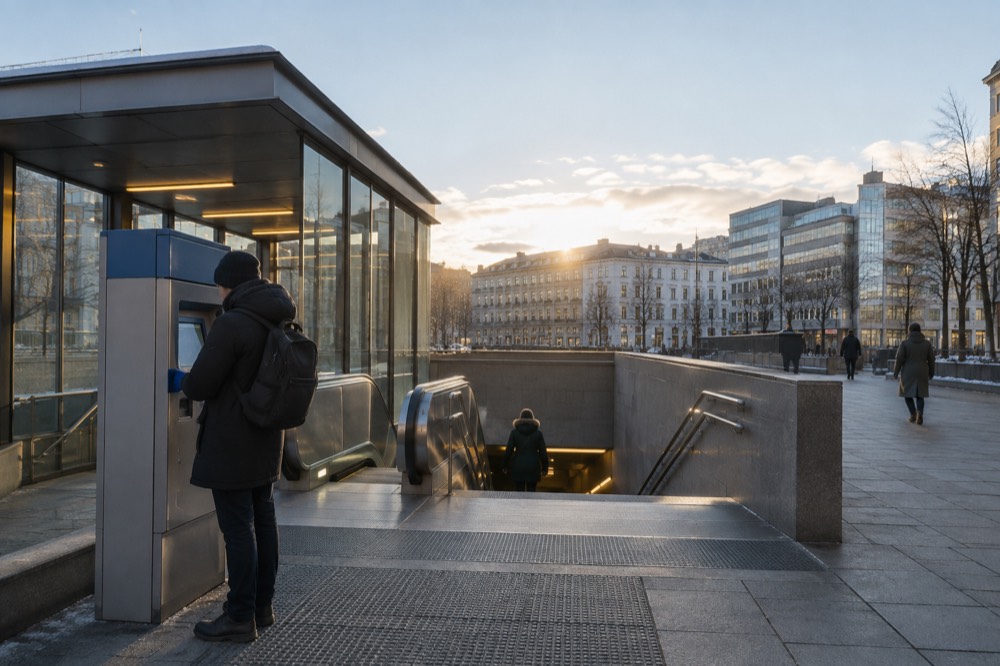
Buy in the Ruter app, which is the cheapest and simplest route: create a profile, add a payment card, buy a ticket and activate it before boarding. Paper tickets and travel cards exist through retailers and service centers, and on-board purchase is only possible on buses and boats, not the metro, and costs more anyway. Tickets bought in advance sit in the app until you activate them.
The app's other job is planning. It routes metro, tram, bus, ferry and walking in one search, and it handles the zone counting for you, which matters more on regional trains than on the metro where everything is zone 1. Ruter's own guidance is to let the journey planner work out zones rather than counting them by hand.
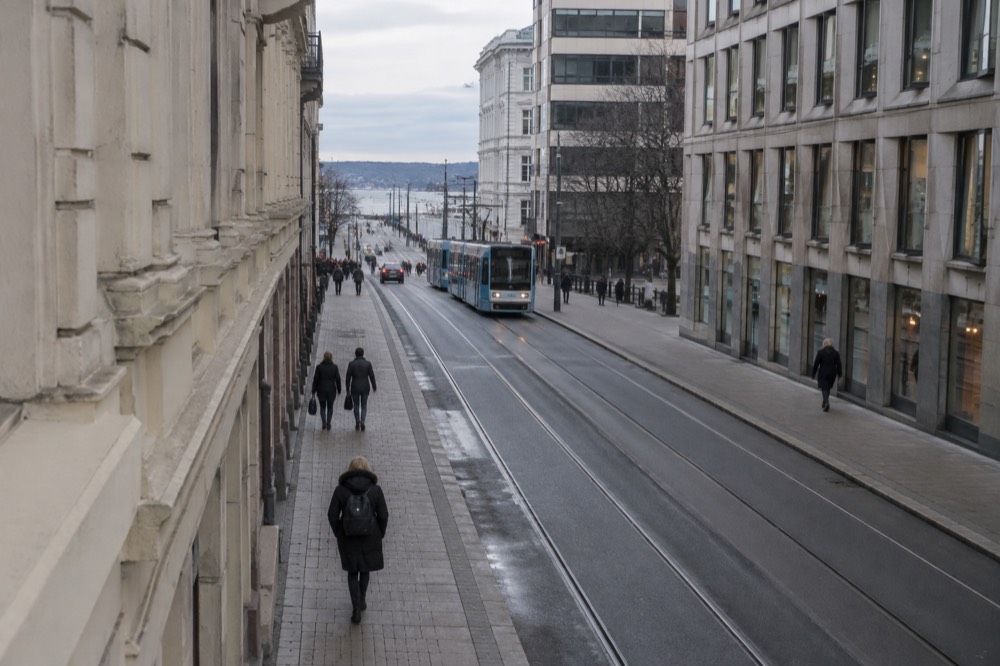
Ticket validity is time-based, not distance-based, inside a zone. A single ticket for one zone is valid for 60 minutes from activation, and validity increases by 30 minutes for each additional zone a ticket covers. On the metro that means a zone 1 single gives you an hour of riding, enough to change lines once or twice in the center.
One practical warning: the January 2026 annual price adjustment touched fares across the board, and Ruter publishes exact single, 24-hour and 7-day prices through its app and its official ticket-price PDF rather than a readable web page. Any specific figure beyond the 30-day pass should be read live before you budget around it. Our Ruter tickets guide keeps the confirmed numbers in one place.
How Do You Connect Between the Airport and the Metro?
Oslo Airport Gardermoen sits in Ruter zone 4N, about 50 km from the center, and the metro does not serve it. You arrive by train, Flytoget or Vy, or by coach, and transfer to the T-bane at Oslo S or Nationaltheatret. Flytoget costs 268 NOK adult one-way and takes about 20 minutes; Vy's trains take about 23 minutes and, per Vy's own page, usually cost about half that.
The trap to avoid is buying the wrong airport ticket. Vy's regional trains to Gardermoen are ordinary Ruter-zone trains: a Ruter ticket covering zone 1 through 4N rides them, and the Oslo Pass covers them outright. Buying Vy's own point-to-point fare at the machine is the expensive way to take the cheap train. Flytoget is a separate company entirely, at 268 NOK adult, and no Ruter ticket or Oslo Pass is valid on it.
| Airport option | Journey time | Adult one-way | Notes |
|---|---|---|---|
| Flytoget express train | ~20 min | 268 NOK | Every 10 minutes; no Ruter tickets or Oslo Pass |
| Vy regional train | ~23 min | About half of Flytoget per Vy | Ruter multi-zone ticket or Oslo Pass valid |
| Flybussen coach | ~45–65 min, traffic dependent | Check the operator's site | Slower, road-based |
| Private transfer | ~1 hour | From $57, | Door to door, no connection needed |
Once you are at Oslo S, the metro is a two-minute walk downstairs at Jernbanetorget, and Nationaltheatret connects the western lines to the same trains. The full airport picture, including the Torp and Sandefjord question, is in our Oslo airport to city centre guide, and the Flytoget-versus-Vy decision gets its own head-to-head in Flytoget vs Vy.
The private transfer is the comfort answer rather than the budget one. After a long-haul flight, with luggage and possibly jet lag, being met at the arrivals hall and taken to your hotel door for a fixed from-price of $57 per the listing, with a 4.3 rating across 89 reviews, buys back an hour of your first day. For everyone else, the Vy train plus a metro connection is the cheap and fast route.
What Can You Reach by Metro in Oslo?
The metro's big three destinations are Holmenkollen ski jump and museum on Line 1, Frognerseteren and the Nordmarka forest trailheads at the end of Line 1, and Sognsvann's lake and ski trails on the northern lines. Downtown, the central tunnel stations put you within walking distance of the Royal Palace, Karl Johans gate, the Opera House and the MUNCH museum.
This is where the T-bane earns its keep for visitors. Most capitals use the metro to move between neighborhoods; Oslo's also moves you from sea level to the top of a forested ridge in twenty minutes. In summer that means hiking and swimming; in winter it means cross-country ski trails reachable on a zone 1 ticket, which is a genuinely rare thing.
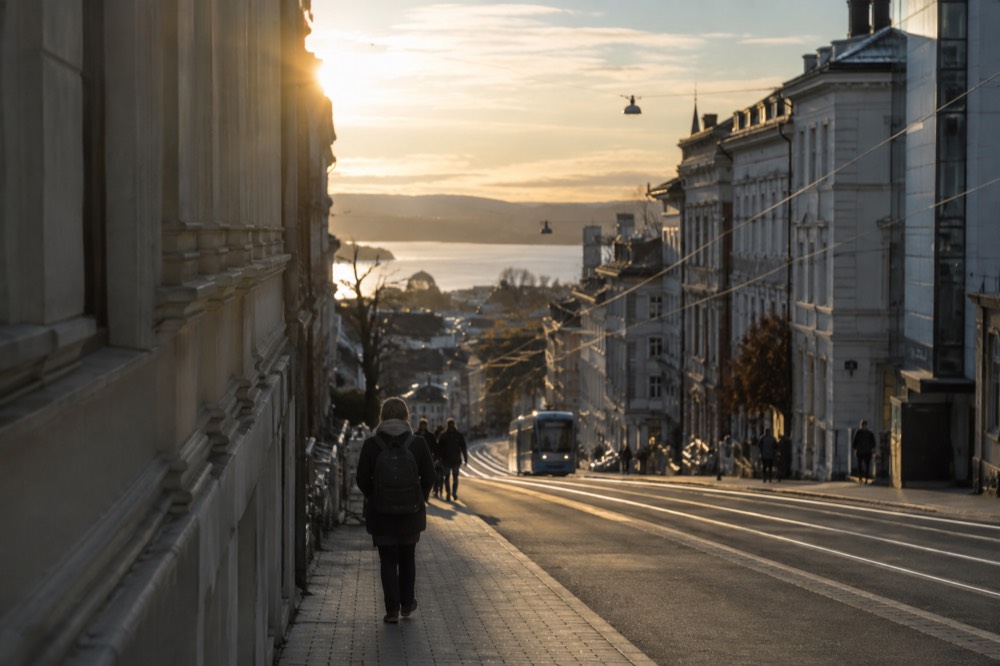
Frognerseteren is the classic outing. The station sits at the top of the Holmenkollen ridge, and from there the marked trails of Nordmarka spread north. Skiforeningen grooms ski trails in winter and publishes live trail and snow-depth reports, so conditions are checkable before you commit. Our Nordmarka guide covers the trailheads, and Sognsvann has the lake-side alternative that the northern lines serve.
| Destination | Metro route | What you find there |
|---|---|---|
| Holmenkollen | Line 1, ~15–20 min from Nationaltheatret | Ski jump tower, Ski Museum at 195 NOK adult |
| Frognerseteren | Line 1 terminus | Nordmarka trailheads, hilltop restaurant, fjord views |
| Sognsvann | Northern lines | Lake swimming in summer, ski trails in winter |
| Karl Johans gate / Royal Palace | Nationaltheatret | Main shopping street, palace grounds, theater district |
| MUNCH and the Opera House | Oslo S / Jernbanetorget | Waterfront museums and the walkable opera roof |
Back in the center, the central tunnel stations do double duty as sightseeing stops. Nationaltheatret serves the Royal Palace end of Karl Johans gate; Jernbanetorget puts you at the Opera House and the Bjørvika waterfront within minutes on foot. The one day in Oslo itinerary shows how the pieces fit together if your time is short.
Metro, Tram or Bus: Which Should You Use?
Use the metro for speed, distance and anything on the western hills or the forest edge; use the trams for the scenic surface routes through the center and along the waterfront; use buses for the gaps, including Bygdøy's museums, which the metro does not reach. All three run on the same Ruter tickets and the same zone 1, so the choice is about where you are going, not what you pay.
The trams are the pleasure craft of the system. They run at street level through the center, past the Parliament, along the waterfront at Aker Brygge and up into the western villa districts, and for a visitor with time they beat the metro's central tunnel, which is just tunnels. The metro wins every time the destination is far or high: no tram climbs to Frognerseteren.
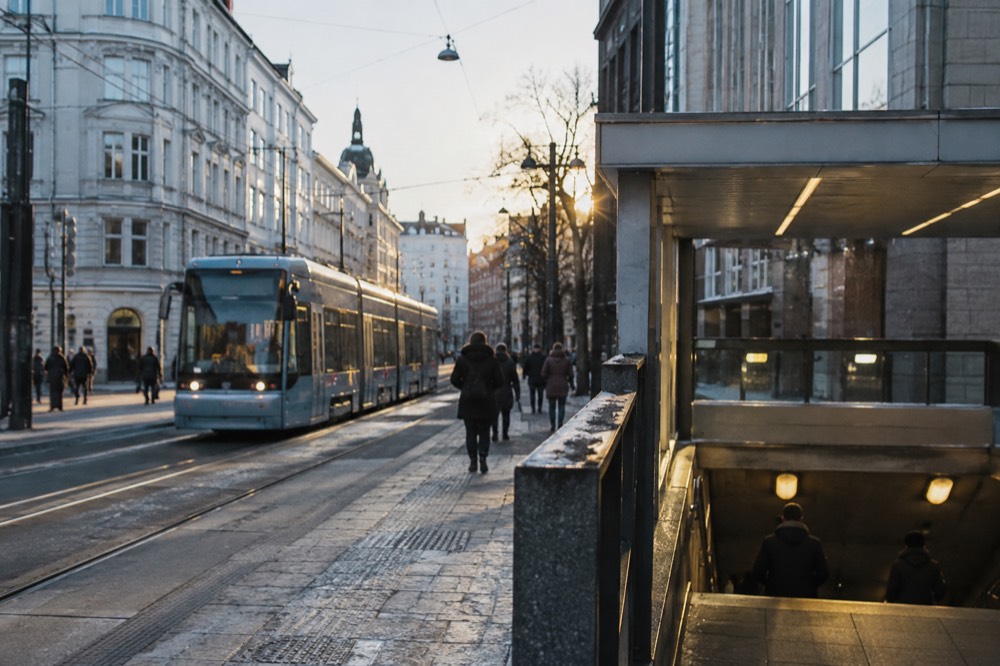
Buses cover the peninsula the metro ignores. Bygdøy's museums, the Kon-Tiki and Fram among them, are reached by bus 30 year-round or by the seasonal museum ferry from Rådhusbrygge 3, and neither of those is a Ruter metro matter, though the ferry has its own ticket rules worth checking in our Oslo ferries guide. The Oslo tram guide completes the surface picture.
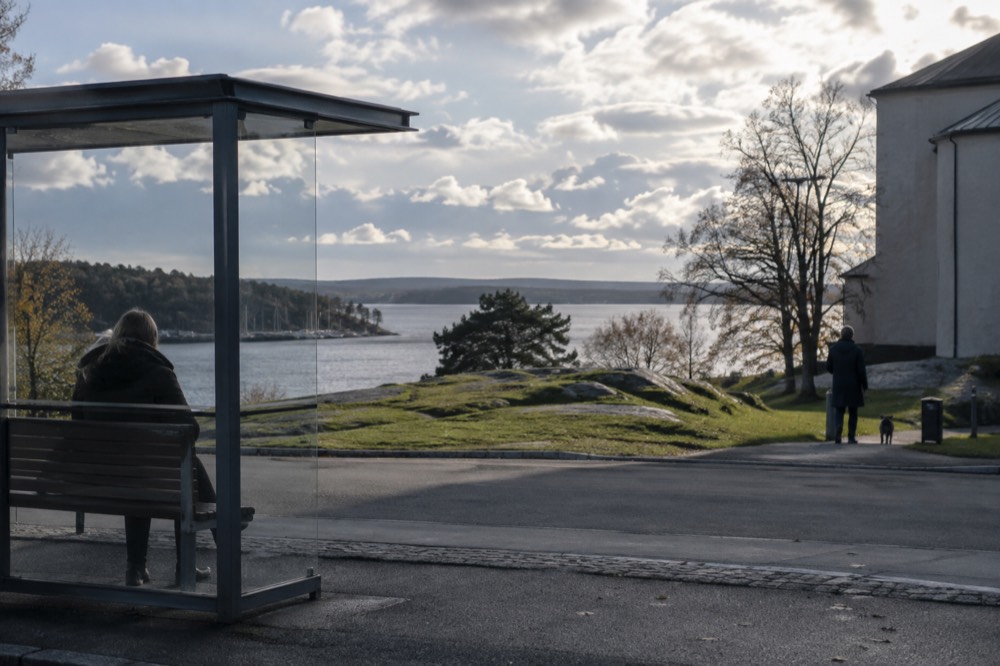
One more distinction worth knowing: the two ferry systems are different. The Bygdøy museum ferry is not covered by standard Ruter tickets, though the Oslo Pass includes it, while the island ferries from Aker Brygge are ordinary Ruter routes that a zone 1 ticket rides. Mixing those up is the most common ticketing mistake visitors make after the Flytoget one.
What Is Riding the Oslo Metro Actually Like?
Riding the T-bane is quiet, punctual and safe, with modern trains, platform displays in Norwegian and English, and level boarding at most stations. Oslo consistently ranks among Europe's safer capitals, and the metro reflects that: ordinary city precautions apply, nothing more. Stations in the center are clean and busy; the forest-end stations can be nearly empty outside peak hours.
Practicalities first. Displays and announcements give line numbers and destinations, and the Ruter app's journey planner fills any gap. Doors open by button or handle on some stock. Bikes are generally carried outside peak hours, and the same zone 1 ticket covers a folded or off-peak bicycle; check the app for the current rule if you are touring with one.
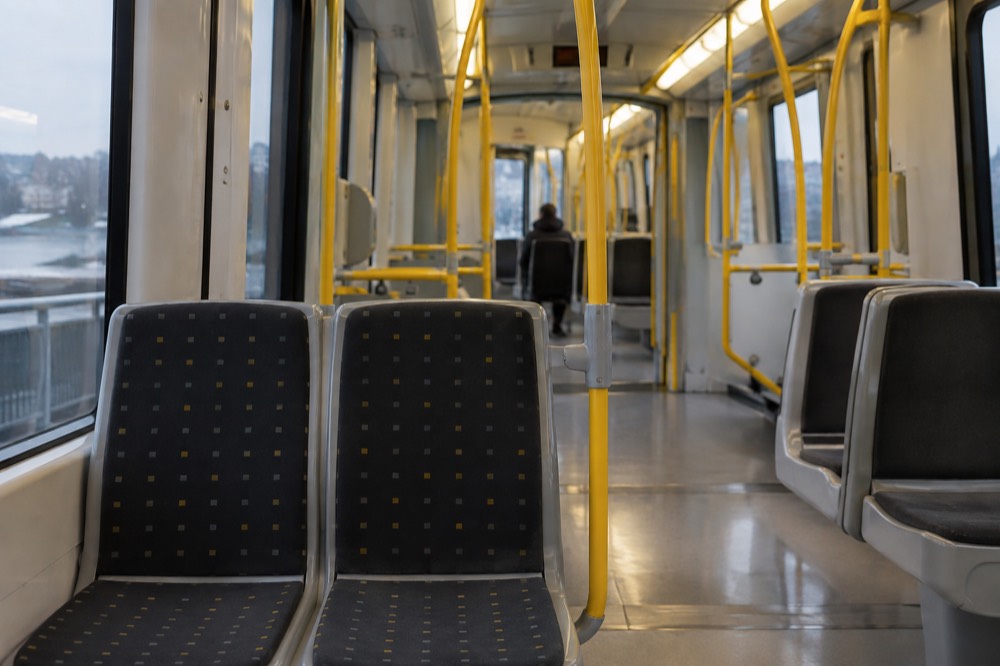
Etiquette is Norwegian in the specific sense: quiet. Phone calls are brief and soft, seats facing each other are normal, and nobody will chat with a stranger, which is not coldness, it is convention. Stand on the right on escalators. Take bags off seats on a full train. Give up a seat for anyone who needs it more, and the carriage will approve silently.
Accessibility is decent and improving. The central stations have lifts, and newer trains have level boarding; Ruter's app marks step-free access station by station, which is the reliable way to plan a wheelchair or stroller route rather than assuming the whole network is uniform. Our Oslo accessibility guide goes deeper for travelers who need it.
What Are the Best Tips for Using the Oslo Metro?
Buy in the app before you travel, activate before boarding, and let the journey planner count zones; ride Line 1 westward for the views on the left side above ground; check weekend engineering works before planning a forest trip; and remember the last trains run earlier than you expect, especially on the Frognerseteren branch. Those five habits cover almost every mistake visitors make.
Start with the app and stay with it. It sells the ticket, plans the route, shows live departures and flags disruptions, and it is cheaper than buying on board wherever on-board purchase exists at all. A charged phone is effectively your ticket, so travelers who dislike relying on one can carry a physical travel card from a Ruter service center instead.
| Situation | Best move |
|---|---|
| Arriving at Gardermoen | Vy train on a Ruter multi-zone ticket, then the metro at Oslo S |
| Heading to Holmenkollen | Line 1 from Nationaltheatret, ~15–20 minutes |
| Planning a Nordmarka hike | Line 1 to Frognerseteren; check Skiforeningen's trail report first |
| Weekend travel | Check the Ruter app for T-bane works and replacement buses |
| Late evening | Check last departure times per line before committing |
| Multi-day museum-heavy visit | Compare the Oslo Pass against single tickets before buying |
The seat-side tip is small but real: on the climb out of the central tunnel toward Holmenkollen, the views of the fjord open up on the western side of the train, and the stretch between the tunnel mouth and Holmenkollen station is one of the prettier suburban railway rides in Scandinavia. Sit where you can see it.
Finally, trust the system's reach. This site, Oslo Travel Guide, exists partly because Oslo rewards travelers who use public transport confidently rather than cautiously: the metro, trams and ferries together reach nearly everything worth seeing, and the money you save over taxis funds a better dinner. For the budget picture overall, our Oslo on a budget guide shows where the city is genuinely expensive and where it is not.
If reading timetables is not how you want to spend a short visit, the hop-on hop-off bus covers the headline sights on a loop, and it rates 4.1 across 2,559 reviews at a from-price of $37.68. It is a complement to the metro rather than a replacement: the bus does the city, the metro does the hills.
And for the day you want the city explained rather than merely traversed, the free highlights walking tour is the largest free walk in Oslo, tip-based, rated 4.68 across 2,150 reviews, and it pairs naturally with a metro day: walk the center in the morning, ride Line 1 to the forest in the afternoon.
Common Questions About the Oslo Metro
Is the Oslo metro included in the Oslo Pass?
Yes. The Oslo Pass covers Ruter public transport in zones 1, 2, 3, 4V and 4N, and the entire metro network sits inside zone 1, so every T-bane line, including the branch to Frognerseteren, rides on the pass. The pass also includes the trams, buses and island ferries, plus Vy trains to and from Gardermoen, though not Flytoget.
How much does the Oslo metro cost?
A single zone 1 ticket covers any metro journey in the city. The confirmed fare anchor is the 30-day zone 1 pass at 655 NOK, cut from 805 NOK on 3 May 2026. Single, 24-hour and 7-day prices were adjusted in January 2026 and are published through the Ruter app and its official price PDF, so read the live figure there. Buying on board, where it is possible at all, costs more than the app.
Does the Oslo metro go to the airport?
No. Oslo Airport Gardermoen is about 50 km out in Ruter zone 4N and is served by trains and coaches, not the metro. Flytoget takes about 20 minutes at 268 NOK adult; Vy's trains take about 23 minutes and usually cost about half that, and a Ruter multi-zone ticket or an Oslo Pass covers them. Transfer to the T-bane at Oslo S or Nationaltheatret.
Which metro line goes to Holmenkollen?
Line 1. It runs from the central tunnel through Majorstuen and up the Holmenkollen ridge, reaching the Holmenkollen stop roughly 15 to 20 minutes from Nationaltheatret and terminating at Frognerseteren, the gateway to Nordmarka's trails. A zone 1 ticket covers the whole climb.
Do I need to buy a metro ticket before boarding?
Yes. There are no fare gates and no on-board sales on the metro, so you need a valid ticket in the Ruter app or on a travel card before you board. Inspectors do spot checks and fines apply. Activate an app ticket before the train arrives, since a purchased-but-inactive ticket does not count as valid.
Can you take the Oslo metro to go hiking?
Yes, and it is one of the system's best tricks. Line 1 ends at Frognerseteren at the top of the forest ridge, where Nordmarka's marked hiking and ski trails begin, and the northern lines reach Sognsvann's lake and trails. Skiforeningen grooms winter trails and publishes live condition reports, so check those before you set out.