17 May in Oslo: Norway's Constitution Day, Explained for Visitors
Norway's national day is the one date that rewrites every rule of an Oslo visit: shops shut, the city centre belongs to children, and the whole town turns out in folk dress. Here is what actually happens, and how to plan around it.
Short answer
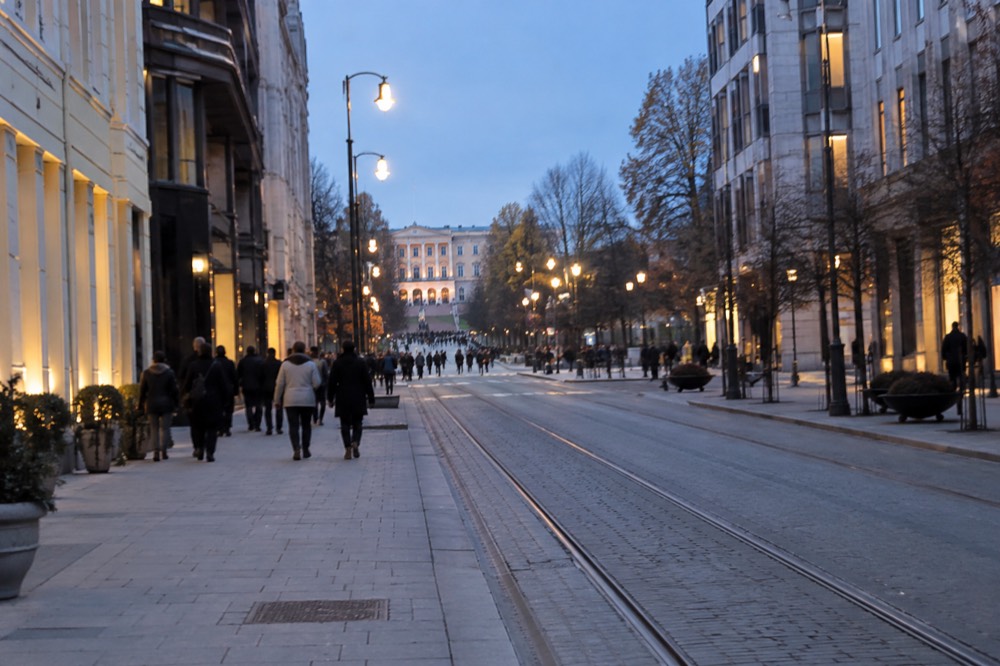
17 May is Norway's Constitution Day, Oslo's biggest annual event. A children's parade fills Karl Johans gate from about 10:00, the Royal Family appears on the Palace balcony, and most shops, the Vinmonopolet and several museums close. Museums like MUNCH stay open. Expect crowds, flags and a dry, family-friendly atmosphere with no fireworks or military display.
What Is 17 May in Oslo?
17 May is Norway's Constitution Day, the country's national holiday, and it commemorates the signing of the Norwegian constitution at Eidsvoll. In Oslo the day belongs to children: the centrepiece is a parade of schoolchildren up Karl Johans gate to the Royal Palace, where the Royal Family waves from the balcony. It is a deliberately civilian celebration, with no fireworks and no military parade, and it is the one day a year the whole city is visibly, loudly Norwegian.
The constitution signed at Eidsvoll on 17 May declared Norway an independent kingdom, at a moment when the country had just been ceded by Denmark and before it entered a union with Sweden. Full independence came later, but the date stuck as the national day, and the way it is celebrated is unusual in Europe. Where many countries mark their national day with a military display, Norway made children the focus. The children's parade, the barnetog, is the main event in every town in the country, and Oslo's is the largest of them.
For a visitor, the practical reality is that 17 May is both the best and the least typical day to be in Oslo. The city centre is packed, festive and free to watch, and the atmosphere is famously safe and family oriented. At the same time, the day runs on its own schedule: shops are shut, alcohol sales stop entirely, several museums close, and public transport reroutes around the parade. This guide walks through what happens, when, what it costs and how to plan a day that does not fight the crowds but uses them.
If you are still building the wider trip, our one day in Oslo itinerary works on normal days, and the best time to visit Oslo explains where mid-May sits in the year.
What Actually Happens on 17 May in Oslo?
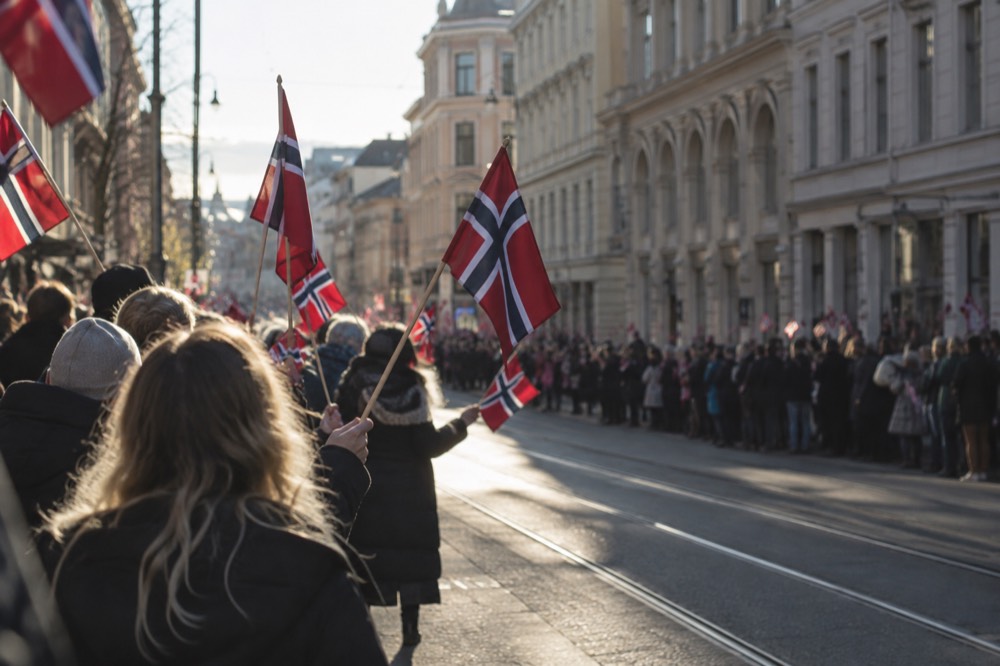
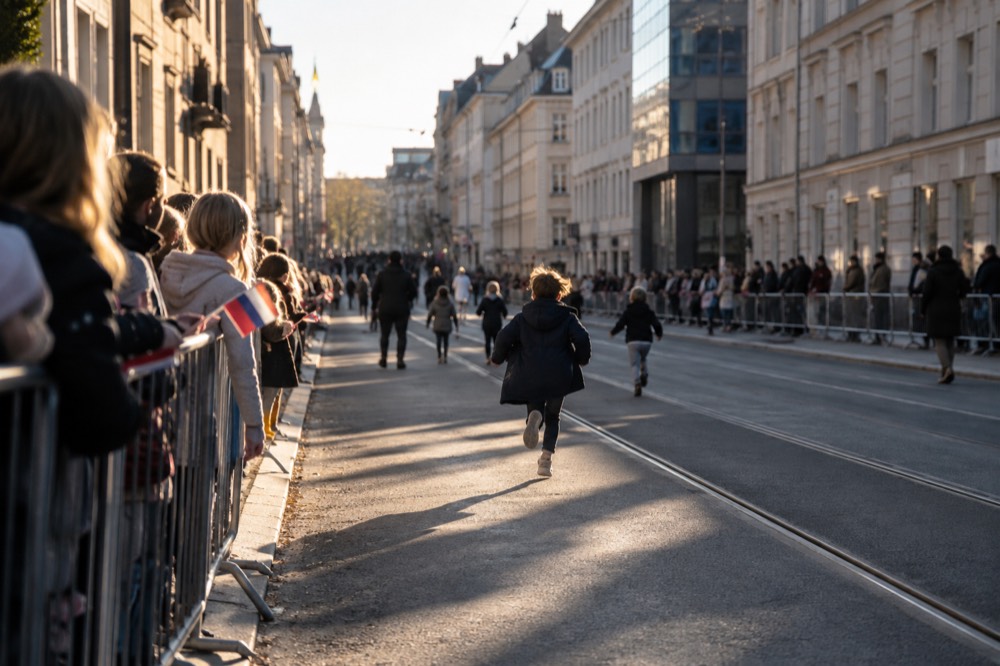
The day starts early with flag-raising and a citizens' parade from the harbour, then the children's parade moves up Karl Johans gate from roughly 10:00, with the Royal Family greeting schools from the Palace balcony through late morning. The afternoon brings neighbourhood parades in the district boroughs, games and ice cream for families, and by evening the city quietens down. There is no fireworks display and no military parade; the whole programme is civic and child-centred.
The morning begins with a flag ceremony, and in Oslo the adults get their own procession too: a citizens' parade through the centre that includes the city's russ, the graduating high-school students who spend weeks beforehand celebrating in coloured overalls. The russ are a spectacle of their own, and their buses and vans, decked out and blaring music, are part of the soundscape of mid-May generally, not just the day itself.
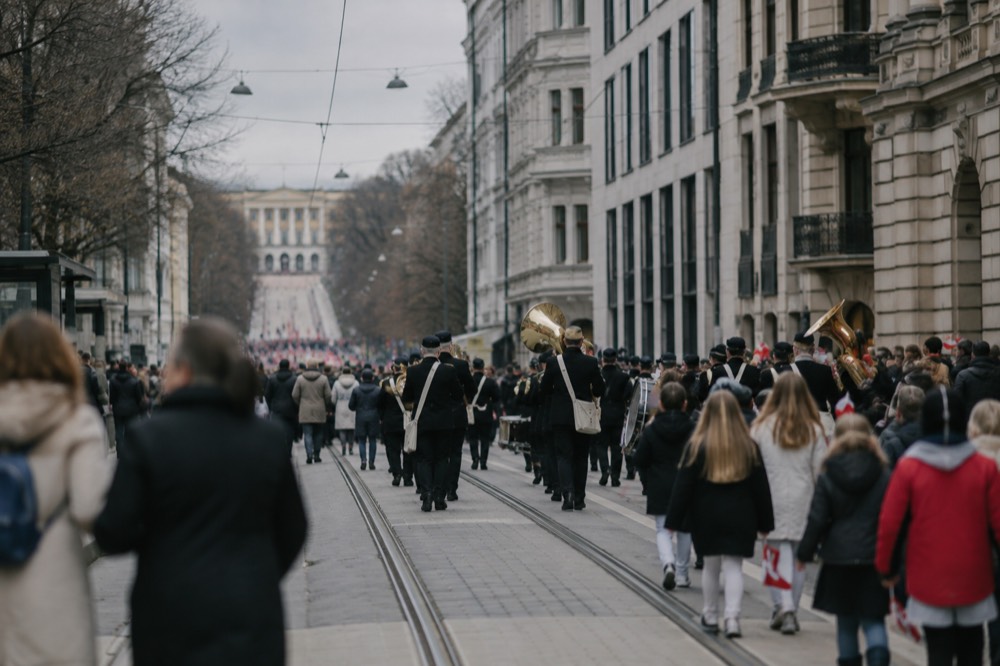
The children's parade is the part visitors come for. School groups from across Oslo march up Karl Johans gate, the main street running from the Central Station to the Royal Palace, and the Royal Family acknowledges each school from the balcony. The route and the balcony appearance are the fixed points; exact timings shift a little year to year, so treat the schedule below as the shape of the day rather than a timetable to set a watch by.
| Part of the day | What happens | Where |
|---|---|---|
| Early morning | Flag-raising, brass bands, russ celebrations | City centre, harbour area |
| Late morning | Children's parade, Royal Family on the balcony | Karl Johans gate to the Royal Palace |
| Afternoon | District parades, children's games, food and ice cream | Boroughs like Grünerløkka, Frogner, Nordstrand |
| Evening | Things wind down; restaurants stay busy | Citywide |
The afternoon is when Oslo locals actually enjoy the day. Each borough runs its own smaller parade and games, and the centre gradually empties as families head to barbecues, neighbourhood gatherings and the homes of friends. For a visitor, late afternoon is the moment to either follow the crowds into a district like Grünerløkka or slip into a museum that stayed open.
The parade is free to watch and needs no ticket, but the rest of your day does not plan itself, and on 17 May the usual transport logic partly breaks down. These are the three products that handle the day best:
What Is Open and Closed on 17 May?
Most shops and nearly all supermarkets close on 17 May, the Vinmonopolet alcohol monopoly is shut, and several museums including the Norsk Folkemuseum close for the day, while others such as MUNCH stay open on their normal schedule. Restaurants and cafés in the centre generally open and do brisk business. The honest rule is to check each venue's own site the day before, because opening decisions are made individually and do shift year to year.
The closures are the single biggest planning fact about the day. Norway's holiday trading rules shut ordinary retail, so do not count on buying anything you forgot, from a rain jacket to a picnic lunch, inside a shop on the day itself. Kiosks and some convenience stores typically keep limited hours, but the safe assumption is that whatever you need for the day, you buy on the 16th.
The Vinmonopolet closure matters more than you might expect. The state monopoly is the only place to buy wine and spirits in Norway, it is closed every Sunday and public holiday, and 17 May is specifically on its closed list along with 1 May and Christmas Eve. Supermarkets, when open, sell only beer and cider up to 4.7% ABV, and on the national day they are shut too. Visitors arriving on 17 May should do their shopping at the airport or on the 16th.
| What | Status on 17 May | Notes |
|---|---|---|
| Shops and supermarkets | Closed | Holiday trading rules; buy on the 16th |
| Vinmonopolet | Closed | Also closed Sundays, 1 May, Christmas Eve |
| Norsk Folkemuseum (Bygdøy) | Closed | Also closed 24–25 December |
| MUNCH | Open | Open every day of the year except 1 May |
| Restaurants and cafés | Mostly open | Busy around parade hours |
| Public transport | Running, rerouted | Parade affects central stops; check the Ruter app |
| Vigeland Park | Open, free | Public park, open 24 hours all year |
Museums are a mixed picture, and the table only carries what the venues themselves publish. MUNCH states it is open every day of the year except 1 May, which makes it one of the safest rainy or quiet-afternoon anchors on the national day; our MUNCH museum guide covers what a visit involves. The Vigeland sculpture park is a public park, free and open around the clock, and on 17 May it is full of locals in bunad rather than tour groups.
If museums are the spine of your trip, the wider Oslo museums guide explains which cluster where, and the rainy day in Oslo page has indoor options that survive a holiday schedule.
Where Is the Best Place to Watch the Parade?
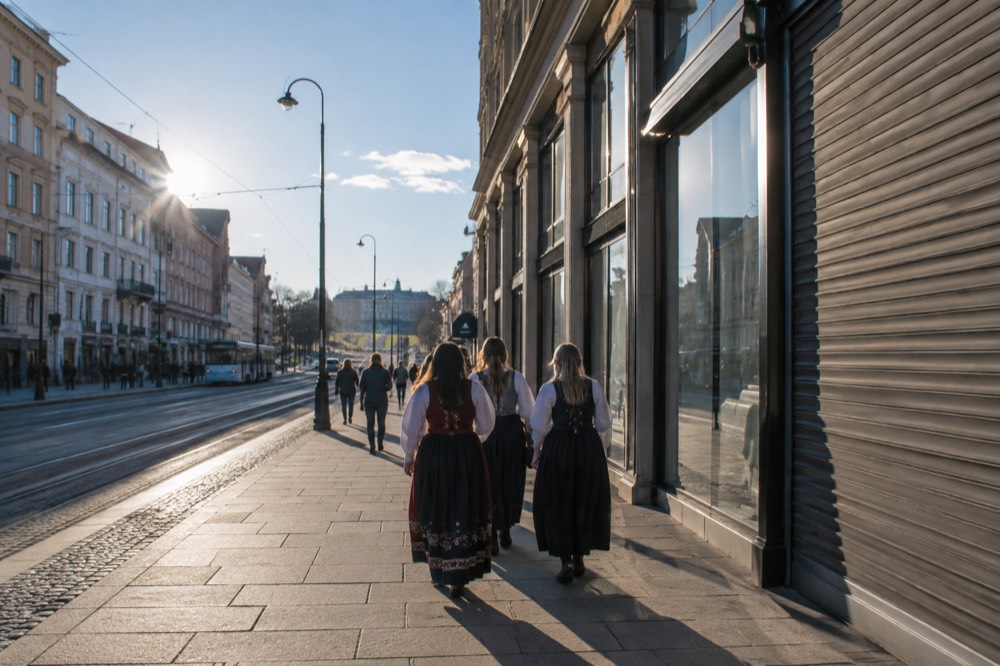
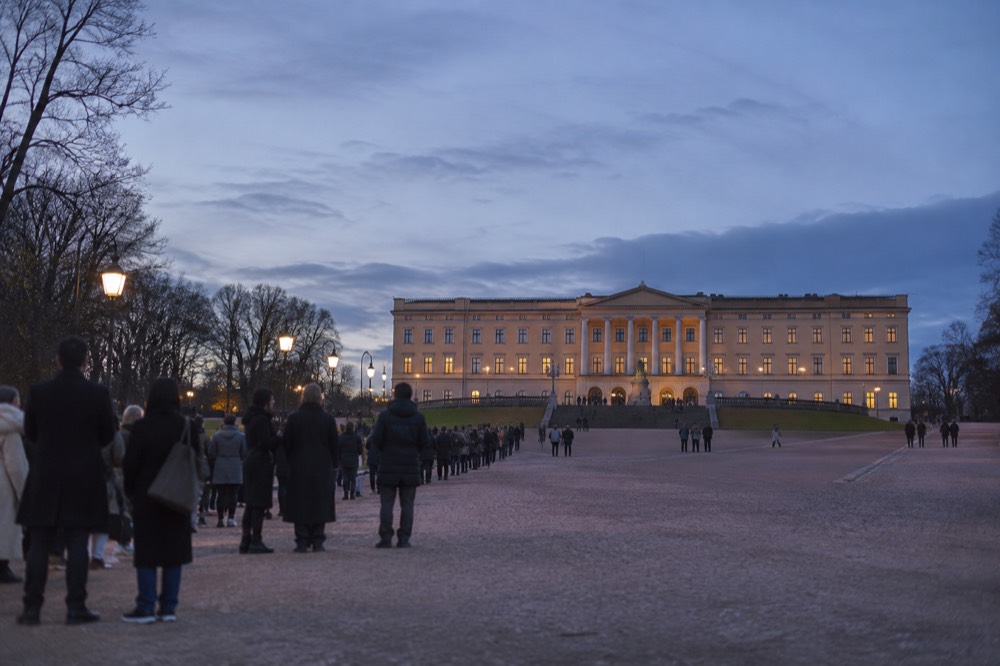
The parade route runs up Karl Johans gate toward the Royal Palace, and the two best watching strategies are either early position on the lower stretch near the Cathedral and Stortinget for the full procession, or the elevated space at Spikerskupa and the Palace end for the balcony atmosphere. Arrive well before the parade starts; the kerbside front rows fill with families an hour or more ahead. District parades in the afternoon are far less crowded.
The lower half of Karl Johans gate, around Oslo Cathedral and the Storting, is where you see the parade build: bands warming up, school marshals with their banners, the russ in their overalls. The upper end, by the Royal Palace, is where the emotional peak sits, because every school pauses and turns toward the balcony to sing and wave. The Palace forecourt and the Eidsvolls plass park beside it are the classic spots, and they are also where the crowd is densest.
Two quieter alternatives are worth knowing. The parade also passes the City Hall end of the route near the harbour, where the crowds thin out and you can often walk straight to a front-row spot. And in the afternoon, the borough parades in Frogner, Grünerløkka or Majorstuen give you the same event at one-tenth the density, with ice cream stands and children's games instead of barricades. If small children are in your group, the afternoon version is honestly the better parade.
What Is the Weather Like in Oslo in Mid-May?
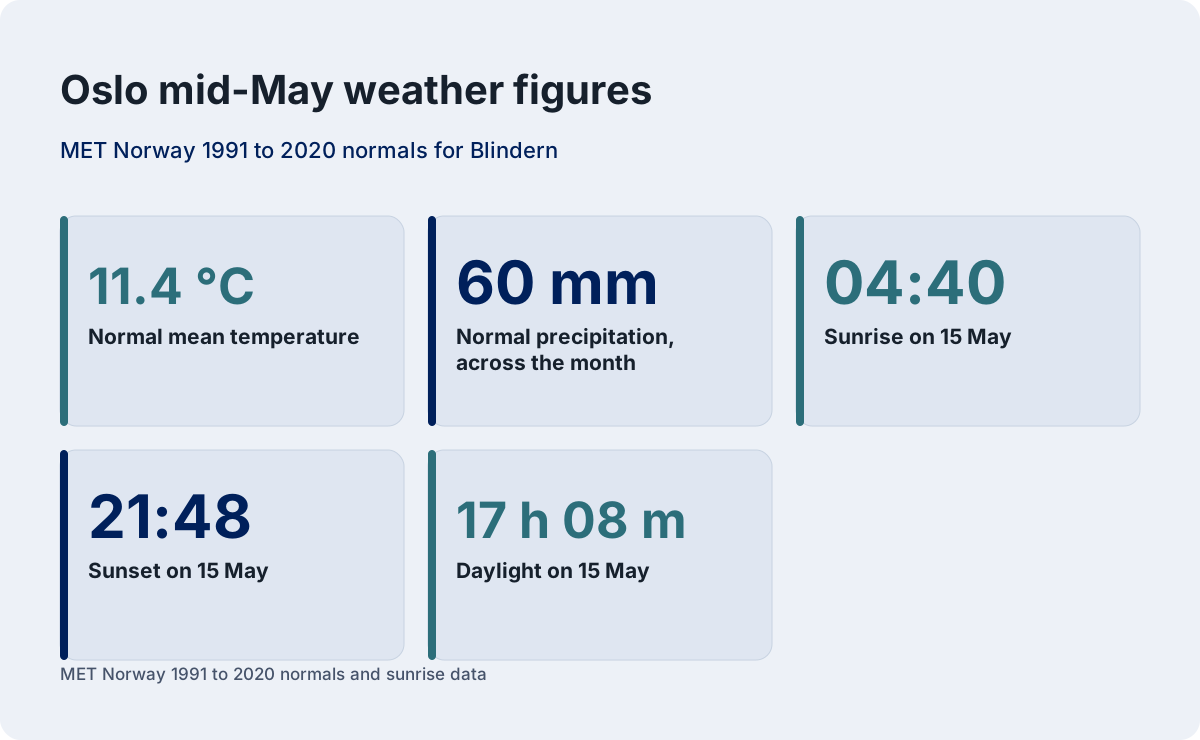
Oslo's May normal is a mean of 11.4 °C with about 60 mm of rain across the month, which in practice means mild days around 15 °C, cold mornings, and a real chance of showers on the day itself. Daylight is enormous: on 15 May the sun rises at 04:40 and sets at 21:48, over 17 hours of it. Dress in layers, keep a rain shell in your bag, and plan for standing outside for hours.
Those normals come from MET Norway's 1991 to 2020 standard series for the Blindern station, and May sits in a sweet spot: warm enough for shirtsleeves by afternoon, cool enough at 09:00 that gloves are not absurd. The rain figure of 60 mm is moderate, well below August's 103 mm, which is Oslo's wettest month on the normals. Still, a parade day is a standing-outside day, and a waterproof layer is the difference between a good morning and a cold one.
| Mid-May in Oslo | Figure | Source basis |
|---|---|---|
| Normal mean temperature | 11.4 °C | MET Norway 1991–2020 normals |
| Normal precipitation | 60 mm across the month | MET Norway 1991–2020 normals |
| Sunrise on 15 May | 04:40 | MET Norway sunrise data |
| Sunset on 15 May | 21:48 | MET Norway sunrise data |
| Daylight on 15 May | 17 h 08 m | MET Norway sunrise data |
The daylight deserves a sentence of its own, because it changes how the day feels. The sun is up before five and down after half past nine, and the long evening light after the parades end is part of what locals love about the date. There is no midnight sun in Oslo, the city is too far south at 59.91 N, but late May evenings stay bright until well past ten, and the Oslo daylight hours guide charts the full swing from 5 h 53 m in December to 18 h 50 m in June.
What Does 17 May Cost for a Visitor?
Watching everything, the parades, the balcony, the flags, is free. The real costs are food and drink, since holiday restaurant prices apply and you cannot buy picnic supplies on the day, and transport, where a 24-hour Oslo Pass at 580 NOK covers both museums and Ruter zones 1 through 4N. A realistic day for two, with one museum and restaurant meals, runs somewhere in the low thousands of kroner once you exclude accommodation.
Norway is the sixth most expensive country in Europe on Statistics Norway's 2025 price-level comparison, with household prices 28.6% above the EU average and food 33% above it, so the honest way to budget the day is to know where the money goes. Restaurants and alcohol are where Oslo bites; museums, transport and the outdoors are comparatively reasonable, and the national day's headline events cost nothing at all.
| Item | Cost | Notes |
|---|---|---|
| Children's parade and balcony | Free | No ticket exists |
| Vigeland Park | Free | Open 24 hours, all year |
| MUNCH entry | 280 NOK adult | 100 NOK under 25, free 17 and under |
| Oslo Pass, 24h adult | 580 NOK | Covers 30+ museums and Ruter zones 1–4N |
| Restaurant lunch for two | Varies by venue | Holiday menus; book ahead |
| Ice cream and coffee stops | Varies by venue | Budget generously; stands do a roaring trade |
The Oslo Pass maths is worth doing for this specific day. A 24-hour adult pass at 580 NOK covers entry at over 30 museums and attractions plus public transport across zones 1, 2, 3, 4V and 4N, and it even covers the Vy trains to and from Gardermoen airport, though not Flytoget. Against single admissions like MUNCH at 280 NOK, two major museums plus transport already puts you at break-even. The is the Oslo Pass worth it page runs the full comparison, and the is Oslo expensive page handles the honest overall picture.
Is 17 May a Good Day to Visit Oslo with Kids?
Yes, and it may be the single best day of the year to do it. The entire holiday is built around children: they carry the flags, they march in the parade, and the afternoon programme in every borough is games, hot dogs and ice cream. The trade-offs are crowds in the centre and closed shops, so families should pick one morning spot early, then head to a district playground or an open museum rather than fighting the crush all day.
Norwegian children are given the day off school, given flags and given the run of the city, and visitors' children slot straight into that. The morning parade is pushchair-friendly if you position on the wider stretches near the Cathedral rather than the packed Palace end, and the borough festivities in the afternoon, with sack races and ice cream, are exactly what a six-year-old wants from a national day.
For the practical layer, the Oslo with kids guide covers playgrounds, the climbing park and family museums, and the free things to do in Oslo page lists the no-cost anchors, including Vigeland Park, which pairs well with a 17 May afternoon in the Frogner district. One note on the Paradox Museum: it is the strongest indoor family ticket in the city if the weather turns, and it sits in the centre, close to the parade route.
What Do You Eat and Drink on 17 May?
The day's food is classic Norwegian spring fare: hot dogs and ice cream in heroic quantities, waffles with sour cream and jam, and breakfasts of smoked salmon and scrambled eggs in homes and hotel buffets. Restaurants stay open and are busy, but shops do not, so anything you want to eat picnic-style must be bought the day before. Alcohol is effectively unavailable for purchase on the day itself.
The ice cream is not a cliché, it is the tradition. Norwegians eat more ice cream per head than almost anyone, and 17 May is the annual peak, with kiosks and stands doing the year's best trade along the parade route. Hot dogs, pølser in wieners or lomper wraps, are the other staple, and the smell of grilled sausages is as much a part of the morning as the brass bands.
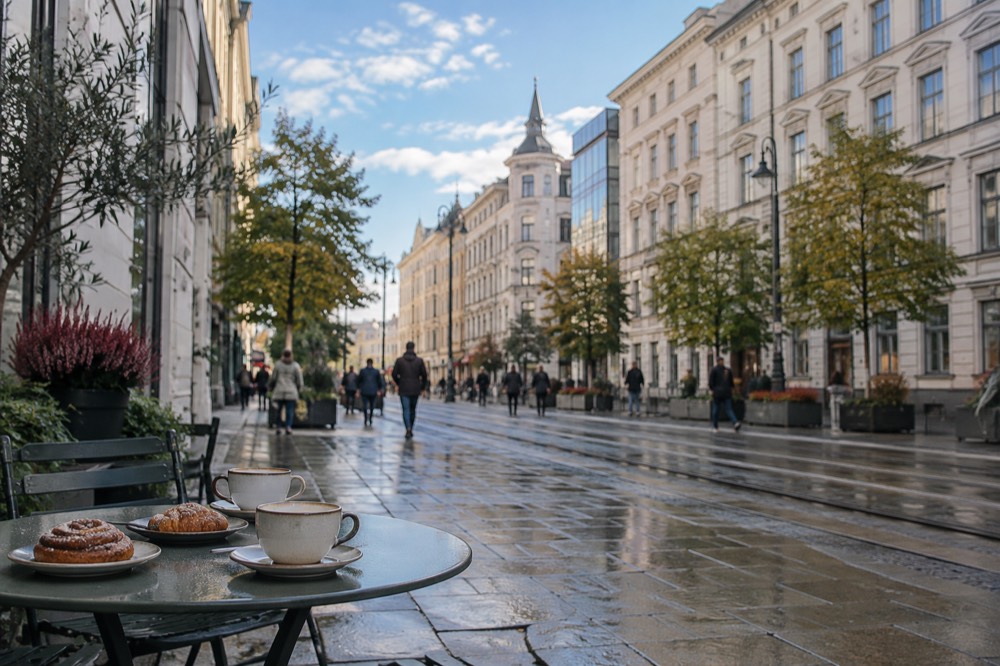
For a sit-down option, the centre's restaurants and cafés work through the day, though tables around the parade hours need luck or a booking. The best restaurants in Oslo and where to eat in Oslo guides cover the year-round options, and Mathallen Oslo, the food hall, is worth checking directly for its holiday hours before you count on it.
The alcohol point deserves precision, because it catches visitors out. The Vinmonopolet, the only retailer allowed to sell wine and spirits, is closed on 17 May. Supermarkets, which are shut anyway for the holiday, can only sell beer and cider up to 4.7% ABV even on a normal day. Restaurants and bars that hold serving licences pour as usual, so a beer with lunch is fine, but buying a bottle for a picnic is impossible on the day. The price of beer in Oslo page explains why it costs what it costs, and Statistics Norway's price-level survey puts alcohol and tobacco at more than double the European average, which is the number behind every bar receipt in the city.
How Do You Get Around Oslo on 17 May?
Public transport runs on a holiday schedule but stays the workhorse of the day, with the caveat that central stops and streets on the parade route close or reroute during the morning. The Ruter app is the authority on the day's diversions. Driving in the centre is a poor plan, taxis are scarce at peak, and the metro lines to Frognerseteren and Holmenkollen run as normal for anyone escaping uphill.
Ruter, the regional transport authority, runs buses, trams, metro and the island ferries, and an ordinary zone ticket covers all of them, including the B1 ferry to Hovedøya year-round. On 17 May the central stretch of Karl Johans gate and the streets around the Palace close to traffic, which pushes trams and buses onto parallel routes for the middle of the day. The practical advice is simple: check the Ruter app that morning, because the diversions are published there and nowhere else reliably. The getting around Oslo and Ruter tickets guides cover the normal system, and the Oslo metro page explains the lines.
One thing worth repeating from the research, because most guides get it wrong: the Oslo Pass covers public transport in zones 1, 2, 3, 4V and 4N, including the Vy trains to and from Gardermoen airport, but it does not cover Flytoget, the separate airport express at 268 NOK. If you are arriving on the morning of the 16th or 17th, that difference is real money. The Flytoget vs Vy page settles it.
For sightseeing beyond the walking core, a hop-on hop-off bus solves the holiday's central problem, which is that the attractions you most want, Bygdøy's museums, Vigeland Park, Holmenkollen, sit outside a parade-bound centre:
If you would rather walk than ride, the free walking tours pause or reroute on the day itself, but on the 16th and 18th they run normally and are a good way to learn the geography before the crowds arrive. The largest of them is the default budget option in the city:
What If You Cannot Make 17 May, or Want to Escape It?
If the crowds are too much, the Oslofjord islands are the escape valve: the B1 ferry to Hovedøya runs year-round on an ordinary Ruter ticket, and mid-May is the start of the swimming season's approach. If you miss the date entirely, the other big Oslo moments are the Christmas market season in December, New Year, and the summer weeks when the fjord boats run at full schedule. Mid-May without the 17th is still one of the best times in the city.
The islands are the local trick. The ferries leave from Aker brygge, an ordinary zone ticket covers them, and Hovedøya's ruined Cistercian abbey and meadows are a 10-minute crossing from the holiday crowds. The Oslo islands and Hovedøya guides cover the practicalities, and the Oslofjord cruise page explains the sightseeing boats, which run their own schedules on the day and are worth checking directly.
On the day itself, an evening on the water is the classic local wind-down, and the shrimp-buffet evening cruise is the Norwegian institution version of it, a three-hour dinner boat that turns the long light of a mid-May evening into the best seat in the city:
For the rest of the calendar, Oslo in summer covers the season the national day opens, Oslo in December covers the Christmas market and the dark weeks, and the Oslo events calendar page lists the year's other fixtures, from Pride to the ski festival at Holmenkollen. And if your dates are flexible rather than fixed, the how many days in Oslo page helps you decide whether to build a whole trip around the 17th or just pass through it.
However you spend the day, the planning basics on Oslo Travel Guide are built around real, checked figures rather than guesswork, which matters more on a holiday than on any normal Tuesday.
Before you lock anything in, these are the three products that best survive a 17 May schedule, with the flexibility to move around the closures:
Common Questions About 17 May in Oslo
What is 17 May in Oslo?
17 May is Norway's Constitution Day, marking the signing of the constitution at Eidsvoll. In Oslo it is celebrated with a children's parade up Karl Johans gate, an appearance by the Royal Family on the Palace balcony, and afternoon festivities in every borough. It is a civilian, family-focused day with no fireworks or military display.
Is everything closed in Oslo on 17 May?
Most shops and supermarkets close, the Vinmonopolet is shut, and several museums including the Norsk Folkemuseum close for the day. MUNCH stays open, restaurants and cafés mostly open, and public transport runs on a holiday schedule with central reroutes. Check individual venues the day before.
Can you buy alcohol in Oslo on 17 May?
Not from a shop. The Vinmonopolet, the only retailer for wine and spirits, is closed on the national day, and supermarkets, which are shut anyway, can only sell beer and cider up to 4.7% ABV even when open. Bars and restaurants with licences serve as usual.
What time does the children's parade start in Oslo?
The children's parade typically moves up Karl Johans gate from around 10:00 in the morning, with the Royal Family on the Palace balcony through late morning. Exact timings shift a little year to year, so arrive early, well before the start, for a front-row spot.
Is 17 May a good day for tourists in Oslo?
It is one of the best days to see Norwegian culture and one of the hardest days for conventional sightseeing. The parades and atmosphere are free and remarkable, but shops shut, some museums close, and the centre is very crowded. Plan the morning around the parade and the afternoon around a district or an open museum.
What should you wear on 17 May in Oslo?
Layers and a rain shell. Oslo's May normal is a mean of 11.4 °C, with cold mornings, mild afternoons and about 60 mm of rain across the month. You will be standing outside for hours, so comfortable shoes matter as much as the jacket.