Fredrikstad Day Trip from Oslo: The Complete Guide
Fredrikstad is the easy southern day trip from Oslo: a train ride down the Oslofjord's western shore, and a fortified Old Town that most visitors to Norway never see.
Short answer
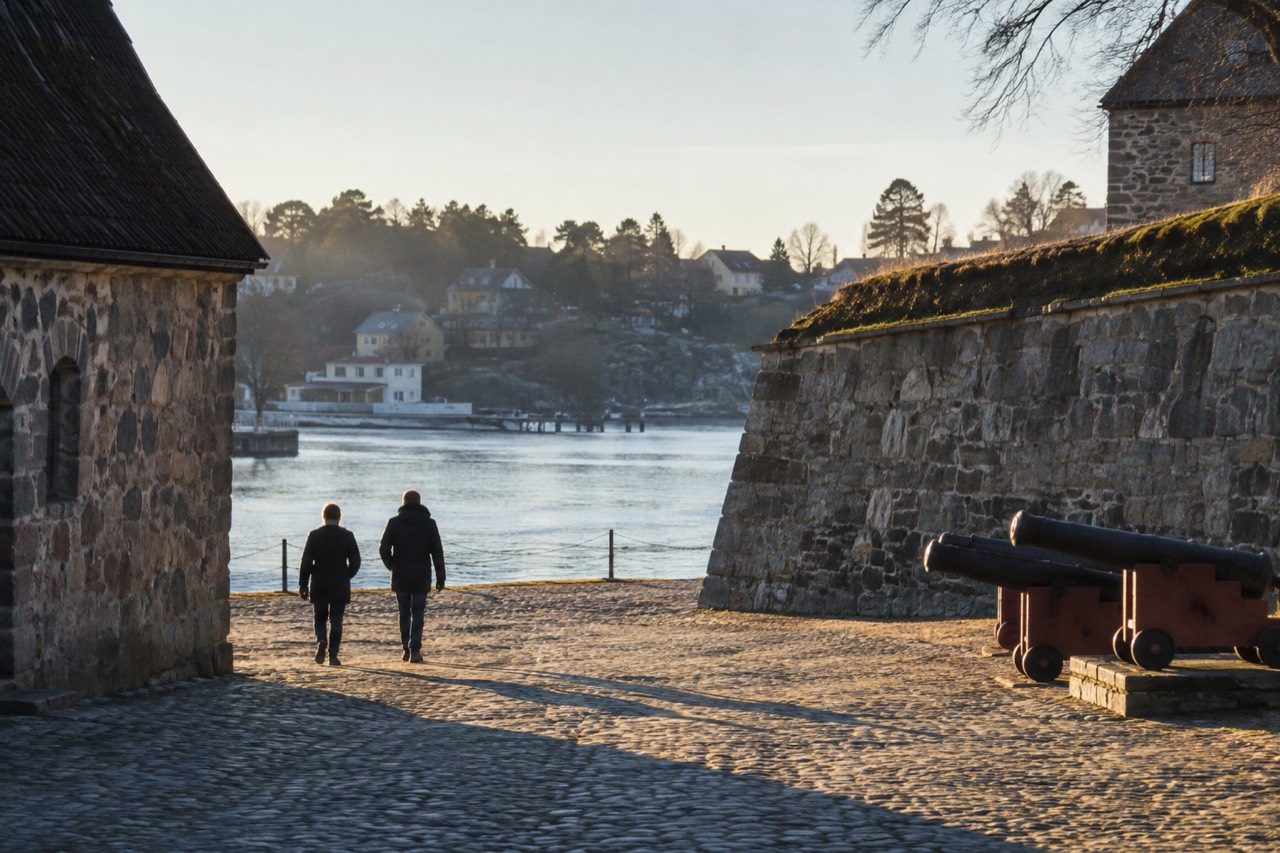
Fredrikstad sits roughly 100 km south of Oslo and is reached by direct Vy train from Oslo S in well under two hours. The reason to go is Gamlebyen, the fortified Old Town, one of the best-preserved fortress towns in Northern Europe, plus a riverside new town and a serious art and antiques scene.
Fredrikstad does something few day trips from a capital manage: it gives you a completely different Norway without a long journey. The town grew up around a star-shaped fortress on the Glomma river, Norway's longest, and the fortified core, Gamlebyen, still stands inside its ramparts. Cobblestone squares, timber warehouses, bastions you can walk on, and a slow ferry across the river to the modern town. All of it about 100 km south of Oslo, on the train line that hugs the Oslofjord's western shore.
This guide covers how to get there, what Gamlebyen actually contains, what else the town offers, and how to judge whether it beats the other day trips on your shortlist. If you are still building the overall plan, start with our one day in Oslo itinerary and work outward.
Why Is Fredrikstad Worth a Day Trip from Oslo?
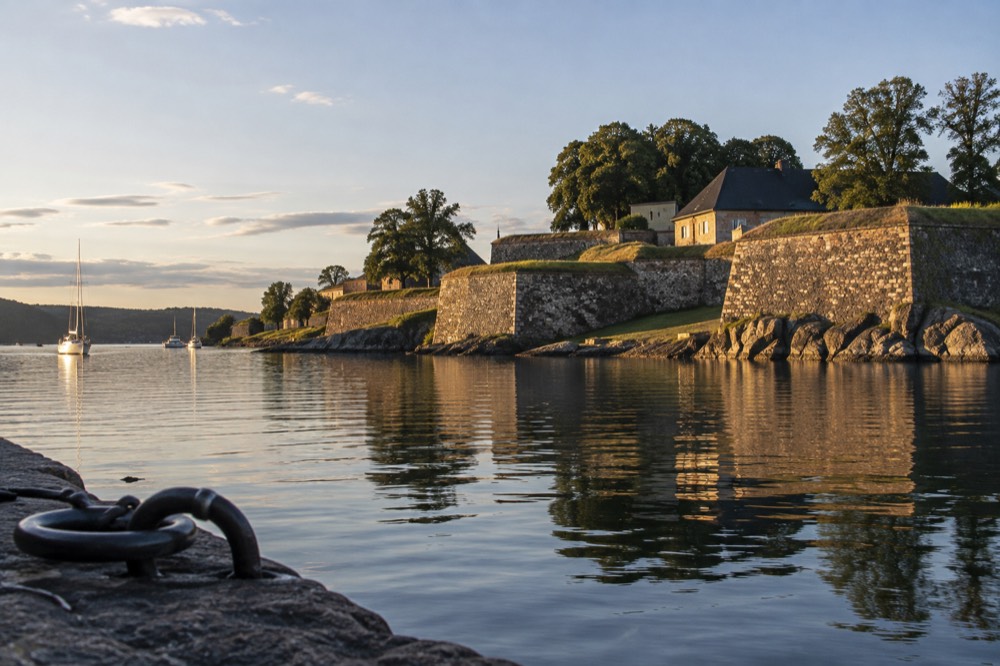
Fredrikstad is worth the trip because Gamlebyen is genuinely unlike anything in Oslo: a complete fortified town inside its original earth and stone ramparts, with buildings, gates and bastions that survived the centuries that rebuilt most Norwegian towns in concrete. You get a walkable historic quarter, a river setting on the Glomma, and a compact art and antiques scene, all reached by a direct train from Oslo S that takes well under two hours.
The comparison that matters is with Oslo itself. The capital's own old quarters, like Karl Johans gate and the areas around Oslo Cathedral, are handsome but rebuilt, fires and nineteenth-century redevelopment having taken their toll. Gamlebyen escaped that wave. When the town outgrew its walls, the townspeople simply built a new settlement on the west bank of the river and left the old one alone. That accident of history is the whole reason to visit.
The other reason is pace. Oslo rewards a full schedule. Fredrikstad rewards a slow one: a coffee in the old market square, a loop of the ramparts, a museum or two, and a ferry ride back across the Glomma. If your Oslo itinerary is packed with the big museums, a low-key day here balances it.
How Do You Get from Oslo to Fredrikstad?
The train is the sensible answer: direct Vy regional services run from Oslo S to Fredrikstad down the western side of the Oslofjord, with a journey time that comes in well under two hours, and tickets are cheapest bought in advance on Vy's own site or app. Driving takes a similar amount of time on the E6 and gives you flexibility for detours, but parking in the old town is limited. There is no useful boat option: this is a rail or road trip, not a fjord cruise.
Start at Oslo Central Station, which is also where the airport trains terminate if you are arriving the same morning. Buy the ticket on Vy's site or app rather than at a machine; advance-purchase fares on Norwegian regional trains are meaningfully cheaper than walk-up ones. Check the live timetable on Vy's planner before you lock your day, because departure frequency drops outside peak hours and you want to know your return options before you commit.
One thing to get right early: Fredrikstad is outside the Ruter zone system entirely. Ruter tickets, and the transport inclusion of the Oslo Pass, cover Oslo and Akershus, zones 1 through 4V and 4N. Fredrikstad is in a different county fare region, so this is a point-to-point Vy ticket, not a zone ticket. Our Ruter tickets guide explains where that system ends.
| Option | Best for | Watch out for |
|---|---|---|
| Vy regional train from Oslo S | Almost everyone; direct, frequent, no parking worries | Advance fares are cheaper; check the return timetable before you go |
| Car via the E6 | Detours, families with gear, combining with Halden or other stops | Traffic around Oslo at peak times; limited parking near Gamlebyen |
| Organized tour from Oslo | Zero-effort days | Most Oslo tours head west to the fjords, not south; check the itinerary carefully |
Arriving by train puts you in the modern town center, on the west bank of the Glomma. Gamlebyen sits on the east bank. It is a short walk to the river, and the little passenger ferry across to the old town is part of the pleasure of the visit; in the off-season, or if the ferry is not running, the road bridge is a modest detour on foot.
If you would rather not plan any of the day yourself, there are guided alternatives out of Oslo, though most of them point west rather than south. The trio below is the honest shortlist: the ambitious fjord option, an island-hopping nature walk inside Oslo itself, and the hop-on-hop-off bus for a city-only day.

What Is Gamlebyen, Fredrikstad's Old Town?
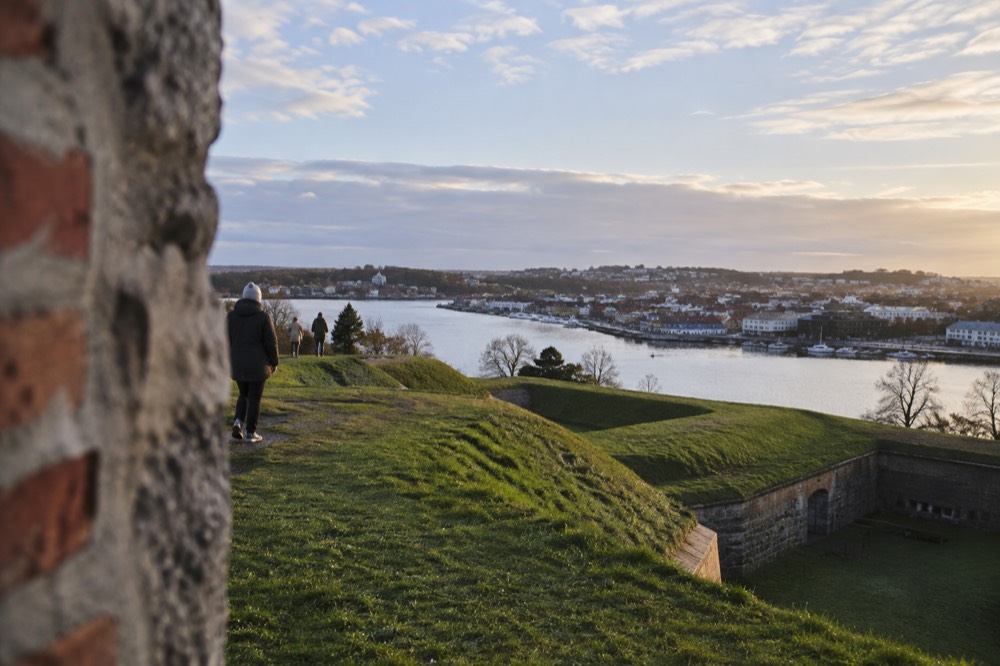
Gamlebyen is the original, walled settlement of Fredrikstad, laid out inside star-shaped fortifications on the east bank of the Glomma, and it is regarded as one of the best-preserved fortified towns in Northern Europe. The ramparts, gates and moat survive, the street grid inside is intact, and the buildings now hold studios, galleries, cafes and small museums rather than garrisons. You can walk the entire circuit of the walls in under an hour, with the river on one side the whole way.
The layout is the attraction. Inside the walls, the streets run in the deliberate grid of a planned fortress town, with the main square at the center and the gates punched through the ramparts at the compass points. Climb any bastion and the geometry reads instantly: earth-and-stone star points, a dry moat, the river beyond. Nothing in Oslo gives you this. The closest experiences in the capital, like Akershus Fortress, are castles with a defensive wall, not a whole civilian town inside a star fort.
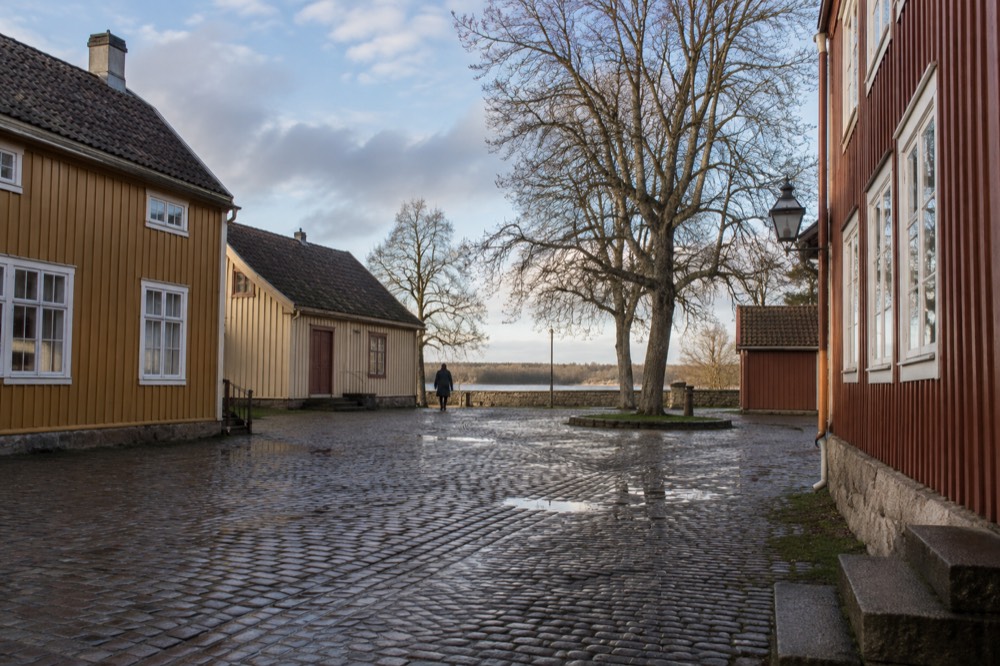
Inside, the tone is artisan rather than museum-diorama. Potters, painters and secondhand dealers occupy the old buildings, and the town has a reputation in Norway for antiques. The Norwegian Museum of Cultural History in Oslo covers open-air folk architecture at national scale, but Gamlebyen is the living, commercial version: people work here, and the shops and galleries are the reason locals make the trip down from Oslo on weekends.
| Sight in Gamlebyen | What it is | Time to allow |
|---|---|---|
| The ramparts circuit | Walkable walls and bastions around the whole old town | About an hour at a stroll |
| The main square | Cobblestone market square with cafes and galleries | 30 to 60 minutes, longer with coffee |
| The fortifications museum | The town's military history inside the old walls | Roughly an hour |
| The river ferry crossing | Short passenger ferry between the two town centers | 10 minutes each way |
| Bastion viewpoints | Panoramas over the Glomma and the moat | As long as you like |
Time your visit around the weekend if you can. The market square fills with stalls on market days, and the galleries and workshops are more likely to be open. Midweek in the off-season the town is quiet, which has its own appeal, but you will find more doors shut.
One practical note that catches out visitors to the wider region: if your Norwegian history interest runs to the Viking Age, plan that part of your trip in Oslo, not here. The Museum of the Viking Age on Bygdøy is closed and will reopen in 2027, and until then the honest substitutes are the Viking-age objects at the Historical Museum in central Oslo and the Viking Planet experience. Our Museum of the Viking Age guide lays out exactly what is open and what is not.
What Else Is There to Do in Fredrikstad?
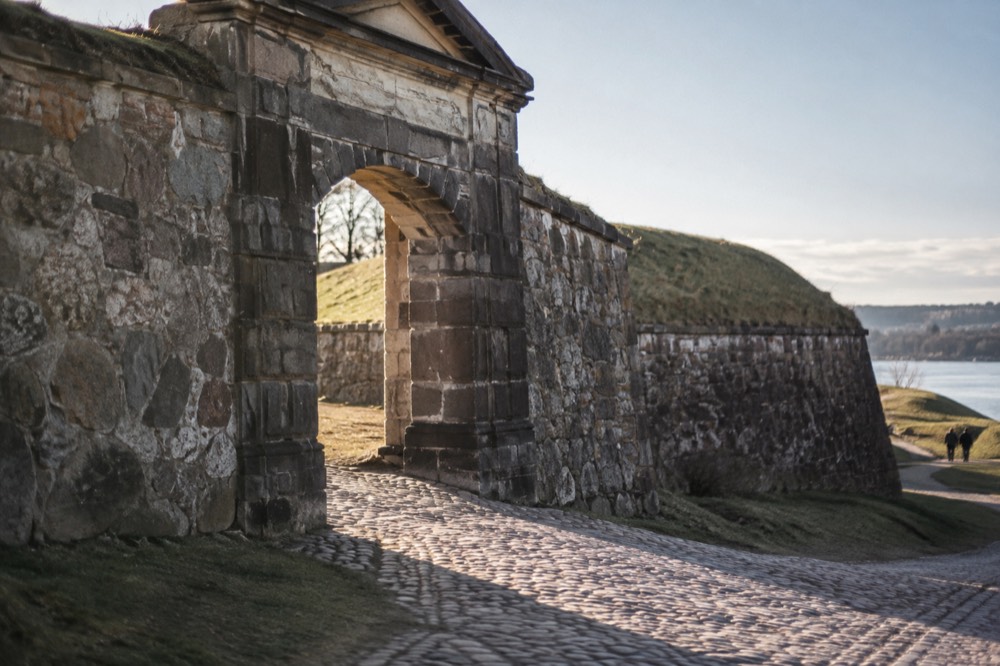
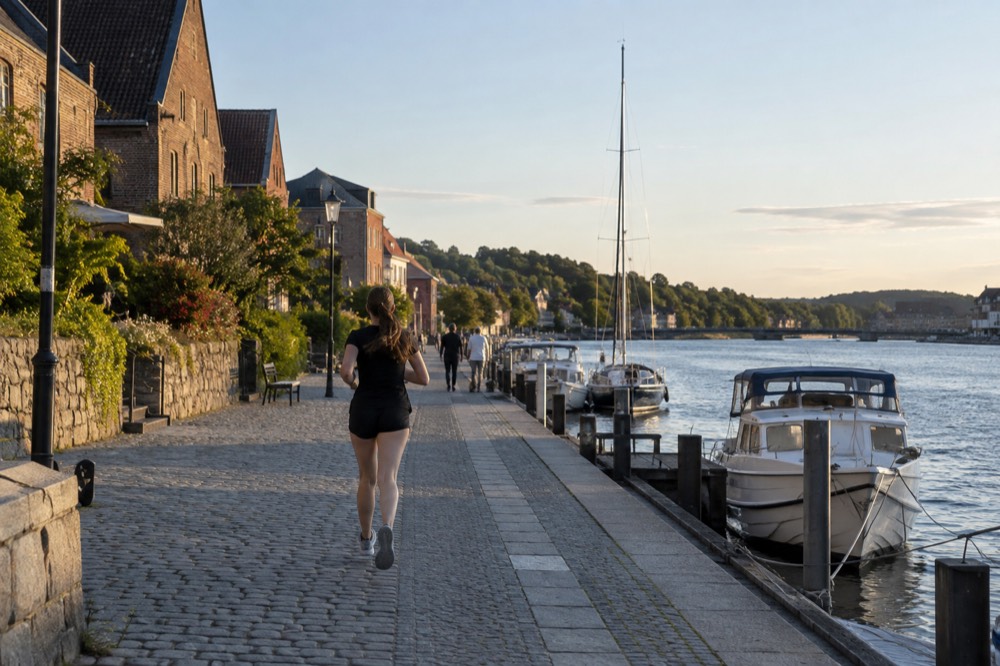
Beyond Gamlebyen, Fredrikstad offers a walkable modern center on the west bank of the Glomma, a riverside promenade, a contemporary art museum, and easy access to the skerries and swimming spots of the outer Oslofjord coast. The town is also a practical base for the wider Østfold coastline, with its small harbor towns and beaches. Realistically, a day trip covers Gamlebyen thoroughly plus one or two of these; you will not run out, but you will not exhaust them either.
Cross back over the river and the new town is a normal, pleasant Norwegian center: pedestrian streets, department stores, the everyday cafes where residents actually eat. This is where you find the practical services, and it is worth an hour even on a short visit, if only for the contrast between the two banks. The river itself is the spine of the town, and the quays on both sides make for an easy flat walk.
South of the center, the coast opens up. The Østfold shoreline is the quiet end of the Oslofjord, the same water that Oslo's own islands and beaches sit on, but far less visited. If your day trip falls in summer and the weather holds, a swim stop is a genuinely Norwegian way to end the excursion. Water temperatures in the fjord in July and August typically sit between 15 and 20 °C, which is brisk rather than balmy.
For visitors who want nature with a guide rather than self-directed exploring, Oslo itself has the stronger roster, and the island-hopping walk below is the standout: ferry-and-foot exploration of the inner Oslofjord's islands, the thing this stretch of coast makes possible and almost nowhere else does.
How Long Do You Need, and When Should You Go?
A single long day is enough for Fredrikstad: the train down, a morning in Gamlebyen, lunch in the old square, an afternoon on the ramparts or the river, and an evening train back to Oslo. Spring through early autumn is the best window, with the warmest and most reliable weather from June to August. Winter visits work, but short daylight hours compress the day, and the outdoor appeal of the fortress town shrinks with them.
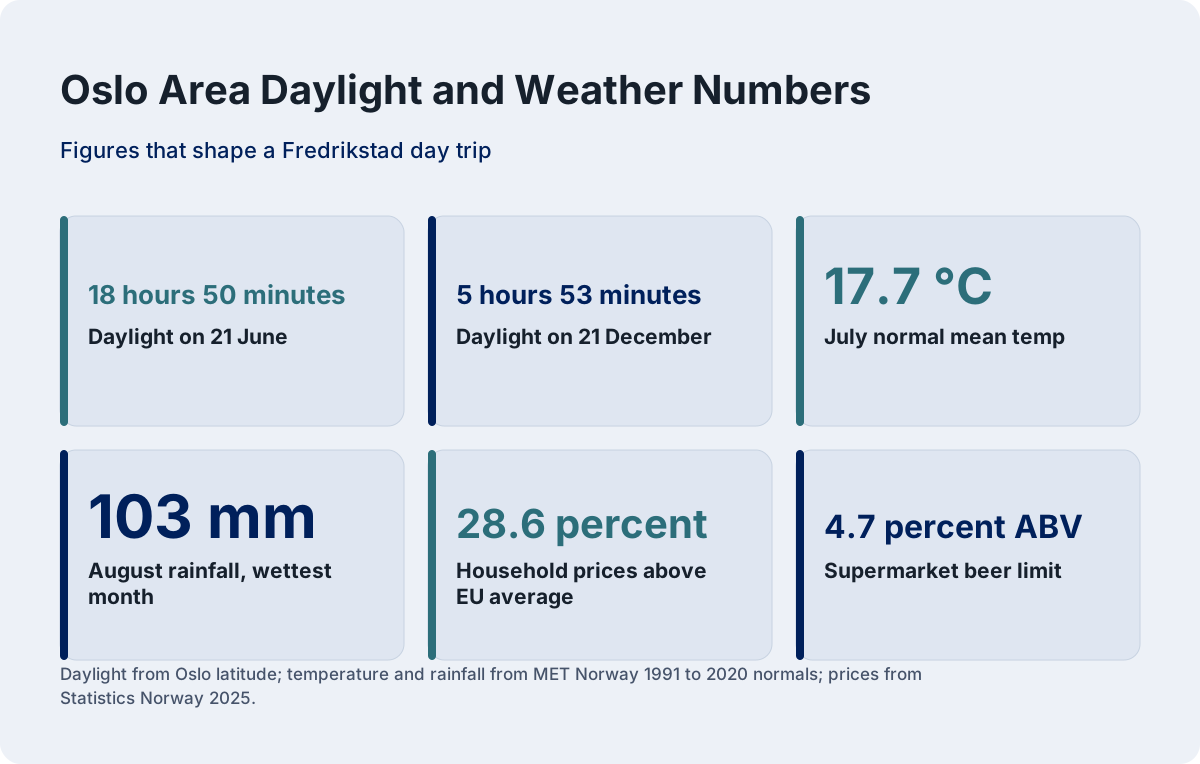
The daylight math matters more than most visitors expect. Oslo's latitude swings from 18 hours 50 minutes of daylight on 21 June down to 5 hours 53 minutes on 21 December, a factor of more than three, and Fredrikstad sits close enough to Oslo that the same arithmetic applies. A December day trip means arriving to a late sunrise and losing the light by mid-afternoon. Our Oslo daylight hours guide has the full table if you are planning a winter trip.
Weather-wise, the regional picture follows the Oslofjord's normals. MET Norway's 1991 to 2020 statistics for Oslo (Blindern) show July as the warmest month with a normal mean of 17.7 °C, and August as the wettest at 103 mm, a fact that surprises visitors who assume November holds that title. Pack a rain layer whenever you come.
| Season | Normal mean temp (Oslo Blindern) | What it means for Fredrikstad |
|---|---|---|
| March to May | 1.3 to 11.4 °C | Light crowds, cool walking weather, galleries open on shorter hours |
| June to August | 15.3 to 17.7 °C | Best window; ferry running, market days, swimming possible |
| September to October | 12.2 down to 6.6 °C | Quiet and atmospheric; October is wetter than you think |
| November to February | 2.2 down to −2.3 °C | Short days and cold ramparts; a museum-and-coffee trip |
Is Fredrikstad a Good Day Trip with Kids?
Yes, with the right expectations. The ramparts are a natural playground: walls to climb, bastions to explore, a moat to peer into, and space to run that a city center cannot match. The river ferry is a genuine hit with younger children, and the compact scale means no long transit legs inside the day. What the town lacks is purpose-built attractions, so families wanting rides and indoor entertainment should stay in Oslo, where the museum and activity roster is far deeper.
The walk itself is the attraction for children. A lap of the walls, an ice cream in the square, a trip across the river on the little ferry, and most kids are content. In summer, add a swim stop on the coast south of town. In winter, the equation changes: cold ramparts hold attention for a shorter time, and you will want to build the day around indoor stops and long lunches.
For families weighing this against staying in the capital, our Oslo with kids guide covers the deeper family roster, including the Paradox Museum, whose interactive illusions make it the city's strongest rainy-day family ticket. A sensible split on a week-long trip is two or three family days in Oslo, then one slower day in Fredrikstad when everyone is tired of queues.
Where Do You Eat in Fredrikstad?
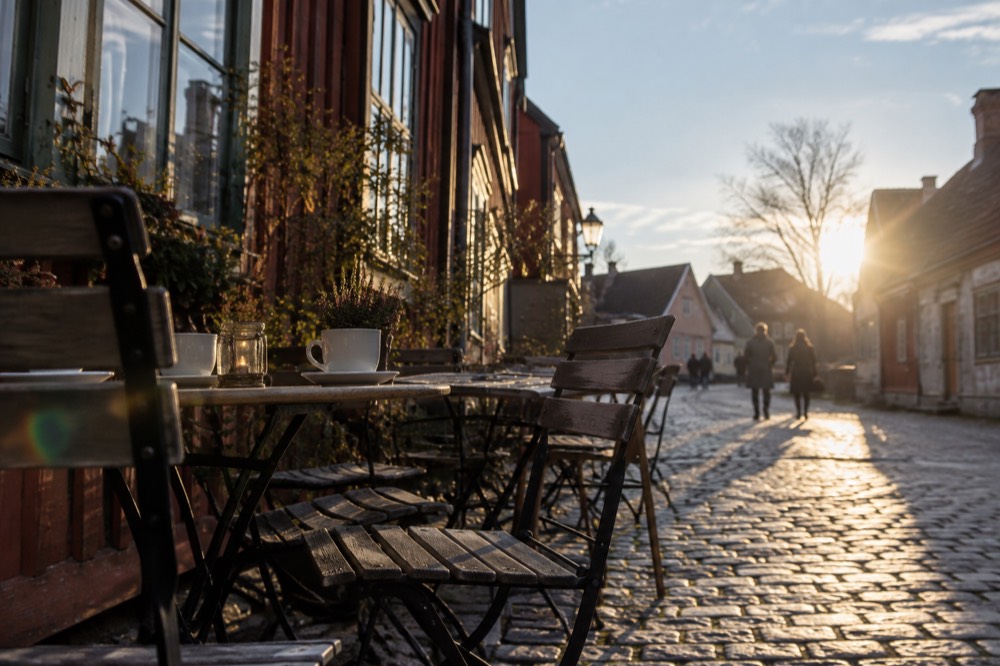
Eat in Gamlebyen, in the square and the streets immediately off it, where the old buildings hold cafes, bakeries and restaurants with outdoor tables in summer. The town's food reputation rests on everyday Norwegian cafe fare rather than fine dining, so plan for a solid lunch and coffee rather than a destination dinner. If you are catching a late train back, the new town's pedestrian streets have the wider evening selection.
Norwegian restaurant prices are the thing to brace for, not just here but everywhere in the country. Statistics Norway's 2025 price-level survey puts overall household prices 28.6 percent above the EU average, food and non-alcoholic drink 33 percent above, and alcohol and tobacco at more than double the European average. A family lunch in Gamlebyen is a pleasant, predictable expense; a round of beers is where the bill climbs fast. Our is Oslo expensive guide unpacks where the money actually goes.
One alcohol rule worth knowing before any Norwegian day trip: wine and spirits are sold only through Vinmonopolet, the state monopoly, which closes on Sundays and public holidays and shuts early on Saturdays. Supermarkets sell beer and cider only, up to 4.7 percent ABV, with a fixed evening cut-off on sales. If you want a bottle for the evening train back, buy it before the weekend squeeze. The details are in our tipping and practical culture guides.
How Does Fredrikstad Compare to Other Day Trips from Oslo?
Fredrikstad is the history-and-pace choice among Oslo's day trips: less dramatic than the fjord country to the west, less mountainous than the ski and hike terrain to the north, but the easiest genuinely historic town to reach by direct train. Choose it for fortifications, antiques and a slow river town; choose the western trips for scenery; choose the northern forests for hiking. If you have only one day out of the city and scenery is the priority, Fredrikstad is not the pick.
The honest league table for a single day out of the capital, with the full roster in our day trips from Oslo guide: Drammen and Drøbak are shorter hops, Fredrikstad and Halden are the fortress towns, and the big-hitters are the fjord and mountain routes. The Oslofjord cruise and the Norway-in-a-Nutshell routes deliver the scenery Norway is famous for, and they book out first in summer.
For travelers with a full day and a bigger budget, the private Sognefjord round trip below is the ceiling of what is bookable out of Oslo in a single day: a private driver, the Flåm Railway, and the fjord itself, all between the morning and evening trains' worth of hours. It is a different category of trip from Fredrikstad, and that is the point of comparing them.
If your day-trip appetite is more modest, the hop-on-hop-off bus is the low-commitment city option, useful on a first day in Oslo when you are still getting oriented before you venture south.
| Day trip from Oslo | Character | Best for |
|---|---|---|
| Fredrikstad | Fortified old town, river, antiques | History and a slow pace |
| Drøbak | Small fjord-side town south of Oslo | A half-day, or the Christmas house |
| Halden | Hilltop fortress town, further south | Combining with Fredrikstad by car |
| Oslofjord islands | Beaches, ruins, swimming | A summer half-day from the center |
| Sognefjord and Flåm | Fjord scenery and mountain railway | The big scenic day |
Whichever way you lean, book the train or the tour before the summer peak. The fjord trips sell out, and even the Vy trains to Fredrikstad are cheapest and most comfortable with a reserved seat on a sunny Saturday. This site, Oslo Travel Guide, keeps a full set of day-trip comparisons if you are still deciding.
Common Questions About Fredrikstad
How far is Fredrikstad from Oslo?
About 100 km south of Oslo, down the western side of the Oslofjord. The direct Vy regional train from Oslo S covers it in well under two hours, and driving on the E6 takes broadly similar time depending on traffic leaving Oslo.
Is Fredrikstad worth visiting?
Yes, if a fortified old town, a slow river setting and an antiques-and-galleries scene appeal to you. Gamlebyen is regarded as one of the best-preserved fortress towns in Northern Europe, and it is the easiest town of its type to reach from Oslo by direct train.
How do I get from Oslo to Fredrikstad?
Take a direct Vy regional train from Oslo S. Buy the ticket in advance on Vy's site or app for the cheaper fare. Fredrikstad is outside the Ruter zone system, so Ruter tickets and the Oslo Pass transport inclusion do not apply; this is a point-to-point Vy ticket.
What is Gamlebyen?
Gamlebyen is Fredrikstad's original walled town, laid out inside star-shaped fortifications on the east bank of the Glomma river. The ramparts, gates and street grid survive intact, and the buildings now hold cafes, galleries and workshops. You can walk the full circuit of the walls in under an hour.
Can you do Fredrikstad as a day trip?
Yes, comfortably. A morning train down, the middle of the day in Gamlebyen, and an evening train back to Oslo makes a full but unhurried day. Check the return timetable before you go, since departure frequency drops outside peak hours.
When is the best time to visit Fredrikstad?
June through August, when the ferry across the river runs, market days fill the old square, and the weather supports rampart walks and a swim on the coast. Spring and early autumn are quieter and cooler. Winter works but short daylight hours compress the day.