Oslo Beaches: Where to Swim in the Oslofjord
Oslo is one of the few capitals where clean saltwater swimming is part of everyday summer life. Here is where the locals actually swim, how to get there by boat or tram, and what the water is really like.
Short answer
Oslo's main swimming spots are Sørenga, Huk on Bygdøy, Paradisbukta, Tjuvholmen and the island beaches on Langøyene and Hovedøya. All are free and public. The water typically reaches 15 to 20°C in July and August, and the island ferries run on an ordinary Ruter ticket from Aker brygge.
Oslo is a capital where the sea is not a backdrop, it is a public facility. The city wraps around the inner Oslofjord, and almost every neighborhood has a shoreline within reach of a tram or a ferry. In July the metro carries wetsuits and towels toward the islands, office workers swim at Sørenga before going home, and the seawater pools at Tjuvholmen fill up at lunchtime. None of it costs anything. The beaches are public, the water is tested, and the ferries that reach the best ones run on an ordinary public transport ticket.
That surprises visitors who arrive with the "expensive Scandinavia" briefing and expect a city of museums. The museums are real, and so is the bill for a restaurant dinner, but the coastline is the part of Oslo that costs nothing and delivers the most. This guide covers the beaches worth your time, how to reach each one, what the water is actually like, and the seasonal realities that decide whether your swim happens at all. For the wider picture of the city, start with our complete Oslo attractions overview.
Where Are the Best Beaches in Oslo?
The best swimming spots in Oslo are Sørenga and Tjuvholmen near the city center, Huk and Paradisbukta on the Bygdøy peninsula, and the island beaches on Langøyene, Hovedøya and Gressholmen out in the fjord. All of them are free, public and officially monitored for water quality. Sørenga is the most convenient, Huk the most scenic, and Langøyene the best sand, but it sits at the end of a ferry ride.
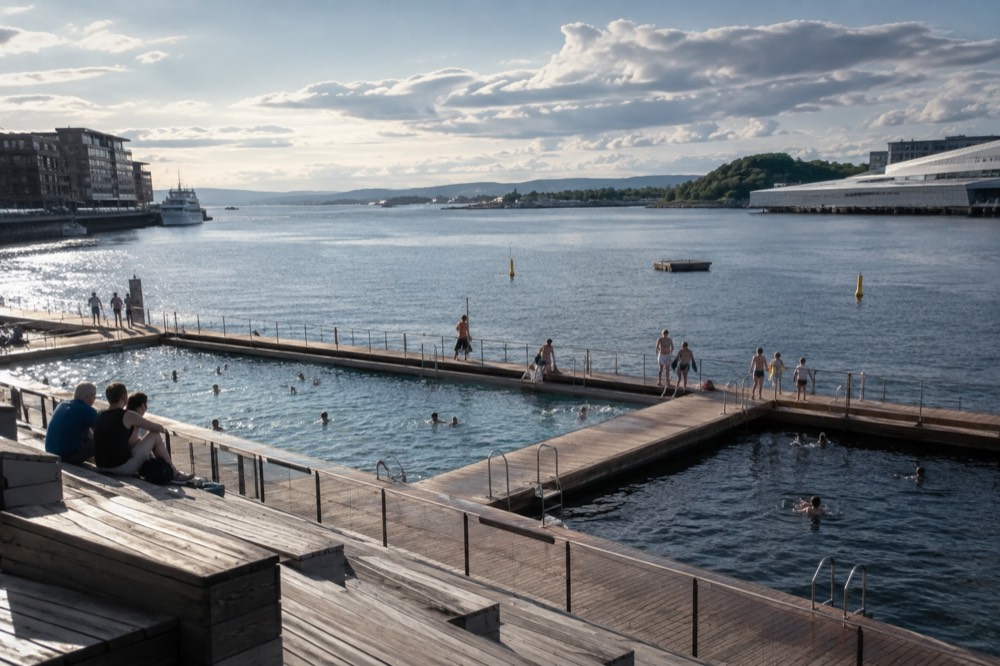
The list below is the one locals actually use, not a tourist-office round-up. Oslo's bathing water quality is tested by the municipality and published during the season, so a beach on this list is a beach with a public record behind it. The character of each spot varies more than you would expect for one city: Sørenga is a seawater pool complex carved into the waterfront at Bjørvika, Huk is a classic rocky peninsula beach with lawns and pines, and Langøyene is a genuine sandy island with shallow water that warms early.
| Beach | Location | Character | Best for |
|---|---|---|---|
| Sørenga | Bjørvika, walkable from the center | Seawater pools and a sandy beach | A quick swim, families, after work |
| Tjuvholmen | Aker Brygge area | Seawater pool, city-beach feel | Sunbathing near restaurants |
| Huk | Bygdøy peninsula | Rocky beach, lawns, pines, jetties | The classic Oslo beach day |
| Paradisbukta | Bygdøy peninsula | Sheltered sandy cove | Calmer water, picnics |
| Langøyene | Oslofjord island | Sandy island beach, shallow water | The best sand, camping |
| Hovedøya | Oslofjord island | Rocky shores and coves, abbey ruins | Combining a swim with history |
| Gressholmen | Oslofjord island | Smooth rocks, quiet coves | Escaping the crowds |
| Ingierstrand | Southeast of the center | Longer sandy beach | A beach day with a drive or bus |
| Hvervenbukta | Southeast of the center | Grassy and sandy, family favorite | Local summer weekends |
Two names on that list deserve a warning. Huk and Paradisbukta sit on Bygdøy, which means the seasonal museum ferry from Rådhusbrygge 3 is one way in, but there is also a year-round bus. The islands are a different system entirely, and the distinction matters so much for beach days that it gets its own section below. If you are still sketching the whole trip, our Oslo itinerary guides can slot a beach day into a longer visit.
How Do You Get to Oslo's Beaches?
The island beaches are reached by Ruter's public ferries, lines B1 and B2, which depart from Aker brygge and ride on an ordinary zone 1 ticket, the same ticket as the tram or metro. The Bygdøy beaches are reached by bus 30 year-round, or by the seasonal Bygdøy ferry from Rådhusbrygge 3, which is a separate operator where Ruter tickets are not valid. Sørenga and Tjuvholmen are walkable from the city center.
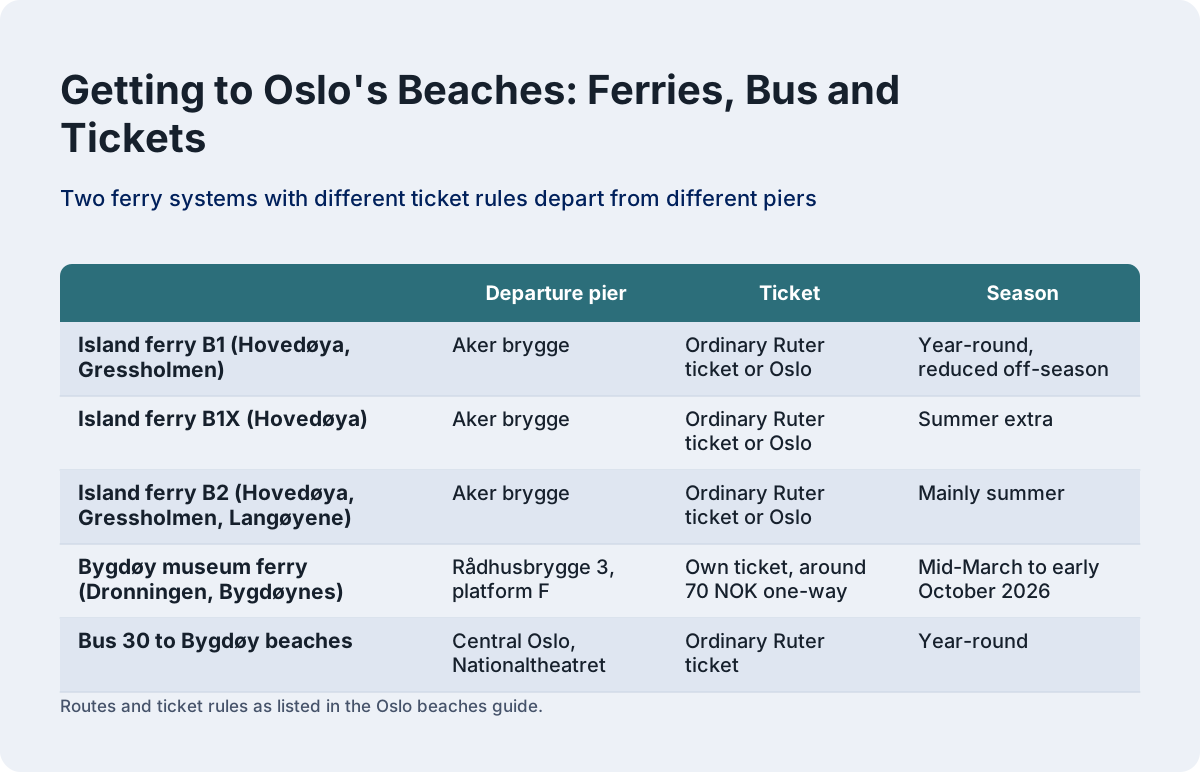
This is the part of an Oslo beach day that trips up the most visitors, because there are two ferry systems and they follow different ticket rules. The island ferries, lines B1, B1X in summer and B2, are ordinary Ruter public transport. You tap the same ticket you used on the tram, there is no surcharge, and you can hop on and off at the islands with a valid ticket or an Oslo Pass. The B2 line, which serves Langøyene, runs mainly in the summer season.
| Route | Departure pier | Ticket | Season |
|---|---|---|---|
| Island ferry B1 (Hovedøya, Lindøya, Gressholmen, Bleikøya, Nakholmen) | Aker brygge | Ordinary Ruter ticket or Oslo Pass | Year-round, reduced off-season |
| Island ferry B1X (Hovedøya) | Aker brygge | Ordinary Ruter ticket or Oslo Pass | Summer extra |
| Island ferry B2 (Hovedøya, Gressholmen, Langøyene) | Aker brygge | Ordinary Ruter ticket or Oslo Pass | Mainly summer |
| Bygdøy museum ferry (Dronningen, Bygdøynes) | Rådhusbrygge 3, platform F | Own ticket, around 70 NOK one-way, included with the Oslo Pass | Mid-March to early October 2026 |
| Bus 30 to Bygdøy beaches | Central Oslo, Nationaltheatret | Ordinary Ruter ticket | Year-round |
The Bygdøy ferry is the one to watch. It runs from Rådhusbrygge 3, a different pier from the island boats at Aker brygge, roughly every 20 minutes in season, and Ruter tickets are not accepted on it. The Oslo Pass does cover it. Out of season, bus 30 does the job on an ordinary ticket and stops within walking distance of Huk. The details of the whole ticket system, zones and validity windows are covered in our guide to Ruter tickets.
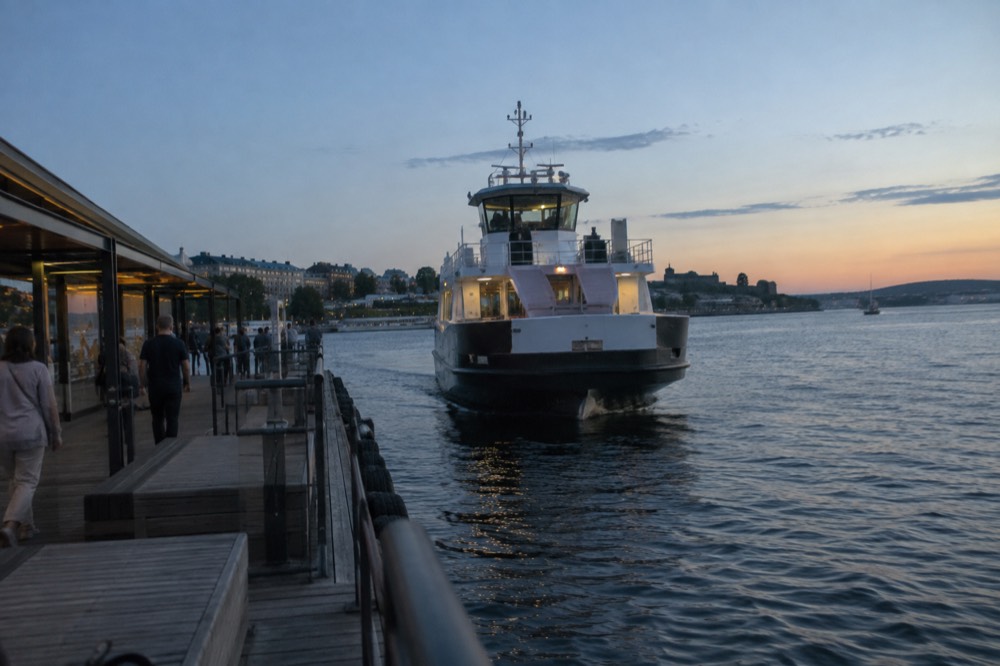
Since every good beach in this city is a fjord beach, seeing the coastline from the water first is a genuinely useful orientation move, and it happens to be the most popular activity in Oslo. The fjord cruise products below are the ones that fit a beach day.
Which Beach Is Best for Actually Swimming?
For swimming, Sørenga is the most reliable choice because its seawater pools hold calm water at any tide, Langøyene has the warmest shallow water on sandy ground, and Huk offers the deepest and clearest water off its jetties. Realistic summer water temperatures in the Oslofjord run 15 to 20°C in July and August, cool rather than cold, and the municipality publishes bathing water temperatures during the season.
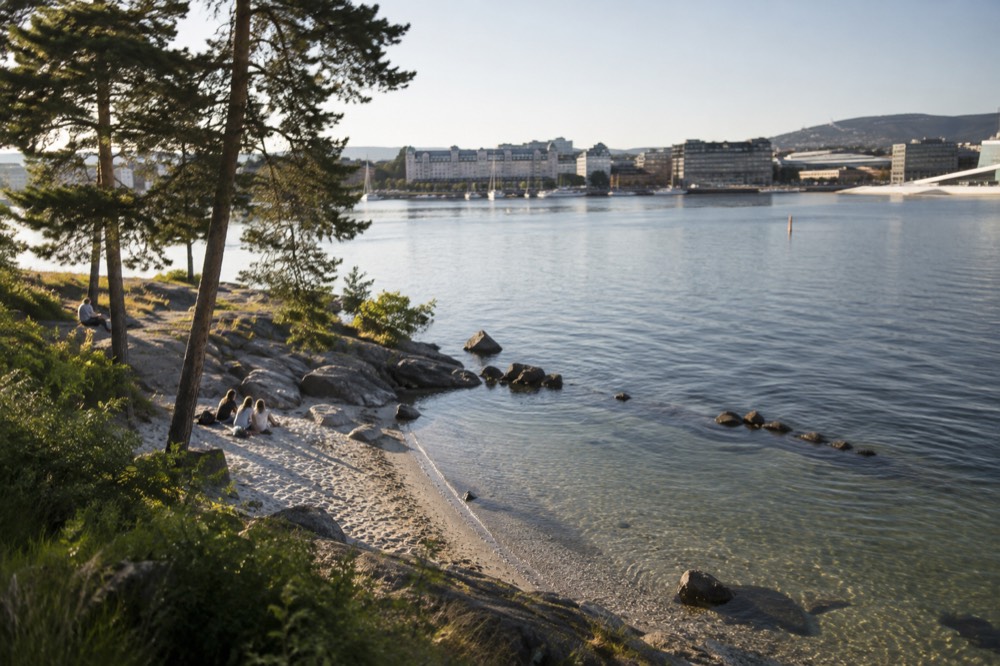
Fifteen to twenty degrees does not sound tropical, and it is not, but the shallow sandy shelf at Langøyene warms faster than the open fjord, which is exactly why it is the camping island. Huk faces the outer fjord, so its water stays clearer and fresher, and the jetties give you a deep entry if you want to swim properly rather than wade. Sørenga sits in the inner harbor basin, and its pool design means you get calm, swimmable water without waves or boat traffic, a short walk from the opera house.
The honest advice is to check the published bathing temperature before you commit to a beach day, because a week of wind and rain can drop the inner fjord several degrees. The official bathing water quality results are published by the city during the season, and they are the record behind every beach on this page. If the water turns out too cold for you, the rainy day guide to Oslo has the indoor alternatives, and August, the wettest month on the 1991 to 2020 normals at 103 mm, is the month most likely to force that switch.
What About the Island Beaches?
The island beaches, above all Langøyene, are the best sand in Oslo and the closest thing the city has to a proper beach escape. The islands sit 10 to 20 minutes from Aker brygge by ferry, the crossing is part of the fun, and Langøyene permits free tent camping for up to two nights in season, which makes it the only Oslo beach you can legally sleep on.
Langøyene is the headline. It is a sandy, partly grassy island with shallow water on its southern side, served by the seasonal B2 ferry, and its camping allowance is a genuine Oslo institution: tents go up in June and come down by late August. Hovedøya is the island for a shorter trip, with rocky coves for swimming and the ruins of a Cistercian abbey to walk around between dips. Gressholmen and Bleikøya are quieter, rockier and mostly visited by people who already know their spot.
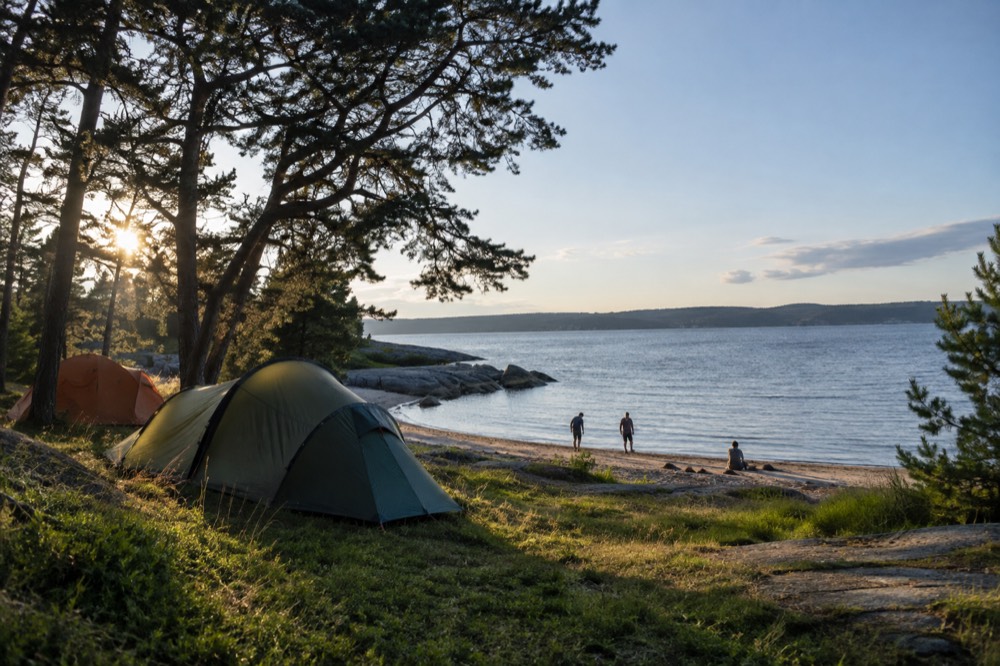
If you would rather have someone else handle the island logistics, the ferry-and-foot island hopping tour below does exactly this trip with a guide, and it is the highest-rated fjord product of its kind in the city.
The islands are also the place where a beach day and a history day genuinely overlap. Hovedøya's abbey ruins are a short walk from its swimming coves, and the crossing itself gives you the harbor view that most visitors only get from a tour boat. Our guide to the Oslo islands covers the full island-by-island picture, including the ones with no beach at all.
When Is Beach Season in Oslo?
Oslo's beach season runs from mid-June to late August, driven less by air temperature than by daylight and water temperature. The July air normal is 17.7°C and the water typically reaches 15 to 20°C in July and August, while the June solstice gives 18 hours 50 minutes of daylight. Outside those months the water is cold, the days are short, and swimming becomes a wetsuit activity for the winter bathing clubs.
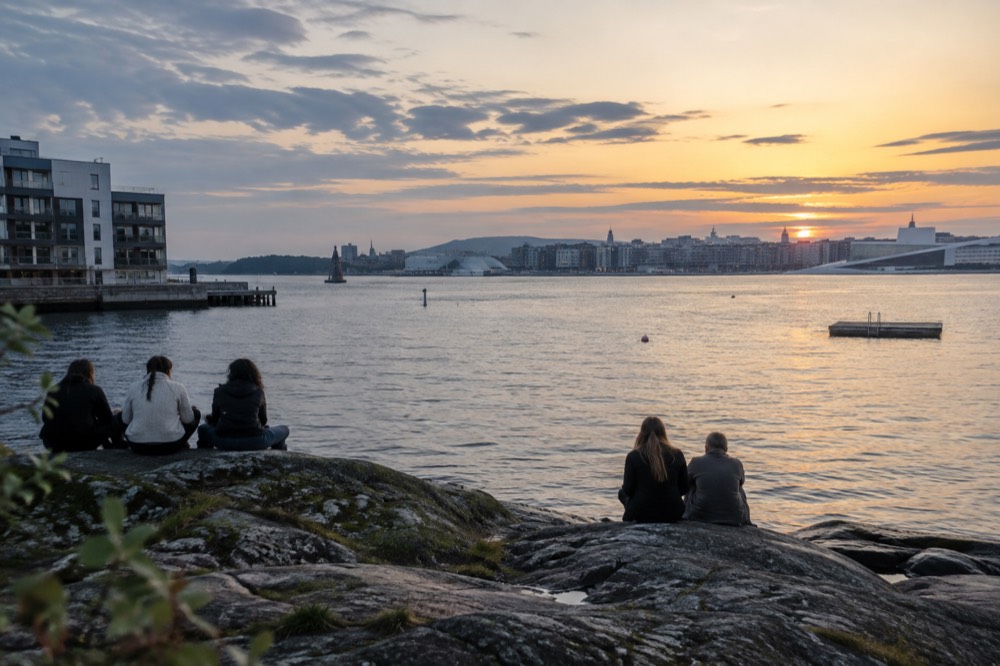
The seasonal logic of Oslo swimming is the daylight swing, which is extreme at 59.91 N. In late June the sun sets at 22:43 and rises at 03:53, and the gap between is twilight rather than true night, so an evening beach run after dinner is completely normal. By late December the sun is up for 5 hours 53 minutes and sets at 15:11, which is why winter swimming belongs to organized, hardy locals rather than visitors. There is no midnight sun in Oslo, that requires the Arctic Circle, but midsummer evenings on a fjord beach stay light almost until the last ferry home.
| Date | Sunrise | Sunset | Day length |
|---|---|---|---|
| 15 May | 04:40 | 21:48 | 17 h 08 m |
| 21 Jun | 03:53 | 22:43 | 18 h 50 m |
| 15 Jul | 04:21 | 22:23 | 18 h 02 m |
| 15 Aug | 05:31 | 21:09 | 15 h 38 m |
| 15 Sep | 06:44 | 19:38 | 12 h 54 m |
Air temperature norms tell the rest of the story. July averages 17.7°C and August 16.5°C on the 1991 to 2020 normals, warm enough for a full beach afternoon, and August's 103 mm of normal rain is the trade-off: it is the wettest month of the year in Oslo, so a beach plan in August should have an indoor fallback. The full monthly breakdown, including the winter side of the curve, is in our Oslo weather by month guide, and the wider seasonal planning question is covered in the best time to visit Oslo.
What Should You Know Before You Go?
Bring water shoes, expect rocks rather than sand at most spots, carry cash-free payment for the Bygdøy ferry if you use it, and know that the last ferries home from the islands run early enough to plan around. Facilities vary: Sørenga has full amenities, Huk has kiosks and toilets in season, and the islands have very little, so bring food and water. Alcohol on beaches follows Norway's strict, expensive rules.
The practical reality of Oslo beaches is that they are natural shoreline more often than managed sand. Rocks and pine needles are the default surface, and the shallow entry at many spots is smoother rock rather than sand, which is why locals wear water shoes. Kiosks and toilets operate seasonally at the big spots, Huk and Sørenga, but on the islands you should assume nothing is open and carry what you need for the day, including water, because a hot island afternoon has no shade to retreat to.
The alcohol point is worth a sentence because it shapes Norwegian beach culture. Norway's prices for alcohol are more than double the European average on Statistics Norway's 2025 comparison, wine and spirits are sold only through the state monopoly Vinmonopolet, which is closed on Sundays and shuts early on Saturdays, and beer from supermarkets stops at 4.7% ABV. Beach days here are mostly sober by design. The cost picture overall is covered in our is Oslo expensive guide, where the free coastline is the counterweight to the restaurant bill.
One more planning note: the Oslo Pass covers both ferry systems, the Ruter island boats and the Bygdøy ferry, along with the museums, which makes a combined Bygdøy museum-and-beach day the single best value the pass offers. The maths is worked through in is the Oslo Pass worth it.
Can You Combine a Beach Day with a Fjord Tour?
Yes, and it is the best single-day structure in the city: a morning fjord cruise to read the coastline, an afternoon at Sørenga or on the islands, and an evening swim in the long midsummer light. The cruise products run from piers next to the beach spots, so there is no wasted travel between them, and the wooden sailing ship option turns the same water into a two-hour experience of its own.
The pairing works because of geography. The cruise departure points and the best swimming spots sit on the same short stretch of waterfront, between Rådhusbrygge, Aker brygge and Tjuvholmen, so a boat morning flows straight into a beach afternoon without a single transit leg. In July, with sunset at 22:23, you can do both and still swim before dinner.
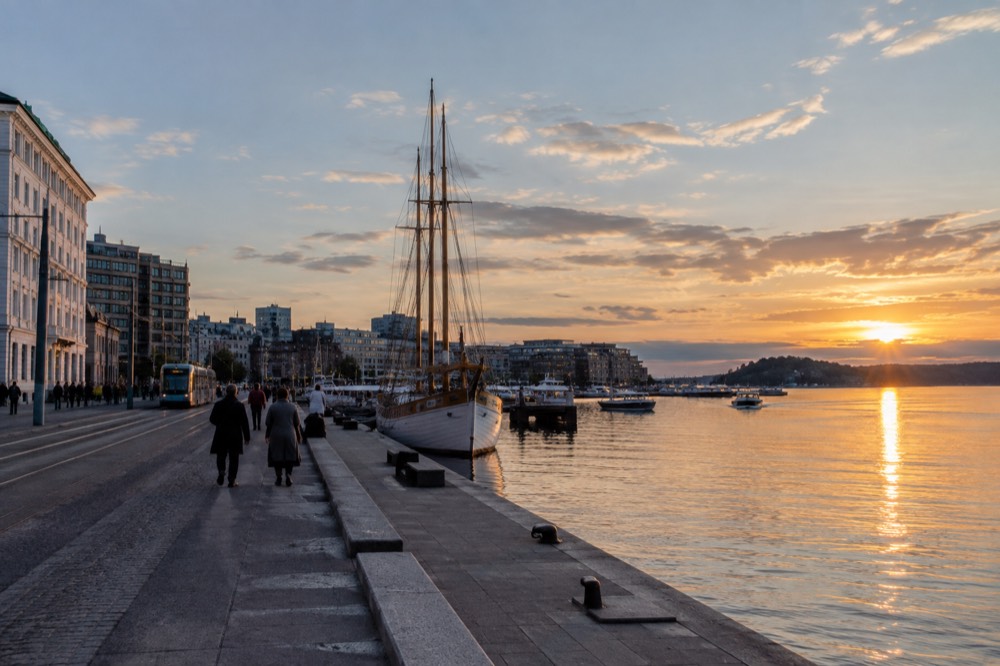
The traditional wooden sailing ship below is the contrast pick: same fjord, completely different experience, two hours under canvas rather than 90 quiet electric minutes.
For a full evening version of the fjord, the shrimp buffet cruise is the Norwegian institution that ends with food, and the full range of options, including the dinner boats, is in our Oslofjord cruise guide. If you are planning around the whole summer visit rather than one day, Oslo in summer pulls the beaches, the islands and the boat trips into one seasonal plan, and this article sits alongside them as part of Oslo Travel Guide's coverage of the fjord city.
Before you lock anything in, the three strongest fjord products are worth one last side-by-side, because they are the ones that sell out first in July.
Common Questions About Oslo Beaches
Can you swim in Oslo?
Yes. Oslo has clean, tested saltwater swimming at Sørenga, Tjuvholmen, Huk, Paradisbukta and the Oslofjord islands, all free and public. The water typically reaches 15 to 20°C in July and August, and the municipality publishes bathing water temperatures and quality results during the season.
What is the best beach in Oslo?
Huk on the Bygdøy peninsula is the classic choice for clear water and a proper beach-day feel, while Langøyene has the best sand and shallow warm water, reached by the seasonal B2 ferry from Aker brygge. Sørenga is the most convenient, walkable from the city center with calm seawater pools.
Are the Oslo beaches free?
Every beach and swimming spot listed here is free and publicly accessible. The only costs are transport: an ordinary Ruter ticket covers the island ferries and bus 30, while the separate Bygdøy ferry charges around 70 NOK one-way, included with the Oslo Pass.
How do I get to the Oslofjord island beaches?
Take the Ruter ferry lines B1 or B2 from Aker brygge. B1 runs year-round to Hovedøya, Lindøya, Gressholmen, Bleikøya and Nakholmen, while B2, which serves the sandy island Langøyene, runs mainly in summer. Ordinary zone 1 tickets and the Oslo Pass are valid, with no surcharge.
Can you camp on the Oslo beaches?
On Langøyene, yes. Free tent camping for up to two nights is allowed in season, which makes it the only beach in Oslo you can legally sleep on. The B2 ferry serves the island in summer, and you should carry everything you need, since facilities are minimal.
Is the water in the Oslofjord clean?
Yes, at the official bathing spots. The city tests bathing water quality and publishes the results during the season, and the spots in this guide, Sørenga, Tjuvholmen, Huk, Paradisbukta, Langøyene, Hovedøya and Gressholmen, are all on the monitored list.